
Dogs and cats · Written by vets · Free
Pain and mobility in dogs and cats
Guides, tools and printable sheets for living with pain. All free. No account needed.
Start here
Read these first

How Dogs Hide Pain: Why You're Not Failing as an Owner
When an owner finds out their dog has been in pain for months or years before they realised, the response is usually some variation of the same thing. "I should have known. I'm a terrible owner. How did I miss this?"
Alastair Greenway, BVM&S MRCVS · 17 min read
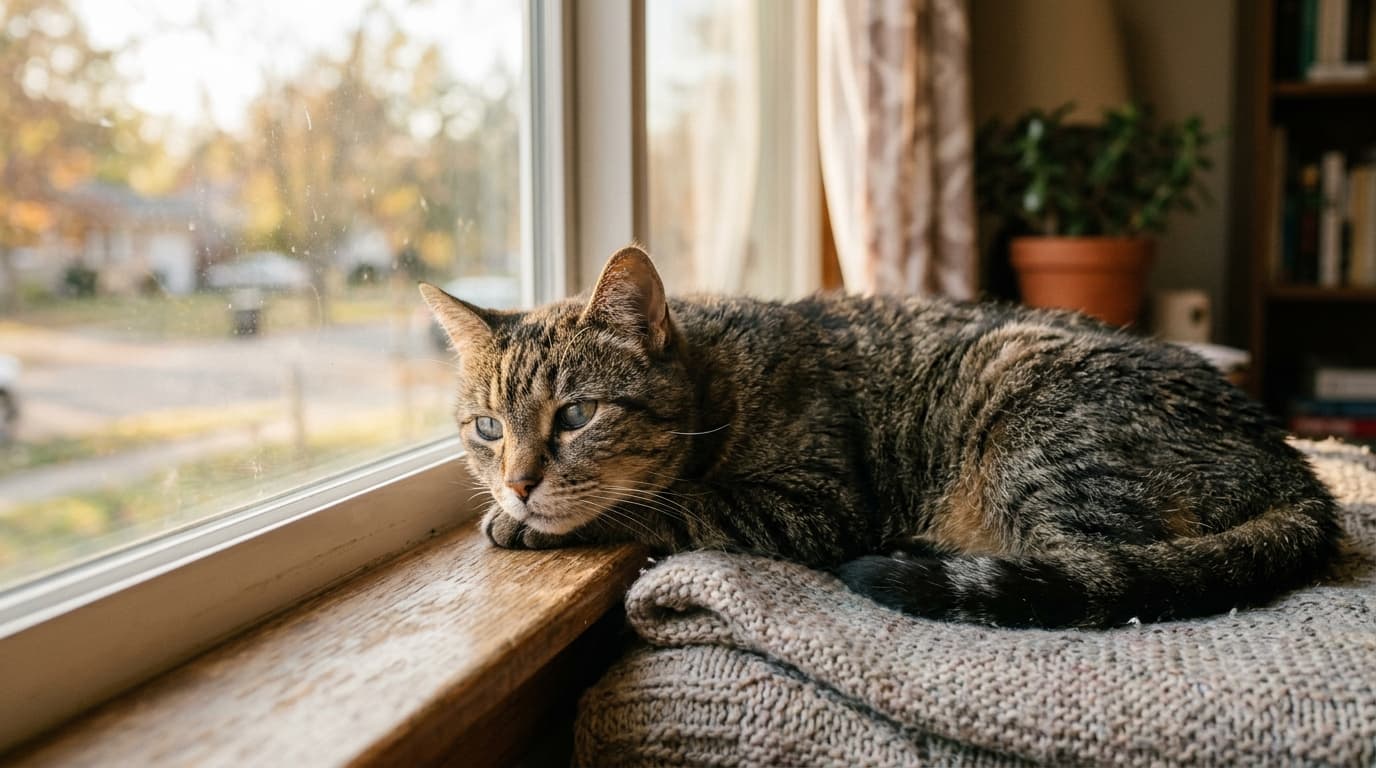
Recognising Pain in Cats: Even Harder Than Dogs
Recognising pain in dogs is harder than most owners realise, as our article on how dogs hide pain explains. With cats, the difficulty multiplies. Cats are extraordinarily good at concealing discomfort, often to the point where they appear completely normal until an underlying condition has progressed significantly. The signs that do exist are subtler than...
Alastair Greenway, BVM&S MRCVS · 21 min read
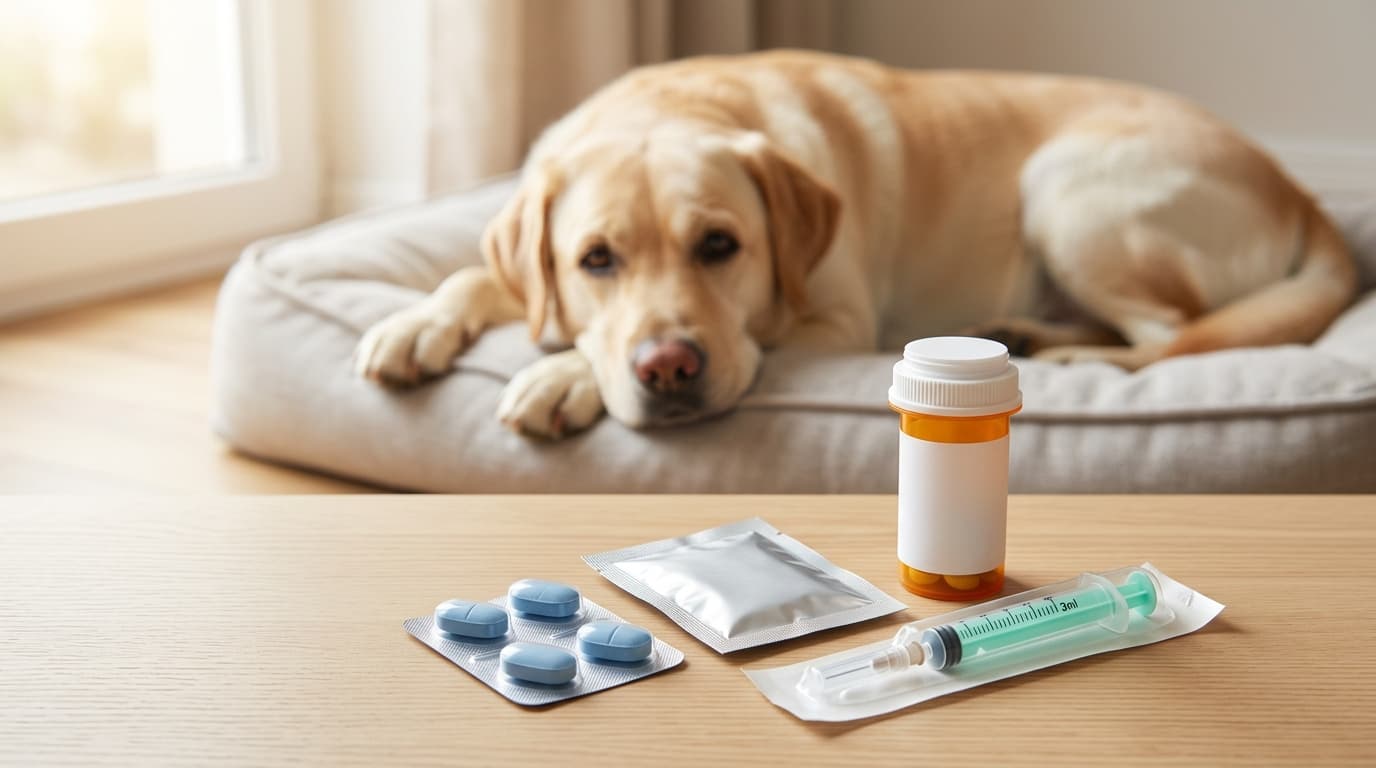
Arthritis Pain Relief: The Complete Medication Guide
There are more options for treating arthritis pain in dogs now than at any point in veterinary history. NSAIDs that are safer and better tolerated than ever. Monoclonal antibody therapy that didn't exist five years ago. Adjunct medications that fill gaps the traditional drugs couldn't reach. Multimodal protocols that combine treatments in ways tailored to...
Alastair Greenway, BVM&S MRCVS · 22 min read

Managing a Flare-Up: What to Do on a Bad Day
Even a well-managed arthritic pet will have bad days. A flare-up is a sudden spell of more pain and stiffness, and it is frightening when you do not know what to do, and dangerous if you reach for the wrong thing. Here is how to handle a flare safely at home, what never to give,...
Alastair Greenway, BVM&S MRCVS · 10 min read
Spotting pain
What to look for at home.
Is it pain, age, or disease? Reading the slowdown in an older pet
The slowdown usually arrives quietly. The walk that used to take in the whole park becomes a slow shuffle to the corner and back. He takes the stairs one careful step at a time now, or waits at the bottom for a lift. She sleeps through things she used to come running for. And at...
16 min read
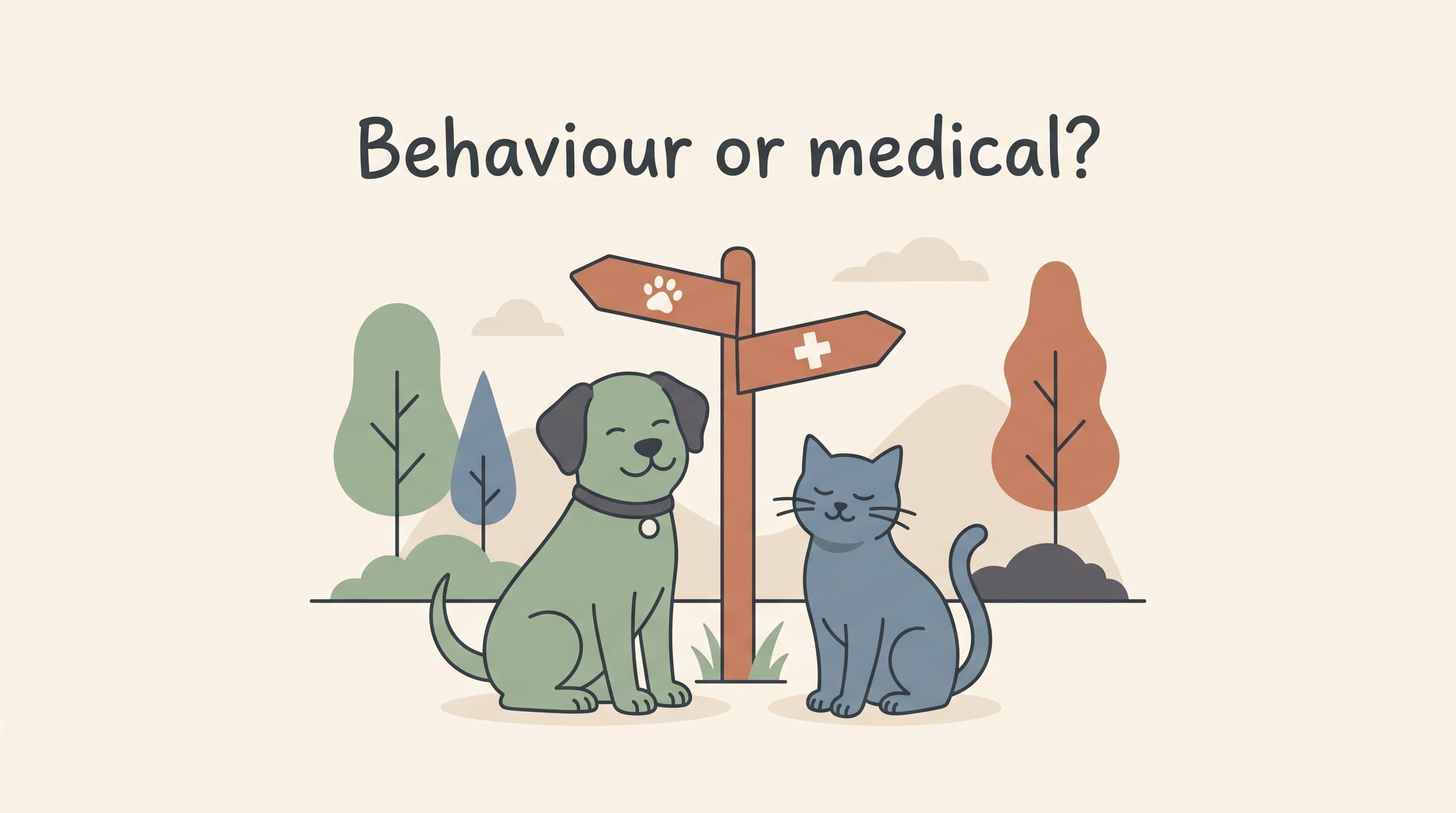
Is it behaviour or is it medical? Why the first step is a vet check
A dog starts snapping when it never used to. A house-trained cat begins weeing on the bed. The first words out of most people's mouths are some version of "what has got into him?" or "she is doing it to spite me." Those...
11 min read
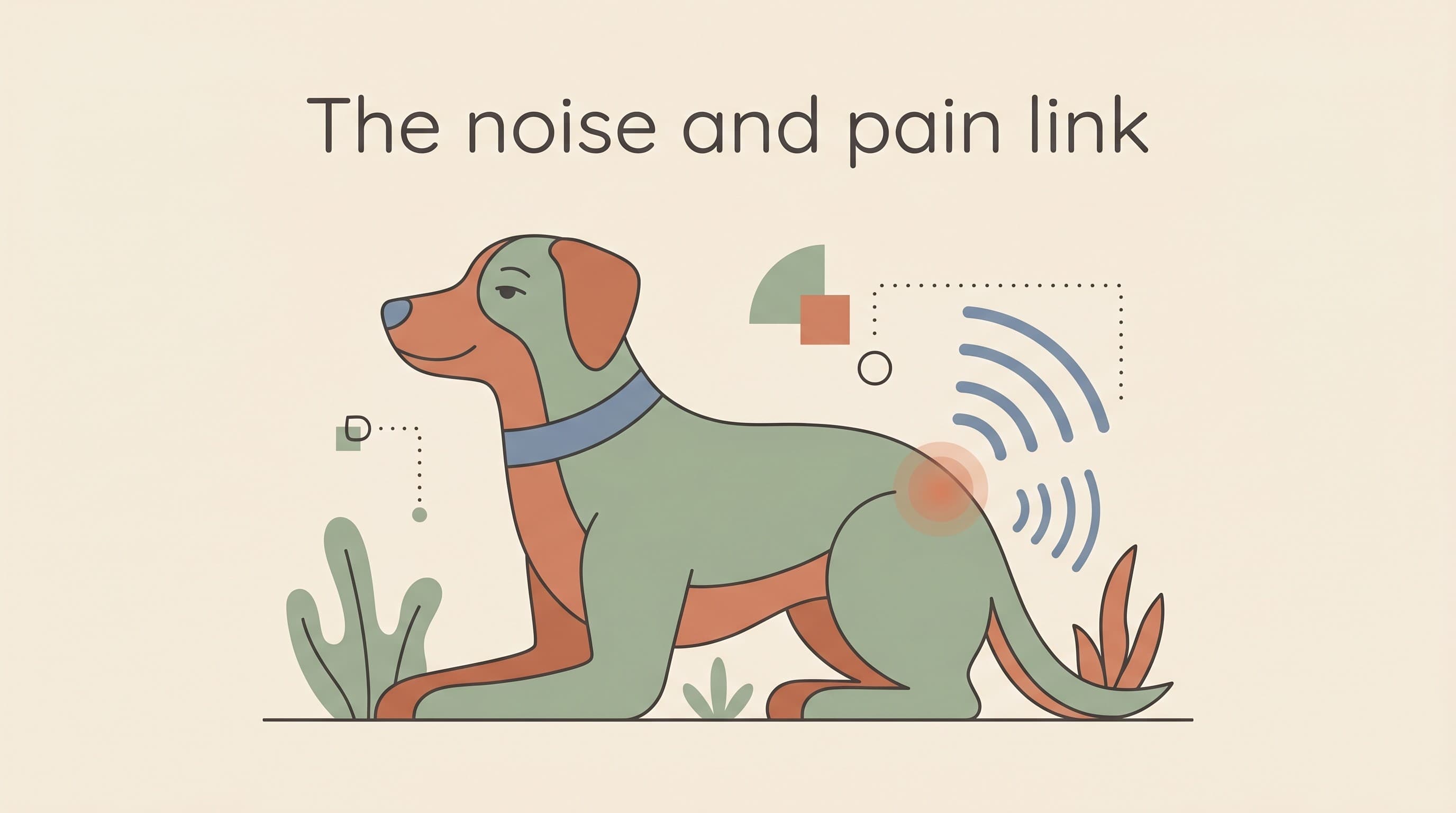
The hidden pain link: when noise fear is a sign of undiagnosed pain
Some dogs who are frightened of fireworks, thunder or sudden bangs are not "just" noise-phobic. They are in pain, and nobody has spotted it yet. It surprises almost everyone, owners and vets alike, the first time they...
12 min read

Monitoring Your Cat at Home: Tracking Pain You Can't See
For a cat with arthritis, the home is the clinic. Feline arthritis is invisible at the vet, and the X-ray rarely tells us how much it hurts, so the most valuable data in the whole condition comes from you, watching at home, over time. What follows is a simple, sustainable way to track pain you...
9 min read
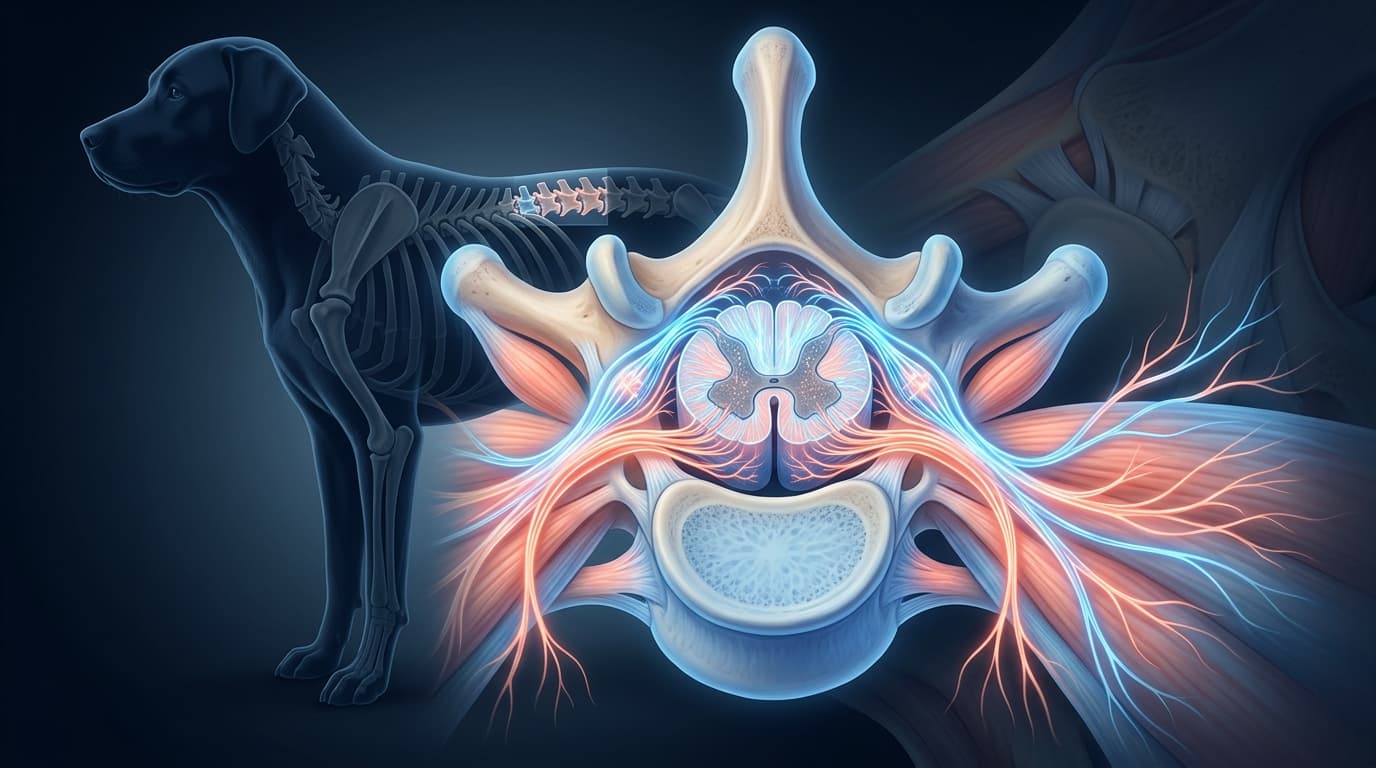
Central Sensitisation: When Pain Becomes Its Own Disease
Modern pain medicine has a concept that explains a great deal of what we see in chronic pain patients, yet owners rarely hear it named. It's called central sensitisation, and once you understand it, the way you think about your dog's arthritis shifts.
17 min read
Arthritis
Signs, diagnosis and the first weeks.
Arthritis in Dogs: Everything You Need to Know
Most owners arrive here for one of two reasons: a dog who's just been diagnosed with arthritis, or a nagging sense that something isn't quite right and a wish to work out what's going on. Either way, you've come to the right place.
13 min read
How to Spot Arthritis in Your Dog: The Signs Most Owners Miss
Ask most people what arthritis looks like in a dog and they'll describe a limping older Labrador struggling up the stairs. That picture is right, but only partly. By the time a dog is obviously limping, the disease has usually been progressing quietly for months or years. The signs you were meant to catch came...
16 min read

Arthritis in Cats: The Invisible Epidemic
There's a very good chance your cat has arthritis, particularly if they're getting on in years. And the odds are that nobody has told you.
16 min read
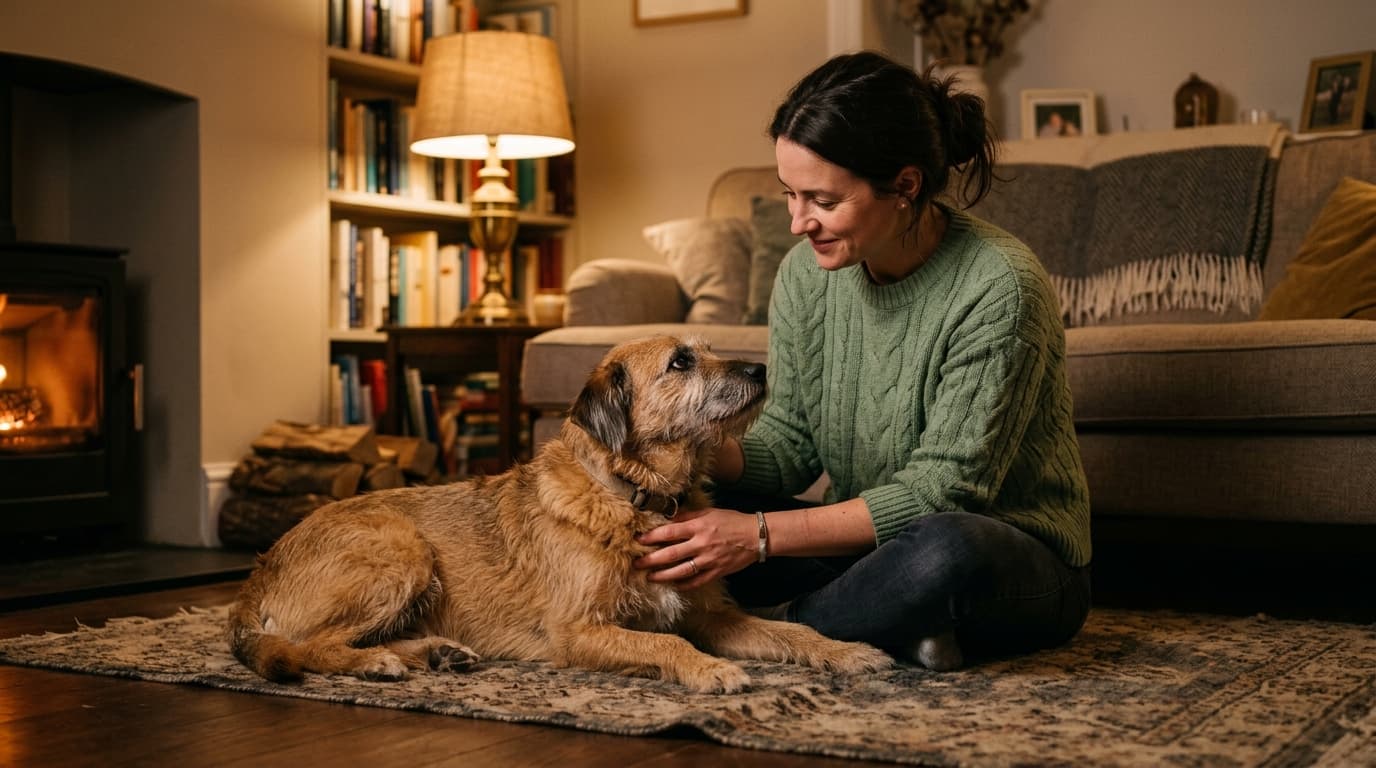
Your Dog Has Arthritis. Now What? The First 30 Days
The diagnosis is in. You've come home from the vet clinic with a prescription, a leaflet you'll probably never read again, and a head full of half-remembered advice. Now you're standing in the kitchen, looking at your dog, and you're not sure what to do first.
19 min read

Young Dogs and Arthritis: It's Not Just an Old Dog's Disease
A two-year-old dog comes in with arthritis more often than most owners would ever guess. Maybe yours is three. Maybe just over a year old. And the vet has just used a word you'd filed away for old age.
17 min read
Backs and discs
Disc disease, from the first signs to recovery.
The Early Warning Signs: Spotting a Disc Problem Before It's a Crisis
Most owners meet intervertebral disc disease as a sudden catastrophe: a dog that was fine in the morning is dragging its back legs by lunchtime. But it doesn't always arrive without warning. Quite often there's a quieter phase first, a few days of a dog being subtly "off", in pain or stiff but still walking,...
7 min read
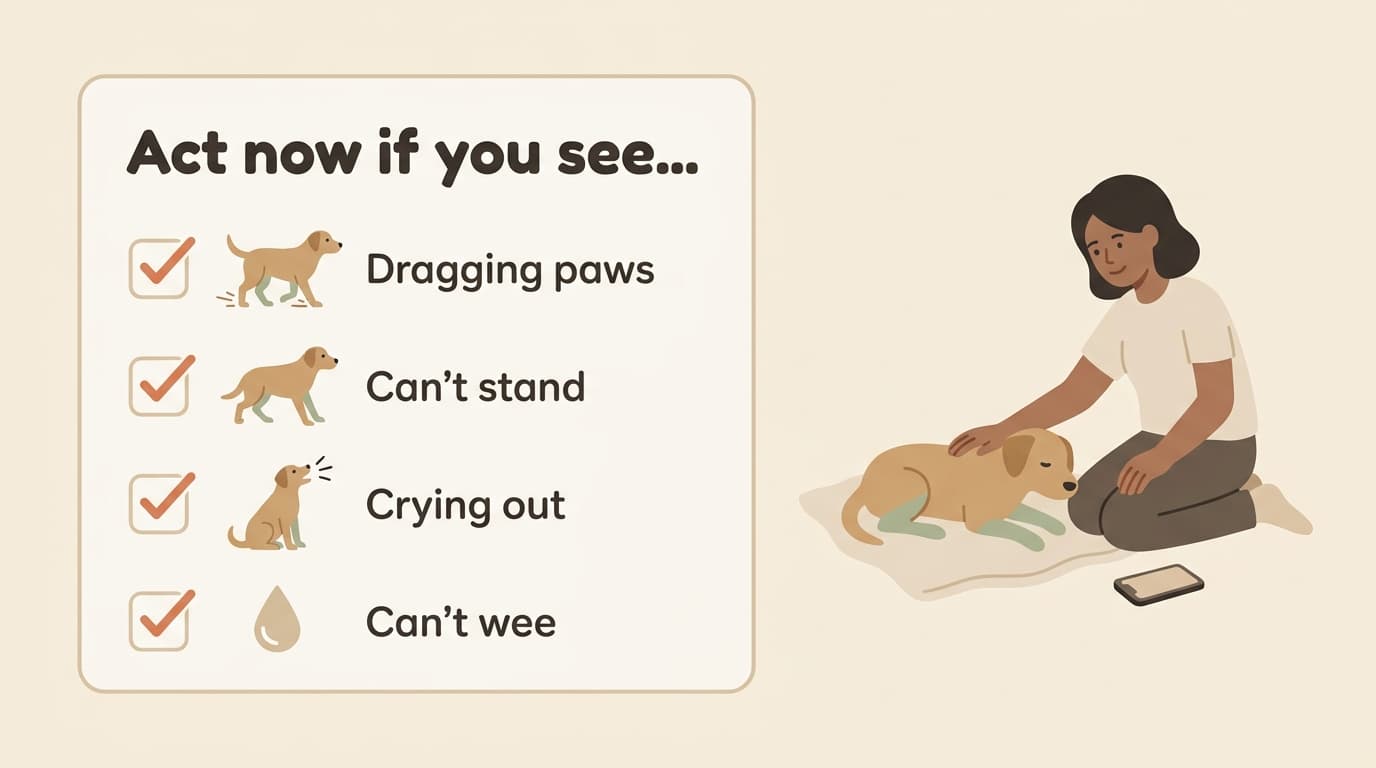
Is This an IVDD Emergency? The Red Flags That Mean Act Now
A dog that has suddenly gone wobbly, started dragging a back leg, or cried out in pain needs an answer fast, not a biology lesson. So here it is, straight away.
8 min read
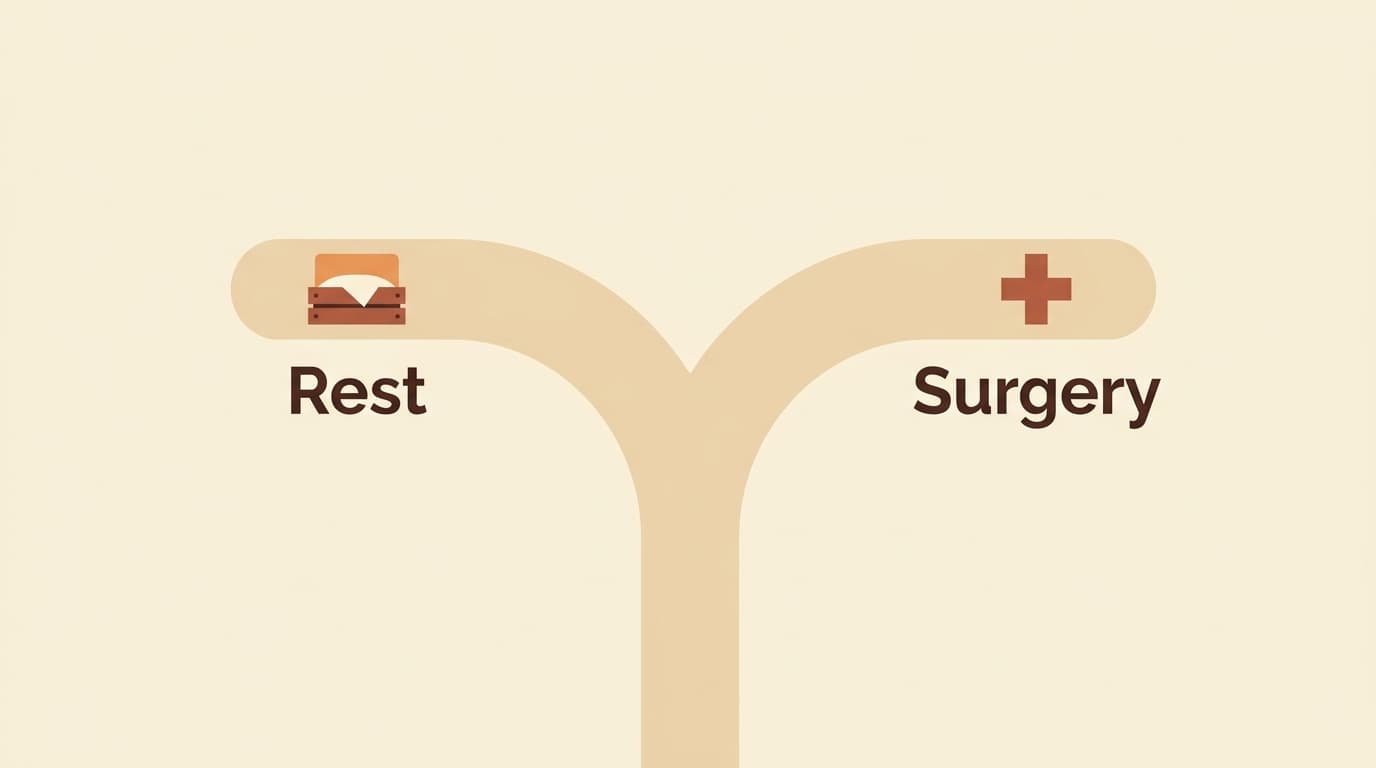
IVDD Surgery vs Conservative Treatment: How to Decide
Surgery, or strict rest? For most owners facing intervertebral disc disease, this is the hardest call they will have to make, and it usually arrives tangled up with fear, cost, and very little time to think. Let me say something reassuring at the outset, because the way this decision is often framed is unfair to...
14 min read
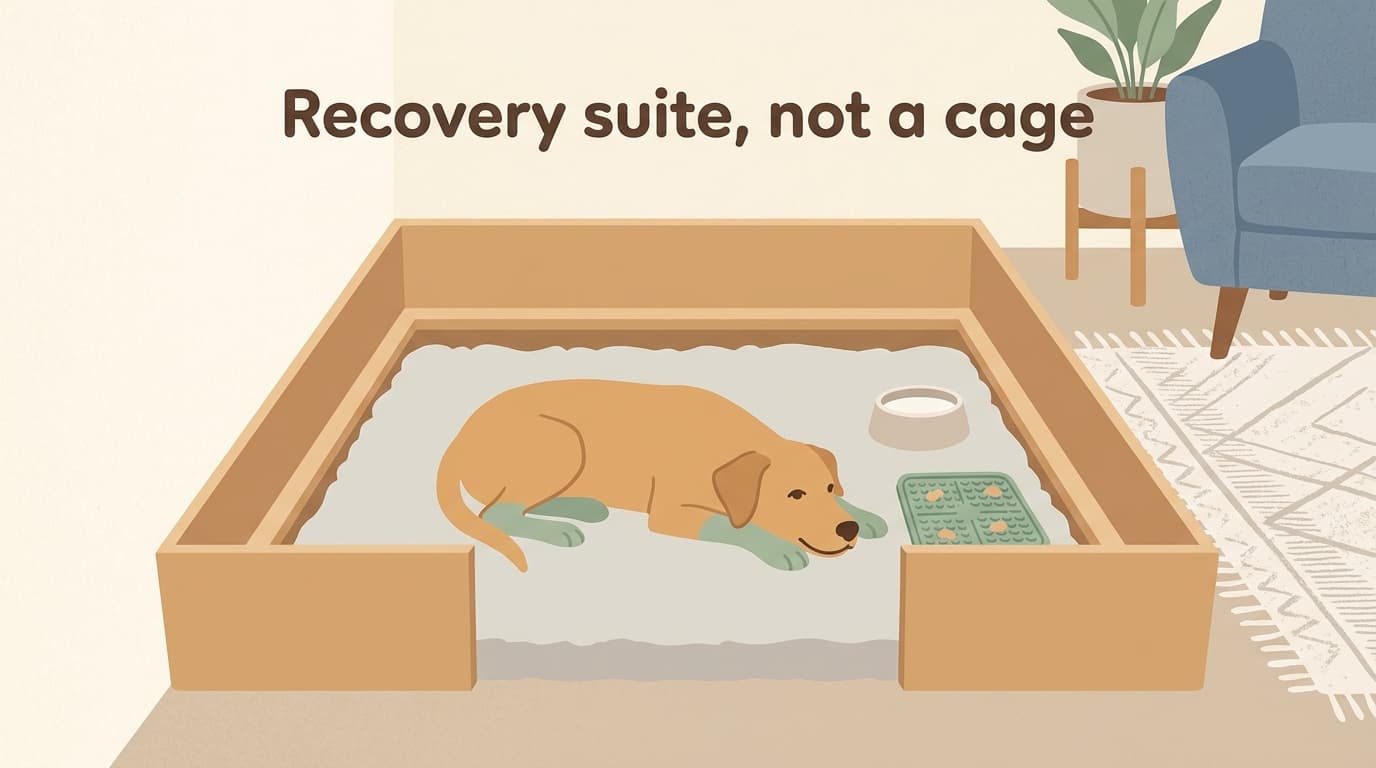
Strict Crate Rest for IVDD, Done Properly (and How to Survive It)
Weeks of strict rest is the centrepiece of conservative treatment for intervertebral disc disease, and it is quite possibly the most daunting thing your vet has ever asked of you. Keeping a dog still for weeks, when every instinct of theirs and yours rebels against it, is genuinely tough. But the encouraging truth is simple:...
13 min read

Rehabilitation After IVDD: The Roadmap
Once a dog has come through the frightening acute phase, the surgery or the first weeks of strict rest, the natural next question arrives: what now? How does a dog that cannot walk, or can barely walk, actually get back to moving? The answer is rehabilitation, and it is the part of the journey that...
7 min read
Will It Happen Again? Reducing the Risk of Recurrence
After one IVDD episode, with all the fear and effort it involved, one question tends to loom over the whole recovery: will it happen again? It is a natural worry, and you deserve a straight answer rather than false comfort. So here it is, with the real figures and, just as importantly, what genuinely lowers...
6 min read
Hips, knees and elbows
Cruciate disease, dysplasia and kneecaps.

Has My Dog Done Its Cruciate? Signs and Symptoms
A cruciate problem usually arrives one of two ways. Sometimes it's sudden: the dog jumps off the sofa or skids on the kitchen floor chasing a ball and comes up holding a back leg in the air. Sometimes there's no single moment at all, just a limp that drifts in and out for weeks, worse...
9 min read
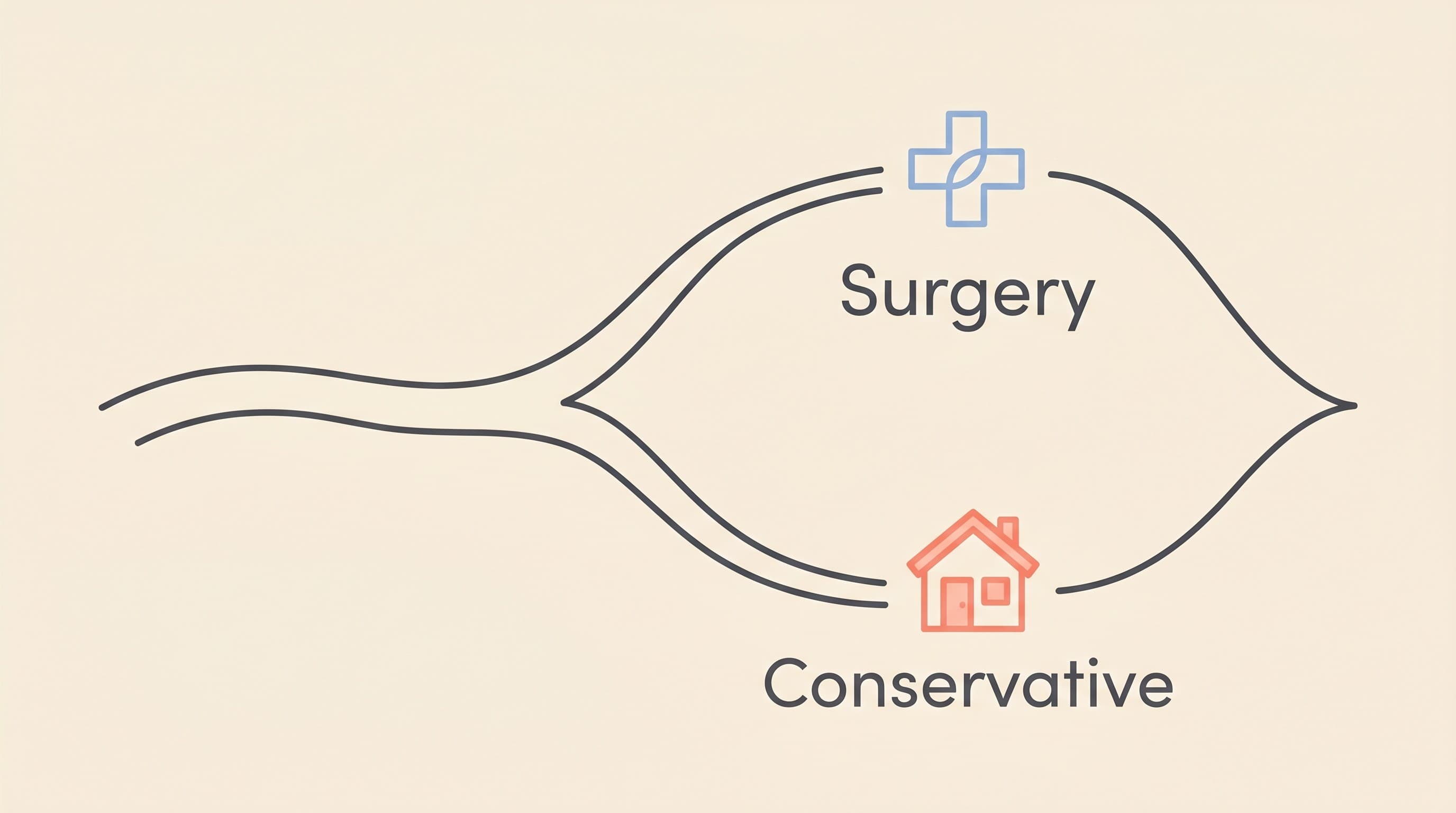
Surgery or Not? How to Think About the Cruciate Decision
Your dog has done its cruciate, someone has said the word surgery, and there's almost certainly a number attached to all of it. So the question now is whether you're about to do the right thing or the wrong thing by them, and it's a heavy one to be sitting with, often a day or...
10 min read
Cruciate Disease and Arthritis: The Lifelong Picture
There's a question that almost never gets asked in the consult room, because by the time the leg is working again the appointment is over and everyone's relieved. The diagnosis landed, you made a decision about surgery or conservative care, you got through the recovery or the long slow build of it, and your dog...
10 min read

Hip Dysplasia: Understanding the Condition and Its Surgical Options
Hip dysplasia is one of the conditions owners most fear hearing about. Part of that is the name, which is familiar and carries a weight of dread, and part of it is how strongly the condition is tied to large breeds, so that many owners of big dogs worry about it from puppyhood onward. It's...
10 min read
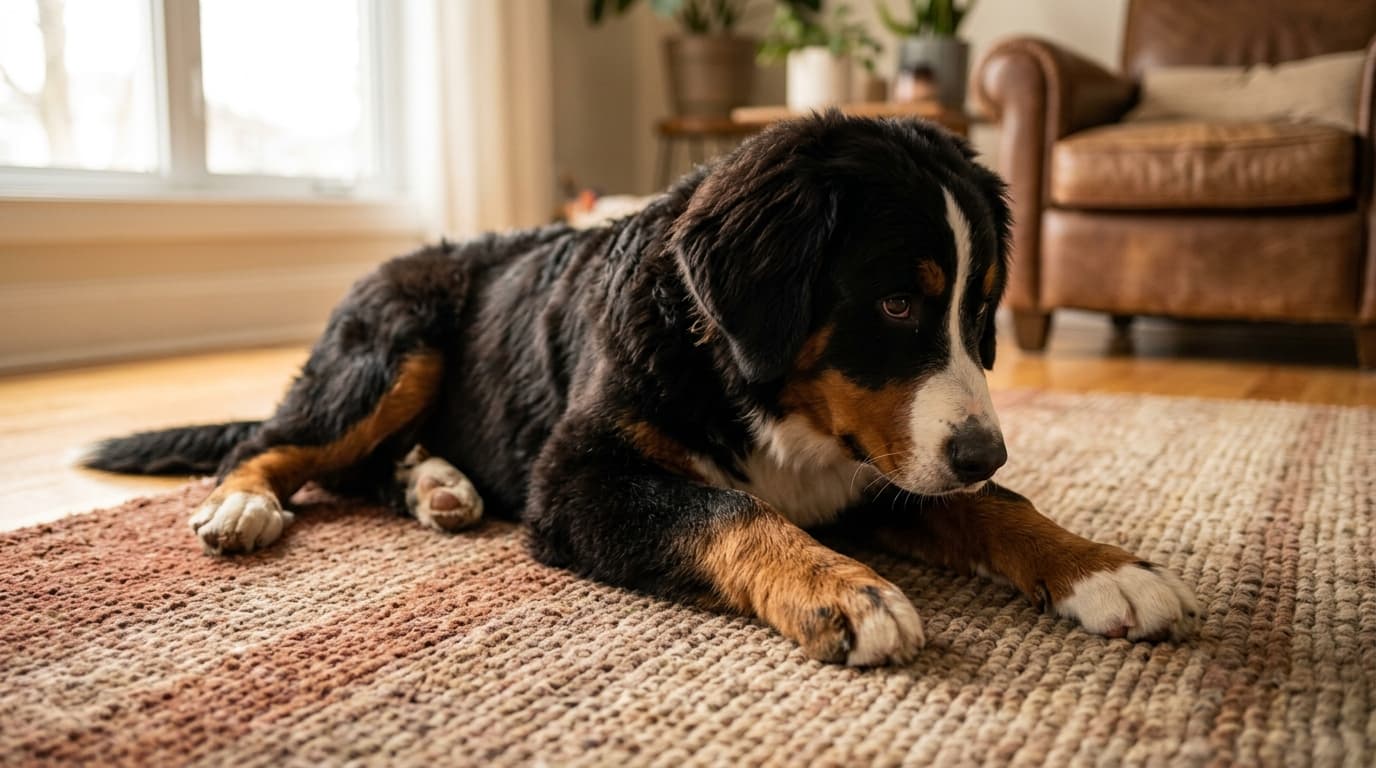
Elbow Dysplasia: Understanding the Condition and Its Surgical Options
Elbow dysplasia is the most common cause of front-leg lameness in young large-breed dogs, and one of the leading developmental causes of elbow arthritis. If your dog has been diagnosed with it, you may already have run into something that confuses many owners: elbow dysplasia isn't one single thing. It's an umbrella term covering several...
10 min read

Patellar Luxation: Understanding the Condition and Its Surgical Options
A small-breed dog who occasionally skips or hops for a step or two and then carries on as if nothing happened is showing you patellar luxation in action. It's one of the most common orthopaedic conditions in dogs, especially small breeds, and while it's often mild, it can also be a significant cause of knee...
10 min read
Treatments and therapies
Medicines, supplements and hands-on therapies.
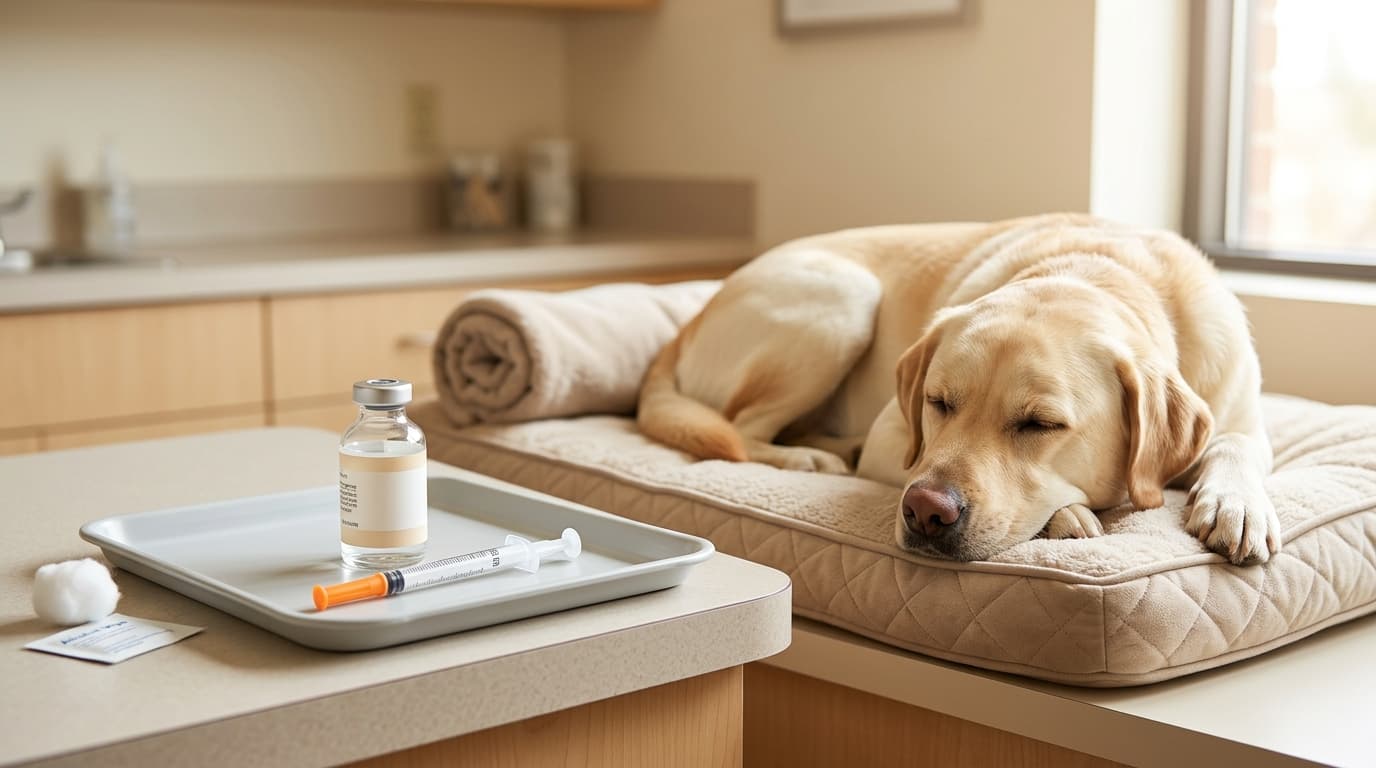
Librela: What You Need to Know
Librela is one of the most discussed veterinary medications of the past few years, and for good reason. When it launched, it represented a genuine breakthrough in canine arthritis pain management, offering a completely new mechanism of action and a different side effect profile from traditional NSAIDs. For many dogs, it has been transformative. For...
17 min read

Solensia: The Game-Changer for Feline Arthritis
Solensia is the most important development in feline arthritis management in the past two decades. That's a strong statement, and I stand by it. Arthritis affects nine in ten cats over the age of 12, and until recently the options were thin: NSAIDs that came with kidney worries, or, for a lot of patients, nothing...
20 min read

Supplements for Arthritis: What the Evidence Actually Says
Walk into any pet shop in the UK and you'll find a wall of joint supplements. Glucosamine. Chondroitin. MSM. Green-lipped mussel. Turmeric. Collagen. CBD. Every one carries a confident label suggesting it will transform your arthritic dog's life. The marketing is sophisticated, the packaging is reassuring, and the prices run from modest to eye-watering.
21 min read

Complementary Therapies: An Evidence-Based Overview
Walk into any arthritis discussion online and you'll find people enthusiastically recommending acupuncture, laser therapy, massage, chiropractic, magnets, ultrasound, and a dozen other complementary approaches. Some of these are recommended by qualified veterinary professionals. Some are recommended by people with no specific training. The evidence behind each modality varies enormously, from genuinely impressive to essentially...
29 min read
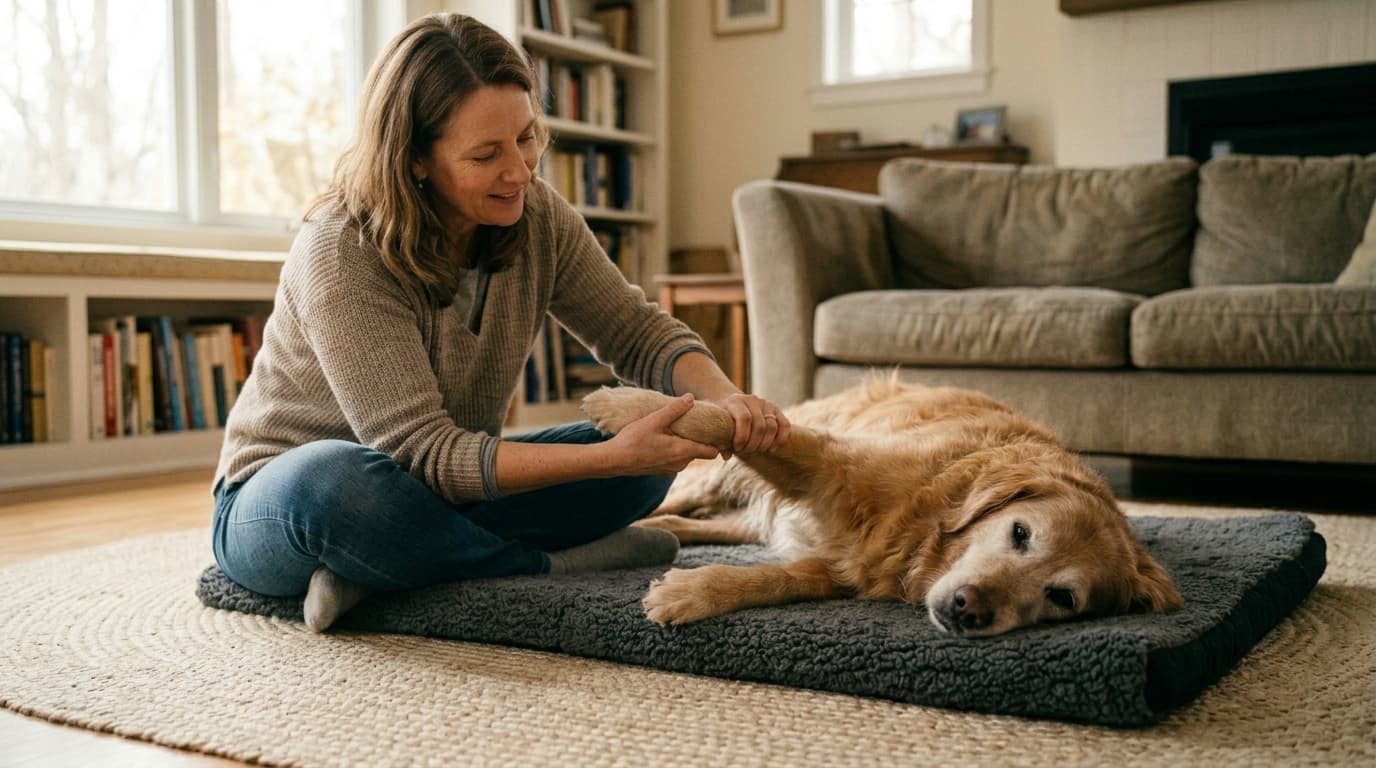
Home Physiotherapy: Exercises You Can Do Together
Most articles on home physiotherapy for arthritic dogs end up either too vague to be useful or too technical to be safe. They tell you to "do some gentle stretches" without explaining how, or they describe complex protocols that need professional supervision to perform safely.
21 min read
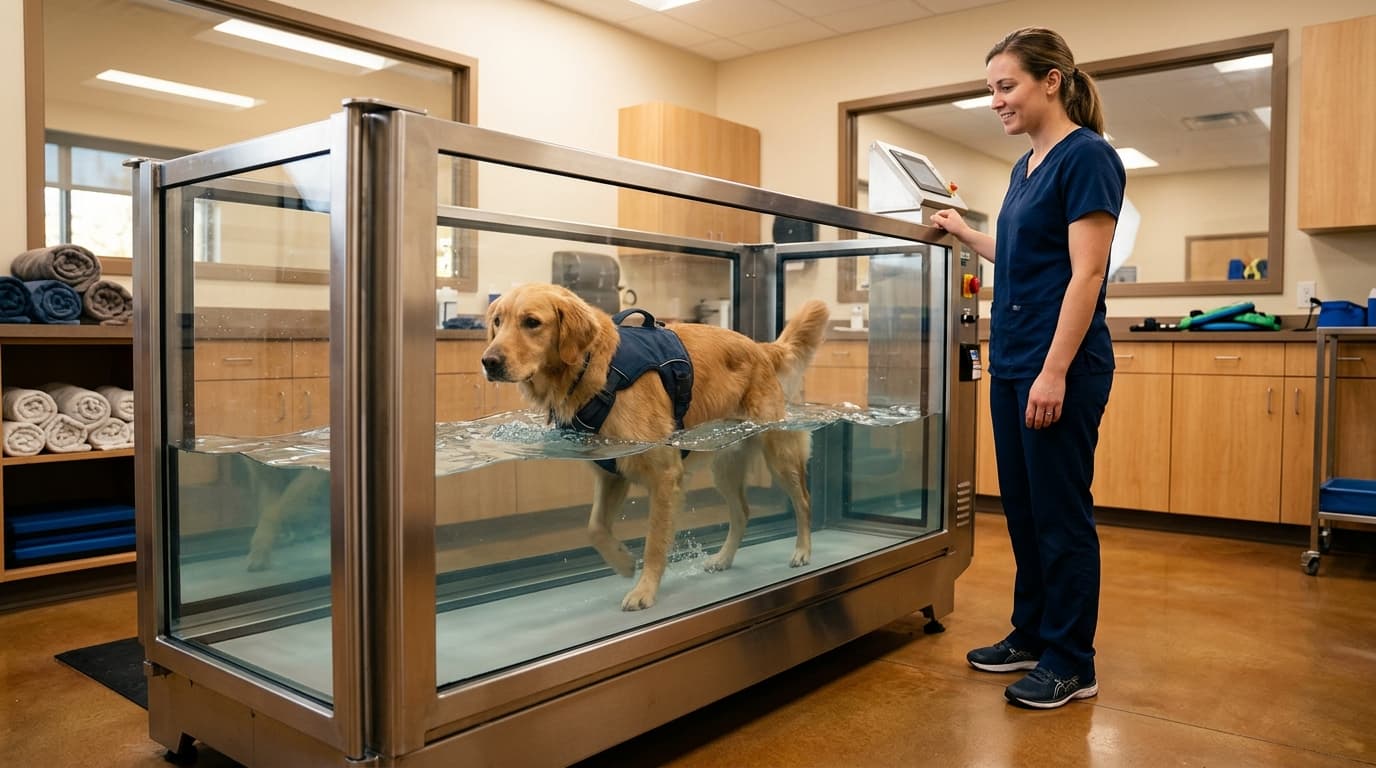
Hydrotherapy: The Complete Guide
Hydrotherapy is one of those interventions that genuinely changes outcomes for arthritic dogs. The evidence is good, the mechanism makes sense, and in many dogs the response is dramatic and visible. In the UK it's widely available too, with hundreds of qualified centres operating across the country.
23 min read

Beyond Medication: Physiotherapy, Laser and Acupuncture for Cats
Medication is the backbone of feline arthritis care, but it is not the whole story. Physiotherapy, laser, acupuncture and gentle home movement all get asked about. Here is a clear, evidence-weighted look at what actually helps a cat, what the dog playbook gets wrong for cats, and why surgery is rarely the answer.
8 min read
Getting older
Keeping an older pet moving and comfortable.
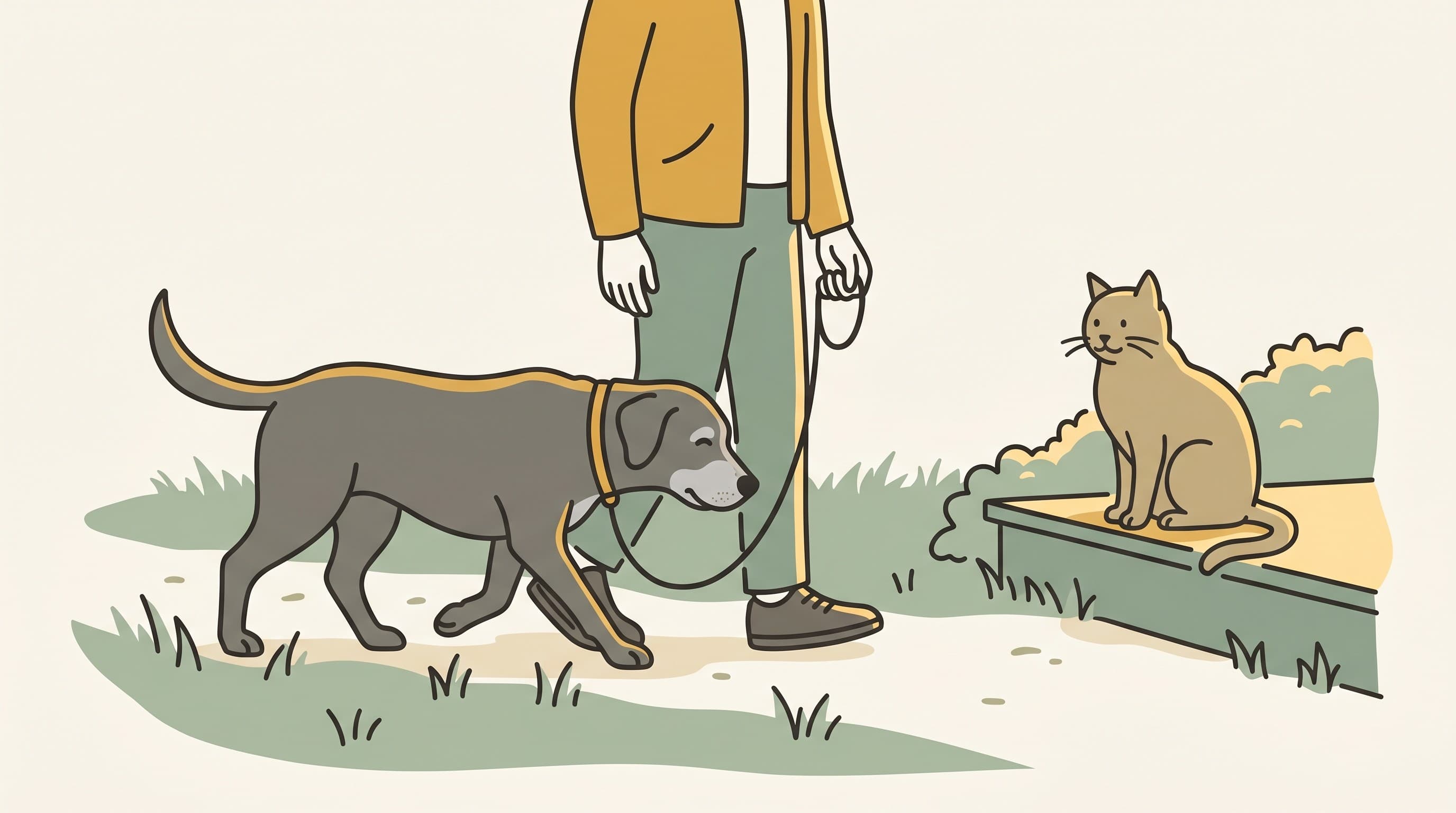
Keeping an older pet moving: exercise, joints and staying strong
Somewhere in the middle of a pet's life, a kind instinct quietly takes over. The walks get a little shorter, the jumps a little more careful, and without quite deciding to, you begin to wrap them in cotton wool. Fewer stairs. A gentler game. Best not tire her out. It comes from love, and from...
14 min read
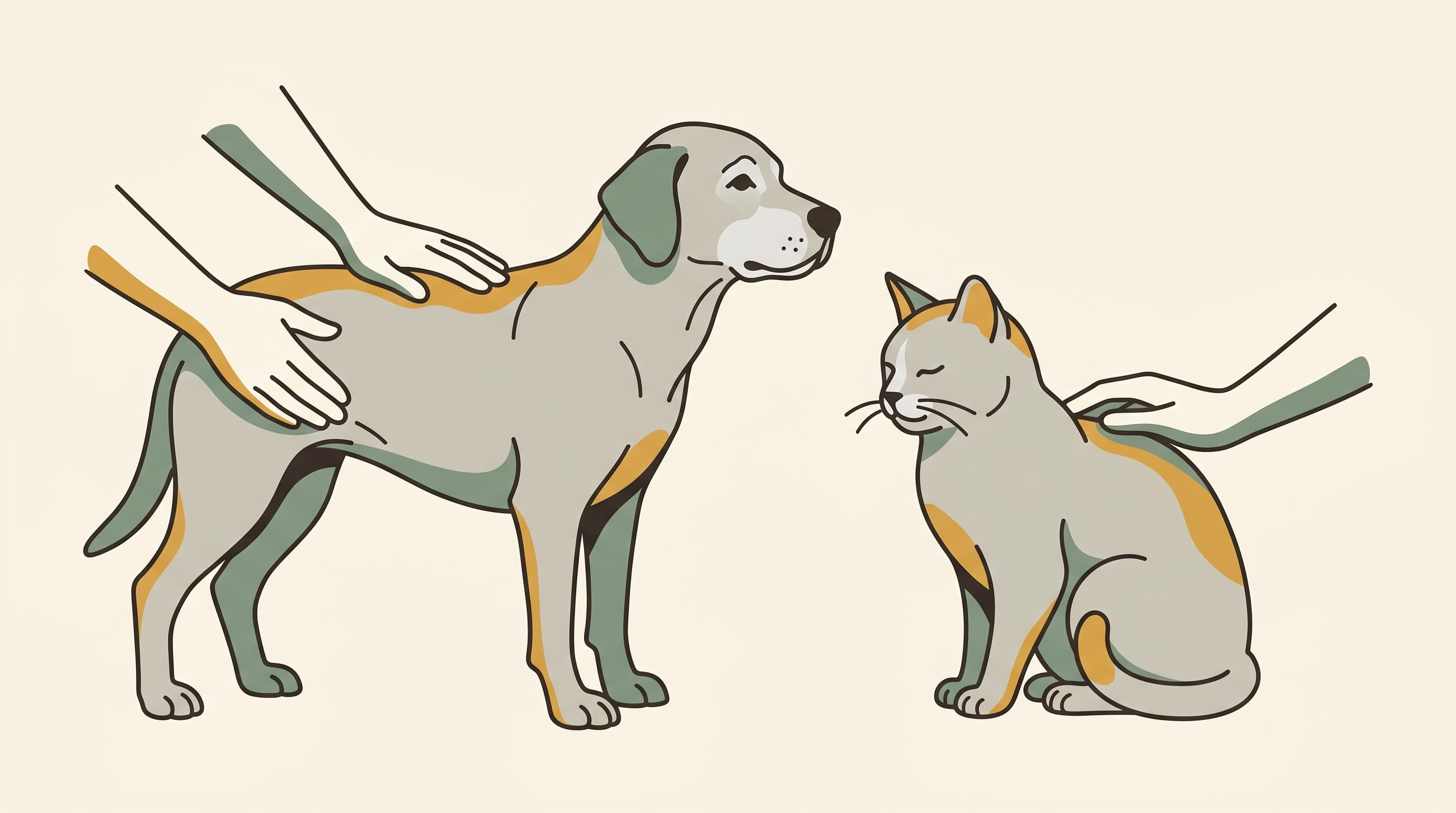
Muscle loss in older pets (sarcopenia): spotting it and slowing it
Most owners feel it before they ever see it. You lift your old cat and she seems to have hollowed out under the fur, lighter than her cuddly outline suggests. Or you run a hand down your dog's back and the muscle over his hips, the solid haunch that used to power him up the...
14 min read
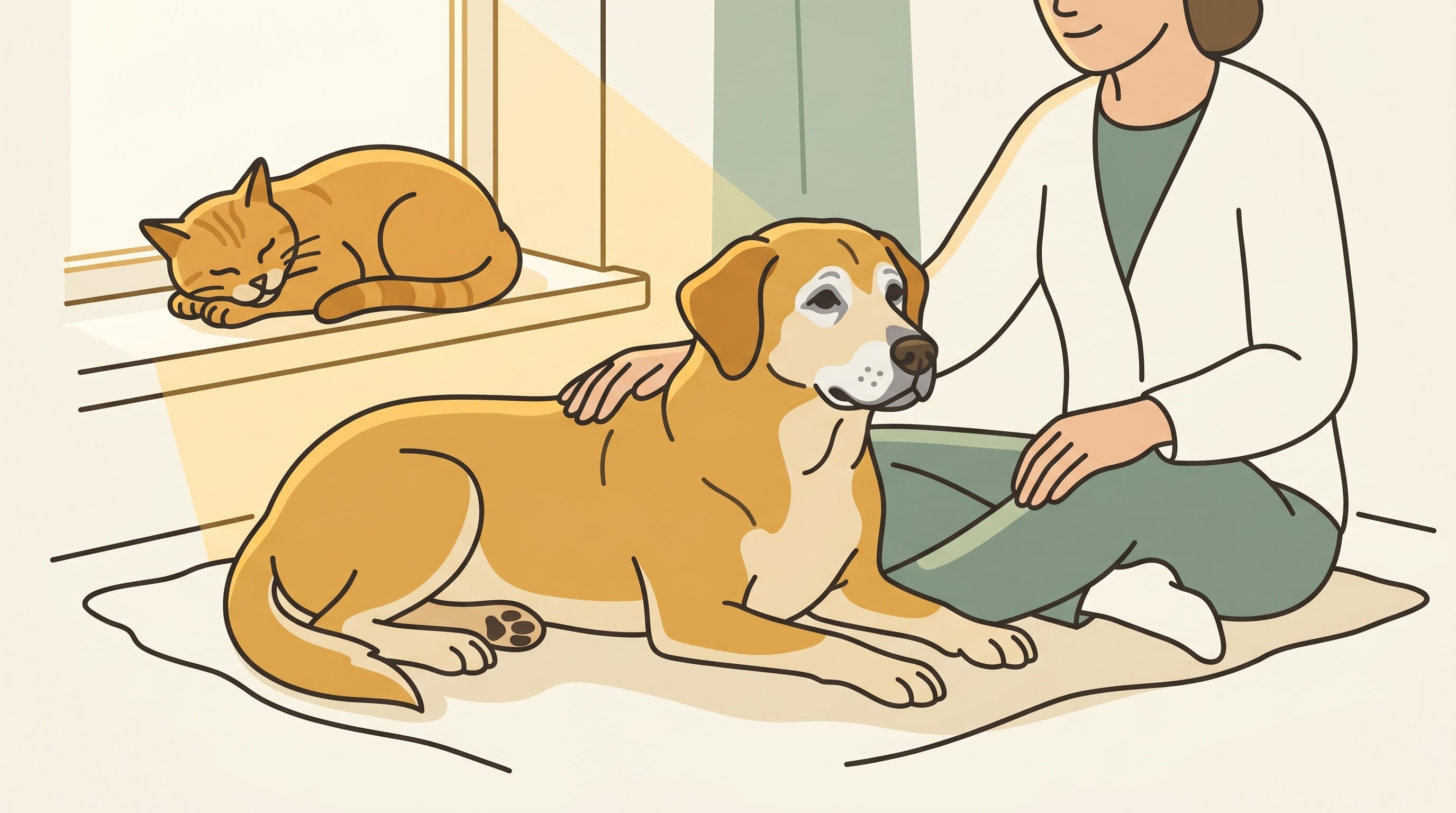
The first signs your pet is getting older (normal vs not)
A few grey hairs around the muzzle that you are fairly sure were not there last year. A slower greeting at the door. A cat who used to pour herself onto the top of the wardrobe and now takes it in two careful stages, or skips it altogether. Notice enough of these and you reach...
15 min read
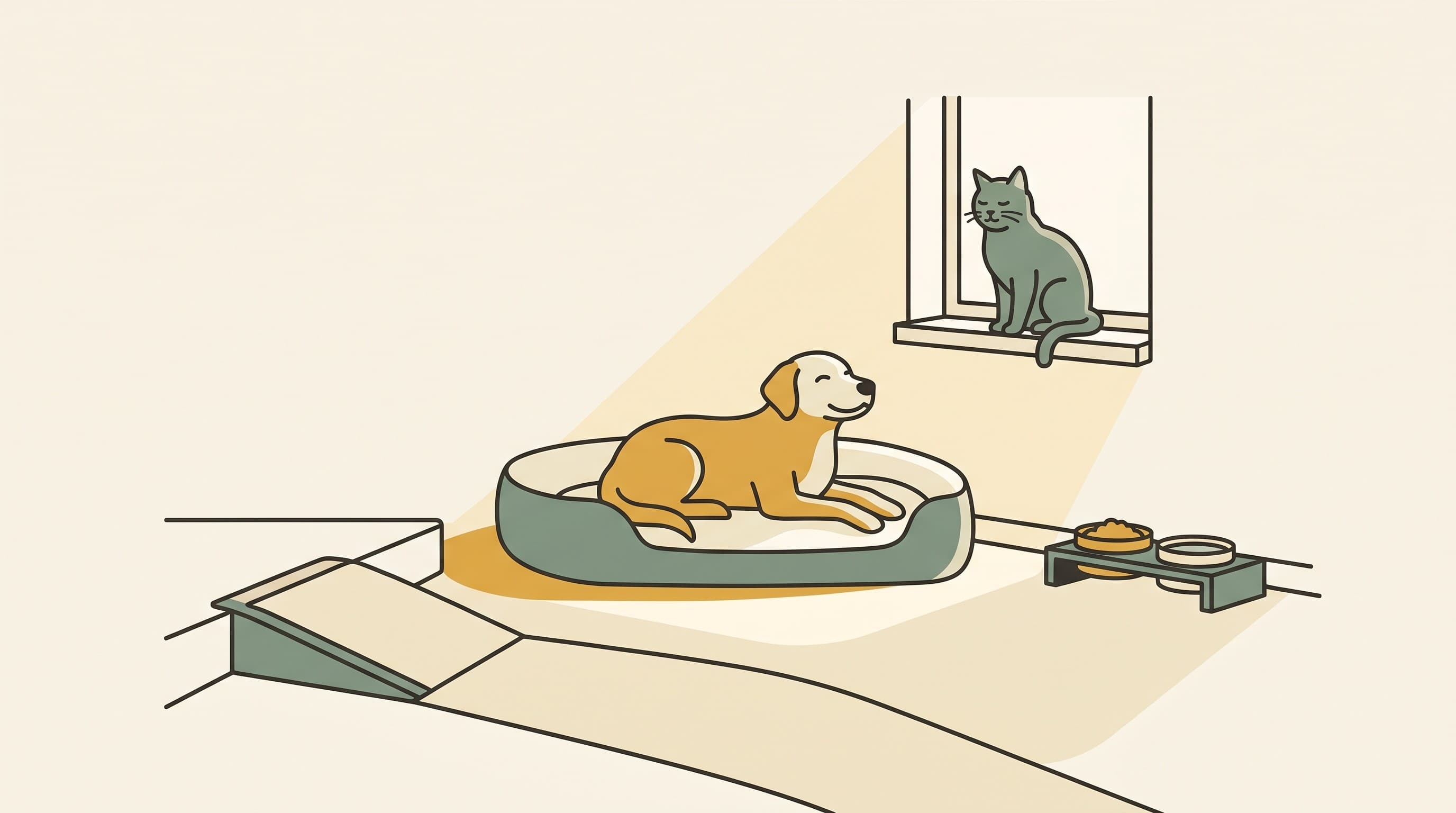
Making your home work for an older pet: ramps, grip, warmth, access
The home your pet has lived in for years was, without anyone deciding it, built for a young animal. The leap onto the sofa, the dash down the stairs, the high-sided litter tray in the corner of the bathroom, the kitchen floor polished to a shine: all of it was easy once, and you stopped...
14 min read

Living Well and Ageing With an Arthritic Cat: The Long View
An arthritis diagnosis in an older cat is not the beginning of the end. It is the start of a long, manageable chapter that can run for years of good, comfortable life. This article takes the long view for cats: ageing well, keeping life rich as the years pass, and recognising gently and clearly when...
9 min read
Printable sheets
Day to day
Exercise, weight, the home and the bad days.
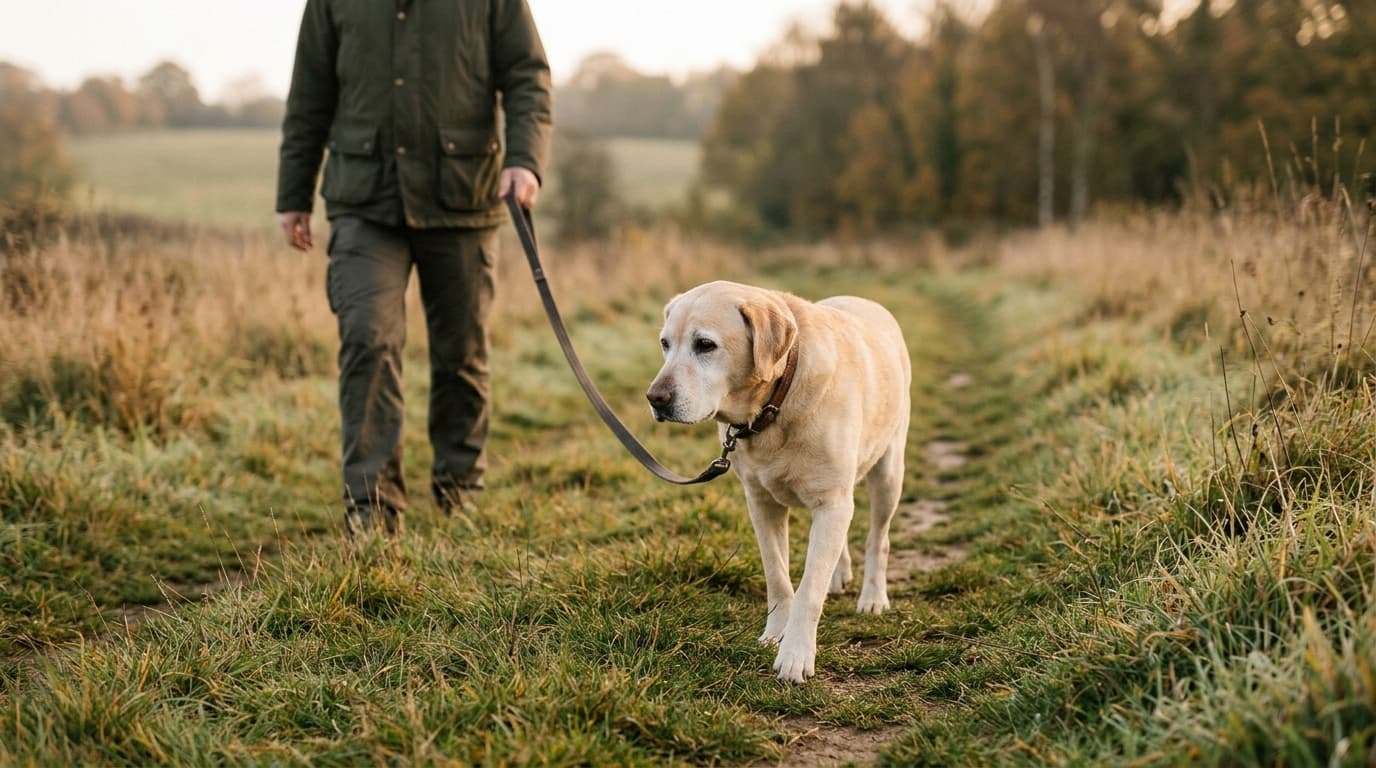
Exercise and Arthritis: The Complete Guide
Exercise is one of the most powerful things you can do for your arthritic dog. It's also one of the easiest things to get wrong.
23 min read
Weight and Arthritis: The Single Best Thing You Can Do
A dog who's slowing down, struggling on the stairs or cutting their walk short usually gets the same explanation: it's "just their age" or "just the arthritis". Both might be true. But there's one thing you can do that helps more than any supplement, any joint chew, and very nearly anything else in your control....
8 min read

Home Modifications: Room by Room
Your arthritic dog spends most of their life inside your home, not out on walks. They're moving around the kitchen, the hallway, the living room, the garden. They're getting up from beds, climbing on and off furniture, navigating thresholds, crossing the floor to a water bowl. Every one of those movements either helps them or...
23 min read
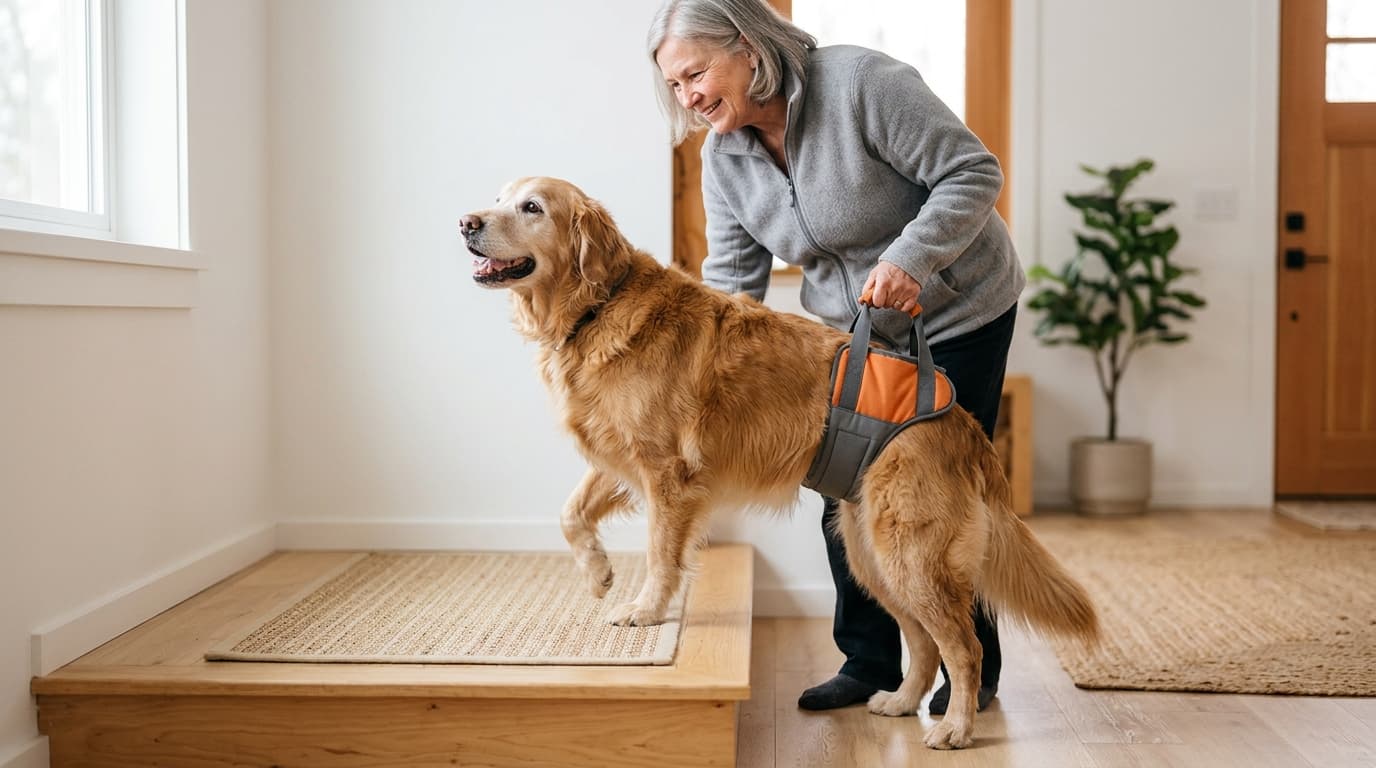
Mobility Aids and Equipment: Harnesses, Slings, Ramps, Grips and Carts
The right piece of kit can transform an arthritic pet's day. A sling gets a stiff dog up the stairs, grips stop the skating on a slippery floor, a good bed actually supports sore joints. This is a practical guide to the mobility aids and equipment worth having, how to choose and fit them, and...
8 min read
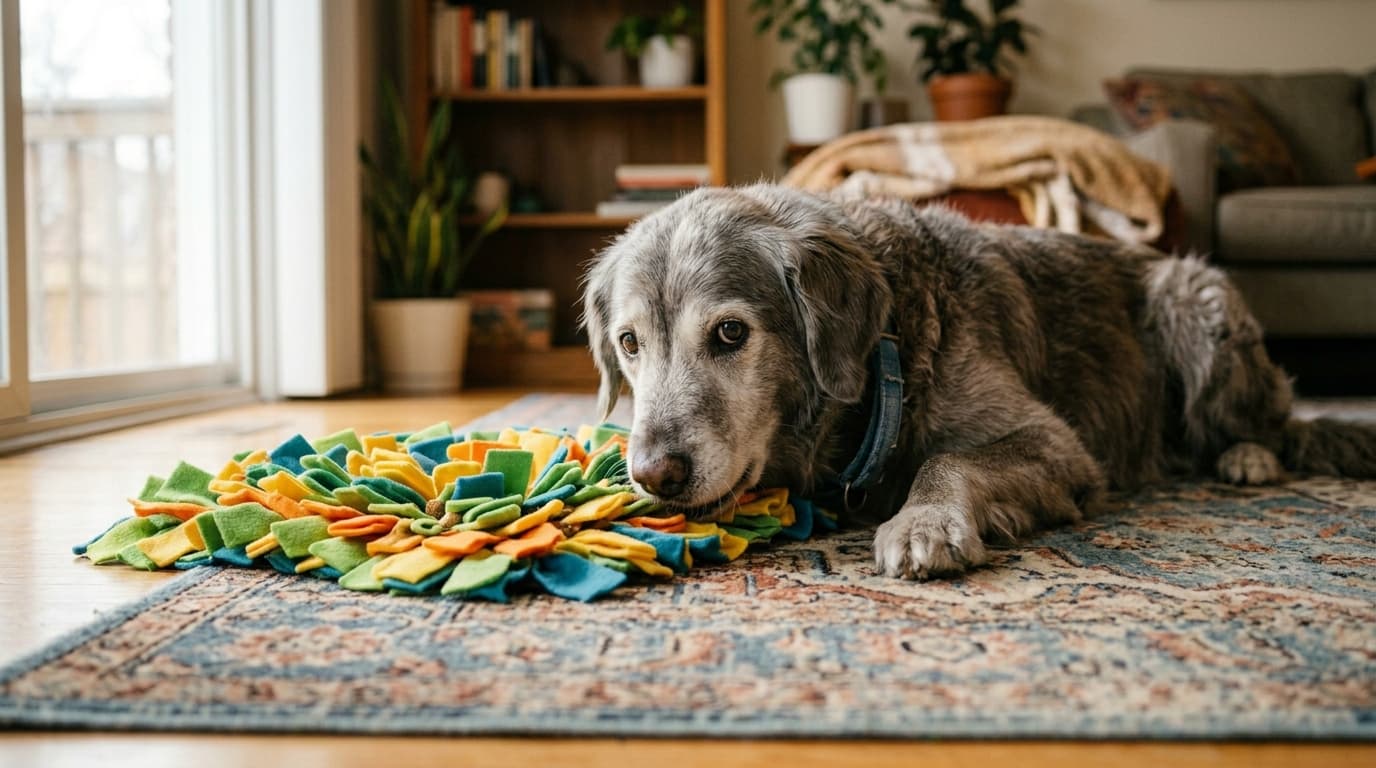
Keeping Them Happy: Enrichment When Walks Aren't Enough
When a dog's walks get shorter, or a cat stops doing its acrobatic laps of the house, owners naturally worry about the physical side. Are they getting enough exercise? Are the muscles wasting? Is the weight creeping on? Those are good questions, and the rest of this guide answers them.
8 min read

Monitoring and Knowing When Things Change
The single most useful skill you can develop as the owner of an arthritic dog or cat is the ability to monitor them well at home. It does more than any single medication, it's more reliable than any specialist appointment, and it matters more than any therapy you might consider.
25 min read
Working with your vet
Appointments, costs and further help.

Getting the Most From Your Vet Appointments
A useful vet appointment and a frustrating one usually don't differ on which vet you see. Twenty-five years in the consulting room have taught me they differ on how well prepared the owner is, and how clearly they can describe what they've actually seen at home.
23 min read
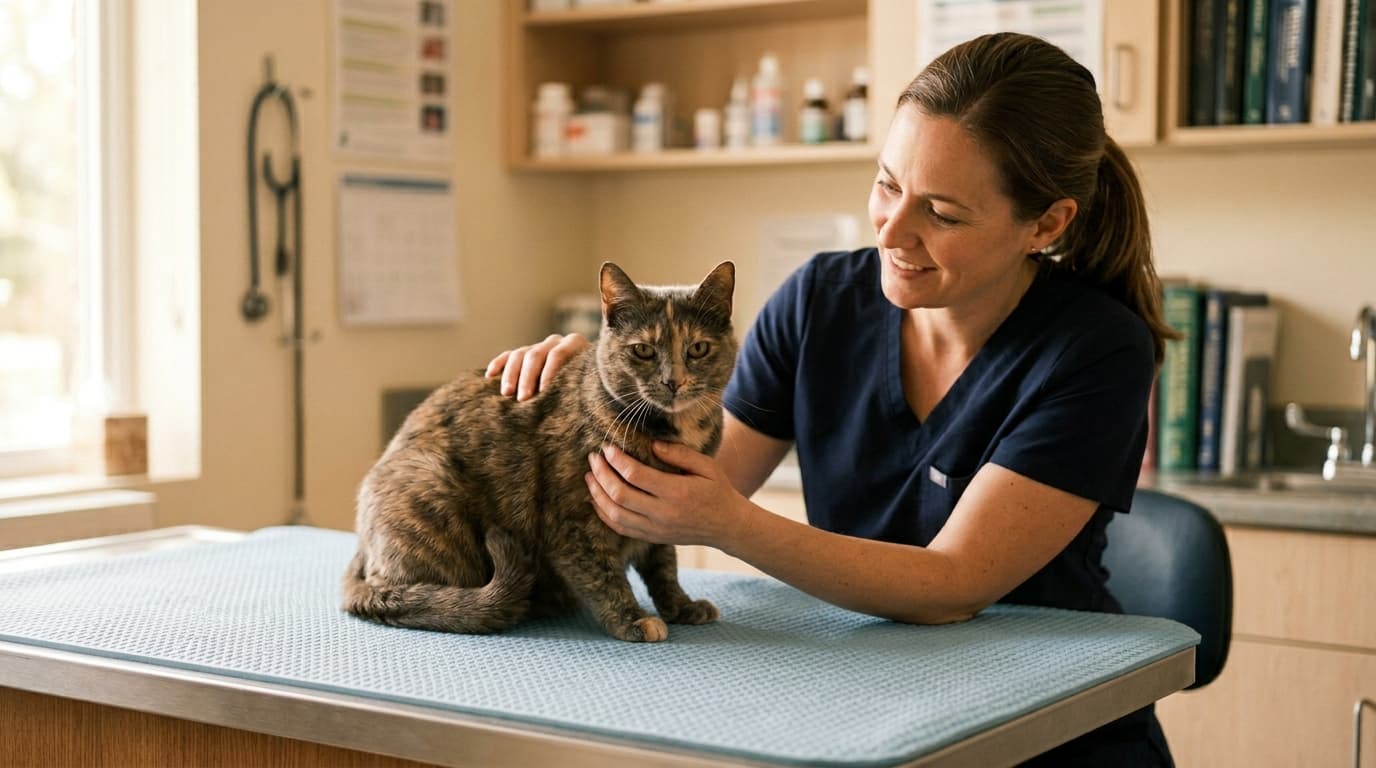
The Cat-Friendly Vet Visit: Getting a Real Picture of a Stoic Patient
A frightened cat on a cold steel table will not limp, will not play, and will not show you the stiffness you see every day at home. The vet examines the cat in front of them, and that cat is not your cat. So this article is about getting a visit that produces a real...
9 min read

Building Your Dog's Care Team
Ask most owners who looks after their pet's health and the answer is one word: "the vet." That model works fine for routine care, vaccinations and the occasional bout of illness. For a chronic condition like arthritis, though, it's too narrow. Managing arthritis well across the years of your dog's life takes a team of...
23 min read
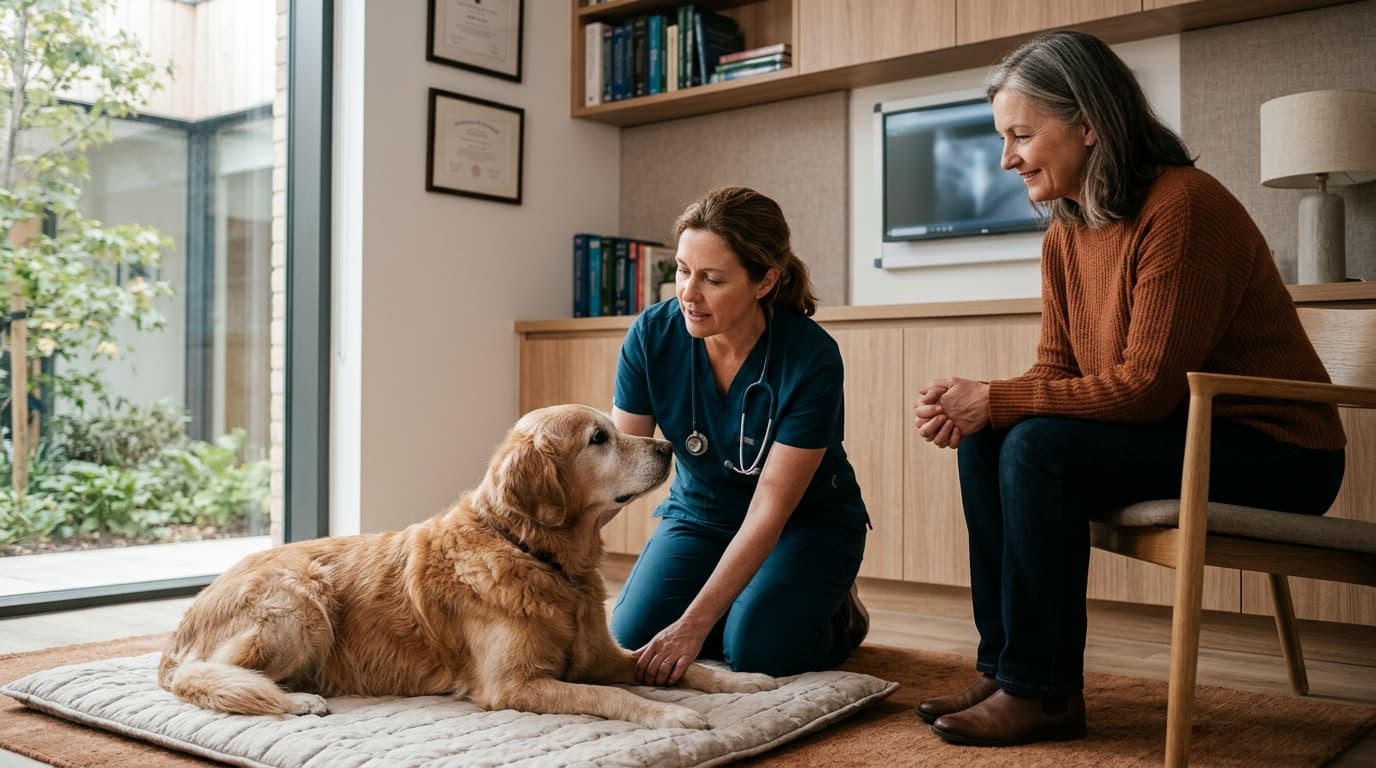
When Pain Needs a Specialist: The Veterinary Pain Clinic
Some owners managing a pet with arthritis reach a particular crossroads. The medication that worked beautifully for a year isn't quite holding any more. The dose has been increased, a second drug added, and still there are bad days that don't make sense. And then the vet says something that lands with a small jolt:...
14 min read
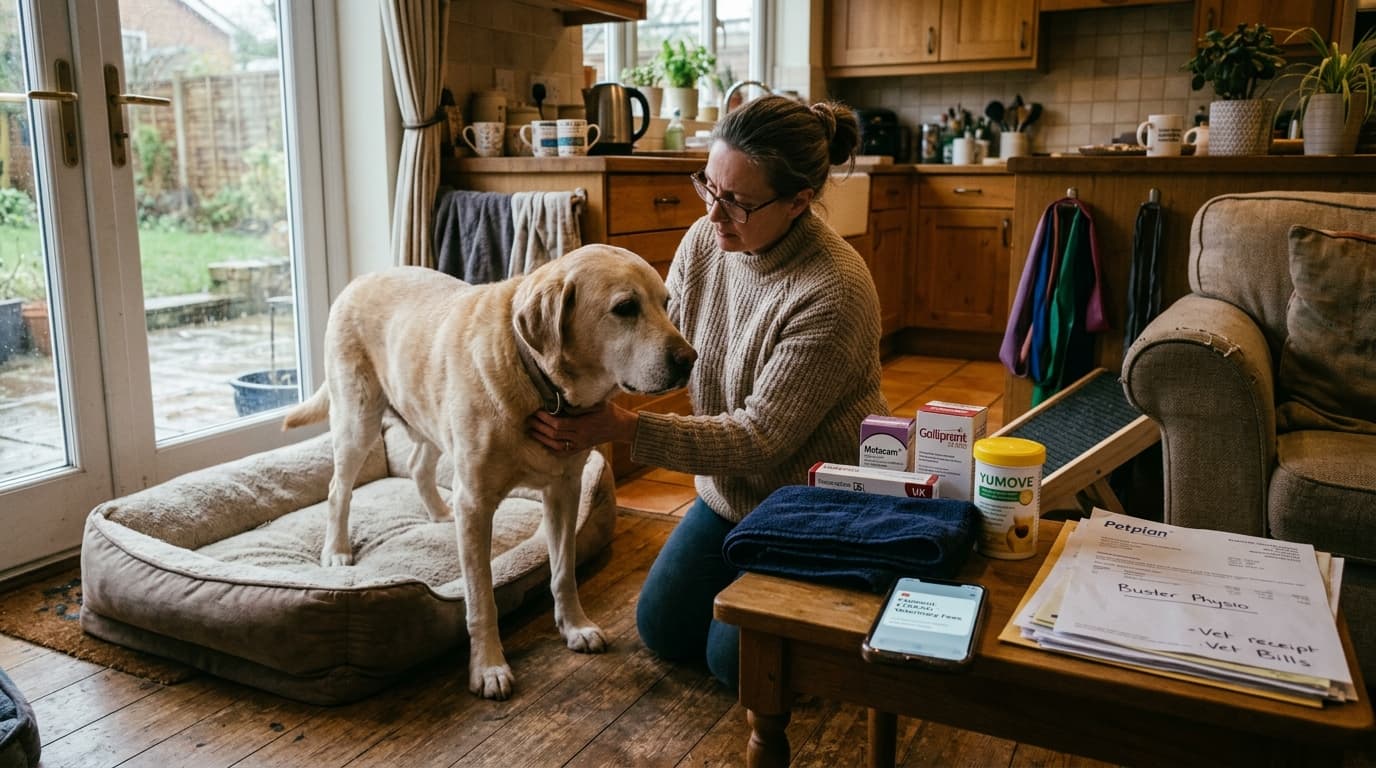
What Arthritis Treatment Actually Costs in the UK
Nobody at the surgery enjoys talking about money, and I think that silence does real harm. Owners make decisions about their pet's care in a fog, afraid to ask what things cost and ashamed when the answer is more than they can manage. So this article does the thing most veterinary websites avoid. It puts...
8 min read

Funding Long-Term Arthritis Care: Insurance and Beyond
Most owners put off reading anything about money until a bill forces the issue. I understand why. Money conversations are uncomfortable, the UK pet care funding landscape is genuinely complex, and the decisions you make about funding your dog or cat's chronic disease care will shape what's possible for them across the years ahead.
27 min read
All free tools
- Tracker
The 2-Minute Mobility Check
A short check of how arthritis is affecting your pet right now, with their management stage.
Open tool - Red-flag check
Behaviour & "Is This Medical?" Check
Screen a worrying behaviour change for a medical cause and for safety, then find the next step.
Open tool - Tracker
Healthy Weight Tracker
Score body condition on the 9-point scale and track the trend toward a healthy target.
Open tool - Check
IVDD Red-Flag & Grade Check
Dogs only
The red-flag signs of a disc emergency, the likely grade, and what to do next.
Open tool - Tracker
IVDD Crate-Rest Recovery Tracker
Dogs only
Track the neuro grade and recovery phase through crate rest, and the signs to call your vet.
Open tool - Tracker
Cruciate Recovery Tracker
Dogs only
Track how the operated leg is used week by week, and the signs that mean call your vet.
Open tool - Explainer
Understand Your Dog's Pain Relief
Dogs only
Build your dog’s regime and see how each medicine acts along the pain pathway.
Open tool - Explainer
Understand Your Cat's Pain Relief
Cats only
See where each of your cat’s pain medicines acts, and why the options differ.
Open tool - Tracker
The Senior Wellness Check
Two simple scores for an ageing pet: Vitality, and Mind and sharpness, tracked over time.
Open tool - Check
The Quality-of-Life Check
A gentle HHHHHMM check for the hardest questions. Decision support, never a verdict.
Open tool
Printable sheets
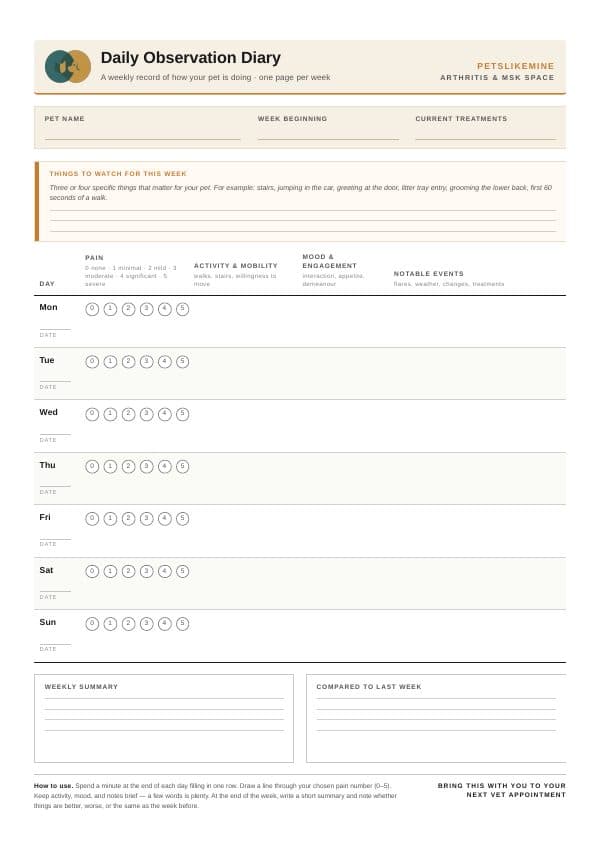
Daily Observation Diary
PDFA weekly record of how your pet is doing, one page per week. The small details that compound across months: stiffness on rising, willingness on walks, mood, appetite, and the moments your gut says something's shifted.
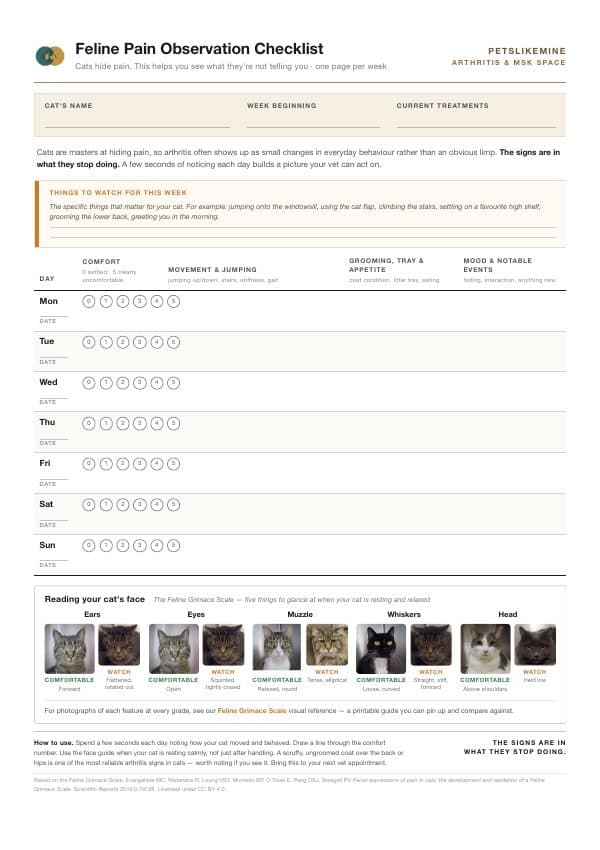
Feline Pain Observation Checklist
PDFA week-by-week record built around how cats really show pain. Not an obvious limp, but the things they quietly stop doing: jumping onto the windowsill, using the cat flap, grooming, settling on a favourite high shelf. A few seconds of noticing each day builds a picture your vet can act on.
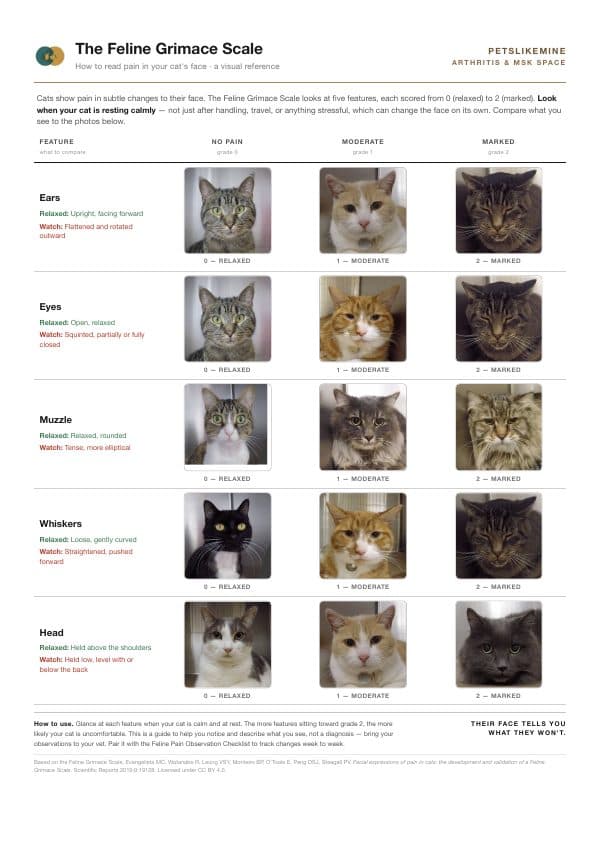
The Feline Grimace Scale
PDFHow to read pain in your cat's face. The Feline Grimace Scale scores five features, from the ears and eyes to the muzzle and whiskers, each from 0 to 2. A visual reference for spotting discomfort when your cat is resting calmly, with photos to compare against.
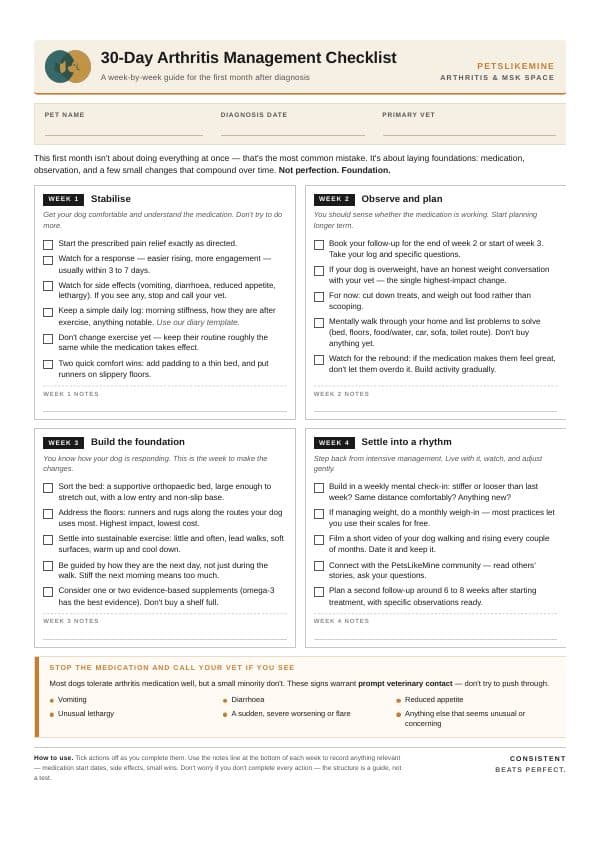
The First 30 Days: Week-by-Week Checklist
PDFA week-by-week guide for the first month after diagnosis. The conversations to have, the small changes to start, and the habits that compound across the years ahead.
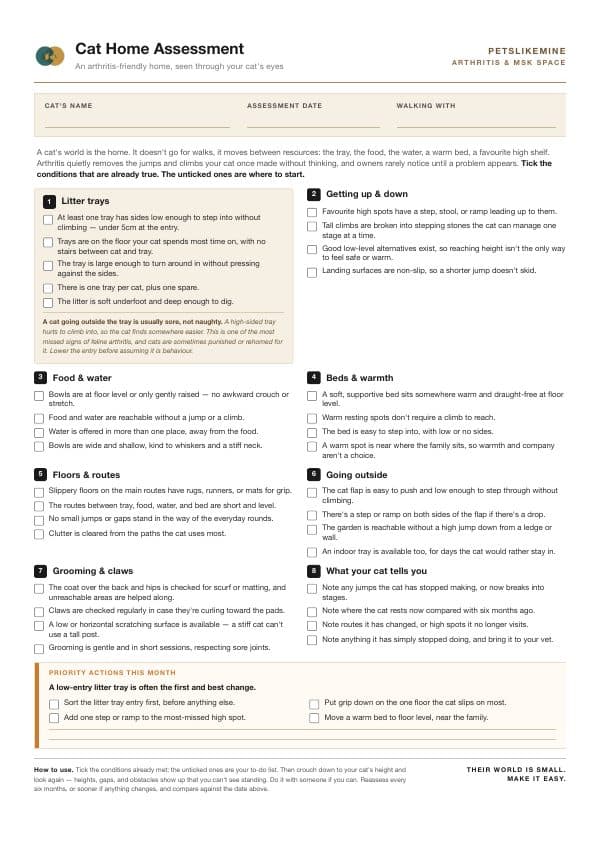
Cat Home Assessment Checklist
PDFA resource-by-resource home assessment for cats with arthritis. A cat's world is the home, and arthritis quietly removes the jumps and climbs between the litter tray, the food, the warm bed, and the favourite high shelf. Tick what's already easy; the rest becomes your plan, starting with the litter tray.
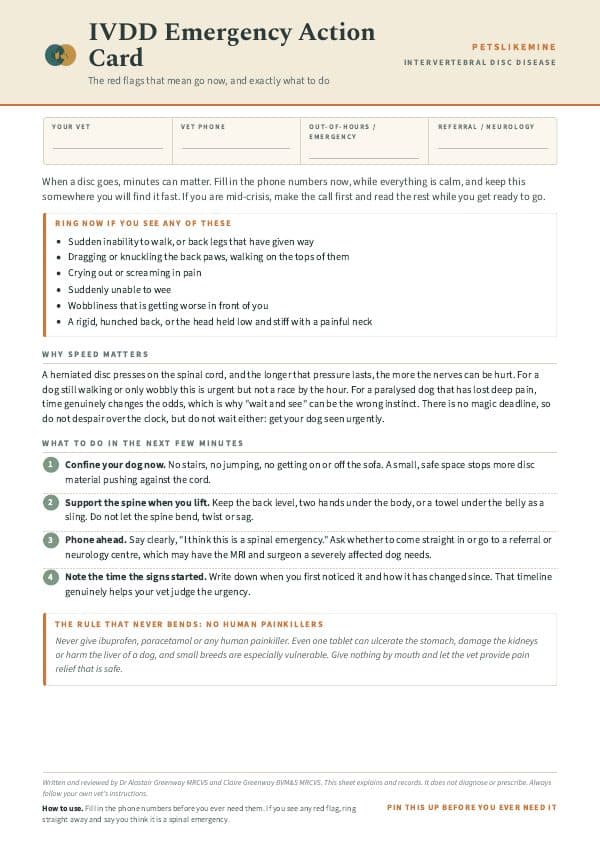
IVDD Emergency Action Card
PDFThe one to pin to the fridge before you ever need it. The red flags that mean go now, how to check deep pain and lift a dog with a hurt back safely, what to say when you phone the vet, and the rule that never bends: no human painkillers. When a disc goes, minutes matter, so the thinking is done for you here.
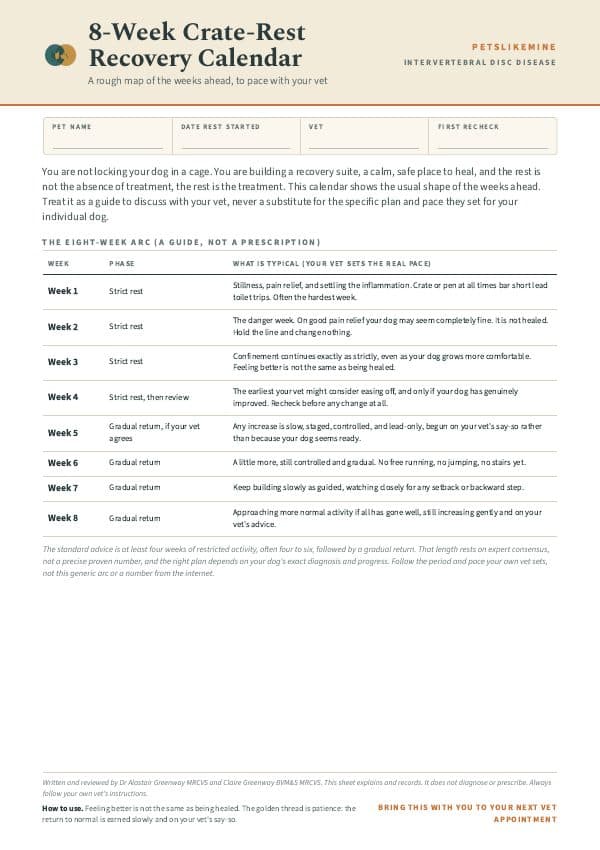
8-Week Crate-Rest Recovery Calendar
PDFThe eight weeks of crate rest mapped out so you always know what this week allows: the rest rules, the toilet trips, the first supported steps. A daily tick grid to keep you honest, and a column for the day's grade so progress is there in black and white. The single hardest part of conservative treatment, made survivable.
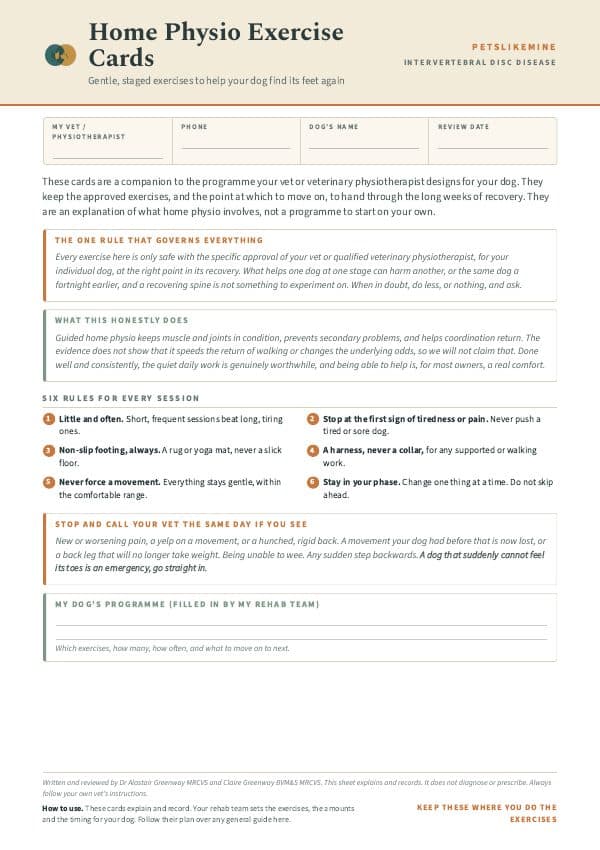
Home Physio Exercise Cards
PDFGentle, staged exercises to help your dog find their feet again, one card per movement with clear pictures and the point at which to progress. A companion to the home physio video, and strictly only ever started once your vet or physiotherapist has given the go-ahead. Done at the right time and the right way, this is how strength comes back.
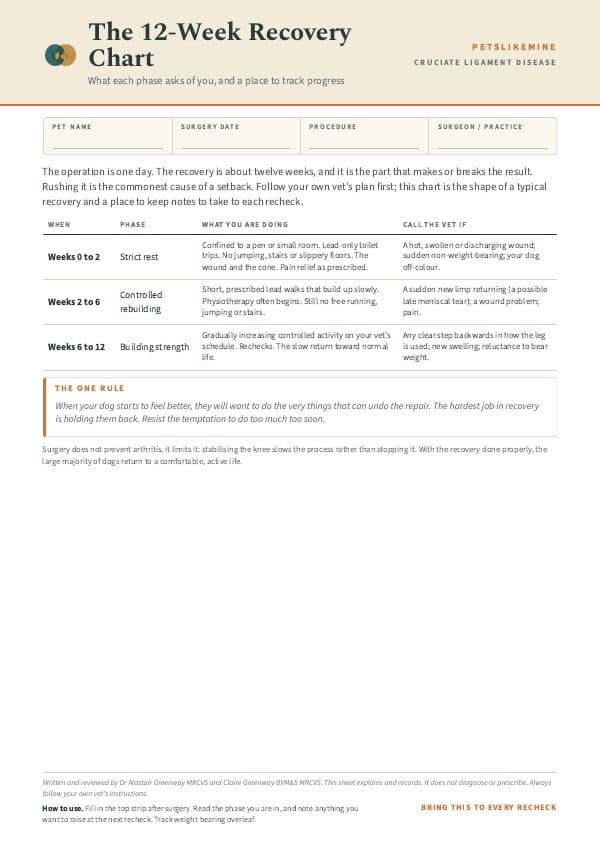
The 12-Week Recovery Chart
PDFThe whole recovery on two pages: what each phase asks of you across the twelve weeks, the red flags for each stage, and a weekly weight-bearing and lameness log to take to every recheck. The part owners most underestimate, made navigable.
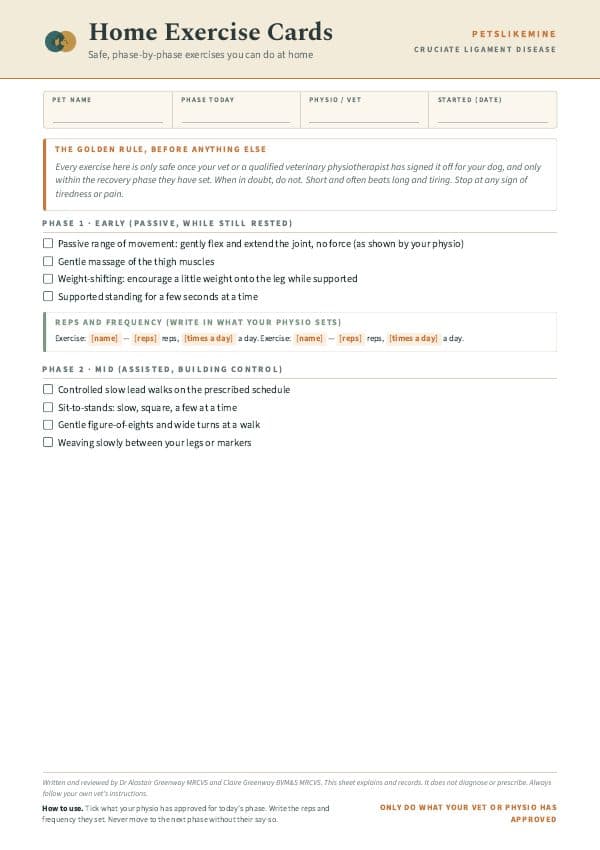
Home Exercise Cards by Phase
PDFSafe, phase-by-phase home physiotherapy you can actually do, with the golden rule front and centre: only what your vet or physiotherapist has approved, and stop at tiredness or pain. Early, mid and late-phase exercises with space to write in the reps they set.
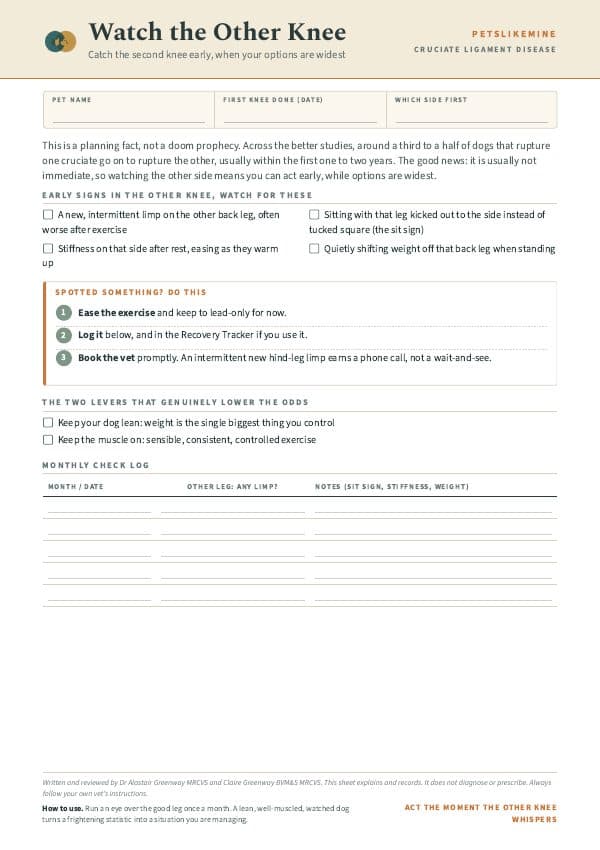
Watch the Other Knee Checklist
PDFBecause around a third to a half of dogs rupture the other cruciate too, usually within a year or two. The early signs to watch for, what to do if you spot one, the two levers that genuinely lower the odds, and a monthly check log. Honest, not alarmist.
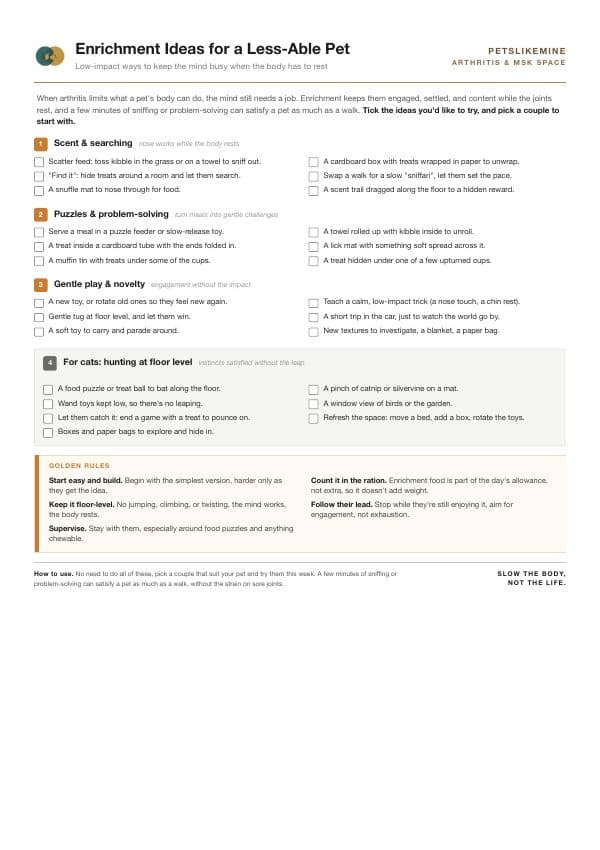
Enrichment Ideas for a Less-Able Pet
PDFA menu of low-impact ways to keep a pet's mind busy when arthritis limits the body. Scent work, puzzle feeders, gentle play, and a full feline section, mostly free and all at floor level. Tick what you'd like to try. Slow the body, not the life.
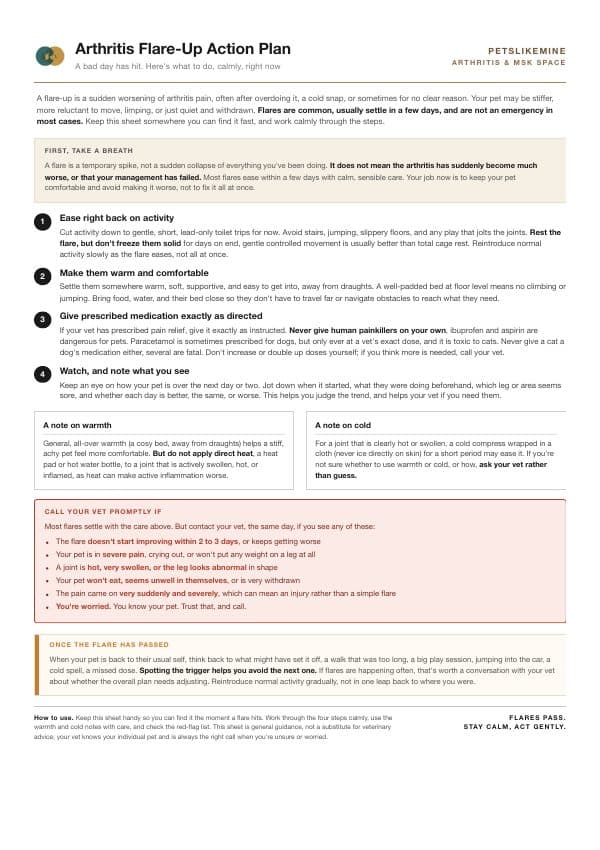
Arthritis Flare-Up Action Plan
PDFWhat to do when arthritis suddenly worsens. A calm, step-by-step plan for the first few days of a flare: ease back, keep them comfortable, give prescribed medication exactly as directed, and watch for the red flags that mean call the vet today. Flares are common and usually pass.
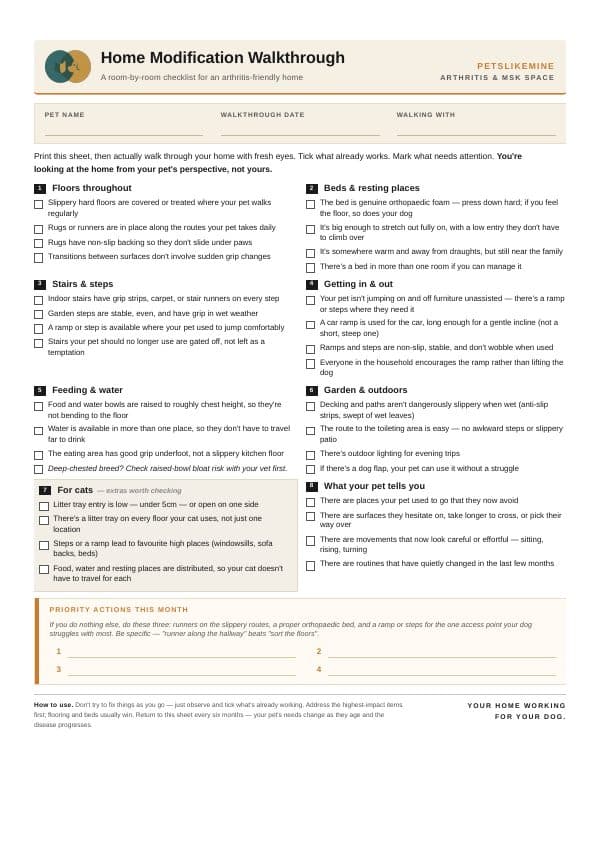
Home Modifications: Room-by-Room Walkthrough
PDFA room-by-room checklist for an arthritis-friendly home. The cheap wins, the bigger projects, and the small changes that matter most for an arthritic dog or cat.
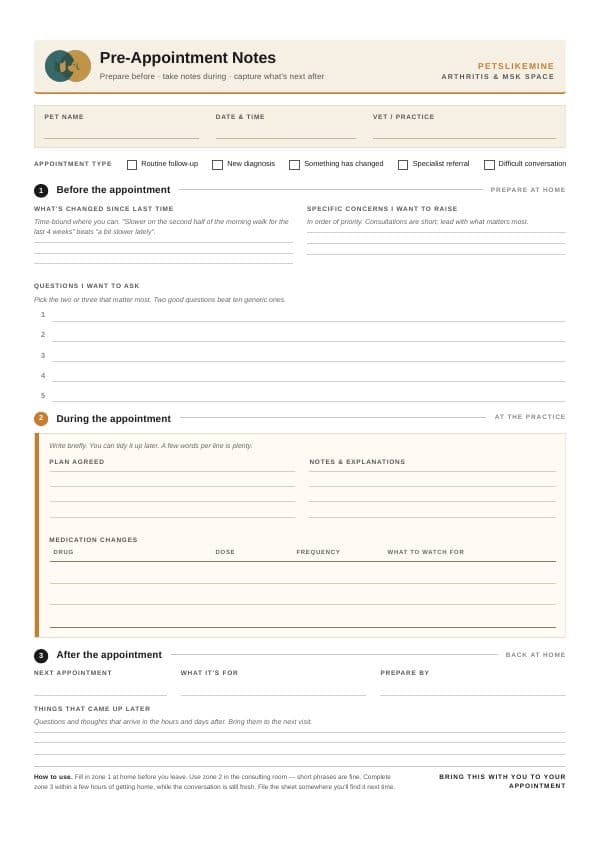
Pre-Appointment Notes
PDFPrepare before, take notes during, capture what's next after. A single sheet that turns a ten-minute vet appointment into one you'll actually remember properly a week later.
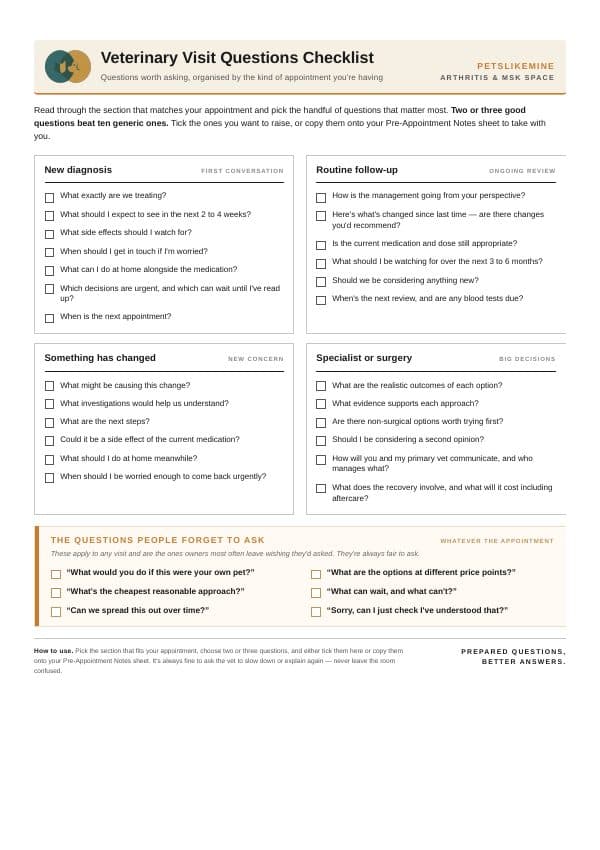
Vet Questions Checklist
PDFQuestions worth asking, organised by the kind of appointment you're having: diagnosis, treatment review, surgical consult, end-of-life conversation. Pick what fits and bring it with you.
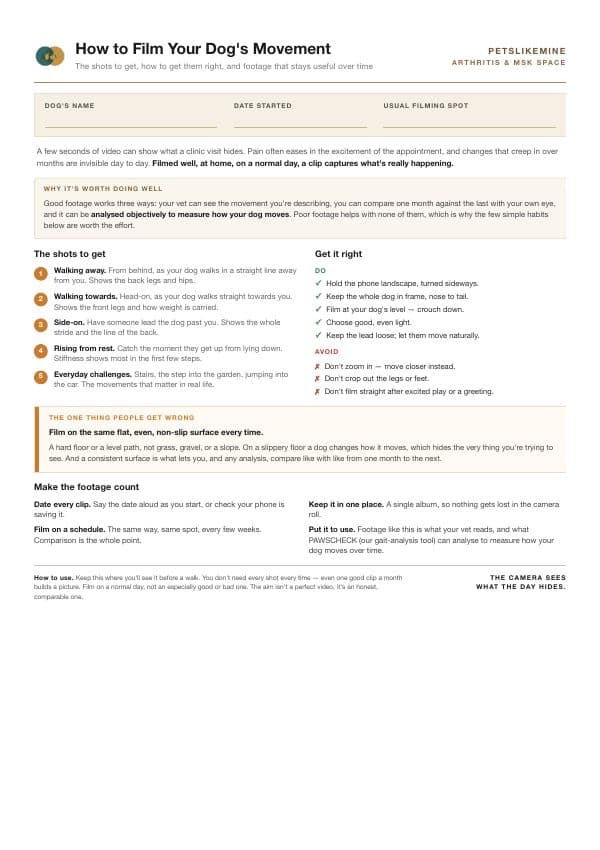
How to Film Your Dog's Movement
PDFA printable guide to capturing video your vet, and you, can actually use. The five shots that show how your dog really moves, how to get them right, and the one detail that makes or breaks the footage: the surface. Film on a normal day and the camera catches what a clinic visit often hides.
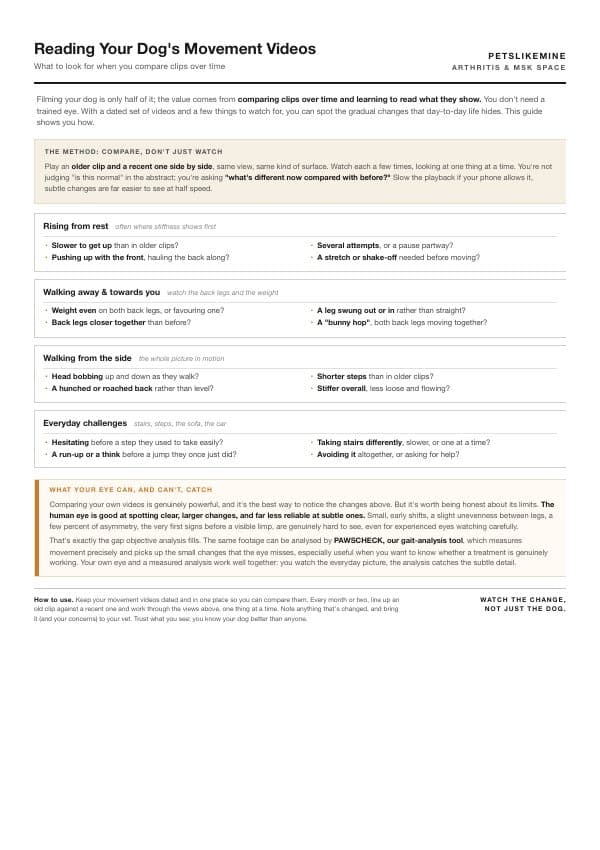
Reading Your Dog's Movement Videos
PDFThe companion to the filming guide: how to actually read the clips you have captured. Line up an older video against a recent one, watch one thing at a time across four everyday views, and spot the gradual changes day-to-day life hides. With an honest note on the subtle shifts the eye misses, and where objective gait analysis picks up.
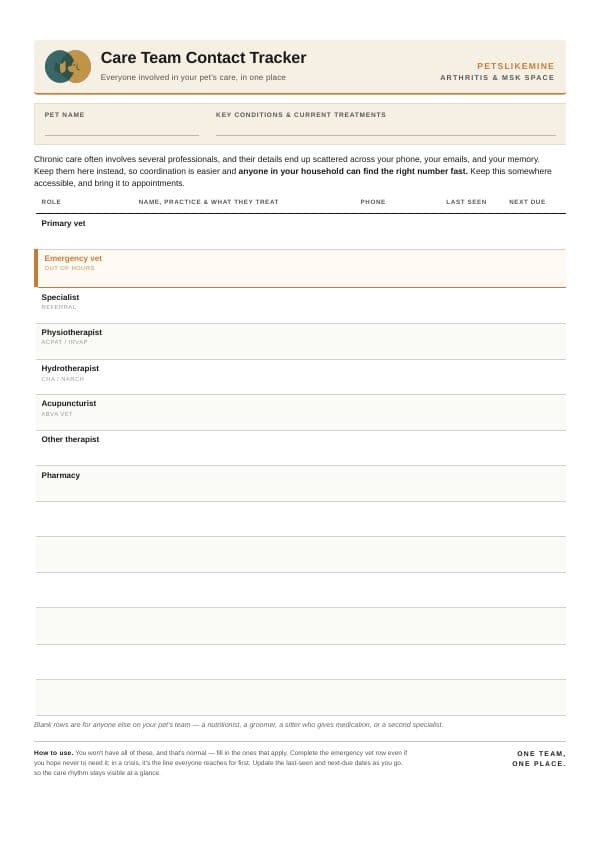
Care Team Tracker
PDFEveryone involved in your pet's care, in one place: primary vet, specialists, physiotherapist, hydrotherapist, behaviourist, end-of-life services. Contact details, last-seen dates, and what they're treating.
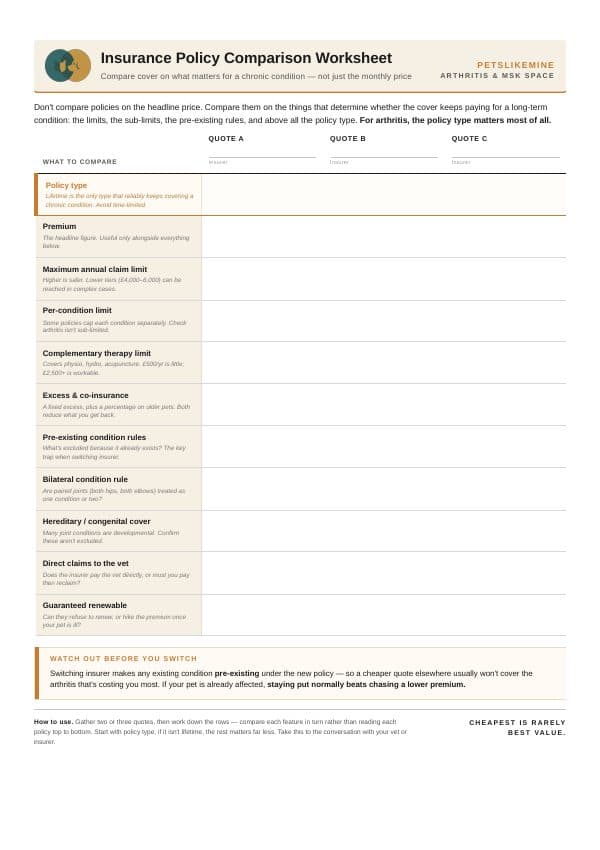
Insurance Comparison Worksheet
PDFCompare cover on what actually matters for a chronic condition: lifetime vs maximum-benefit vs annual vs accident-only, per-condition limits, excess structure, and the small print on continuing conditions.
Keep track over time
Join PetsLikeMine free to save your results, see the trend and meet owners with pets like yours.
Join PetsLikeMine for free