

What Arthritis Treatment Actually Costs in the UK
Alastair Greenway
BVM&S MRCVS
Nobody at the surgery enjoys talking about money, and I think that silence does real harm. Owners make decisions about their pet's care in a fog, afraid to ask what things cost and ashamed when the answer is more than they can manage. So this article puts actual numbers on the page.
A few plain caveats first. These are typical ranges for UK private practice in early 2026. Prices vary a lot by region (London is dearer), by the size of your dog, and from practice to practice. Referral centres cost more than first-opinion clinics. Always ask your own vet for a written estimate. With that said, here is what arthritis care really tends to cost.
What diagnosis costs upfront

- Consultation: roughly £30 to £60 for a standard appointment.
- X-rays: usually £200 to £500, and sometimes more. The reason for the range is sedation or a general anaesthetic, which most dogs need in order to lie still in the right position, plus the number of joints imaged.
- Blood tests: around £80 to £200, commonly done before starting long-term medication to check the liver and kidneys are up to the job.
It is reasonable to spend £300 to £700 getting to a clear diagnosis and a safe starting point. You do not always need every test at once, so it is fair to ask your vet what is essential now and what can wait.
Medication, month after month
This is the cost that goes on, month after month, so it matters most for planning.
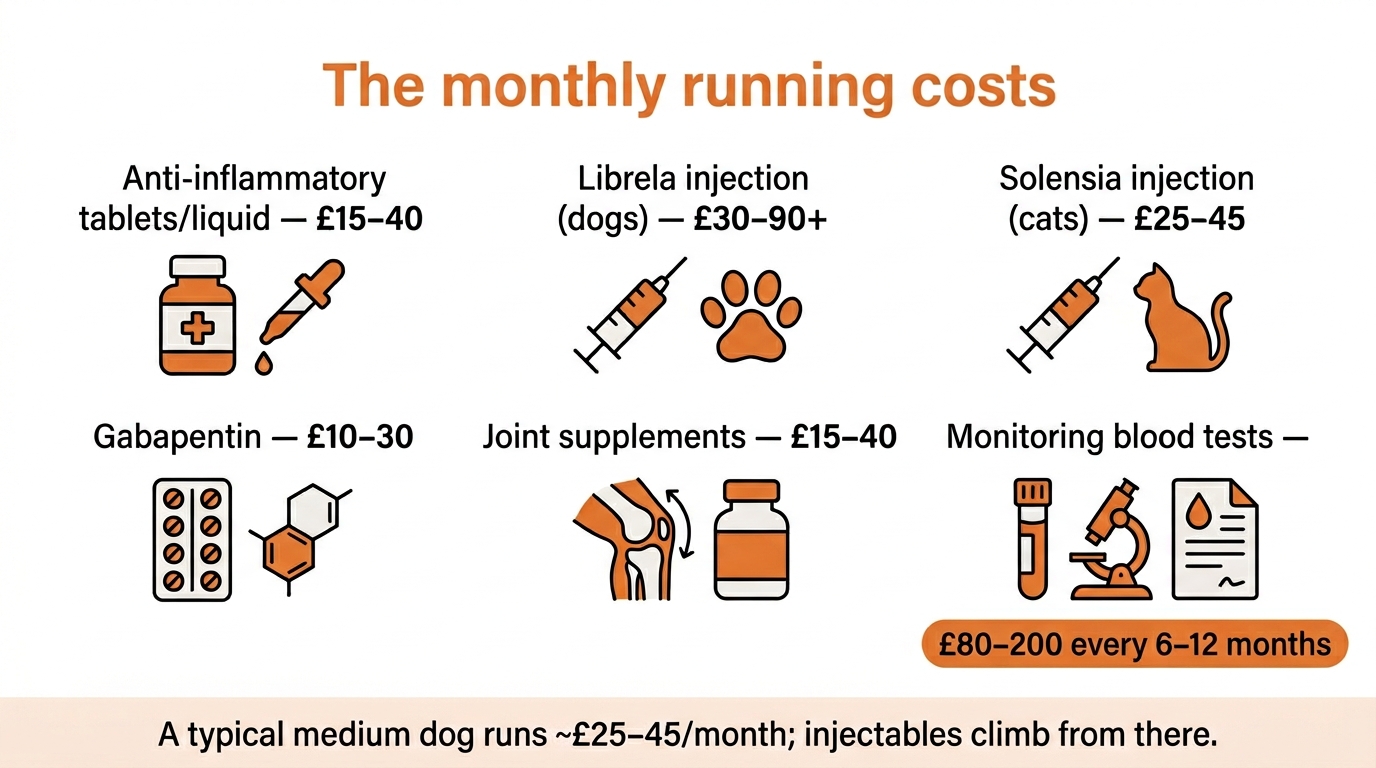
- Anti-inflammatory tablets or liquid (meloxicam, carprofen, and similar): roughly £15 to £40 a month depending on your dog's size. These are the workhorse of arthritis treatment, well-proven and good value.
- Librela (bedinvetmab) injection for dogs: around £30 to £90 or more per month by weight, plus the appointment to give it.
- Solensia (frunevetmab) injection for cats: roughly £25 to £45 per month, plus the appointment.
- Gabapentin: often £10 to £30 a month, used alongside other pain relief.
- Monitoring blood tests: budget for a check every 6 to 12 months on long-term anti-inflammatories, at the £80 to £200 mark each time.
For a typical medium-sized dog on an anti-inflammatory with periodic monitoring, many owners spend somewhere around £25 to £45 a month averaged over the year. Move to a monthly injectable and that figure climbs.
Do supplements earn their place
Joint supplements and omega-3 products usually run £15 to £40 a month. I am straight with clients here: the evidence is strongest for high-dose omega-3 fish oils, and more mixed for glucosamine-type products. They are an addition to good treatment, not a replacement, and if money is tight they are one of the first places I would economise.
Hands-on therapies and what they run to
- Hydrotherapy: about £30 to £50 per session for an underwater treadmill, often a little less for pool sessions. Many centres sell blocks at a discount.
- Physiotherapy: roughly £40 to £70 per session, with the first assessment sometimes longer and dearer.
- Acupuncture: commonly £40 to £70 per session.
- Laser therapy: often sold as a course, priced similarly per session.
These can genuinely help, but they add up, so it is worth being clear about what you are getting and whether a block booking makes sense.
Cheap kit that punches above its price
A lot of high-impact help is cheap.
- Orthopaedic bed: £40 to £150.
- Ramps (car or sofa): £30 to £100.
- Support harness or sling: £25 to £70.
- Non-slip rugs and runners: often the cheapest change you can make, and one of the most useful. Inexpensive yoga mats or cut-to-size runners do the job.
When surgery is on the table
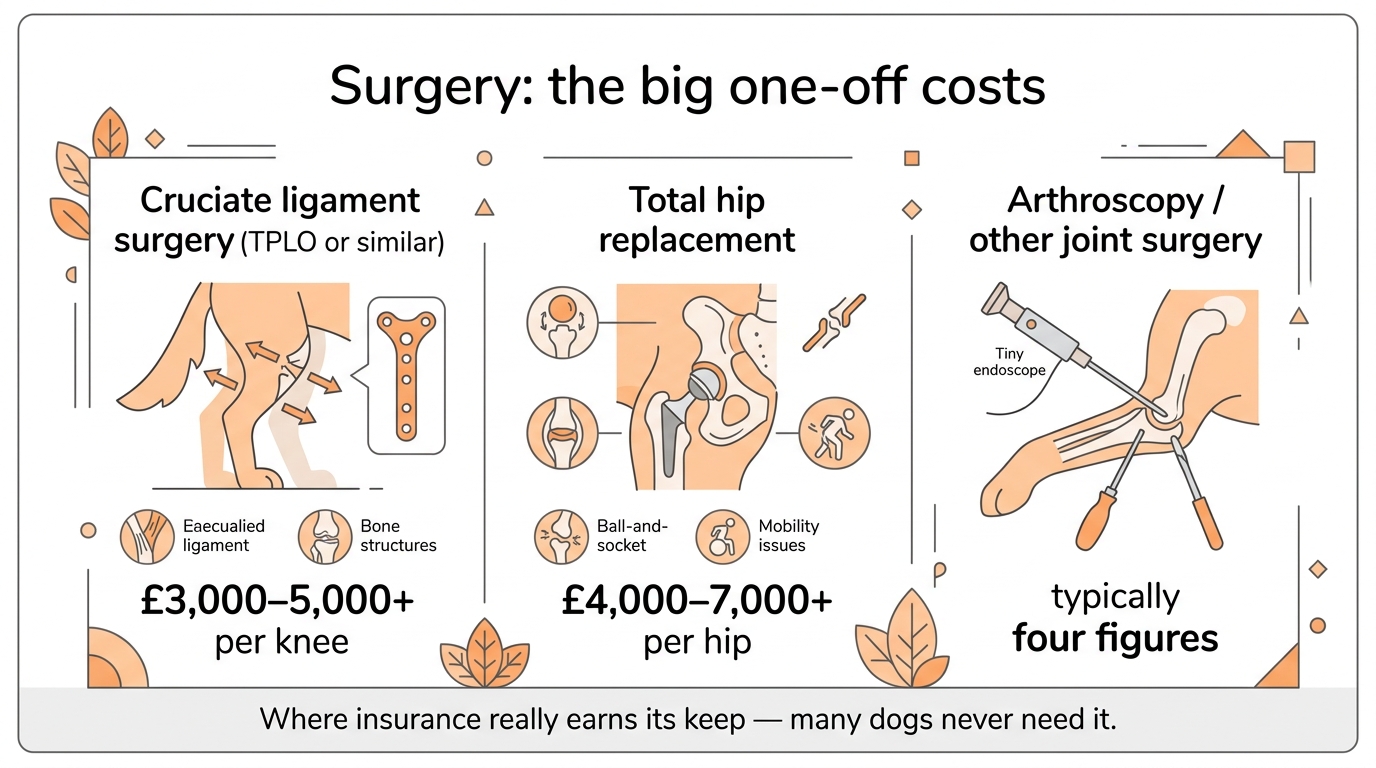
This is where costs jump, and where insurance really earns its keep.
- Cruciate ligament surgery (a TPLO or similar): commonly £3,000 to £5,000 or more, per knee. Dogs frequently go on to need the other knee done later.
- Total hip replacement: roughly £4,000 to £7,000 or more, per hip, at a referral centre.
- Arthroscopy and other joint surgery: typically four figures once referral, imaging, and anaesthetic are included.
Not every arthritic dog needs surgery, and many do very well on medical management alone. But if your dog has an unstable cruciate or severe hip disease, these are the numbers that make people very glad they took out insurance early.
Insurance, and the trap that catches owners
Insurance is the single biggest lever on how affordable all of this feels, and there is one trap that catches owners over and over.
The trap is pre-existing conditions. If your dog is diagnosed with arthritis before you take out a policy, or during a gap between policies, that arthritis (and often anything related to it) will be excluded. No insurer will cover a problem that already exists. This is why the time to insure is when your pet is young and well, not when the limp appears.
If you do have cover, the type matters. A lifetime policy renews each year with the arthritis still covered, up to an annual limit. Cheaper time-limited or per-condition policies may stop covering arthritis after 12 months, or once a cash limit is reached, which is close to useless for a lifelong condition. Premiums also rise as your pet ages. Read what you are buying, and prioritise lifetime cover if you possibly can.
Where your money works hardest
Here is the part the pet-spending industry would rather you did not dwell on: some of the most effective interventions are the cheapest.
Weight management is free, and the evidence behind it is strong. A study by Marshall and colleagues in 2010 showed that weight loss alone measurably reduced lameness in overweight arthritic dogs. The long-running Kealy study from 2002 found that dogs kept lean throughout life developed less arthritis and lived longer than their heavier littermates. Getting your dog to a lean body weight can reduce, and occasionally remove, the need for medication. Nothing you buy comes close to that value.
After weight, the cheap wins are controlled, consistent exercise and a few changes at home: non-slip flooring, a good bed, a ramp into the car. Get those right, get the basic medication right, and only then spend on the extras if the budget allows.
Building a plan around your budget
Because real life has limits, here is a rough way to prioritise.
- On a tight budget: put your money into a clear diagnosis, an effective anti-inflammatory with the necessary monitoring, weight control (free), and a handful of cheap home changes. This alone keeps a great many dogs comfortable.
- With a bit more room: add high-dose omega-3, a course of hydrotherapy or physiotherapy, and better equipment.
- With more to spend, or with good insurance: add monthly injectables such as Librela where they help, regular professional rehab, and surgery where it is genuinely indicated.
None of this is about spending the most. It is about spending in the right order. A lean dog on the right tablet, walking sensibly on non-slip floors, is better cared for than an overweight dog on every supplement going. Ask your vet for a frank estimate, say plainly what you can afford, and build the best plan that fits inside it. A good vet would far rather have that conversation than watch you quietly skip treatment out of embarrassment.
References
- Marshall WG, Hazewinkel HAW, Mullen D, et al. The effect of weight loss on lameness in obese dogs with osteoarthritis. Veterinary Research Communications, 2010.
- Kealy RD, Lawler DF, Ballam JM, et al. Effects of diet restriction on life span and age-related changes in dogs. Journal of the American Veterinary Medical Association, 2002.
Sister tool · Sightline
Track whether treatment is working
Sightline, a separate ConciergeVet tool, runs a short weekly check-in built on validated pain and mobility instruments, turns it into a single Sightline Score you can watch trend over weeks rather than judge on one bad day, and produces a report you can bring to your vet.
A written log, or our printable trackers, does much the same job.
See how Sightline tracks treatmentSister directory · PetCare Atlas
Compare what a prescribed medicine costs
PetCare Atlas, our sister directory, lists what accredited UK retailers charge for authorised veterinary medicines. Every accredited retailer is shown, whether it pays or not. You need a prescription from your vet, and which medicine is prescribed is your vet’s decision alone.
See medicine prices on PetCare Atlas →See where your pet stands today
Tracking is the other half of managing arthritis. Take the 2-minute Mobility Check to see your pet's stage, then watch it shift as treatment takes effect.
Take the Mobility CheckYou're not doing this alone
Compare treatment journeys and talk to owners managing arthritis. Free to join.
Join PetsLikeMine