
The Arthritis Hub
Everything you need when your dog or cat has arthritis
From the first stiff morning to the long view: how to spot the signs, what the treatments really do, what they actually cost in the UK, and how to make every day more comfortable.
Written and reviewed by vets. Honest about what works. Free to read.

The whole journey
One library, from diagnosis to the long view.
Evidence, not opinion
Every guide cites its sources and is checked by a second vet, with the date it was last reviewed shown.
Why this library exists
Arthritis is manageable. Most owners are just never shown how.
Arthritis is the most common cause of chronic pain in dogs and cats, and one of the most treatable. The problem is rarely the condition itself. It is that good, honest guidance is hard to find: advice is either too vague to act on, or quietly trying to sell you something.
This is our answer to that. A complete, plain-English library that follows the whole journey, from the first signs through to the hardest decisions, for cats as well as dogs. Every claim is backed by a source and checked by a second vet. None of it is behind a paywall.
Start here
New to this? Begin with these.
The four guides most owners need first, whether your pet was just diagnosed or you are still piecing the signs together.
Not diagnosed yet?
Worried, or protecting an at-risk pet?
You do not need a diagnosis to start. If your pet is young or a breed prone to joint problems, or you have noticed the odd early sign, you can see where things stand in two minutes, and get ahead of it.
Why this is the place to come
Four things you will struggle to find together anywhere else in the UK.
Evidence, not opinion
Every guide cites its sources and is checked by a second vet, with the date it was last reviewed shown. You can see our working.
The full library
The guide library, stage by stage
Arthritis care changes as you go. These guides follow the journey, from the first diagnosis to living well with it long term. Read in order, or jump to where you are.
1Understanding the diagnosis
12 guides

Arthritis in Cats: The Invisible Epidemic
16 minThere's a very good chance your cat has arthritis, particularly if they're getting on in years. And the odds a…
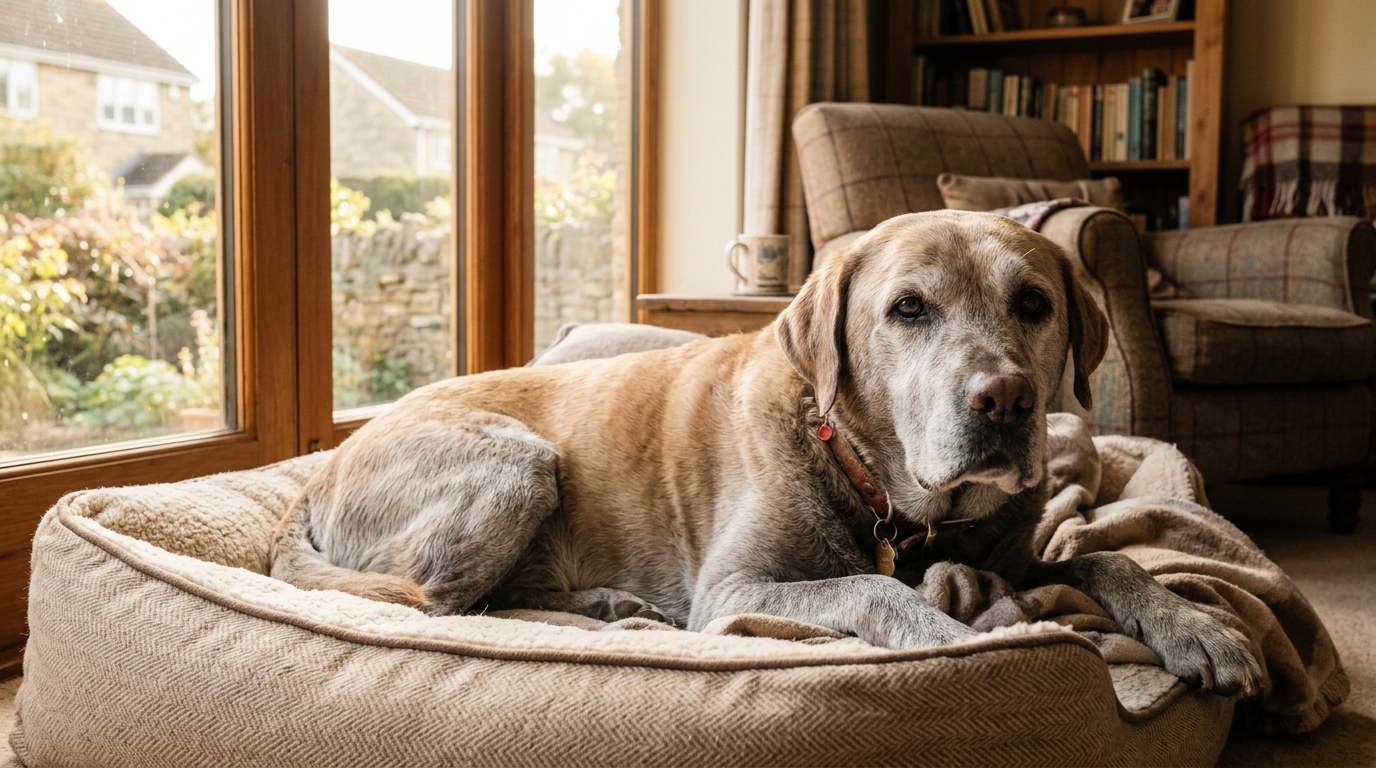
Arthritis in Dogs: Everything You Need to Know
13 minMost owners arrive here for one of two reasons: a dog who's just been diagnosed with arthritis, or a nagging s…
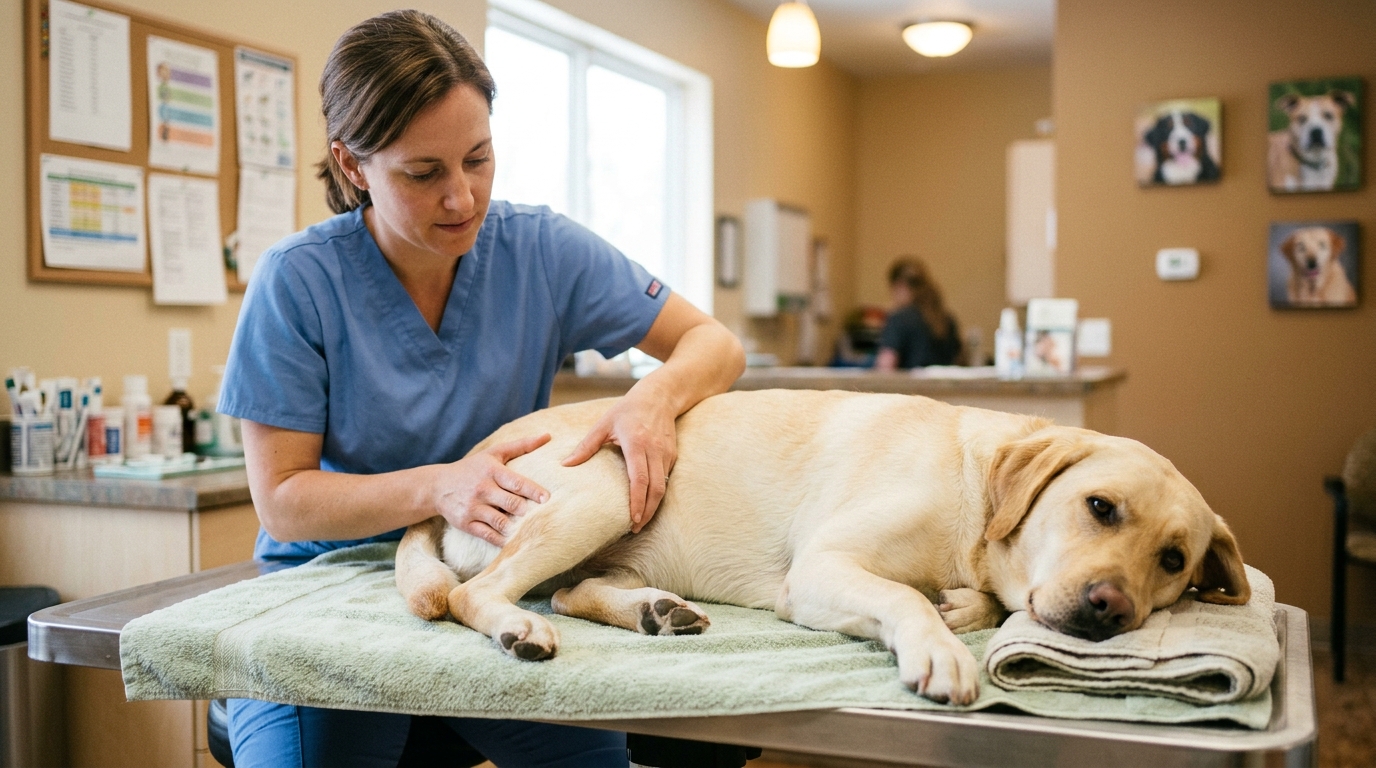
How Arthritis Is Diagnosed: Understanding the Vet Visit
18 minMost owners notice the same odd thing. The dog who was stiff, slow and reluctant at home walks into the consul…

How to Spot Arthritis in Your Dog: The Signs Most Owners Miss
16 minAsk most people what arthritis looks like in a dog and they'll describe a limping older Labrador struggling up…

Spondylosis in Dogs: What That X-Ray Finding Actually Means
12 minSpondylosis usually turns up by accident, on an X-ray taken for something else entirely, and the word alone is…

Your Dog Has Arthritis. Now What? The First 30 Days
19 minThe diagnosis is in. You've come home from the vet clinic with a prescription, a leaflet you'll probably never…
Causes of Arthritis: Developmental Disease, Injury, and Beyond
18 min"Why has my dog got arthritis?"
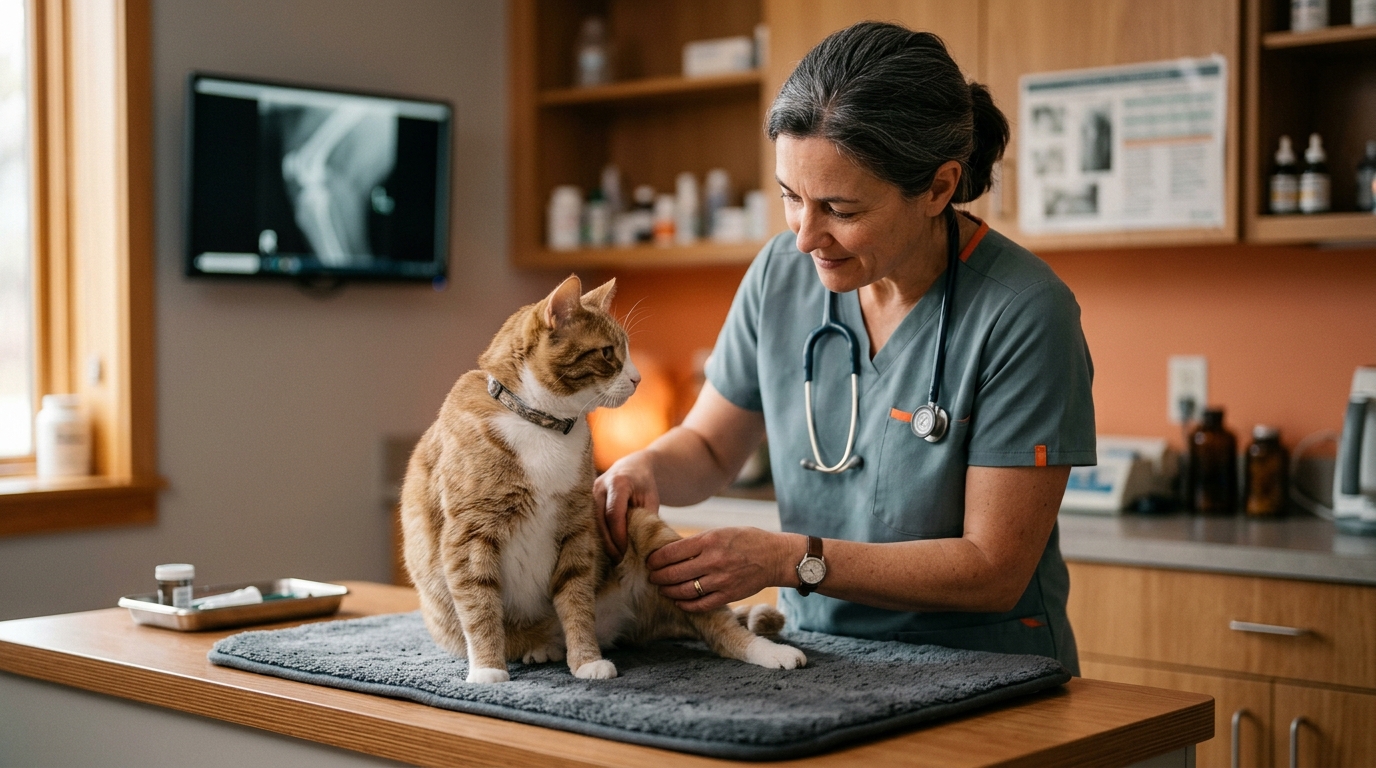
How Feline Arthritis Is Diagnosed: Why There Is No Single Test
8 minThere is no blood test or single scan that diagnoses arthritis in a cat. The diagnosis is a piece of detective…
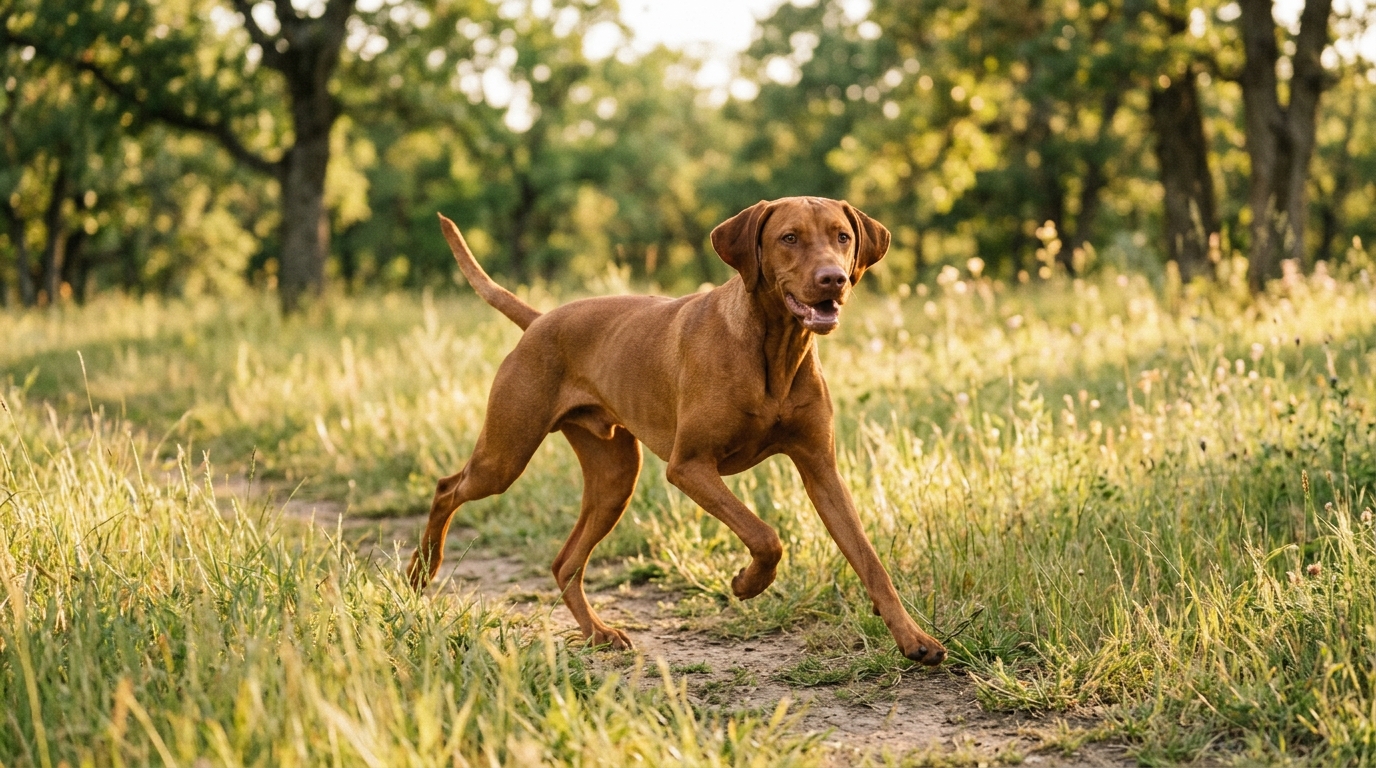
Protecting Your Young Dog's Joints: What You Can Do Before Arthritis Starts
10 minAlmost everything else in this space is written for owners whose dog already has arthritis. This article is di…
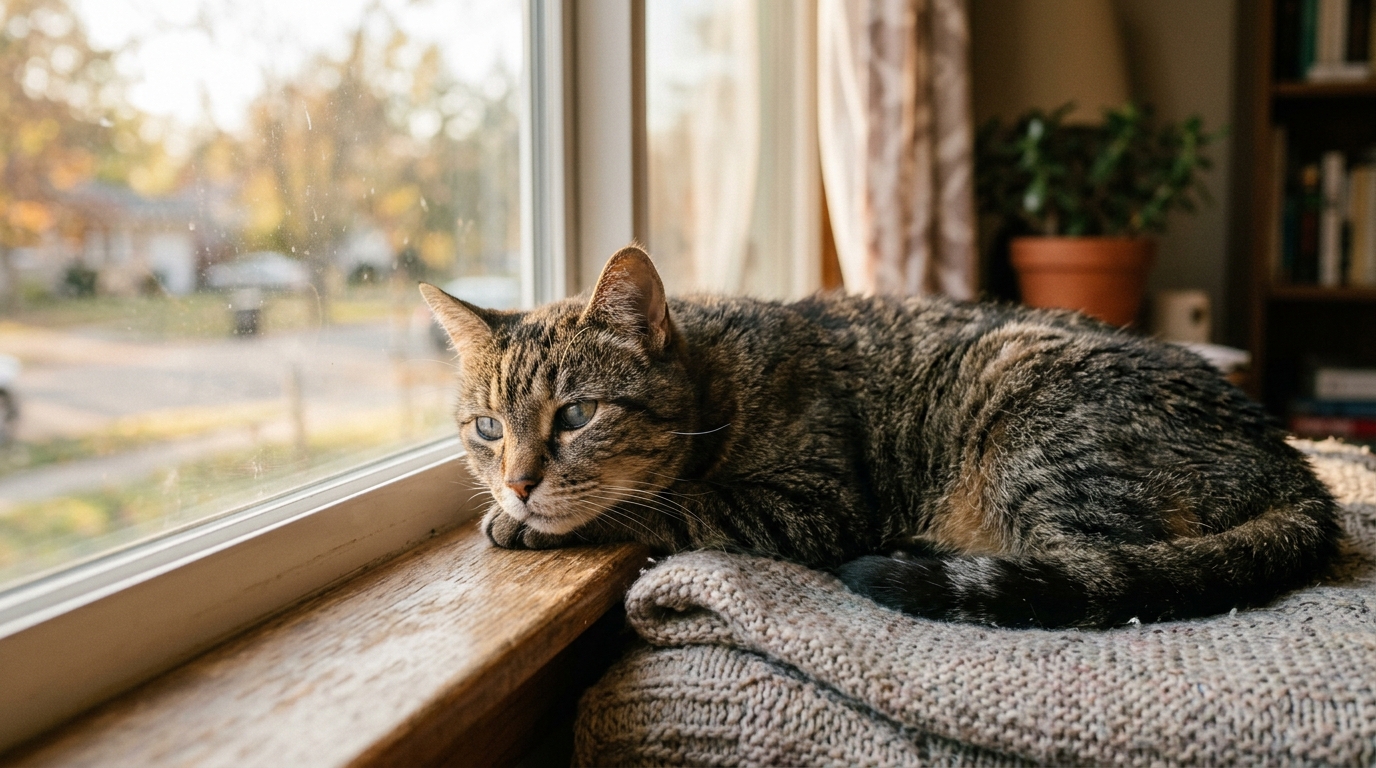
Recognising Pain in Cats: Even Harder Than Dogs
21 minRecognising pain in dogs is harder than most owners realise, as our article on how dogs hide pain explains. Wi…

What to Avoid: Misinformation, Myths and Marketing
9 minOwners of pets with arthritis are a marketing target. I want to say that plainly at the start, because once yo…

Young Dogs and Arthritis: It's Not Just an Old Dog's Disease
17 minA two-year-old dog comes in with arthritis more often than most owners would ever guess. Maybe yours is three.…
2Pain and treatment
8 guides
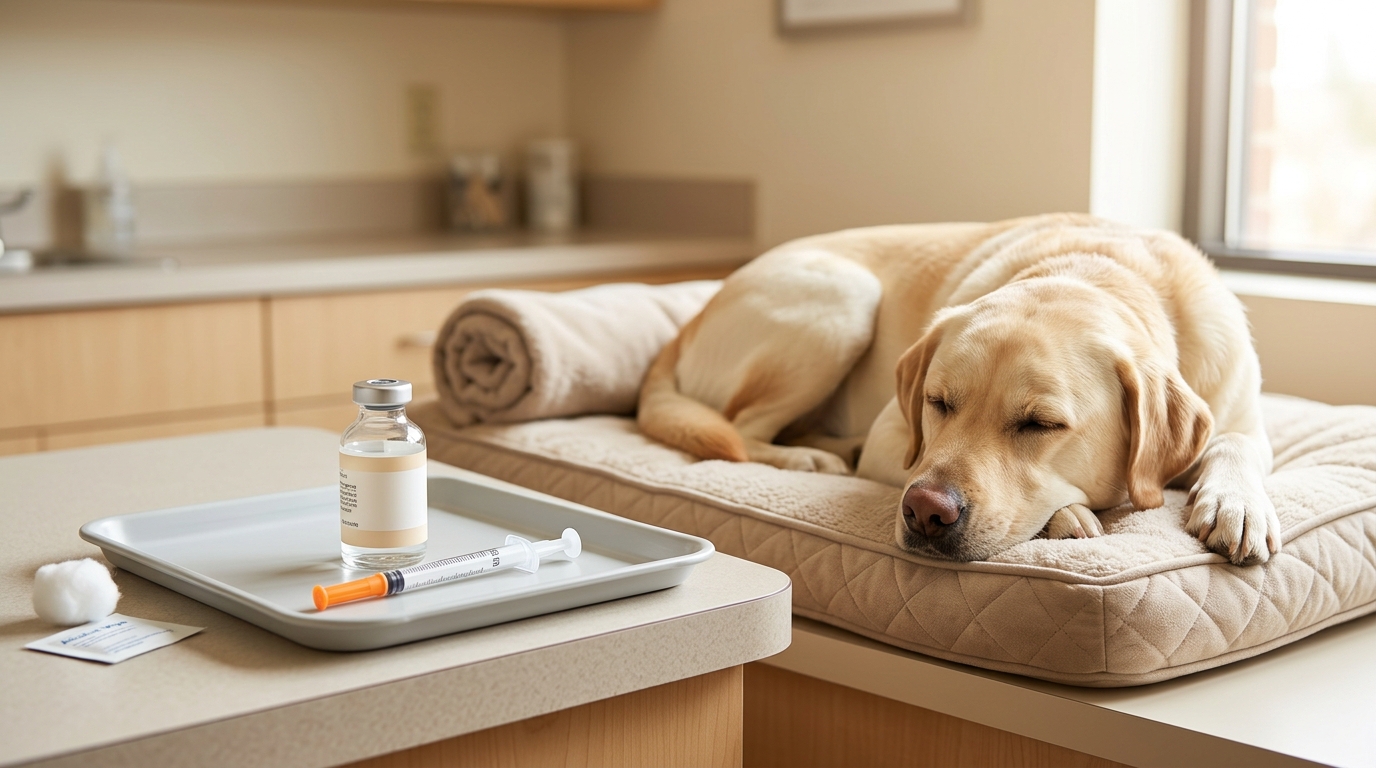
Librela: What You Need to Know
17 minLibrela is one of the most discussed veterinary medications of the past few years, and for good reason. When i…
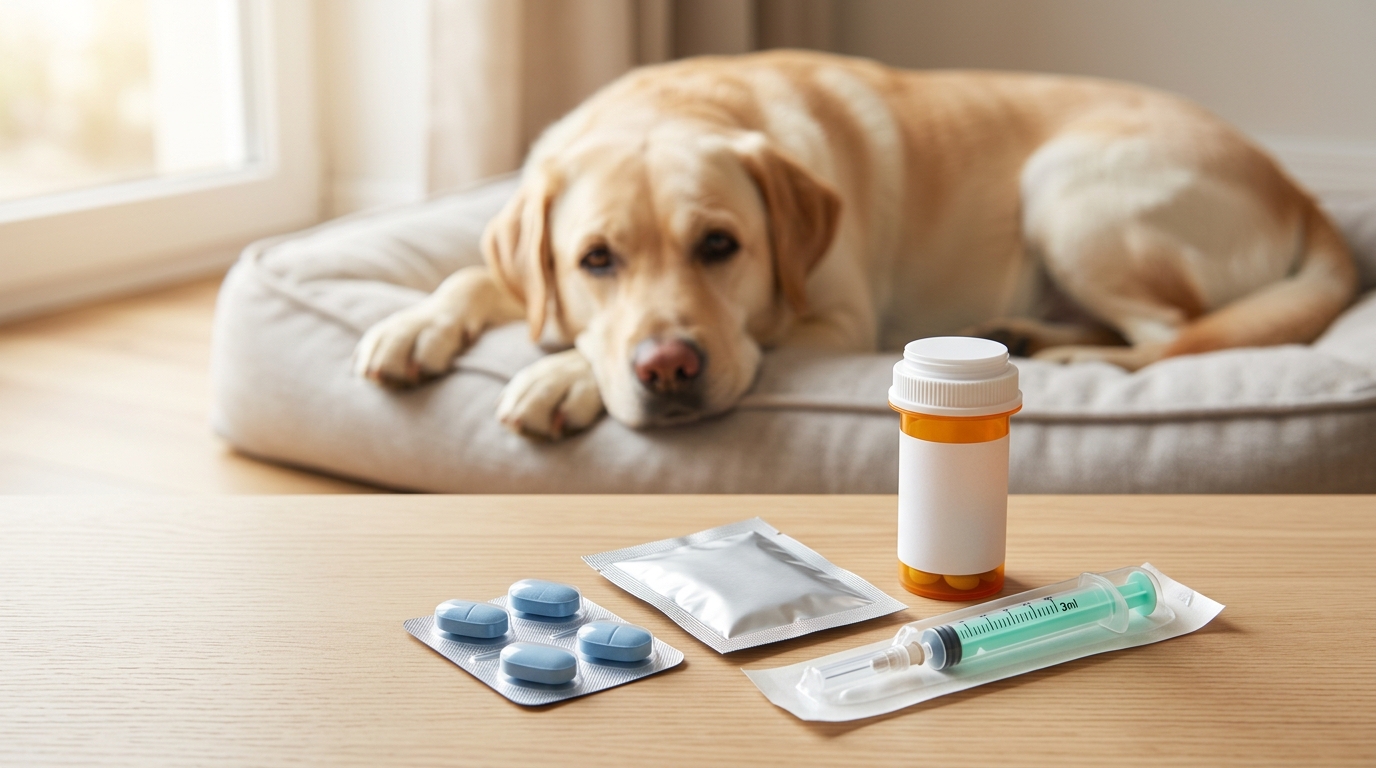
Arthritis Pain Relief: The Complete Medication Guide
22 minThere are more options for treating arthritis pain in dogs now than at any point in veterinary history. NSAIDs…

Arthritis and Kidney Disease: Treating Pain When the Kidneys Are Struggling
12 minChronic kidney disease and arthritis are the two most common conditions of older cats, and they very often arr…

CBD and Cannabis for Pet Arthritis: What the Evidence Actually Says
10 min---
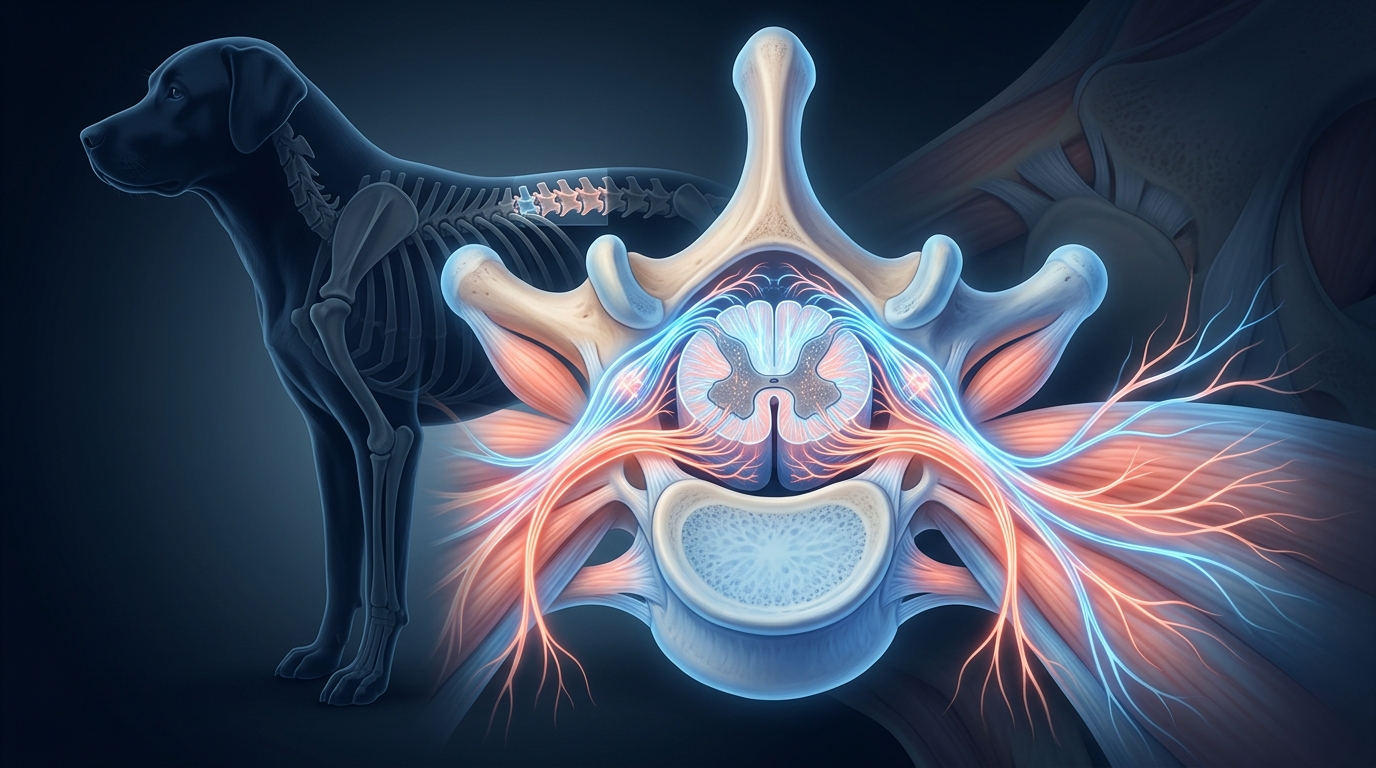
Central Sensitisation: When Pain Becomes Its Own Disease
17 minModern pain medicine has a concept that explains a great deal of what we see in chronic pain patients, yet own…

How Dogs Hide Pain: Why You're Not Failing as an Owner
17 minWhen an owner finds out their dog has been in pain for months or years before they realised, the response is u…

Managing Your Cat's Arthritis: Medications, Environment, and Diet
26 minYour cat has arthritis, either confirmed on examination or suspected strongly enough that we'll treat the susp…

Solensia: The Game-Changer for Feline Arthritis
20 minSolensia is the most important development in feline arthritis management in the past two decades. That's a st…
3Daily management
11 guides
Exercise and Arthritis: The Complete Guide
23 minExercise is one of the most powerful things you can do for your arthritic dog. It's also one of the easiest th…

Feeding the Arthritic Dog: Diet, Nutrition, and Meal Planning
23 minWhat goes in your arthritic dog's bowl matters more than you might think. Not just the quantity, which we cove…
Grooming, Nail Care, and the Details That Matter
21 minPlenty of owners file grooming, nail care and the rest under "nice to have" rather than serious arthritis mana…
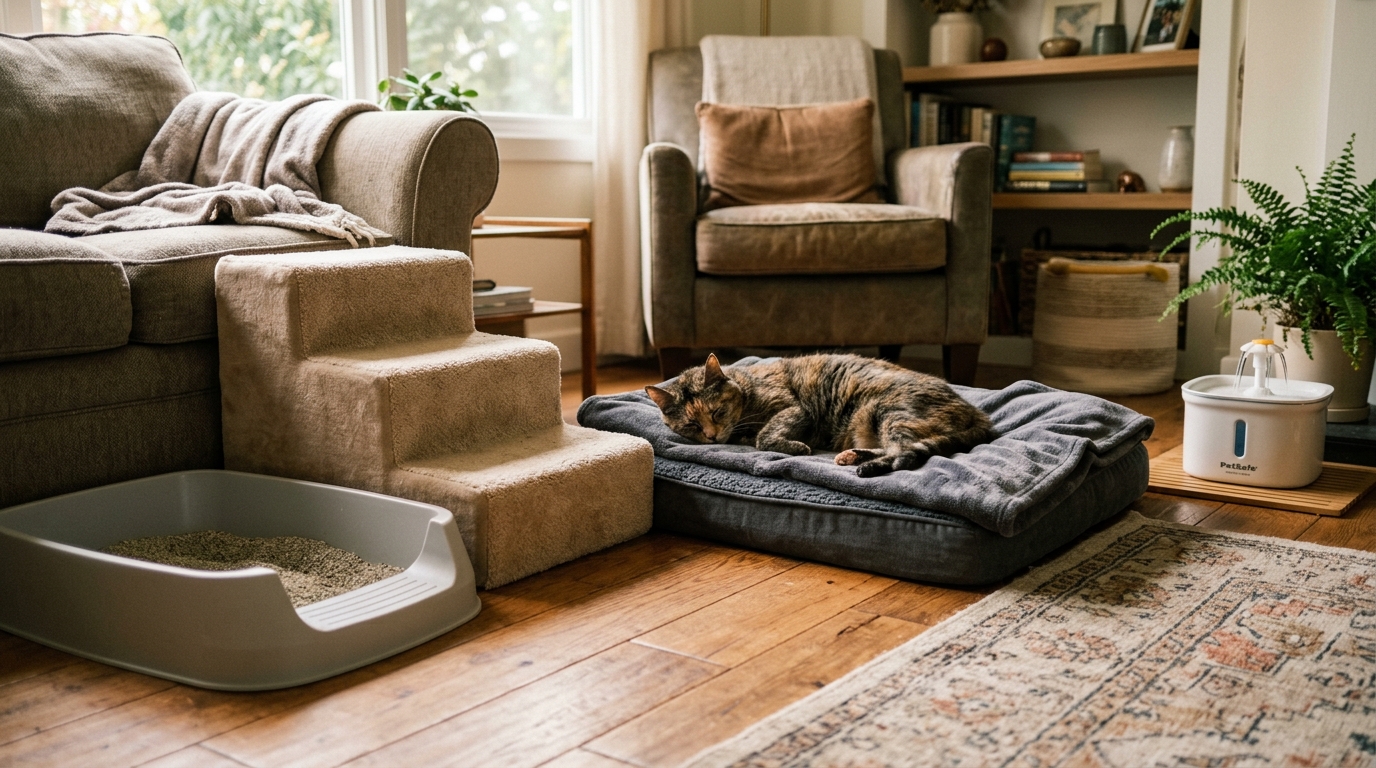
Home Modifications for Arthritic Cats
22 minFor an arthritic cat, your home is their entire world. Unlike a dog who escapes for walks and outings, a cat l…

Home Modifications: Room by Room
23 minYour arthritic dog spends most of their life inside your home, not out on walks. They're moving around the kit…
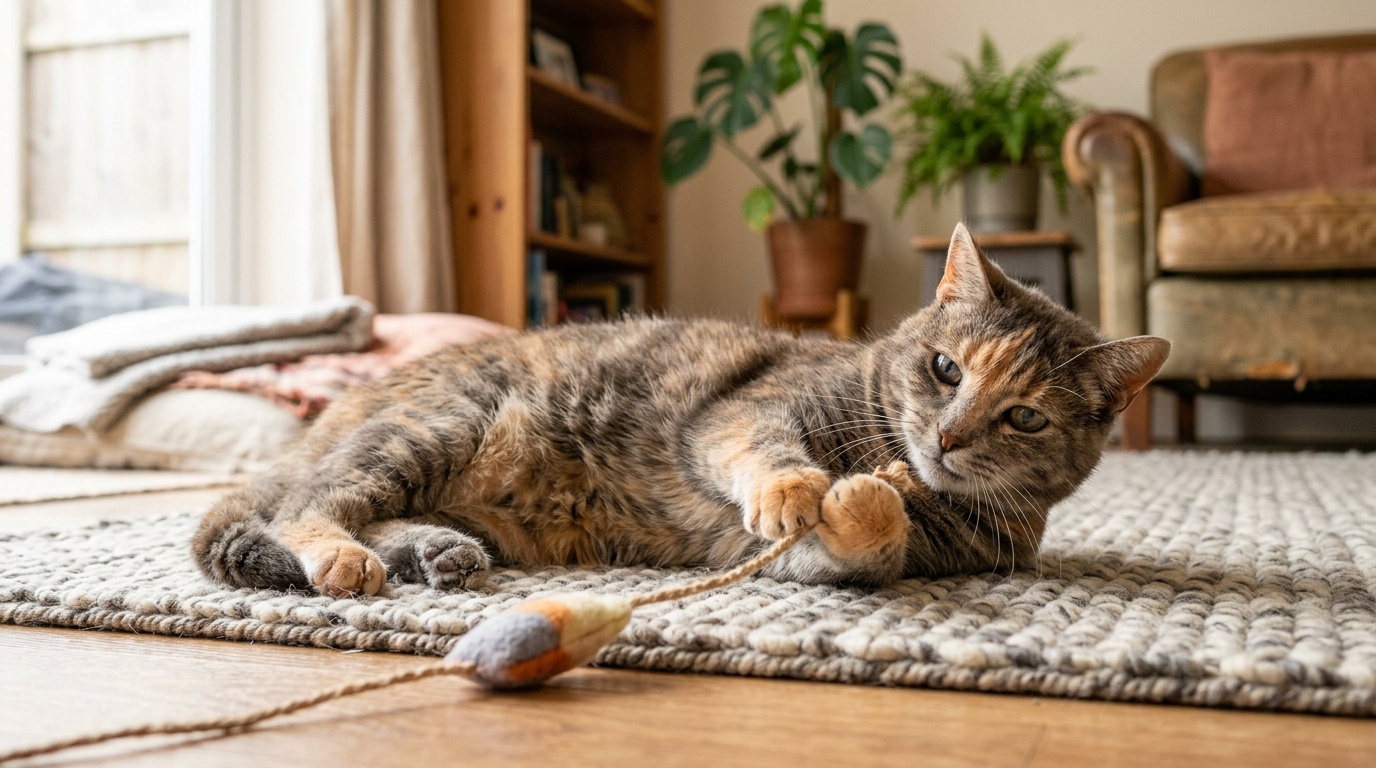
Keeping an Arthritic Cat Active and Engaged
7 minA stiff cat still needs to move, and still needs to be a cat. Gentle, regular activity keeps joints mobile, we…

Managing a Flare-Up: What to Do on a Bad Day
10 minEven a well-managed arthritic pet will have bad days. A flare-up is a sudden spell of more pain and stiffness,…
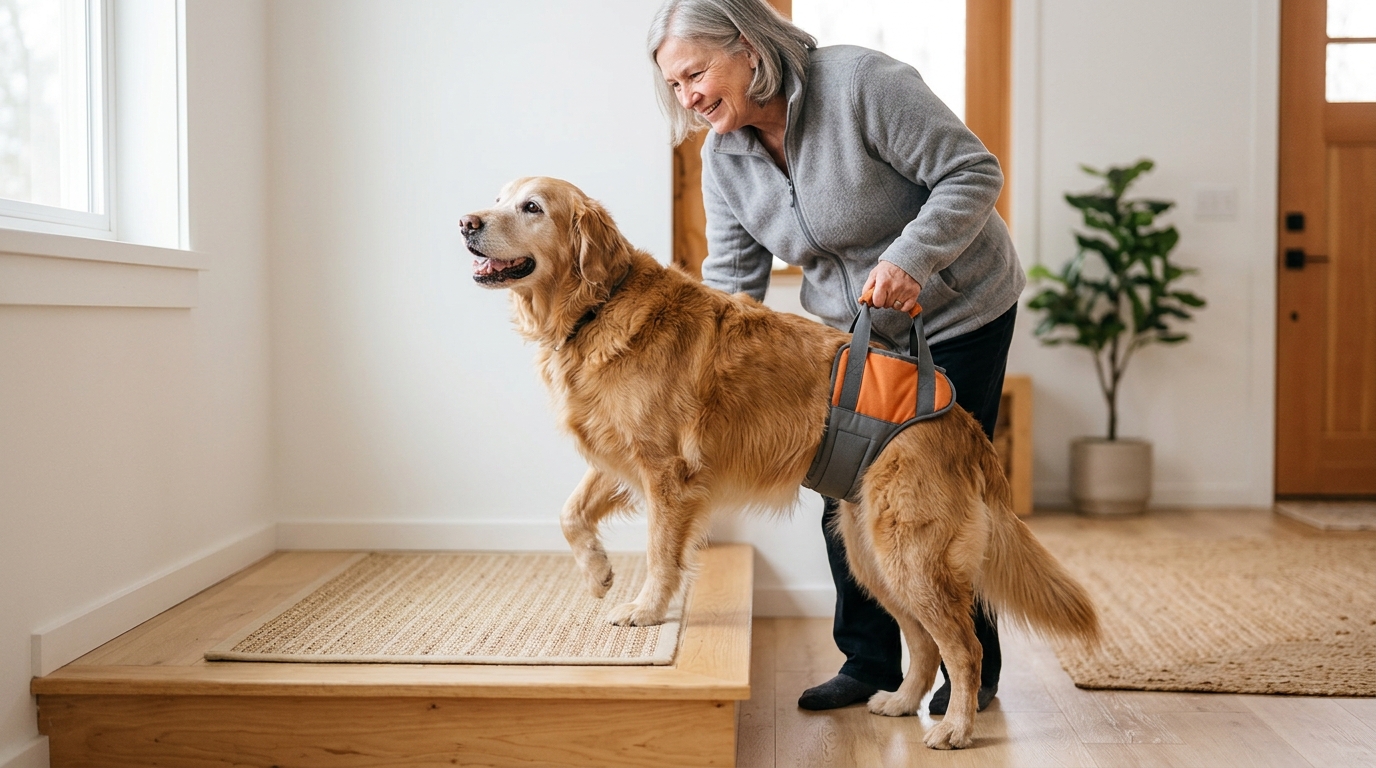
Mobility Aids and Equipment: Harnesses, Slings, Ramps, Grips and Carts
8 minThe right piece of kit can transform an arthritic pet's day. A sling gets a stiff dog up the stairs, grips sto…

Supplements for Arthritis: What the Evidence Actually Says
21 minWalk into any pet shop in the UK and you'll find a wall of joint supplements. Glucosamine. Chondroitin. MSM. G…

Weight Management for the Arthritic Cat
8 minWeight is one of the few arthritis levers entirely in your hands, and in cats it is both common and stubborn.…
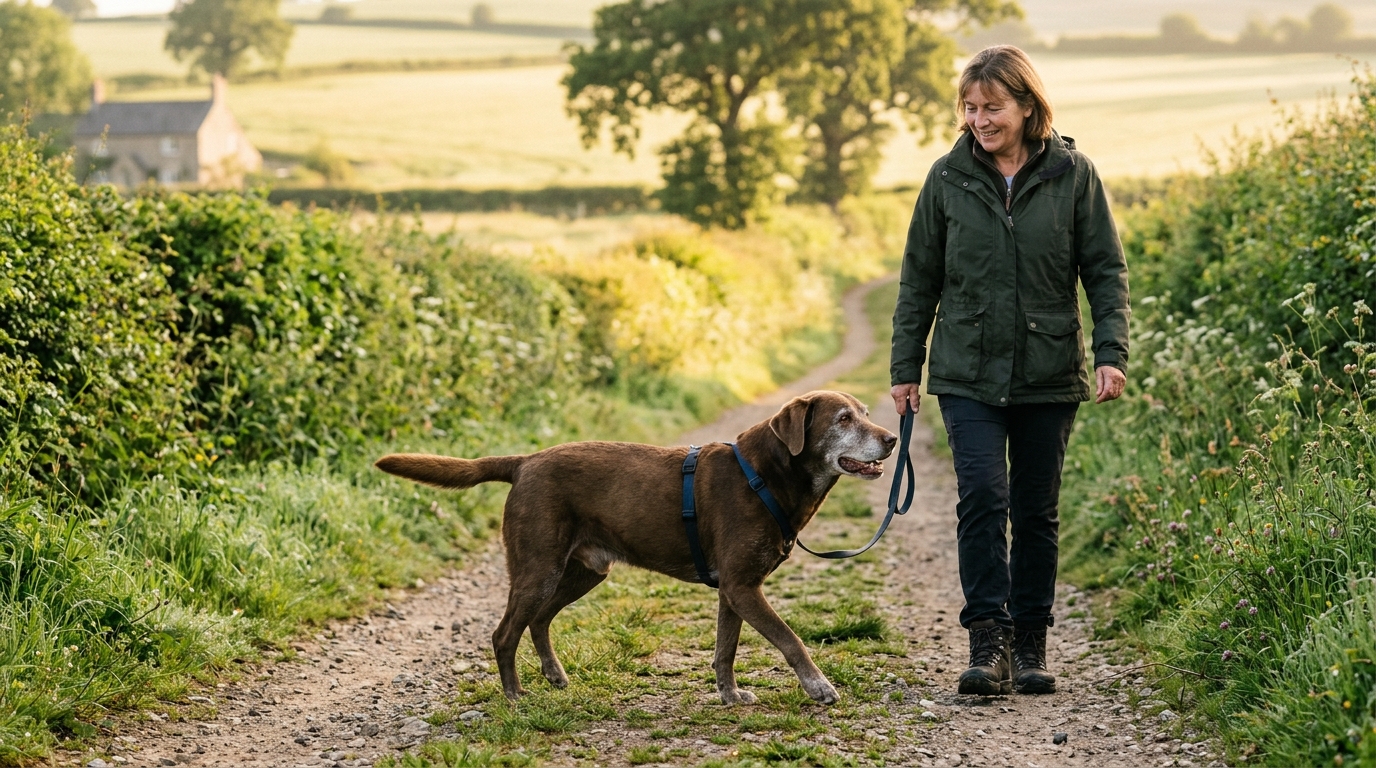
Weight Management: The Single Most Effective Thing You Control
25 minIf I could give only one piece of advice to the owner of an overweight arthritic dog, it would be this: get th…
4Therapies and interventions
9 guides

Beyond Medication: Physiotherapy, Laser and Acupuncture for Cats
8 minMedication is the backbone of feline arthritis care, but it is not the whole story. Physiotherapy, laser, acup…

Complementary Therapies: An Evidence-Based Overview
29 minWalk into any arthritis discussion online and you'll find people enthusiastically recommending acupuncture, la…

Elbow Dysplasia: Understanding the Condition and Its Surgical Options
10 minElbow dysplasia is the most common cause of front-leg lameness in young large-breed dogs, and one of the leadi…

Hip Dysplasia: Understanding the Condition and Its Surgical Options
10 minHip dysplasia is one of the conditions owners most fear hearing about. Part of that is the name, which is fami…

Home Physiotherapy: Exercises You Can Do Together
21 minMost articles on home physiotherapy for arthritic dogs end up either too vague to be useful or too technical t…
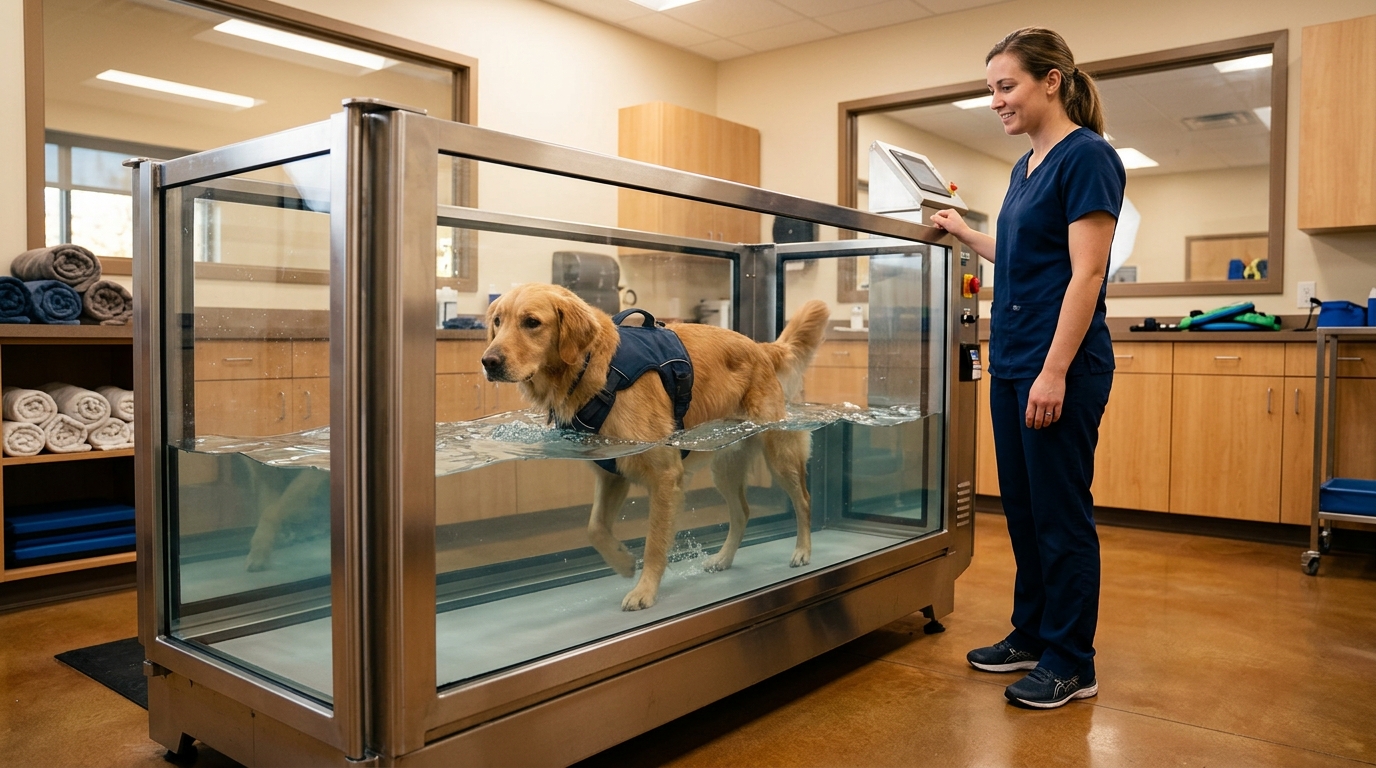
Hydrotherapy: The Complete Guide
23 minHydrotherapy is one of those interventions that genuinely changes outcomes for arthritic dogs. The evidence is…

Patellar Luxation: Understanding the Condition and Its Surgical Options
10 minA small-breed dog who occasionally skips or hops for a step or two and then carries on as if nothing happened…

Regenerative Medicine: Stem Cells, PRP, and Beyond
20 minRegenerative medicine for canine arthritis sits in an interesting position. The science is genuinely exciting,…

Surgery: The Decision-Making Framework
22 minSurgery tends to enter the picture in one of a few ways. Your vet has raised it as an option, your insurer has…
5Working with your vet
7 guides

Building Your Dog's Care Team
23 minAsk most owners who looks after their pet's health and the answer is one word: "the vet." That model works fin…

Funding Long-Term Arthritis Care: Insurance and Beyond
27 minMost owners put off reading anything about money until a bill forces the issue. I understand why. Money conver…

Getting the Most From Your Vet Appointments
23 minA useful vet appointment and a frustrating one usually don't differ on which vet you see. Twenty-five years in…

Monitoring Your Cat at Home: Tracking Pain You Can't See
9 minFor a cat with arthritis, the home is the clinic. Feline arthritis is invisible at the vet, and the X-ray rare…

Monitoring and Knowing When Things Change
25 minThe single most useful skill you can develop as the owner of an arthritic dog or cat is the ability to monitor…
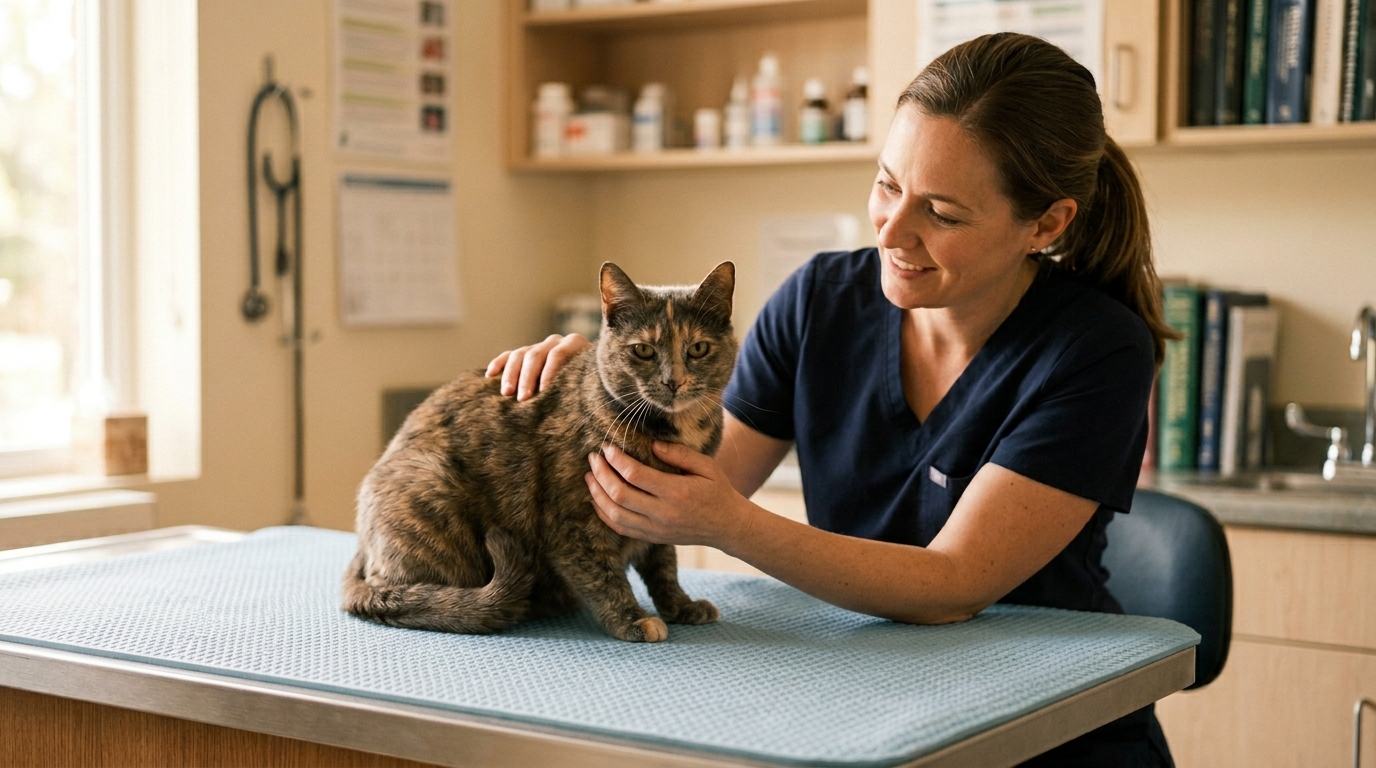
The Cat-Friendly Vet Visit: Getting a Real Picture of a Stoic Patient
9 minA frightened cat on a cold steel table will not limp, will not play, and will not show you the stiffness you s…

When Pain Needs a Specialist: The Veterinary Pain Clinic
14 minSome owners managing a pet with arthritis reach a particular crossroads. The medication that worked beautifull…
6The long view
5 guides
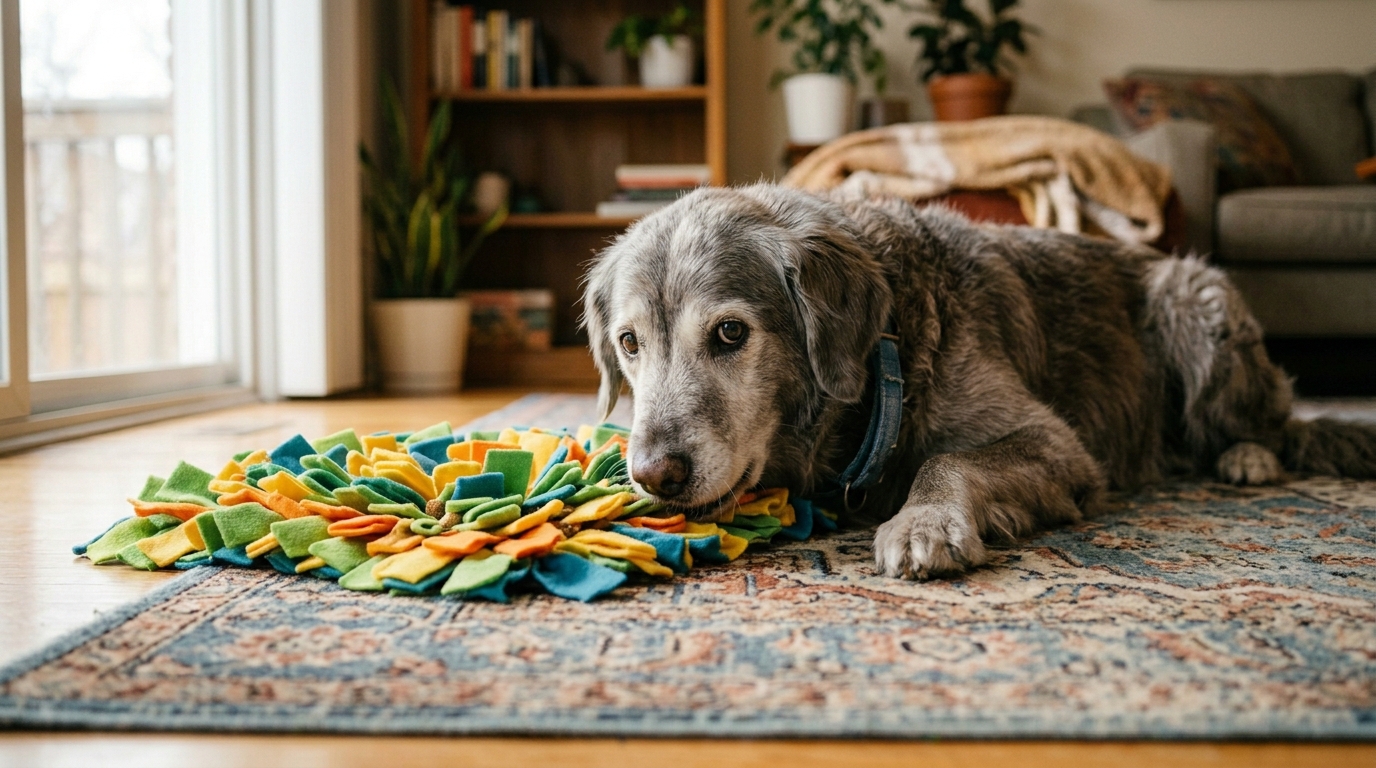
Keeping Them Happy: Enrichment When Walks Aren't Enough
8 minWhen a dog's walks get shorter, or a cat stops doing its acrobatic laps of the house, owners naturally worry a…

Living Well With Arthritis: The Long Game
8 minWhen a dog or cat is first diagnosed with arthritis, most owners ask me some version of the same question, eve…

Living Well and Ageing With an Arthritic Cat: The Long View
9 minAn arthritis diagnosis in an older cat is not the beginning of the end. It is the start of a long, manageable…

The Quality of Life Conversation
11 minThere comes a point with some chronic conditions when a pet can no longer be made meaningfully better, and the…

When Things Get Harder
8 minThe earlier articles in this stage have been, for the most part, hopeful, and deliberately so. Most pets with…
Who writes this
Practising vets, named and accountable.
Every guide is written and reviewed by practising RCVS-registered vets from Greenway Veterinary Group. Each article names its author and the vet who reviewed it, shows when it was last checked, and links to the studies behind its claims. If we cannot back something up, we do not say it.
Free printable downloads
Vet-built worksheets and trackers. Print at home, no signup required.
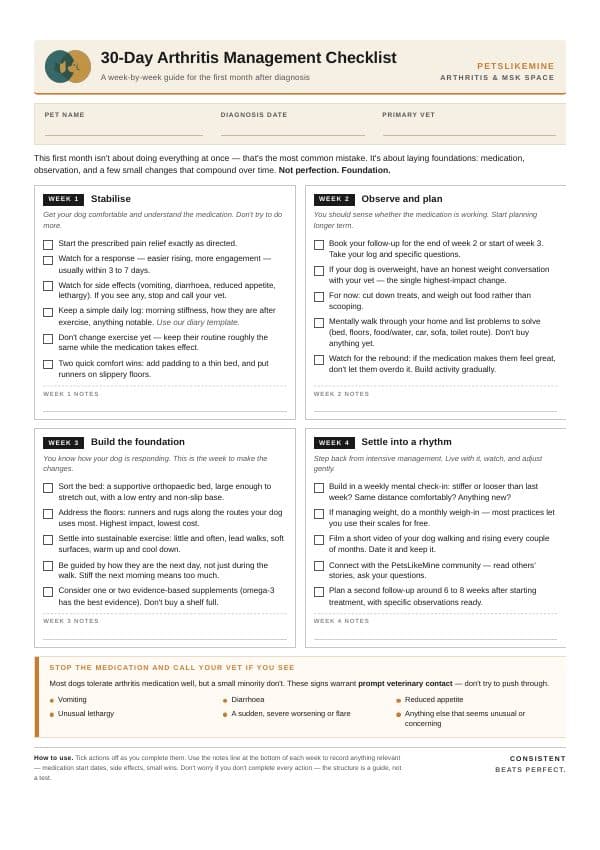
The First 30 Days: Week-by-Week Checklist
PDF · 356 KBA week-by-week guide for the first month after diagnosis. The conversations to have, the small changes to start, and the habits that compound across the years ahead.
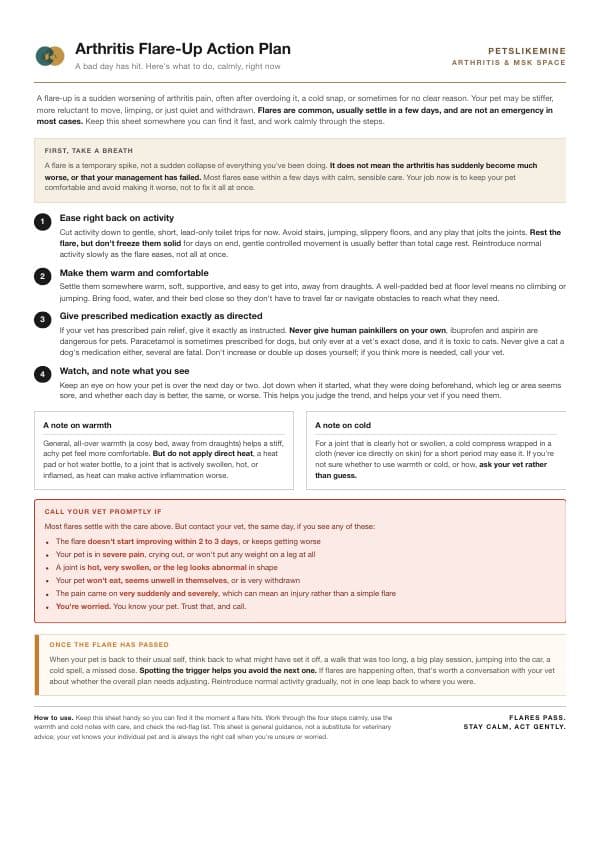
Arthritis Flare-Up Action Plan
PDF · 139 KBWhat to do when arthritis suddenly worsens. A calm, step-by-step plan for the first few days of a flare: ease back, keep them comfortable, give prescribed medication exactly as directed, and watch for the red flags that mean call the vet today. Flares are common and usually pass.
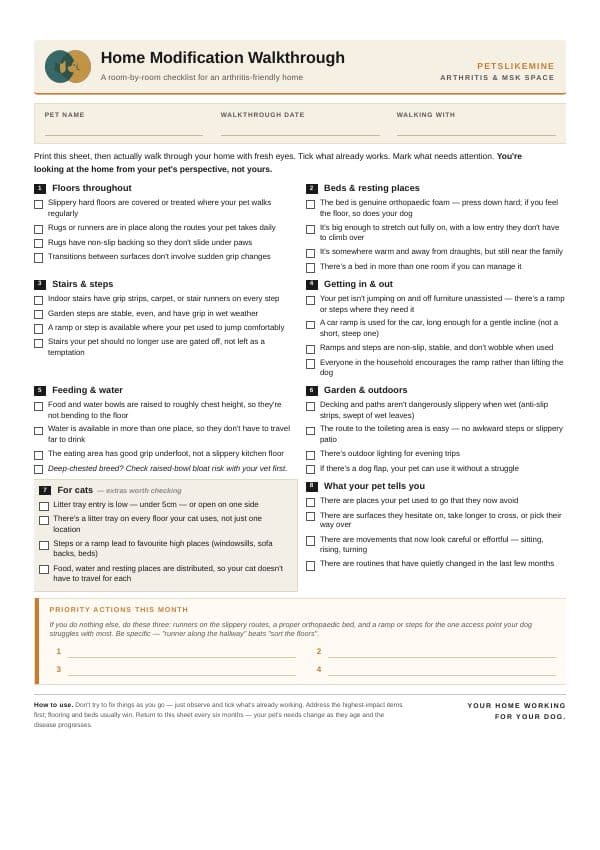
Home Modifications: Room-by-Room Walkthrough
PDF · 357 KBA room-by-room checklist for an arthritis-friendly home. The cheap wins, the bigger projects, and the small changes that matter most for an arthritic dog or cat.
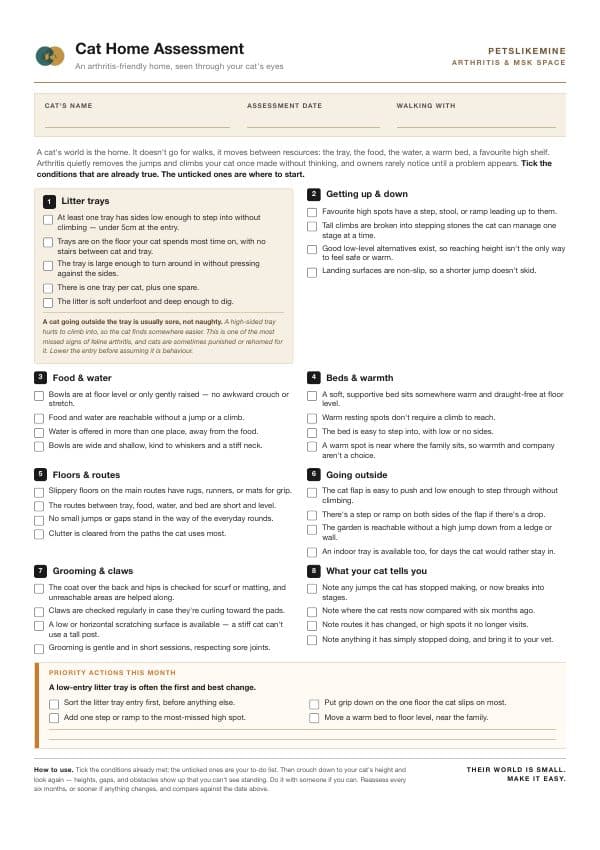
Cat Home Assessment Checklist
PDF · 127 KBA resource-by-resource home assessment for cats with arthritis. A cat's world is the home, and arthritis quietly removes the jumps and climbs between the litter tray, the food, the warm bed, and the favourite high shelf. Tick what's already easy; the rest becomes your plan, starting with the litter tray.
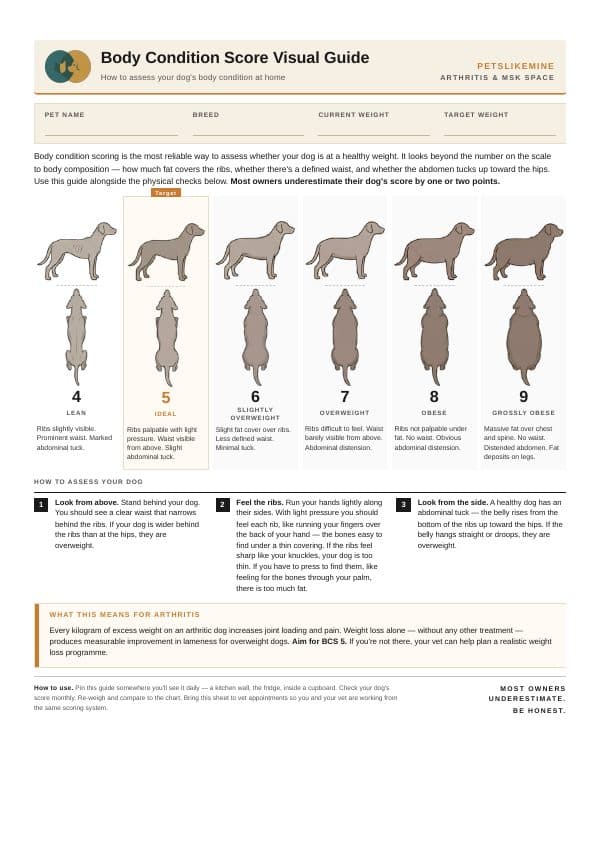
Body Condition Score: Visual Assessment Guide
PDF · 616 KBHow to assess your dog's body condition at home, with side-on and top-down silhouettes for the 1-9 BCS scale. Weight management is the single most effective thing you control, and this is the tool that makes it measurable.
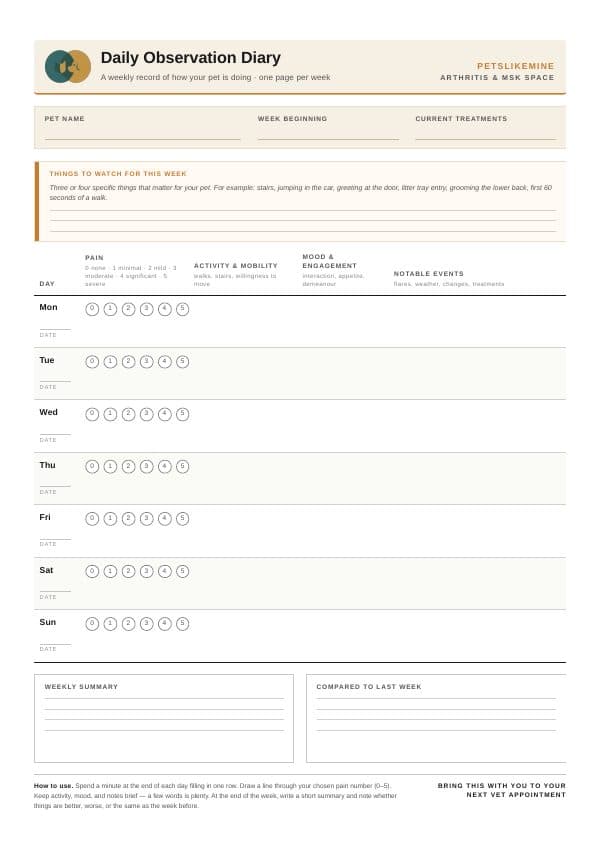
Daily Observation Diary
PDF · 354 KBA weekly record of how your pet is doing, one page per week. The small details that compound across months: stiffness on rising, willingness on walks, mood, appetite, and the moments your gut says something's shifted.
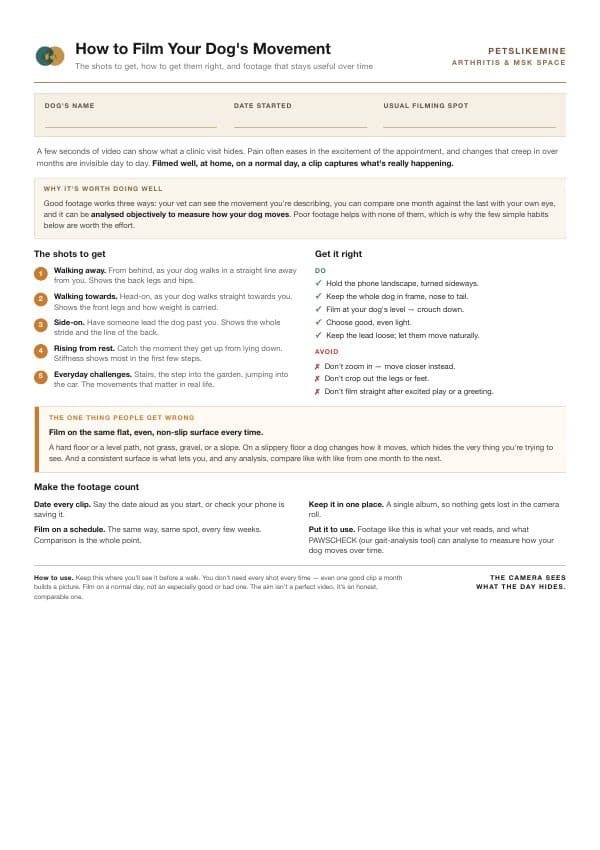
How to Film Your Dog's Movement
PDF · 127 KBA printable guide to capturing video your vet, and you, can actually use. The five shots that show how your dog really moves, how to get them right, and the one detail that makes or breaks the footage: the surface. Film on a normal day and the camera catches what a clinic visit often hides.
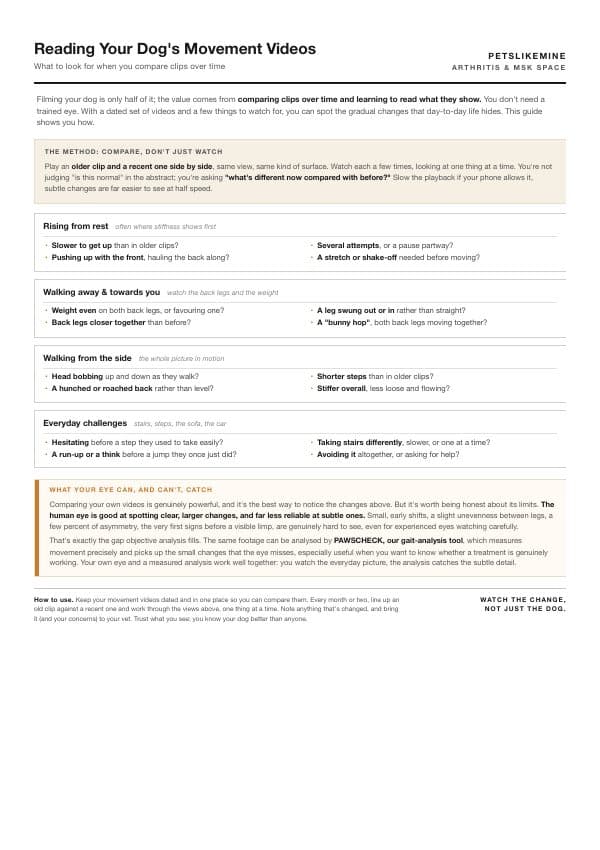
Reading Your Dog's Movement Videos
PDF · 89 KBThe companion to the filming guide: how to actually read the clips you have captured. Line up an older video against a recent one, watch one thing at a time across four everyday views, and spot the gradual changes day-to-day life hides. With an honest note on the subtle shifts the eye misses, and where objective gait analysis picks up.

Pre-Appointment Notes
PDF · 352 KBPrepare before, take notes during, capture what's next after. A single sheet that turns a ten-minute vet appointment into one you'll actually remember properly a week later.
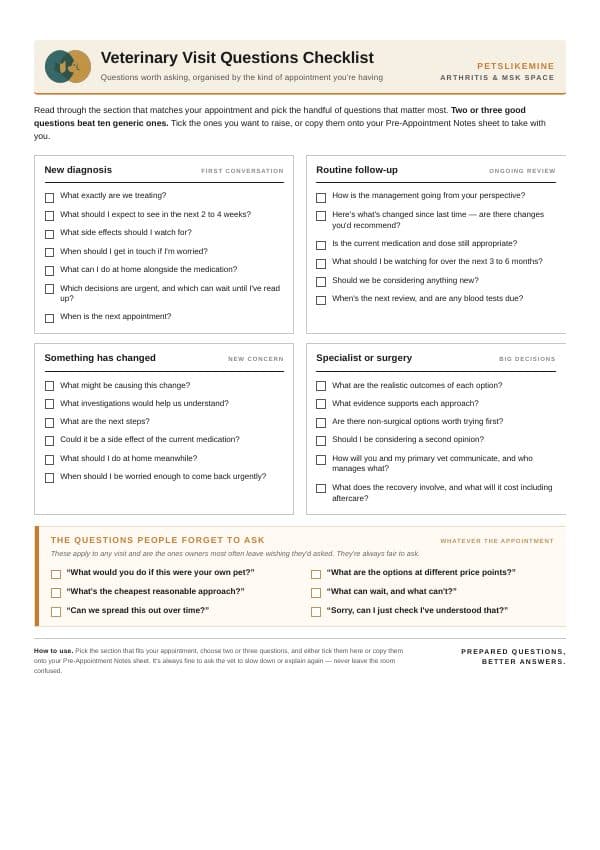
Vet Questions Checklist
PDF · 348 KBQuestions worth asking, organised by the kind of appointment you're having: diagnosis, treatment review, surgical consult, end-of-life conversation. Pick what fits and bring it with you.
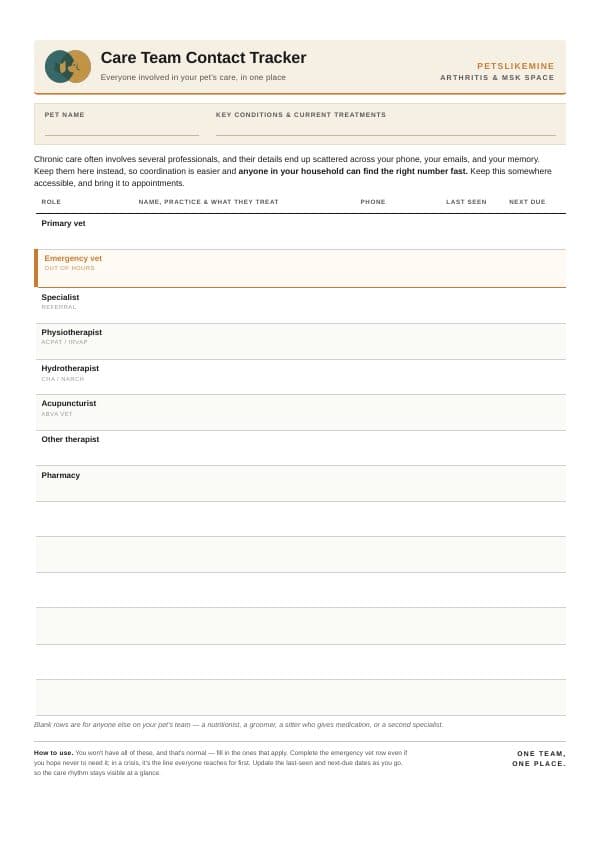
Care Team Tracker
PDF · 341 KBEveryone involved in your pet's care, in one place: primary vet, specialists, physiotherapist, hydrotherapist, behaviourist, end-of-life services. Contact details, last-seen dates, and what they're treating.
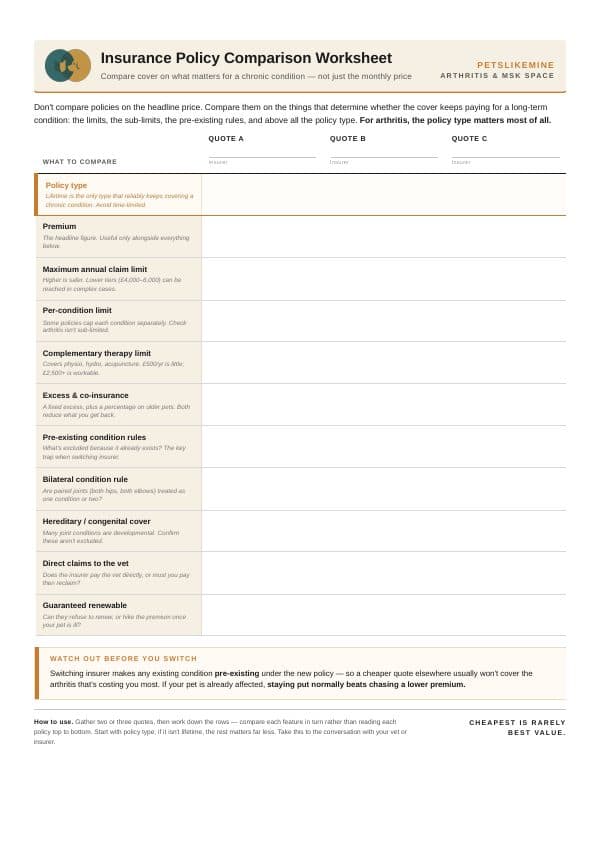
Insurance Comparison Worksheet
PDF · 352 KBCompare cover on what actually matters for a chronic condition: lifetime vs maximum-benefit vs annual vs accident-only, per-condition limits, excess structure, and the small print on continuing conditions.
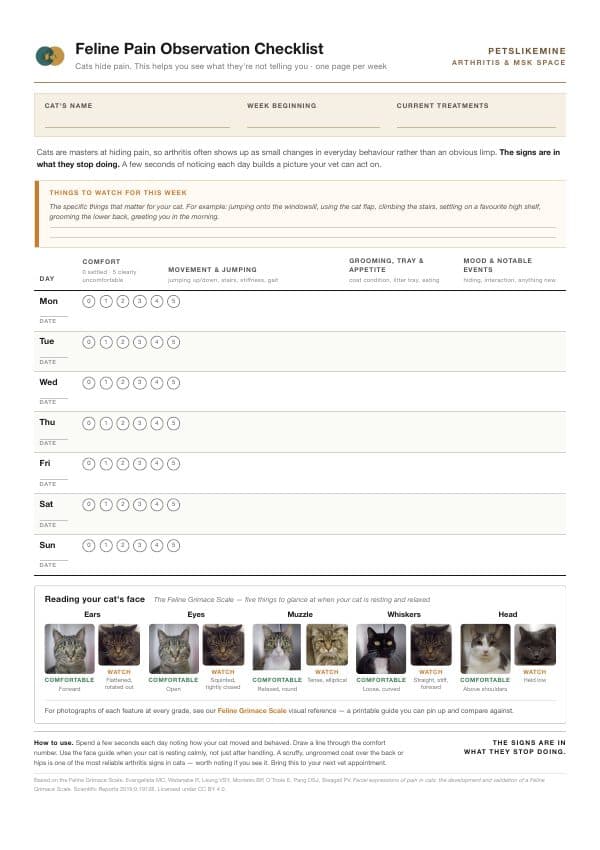
Feline Pain Observation Checklist
PDF · 566 KBA week-by-week record built around how cats really show pain. Not an obvious limp, but the things they quietly stop doing: jumping onto the windowsill, using the cat flap, grooming, settling on a favourite high shelf. A few seconds of noticing each day builds a picture your vet can act on.
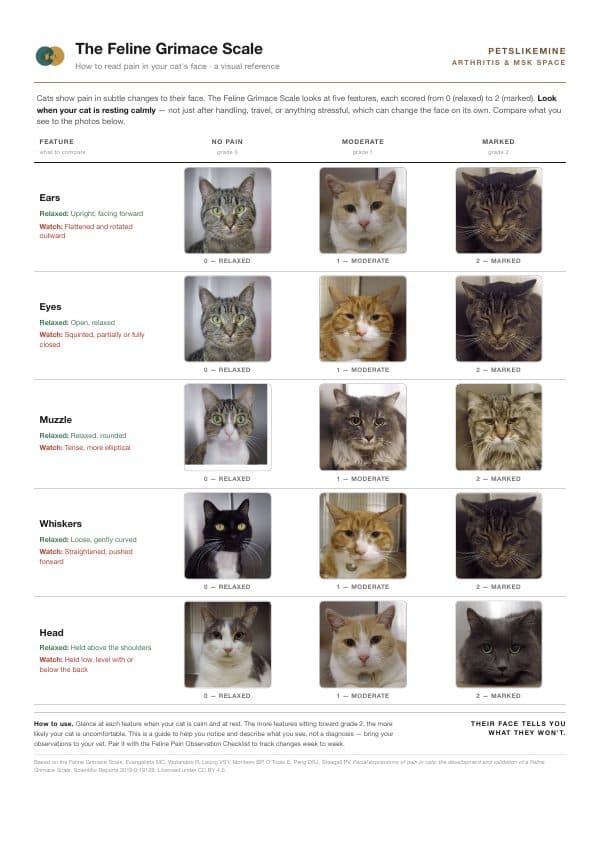
The Feline Grimace Scale
PDF · 699 KBHow to read pain in your cat's face. The Feline Grimace Scale scores five features, from the ears and eyes to the muzzle and whiskers, each from 0 to 2. A visual reference for spotting discomfort when your cat is resting calmly, with photos to compare against.
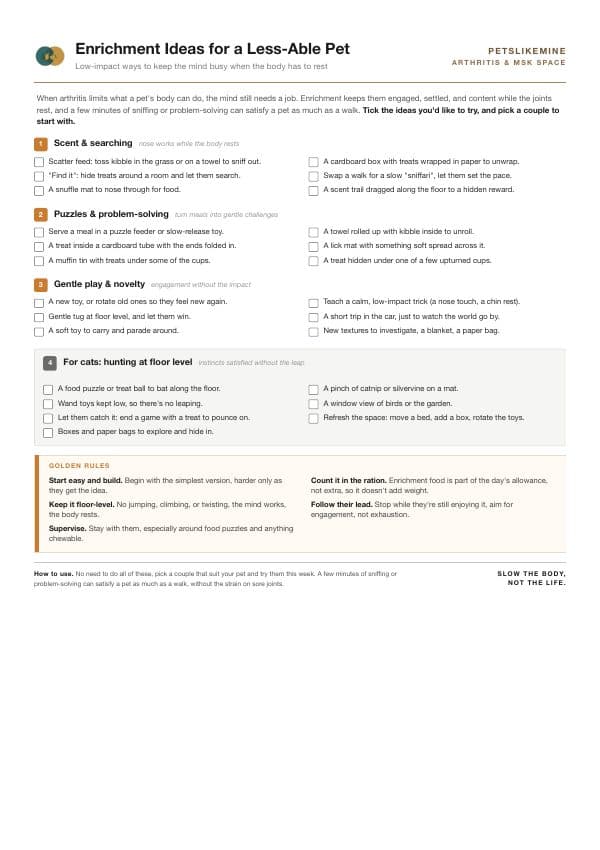
Enrichment Ideas for a Less-Able Pet
PDF · 124 KBA menu of low-impact ways to keep a pet's mind busy when arthritis limits the body. Scent work, puzzle feeders, gentle play, and a full feline section, mostly free and all at floor level. Tick what you'd like to try. Slow the body, not the life.
FAQ
The questions owners ask us most
Short, honest answers to the questions arthritis owners search for most, drawn from the vet-written guides above.
Can arthritis in dogs and cats be cured?
No, and it is better to know that from the start. Arthritis involves structural changes to the joint that current medicine cannot reverse: cartilage that has been destroyed does not regrow. What it can be is managed, effectively and for years. Most dogs stay on some form of pain management for the rest of their lives once it starts, and the aim is a comfortable, active pet rather than a cured joint.
Read the complete guide to arthritis in dogsWhat is the best pain relief for a dog with arthritis?
For most dogs, treatment starts with a prescription NSAID from your vet. They have been used for decades, the safety profile is well understood, and they work for the majority of dogs. For significant arthritis the modern approach is multimodal: combining medications and approaches that work in different ways rather than relying on one drug. Librela can be added, or switched to, when the response to an NSAID is incomplete. There is no single best drug, only the right plan for your dog.
Read the complete medication guideWhat are the side effects of Librela?
The most commonly reported side effects are mild and short-lived: injection site reactions, transient lethargy and mild stomach upset. Post-marketing monitoring has also logged uncommon but more significant reports, including neurological signs such as wobbliness. Watch your dog closely after the first injection, when adverse events are most often reported, and ring your vet about any unexplained change. Our Librela guide sets out the full picture honestly, including the regulator data.
Read the honest Librela guideHow much does arthritis treatment cost in the UK?
For a medium-sized dog, a basic NSAID-only regime works out at roughly £460 to £960 a year, while full multimodal care with Librela can reach £1,430 to £2,860. Librela itself is priced by weight, typically £30 to £90 or more per monthly injection, and Solensia for cats runs £35 to £65 a month. Our cost guide gives the real figures line by line, including the monitoring blood tests.
See the full UK cost breakdownHow do I know if my cat has arthritis?
Cats rarely limp. The clearest sign is a change in jumping: hesitating, jumping to a chair first, or not bothering at all. Reduced grooming, with matting over the lower back and tail base, and difficulty climbing into a high-sided litter tray are common too. One landmark study found 90 percent of cats over 12 had X-ray evidence of arthritis in at least one joint, yet only 4 percent had it mentioned in their records. If you recognise your cat here, book a dedicated appointment with your vet.
Read about the invisible epidemic in catsDo joint supplements actually work?
It depends which one. Omega-3 fatty acids have the best evidence base of any joint supplement, with modest but real improvements in trials, and green-lipped mussel shows genuinely promising results. The evidence for glucosamine and chondroitin is weak, and recent reviews conclude they should no longer be recommended for arthritis pain. No supplement replaces proper pain relief for a pet with diagnosed arthritis.
See what the evidence actually saysDoes weight loss really help a pet with arthritis?
More than almost anything else you control. Studies show weight loss alone measurably reduces lameness in overweight arthritic dogs, sometimes to the point of reducing or removing the need for medication, and dogs kept lean through life develop less arthritis and live longer. The same is true for cats, where weight loss needs to be slow, controlled and ideally supervised.
When is joint pain an emergency?
Osteoarthritis itself builds slowly. A single joint that suddenly becomes severely painful and swollen, or sudden swelling in several joints with a fever, is a different problem and needs to be seen urgently. If in doubt, ring your vet the same day.
Learn the signs most owners missThese answers summarise our vet-written guides. They are general education, not advice about your own pet: your vet knows the individual.