

Arthritis Pain Relief: The Complete Medication Guide
Alastair Greenway
BVM&S MRCVS
There are more options for treating arthritis pain in dogs now than at any point in veterinary history. NSAIDs that are safer and better tolerated than ever. Monoclonal antibody therapy that didn't exist five years ago. Adjunct medications that fill gaps the traditional drugs couldn't reach. Multimodal protocols that combine treatments in ways tailored to the individual dog.
This is genuinely good news. But it also means the conversation about arthritis pain relief is more complicated than it used to be. Owners are often confused about what's been prescribed, why it was chosen over alternatives, and what to expect. Some leave the vet clinic with a prescription they don't understand and a vague sense that there might be options they weren't told about.
This article aims to give you a thorough understanding of every major option for treating arthritis pain in dogs. It covers what each medication does, how it differs from the alternatives, what to expect in terms of effects and side effects, what monitoring is needed, and what each option realistically costs in the UK. You'll be equipped to have an informed conversation with your vet about what's right for your dog.
A word of caution before we start. Every dog is different. The right medication for your dog depends on their specific situation, age, concurrent diseases, and individual response. This article gives you the information to discuss options intelligently with your vet. It doesn't replace that conversation.
If you'd like a more visual companion to this article, our medication explainer tool lets you select the medicines your vet has prescribed and see where each one acts in the pain pathway. It's the same content organised around what the medicines do rather than what they're called.
How the treatments group together
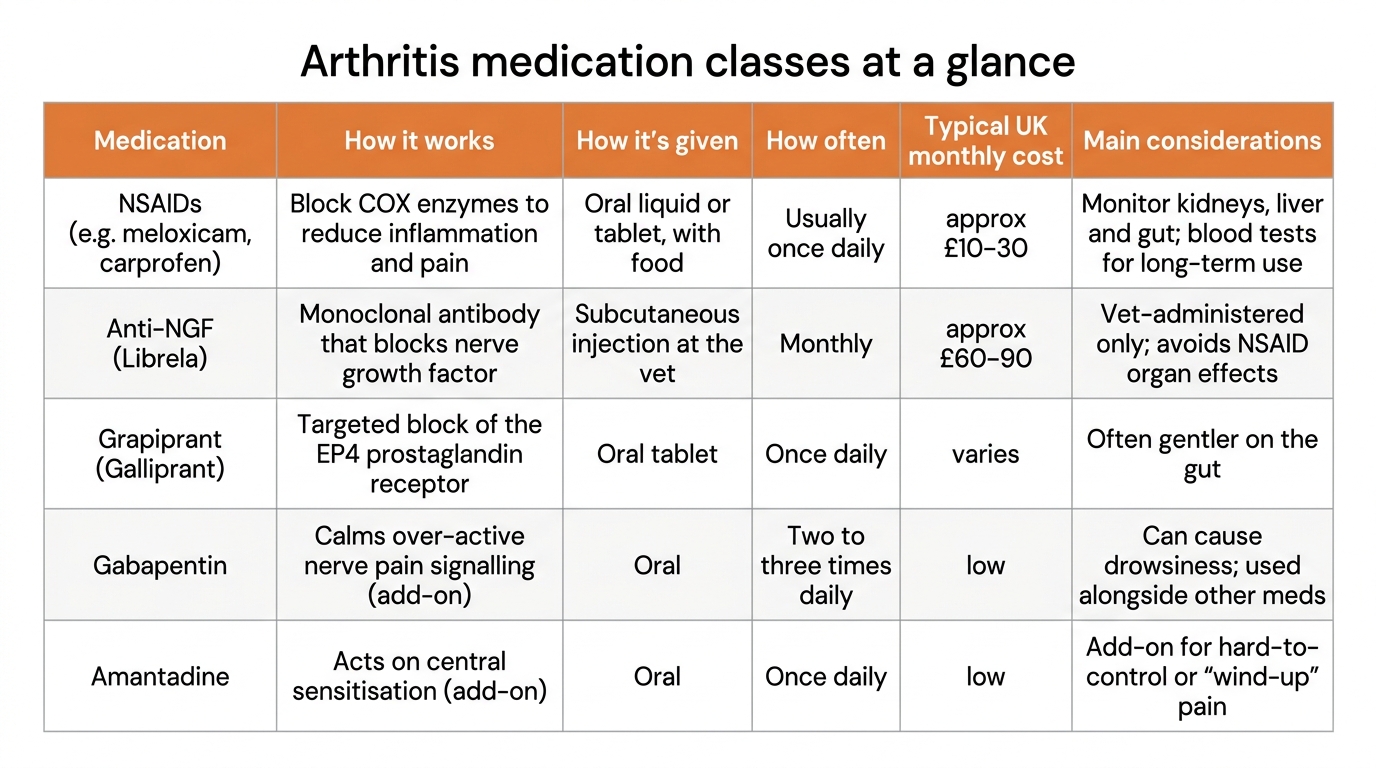
Arthritis pain relief medications can be grouped into a few broad categories based on how they work.
NSAIDs (non-steroidal anti-inflammatory drugs) reduce inflammation and pain by blocking specific enzymes (cyclooxygenase, or COX) that produce inflammatory chemicals. They include meloxicam, carprofen, robenacoxib, firocoxib, and others. NSAIDs are usually the first-line treatment for arthritis in dogs.
Anti-NGF therapy is a newer approach. Monoclonal antibody injections that bind to nerve growth factor (NGF), a key protein in chronic pain signalling. Librela (bedinvetmab) is the main example.
Adjunct pain medications work through different mechanisms and are typically added to NSAIDs or anti-NGF therapy when those alone aren't enough. They include gabapentin, amantadine, tramadol, and paracetamol (used carefully and only under veterinary direction in dogs).
Newer specific NSAIDs like grapiprant (Galliprant) work on more specific aspects of the inflammatory pathway and may have different side effect profiles.
Adjunct treatments not strictly classified as pain medications but contributing to pain control include omega-3 fatty acids, joint diets, and certain supplements (covered in our dedicated supplements article).
Most arthritic dogs end up on at least one medication. Many benefit from combinations. There's no single right answer for every dog.
NSAIDs: the first line
For most dogs with arthritis, NSAIDs are where treatment starts. They've been used for decades, the safety profile is well understood, the cost is reasonable, and they work for the majority of dogs.
What NSAIDs do in the body
NSAIDs reduce the production of prostaglandins, which are signalling molecules involved in pain and inflammation. Specifically, they block enzymes called cyclooxygenases (COX-1 and COX-2). Older NSAIDs blocked both fairly equally. Modern veterinary NSAIDs are designed to preferentially block COX-2 (which is more involved in inflammation) while sparing COX-1 (which has protective effects on the gut, kidneys, and platelets). This selectivity is the main reason modern NSAIDs are safer than the older drugs.
The benefits of NSAIDs:
- Effective for both pain and inflammation
- Convenient oral administration (usually once daily)
- Well-understood safety profile
- Affordable
- Can be adjusted easily in dose
- Decades of clinical experience
The drawbacks:
- Can affect the kidneys, liver, and gastrointestinal tract
- Require monitoring with blood tests for long-term use
- Not suitable for dogs with significant kidney or liver disease
- Cannot be combined with corticosteroids
- Some dogs don't tolerate them
Meloxicam (Metacam, Loxicom, Rheumocam)
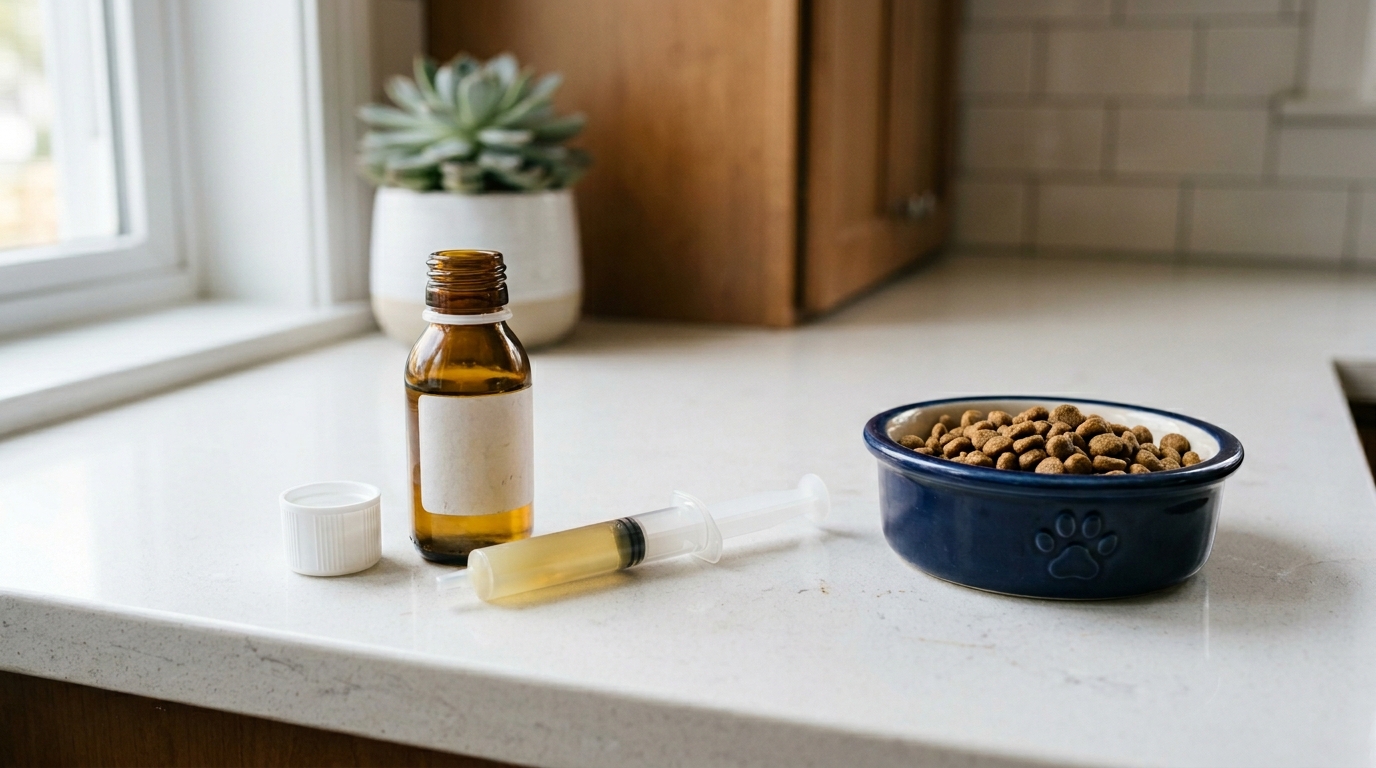
Meloxicam is probably the most widely used NSAID for arthritis in UK dogs. It's available as a flavoured oral liquid (the most common form, dosed once daily) or as tablets.
Meloxicam suspension is administered with food. It's typically given once daily at a dose based on your dog's weight (your vet will calculate this precisely). The effects come on within hours of the first dose, though the full benefit usually takes a few days to become apparent.
UK costs: A 100ml bottle of branded Metacam at full vet retail price costs £40 to £55. Generic meloxicam (Loxicom or Rheumocam) at the same volume costs £25 to £35. Buying online with a written prescription typically reduces these costs by 30 to 50%. A medium-sized dog (25kg) typically uses a 100ml bottle in 6 to 8 weeks. So the monthly cost ranges from approximately £10 (cheapest generic, online pharmacy) to £30 (branded, vet practice).
For long-term treatment, asking your vet for a written prescription and buying online can save £150 to £350 per year.
Carprofen (Rimadyl, Carprodyl, Carprieve)
Carprofen is another widely used NSAID. It's typically given as twice-daily chewable tablets, which some owners find easier than measuring liquid. Like meloxicam, it's COX-2 selective and well-tolerated by most dogs.
The dosing is based on weight, and the chewable tablets are designed to be palatable to dogs (most accept them readily). It's particularly common in larger dogs because the tablets can be easier and more economical than measuring out larger volumes of liquid.
UK costs: Branded Rimadyl tablets cost £35 to £55 for a month's supply at vet prices for a medium-sized dog. Generic carprofen is around 25 to 30% cheaper. Online prescription pricing is typically 30 to 40% lower than vet retail.
Robenacoxib (Onsior)
Robenacoxib is a more recently developed NSAID, often described as a "tissue-selective" COX-2 inhibitor. The theory is that it concentrates preferentially in inflamed tissues, potentially reducing systemic exposure and side effects.
It's available as tablets and as an injection (used mainly in clinical settings). It's typically given once daily on an empty stomach (an unusual feature among NSAIDs).
UK costs: Onsior tablets are typically £45 to £70 per month for a medium-sized dog. It's at the more expensive end of the NSAID range.
Mavacoxib (Trocoxil)
Mavacoxib has an unusual feature: it's dosed only every 4 weeks rather than daily. This can be appealing for owners who struggle with daily medication. The convenience comes with caveats, though. The long half-life means that if a problem develops, the drug stays in the system for a long time, making management trickier.
It's typically reserved for situations where daily dosing isn't practical.
UK costs: Mavacoxib costs roughly £25 to £40 per monthly dose for a medium-sized dog.
Firocoxib (Previcox)
Firocoxib is another COX-2 selective NSAID, given once daily as a tablet. It's chewable and well-tolerated by most dogs. Cost is similar to other modern NSAIDs.
Keeping an eye on the bloods
Any dog on long-term NSAID therapy needs monitoring. The standard recommendation is:
- Baseline blood tests before starting (kidney function, liver function, sometimes urinalysis)
- Repeat blood tests 2 to 4 weeks after starting (to catch early problems)
- Then periodic monitoring every 6 to 12 months for long-term use
The blood tests cost £80 to £150 each in UK practice. This isn't optional. It's part of responsible long-term medication use, and skipping it isn't worth the risk.

Side effects to watch for
Most dogs tolerate NSAIDs very well. The minority who don't typically show issues within the first two weeks of starting. Watch for:
- Vomiting or diarrhoea
- Reduced appetite
- Lethargy beyond what would be expected
- Black or tarry stools (indicating gastrointestinal bleeding)
- Increased thirst or urination
- Yellowing of the eyes or gums (suggesting liver problems)
If any of these develop, stop the medication and contact your vet. Most problems resolve quickly with prompt action.
NSAIDs should not be given with corticosteroids (prednisolone, dexamethasone) or with other NSAIDs. The combination dramatically increases the risk of gastrointestinal ulceration.
Anti-NGF therapy: Librela
Librela (bedinvetmab) is a significant new development in arthritis pain management. It's the first monoclonal antibody therapy licensed for arthritis pain in dogs, launched in the UK in 2021.
What Librela does differently
Librela works completely differently from NSAIDs. It's a monoclonal antibody that binds to nerve growth factor (NGF), a protein involved in maintaining pain signalling in chronic pain conditions. By neutralising NGF, Librela reduces the sensitivity of nerves that would otherwise be sending pain signals.
The mechanism is targeted and specific. Because it doesn't act on the kidneys, liver, or gastrointestinal tract (the organs typically affected by NSAIDs), it has a very different side effect profile.
How it's given
Librela is given as a monthly subcutaneous injection at the vet clinic. It cannot be self-administered at home. The injection itself is quick and most dogs tolerate it without difficulty.
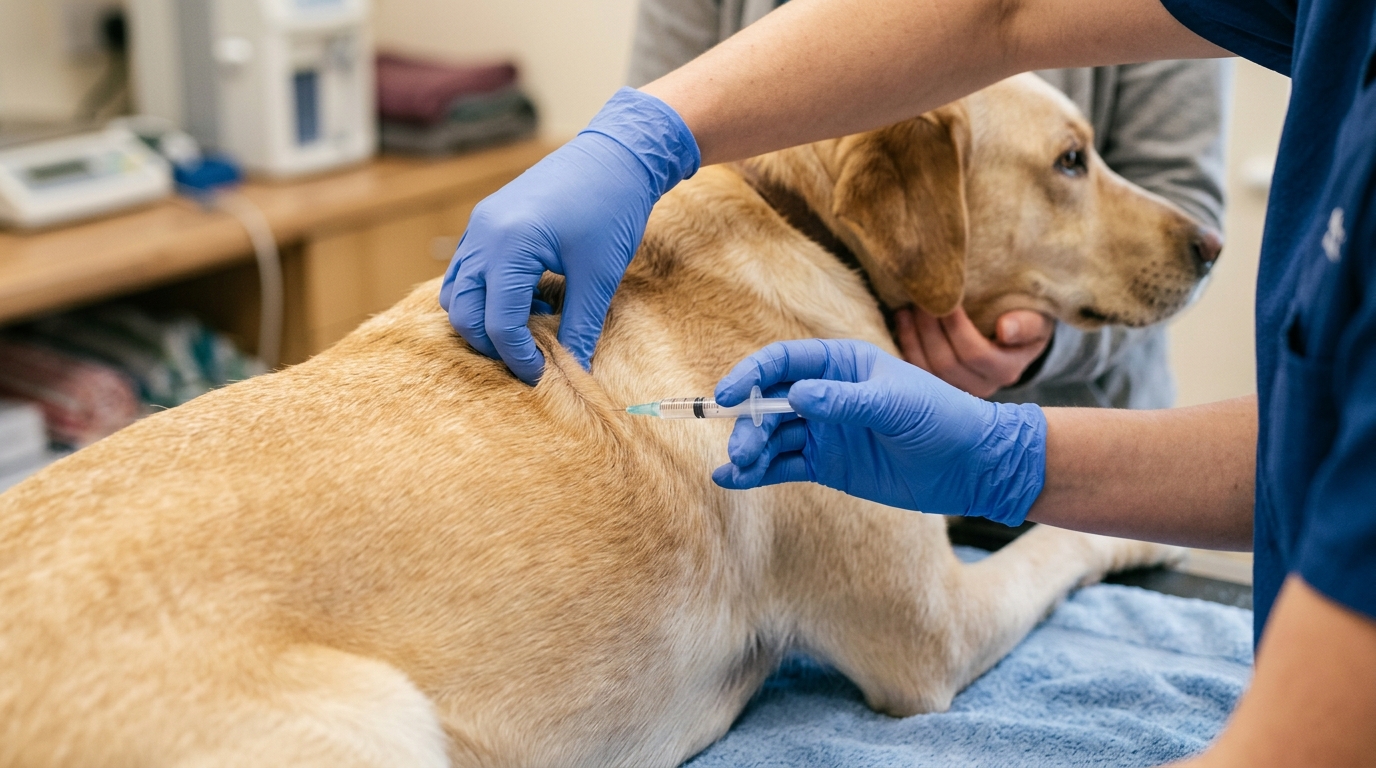
The effects typically begin within 7 to 14 days of the first injection. Some dogs respond beautifully and quickly. Others take 2 to 3 monthly doses before the response is clear. A small percentage don't seem to respond at all.
UK costs
A monthly Librela injection in UK practice typically costs £60 to £90 depending on the dog's weight and the practice. Annual cost is therefore £720 to £1,080. This is significantly more expensive than NSAID therapy, but for many families the result justifies it.
Librela is not available through online pharmacies. It must be administered by a vet, so you can't reduce the cost by buying it elsewhere.
Where Librela earns its place
Librela has earned a place in the toolkit for several specific situations:
Dogs who can't take NSAIDs. Dogs with kidney disease, liver disease, gastrointestinal sensitivity, or who haven't tolerated NSAIDs are obvious candidates for Librela. The mechanism avoids the organs that limit NSAID use.
Dogs whose pain isn't well-controlled on NSAIDs alone. Adding Librela to existing NSAID therapy (or switching to Librela) can produce better pain control in some dogs whose response to NSAIDs has been incomplete.
Older dogs with multiple health conditions. When the medication picture is already complex, Librela's clean side effect profile can simplify things.
Owners who struggle with daily medication. Monthly injections at the clinic remove the burden of remembering daily doses.
Safety and what's still being learned
The published safety profile of Librela is generally favourable. The most commonly reported issues are mild and short-lived: local injection site reactions, transient lethargy, mild gastrointestinal upset.
However, there has been ongoing post-marketing safety monitoring by the Veterinary Medicines Directorate, and there have been some reports of more significant adverse events in some dogs. These are uncommon but have included neurological signs, deterioration in pre-existing conditions, and other concerns. The picture is still being clarified, and the risk-benefit balance should be discussed with your vet, particularly for older dogs with multiple existing health issues.
The product information advises against use in dogs with a history of cruciate ligament rupture in the past six months or in dogs less than 12 months old, as these situations weren't included in the original clinical trials.
For most dogs, Librela has been a genuine step forward. For some, it hasn't worked or has produced unwanted effects. The pragmatic approach is to discuss it with your vet, consider whether it's right for your specific dog, and monitor carefully when starting.
Grapiprant (Galliprant)
Grapiprant is a slightly different class of drug. It's a piprant, a more targeted modulator of inflammation that acts on a specific prostaglandin receptor (the EP4 receptor) rather than blocking COX enzymes more broadly.
The theoretical advantage is that by acting more specifically, it may have fewer effects on the gut, kidneys, and other tissues affected by traditional NSAIDs. The clinical evidence supports this in many dogs, though it's not entirely free of similar concerns.
Grapiprant is given as a daily tablet. The 2024 Enomoto study used it as part of a multimodal regimen in young dogs with arthritis and showed measurable improvements in objective gait parameters.
UK costs: Galliprant tablets typically cost £50 to £75 per month for a medium-sized dog.
Grapiprant can be useful for dogs who haven't tolerated traditional NSAIDs, or as a daily oral alternative for owners who don't want monthly clinic visits for Librela but want something different from a traditional NSAID.
Adjunct pain medications
For some dogs, NSAIDs or Librela alone don't provide adequate pain control. This is particularly common in dogs with longstanding arthritis, those with central sensitisation, or those with multi-joint disease. Adjunct medications added to the primary treatment can fill the gap.
Gabapentin
Gabapentin was originally developed as a human anti-seizure medication, but it's now widely used in veterinary medicine for chronic pain. It works on a completely different pathway from NSAIDs (modulating calcium channels in nerve cells), which means it can address types of pain that don't respond to anti-inflammatory drugs.
It's particularly useful for:
- Neuropathic pain (pain from nerve involvement)
- Central sensitisation
- Spinal pain
- Cases where NSAIDs alone aren't enough
Gabapentin is given as capsules or tablets, typically two or three times daily. The dose is gradually titrated up to find what works without causing too much sedation, which is the main side effect.
Many dogs are noticeably drowsy when starting gabapentin. This usually settles over a week or two as they adjust. Some dogs remain a bit sleepy throughout treatment, which may or may not be a problem depending on their lifestyle.
UK costs: Gabapentin is now available as generic and is relatively inexpensive. A month's supply for a medium-sized dog typically costs £15 to £30 at vet retail, less online with a prescription.
Amantadine
Amantadine was originally an antiviral drug, but it works on a brain receptor (the NMDA receptor) involved in pain signalling and central sensitisation. It's particularly useful when central sensitisation has developed (the wind-up pain we've discussed in other articles).
It's given as a once-daily capsule. Most dogs tolerate it well. Side effects are uncommon but can include mild agitation or gastrointestinal upset.
UK costs: Amantadine is relatively affordable, typically £20 to £40 per month for a medium-sized dog at vet retail.
Paracetamol (with codeine in some preparations)
This is an important and underutilised option, but it comes with caveats.
Paracetamol is genuinely useful for some dogs as an adjunct to other arthritis medications. It works through a different mechanism from NSAIDs and can provide additional pain relief without the same risks. However, it's critical that paracetamol is only used under specific veterinary direction:
- Paracetamol is highly toxic to cats. It must never be given to a cat.
- The dose for dogs is specific and must be calculated correctly. Human paracetamol doses are not appropriate.
- It should not be used in dogs with liver disease.
- It's typically prescribed as a specific veterinary product (such as Pardale-V, which combines paracetamol with codeine) or as a calculated dose of human paracetamol under vet guidance.
When used appropriately, paracetamol can be a useful, affordable adjunct to other treatments.
UK costs: When prescribed as a vet product, costs are modest. £15 to £30 per month for a medium-sized dog.
Tramadol
Tramadol has fallen significantly from favour in canine arthritis management in recent years, and it's worth understanding why.
For years, tramadol was widely prescribed for chronic pain in dogs. The thinking was that it had opioid-like effects and could provide useful pain relief. However, more recent research has shown that dogs metabolise tramadol very differently from humans. The active opioid metabolites that produce pain relief in humans are produced only minimally in dogs. Studies looking at tramadol's effectiveness for chronic arthritis pain in dogs have been disappointing, with a randomised controlled trial finding no clinically meaningful benefit over placebo for osteoarthritis pain.
Tramadol may still have a role in specific situations, but it's no longer considered a routine first-choice adjunct for chronic arthritis pain. If you have an older dog who has been on tramadol for years, it may be worth a conversation with your vet about whether something more effective could replace it.
Corticosteroids (prednisolone, methylprednisolone)
Corticosteroids are powerful anti-inflammatory drugs, but they have a complicated role in arthritis management.
Corticosteroids work, often dramatically. A dog with severe arthritis pain put on prednisolone often shows immediate improvement. But the long-term side effects (increased thirst, increased appetite, muscle wasting, immune suppression, increased susceptibility to infection, behavioural changes, predisposition to other diseases) make them poor choices for long-term management of a chronic condition.
Steroids are typically reserved for:
- Short-term use in flares
- Immune-mediated arthritis (where they're a first-line treatment)
- Situations where NSAIDs are contraindicated and other options have been exhausted
Steroids cannot be combined with NSAIDs (the gastrointestinal risk is too high). If your dog is on steroids for any reason, NSAID therapy needs to be stopped, with a washout period before either is changed.
UK costs: Prednisolone is cheap (£10 to £20 per month for a medium-sized dog), but the cost isn't really the point. The side effect profile is what limits its use.
Multimodal pain management
This is the modern approach for most dogs with significant arthritis. Rather than relying on a single drug, treatment combines several different medications and approaches that work through different mechanisms. The result is often better pain control with lower doses of each individual medication, reducing the risk of side effects.

A typical multimodal protocol for a dog with moderate to severe arthritis might be:
- Daily NSAID (e.g. meloxicam)
- Monthly Librela injection (in dogs who need additional control)
- Gabapentin or amantadine for breakthrough pain or central sensitisation
- Daily omega-3 fatty acid supplementation
- Weight management programme
- Environmental modifications
- Regular controlled exercise
- Possibly hydrotherapy, physiotherapy, or acupuncture
Not every dog needs every component. The protocol is built around the individual dog's needs and the family's circumstances.
The COAST (Canine Osteoarthritis Staging Tool) consensus guidelines and the 2022 AAHA pain management guidelines both emphasise multimodal approaches as the standard of care for arthritis pain in dogs.
Adding up the year's costs
A useful exercise is to think about what arthritis treatment realistically costs over a year. UK estimates for a medium-sized dog with moderate arthritis:
Basic NSAID-only regime:
- NSAID medication: £150 to £360 a year
- Monitoring blood tests: £160 to £300 a year (twice annually)
- Vet consultations: £150 to £300 a year
- Total: approximately £460 to £960 a year
NSAID plus Librela for inadequate control:
- All of the above plus Librela monthly: £720 to £1,080 a year
- Total: approximately £1,180 to £2,040 a year
Multimodal with adjuncts:
- NSAID: £150 to £360 a year
- Gabapentin: £180 to £360 a year
- Monitoring: £160 to £300 a year
- Vet consultations: £200 to £400 a year
- Total: approximately £690 to £1,420 a year
Multimodal plus Librela:
- NSAID or grapiprant: £180 to £720 a year
- Librela monthly: £720 to £1,080 a year
- Adjuncts: £180 to £360 a year
- Monitoring and consultations: £350 to £700 a year
- Total: approximately £1,430 to £2,860 a year
These figures don't include hydrotherapy, physiotherapy, supplements, or other adjunct treatments. Over a dog's remaining lifetime, the cumulative cost of arthritis management can be substantial. This is a legitimate consideration in decision-making and worth discussing openly with your vet.
Common questions
Will my dog be on medication forever?
Probably yes, in some form. Arthritis is a chronic condition. The medications don't cure it, they control the pain. Most dogs continue on some form of pain management for the rest of their lives once it starts.
That said, what they're on may change over time. Doses may increase. Medications may be added or substituted. Some dogs do reduce their medication when weight loss or other lifestyle changes are successful. The picture isn't static.
Can I just give my dog human painkillers?
No. Ibuprofen, naproxen, aspirin, and other human NSAIDs are toxic to dogs at doses easily reached, and the safety margin is much narrower than for veterinary-licensed products. Paracetamol can be used in dogs but only at specific veterinary-calculated doses and under direction. Don't medicate your dog with anything from your own medicine cabinet without specific guidance from your vet.
My friend's dog takes a different medication. Should mine be on that too?
Not necessarily. Different dogs respond differently to different medications. The right choice depends on your individual dog's situation. What works brilliantly for one dog may not be the best choice for another, even with similar conditions.
Can I buy these medications cheaper online?
For most oral medications, yes. UK law allows you to ask your vet for a written prescription, which you can then take to an online pharmacy. The savings can be significant for long-term medications. Your vet charges a fee for writing the prescription (typically £15 to £25), but this is usually recovered quickly in savings. Librela is the main exception, as it must be given as an injection at the clinic.
Do supplements replace medications?
No. Some supplements (notably omega-3 fatty acids) have evidence of modest benefit and can be a useful part of multimodal management. But they don't replace pharmaceutical pain relief for dogs with diagnosed arthritis. Treating arthritis with supplements alone is usually insufficient.
What if the medication isn't working?
Don't accept inadequate pain control as inevitable. If your dog seems to be in significant pain despite treatment, talk to your vet. Options include increasing the dose (within safe limits), switching medications, adding adjunct therapies, or referral to a specialist in chronic pain management. There's nearly always something more that can be done.
Working with your vet
The most important thing is open, ongoing communication with your vet. They need to know:
- How well the medication seems to be working
- Any side effects you've noticed
- Whether you're struggling with cost
- Whether you're struggling with administration
- Whether you have questions or concerns
A good vet wants to know all of this. They can't optimise the treatment plan if they don't have the information.
Don't be afraid to push for more if your dog isn't comfortable. Don't be afraid to ask about cost. Don't be afraid to ask about alternatives. Don't be afraid to ask for referral if you feel the management isn't progressing.
This is a long-term partnership. The first medication you try may not be the final answer. The first dose may need adjustment. The combination that works at year one may need refinement by year three. That's normal, and it's the point of ongoing care.
A final word

Pain control is the foundation of everything else in arthritis management. A dog in pain can't exercise properly, can't sleep well, can't engage with life the way they should. Get the pain right, and everything else becomes possible.
Medication isn't the whole answer. Weight management, exercise modification, environmental changes, and adjunct therapies all contribute. But medication is usually the starting point, and getting it right matters enormously.
If your dog is on arthritis medication and seems comfortable, you're doing well. If you're not sure whether they're as comfortable as they could be, push for that conversation. Your dog deserves to feel as good as the current state of veterinary medicine can make them feel.
References
- European Medicines Agency. Librela (bedinvetmab): summary of product characteristics. Marketing authorisation, 2020.
- US Food and Drug Administration, Center for Veterinary Medicine. Information on adverse event reports associated with Librela (bedinvetmab), 2024.
- Enomoto M, Hash J, Cole T, et al. Response to treatment with grapiprant as part of a standard multimodal regimen in young dogs with appendicular joint osteoarthritis associated pain. Frontiers in Veterinary Science, 2024.
- Budsberg SC, Torres BT, Kleine SA, et al. Lack of effectiveness of tramadol hydrochloride for the treatment of pain and joint dysfunction in dogs with chronic osteoarthritis. Journal of the American Veterinary Medical Association, 2018.
- Cachon T, Frykman O, Innes JF, Lascelles BDX, Okumura M, Sousa P, et al. Face validity of a proposed tool for staging canine osteoarthritis: Canine OsteoArthritis Staging Tool (COAST). The Veterinary Journal, 2018.
- Gruen ME, Lascelles BDX, Colleran E, et al. 2022 AAHA pain management guidelines for dogs and cats. Journal of the American Animal Hospital Association, 2022.
Free downloads
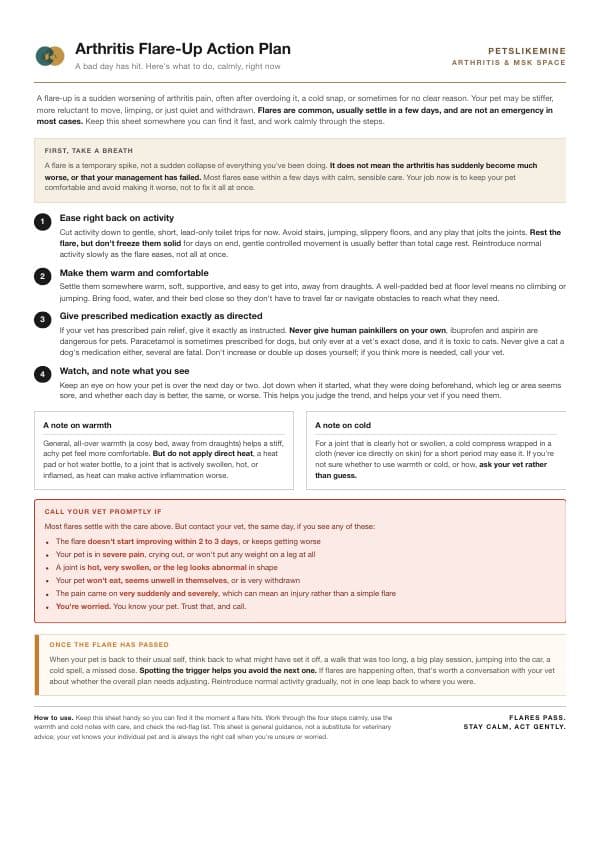
Companion worksheets to put what you've read into practice. Free PDFs, print at home.
Sister tool · Sightline
Track whether treatment is working
Sightline, a separate ConciergeVet tool, runs a short weekly check-in built on validated pain and mobility instruments, turns it into a single Sightline Score you can watch trend over weeks rather than judge on one bad day, and produces a report you can bring to your vet.
A written log, or our printable trackers, does much the same job.
See how Sightline tracks treatmentSee where your pet stands today
Tracking is the other half of managing arthritis. Take the 2-minute Mobility Check to see your pet's stage, then watch it shift as treatment takes effect.
Take the Mobility CheckYou're not doing this alone
Compare treatment journeys and talk to owners managing arthritis. Free to join.
Join PetsLikeMine