

How to Spot Arthritis in Your Dog: The Signs Most Owners Miss
Dr. Alastair Greenway
MRCVS, 25 years clinical experience
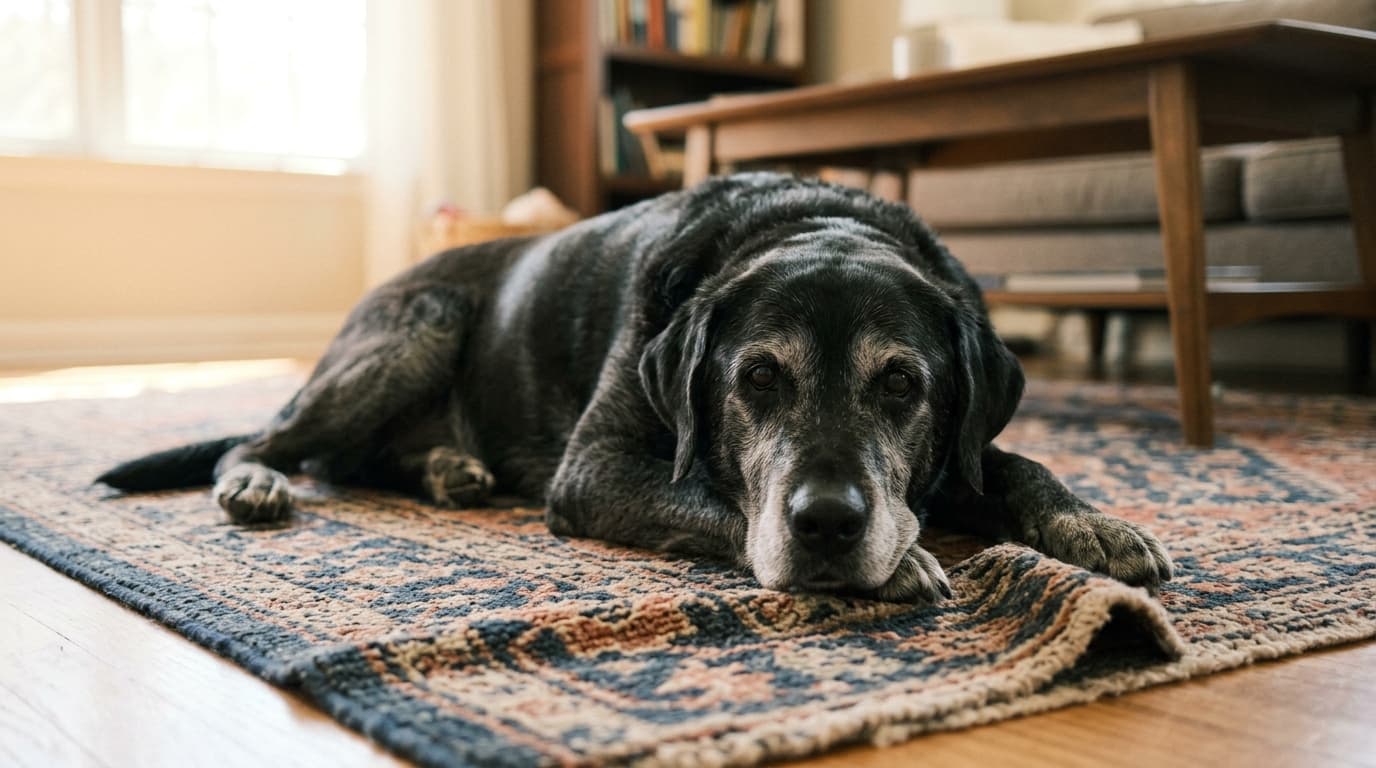
Ask most people what arthritis looks like in a dog and they'll describe a limping older Labrador struggling up the stairs. That picture is right, but only partly. By the time a dog is obviously limping, the disease has usually been progressing quietly for months or years. The signs you were meant to catch came and went long before the limp arrived.
This article is about those earlier signs. The ones that don't look like pain to most owners. The ones that get dismissed as "he's just getting old" or "she's always been a bit grumpy." The signs that, if caught early, give your dog the best possible chance of staying comfortable and mobile for years.
I'll level with you. Reading this might be uncomfortable, because some of what I'm about to describe will probably sound exactly like your dog. That's not a reason to feel guilty. The whole reason these signs get missed is that they're genuinely subtle and easy to misinterpret. The fact that you're here, learning what to look for, means your dog is in better hands than the millions of dogs whose owners never make the connection.
Why the subtle signs matter so much
Recent research has been clear and somewhat damning: owners systematically miss the subtle signs of pain in their dogs. A 2026 study published in PLOS ONE asked participants to evaluate 17 specific behavioural signs that may indicate pain. Dog owners performed only marginally better than non-owners. In some cases, non-owners were actually more accurate, possibly because owners had learned to interpret these behaviours as personality quirks or stress rather than as discomfort.
This isn't because dog owners don't love their dogs or aren't paying attention. It's because chronic pain in dogs presents very differently from how we instinctively expect pain to look. We expect crying, whimpering, obvious limping, a dog who clearly seems to be suffering. What we get instead is gradual change, behavioural adaptation, and the quiet erosion of the things our dogs used to do.
Here's what makes it matter so much: the earlier you catch arthritis, the more effective treatment becomes. Pain that has been present for a long time triggers changes in the nervous system that make it harder to treat later (this is called central sensitisation, and I've written about it in more detail in our main arthritis guide). A dog whose arthritis is identified and managed early may live comfortably for years with relatively modest intervention. A dog whose arthritis goes unrecognised for two or three years may need much more aggressive multimodal pain management to achieve the same comfort level.
So spotting the signs early isn't just about being a more attentive owner. It's about giving your dog the best possible long-term outcome.
The classic signs everyone already knows
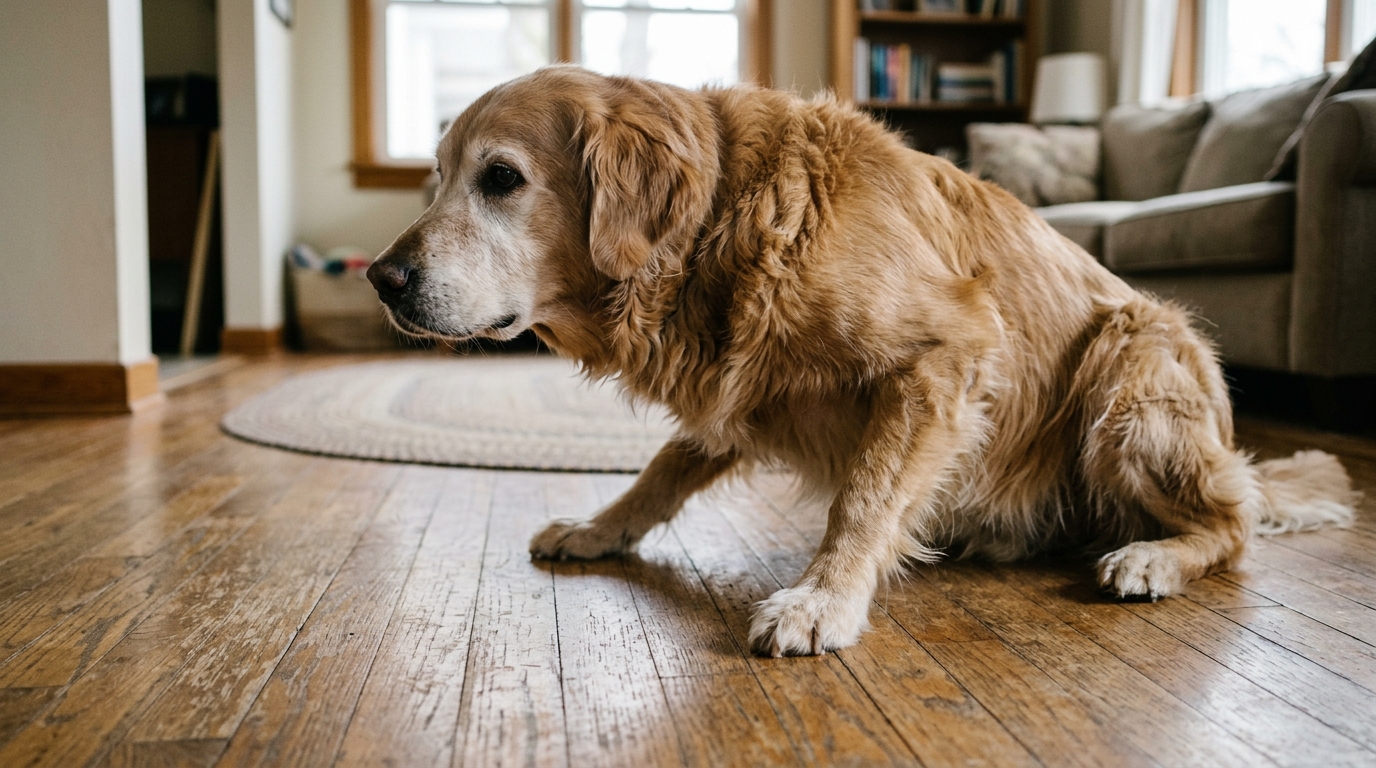
Let's start with the obvious ones, because they do matter, even if they aren't the whole picture.
Limping. A persistent or intermittent limp, particularly on one or more legs, is one of the more reliable signs of joint pain. In arthritis, the limp is often worse after rest and improves as the dog warms up, which is the opposite of what you'd expect with a soft tissue injury. The limping leg may not always be the same one. A dog with arthritis in multiple joints might favour different legs on different days.
Difficulty getting up. Watch how your dog stands up from a lying position. Are they slow? Do they pause halfway, as if checking that it's worth the effort? Do they need to push off with their front paws or shuffle into position before rising? This "rising stiffness" is often one of the first signs.
Stiffness after rest. Your dog's first few steps in the morning, or after a long nap on the sofa, look creaky or hesitant. Over the next few minutes, they loosen off and seem more normal. This is classic arthritic pain. The joints have stiffened during rest, and movement is gradually working that out.
Reluctance on stairs. Going up stairs uses different muscles and joints than coming down. A dog who hesitates at the bottom of the stairs, or who refuses to come down stairs (the descent loads the front legs and is often worse with elbow arthritis), is telling you something.
Difficulty jumping. Onto the sofa, onto the bed, into the car, up to a counter they used to clear easily. Hesitation, scrambling, or simply refusing where they used to leap is significant.
Slowing down on walks. Lagging behind. Wanting to turn back earlier. Stopping more frequently. Walking with shorter strides. Not pulling at the lead the way they used to.
These signs matter. If your dog is showing any of them, a vet visit is warranted. But they're often late signs, by which I mean the arthritis has usually been progressing for some time before these become obvious. The really important signs come earlier.
What most owners walk straight past
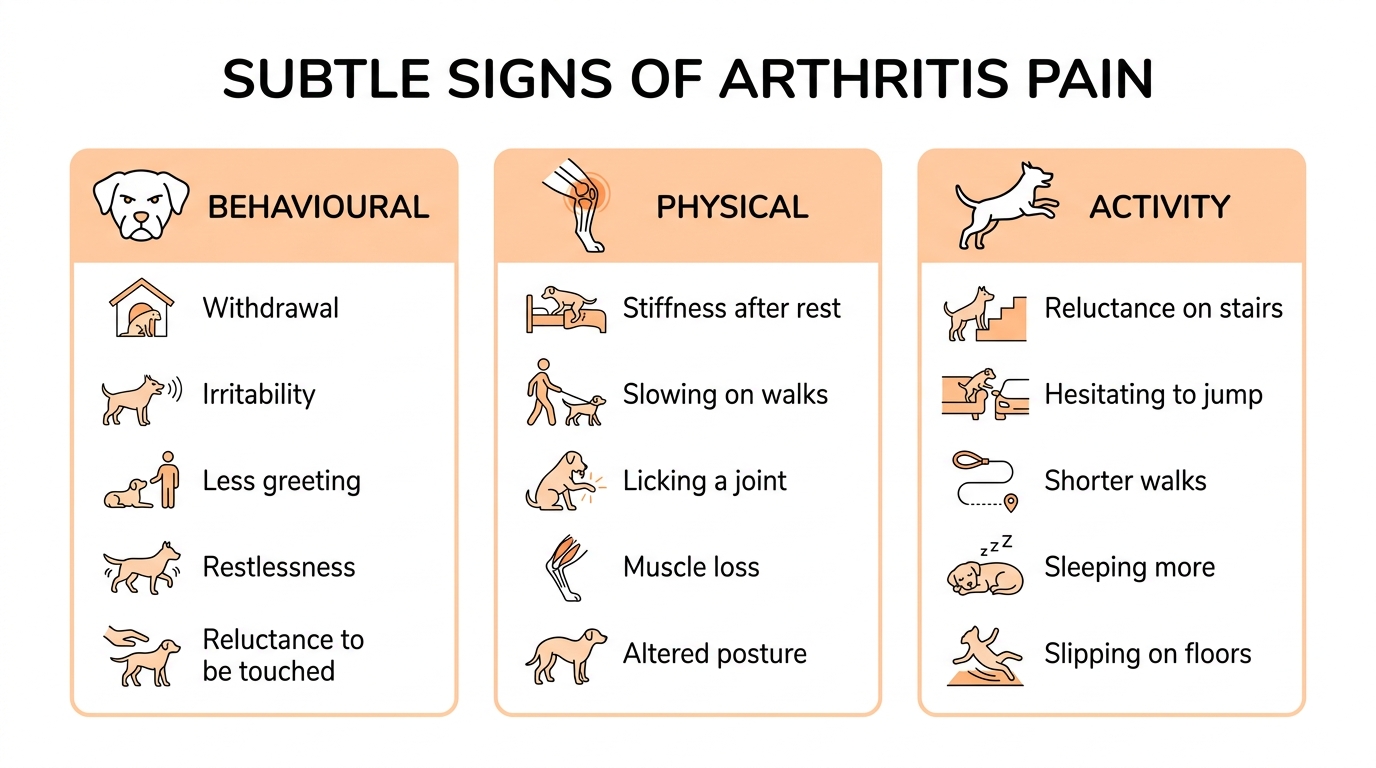
A shift in personality. This might be the single most overlooked sign of chronic pain in dogs. A previously sociable dog becoming withdrawn. A previously bouncy dog becoming subdued. A previously affectionate dog becoming irritable. A previously confident dog becoming anxious or clingy. We tend to attribute these changes to ageing, to mood, to "he's just like that now." But chronic pain genuinely changes personality. It would change yours too.
Lip licking, yawning, or air sniffing in unusual contexts. These are subtle stress and pain indicators that get widely dismissed. A dog who licks their lips when being handled or stroked in a particular area, even if you can't feel anything obviously wrong, may be telling you that area is uncomfortable. Yawning when not tired, particularly during interactions or examinations, is another classic pain or stress signal. Sniffing the air rather than the ground during a walk can sometimes indicate that they're trying to manage discomfort while still appearing engaged.
Hesitant paw lifting. Slowly or reluctantly lifting a paw when asked, or picking up a paw and holding it slightly in the air during normal standing, can indicate that putting full weight on it is uncomfortable. This is often more reliable than obvious limping for detecting early forelimb pain.
Reduced play. Most owners notice when their dog stops playing entirely. Few notice the slow reduction. Twenty minutes of fetch becoming fifteen, then ten. The squeaky toy that used to come out daily now gathering dust under the sofa. Other dogs in the park getting more enthusiastic greetings than yours offers. Pay attention to enthusiasm levels, not just whether play is happening at all.
Turning the head or body away. When you reach to touch your dog in a particular area, do they subtly turn their head away, shift their body, or move just out of reach? This is often misread as "she doesn't feel like a cuddle right now." It can actually be a pain avoidance behaviour, particularly if it's consistent with one specific area.
Freezing or going still. Some dogs in pain become unusually still when handled. Not relaxed-still, but tense-still. They stop wagging their tail. They hold their breath slightly. They wait for the interaction to be over. This stoic response is more common in working breeds and dogs with high pain thresholds, and it often gets interpreted as "he's so well behaved."
Excessive licking of specific areas. A dog who repeatedly licks one elbow, hip, or paw may be focusing on a source of discomfort. Over time this can create bald patches or skin irritation, which then get treated as a skin problem. Look at where the licking is happening. If it's over a joint, particularly a joint that gets used a lot, consider pain as the underlying cause.
Increased scratching or grooming. Particularly around the hindquarters and lower back. This is sometimes related to spinal arthritis or lumbosacral disease causing referred discomfort.
Coat changes. A dog who can't easily reach to groom themselves may develop a duller, slightly unkempt coat, particularly along the back and hindquarters. You might notice scurf or matting in places that used to be clean.
Altered facial expression. This is harder to describe but easier to recognise once you know what you're looking for. A subtly tense face. Slightly squinted eyes. A more closed mouth than usual. Reduced eye contact. The dog still looks "themselves" but somehow flatter, less expressive, less engaged. Research on facial expressions of pain in animals has shown that these facial changes are real and measurable indicators of discomfort.
Restlessness at night. Shifting position repeatedly. Getting up, walking around, lying down again. Sighing or groaning when settling. Choosing different sleeping spots than usual. A dog who can't get comfortable to sleep is often a dog whose joints ache when they lie in certain positions.
Increased attachment or shadowing. Some dogs respond to chronic pain by becoming more dependent on their owners, following them from room to room, not wanting to be left alone, becoming clingy. Others go the opposite direction and withdraw. Both can indicate something is wrong.
Subtle changes in gait or posture. A slightly hunched back. A "rabbit hopping" hindlimb gait where both back legs move together. Standing with the back legs more underneath the body than normal. Sitting with one leg sticking out to the side ("lazy sit"). A subtle weight shift forward when standing still. None of these are dramatic on their own, but they are signs.
"He's just getting old": the trap
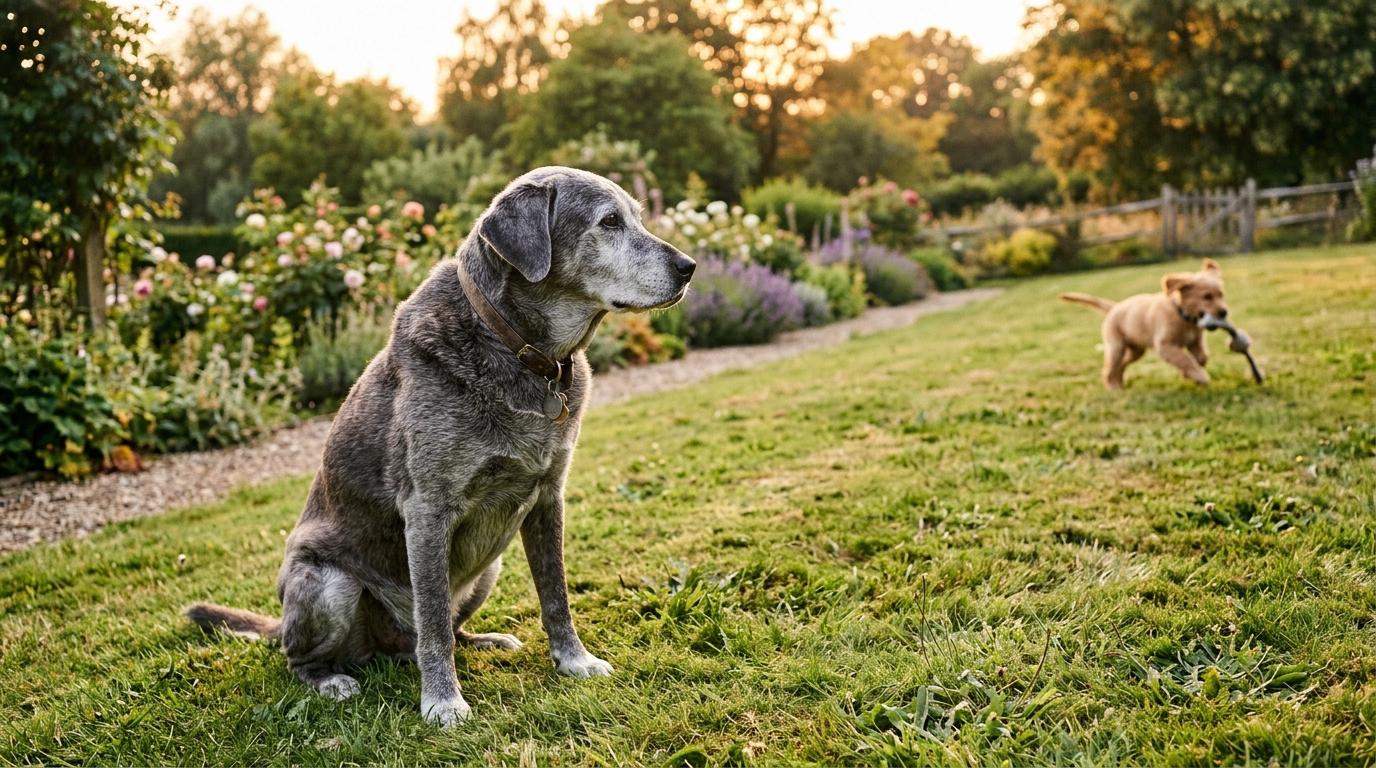
Almost every owner of a dog with arthritis goes through the same realisation at some point: "Looking back, I thought she was just slowing down with age. I didn't realise she was in pain." This is the most common pattern in veterinary practice, and it's an enormous problem for animal welfare.
Here's the thing, though. Dogs don't simply slow down with age. Healthy older dogs remain active, engaged, playful, and mobile right up until significant illness sets in. The slowing down that most owners attribute to age is, in the vast majority of cases, joint pain that has been quietly progressing.
I'm not saying every senior dog is in agony. I'm saying that "slowing down" is almost always a sign of something, and that something is most commonly orthopaedic discomfort. Treating it can transform a dog who seems to be "just getting old" into a dog who is visibly happier, more active, and more engaged with life.
If you find yourself thinking "she's just getting old" about your dog, that thought itself is a prompt to have a proper conversation with your vet about joint pain. Not because every change is arthritis, but because dismissing changes as "old age" is how we let arthritis go untreated for years.
Why dogs are so good at hiding pain
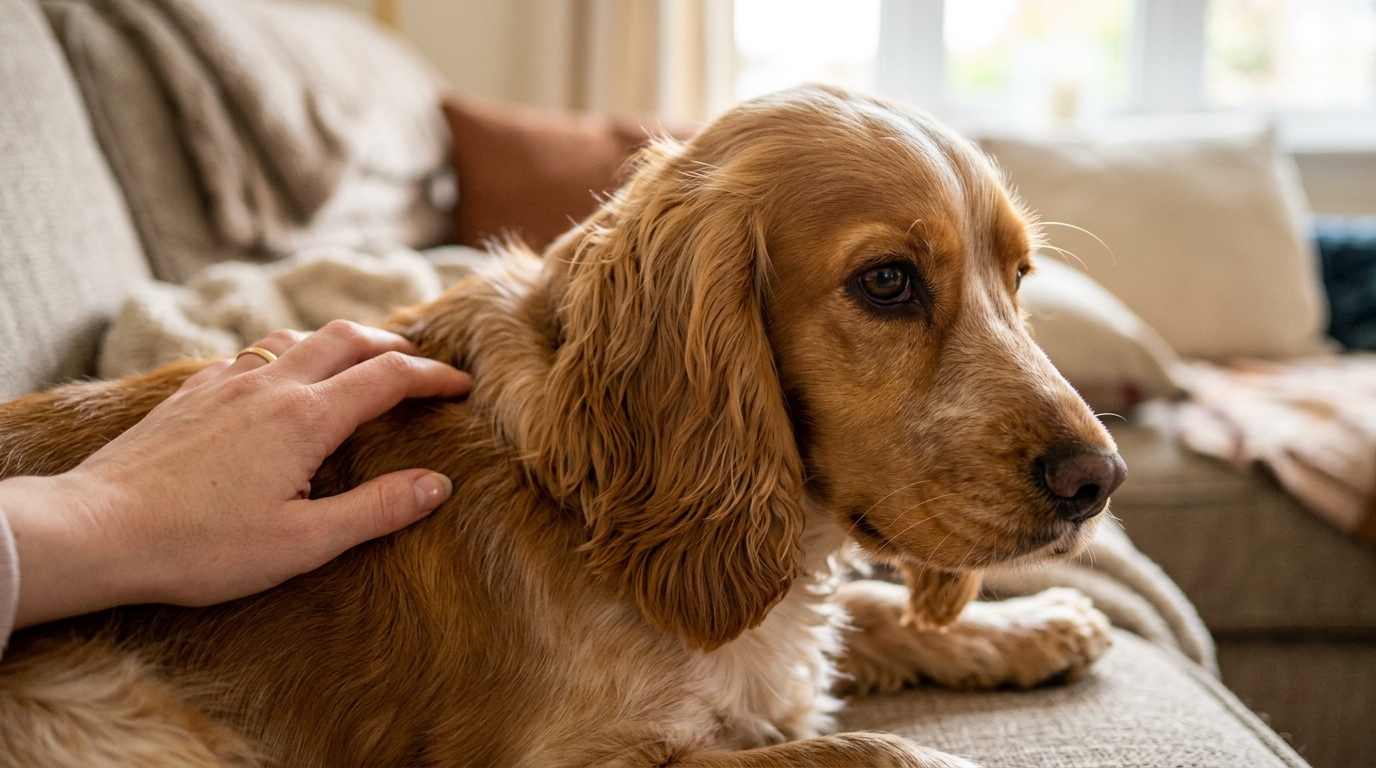
Understanding why dogs are so good at hiding pain helps explain why we miss the signs.
Dogs evolved as social, hierarchical animals. In a pack or family group, an animal showing obvious weakness or vulnerability risks losing status or, in wild ancestors, being targeted by predators or rivals. The instinct to mask discomfort is hardwired, and it persists in our domestic dogs even when there's no realistic threat.
Different dogs have different tolerance and expression of pain. Working breeds, terriers, and many of the more stoic temperaments often hide pain extremely well. They were selected for their ability to keep working through discomfort. A stoic dog with significant arthritis can present with almost no obvious signs other than a slight slowing down. A more emotionally expressive dog with the same level of disease might be more vocal about it.
Age also plays a role. Older dogs have often had pain for longer and have adapted their behaviour around it. They've learned to move differently, to avoid certain activities, to compensate. The pain may be just as significant as it was years earlier, but it shows less because the dog has built coping strategies. This is one reason why a dog who suddenly seems much worse may actually have had advanced arthritis for some time, and something has tipped them past their compensatory capacity.
The masking is so effective that even experienced vets, working in a brief consultation, often need owner observations to make the diagnosis. Your day-to-day observations are more valuable than anything we can detect in a 15-minute appointment.
When it's time to be concerned
If your dog is showing two or three of the signs I've described, particularly if those signs have developed over weeks or months rather than days, it's worth a conversation with your vet. You don't need to be certain. You don't need to wait for things to get worse. You just need to articulate what you've noticed.
Be especially attentive if your dog falls into any of these categories:
- Over six years old, particularly if a larger breed
- A breed predisposed to joint conditions (Labradors, Golden Retrievers, German Shepherds, Bernese Mountain Dogs, Rottweilers, Cavalier King Charles Spaniels, Bulldogs, Dachshunds, and many others)
- Has had a previous orthopaedic injury or surgery
- Is overweight (excess weight dramatically accelerates joint disease)
- Has been diagnosed with hip dysplasia, elbow dysplasia, or any developmental joint condition
- Was a working or sporting dog, particularly if intensively trained
- Has had multiple cruciate ligament issues
For these dogs, the threshold for investigating possible joint pain should be low. Even subtle signs warrant a proper assessment.
Getting ready for your vet visit

Once you've decided to discuss possible arthritis with your vet, you can make that appointment dramatically more productive with a bit of preparation.
Keep a brief observation diary for a week or two before the appointment. Note things like when your dog seems most stiff, what activities they're avoiding, whether mornings are worse than evenings, and any specific areas they seem reluctant to be touched. This isn't a science experiment. Just notes on what you're seeing.
Film your dog moving. A short video of your dog getting up from rest, walking down a hallway, navigating stairs, or trying to jump onto the sofa is enormously useful. Your dog may move perfectly normally at the vet clinic out of nervous adrenaline, masking signs that are obvious at home. Video bridges that gap. And that same footage can be analysed objectively to measure how your dog is moving, which helps catch the subtle gait changes that are easy to miss by eye.
This is one of the gaps we built PAWSCHECK for. PAWSCHECK (pawscheck.co.uk) is a separate ConciergeVet tool that runs AI gait analysis on a short smartphone video and produces a vet-reviewed report. The reason it exists is exactly the thing this article is about: peer-reviewed work suggests vets disagree on mild lameness in around three-quarters of cases, and dogs that compensate by shifting weight or shortening stride often look "fine" to the human eye until the changes are substantial.
I mention this because the principle here matters regardless of which tool you use. The goal is to bring your vet something more than memory and impression: video, written notes, dated observations, anything that turns a vague sense of "she's slowing down" into evidence your vet can interpret. A few clips on your phone do most of the work. Objective gait analysis adds another layer for owners who want it.
Make notes about specific changes. Things they used to do that they don't anymore. The walk that's now half the length. The toy they no longer fetch. The greeting that used to involve a leap and now involves an upward look. These specifics are more valuable than general impressions.
Be specific about timing. "She's been slowing down" is vague. "Over the last four months, her walks have got progressively shorter, she's reluctant to jump into the car, and she's been stiff in the mornings for about ten minutes" is far more useful clinically.
Ask for a proper orthopaedic examination. If your vet is going to assess possible arthritis seriously, this needs more than a quick palpation. A proper examination involves systematic assessment of each joint's range of motion, looking for pain responses, asymmetries, and signs of joint thickening or effusion. Don't be shy about asking for time and attention to be given to this.
Be prepared for radiographs. X-rays aren't always needed to start treatment, but they often help confirm the diagnosis and identify which joints are most affected. If your vet recommends them, they're usually worth doing.
You're already doing the right thing
If you've read this far, you've done something most dog owners never do. You've taken the time to understand what arthritis actually looks like, beyond the cartoon version of a limping old dog. You're better equipped to advocate for your dog, to spot changes early, and to have a productive conversation with your vet.
If you've recognised your dog in some of these descriptions and feel a bit guilty about not noticing sooner, please let that go. The signs are designed to be missed. Vets miss them. Trainers miss them. People who've had dogs their whole lives miss them. The reason these signs get missed is that they're genuinely subtle, not because anyone is failing as an owner.
What matters now is what you do next. Make the appointment. Take the videos. Have the conversation. And whatever the outcome, know that you've moved your dog from the group of arthritic dogs whose owners don't realise into the group whose owners are actively looking. That distinction matters more than you might think.
References
- Gardeweg SMA, Picard DE, van Herwijnen IR. The abilities in dog pain sign recognition as assessed by presenting seventeen listed dog behavioural signs and three case descriptions to dog owners and non-dog owners. PLOS ONE, 2026.
- Mota-Rojas D, et al. How facial expressions reveal acute pain in domestic animals with facial pain scales as a diagnostic tool. Frontiers in Veterinary Science, 2025.
- Reid J, Nolan AM, Hughes JML, Lascelles D, Pawson P, Scott EM. Development of the short-form Glasgow Composite Measure Pain Scale (CMPS-SF) and derivation of an analgesic intervention score. Animal Welfare, 2007.
Free downloads
Companion worksheets to put what you've read into practice. Free PDFs, print at home.
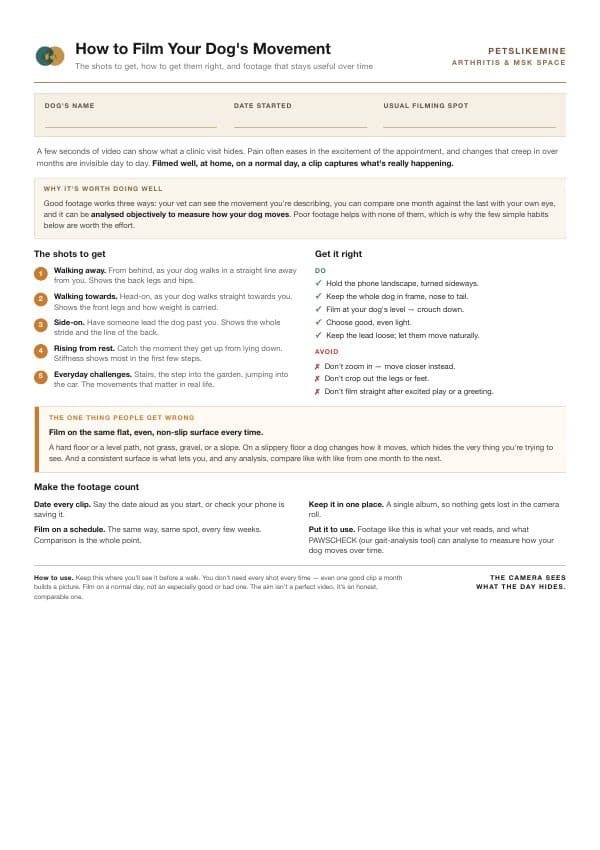
How to Film Your Dog's Movement
PDF · 127 KBA printable guide to capturing video your vet, and you, can actually use. The five shots that show how your dog really moves, how to get them right, and the one detail that makes or breaks the footage: the surface. Film on a normal day and the camera catches what a clinic visit often hides.
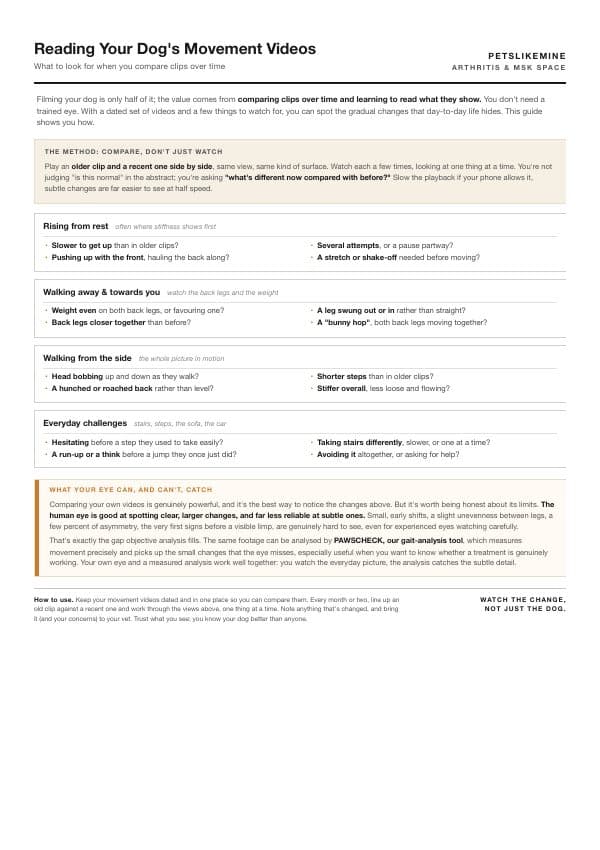
Reading Your Dog's Movement Videos
PDF · 89 KBThe companion to the filming guide: how to actually read the clips you have captured. Line up an older video against a recent one, watch one thing at a time across four everyday views, and spot the gradual changes day-to-day life hides. With an honest note on the subtle shifts the eye misses, and where objective gait analysis picks up.
Sister tool · Sightline
Track whether treatment is working
Sightline, a separate ConciergeVet tool, runs a short weekly check-in built on validated pain and mobility instruments, turns it into a single Sightline Score you can watch trend over weeks rather than judge on one bad day, and produces a report you can bring to your vet.
A written log, or our printable trackers, does much the same job.
See how Sightline tracks treatmentSee where your pet stands today
Tracking is the other half of managing arthritis. Take the 2-minute Mobility Check to see your pet's stage, then watch it shift as treatment takes effect.
Take the Mobility CheckYou're not doing this alone
Compare treatment journeys and talk to owners managing arthritis. Free to join.
Join PetsLikeMine