

Hip Dysplasia: Understanding the Condition and Its Surgical Options
Alastair Greenway
BVM&S MRCVS
Hip dysplasia is one of the conditions owners most fear hearing about. Part of that is the name, which is familiar and carries a weight of dread, and part of it is how strongly the condition is tied to large breeds, so that many owners of big dogs worry about it from puppyhood onward. It's also one of the major developmental causes of hip arthritis, which is why it earns a detailed article in this space.
This is the second of our condition-specific surgical guides, and like the others it sits beneath the general article on the surgery decision, which I'd recommend reading alongside it. That article covers how to decide about surgery and what recovery demands; this one goes deep on hip dysplasia specifically.
As with all of these guides, my purpose is to help you understand the condition and walk into the conversation with your vet or surgeon well informed, not to tell you which path your dog should take. Hip dysplasia has an unusually wide range of options that depend heavily on your dog's age and the stage of the disease, and choosing between them is genuinely a job for you and a surgeon together. I want to make you a good partner in that conversation.
A loose joint that wears badly
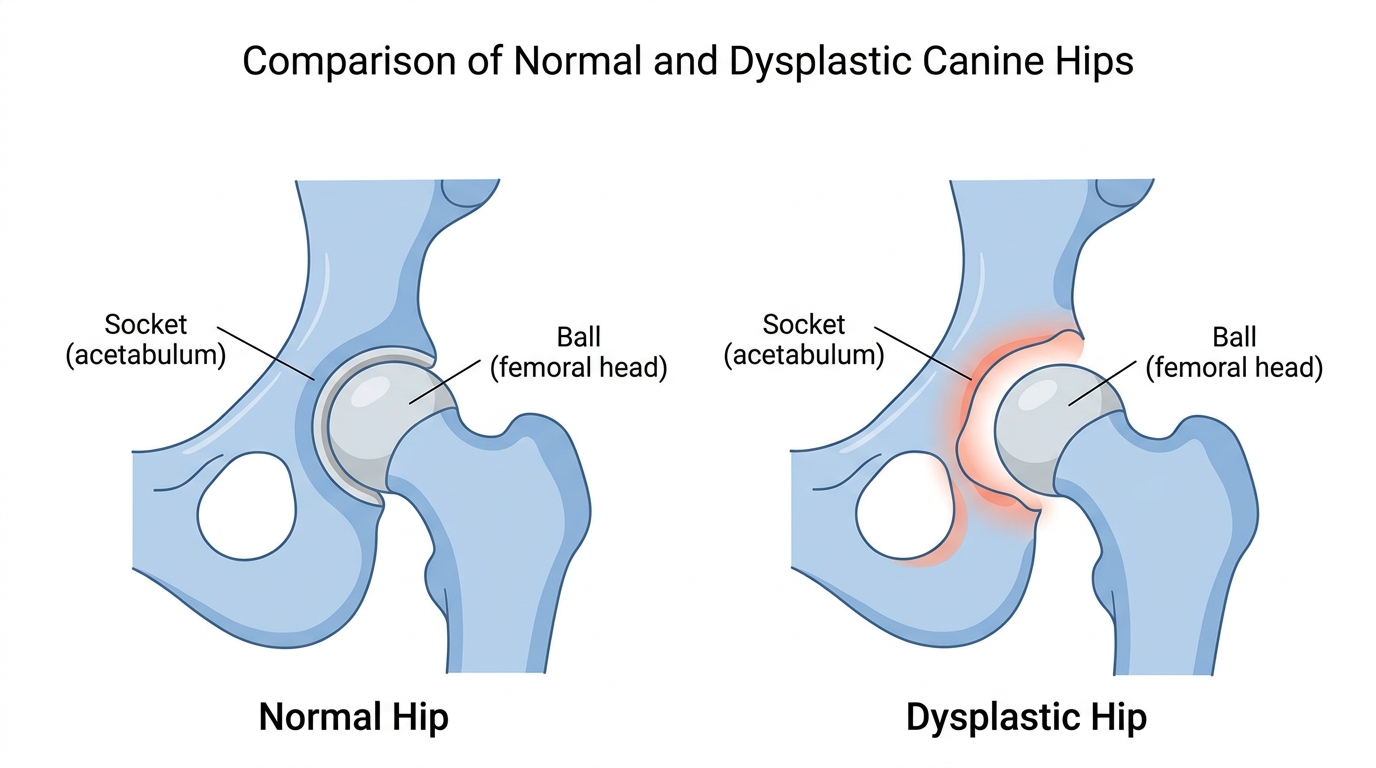
The hip is a ball-and-socket joint: the ball at the top of the thigh bone sits in a socket in the pelvis. In a healthy hip, the ball fits snugly and moves smoothly. In hip dysplasia, the joint develops abnormally so that the fit is loose, the ball and socket don't match well, and there is excess movement, what vets call joint laxity.
This is fundamentally a developmental condition. It begins in puppyhood, as the growing joint fails to form properly, and its causes are multifactorial: genetics is the major driver, with diet, growth rate, hormonal factors, and environment all thought to contribute. It's strongly associated with larger and giant breeds, though it can occur in any dog.
That loose, poorly fitting joint is the root of all the trouble. Because the ball doesn't sit securely in the socket, every movement involves abnormal forces and friction, and over time this damages the joint and drives arthritis.
Why it leads to arthritis
This is the link back to the heart of this space, and it's central to understanding the condition. A loose, badly fitting hip is an unstable hip, and instability drives osteoarthritis just as it does in the cruciate-affected knee. The abnormal movement gradually wears the cartilage, inflames the joint, and produces the progressive changes of arthritis.
That mechanism explains a pattern owners often notice. Hip dysplasia tends to cause problems at two distinct life stages. The first is in young dogs, often between six and twelve months, when the laxity itself causes pain and lameness in the still-developing joint. The second is later, in mature and older dogs, when the arthritis that the laxity has been driving for years becomes advanced enough to cause significant trouble. A dog can have a difficult patch as a youngster, settle for several years, and then return with arthritic pain in middle age or beyond.
There's an important limit to bear in mind here. Conservative management alone cannot halt the underlying process in a significantly dysplastic hip; it can manage the symptoms well in many dogs, but it doesn't fix the laxity driving the damage. This is why, for some dogs, surgery to address the mechanics is considered.
Reaching a diagnosis
Diagnosis combines examination and imaging. On examination, the vet assesses the hips for pain, reduced range of motion, and laxity. A specific test for looseness, where the vet feels whether the ball can be displaced within the socket, is often part of the assessment, sometimes done under sedation for accuracy.
X-rays are central to diagnosis and planning. They show the fit of the joint, the degree of laxity, and the extent of any arthritis already present, and they're essential for deciding which, if any, surgical options are appropriate. Specialised positioned X-rays and scoring schemes exist for assessing hip conformation, particularly in breeding and screening contexts.
Weighing up the options
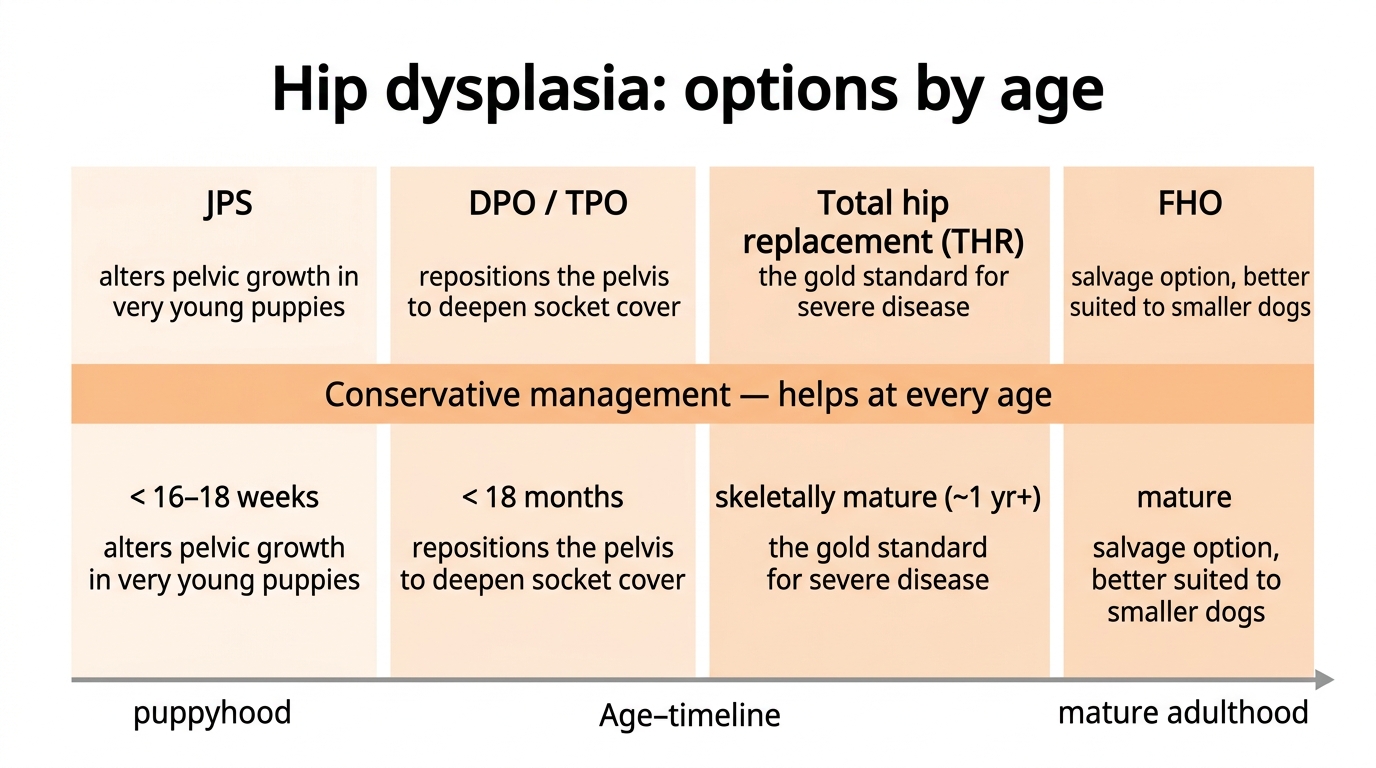
Hip dysplasia has a wider and more age-dependent range of options than most orthopaedic conditions. That's good news, because there's usually something that can help, and it's also a reason the conversation with a surgeon matters so much. I'll group them by the situation they suit, but which is right for your dog is firmly a decision for you and your surgeon.
Conservative (medical) management
For many dogs, particularly those with milder disease, conservative management is a genuinely good option and often the first approach. It's everything this guide describes: weight control, which is especially powerful in hip dysplasia because excess weight directly increases the load on the struggling joints; controlled, appropriate exercise to maintain the muscle that supports the hip; pain relief; physiotherapy and hydrotherapy; and the home and lifestyle measures throughout this space.
Many dysplastic dogs live comfortable, active lives on good conservative management for years. It manages symptoms rather than correcting the underlying laxity, but for a great many dogs that's enough to keep them happy and mobile.
Preventive surgery in young dogs
A distinctive feature of hip dysplasia is that, in young dogs diagnosed before arthritis has set in, there are procedures aimed at changing the joint's mechanics to prevent or reduce future damage. These have strict age windows and aren't options once the dog is mature.
Juvenile pubic symphysiodesis (JPS) is a minor procedure done on very young puppies, typically before about 16 to 18 weeks, that alters pelvic growth so the sockets rotate to cover the ball better as the pup grows. Because it must be done so early, it relies on identifying at-risk puppies before they show much trouble.
Double or triple pelvic osteotomy (DPO/TPO) is a more major procedure for somewhat older but still young dogs, generally under about 18 months and before arthritis has developed, in which the pelvis is cut and repositioned to improve the socket's coverage of the ball. It aims to create a better-fitting, more stable joint and head off the arthritis the laxity would otherwise cause.
These preventive options are powerful when the timing and the dog are right, but the windows are narrow, which is one reason early diagnosis in at-risk breeds matters.
Salvage and replacement surgery
For mature dogs, or those with established arthritis, the preventive procedures are no longer options, but two others come into play.
Total hip replacement (THR) is, for severe hip dysplasia, widely regarded as the gold standard. Just as in people, the damaged ball and socket are replaced with prosthetic implants, recreating a well-fitting, pain-free joint with near-normal function. It's a major procedure performed by specialist surgeons, and it has a high success rate, commonly cited in the region of 80 to over 90 percent achieving excellent function. It can be done in dogs once they're skeletally mature, usually around a year old.
Femoral head ostectomy (FHO) takes a different approach: rather than replacing the joint, the ball is removed entirely, and the body forms a "false joint" of fibrous tissue that, while not anatomically normal, can be pain-free. It's better suited to smaller and lighter dogs; in large and giant breeds, recovery is longer and outcomes less predictable, with some dogs retaining a degree of altered gait. It's often considered a salvage procedure, used when THR isn't possible or affordable, and it relies heavily on good post-operative physiotherapy for the best result.
To pull the surgical options together: THR offers the most complete restoration of normal function for severe disease, the juvenile procedures can prevent trouble if done in time, and FHO provides pain relief with less predictable function, particularly in bigger dogs. Which fits your dog depends on age, size, severity, and your circumstances, and that's the conversation to have with a surgeon.
What recovery actually involves
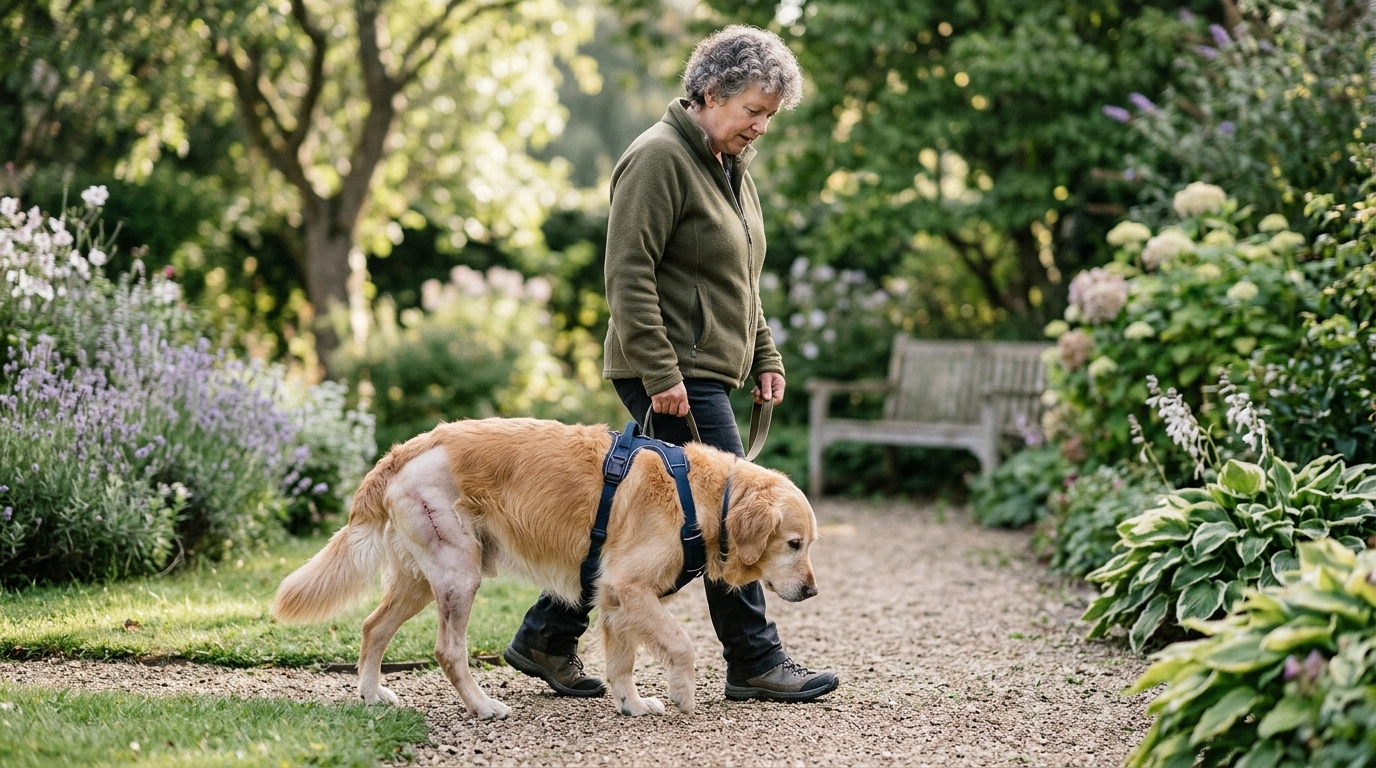
Recovery varies considerably by procedure, which is part of the decision. The juvenile procedures and FHO generally involve weeks of restricted activity and a strong emphasis on physiotherapy; FHO in particular depends on diligent rehabilitation to build the false joint well. Total hip replacement involves a carefully controlled recovery, typically over a couple of months, with strict restriction early on.
One point is worth flagging, because surgeons make it repeatedly: dogs often recover from hip surgery faster than expected and feel well before they've fully healed, which means the hard part for owners is holding them back during the restriction period rather than coaxing them to move. As with all orthopaedic surgery, the outcome depends heavily on the recovery being done properly, and that depends on you. The recovery-planning content in our surgery-decision article is designed to help you assess realistically whether you can provide it.
Questions worth asking your surgeon
Given how age- and stage-dependent the options are, these questions tend to be most useful:
Given my dog's age and the stage of their disease, which options are actually available to us, and which do you recommend? If we're considering conservative management, what would make us reconsider surgery later? For a young dog, are the preventive procedures still an option, and is the timing window still open? If surgery is recommended, why this procedure for my dog specifically? What does recovery realistically involve for that procedure? What are the likely outcomes and the main risks? Will both hips need addressing, now or eventually? And what are the options at different price points, since these procedures vary widely in cost?
The bottom line
Hip dysplasia sounds frightening, but the reality for most affected dogs is more hopeful than the name suggests. Many do very well on conservative management for years. For those who need more, the range of surgical options is genuinely good: preventive procedures can head off trouble in young dogs caught early, and for severe disease, total hip replacement can restore a dog to near-normal, pain-free life.
Two things matter most. One is early awareness, especially in at-risk breeds, where catching laxity young opens up preventive options that close later. The other is a careful, individualised conversation with a surgeon about what suits your particular dog at their particular stage. There's no single right answer that applies to every dysplastic hip, which is exactly why the conversation matters. Walk into it understanding the condition and the options, ask the questions above, and you'll be well placed to make a good decision together.
Read this alongside the surgery-decision article for the framework on deciding and planning recovery, and explore conservative management thoroughly in the weight, exercise, and therapy articles, since for many dysplastic dogs that's the mainstay of a good life.
References
Sister tool · Sightline
Track whether treatment is working
Sightline, a separate ConciergeVet tool, runs a short weekly check-in built on validated pain and mobility instruments, turns it into a single Sightline Score you can watch trend over weeks rather than judge on one bad day, and produces a report you can bring to your vet.
A written log, or our printable trackers, does much the same job.
See how Sightline tracks treatmentSee where your pet stands today
Tracking is the other half of managing arthritis. Take the 2-minute Mobility Check to see your pet's stage, then watch it shift as treatment takes effect.
Take the Mobility CheckYou're not doing this alone
Compare treatment journeys and talk to owners managing arthritis. Free to join.
Join PetsLikeMine