Causes of Arthritis: Developmental Disease, Injury, and Beyond
A
Alastair Greenway
BVM&S MRCVS
26 May 2026·18 min read·2 views
Vet writtenLast reviewed 26 May 2026
"Why has my dog got arthritis?"
It's the question most owners ask in the first appointment after diagnosis, and it deserves a proper answer. Not because knowing the cause changes the treatment in most cases, but because it changes how you understand what's happening to your dog. It often relieves guilt. It sometimes informs future decisions about other pets you might own. And occasionally, it does genuinely change the management plan.
This article walks through the main causes of arthritis in dogs, from the developmental conditions that account for the majority of cases, through injury, obesity, and the contributing factors that compound everything else. It also tackles some of the controversial questions. Does early neutering matter? Does diet during puppyhood affect joint health? Is your dog's breed really to blame?
Primary versus secondary: the big picture
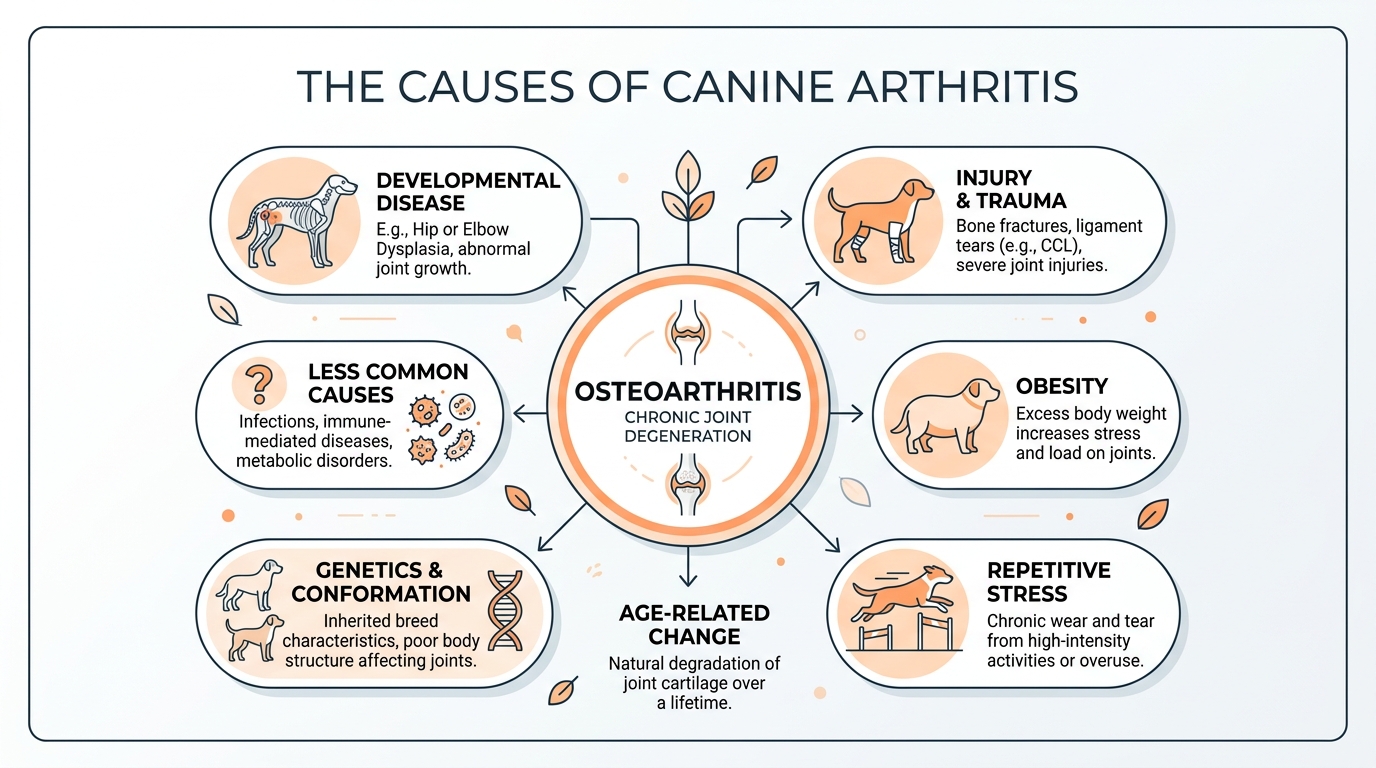
Most arthritis is secondary: it grows out of another problem, from developmental disease to injury, weight or genetics.
Veterinary medicine traditionally divides osteoarthritis into two broad categories.
Primary (idiopathic) osteoarthritis is arthritis that develops without an obvious underlying cause. The joints simply wear out over time, driven by age, accumulated micro-trauma, and individual susceptibility. In humans, primary OA is the dominant form, particularly in older adults. In dogs, it's actually relatively uncommon. Most canine arthritis has a specific cause.
Secondary osteoarthritis develops as a consequence of something else: a structural abnormality in the joint, an injury, an instability, or an underlying disease. The vast majority of canine osteoarthritis is secondary. The American College of Veterinary Surgeons states the position clearly. Most arthritis in dogs is secondary to orthopaedic disease, including cranial cruciate ligament rupture, osteochondrosis, or trauma.
This distinction matters because it changes how we think about your dog. Most arthritis isn't simply "old age catching up." It's a consequence of something that was usually present long before the symptoms appeared.
Developmental joint diseases: the most common cause
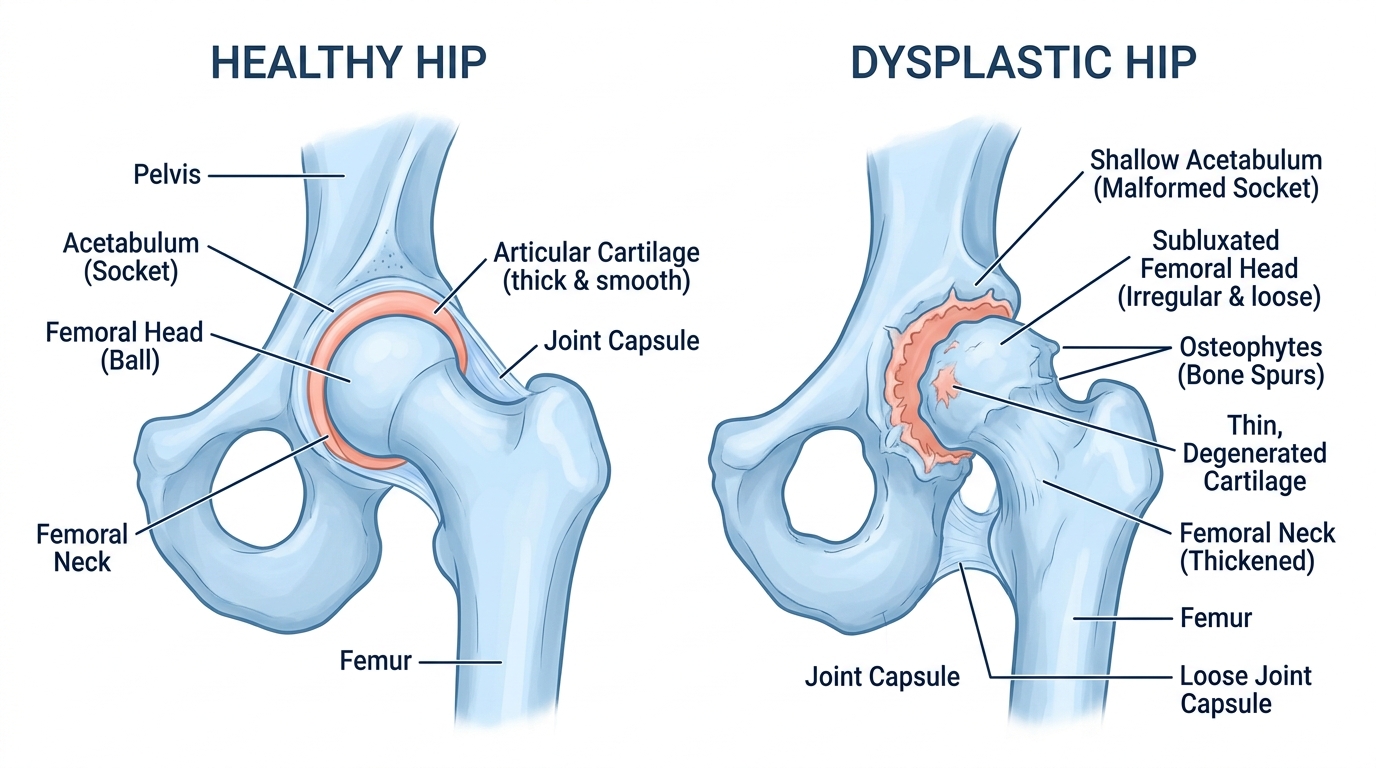
In hip dysplasia the ball and socket fit poorly, so the joint wears abnormally and arthritis follows, often early.
If your dog has arthritis, the single most likely cause is a developmental joint condition that began in puppyhood. These are conditions where the joints didn't form quite correctly during growth, leading to abnormal mechanical loading and eventual degeneration.
Hip dysplasia
Hip dysplasia is one of the most common developmental conditions in dogs, particularly large breeds. The hip joint is a ball and socket, with the head of the femur sitting in the acetabulum of the pelvis. In a healthy hip, the ball fits the socket precisely and the joint moves smoothly through its range. In a dysplastic hip, the fit is imperfect. The ball may sit too loosely in a shallow socket. The joint may be unstable. Over time, this abnormal mechanical relationship causes cartilage damage, joint capsule thickening, osteophyte formation, and eventually significant arthritis.
Hip dysplasia is significantly heritable. The highest prevalence of hip dysplasia is in breeds that tend to be stocky, round, and heavy, such as German Shepherds and many large, heavy-set breeds. The lowest prevalence is in slender, fleet-footed breeds like Greyhounds and Whippets, where it is close to non-existent.
But genetics isn't the whole story. Environmental factors during puppyhood significantly modify the expression of hip dysplasia. Puppies allowed to use stairs in their first few months show a higher incidence of hip dysplasia, while regular off-lead exercise on soft, even ground in early life appears protective. Overnutrition and rapid growth, from feeding too many calories during development, have been identified as a risk factor for joint disease. Non-restricted, ad-lib feeding during growth in particular raises the risk of developing hip dysplasia.
So a Labrador puppy from carefully screened parents, raised on appropriate flooring with a controlled diet and sensible exercise, may show no hip dysplasia despite the breed's predisposition. Conversely, a puppy from poorly screened parents, raised on laminate floors, overfed, and exercised inappropriately, may develop significant hip dysplasia even without an extreme genetic loading.
For most dogs with hip dysplasia, the diagnosis comes either in young adulthood (when intermittent hindlimb lameness or "bunny hopping" gait becomes apparent) or in middle age (when the secondary arthritis catches up).
Elbow dysplasia
If hip dysplasia is the most famous developmental condition, elbow dysplasia is arguably the most clinically frustrating. It's actually an umbrella term covering several specific abnormalities of the elbow joint:
Fragmented medial coronoid process (FCP), where a piece of bone in the elbow detaches and floats free in the joint, causing inflammation and damage.
Ununited anconeal process (UAP), where a piece of bone that should fuse to the rest of the ulna during growth fails to do so.
Osteochondritis dissecans (OCD) of the elbow, where a piece of cartilage and underlying bone separates from the joint surface.
Elbow incongruity, where the bones of the elbow don't fit together quite right.
Often, several of these are present together. The elbow joint involves three bones (humerus, radius, ulna) coming together in a complex articulation, and small errors in development have outsized consequences.
Elbow dysplasia is most common in large breeds, particularly Labradors, Golden Retrievers, Rottweilers, Bernese Mountain Dogs, German Shepherds, and Newfoundlands. Early signs are typically forelimb lameness in young dogs (often 5 to 12 months), particularly after exercise. Many dogs are diagnosed during this growing phase. Others are diagnosed later when secondary arthritis becomes apparent.
What makes elbow dysplasia so difficult is that even with optimal treatment, secondary arthritis is essentially inevitable. The structural problem fundamentally changes how forces pass through the joint, and the cartilage damage that results progresses regardless of how well you manage things. Owners often find this hard to accept, particularly with young dogs. The arthritis is going to develop. The goal is to slow it down and manage it well, not to prevent it entirely.
Osteochondrosis and osteochondritis dissecans (OCD)
Osteochondrosis is a developmental disturbance of cartilage and bone formation, where the cartilage doesn't properly convert to bone during growth. When a fragment of this abnormal cartilage breaks away from the underlying bone, the condition is called osteochondritis dissecans (OCD).
OCD typically affects the shoulder, elbow, stifle, or hock. It's most common in large and giant breed dogs, and it usually presents with lameness in young dogs (4 to 10 months old). Diagnosis is often by radiograph, sometimes followed by advanced imaging or arthroscopy.
OCD is one of the conditions where early surgical intervention can significantly improve long-term outcomes. Removing the loose fragment and treating the underlying defect, ideally before secondary arthritis develops, gives the joint the best chance of long-term function. This is why young dogs with persistent lameness deserve a thorough workup rather than a "let's wait and see" approach.
Cranial cruciate ligament disease
This is one of the most important and most misunderstood causes of arthritis in dogs.
In humans, ACL (anterior cruciate ligament) injuries are usually acute traumatic events. A footballer twists awkwardly, the ligament tears, and surgery follows. In dogs, the equivalent ligament (the cranial cruciate ligament) usually fails progressively over months or years, not in a single moment. The current understanding is that canine cruciate disease is best thought of as a degenerative condition, with genetic, anatomical, and biomechanical factors all contributing.
Breeds including Rottweilers, Golden Retrievers, and Labrador Retrievers have increased risk of cruciate ligament rupture. Overweight dogs are significantly more likely to develop cruciate ligament disorders, with obesity almost quadrupling the risk.
Once the cruciate ligament fails, the stifle becomes unstable. The bones move abnormally during weight-bearing, the meniscus (a cartilage shock absorber in the joint) often gets damaged, and arthritis develops rapidly. Even with surgical repair (TPLO, TTA, lateral suture techniques), some degree of arthritis is essentially universal.
One of the most under-appreciated facts about cruciate disease is that it's frequently bilateral. Evidence suggests that roughly one-third to one-half of dogs will rupture the cruciate in the other knee too, commonly within a year or two. So if your dog has had a cruciate problem on one side, there is a real chance the other knee will follow. This is one of the reasons cruciate disease accounts for so much of the arthritis seen in middle-aged dogs.
Patellar luxation
The patella (kneecap) normally sits in a groove on the front of the femur and slides up and down as the knee bends. In patellar luxation, the kneecap pops out of its groove, either temporarily or persistently.
Patellar luxation is graded 1 to 4. Grade 1 is mild and may need no treatment. Grade 4 is severe, with the patella permanently dislocated. The condition is particularly common in small breeds. Smaller breeds such as Pomeranians, Chihuahuas, Yorkshire Terriers, and French Bulldogs have higher odds of developing patellar luxation compared to crossbreeds.
Persistent luxation causes abnormal forces in the joint and progressive arthritis. Some dogs with low-grade luxation cope reasonably well; others develop significant secondary arthritis and need surgical correction.
Injury and trauma
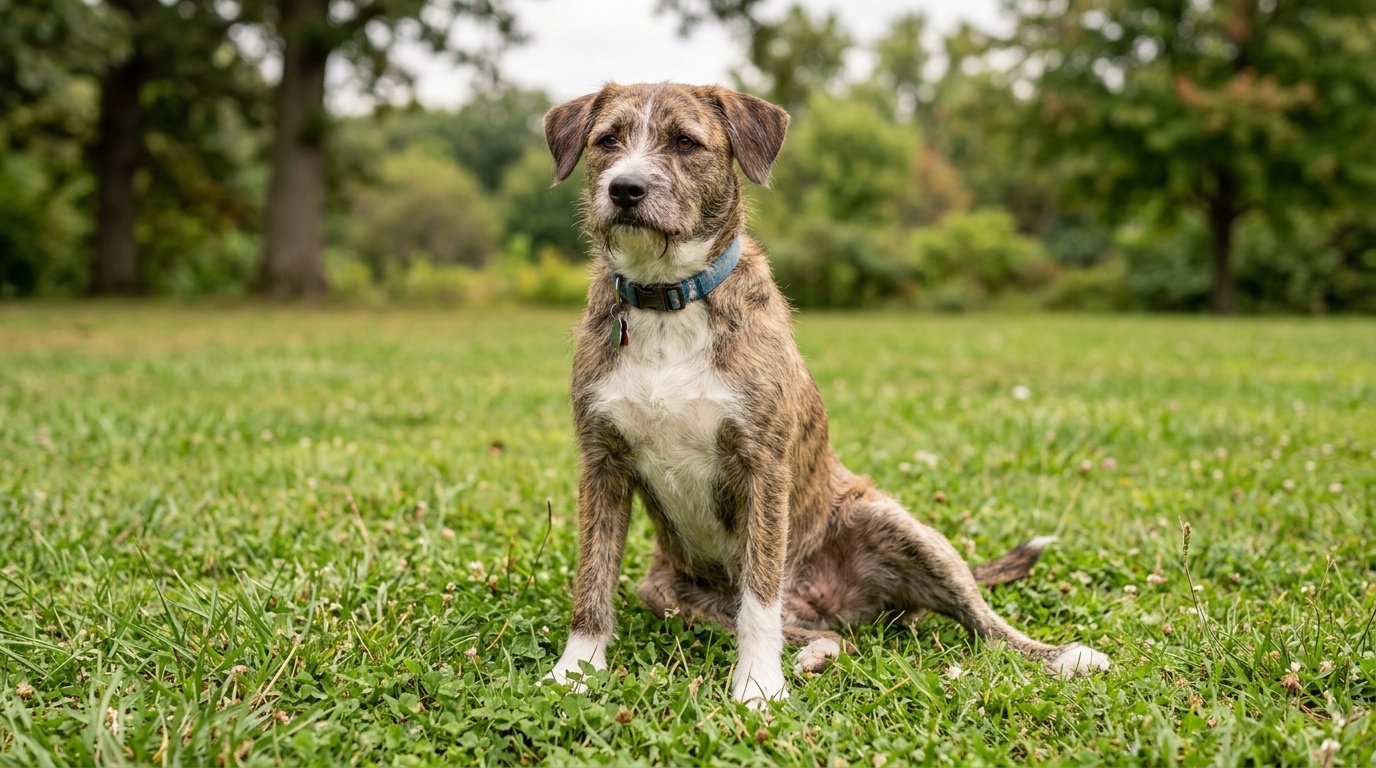
A dog who sits with one back leg kicked out to the side, the “sit test”, may be guarding a cruciate problem.
The second major category of arthritis cause is acquired joint disease following injury.
Fractures involving joints. Any fracture that extends into a joint surface can cause arthritis, even with perfect repair. The cartilage doesn't heal back to its original state, and the irregularity in the joint surface causes accelerated wear. Common sites include the elbow, carpus (wrist), tarsus (hock), and stifle.
Joint dislocations. A dog that has dislocated a joint, whether spontaneously or due to trauma, often develops secondary arthritis. The joint capsule is stretched, the supporting ligaments are damaged, and the joint may not function quite the same way again.
Ligament injuries. Beyond the famous cruciate ligament, dogs can injure any of the supporting ligaments around their joints. Collateral ligament injuries in the stifle, hock, or elbow can all lead to instability and secondary arthritis.
Penetrating injuries. Bite wounds, foreign body penetration, or surgical interventions that damage the joint capsule can introduce infection or cause direct cartilage damage. Septic arthritis (joint infection) is a serious condition that requires urgent treatment, and even with successful treatment, secondary arthritis often follows.
Repetitive micro-trauma. Working dogs, agility dogs, and dogs whose lives involve repeated high-impact activity may develop arthritis from accumulated micro-injuries even without a single dramatic event. This is one reason why retired racing greyhounds often have significant joint changes despite never having had an obvious injury.
The pattern with injury-related arthritis is that it often becomes apparent years after the original event. A cruciate repair done at age four may not produce obvious arthritis until age eight or nine. A fracture in puppyhood may not cause problems until middle age. The seeds are planted at the time of injury, and the disease grows quietly until it becomes symptomatic.
Obesity: the accelerator and amplifier
Every extra kilo loads the joints and fuels inflammation. Weight is the single biggest factor you can change.
Obesity is one of the most important and most underdiscussed contributors to canine arthritis. It works in two ways.
First, obesity increases the mechanical load on every joint in the body. A 30kg Labrador carrying an extra 6kg (which would be a typical level of overweight for that breed) is loading their hips, elbows, stifles, and spine with 20% more weight on every step. Over time, this dramatically accelerates wear.
Second, and less obviously, fat tissue is metabolically active and produces inflammatory cytokines. Obesity is therefore not just a mechanical problem but a chronic low-grade inflammatory state. This inflammation contributes directly to joint degeneration.
The combined effect is striking. Obesity almost quadruples the risk of cruciate ligament disease. Studies of weight management in arthritic dogs have shown that weight loss alone can produce meaningful improvements in pain and mobility, sometimes to the extent of reducing or eliminating the need for medication.
What makes obesity so stubborn is that it interacts with arthritis in a vicious cycle. A dog with sore joints moves less. A dog that moves less gains weight. The extra weight worsens the arthritis. The increased pain reduces movement further. Breaking this cycle requires deliberate intervention, and it's usually the single most impactful thing an owner can do for their arthritic dog.
We have a dedicated article on weight management in this space. If your dog is overweight, please read it.
Age and accumulated change
Age does play a role in arthritis, though perhaps not in the way most people assume.
As dogs age, the cartilage in joints changes composition and is less able to repair areas of damage, resulting in cartilage breakdown and inflammation. The repair mechanisms that worked perfectly in a young dog become less efficient. Damage that would have been corrected in youth accumulates.
But "old age" alone, in the absence of any other contributing factor, is rarely the sole cause of significant arthritis. When we see arthritis in a senior dog, there's almost always something else in the background: a developmental abnormality that was always there, a long-ago injury, accumulated obesity, or a lifetime of high-impact activity. Age is more of a final straw than a primary cause.
This is why the phrase "she's just slowing down because she's getting old" is misleading. Dogs don't simply wear out. Healthy old dogs without underlying joint problems remain reasonably active and comfortable. The slowing down you see is usually arthritis from one of the causes above, finally becoming clinically obvious.
Genetics and breed
Much joint health is inherited. Choosing wisely and screening breeding dogs shapes the next generation's joints.
Genetics influences arthritis risk in several ways.
Breed-specific structural predispositions. As we've seen, certain breeds are predisposed to specific developmental joint conditions. Labradors and Goldens to hip and elbow dysplasia. Rottweilers to cruciate disease. Small breeds to patellar luxation. Newfoundlands to cruciate problems and elbow dysplasia. Bernese Mountain Dogs to elbow dysplasia and a range of orthopaedic issues.
Conformation. Some breeds have body shapes that inherently stress particular joints. Breeding to reach desired breed conformational appearances and possible inadvertent co-selection of undesirable musculoskeletal conformations can have detrimental effects. The extreme angulation of some German Shepherd lines, the chondrodystrophy (short legs) of Dachshunds and Bassets, the brachycephalic conformation of bulldogs. All of these have joint health implications.
Specific genetic markers. Research is increasingly identifying specific genes and genetic variants associated with joint disease risk. We're not yet at the point where this routinely influences breeding or treatment decisions, but it's coming.
What this means for you, in practical terms: if your dog is one of the predisposed breeds and has arthritis, this is almost certainly part of the explanation. It doesn't help to feel guilty about choosing a breed that turned out to have joint problems, but it does explain why you're now managing the disease. And it's worth bearing in mind for future dogs, if you're a multi-dog household or considering adding another.
The neutering controversy
This is a contentious area, and the science has evolved significantly in the last decade.
The traditional advice in the UK and Europe was to neuter most dogs at around six months of age, before sexual maturity. More recent research has questioned this, particularly for larger breeds. Early spay or neutering has been shown to increase the incidence of developmental bone disease, resulting in the early onset of osteoarthritis.
The mechanism appears to be that sex hormones play a role in closing the growth plates of long bones at the appropriate time. When sex hormones are removed early through neutering, the growth plates may close later than they should, leading to subtle alterations in bone proportions that can predispose to joint problems.
The research is most compelling for certain breeds. Studies on Golden Retrievers, Labrador Retrievers, and German Shepherds have shown increased rates of cruciate disease and hip dysplasia in dogs neutered early compared to those neutered later or left entire. The effect appears to be most significant in large breed dogs and less marked in smaller breeds.
What does this mean in practice? If your dog has already been neutered early and has arthritis, there's nothing to be done about it now. Don't agonise over a past decision made on the best advice available at the time. For future dogs, particularly larger breeds, it's worth having a thoughtful conversation with your vet about the optimal age for neutering, weighing the joint considerations against the other reasons for and against neutering at different ages.
Less common causes
A few other conditions can lead to arthritis, though they're much less common:
Immune-mediated joint disease. The dog's own immune system attacks the joints, causing inflammation and damage. This requires specific diagnosis and treatment quite different from osteoarthritis.
Septic arthritis. Infection within the joint, usually bacterial. Can follow surgery, penetrating injury, or rarely systemic infection. Requires urgent treatment.
Lyme disease and other tick-borne infections. Can cause joint inflammation, particularly in dogs with significant tick exposure.
Crystal arthropathies. Uric acid or other crystals depositing in joints. Rare in dogs.
Cancer. Joint cancer (synovial cell sarcoma) is uncommon but can present similarly to arthritis in its early stages. Persistent single-joint problems that don't fit a typical pattern warrant investigation.
Hormonal conditions. Hypothyroidism and Cushing's disease can affect joint and muscle comfort, though they don't directly cause structural arthritis.
If your dog's arthritis presentation seems atypical (sudden onset, multiple joints simultaneously, fever, dramatic deterioration, very young dog), these alternative diagnoses are worth considering.
What does this mean for your dog?
Knowing the cause of your dog's arthritis usually doesn't change the immediate treatment. The pain relief, the weight management, the exercise modification, the supplements, the home modifications, all of these apply whether your dog's arthritis is secondary to elbow dysplasia, cruciate disease, an old injury, or simple age-related wear.
But understanding the cause does help in several ways:
It removes guilt. If your Labrador has arthritis because of underlying hip dysplasia from puppyhood, the long walks you took her on five years ago didn't cause it. The seeds were planted long before you had any say.
It explains the pattern. A dog with bilateral hip dysplasia will have specific symptoms (difficulty rising, bunny hopping, weight shift forward) that make sense once you know what's underneath. A dog with cruciate disease will favour their hindlimb in specific ways. Knowing the cause helps you understand what you're seeing.
It informs surveillance. A dog with one cruciate problem is at high risk for the other side. A dog with one elbow affected by dysplasia often has subclinical disease in the other. Knowing this means you can watch for it and intervene early.
It influences future decisions. If you're considering another dog from the same breed, or planning to breed your own dog, the joint history matters enormously. Health-screened parents from reputable breeders dramatically reduces (though doesn't eliminate) the risk of developmental joint disease.
Occasionally, it changes management. Most arthritis is managed similarly regardless of cause. But there are exceptions. Immune-mediated arthritis needs immunosuppression, not just pain relief. Septic arthritis needs antibiotics urgently. Some specific structural problems benefit from surgical intervention. Knowing the cause matters for these cases.
The bigger picture
Step back from the specific causes and a clearer picture emerges. Most canine arthritis is the consequence of decisions and circumstances that long predate the diagnosis. Genetic selection over generations. Decisions made at the breeding stage. Conditions present in puppyhood that weren't always identified. Injuries that healed but left their mark. Years of carrying a few extra kilograms. The accumulated effects of a long, active life.
This is why arthritis is so common. It's not one disease with one cause. It's the final common pathway for a wide range of joint problems, all of which leave their footprint in the same way.
It's also why prevention matters more than people realise. The next dog you bring home, or the puppy of a friend, has decisions being made about them right now that will affect their joint health for the next 15 years. Breed choice. Diet. Exercise during growth. Weight management. Neutering timing. None of these guarantee perfect joints, but they tilt the odds.
For your current dog, the causes are now history. What matters is what you do from here. Reassuringly, whatever combination of factors led to your dog's arthritis, the management approaches are largely the same. Pain control. Weight management. Exercise modification. Environmental adaptation. Time spent comfortable with the people who love them.
Sightline, a separate ConciergeVet tool, runs a short weekly check-in built on validated pain and mobility instruments, turns it into a single Sightline Score you can watch trend over weeks rather than judge on one bad day, and produces a report you can bring to your vet.
A written log, or our printable trackers, does much the same job.