

Mobility Aids and Equipment: Harnesses, Slings, Ramps, Grips and Carts
Alastair Greenway
BVM&S MRCVS
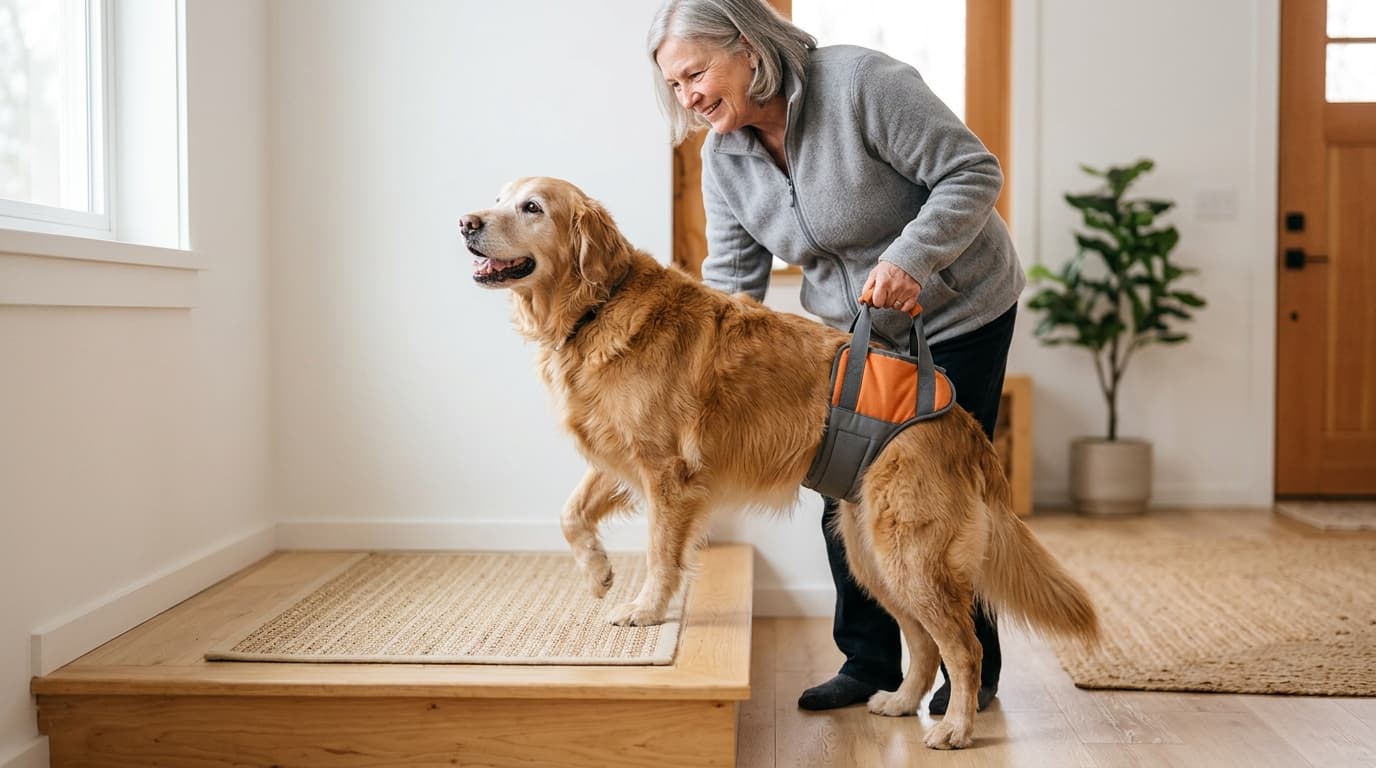
The right piece of kit can transform an arthritic pet's day. A sling gets a stiff dog up the stairs, grips stop the skating on a slippery floor, a good bed actually supports sore joints. This is a practical guide to the mobility aids and equipment worth having, how to choose and fit them, and what is genuinely useful versus what just sells.
We are talking here about portable, wearable, and assistive equipment that helps a pet move, rise, and stay steady. It is the companion to our home modifications articles, which cover the fixed environment, the flooring, the bed placement, the built-in ramps. Here we focus on the gear: the things you buy, fit, and use to support a struggling pet. Most of it is dog-oriented, simply because dogs more often need lifting and supporting, but several items, ramps, traction, supportive beds, easy-access feeding, apply just as well to cats, and I will flag those as we go.
Equipment supports, it does not replace
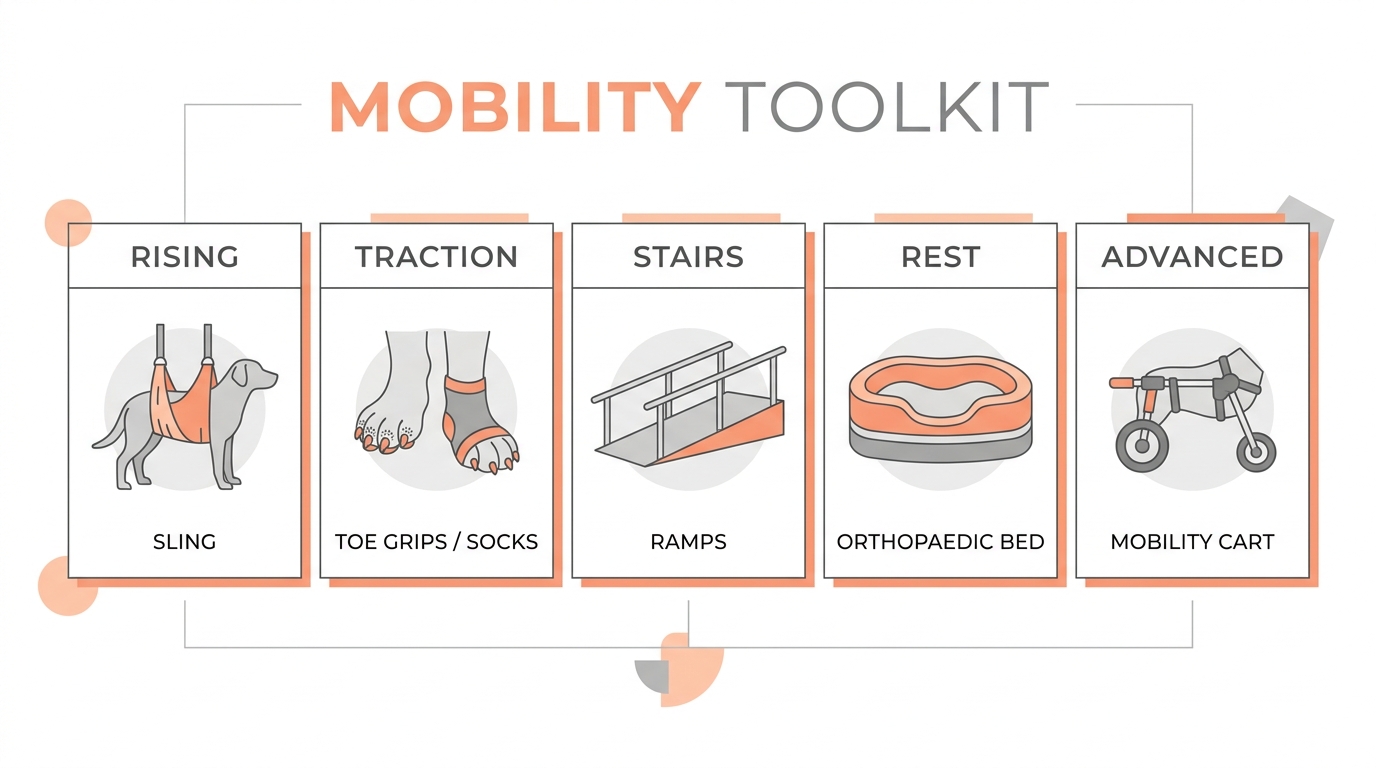
One piece of framing before the kit list. Equipment is an adjunct. It sits on top of good pain control, a healthy weight, and a well-set-up home, and it does not replace any of them. A sling will help you get a dog up the stairs, but it will not treat their pain. Toe grips will stop the skating, but they will not replace the need for a lean body and a comfortable home.
So before investing in equipment, make sure the foundations are right: the pain is properly managed with your vet, the weight is under control, and the home is set up well. Then the equipment in this article adds genuine, practical help on top. Bought instead of those foundations, it disappoints. Bought on top of them, it can transform a pet's day.
Slings and support harnesses for getting up and getting around
For a dog that struggles to rise, manage stairs, or get into the car, a sling or support harness is often the single most useful piece of equipment, because it lets you take some of their weight without hurting your own back.
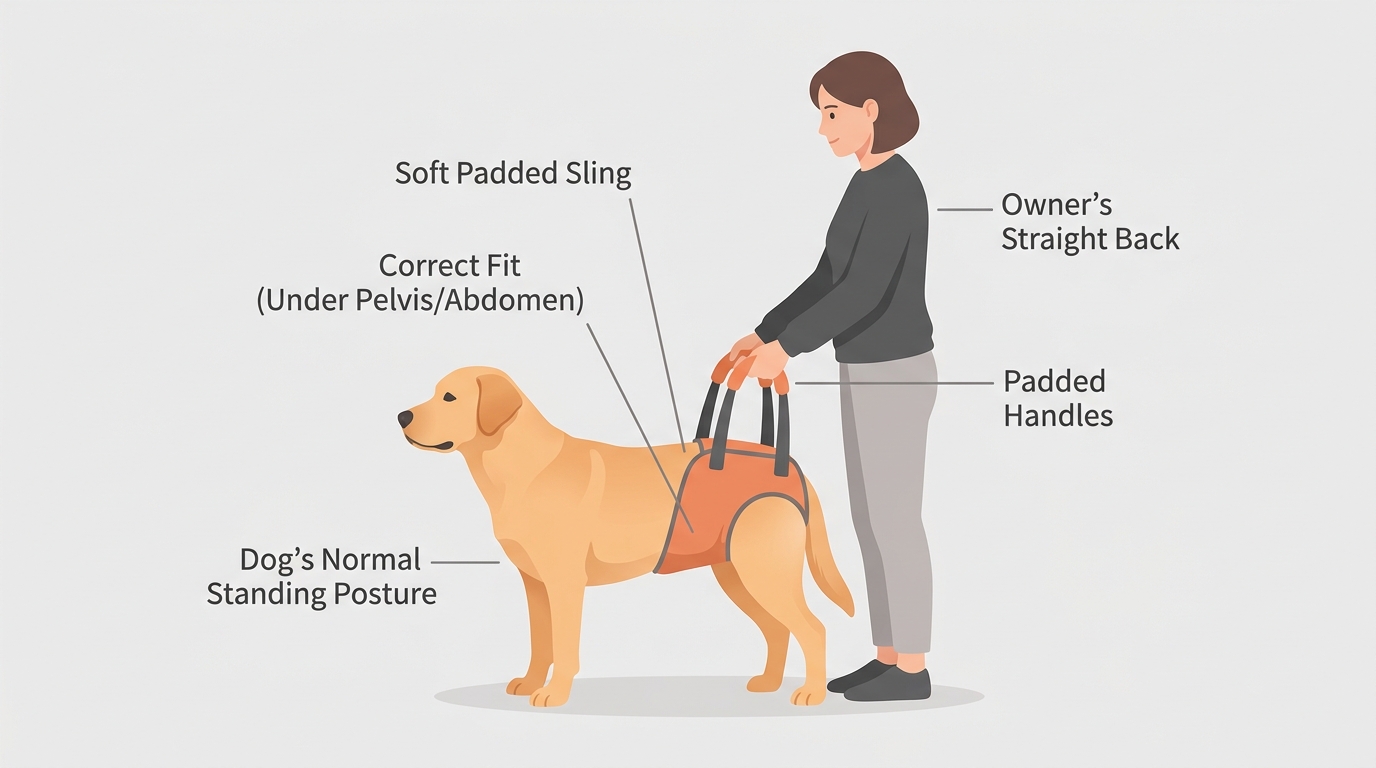
There are two broad types. A rear-support sling is a simple band that goes under the dog's hindquarters, with handles for you to hold, supporting the back end, which is where most arthritic dogs are weakest. A full-body or two-part lifting harness supports front and back, useful for a dog that needs help at both ends. Some are designed to be left on for the day so help is always to hand.
Two things matter more than which brand you buy. The first is correct fit: a sling that is too loose slips, and one that presses in the wrong place can cause sores or strain, so it needs to fit the individual dog properly. The second is safe lifting technique, for your sake as much as the dog's: lift with the sling and your legs, not your back, and use the equipment to assist the dog's own effort rather than hauling their full deadweight. For a larger dog especially, it is well worth having a vet or physiotherapist show you how to fit and use a sling correctly the first time.
Traction: the slippery-floor problem
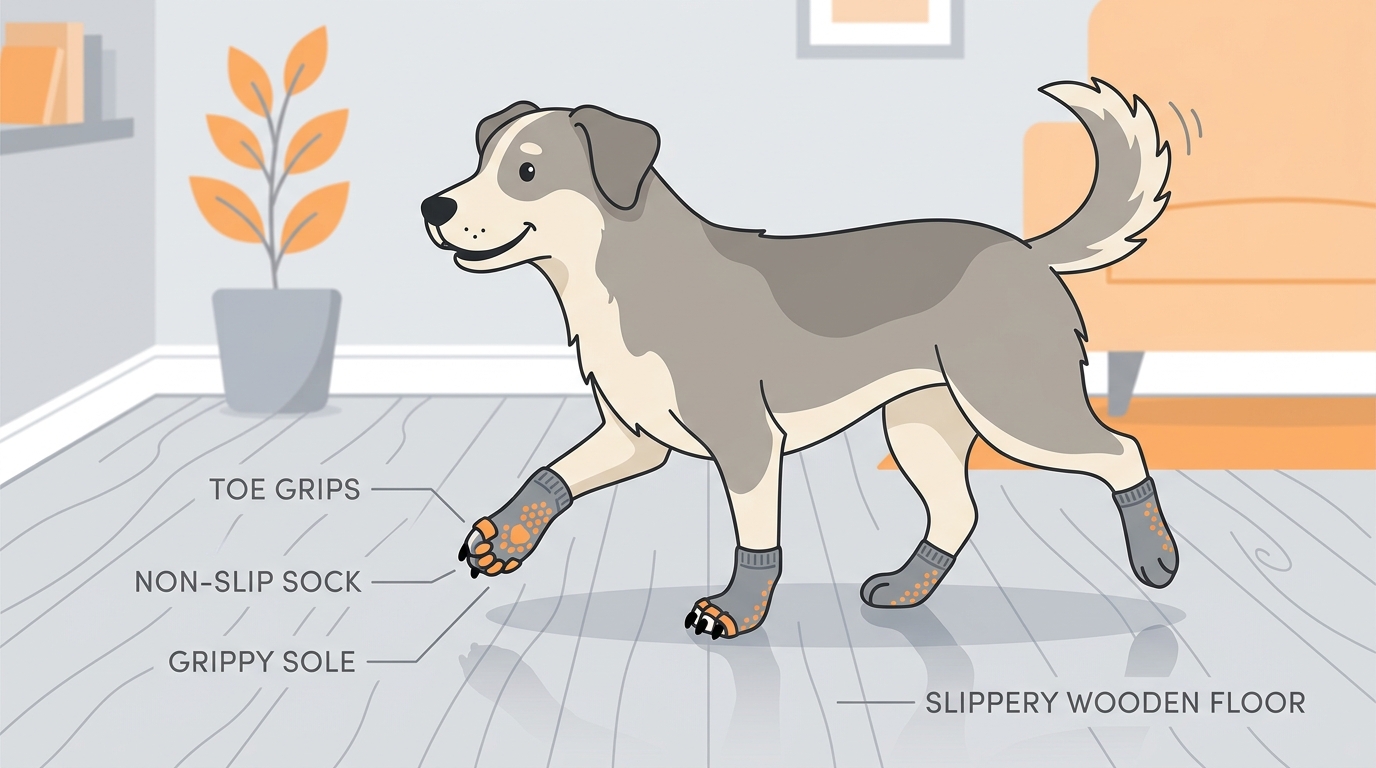
This is the one I wish every owner of a stiff pet knew about, because it is such a common and such a fixable problem. A pet that skates and scrabbles on hard, smooth floors, laminate, tile, wood, loses confidence, tenses up, and moves less, and that loss of confidence and movement does real harm to an arthritic pet's function.
Floor changes (rugs and runners) are the main fix and belong to our home modifications article, but portable traction aids complement them and travel with the pet. Toe grips, small rubber rings that fit over the nails to provide grip, give many dogs instant traction on slick floors. They need to be measured to the individual dog rather than guessed by size. Paw wax and non-slip socks or boots are alternatives, useful too for dogs that drag a paw. And good basic nail care matters, because overlong nails alter how the foot meets the floor and worsen the skating. Pair a less slippery home with traction on the pet themselves and you can restore a remarkable amount of confidence to a pet that had started creeping fearfully around hard floors.
Ramps and steps
Ramps and steps let a pet reach the car, the sofa, or the bed without jumping onto sore joints, taking the impact out of the things they want to do. I will keep this brief, because the fixed side of it sits in our home modifications article, but the portable principle is worth stating: a good ramp is wide enough for the pet to feel secure, not too steep, sturdy, and non-slip, and most pets need a little patient training to use one confidently rather than being expected to march up it first time. Car ramps in particular save both the dog's joints and your back. This applies to cats too, as a route up to a favourite perch in stages.
Orthopaedic and heated beds for rest and warmth
Where a pet sleeps matters more than people think, because they spend so much of the day there. An orthopaedic bed, typically good-quality memory foam, supports the joints and cushions the bony pressure points a thin bed leaves exposed, and it also lifts the pet off the cold floor, since cold conducts up into stiff joints and worsens them. Look for genuine supportive foam that does not bottom out under the pet's weight, and a low or open side so a stiff pet can step in without climbing.
Gentle warmth helps a stiff, achy body, and a heated bed or pad can be soothing, but with one safety rule: it must be a pet-safe product used as directed, never something that can overheat or burn, and never applied directly to an actively inflamed joint. Safe, gentle, general warmth is the goal, not intense direct heat.
Feeding and daily ergonomics
Small ergonomic aids ease the everyday. Raised feeders, bowls lifted off the floor, can make eating more comfortable for a stiff dog who finds bending down to floor level awkward, sparing the neck and elbows. One nuance though: raised feeders are not universally recommended, as in some large breeds they have been associated with other risks, so they are worth discussing with your vet rather than assuming they suit every dog. For cats, the equivalent everyday aid is the easy-access litter tray, low-sided and easy to step into, which we cover in the feline home articles and which is genuinely one of the most important changes for an arthritic cat.
Advanced mobility: carts and wheelchairs
At the more severe end, carts, often called wheelchairs though the pet stands rather than sits in them, can give mobility back to a pet with severe weakness or a neurological problem alongside their arthritis.
Two important points here. First, for arthritis specifically, a cart is usually a last resort rather than an early option, because we generally want an arthritic pet to keep using their limbs to maintain muscle and joint range, which a cart can reduce. They come into their own for severe or neurological cases, not as a shortcut for a stiff but walking dog. Second, if a cart is genuinely appropriate, professional fitting and realistic expectations matter enormously: it must be properly measured and fitted, cart time built up gradually and kept limited at first, and the pet given patience to learn it. This is firmly a decision to make with your vet or a rehabilitation specialist, not an online impulse buy.
Choosing well and avoiding waste
Finally, how to spend wisely, because this is an area full of products and not all of them earn their price. A few plain principles.
Fit matters more than brand. A correctly fitted basic sling beats an ill-fitting premium one, so prioritise getting the fit and size right for your individual pet. Trial before big spend where you can, since pets vary and an aid that suits one may not suit another. Get professional advice on the bigger-ticket and higher-stakes items, slings for a large dog, and especially carts, from a vet or veterinary physiotherapist, who can measure, fit, and show you safe use. And keep a healthy scepticism toward gadgets that promise dramatic results. The genuinely useful aids are mostly simple and unglamorous, while the things that promise the most often deliver the least. Our article on misinformation and marketing applies here as much as anywhere.
Used well, on top of solid pain control, weight management, and a good home, the right equipment makes a real, daily difference to an arthritic pet's comfort, confidence, and independence, and to the strain on you as you help them. Choose for fit and genuine usefulness, get advice on the big items, and the kit can transform how your pet, and you, get through the day.
References
- Millis DL, Levine D. Canine Rehabilitation and Physical Therapy. 2nd ed. Saunders, 2014.
- Gruen ME, Lascelles BDX, Colleran E, et al. 2022 AAHA Pain Management Guidelines for Dogs and Cats. Journal of the American Animal Hospital Association, 2022.
- Canine Arthritis Management (CAM). Practical guidance on flooring, traction and home mobility aids.
Sister tool · Sightline
Track whether treatment is working
Sightline, a separate ConciergeVet tool, runs a short weekly check-in built on validated pain and mobility instruments, turns it into a single Sightline Score you can watch trend over weeks rather than judge on one bad day, and produces a report you can bring to your vet.
A written log, or our printable trackers, does much the same job.
See how Sightline tracks treatmentSee where your pet stands today
Tracking is the other half of managing arthritis. Take the 2-minute Mobility Check to see your pet's stage, then watch it shift as treatment takes effect.
Take the Mobility CheckYou're not doing this alone
Compare treatment journeys and talk to owners managing arthritis. Free to join.
Join PetsLikeMine