

Solensia: The Game-Changer for Feline Arthritis
Alastair Greenway
BVM&S MRCVS
Solensia is the most important development in feline arthritis management in the past two decades. That's a strong statement, and I stand by it. Arthritis affects nine in ten cats over the age of 12, and until recently the options were thin: NSAIDs that came with kidney worries, or, for a lot of patients, nothing much at all. A monthly injection built specifically for chronic feline pain has changed that picture.
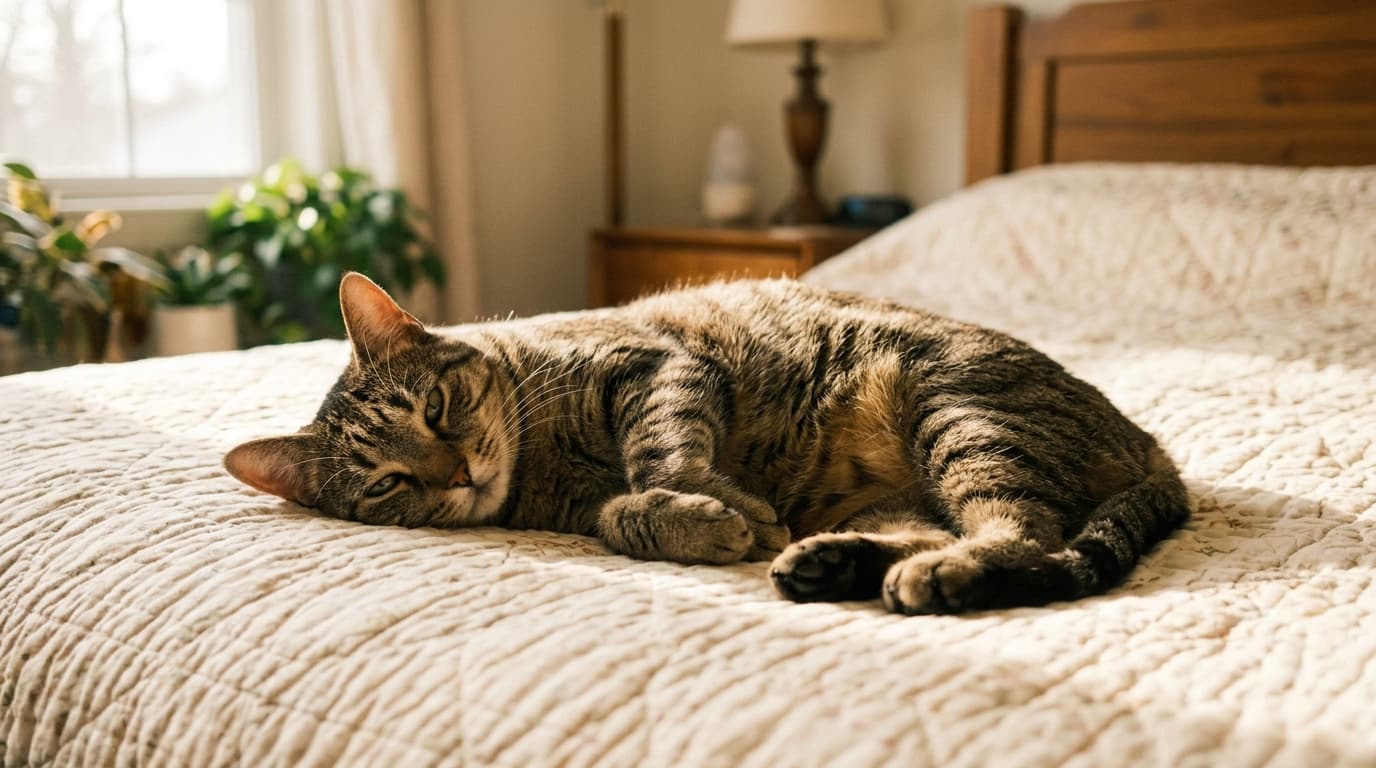
I've watched cats come back to life on Solensia. Cats who'd given up jumping. Cats who'd retreated from family life. Cats whose owners had put the decline down to "just old age." Plenty of them respond so well that the change shows within weeks and is dramatic within months. For a good proportion of arthritic cats, this medication has been a genuine gift.
It's also a relatively new drug, with all the ongoing safety monitoring that implies. The picture isn't entirely clean. There are reports of adverse events, open questions about long-term effects, and specific situations where Solensia isn't suitable. We're still clarifying the full account as more cats receive it over longer stretches of time.
What follows is meant to give you a thorough, balanced understanding of Solensia. What it is, how it works, what the evidence shows about its effectiveness, what the safety profile looks like, what realistic expectations should be, and how to decide whether it's right for your cat. If your cat has been diagnosed with arthritis, or you suspect it, this is one of the most important conversations you'll have with your vet. It's worth understanding properly.
What Solensia actually is
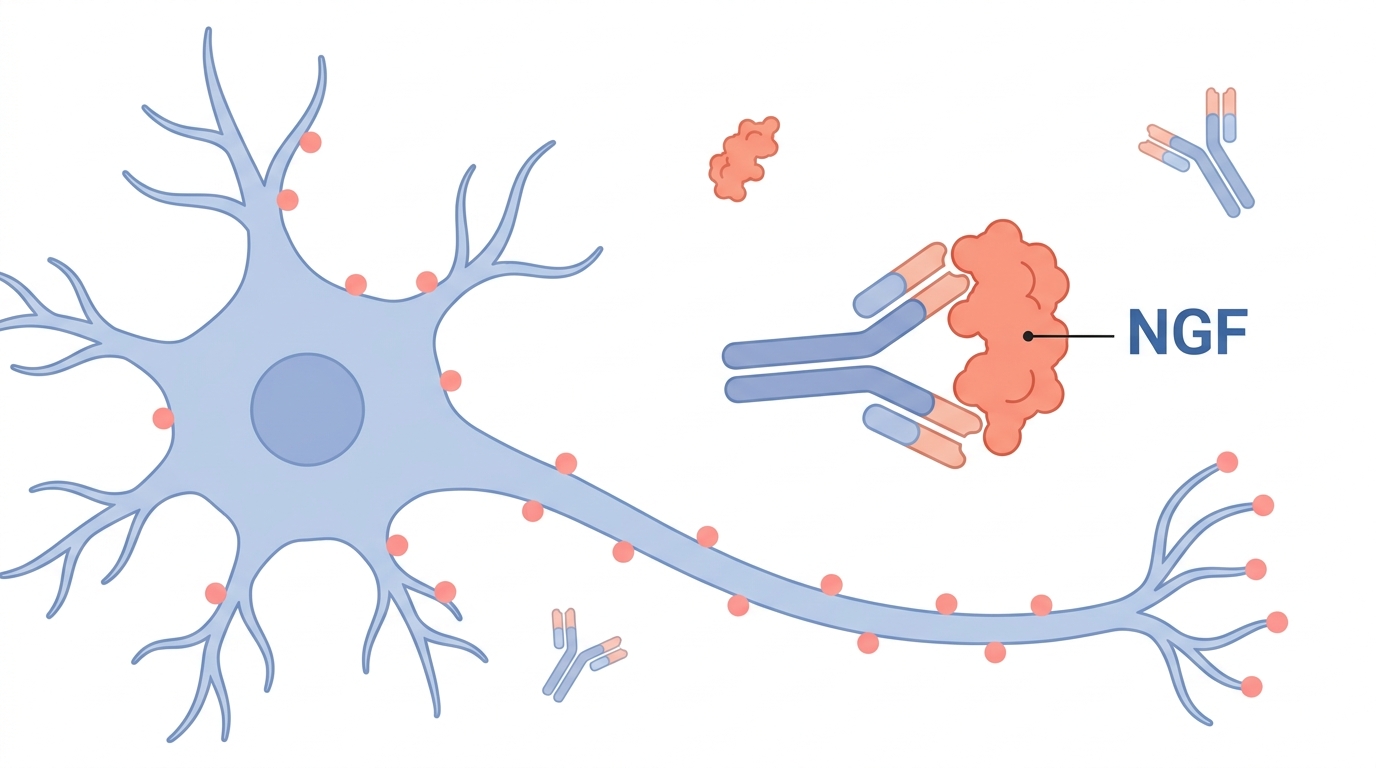
Solensia (active ingredient: frunevetmab) is a monoclonal antibody therapy designed specifically for cats. A few concepts unpack what that means and why it matters.
Antibodies are proteins your immune system normally makes to recognise and neutralise specific targets. A monoclonal antibody is a designed, manufactured antibody that locks onto one specific molecule with extraordinary precision. Human medicine has used monoclonal antibodies against cancers, autoimmune diseases, and chronic pain for over two decades. They're among the most precise pharmaceutical tools we have.
Frunevetmab is a feline monoclonal antibody aimed at a protein called nerve growth factor (NGF). NGF is a signalling molecule that helps maintain and amplify pain in chronic conditions like arthritis. In a healthy joint, NGF levels stay low. In an arthritic joint, NGF levels rise, and that rise sensitises the nerves serving the area to pain signals. So a good deal of the chronic pain of arthritis comes from ongoing NGF activity keeping the pain system switched on.
Neutralise NGF, and frunevetmab interrupts that amplification. The nerves grow less sensitive. The pain signals quieten. In a lot of cats, the result is real improvement in comfort and mobility.
The species-specific design matters here. Frunevetmab is "felinised," modified to look like a natural cat protein to the cat's immune system, which lowers the risk of the cat's body treating it as foreign and building antibodies against it. That piece of engineering is part of what makes the medication work.
It's delivered as a monthly subcutaneous (under-the-skin) injection at the clinic. It can't be given at home. The cat doesn't need to fast beforehand. The injection takes seconds, and most cats tolerate it well.
How it differs from other treatments
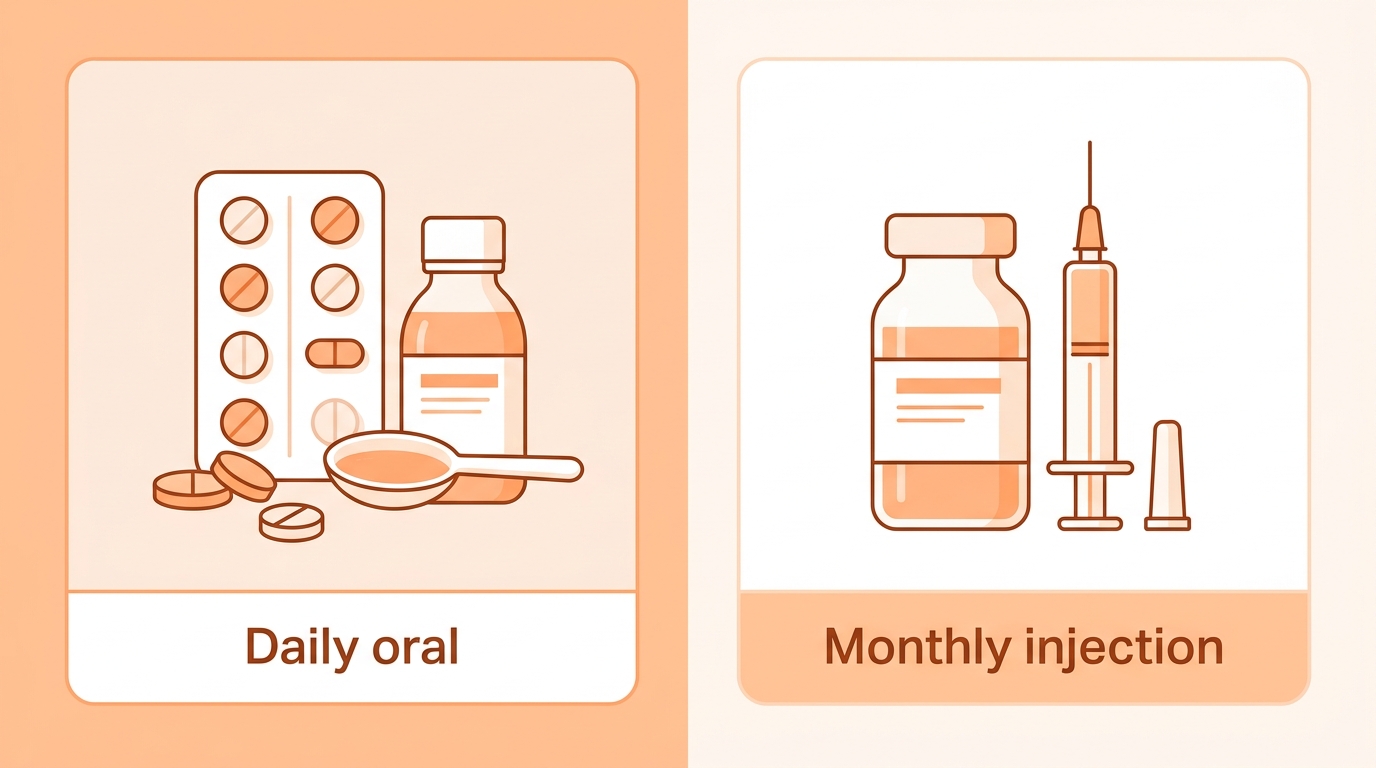
Solensia's place in feline arthritis management comes into focus when you set it next to the alternatives.
Compared to NSAIDs
Mechanism:
- NSAIDs block enzymes (COX-1 and COX-2) that produce inflammatory chemicals throughout the body
- Solensia binds to and neutralises one specific protein (NGF) involved in chronic pain
Effect on inflammation:
- NSAIDs reduce both inflammation and pain
- Solensia primarily reduces pain signalling rather than inflammation itself
Route and frequency:
- NSAIDs are oral medications given daily
- Solensia is a monthly injection given at the vet clinic
Side effect profile:
- NSAIDs can affect kidneys, liver, and gastrointestinal tract; blood monitoring is required
- Solensia doesn't act on those organs in the same way; the side effect profile is different (more on this below)
Use in cats with kidney disease:
- NSAIDs require caution and reduced doses in cats with kidney disease
- Solensia is generally considered safer in cats with stable kidney disease (a major advantage given how common kidney disease is in older arthritic cats)
Onset:
- NSAIDs typically produce noticeable improvement within hours to days
- Solensia's effects build over 1-3 weeks after the first injection, with full effect usually visible by the second or third monthly dose
Cost:
- Modern NSAIDs cost approximately £10-30 per month for a typical cat
- Solensia costs approximately £35-65 per monthly injection in UK practice
Convenience:
- NSAIDs need daily oral administration, which can be a significant challenge with cats
- Solensia requires a monthly vet visit but no daily struggle with medication
Compared to gabapentin
Gabapentin and Solensia tackle different parts of pain. Gabapentin acts on calcium channels in nerve cells, dampening hyperactive signalling. Solensia acts on NGF, reducing the upstream sensitisation. You can use the two together when needed, each addressing a different mechanism of chronic pain.
Gabapentin is given daily as a tablet or liquid, and some cats become noticeably sedated on it. Solensia doesn't typically cause sedation.
Where Solensia really earns its place
A few situations are where it shines:
Cats with concurrent kidney disease. This is the big one. Chronic kidney disease is very common in older cats, often in the same population most affected by arthritis. NSAIDs carry kidney concerns. Solensia doesn't act on the kidneys in the same way, making it a much safer option for these cats.
Cats who can't take oral medication. Many cats are essentially impossible to medicate orally. They detect tablets in food, refuse liquid medications, and the daily battle wears out cat and owner alike. A monthly injection at the vet sidesteps all of it.
Cats with multiple health conditions. When the medication picture is already complicated, a treatment that doesn't interact with kidneys, liver, or stomach simplifies management.
Cats whose pain isn't well controlled on other treatments. Adding Solensia to existing approaches can produce real improvement.
Cats with significant central sensitisation. Because Solensia works on the pain signalling itself rather than on peripheral inflammation, it has theoretical advantages for cats whose chronic pain has become entrenched in their nervous system.
Does it actually work? The evidence
Solensia was approved on the back of clinical trials showing meaningful improvements in pain and mobility in cats with osteoarthritis. The approval pathway ran through both European authorities (2020) and the US FDA (January 2022).
The pivotal multisite pilot field study (Gruen, Myers and Lascelles, Frontiers in Veterinary Science 2021) examined 126 cats with diagnosed degenerative joint disease, randomised to either frunevetmab or placebo injection. Outcomes were measured using owner-reported pain and mobility scales, objective accelerometer-measured activity, and veterinary examination findings. A larger confirmatory trial (Gruen and colleagues 2021, Journal of Veterinary Internal Medicine) followed.
Several findings stood out:
Owner-rated improvement. Cats receiving Solensia showed significantly better owner-rated improvement in mobility, activity, and overall quality of life compared to placebo. This is the outcome that matters most in clinical practice.
Maintained activity levels. In the Frontiers pilot, placebo-treated cats showed a mean 9.3% decrease in objectively measured weekly activity over the post-treatment period, while frunevetmab-treated cats showed only a 0.9% decrease. The medication was effectively halting the activity decline that arthritis typically causes.
Response timing. Most cats showed visible improvement within 1-3 weeks of the first injection. The full effect typically built over 2-3 monthly doses.
Response rate. In the larger JVIM confirmatory trial, around 76% of cats reached the treatment success threshold after three monthly injections, compared with about 68% on placebo. So the absolute success rate is high, but the gap over placebo is more modest than the headline number alone suggests. That's a sober picture worth holding in mind.
In my own clinical experience, the response rate is genuinely high. Most cats I start on Solensia show observable improvement that their owners notice and value. Not every cat. Not always dramatic. But often enough that I treat it as a first-line option for many arthritic cats.
So what does "improvement" look like in practice? Owners commonly report:
- Their cat jumping onto surfaces they'd stopped attempting (worktops, beds, windowsills)
- More play and engagement
- Better grooming, including areas they'd been neglecting
- Reduced morning stiffness
- More social interaction with the family
- Better appetite in some cases
- Returning interest in things they'd lost enthusiasm for
For many owners, the change is described as "getting our cat back." That isn't marketing language; it's how the experience genuinely feels when treatment works.
The safety picture: what we know and don't know
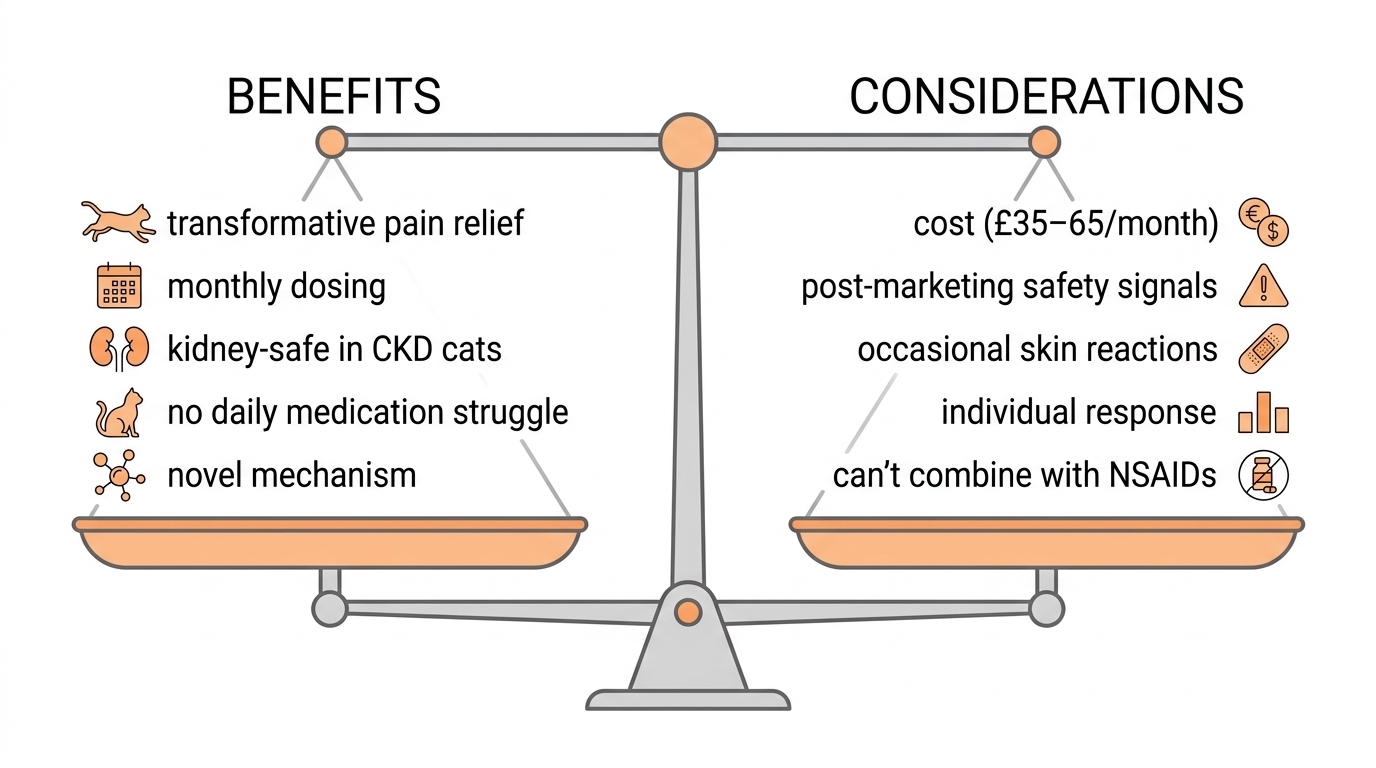
Solensia has been on the market for several years now, and the cumulative experience is sharpening our understanding of the safety profile.
What the pre-approval studies showed
The clinical trials submitted for regulatory approval showed Solensia to be generally well-tolerated. The most commonly reported adverse events in the field studies were:
Gastrointestinal disorders including vomiting and diarrhoea, typically mild and transient.
Skin disorders including dermatitis, eczema, and alopecia. Importantly, the original studies mostly put these down to irritation from the activity-monitor collars the cats wore during the trials, not to the medication itself. That was a research artifact rather than a drug effect.
Behavioural changes in a small number of cats including anxiety, hiding, increased vocalisation, or inappropriate urination.
Injection site reactions in some cats.
Overall, the pre-approval picture was favourable.
What post-marketing data has shown
Once a medication is approved and used across the wider veterinary population, more information surfaces about safety. With Solensia, the regulatory bodies have been tracking adverse event reports, and several patterns have come into clearer focus.
The FDA's Center for Veterinary Medicine has received over 3,200 adverse event reports related to Solensia between approval (January 2022) and March 2024. For context, hundreds of thousands of doses have been administered globally during this period, so the rate of reported events per dose stays relatively low. Even so, the absolute numbers and the specific concerns reported deserve attention.
The most frequently reported events in post-marketing data include:
Skin disorders. Where the original trials blamed the collars, real-world experience has shown that some cats develop genuine cutaneous reactions related to Solensia treatment. A 2023 published case series in the Journal of Feline Medicine and Surgery (Storrer and colleagues) described five cats who developed moderate to severe pruritus (itching) and self-trauma to the head and neck after Solensia injections, with onset 3-18 days after treatment. Three of these cats received further injections and developed similar reactions each time.
These reactions appear to be uncommon but real. They tend to be itchy rather than painful, and most resolve when Solensia is discontinued.
Gastrointestinal disorders. Vomiting, diarrhoea, reduced appetite. Typically mild and transient, but reported often enough to be noted.
Behavioural changes. Lethargy, withdrawal, occasionally signs of disorientation.
Worsening of pre-existing conditions. Particularly noted in cats with significant comorbidities.
Deaths. Some reports of euthanasia or death following Solensia treatment, though attribution in cats with multiple existing health conditions is often hard to establish.
A word on rapidly progressive osteoarthritis
This deserves specific attention, because it's been a significant question with anti-NGF therapies generally.
Anti-NGF medications were investigated extensively in humans for osteoarthritis pain in the 2010s. The human trials showed efficacy but were complicated by reports of rapidly progressive osteoarthritis (RPOA) in some patients, where joints deteriorated unusually quickly. This effect was more common when anti-NGF was combined with long-term NSAID use. That human experience contributed to anti-NGF drugs not being approved for routine human osteoarthritis treatment.
In cats, RPOA hasn't been clearly characterised or reported in the same way. The cat-specific evidence is limited. The product labelling notes that "safe use of SOLENSIA with concurrent NSAIDs has not been established in cats," partly because of this human concern.
Whether the rapid joint deterioration seen in some human patients on anti-NGF therapy might also occur in some cats is a question the long-term experience is still answering. The picture is reasonably reassuring so far, while the longer-term data keeps accumulating.
Putting the risk in proportion
Reading the safety information might feel alarming, so let me put it in context.
Hundreds of thousands of Solensia doses have been administered globally. The adverse event reports, while concerning in absolute numbers, represent a small percentage of total doses. Most cats receiving Solensia do well, without significant adverse events, often with substantial benefit.
That said, "uncommon" doesn't mean "doesn't happen." For an individual cat who has a serious adverse reaction, statistics offer little comfort. And the cumulative evidence has been significant enough to warrant ongoing monitoring and the careful clinical decision-making that any modern pharmacotherapy requires.
The reality is that Solensia carries real benefits for most cats alongside a real adverse event profile that needs weighing. The decision for any individual cat comes down to how that balance falls in their specific situation.
Who shouldn't have Solensia
A few specific situations call for caution, or rule the drug out:
Cats under 7 months or 2.5kg. Solensia hasn't been evaluated in very young or very small cats. The product labelling specifically excludes use in this group.
Cats with known hypersensitivity to the drug or its components. If a previous dose has caused a significant reaction, further doses shouldn't be given.
Cats being treated concurrently with NSAIDs. The safety of this combination hasn't been established. Most clinicians won't combine the two routinely, though some use them sequentially or with washout periods.
Pregnant or breeding cats. NGF is important for normal fetal nervous system development, and anti-NGF therapy in pregnancy could theoretically affect the developing kittens. Solensia is not used in breeding queens.
Cats with significant adverse reactions to a previous dose. If your cat developed cutaneous lesions, significant behavioural change, or other clear adverse events after a Solensia injection, the next dose should not be given without thorough reassessment with your vet.
Cats whose owners aren't able to monitor for adverse events. Solensia relies on the owner watching for and reporting any concerning changes. If for any reason that monitoring isn't going to happen, that's a problem.
Having the conversation with your vet

If you and your vet are weighing up Solensia for your cat, these are the questions worth putting on the table:
Why Solensia specifically for my cat? What's the case for this medication over alternatives in your cat's particular situation?
What are the alternatives? Have NSAIDs been tried (where appropriate)? Are there other modalities to consider first?
What's the expected benefit? Realistically, what improvement should you be looking for? Set expectations together.
What's the trial period? How will you decide whether it's working? When will you reassess? What would prompt stopping?
What warning signs should I watch for? Specifically, what should prompt me to contact you between injections?
Are there reasons we shouldn't try this in my cat? Comorbidities, concurrent medications, age, or other factors that might affect the risk-benefit balance?
What's the cost and commitment? Financially and practically, what am I signing up for?
A good vet will engage seriously with these questions. If you feel rushed or pressured into a decision either way, slow down. This is a significant medication choice, and it deserves proper consideration.
After that first injection: what to watch
The first 2-3 weeks after the first Solensia dose are the most important monitoring window. Pay attention to:
Effectiveness signs:
- Is your cat moving more easily?
- Are they jumping onto things they'd stopped attempting?
- Have they engaged more with you and the household?
- Is their grooming improving?
- Are they more interested in play, food, life generally?
Adverse event signs:
- Any unusual skin irritation, particularly around the head and neck
- Excessive grooming or self-trauma to any area
- Changes in eating or drinking
- Vomiting or diarrhoea
- Lethargy beyond what would be expected
- Behavioural changes (more withdrawn, more anxious, disoriented)
- Any general deterioration that doesn't fit other explanations
Take a video of your cat moving around before the first injection. Take another at 3-4 weeks after. The comparison is often more informative than memory.
For a more structured version of the same idea, that's part of what we built Sightline for. Sightline (sightline.vet) is a separate ConciergeVet tool that supports cats and runs a short weekly assessment, producing a tracked score across the weeks before and after the first injection. For a £420–780 annual commitment, having the pre- and post-Solensia picture on a single scale rather than two competing impressions is a fair thing to want.
A short video and a few dated notes do the same job perfectly well. The point is to commit to some before-and-after comparison rather than relying on what you remember, because Solensia's effect builds over several weeks and the slow gradient is exactly the kind of change that memory smooths over.
If you notice anything concerning, contact your vet promptly rather than waiting for the next injection. Better to discuss something that turns out to be unrelated than to miss an early adverse event.
What to do if your cat responds well
For cats who respond well, the typical pattern is monthly injections continuing for as long as the cat benefits. There's no defined "course length" for Solensia; it's used as ongoing chronic pain management.
Some practical points for cats doing well on Solensia:
Continue monitoring. Even cats who tolerate the medication well can develop adverse events with later doses. Stay attentive.
Track effectiveness over time. Periodic reassessment of pain scores, activity, and quality of life helps confirm continued benefit. Some cats need adjustments over months and years.
Combine with other interventions. Solensia works best as part of a comprehensive plan: environmental modifications, weight management, possibly nutritional support, possibly other adjunct treatments. Don't rely on the injection alone to do all the work.
Be prepared for the conversation about long-term use. As the safety data accumulates, recommendations may evolve. Stay in touch with your vet, who'll be receiving updates from the manufacturer and regulatory bodies.
What to do if your cat doesn't respond
A small proportion of cats don't show meaningful benefit from Solensia. That's not unusual; no medication works for every patient.
If after 2-3 monthly injections you genuinely can't see improvement:
Reassess the diagnosis. Is arthritis really the main cause of the signs you're seeing? Other conditions can mimic or coexist.
Discuss other options with your vet. NSAIDs (if appropriate), gabapentin, alternative approaches. There are other tools in the toolkit.
Don't continue indefinitely if there's no benefit. Solensia is expensive. If it's not working, that money may be better spent elsewhere in the management plan.
What to do if your cat has an adverse event
If your cat develops what looks like an adverse reaction to Solensia:
Contact your vet promptly. Don't wait for the next scheduled appointment if signs are concerning.
Don't give the next dose without veterinary review. If there's any suggestion of adverse events, the dosing decision needs reconsideration.
Report the event. Adverse event reporting helps build the picture of what's happening at population level. Your vet can report through the appropriate channels.
Be specific in your description. What signs? When did they start in relation to the injection? How severe? Have they resolved or are they continuing?
For mild reactions (transient lethargy, brief gastrointestinal upset), the decision about future doses depends on severity and the balance of benefits vs concerns.
For more significant reactions (cutaneous lesions, persistent behavioural change, signs that didn't resolve), the next dose typically shouldn't be given. Other treatment options may need to be explored.
The economic picture
Solensia is not cheap, and getting clear on the financial commitment helps with the decision.
UK costs per monthly injection: £35-65 depending on the cat's weight and the practice. Annual cost: £420-780.
This compares with:
- Long-term meloxicam at therapeutic dose: £120-360 per year
- Gabapentin: £180-360 per year
- A combination NSAID plus monitoring: £300-600 per year
So Solensia sits meaningfully above the oral options on price. The cost reflects the monoclonal antibody manufacturing process and the targeted nature of the therapy.
For some owners, the cost is prohibitive. That's a legitimate consideration to raise with your vet. There may be cheaper combinations that produce acceptable results. For other owners, the value of an effective, kidney-safe, daily-medication-free option justifies the spend.
There's no judgement in either direction. Make the financial decision that fits your situation, in conversation with your vet.
Where the science is going
This story is still being written. Several lines of development are worth watching:
Long-term safety data continues to accumulate. The picture will sharpen over the coming years.
Combination protocols with NSAIDs, gabapentin, and other modalities are being studied to define optimal multimodal approaches.
Dose optimisation including whether some cats might benefit from less frequent dosing once stabilised.
Predictive markers for which cats are most likely to benefit. For now, we have to try the medication to see who responds.
Comparison studies with other treatment modalities to define when Solensia should be first choice vs second choice.
The likeliest path is that Solensia keeps an important role in feline arthritis management, with that role refined over time as experience accumulates.
Stepping back
Solensia is a medication with both significant benefits and meaningful considerations. That's not unusual in modern veterinary medicine; most powerful drugs carry meaningful side effect profiles. The question is whether the benefits outweigh the risks for the individual patient.
For many cats, the answer is clearly yes. The transformation can be remarkable. The chance to use an effective pain medication that doesn't burden the kidneys, in cats who so often have kidney disease, is genuinely valuable.
For some cats, the answer is more nuanced. The risk-benefit calculation depends on age, comorbidities, alternative options, owner circumstances, and individual response.
Make that judgement carefully. Ask questions. Don't feel pressured in either direction. Insist on understanding what you're agreeing to before agreeing to it.
Your cat's comfort matters. So does their safety. Both can be served by good information, good clinical decision-making, and ongoing communication with your vet. Solensia can be part of that, as long as it's the right choice for the right cat at the right time.
References
- Gruen ME, Myers JAE, Lascelles BDX. Efficacy and safety of an anti-nerve growth factor antibody (frunevetmab) for the treatment of degenerative joint disease-associated chronic pain in cats: a multisite pilot field study. Frontiers in Veterinary Science, 2021;8:610028.
- Gruen ME, Myers JAE, Tena J-KS, Becskei C, Cleaver DM, Lascelles BDX. Frunevetmab, a felinized anti-nerve growth factor monoclonal antibody, for the treatment of pain from osteoarthritis in cats. Journal of Veterinary Internal Medicine, 2021;35(6):2752-2762.
- Storrer A, Mackie JT, Gunew MN, Aslan J. Cutaneous lesions and clinical outcomes in five cats after frunevetmab injections. Journal of Feline Medicine and Surgery, 2023;25(11):1098612X231198416.
- US Food and Drug Administration, Center for Veterinary Medicine. Solensia (frunevetmab injection) post-approval adverse event data, January 2022 to March 2024.
Sister tool · Sightline
Track whether treatment is working
Sightline, a separate ConciergeVet tool, runs a short weekly check-in built on validated pain and mobility instruments, turns it into a single Sightline Score you can watch trend over weeks rather than judge on one bad day, and produces a report you can bring to your vet.
A written log, or our printable trackers, does much the same job.
See how Sightline tracks treatmentSee where your pet stands today
Tracking is the other half of managing arthritis. Take the 2-minute Mobility Check to see your pet's stage, then watch it shift as treatment takes effect.
Take the Mobility CheckYou're not doing this alone
Compare treatment journeys and talk to owners managing arthritis. Free to join.
Join PetsLikeMine