

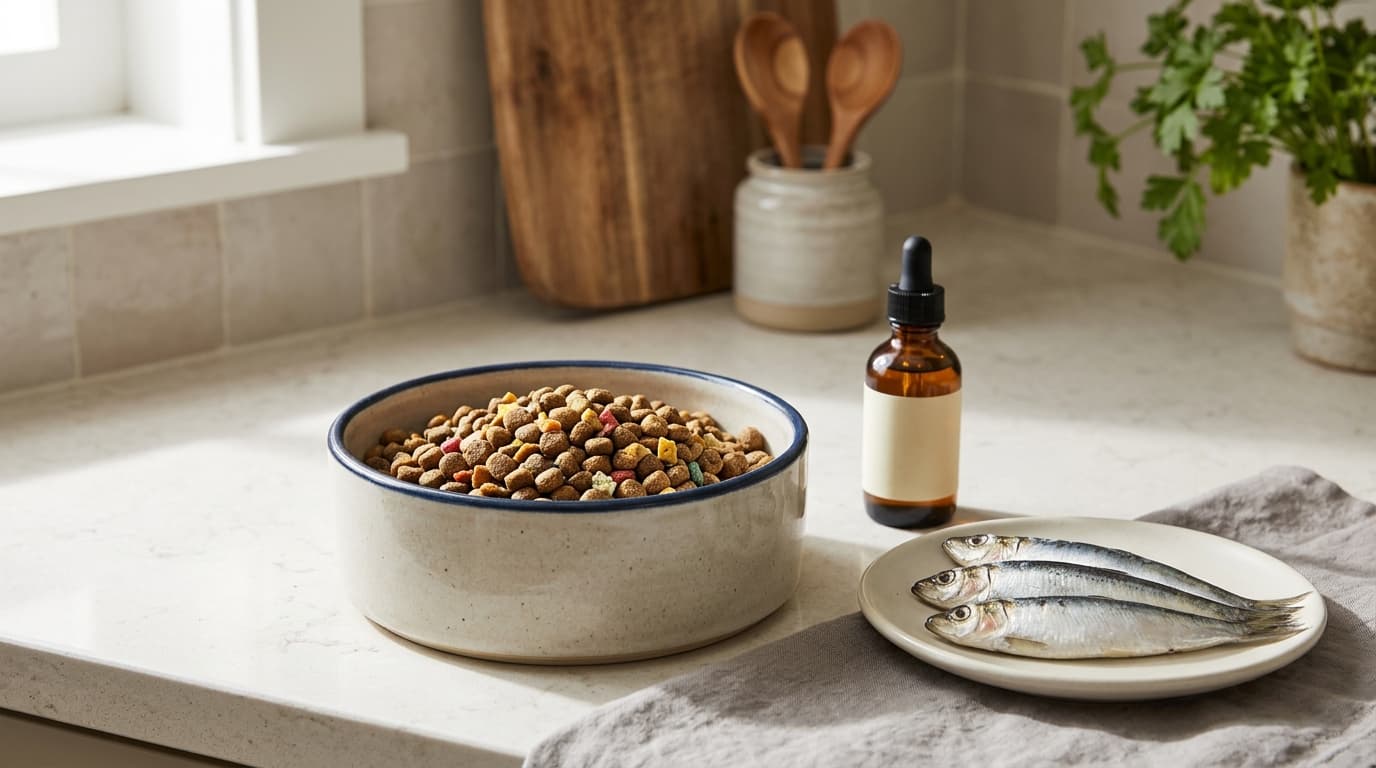
Feeding the Arthritic Dog: Diet, Nutrition, and Meal Planning
Alastair Greenway
BVM&S MRCVS
What goes in your arthritic dog's bowl matters more than you might think. Not just the quantity, which we covered in detail in our weight management article, but the actual composition of the food. The nutrients in their diet are working with their arthritis or against it, every single meal, every single day.
This is one of those areas where the science has moved on significantly in the last decade. What we used to recommend (a standard adult food plus a joint supplement) has been gradually overtaken by better evidence about what specifically helps arthritic dogs nutritionally. Omega-3 fatty acids at therapeutic doses are now considered a core nutritional intervention. Therapeutic joint diets have a respectable evidence base. The relationship between inflammation and food is better understood than it used to be.
There's also a lot of nonsense in the pet food world. Marketing claims that don't survive scrutiny. Trendy diets that aren't backed by evidence. Strongly held opinions about raw versus kibble versus homemade that often have more to do with belief than science.
One thing first: this article assumes you've read our weight management guide. If you haven't, please go and read that first. Weight is the foundation. Nothing in this article will help an overweight arthritic dog as much as getting them to a healthy weight. Diet composition matters, but it matters most once you've got the calorie equation right.
What food can do (and can't do) for arthritis

Before we get into specifics, let me set realistic expectations.
Food can:
- Reduce systemic inflammation that's making arthritis worse
- Provide specific nutrients that support joint health
- Help maintain healthy body weight
- Support muscle mass alongside exercise
- Provide enjoyment and engagement (food is one of life's pleasures for dogs too)
- Modify medication needs in some cases (well-fed dogs on therapeutic diets sometimes need less pharmaceutical pain control)
Food cannot:
- Cure arthritis
- Replace appropriate pain medication in dogs with significant pain
- Rebuild damaged cartilage to a meaningful degree
- Work in isolation without exercise, weight management, and other components of care
Diet is one of several levers in arthritis management. It works alongside the others, not instead of them. Anyone selling you a food that "treats arthritis" or "regenerates joints" is overpromising. Anyone telling you food doesn't matter is underselling.
The realistic position sits somewhere in between: good nutrition makes a meaningful contribution to your arthritic dog's wellbeing, and getting it right is worth doing properly.
Omega-3: the one that earns its place
Omega-3 fatty acids at therapeutic doses are the single most evidence-based dietary intervention for canine arthritis.
The research is consistent across multiple studies over the past two decades. Omega-3 supplementation has been shown to improve weight-bearing on affected limbs, reduce lameness, improve quality of life scores, and in some studies allow for reduced NSAID dosing. The evidence base is far stronger than for any other dietary intervention I can think of.
A 2010 multicentre study by Roush and colleagues compared dogs fed a therapeutic omega-3 enriched diet against dogs fed standard food. The omega-3 dogs showed significant improvements in weight-bearing and arthritis severity over the course of the trial. A separate 2013 study by Moreau and colleagues, in the Journal of Animal Physiology and Animal Nutrition, also found measurable improvements in objective kinetic gait parameters (including peak vertical force) in dogs on a high-omega-3 diet.
The mechanism is well understood. Omega-3 fatty acids, specifically EPA (eicosapentaenoic acid) and DHA (docosahexaenoic acid), are incorporated into cell membranes throughout the body. When inflammation is triggered, the body uses these fatty acids as building blocks for inflammatory signalling molecules. EPA produces less inflammatory versions of these molecules than the omega-6 fatty acids that would otherwise be used. The net effect is a body that produces a less aggressive inflammatory response to the same triggers.
For an arthritic dog, this means less inflammation in the affected joints, less pain, and slower progression of damage. It's not dramatic; you won't see immediate transformation. But over weeks and months, the cumulative effect is meaningful.
How much omega-3 does an arthritic dog actually need?
This is where most owners go wrong. The therapeutic doses used in the research are much higher than what's typically found in over-the-counter supplements or standard pet foods.
The doses associated with clinical benefit in arthritic dogs are roughly:
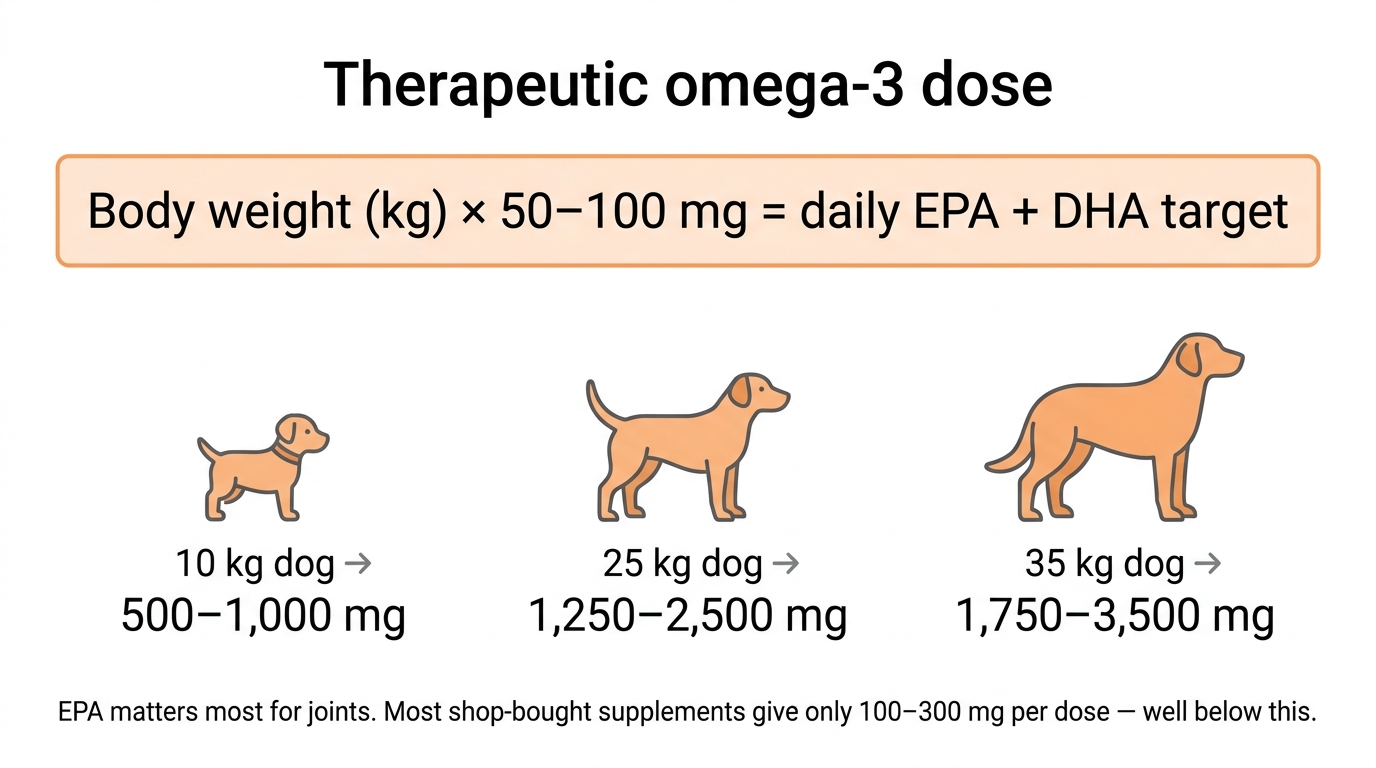
- 50-100mg of combined EPA+DHA per kg of body weight per day
- With EPA being the more important of the two for joint disease in dogs
For a 25kg medium-sized dog, that's 1,250-2,500mg of combined EPA+DHA daily. For a 35kg larger dog, it's 1,750-3,500mg daily.
Compare these doses to what's typically in commercial products:
- Most over-the-counter "joint supplements" with omega-3 contain 100-300mg of EPA+DHA per dose. Far below therapeutic
- Standard adult pet foods contain modest amounts of omega-3, almost never at therapeutic doses
- Therapeutic veterinary joint diets are formulated to deliver therapeutic doses through the food itself
Here's the most important practical point: many dogs whose owners think they're providing omega-3 supplementation are actually delivering doses far below what the evidence shows is needed. The pot on your shelf may have a fish oil logo and a confident claim, but if you do the maths on what's actually delivered, it's often a fraction of what's required.
How to deliver therapeutic omega-3 doses
You have three main options:
Option 1: A therapeutic joint diet that delivers omega-3 in the food.
This is the most convenient approach and the one with the strongest evidence base, because most of the research used therapeutic diets. The main UK options include:
- Hill's Prescription Diet j/d
- Royal Canin Mobility Support
- Purina Pro Plan Veterinary Diet JM
- Specific Joint Support CJD
These foods are formulated to deliver therapeutic omega-3 doses through normal feeding amounts. They also contain other supportive nutrients (often green-lipped mussel, glucosamine, chondroitin) and are usually slightly higher in protein to support muscle mass.
Cost: These foods are more expensive than standard food, typically £80-130 for a large bag for a medium-sized dog, lasting roughly 4-6 weeks. So perhaps £25-40 per month above what you might spend on standard food.
The case for: convenience, evidence base, no need to remember separate supplements, balanced nutrition built in.
The case against: cost, requires prescription from your vet, some dogs prefer their existing food.
Option 2: A high-quality fish oil supplement at therapeutic doses.
If a therapeutic diet isn't feasible (cost, palatability, or owner preference), you can add a fish oil supplement to standard food to deliver the EPA and DHA.
Look for:
- Products that specify the EPA and DHA content separately (not just "omega-3" or "fish oil")
- High concentration of EPA+DHA per ml or per capsule (so you don't need ridiculous quantities)
- Quality certification (look for products tested for heavy metals, oxidation, and rancidity)
- Liquid forms allow more precise dosing than capsules for dogs of varying sizes
Calculate the dose carefully. If your 25kg dog needs 1,500mg of EPA+DHA daily, and your fish oil contains 300mg per ml, you need 5ml per day. Not "a couple of squirts." Measure it.
Cost: Quality therapeutic-dose fish oil costs £15-30 per month for a medium-sized dog. Cheap fish oils don't have sufficient concentration and end up costing more in volume to deliver therapeutic doses.
Option 3: A diet rich in oily fish.
Some owners prefer feeding fresh sources. Sardines (oily, small, low in mercury) can provide useful omega-3 amounts. A medium-sized dog might need 50-100g of sardines per day to deliver therapeutic omega-3, which is achievable as a top-up to their main food.
The challenge with whole food sources is that the doses are harder to calculate precisely, and the fish needs to be appropriately prepared (canned in spring water, not brine, and not oil that adds calories). For most owners, supplements or therapeutic diets are more practical.
A note on omega-6 to omega-3 ratio
The ratio of omega-6 to omega-3 fatty acids in the diet matters as much as the absolute amount of omega-3.
Most standard pet foods have an omega-6 to omega-3 ratio of around 15-30:1. This is dramatically tilted toward omega-6, which produces more inflammatory signalling molecules. For an arthritic dog, this background ratio is actively unhelpful.
Therapeutic joint diets often have ratios closer to 1:1 or even 1:2 (more omega-3 than omega-6). This shifts the body's inflammatory chemistry significantly.
What this means practically: simply adding fish oil to a standard high-omega-6 diet helps, but not as much as feeding a diet with the right ratio built in. That's part of why therapeutic joint diets work well as a complete approach.
Protein: more important than people think
Most discussions of arthritis nutrition focus on inflammation and joint nutrients. Protein gets less attention, but it matters considerably.
Arthritic dogs are at risk of muscle loss. Reduced activity, age-related muscle changes, and the chronic inflammatory state of arthritis all contribute to sarcopenia (age-related muscle wasting). Loss of muscle mass is bad for arthritis because muscles support joints. Less muscle equals more force through the joints, which equals more damage.
Maintaining adequate protein intake helps preserve muscle mass. For senior dogs and arthritic dogs particularly, the protein requirement is often higher than it was when they were younger. The old advice to feed "low protein" diets to senior dogs has been comprehensively debunked. Modern senior diets and therapeutic joint diets typically contain more protein, not less, than standard adult food.
For an arthritic dog, look for diets with:
- Protein content of at least 25-28% on a dry matter basis (higher is fine if otherwise healthy)
- High-quality protein sources (named meat or fish first ingredient, not vague "meat meal" or "animal derivatives")
- Adequate essential amino acids for muscle synthesis
Dogs with kidney disease have specific protein requirements that need balancing with vet input. For the otherwise healthy arthritic dog, generous protein is generally beneficial.
Other ingredients with reasonable evidence
Beyond omega-3 and protein, there are several other nutritional factors worth knowing about.
Green-lipped mussel (Perna canaliculus)
We covered this in detail in our supplements article. To summarise: green-lipped mussel has reasonable evidence of benefit in canine arthritis, working through multiple mechanisms (anti-inflammatory action, joint nutrition support).
Many therapeutic joint diets include green-lipped mussel as an ingredient. If you're using a complete joint diet, you may not need to supplement separately. If you're using standard food plus omega-3, adding green-lipped mussel as a supplement is reasonable based on the evidence.
Glucosamine and chondroitin
The evidence is weaker than the marketing suggests. We covered this in detail in our supplements article. The summary: probably won't hurt, may help some dogs marginally, shouldn't be relied on as your main intervention.
Many therapeutic joint diets contain glucosamine and chondroitin alongside omega-3 and green-lipped mussel. This combination approach has more evidence than glucosamine alone.
Curcumin and turmeric
Theoretical benefits, weak evidence in dogs. Some therapeutic diets include curcumin as part of their formulation. Whether it makes a meaningful contribution to the overall effect is hard to say. Probably not harmful, probably not transformative.
Vitamin E
Vitamin E is an antioxidant that works alongside omega-3 fatty acids. Many therapeutic diets and quality omega-3 supplements include vitamin E specifically to protect the omega-3 from oxidation and to support their action.
If supplementing fish oil separately, look for products that include vitamin E. If not, a separate vitamin E supplement may be worth considering, though doses don't need to be high.
Specific carbohydrate sources
Some research suggests certain carbohydrate sources (specifically those with low glycaemic index) may produce less systemic inflammation than others. This is a developing area of nutrition science.
In practice, the differences between specific carbohydrate sources are probably small compared to the impact of omega-3 dosing, protein adequacy, and overall calorie balance. Don't overthink this aspect.
Ingredients to be cautious about
A few things in standard dog foods are worth being aware of in the context of arthritis.
High omega-6 content
As discussed, very high omega-6 levels tilt the body's inflammatory chemistry in unhelpful directions. Many cheaper pet foods are heavily reliant on omega-6 rich vegetable oils (sunflower, corn, soybean) for their fat content. For an arthritic dog, this is actively unhelpful even before you consider whether they're getting adequate omega-3.
Excessive carbohydrate
While dogs can metabolise carbohydrates effectively, very high carbohydrate diets (often the cheapest commercial foods) tend to be calorie-dense and may contribute to weight gain. For an arthritic dog who's exercising less than they used to, calorie-dense food is a hazard. Look at the nutritional analysis and prefer foods with reasonable protein and fat content rather than carbohydrate-dominant formulations.
Generic "vegetable oil"
If a food's fat source is listed as "vegetable oil" without specifying the source, you don't know what you're getting. Could be high-omega-6 sunflower oil. Could be balanced rapeseed oil. The specific oil source matters more than the generic description suggests.
Preservatives and additives
For arthritic dogs particularly, some owners avoid foods with artificial preservatives (BHA, BHT, ethoxyquin) on inflammation grounds. The evidence that these directly affect arthritis is weak, but quality foods generally use natural preservatives (mixed tocopherols) anyway. This isn't a big issue if you're already choosing reasonable quality food.
The diet wars: raw vs kibble vs home-prepared
You'll hear strong opinions on this. Let me give you an evidence-based view.
Standard commercial kibble (well-formulated)
The most common option and, despite the reputation it sometimes has on the internet, perfectly fine for most arthritic dogs. Good quality kibble provides balanced nutrition, consistent calorie counts (essential for weight management), and convenience. Many therapeutic joint diets are kibble-based and have strong evidence behind them.
Look for: named protein sources, adequate protein content, reasonable fat sources, declared omega-3 content if relevant, AAFCO compliance or equivalent.
Wet/canned food
Higher water content (good for hydration), often more palatable, useful for older dogs with dental issues or reduced appetite. Generally more expensive per kcal than dry food. Can be useful as a topper on dry kibble to encourage eating.
For arthritic dogs specifically, wet food can be a good choice for picky eaters or those with dental discomfort. Many therapeutic joint diets are available in both wet and dry formats.
Raw food (BARF or similar)
Raw feeding is divisive. The arguments for: more natural, fresher ingredients, owners feel more connected to feeding decisions, anecdotally many owners feel their dogs do better on it. The arguments against: balancing nutrition is technically difficult, food safety risks (bacterial contamination), the evidence for clinical benefit over good quality kibble is essentially non-existent.
For arthritic dogs specifically: there's no compelling reason to recommend raw feeding for arthritis benefit. The therapeutic interventions that have evidence (omega-3 doses, glucosamine, GLM) can be delivered through any feeding approach, but it's easier and more reliable through formulated therapeutic diets.
If you raw feed and want to do it well, work with a veterinary nutritionist to ensure balance. Avoid the influencer-led raw feeding advice that often misses essential nutrients.
Home-prepared (cooked)
Some owners want to cook their dog's food. This can work, but requires careful attention to balance. Home-cooked diets that aren't formulated with veterinary nutrition input are usually deficient in essential nutrients within months.
For arthritic dogs specifically, home cooking lets you control omega-3 inputs precisely, which is potentially advantageous. But you need to get the rest of the diet right too. If this appeals to you, consult a veterinary nutritionist for a properly balanced recipe. Services like BalanceIt or PetDiets allow custom recipe formulation for a fee.
Grain-free diets
This trend deserves a specific mention. The 2018-2019 FDA investigation into a potential link between grain-free dog foods (particularly those with high legume content) and dilated cardiomyopathy raised significant concerns. The investigation has continued but the picture remains unclear.
For arthritic dogs specifically, there's no benefit to grain-free that I'm aware of. The marketing claim that dogs "can't digest grain" is not supported by veterinary nutritional science. If your dog has a specific grain allergy (uncommon), then yes, avoid those grains. Otherwise, the choice is preference, not health-based.
Given the cardiomyopathy concerns, I'd suggest erring on the side of grain-inclusive foods unless there's a specific reason to avoid them.
Practical meal planning for the arthritic dog

Here's how I'd actually structure feeding for a typical arthritic dog.
Decision 1: What food?
For most arthritic dogs, I'd recommend either:
A therapeutic joint diet (Hill's j/d, Royal Canin Mobility, or similar) as the most evidence-based approach if cost allows.
A quality senior or adult food plus a therapeutic-dose omega-3 supplement as a reasonable alternative if therapeutic diets aren't feasible.
Both approaches can work. The therapeutic diet is more convenient and has stronger combined evidence. The alternative is cheaper but requires more discipline with the supplement.
Decision 2: How much?
Based on calculated calorie requirements as detailed in our weight management article. Measure by weight, not volume. Adjust based on monthly body condition assessment.
Decision 3: How often?
Most dogs do well with two meals per day. For arthritic dogs with reduced exercise:
- Two meals (morning and evening) is the standard pattern
- Some benefit from three smaller meals (less digestive load, more frequent satisfaction)
- One meal per day can work but isn't ideal; longer fasting periods may not be optimal for older dogs
For dogs who beg significantly, splitting daily allowance into more frequent smaller meals can help with the perceived hunger problem.
Decision 4: When?
Consistent timing matters more than the specific time. Dogs do better on a predictable schedule than with variable meal times.
For dogs on long-term NSAIDs, food should be given alongside the medication to reduce gastrointestinal effects. Time the morning NSAID dose with breakfast.
Decision 5: How?
Slow feeders or puzzle bowls extend mealtime and provide mental stimulation. Particularly useful for arthritic dogs who can't get the same physical stimulation they once did.
A raised bowl at chest height (covered in our home modifications article) reduces awkward neck and spinal flexion during eating, particularly for dogs with cervical or thoracic arthritis.
Eating should be calm and unhurried. Multiple dogs eating together can create stress and rushed eating. If you have multiple dogs, feed them in separate areas if needed.
Treats: not just empty calories
Treats are usually thought of as a problem (excess calories, training tools, comfort food). For an arthritic dog, they can be more than that.
Treats that work for arthritis
Some treats can deliver useful nutrients:
Sardines or other oily fish (small portions, plain, not in brine) contribute to omega-3 intake.
Joint-supportive chews containing therapeutic ingredients (some commercial products contain meaningful doses of green-lipped mussel, omega-3, or other joint nutrients). Read labels carefully; many "joint chews" contain marketing more than substance.
Frozen Kong stuffings using small amounts of meat, vegetables, and yogurt can deliver nutrition while providing extended chewing engagement.
Bone broth ice cubes in summer provide hydration and small amounts of minerals.
Treats to use sparingly
High-fat or high-sugar treats add empty calories without nutritional benefit. The bigger problem is the calorie load on an arthritic dog who shouldn't be carrying weight.
Highly processed commercial treats vary enormously in quality. Read the ingredients.
Rawhide and similar long-chew treats are increasingly considered problematic from a digestive safety perspective, regardless of arthritis status.
Treats and weight management
If treats are being used as part of a calorie controlled diet (and they should be for any arthritic dog who's overweight or borderline), they count toward the daily allowance. We covered this in detail in the weight management article.
Hydration
Often overlooked but important. Arthritic dogs need adequate hydration for joint and overall health. Reduced exercise can mean reduced thirst, and reduced inclination to walk to the water bowl can mean reduced intake.
Practical points:
- Multiple water bowls in different locations (covered in home modifications)
- Fresh water daily; older dogs are sometimes pickier about water quality
- Wet food contributes meaningful hydration if used
- Some dogs benefit from water fountains, which encourage drinking
- Watch for changes in water intake; sudden increases or decreases can signal other health issues
Supplements within a feeding plan
The relationship between food and supplements is worth being explicit about.
If you're feeding a therapeutic joint diet, you may not need additional joint supplements. The diet is formulated to deliver therapeutic ingredients. Adding more glucosamine, chondroitin, or omega-3 on top is usually unnecessary and potentially expensive.
If you're feeding standard food, you may benefit from adding:
- A therapeutic-dose omega-3 supplement (the most important one)
- Possibly green-lipped mussel
- Possibly other joint supplements if you've chosen to use them
Avoid the "kitchen shelf of supplements" approach, where multiple expensive products are given without clear evidence of additive benefit. One or two well-chosen, evidence-based supplements at correct doses is better than seven products at suboptimal doses.
Putting it together: an example plan

For a typical 25kg arthritic Labrador, here's what a thoughtful feeding plan might look like:
Option A: The therapeutic joint diet approach
- Hill's Prescription Diet j/d, fed at calculated calorie requirement (approximately 250-280g per day for weight maintenance at lean body condition)
- Split into two meals: morning and evening
- Fed in a slow feeder at slightly raised height
- Given alongside the morning NSAID dose
- No additional joint supplements needed
- Treats limited to 10% of daily calories, ideally including a sardine or two for additional omega-3
- Monthly weigh-in to confirm maintaining target weight
Approximate cost: £35-45 per month for the food.
Option B: The standard food plus supplement approach
- Quality adult or senior dog food, fed at calculated calorie requirement
- Split into two meals
- Fed in a slow feeder at slightly raised height
- Plus 5ml of therapeutic-grade fish oil daily (delivering ~1,500mg of EPA+DHA)
- Plus green-lipped mussel capsule daily (optional)
- Treats limited and ideally including occasional sardines
- Monthly weigh-in
Approximate cost: £15-25 per month for the food, plus £15-25 per month for the supplements. Total similar to Option A.
Both approaches deliver good arthritis nutrition. Choose based on your circumstances, your dog's preferences, and your willingness to manage supplements separately.
Common questions
My dog won't eat the therapeutic diet. What now?
Most therapeutic diets are reasonably palatable but no food is loved by every dog. Strategies:
- Mix gradually with their current food, increasing the new food over 7-10 days
- Try the wet version if the dry isn't accepted (or vice versa)
- Warm the food slightly to enhance aroma
- If genuinely refused, try a different therapeutic brand
- If multiple options aren't accepted, switch to Option B (standard food plus supplements)
Don't force a food the dog won't eat. The best diet is the one your dog will actually eat consistently.
Can I mix wet and dry food?
Yes. Many dogs do well with dry food as the main meal plus a small amount of wet food as a topper. This combines convenience and calorie control of dry food with palatability and hydration benefit of wet.
My dog is on multiple medications. Does this affect feeding?
Possibly. Some medications need to be given with food (most NSAIDs). Some need to be given on an empty stomach (some thyroid medications). Some interact with calcium or other minerals in food. Discuss with your vet how to time your dog's medications around meals.
Should an arthritic dog eat the same as a healthy dog of the same age?
Not quite. The arthritic dog typically benefits from higher omega-3, adequate to high protein, controlled calories (because they're exercising less), and possibly specific joint-supportive ingredients. A senior food may meet some of these needs but won't typically have therapeutic omega-3 levels.
What about cooked food I prepare myself?
Possible but requires expertise to do properly. Strongly recommend working with a veterinary nutritionist for a balanced recipe. Don't follow internet recipes that aren't formulated by qualified professionals; nutritional deficiencies develop over months and are hard to spot until they cause problems.
Is there a difference between dog and cat arthritis nutrition?
Yes. Cats with arthritis have similar omega-3 needs but the doses and ratios are different, and cat-specific therapeutic diets exist. Solensia is the cat-specific medication that has changed feline arthritis management dramatically. We have a dedicated section on cat arthritis with separate guides.
What to do this week

If you want to take action, start here:
1. Check what you're currently feeding. Look at the bag. What's the protein content? What's the omega-3 declaration (often expressed as percentages)? Is it a standard adult food, a senior food, or a therapeutic joint diet?
2. Calculate what therapeutic omega-3 doses would be for your dog (50-100mg of combined EPA+DHA per kg of body weight). Compare this to what your current food/supplement combination delivers.
3. Have a conversation with your vet about whether a therapeutic joint diet might be appropriate, particularly if you're spending money on multiple supplements that aren't delivering therapeutic doses.
4. Make sure you're measuring food precisely with a kitchen scale, not estimating with scoops. This is the foundation of everything else.
5. Look at treats squarely. What's actually going in? Are they within the 10% of daily calorie target? Do any of them contribute to arthritis support?
These five actions can transform your dog's nutritional situation within days or weeks, with no need for dramatic intervention.
A final thought
Diet won't cure your dog's arthritis. Nothing will. But getting nutrition right is one of the most consistent, daily ways you can support them. Three hundred and sixty-five times a year, you have an opportunity to either help or hinder their joint health. Choose to help.
The science here is reasonably clear. Therapeutic-dose omega-3, adequate protein, controlled calories, good quality ingredients, and reliable consistency. None of this is exotic. None of this requires unusual knowledge or expense. It just requires attention.
Your arthritic dog will be living with this condition for years. The food you choose is a partner in their care for the entire duration. Pick well, feed thoughtfully, and you'll be doing more for them than you might realise.
References
- Roush JK, Cross AR, Renberg WC, et al. Evaluation of the effects of dietary supplementation with fish oil omega-3 fatty acids on weight bearing in dogs with osteoarthritis. Journal of the American Veterinary Medical Association, 2010;236(1):67-73.
- Moreau M, Troncy E, Del Castillo JR, Bédard C, Gauvin D, Lussier B. Effects of feeding a high omega-3 fatty acids diet in dogs with naturally occurring osteoarthritis. Journal of Animal Physiology and Animal Nutrition, 2013;97(5):830-837.
Sister tool · Sightline
Track whether treatment is working
Sightline, a separate ConciergeVet tool, runs a short weekly check-in built on validated pain and mobility instruments, turns it into a single Sightline Score you can watch trend over weeks rather than judge on one bad day, and produces a report you can bring to your vet.
A written log, or our printable trackers, does much the same job.
See how Sightline tracks treatmentSee where your pet stands today
Tracking is the other half of managing arthritis. Take the 2-minute Mobility Check to see your pet's stage, then watch it shift as treatment takes effect.
Take the Mobility CheckYou're not doing this alone
Compare treatment journeys and talk to owners managing arthritis. Free to join.
Join PetsLikeMine