

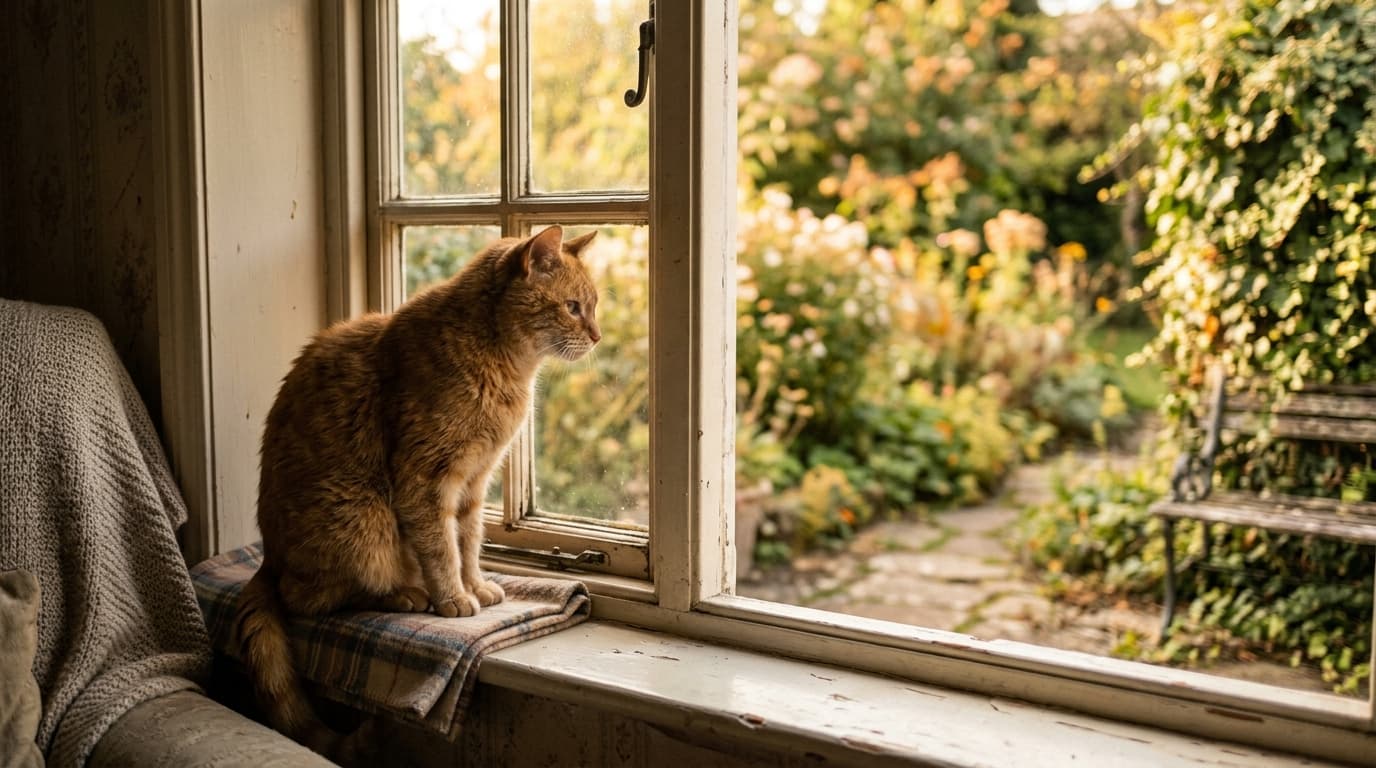
Arthritis in Cats: The Invisible Epidemic
Alastair Greenway
BVM&S MRCVS
There's a very good chance your cat has arthritis, particularly if they're getting on in years. And the odds are that nobody has told you.
This isn't because your vet is incompetent or because you've missed something obvious. It's because feline arthritis is one of the most underdiagnosed conditions in veterinary medicine. Cats are masters at hiding pain. They don't limp the way dogs do. They don't cry out or whimper. They just quietly stop doing things. And because those changes happen gradually, most owners assume their cat is simply getting older.
They're not just getting older. They're in pain. And we can do something about it.
How common is arthritis in cats?
Much more common than almost anyone realises.
One landmark study found that 90% of cats over 12 years of age had radiographic evidence of osteoarthritis in at least one joint. Ninety percent. And the part that should make you sit up is this: only 4% of those cats had any mention of arthritis in their veterinary records. Neither the owners nor the vets had picked it up.
A more recent study from Utrecht University found that 61% of cats over six years old had arthritis in at least one joint, with 48% affected in multiple joints. A 2020 Japanese study using detailed orthogonal radiographs found radiographic evidence of degenerative joint disease in 74% of cats screened. A 2025 narrative review in the Journal of Feline Medicine and Surgery described osteoarthritis as the primary source of chronic pain in cats, affecting well over a quarter of the entire feline population, and noted that detection and diagnosis rates remain stubbornly low.
The numbers vary between studies because different researchers looked at different age groups and used different diagnostic criteria. But the consistent message across two decades of research is this: feline arthritis is extraordinarily common, it increases with age, and the overwhelming majority of affected cats are never diagnosed.
We are failing cats on a massive scale. Not through cruelty or neglect, but through a collective failure to look for something that doesn't present the way we expect.
Why cats are so hard to read
Dogs with arthritis limp. They struggle to get up. They lag behind on walks. The signs, while often missed for too long, are at least visible to the observant owner. A dog in pain moves differently, and eventually that difference becomes impossible to ignore.
Cats are a different proposition entirely.
A study of 28 cats with confirmed osteoarthritis found that only about one in six were overtly lame. One in six. But almost three quarters had reduced their jumping activity, and two thirds were jumping to lower heights. The pain was there. The behavioural change was there. But the most recognisable sign of joint disease, actual lameness, was absent in the majority.
Several things explain this. Cats are small and agile, which means they can compensate for joint pain more effectively than dogs. Feline arthritis is very often bilateral, affecting the same joints on both sides. When both hips or both elbows are sore, there's no asymmetry in the gait, so you don't see a limp. The cat just moves differently, and differently for a cat often looks like not moving at all.
And then there's the evolutionary piece. Cats are both predators and prey animals. Showing weakness in the wild means becoming someone else's lunch. The instinct to mask pain and vulnerability is hardwired. Your cat isn't being stoic or brave. They're running ancient survival software that tells them to hide anything that might make them look like a target.
Signs you're actually looking for
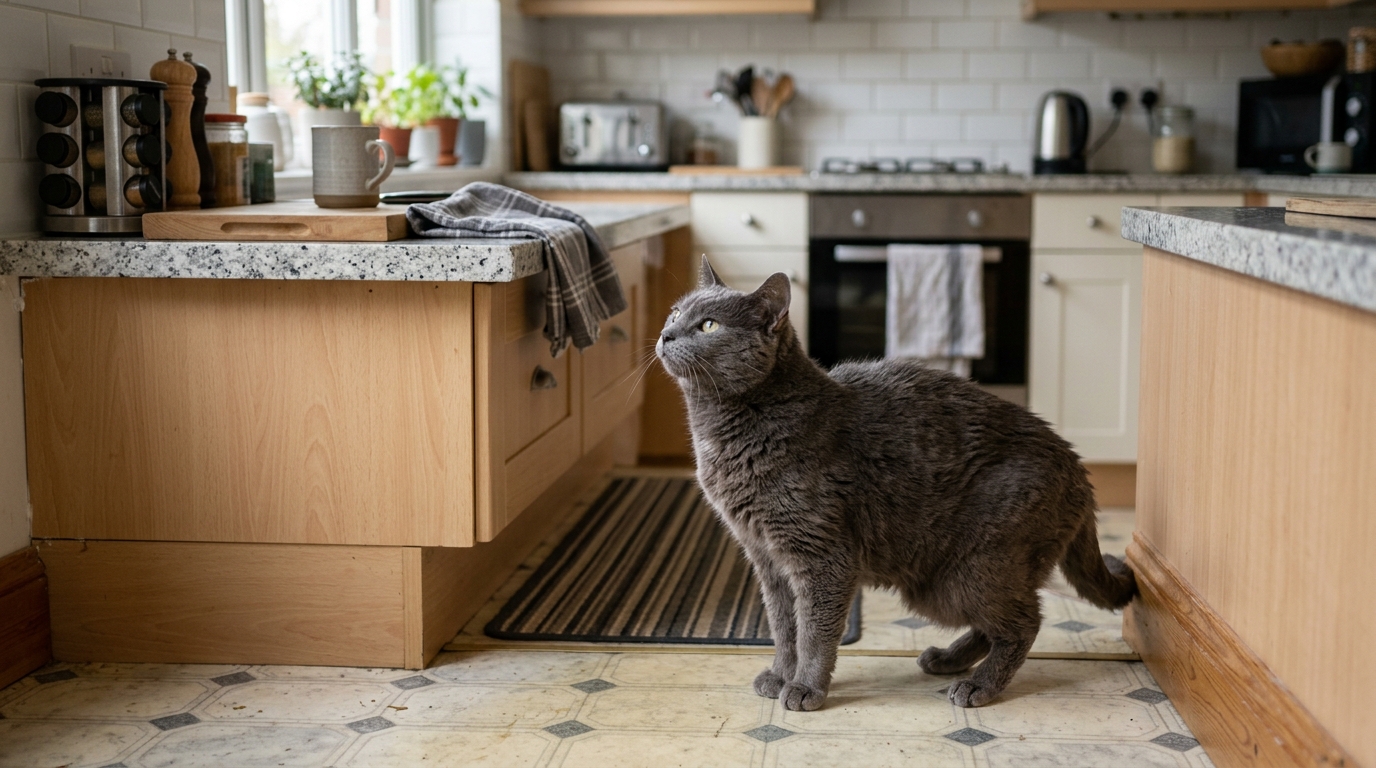
If lameness isn't the main clue, what is? The answer is behavioural change. Subtle, gradual behavioural change that is heartbreakingly easy to mistake for normal ageing.
Reduced jumping. This is the most common sign. Your cat used to leap onto the kitchen worktop in a single bound. Now they hesitate, or jump to a chair first, or simply don't bother. They used to sleep on top of the wardrobe. Now they sleep on the sofa. They used to greet you from the windowsill. Now they watch from the floor. Every time a cat stops going somewhere high, ask yourself why.
Changed jumping technique. Before they stopped jumping entirely, you might notice them calculating more carefully. Crouching lower before takeoff. Landing more heavily. Scrambling rather than leaping. Taking two steps where they used to take one.
Stiffness after rest. Just like dogs and humans with arthritis, cats are often stiffest when they've been still for a while. You might notice them moving awkwardly when they first get up, then loosening off after a few minutes. Early morning and cold weather tend to be worse.
Reduced grooming. Cats with sore joints can't twist and reach the way they used to. You might notice their coat becoming matted or unkempt, particularly on the lower back, hindquarters, and the base of the tail. Areas they can't easily get to without contorting a stiff spine.
Over-grooming in specific areas. Conversely, some cats obsessively lick or chew at a painful joint. If your cat is creating bald patches or irritated skin over a hip or knee, that could be pain-related grooming rather than a skin problem.
Litter tray issues. This is a big one that gets misattributed. A cat with sore hips or a stiff back may find it difficult to climb into a high-sided litter tray. They may struggle to posture properly inside it. The result is that they start going outside the tray, and the owner assumes it's a behavioural problem, a urinary infection, or spite. It's often none of those things. It's a cat in pain who physically can't use the facilities you've provided.
Changes in temperament. A previously friendly cat becomes grumpy or withdrawn. They don't want to be picked up. They hiss or swipe when touched in certain areas. They stop seeking interaction. They hide more. Chronic pain makes anyone irritable, and cats are no exception.
Reduced activity and play. They sleep more. They don't chase toys the way they used to. They don't patrol the garden. They choose the nearest resting spot rather than their favourite one. The spark dims.
Difficulty with stairs. Going up and down stairs requires significant joint flexion. A cat who used to race between floors and now takes them slowly, or avoids them, is telling you something.
Changes in claw condition. Cats who are less active and scratching less may develop overgrown claws. If you're trimming their claws more often than you used to, reduced activity could be the reason.
None of these signs on their own proves arthritis. But if your cat is over eight years old and showing two or three of them, the likelihood is high enough to warrant a conversation with your vet.
Why vets miss it too
It's not just owners who struggle. Vets face genuine diagnostic challenges with feline arthritis.
Cats are notoriously difficult to examine thoroughly. Many become tense, defensive, or completely immobile on the consulting table, which makes it very hard to assess gait, joint range of motion, or pain responses. A cat who pulls their leg away might be in pain, or they might simply object to being handled. Distinguishing the two in a stressed patient in a consulting room is genuinely difficult.
Orthopaedic examination in cats is also less standardised than in dogs. The manipulative tests that help diagnose specific conditions in dogs, like the cruciate drawer test, are less well defined for cats. And because lameness is an unreliable indicator in cats, the usual reason a dog gets an orthopaedic workup, "he's limping," often doesn't apply.
Radiographic changes in feline arthritis tend to be subtler than in dogs. The bony spurs and remodelling are often milder, even when the cat is in significant pain. And the correlation between what you see on an X-ray and how much discomfort the cat is experiencing is poor, just as it is in dogs.
All of this means that diagnosing arthritis in cats requires a combination of owner observation (what's changed at home), thorough but gentle clinical examination, and often radiographs of multiple joints. It takes time, it takes awareness, and it takes an owner who comes in saying "something has changed" rather than "my cat is limping."
Your observations at home are the most valuable diagnostic tool. You know your cat. You know what's normal for them. If something has shifted, that information is more useful to your vet than almost anything they can find in a ten-minute consultation.
Which joints take the brunt
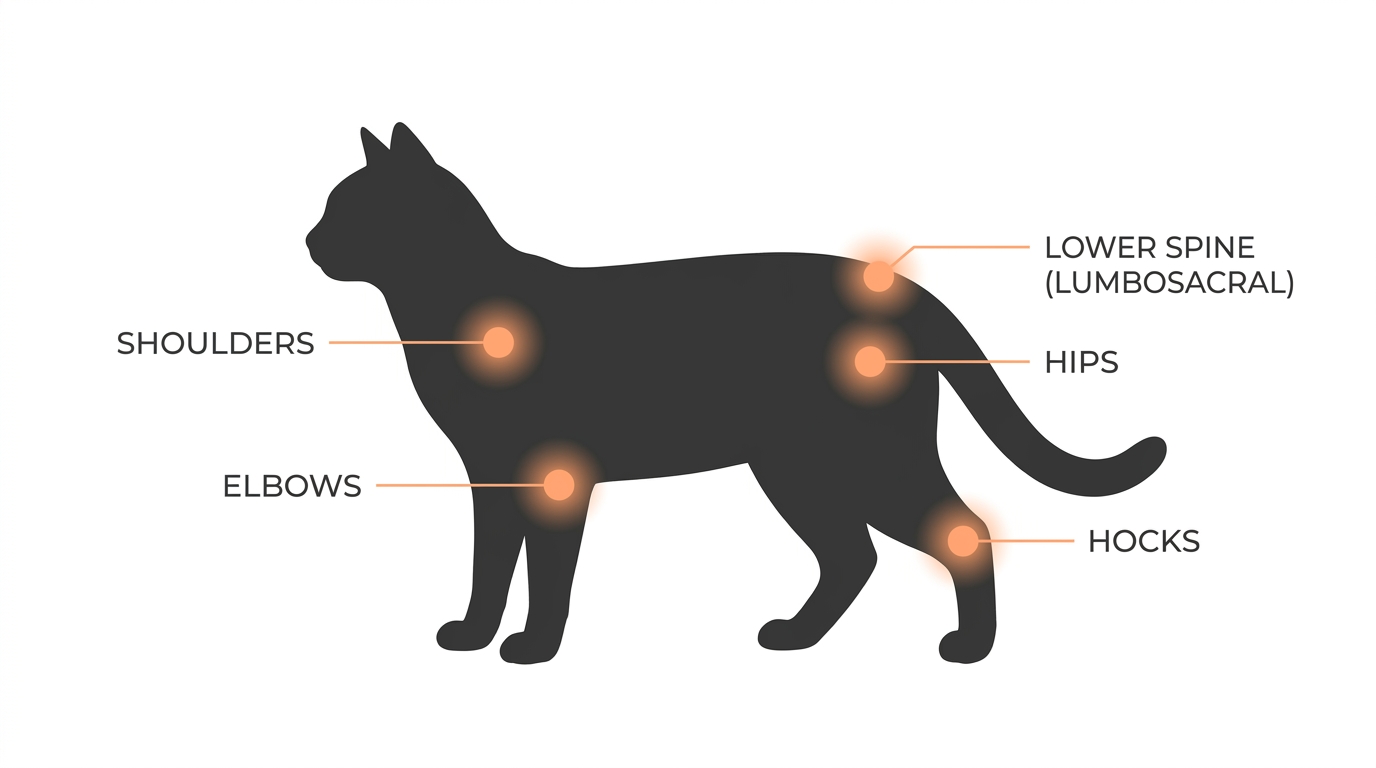
In cats, the joints most frequently affected by osteoarthritis are the elbows and hips, followed by the shoulders, hocks (ankles), and stifles (knees). The spine, particularly the lumbosacral region (the junction between the lower back and pelvis), is very commonly affected, with one study finding spinal degenerative changes in over 40% of cats screened.
Unlike dogs, where arthritis is most commonly secondary to developmental conditions like hip or elbow dysplasia, feline arthritis is often primary. That means it develops without an obvious underlying structural cause. It appears to be more directly related to age, genetics, body weight, and general wear on joints over time. Hip dysplasia does occur in cats, particularly in Maine Coons where the prevalence is around 25%, but for most cats, arthritis seems to develop as part of the ageing process rather than as a consequence of a specific developmental problem.
This distinction matters because it changes the conversation. In dogs, we often talk about screening for dysplasia and managing the consequences of imperfect joint development. In cats, the conversation is more about recognising that any older cat could be affected, and actively looking for it rather than waiting for an obvious problem to present itself.
How feline arthritis differs from canine arthritis
If you're on PetsLikeMine because you also have a dog with arthritis, or if you've read our guide to canine arthritis, it's worth understanding that managing the two species is not the same exercise.
Diagnosis is harder in cats. Dogs limp. Cats adapt. You need to rely on behavioural observation much more heavily.
Medication options are more limited. Dogs have a wide range of licensed NSAIDs, with good safety data for long-term use. In cats, long-term NSAID use has historically been much more restricted due to concerns about kidney and gastrointestinal toxicity. Meloxicam is licensed for long-term use in cats in some countries at a very low dose, but the safety margins are tighter than in dogs and monitoring is essential. The arrival of Solensia (frunevetmab), a monthly anti-nerve growth factor injection specifically designed for cats, has genuinely changed the landscape for feline pain management. More on that below.
Environmental modification is even more important. Because medication options are narrower, non-pharmaceutical management carries even more weight in cats. Ramps, low-entry litter trays, heated beds, accessible food and water, stepping stones to favourite spots. These aren't nice extras. For an arthritic cat, they're essential.
Cats often have concurrent disease. Older cats with arthritis frequently also have kidney disease, hyperthyroidism, diabetes, or heart conditions. Managing arthritis alongside these other problems requires careful balancing, particularly when choosing pain medications. This is one of the reasons feline arthritis management benefits enormously from regular veterinary monitoring.
Weight management is critical but tricky. Obesity worsens arthritis in cats just as it does in dogs. But cats who are in pain move less, and cats who move less gain weight, and the cycle reinforces itself. Additionally, crash dieting in cats is dangerous as it can trigger hepatic lipidosis, a potentially fatal liver condition. Weight loss in cats needs to be slow, controlled, and ideally supervised.
Solensia: A genuine game-changer
For years, the frustration of managing feline arthritis was that we knew these cats were in pain, but our pharmaceutical options were limited. Long-term NSAID use in cats carries real risks. Opioids aren't practical for chronic home use. Gabapentin helps some cats but sedates others to the point of uselessness. We were making do with imperfect solutions.
Then came Solensia (frunevetmab), a monthly injection given at the vet clinic. It's a monoclonal antibody that targets nerve growth factor (NGF), a protein involved in pain signalling. It works by a completely different mechanism to traditional painkillers, which means it avoids the kidney and gastrointestinal concerns that limit NSAID use in cats. Its canine equivalent is Librela (bedinvetmab), which many dog owners on PetsLikeMine will be familiar with.
The evidence for Solensia in cats is genuinely encouraging. Clinical trials showed significant improvements in mobility and owner-assessed quality of life. Cats who had stopped jumping started jumping again. Cats who had become withdrawn re-engaged with their households. The effects are often noticeable within the first month.
It's not without caveats. It needs to be given monthly at the vet clinic, which means a visit and a cost. It doesn't work equally well for every cat. The long-term safety data is still accumulating, as with any relatively new medication. And it doesn't address the underlying joint disease, so environmental modifications and weight management remain important alongside it.
But for many cat owners, Solensia has been transformative. If your cat has been diagnosed with arthritis or you suspect they might have it, this is a conversation worth having with your vet.
What you can do right now
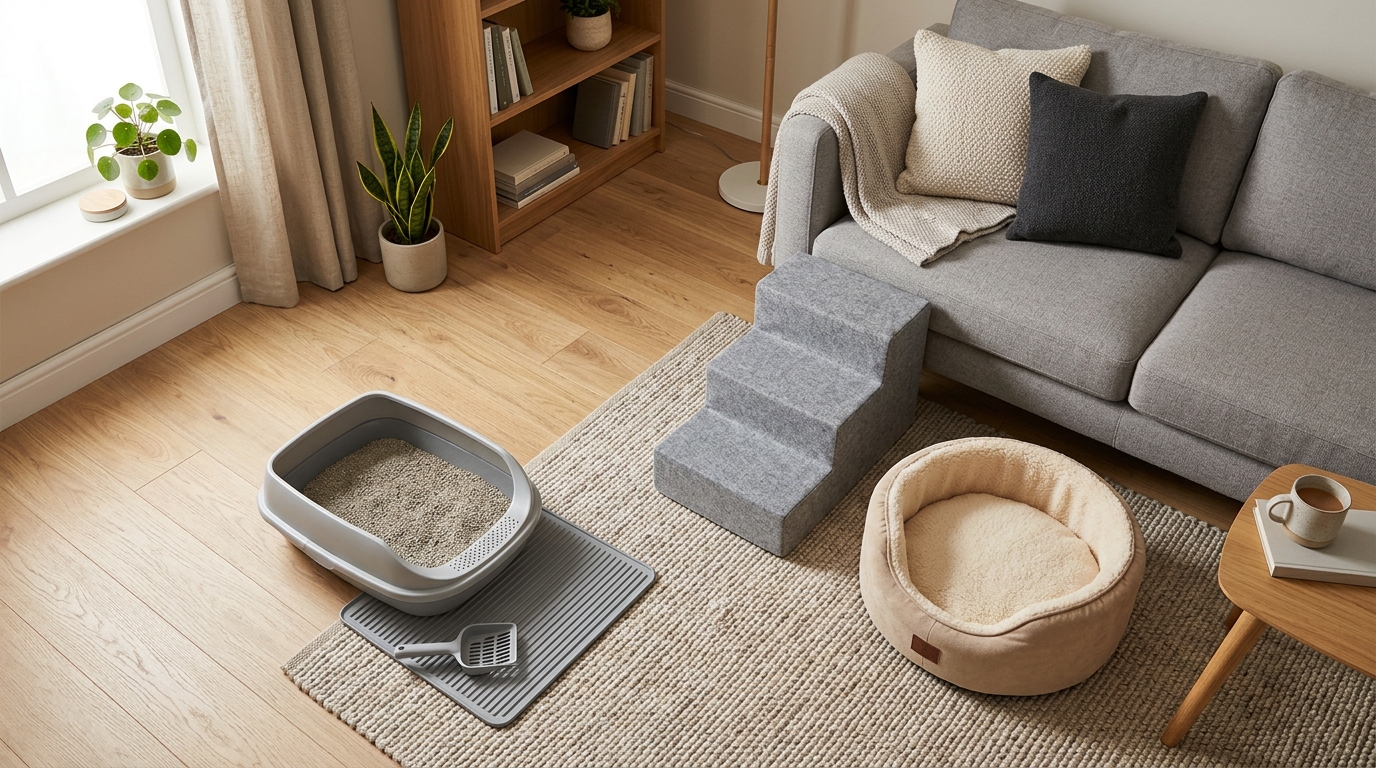
You don't need to wait for a diagnosis to start making your cat's life more comfortable. If your cat is over eight years old, these modifications are worth making regardless, as prevention and early intervention cost nothing and can make a significant difference.
Provide easy access to favourite spots. Steps, ramps, or strategically placed furniture to create a "staircase" to windowsills, beds, and elevated resting places. Cats value vertical space, and losing access to it diminishes their world.
Switch to a low-entry litter tray. Cut down one side of a high-sided tray if necessary, or buy a tray specifically designed for older cats. Make sure it's large enough for them to posture comfortably inside. If you have a multi-storey home, put a tray on each floor so they don't have to navigate stairs to reach one.
Consider a heated bed. Warmth soothes stiff joints. Self-heating pads that reflect body heat, or low-wattage heated pet pads, can make a real difference to comfort, particularly in winter.
Raise food and water bowls slightly. Not dramatically, but enough that your cat doesn't have to bend their neck down to floor level. Eating and drinking in a more neutral neck position is more comfortable for a cat with spinal or forelimb arthritis.
Keep everything accessible on one level if possible. If your cat's world has shrunk because they can't manage stairs, bring the resources to them. Food, water, litter, and a comfortable bed all within easy reach on the level where they spend most of their time.
Help with grooming. Gentle brushing, particularly on the areas they can't reach, keeps their coat in condition and provides a form of gentle massage. Many arthritic cats lean into brushing once they realise it's addressing the itchiness and discomfort of a poorly maintained coat.
Monitor their claws. Less scratching and less activity means claws can overgrow and even curl into the paw pad. Check and trim regularly.
Keep them at a healthy weight. If your cat is overweight, talk to your vet about a gradual weight loss plan. Even a modest weight reduction can meaningfully reduce the load on sore joints.
When to talk to your vet
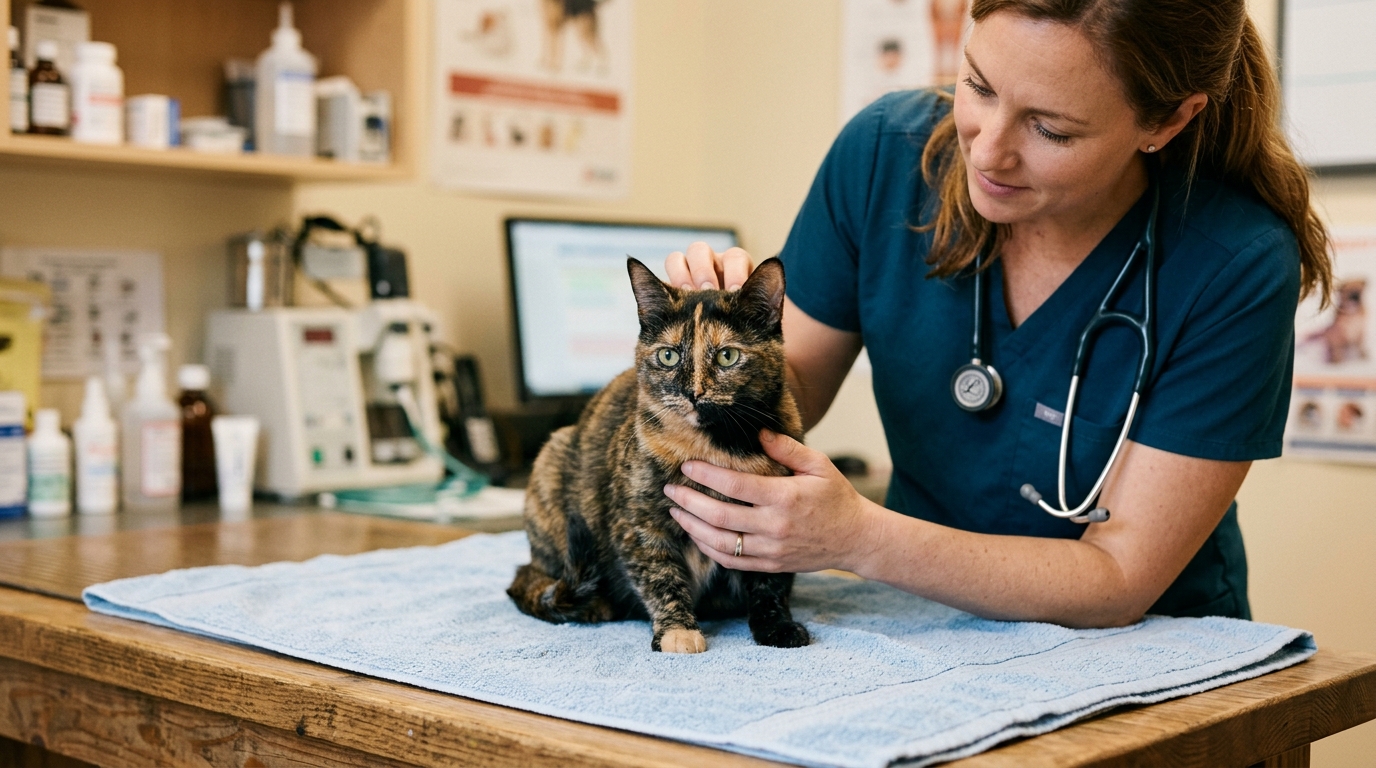
If you've recognised your cat in the descriptions above, make an appointment. Not an emergency, but a dedicated appointment where you can discuss what you've been observing.
Before you go, spend a week or two paying close attention. Make notes on specific changes you've noticed: what your cat used to do that they no longer do, when they seem most stiff, whether there are spots on their body they don't like being touched. If you can, take a short video of your cat moving around the house, getting up from rest, or attempting to jump. These observations are worth more to your vet than anything they'll see in the consulting room, because your cat will almost certainly behave differently at the clinic.
Be prepared for your vet to suggest radiographs. X-rays aren't always necessary to start treatment, particularly if the clinical picture is clear, but they help confirm the diagnosis and identify which joints are most affected. If your cat also needs blood tests for other age-related screening, these can often be done at the same time under mild sedation.
And if your vet seems dismissive or says something along the lines of "that's just old age," push back gently. The veterinary profession's understanding of feline arthritis has evolved enormously in the last decade. A vet who graduated twenty years ago may not have received much training on it. The condition is real, it's common, and it's treatable. Your cat deserves to have it taken seriously.
You're not too late
Say your cat is 14 and you're reading this thinking "I wish I'd known this five years ago." Please don't feel guilty. You didn't know because nobody told you. The veterinary profession is only now coming to terms with how dramatically feline arthritis has been overlooked. The fact that you're here, learning about it now, means your cat is about to get better care than the vast majority of arthritic cats receive.
It is not too late. Cats respond well to treatment at any stage. Environmental modifications are immediately impactful. Solensia can be started at any age. Weight management helps regardless of how long the problem has been building. Your cat's comfort can improve starting this week.
References
- Hardie EM, Roe SC, Martin FR. Radiographic evidence of degenerative joint disease in geriatric cats: 100 cases (1994-1997). Journal of the American Veterinary Medical Association, 2002.
- Slingerland LI, Hazewinkel HAW, Meij BP, et al. Cross-sectional study of the prevalence and clinical features of osteoarthritis in 100 cats. The Veterinary Journal, 2011.
- Retrospective radiographic study of degenerative joint disease in cats: prevalence based on orthogonal radiographs. Frontiers in Veterinary Science, 2020.
- Lefort-Holguin M, Delsart A, Frézier M, et al. Osteoarthritis in cats: what we know, and mostly, what we don't know yet. Journal of Feline Medicine and Surgery, 2025.
- Clarke SP, Bennett D. Feline osteoarthritis: a prospective study of 28 cases. Journal of Small Animal Practice, 2006.
- Loder RT, Todhunter RJ. Demographics of hip dysplasia in the Maine Coon cat. Journal of Feline Medicine and Surgery, 2018.
- Gruen ME, Myers JAE, Tena JS, Becskei C, Cleaver DM, Lascelles BDX. Frunevetmab, a felinized anti-nerve growth factor monoclonal antibody, for the treatment of pain from osteoarthritis in cats. Journal of Veterinary Internal Medicine, 2021.
Sister tool · Sightline
Track whether treatment is working
Sightline, a separate ConciergeVet tool, runs a short weekly check-in built on validated pain and mobility instruments, turns it into a single Sightline Score you can watch trend over weeks rather than judge on one bad day, and produces a report you can bring to your vet.
A written log, or our printable trackers, does much the same job.
See how Sightline tracks treatmentSee where your pet stands today
Tracking is the other half of managing arthritis. Take the 2-minute Mobility Check to see your pet's stage, then watch it shift as treatment takes effect.
Take the Mobility CheckYou're not doing this alone
Compare treatment journeys and talk to owners managing arthritis. Free to join.
Join PetsLikeMine