

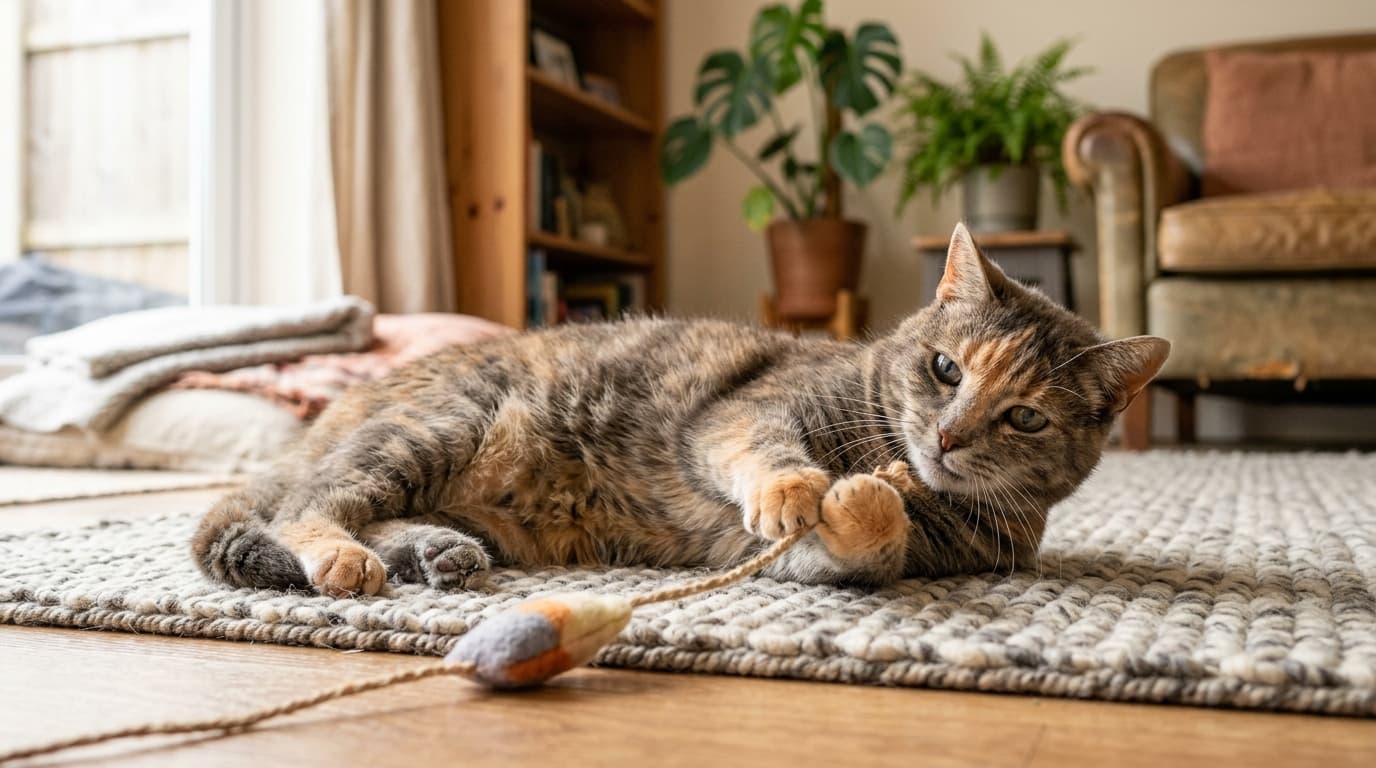
Keeping an Arthritic Cat Active and Engaged
Alastair Greenway
BVM&S MRCVS
A stiff cat still needs to move, and still needs to be a cat. Gentle, regular activity keeps joints mobile, weight down and minds engaged, as long as it is pitched to what an arthritic body can now do. Here is how to keep an arthritic cat moving and playing without asking for the leaps that hurt.
Think of this as a practical, daily how-to: what to actually do to keep your cat moving. It sits alongside two companion articles you may want to read with it. Our article on home modifications covers setting up the environment, the ramps, perches, and arrangements that make movement possible, and our long-view article covers keeping life rich over the years. This one is narrower and more hands-on: the day-to-day business of safe movement and play.
Movement is medicine, even for a stiff cat
It is tempting to think that an arthritic cat should rest, that movement must hurt and stillness must help. The opposite is closer to the truth. Gentle, regular movement is genuinely good for an arthritic cat: it helps keep joints mobile, supports healthy weight, maintains muscle, and lifts mood, while too much rest allows stiffness, weakness, and decline to set in.
So the goal is not to wrap your cat in cotton wool. It is to keep them gently, regularly moving, within their limits. The phrase worth holding onto is "movement is medicine," with the crucial proviso that the dose has to be right for an arthritic body. Total rest is not the aim, and neither is pushing. Gentle and regular is the target.
Pitch it to the arthritic body
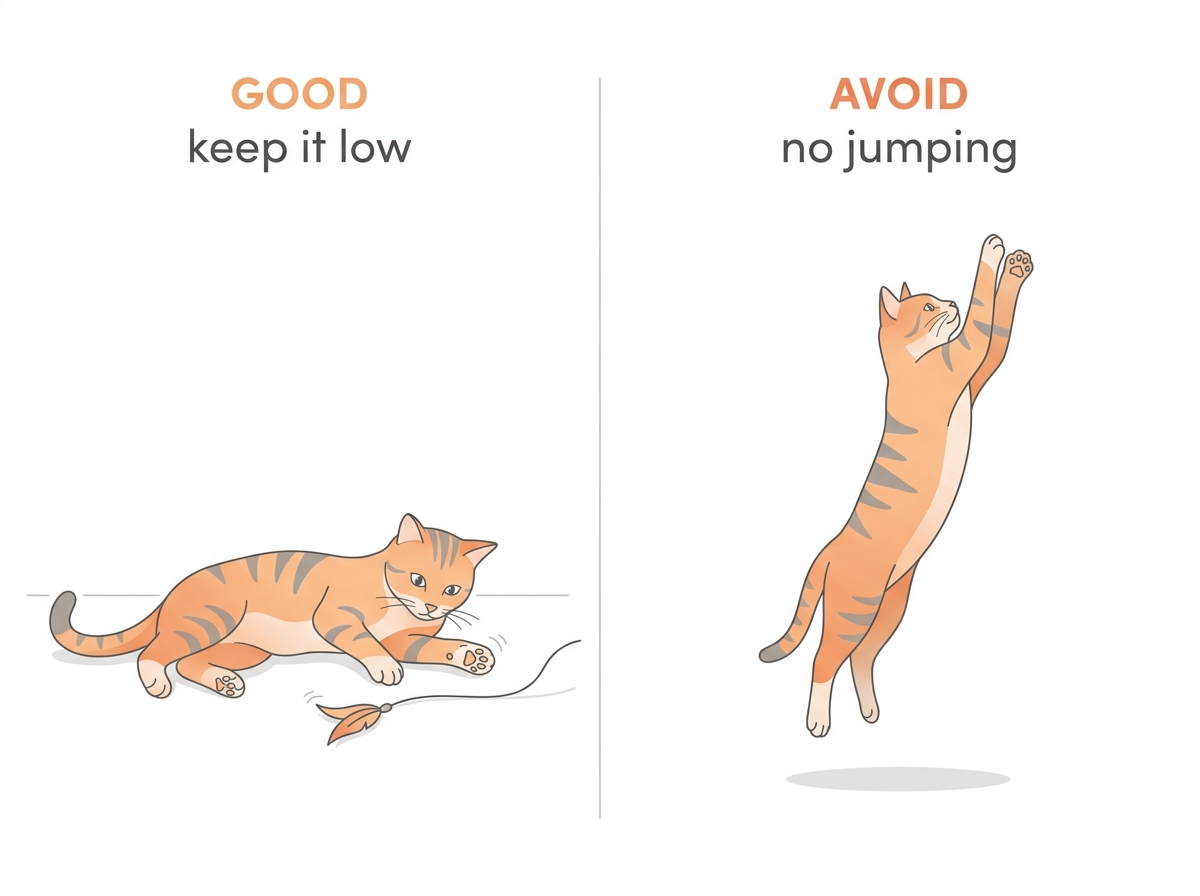
The whole art of this is matching the activity to what sore joints can comfortably manage, and the guiding principle is simple: keep it low and horizontal.
That means play and movement along the ground rather than up in the air. Trail a toy along the floor rather than dangling it high to be jumped at. Favour hunting and chasing games at ground level over anything that tempts a big leap. Keep sessions short and frequent rather than long and demanding, since a few minutes here and there suits a stiff cat far better than one exhausting burst. And actively avoid encouraging the high jumps and hard landings that put the most strain on arthritic joints. What you want is to get the cat moving, stretching, and engaging their body gently, not to recreate the acrobatics of a young cat. Low, horizontal, short, and frequent: that is the shape of arthritis-friendly activity.
Play that works for a sore cat
Within those limits, plenty still works, and most cats remain keen to play if it is pitched right.
Wand toys kept low to the ground, dragged and twitched along the floor like prey, let a cat stalk and pounce gently without leaping. Slow chase games, rolling a ball or a toy a short distance for them to amble after, add movement without impact. Food-dispensing puzzles and toys that make a cat work a little for a treat reward movement and engage the mind, without demanding height. And scent and foraging games, scattering a little food to be hunted out around the floor, tap into the cat's natural hunting drive at ground level. What links all of these is that they invite movement on the horizontal plane, the cat's body working gently, without the jump.
One small but important point: let the cat catch the prey. The satisfaction of a hunt is in the capture, so a game where your cat never "wins" becomes frustrating. Let them succeed often, and they stay keen.
Reaching the heights without the leap
Cats love to be up high, and losing access to favourite vantage points is a real loss for an arthritic cat. What helps is to keep the height available while removing the jump, with steps, ramps, or intermediate "stepping stone" surfaces that let a cat reach a perch in easy stages rather than one painful leap. This belongs mostly to our home modifications article, so I will not dwell on it here, but it is worth mentioning because reaching a high perch under their own steam is itself good, satisfying movement for a cat, the kind we want to enable, just without the impact.
Reading the cat: enough but not too much
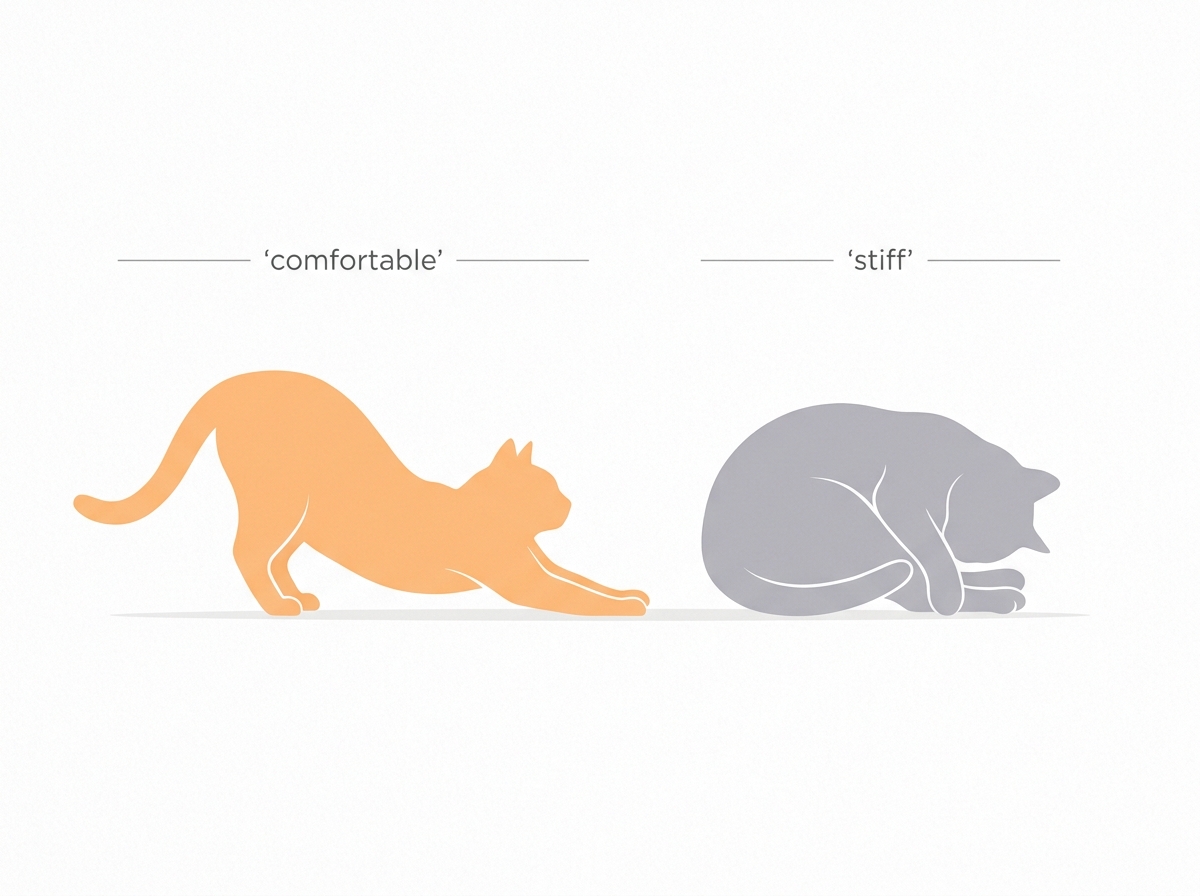
The most important skill in all of this is reading your individual cat, because the right amount of activity is the amount that helps without causing a flare, and that varies from cat to cat.
Watch how your cat is, especially the day after activity. A cat who is moving well, staying engaged, and none the worse the next day is being well exercised. A cat who is stiffer, more reluctant, or sore the following day has been pushed too hard, and the activity needs dialling back. Let the cat set the pace: stop a session while they are still enjoying it rather than pushing to the point of tiredness or discomfort, and follow their lead on which games they are willing to play. You are aiming for the sweet spot of enough movement to do good, without so much that it costs them, and the next-day check is how you find it. This is not a target to hit; it is a balance to feel out for your particular cat.
When the body slows, keep the mind busy
Some days, or in more advanced arthritis, the body simply cannot do much, and on those days mental engagement carries the load. A cat whose physical activity is limited still benefits enormously from having their mind occupied.
Low-effort enrichment fills this role: simple foraging for a few scattered treats, a little novelty to investigate, the comfort of routine, and plain social contact and attention from you. None of this asks anything of sore joints, yet it keeps a cat interested, engaged, and content. The idea is that engagement need not always be physical; on the days movement is hard, keeping the mind busy is its own kind of activity, and it matters just as much for a cat's wellbeing.
Building a sustainable daily rhythm
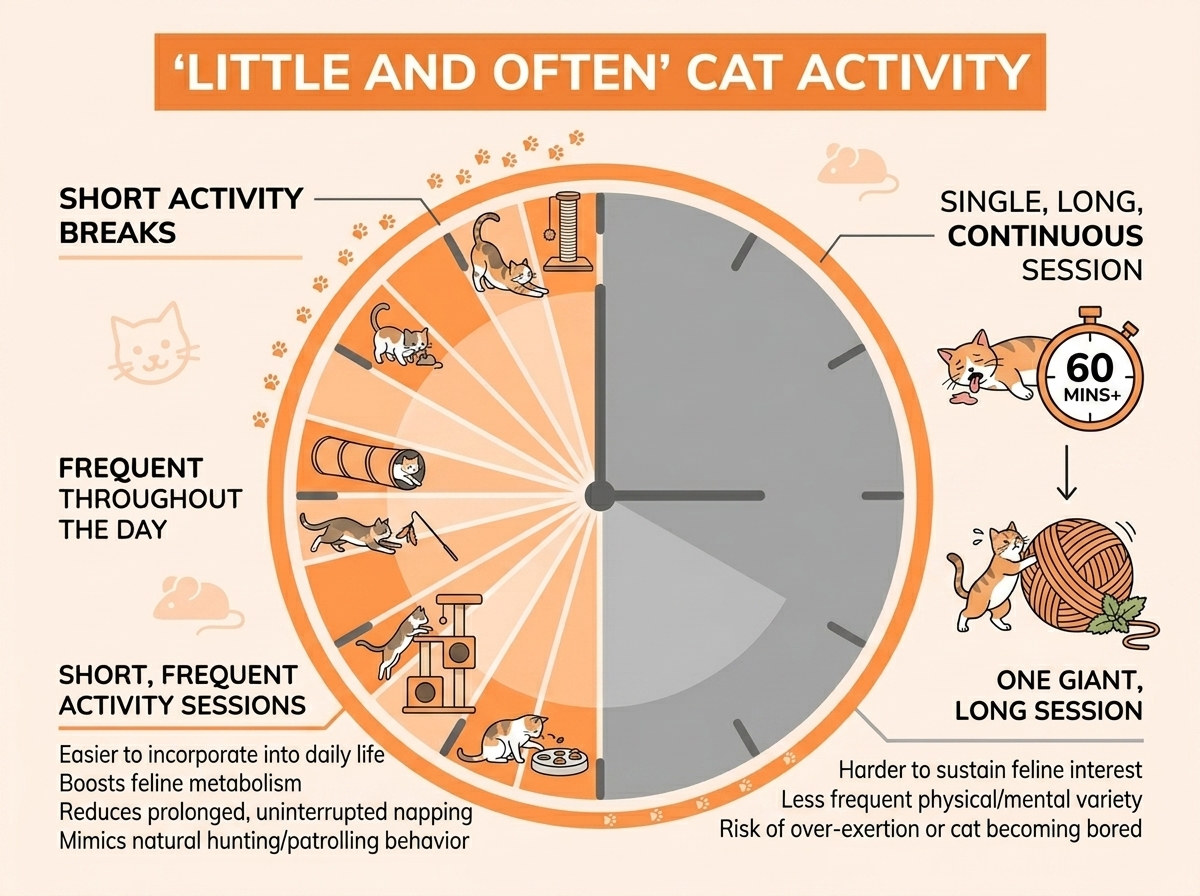
The way to make all this actually happen is to weave it into the day in small amounts rather than treating it as a chore to schedule. A couple of minutes of floor-level play before meals, a foraging game at feeding time, a gentle session in the evening when your cat is naturally a little more active: little and often, folded into normal life, is both better for the cat and far easier for you to keep up than one ambitious daily session you will eventually skip.
That sustainability is what really matters. An arthritic cat does best with gentle movement and engagement woven steadily through their days, for the long term, pitched always to what their body can comfortably do and judged carefully against how they are the next day. Keep it low, keep it gentle, keep it frequent, let the cat lead, and you will keep your arthritic cat moving, playing, and being themselves for a long time to come.
References
- Ellis SLH, Rodan I, Carney HC, et al. AAFP and ISFM Feline Environmental Needs Guidelines. Journal of Feline Medicine and Surgery, 2013.
- Bennett D, Zainal Ariffin SM, Johnston P. Osteoarthritis in the cat: 2. how should it be managed and treated? Journal of Feline Medicine and Surgery, 2012.
- Gruen ME, Lascelles BDX, Colleran E, et al. 2022 AAHA Pain Management Guidelines for Dogs and Cats. Journal of the American Animal Hospital Association, 2022.
Sister tool · Sightline
Track whether treatment is working
Sightline, a separate ConciergeVet tool, runs a short weekly check-in built on validated pain and mobility instruments, turns it into a single Sightline Score you can watch trend over weeks rather than judge on one bad day, and produces a report you can bring to your vet.
A written log, or our printable trackers, does much the same job.
See how Sightline tracks treatmentSee where your pet stands today
Tracking is the other half of managing arthritis. Take the 2-minute Mobility Check to see your pet's stage, then watch it shift as treatment takes effect.
Take the Mobility CheckYou're not doing this alone
Compare treatment journeys and talk to owners managing arthritis. Free to join.
Join PetsLikeMine