

Patellar Luxation: Understanding the Condition and Its Surgical Options
Alastair Greenway
BVM&S MRCVS
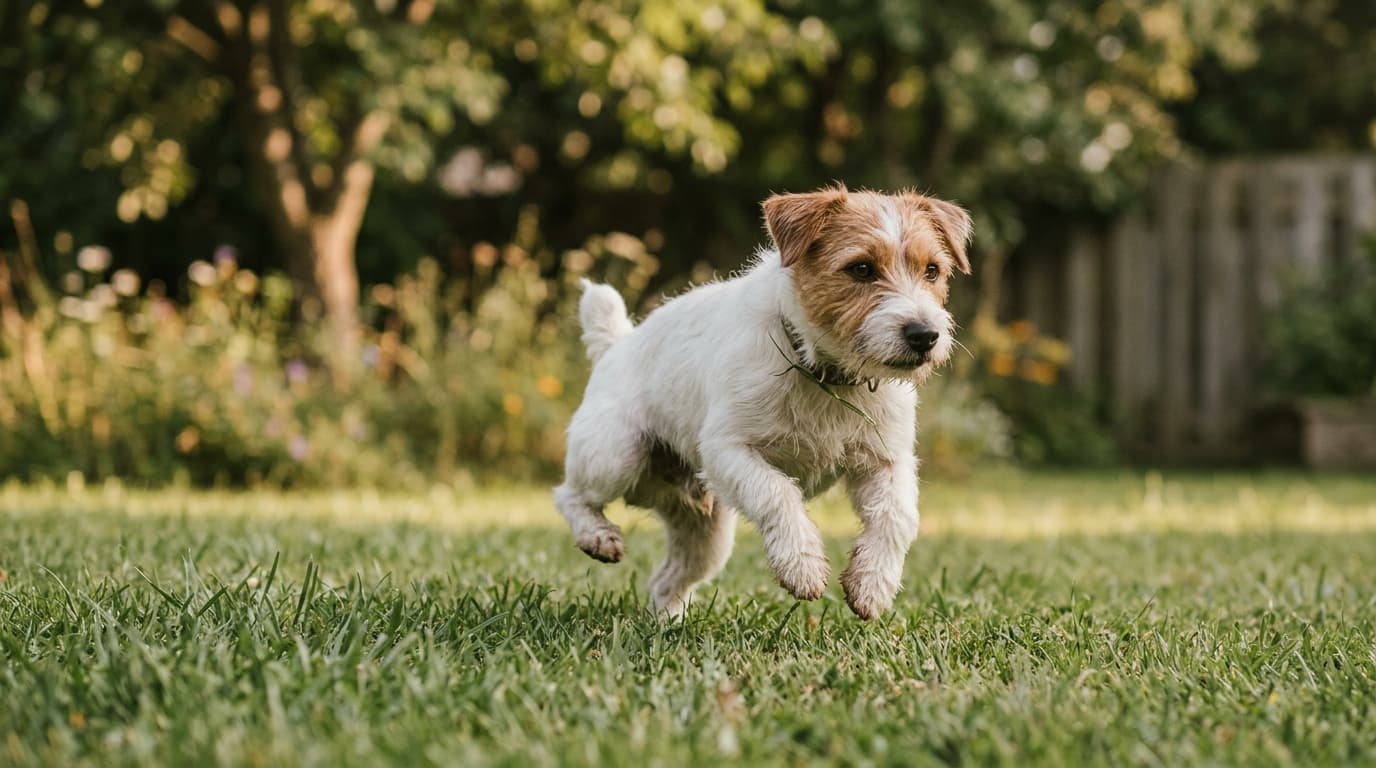
A small-breed dog who occasionally skips or hops for a step or two and then carries on as if nothing happened is showing you patellar luxation in action. It's one of the most common orthopaedic conditions in dogs, especially small breeds, and while it's often mild, it can also be a significant cause of knee arthritis, which is why it completes our set of condition-specific surgical guides.
This is the fourth of those guides, sitting beneath the general article on the surgery decision, which I'd recommend reading alongside it. Here we go deep on patellar luxation specifically: what it is, how it's graded and diagnosed, what the options are, and what to expect.
As with all these guides, my aim is to help you understand the condition and have a well-informed conversation with your vet or surgeon, not to tell you which path your dog should take. Patellar luxation is unusual in that its grading system strongly shapes the decision, so understanding the grades will help you follow that conversation, but the decision itself rests with you and your surgeon, based on your individual dog.
What's actually going wrong in the knee
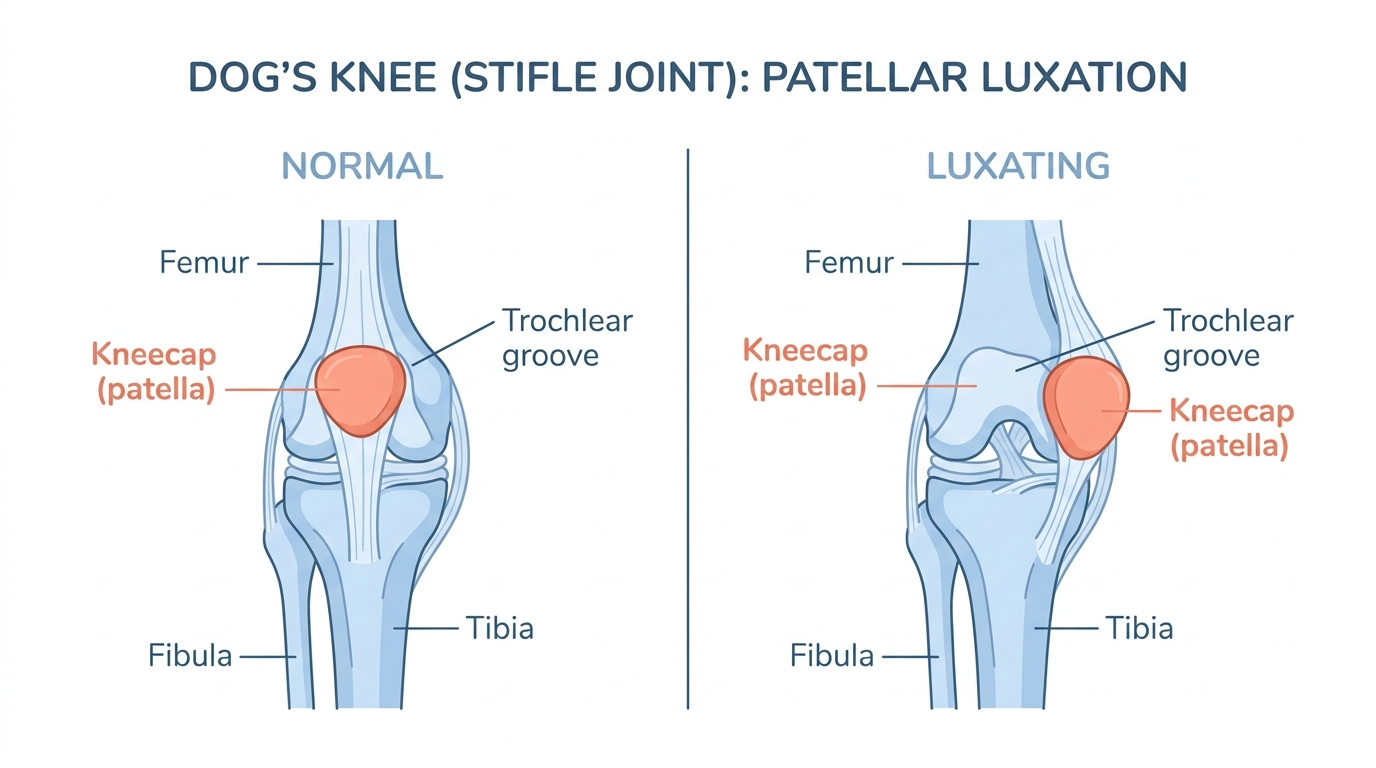
The patella is the kneecap. In a normal knee, it sits in a groove at the end of the thigh bone, called the trochlear groove, and glides smoothly up and down within that groove as the leg bends and straightens, held on track by the pull of the big thigh muscles through the patellar ligament.
In patellar luxation, the kneecap slips out of its groove, luxates, to one side. Most commonly it slips toward the inside of the leg, medial luxation, which predominates particularly in small breeds and represents the large majority of cases; less often it slips to the outside, lateral luxation. When the patella is out of its groove, the knee can't work properly, which is why you see the characteristic skip or hop, and over time the abnormal mechanics damage the joint.
Underlying causes are usually developmental and structural. The trochlear groove may be too shallow to hold the kneecap securely, or the alignment of the bones and the pull of the muscles may be slightly off, so the kneecap is drawn out of its track. It's largely a conformational condition, which is why certain breeds are predisposed and why it often affects both knees.
Why it leads to arthritis
This is the link back to the heart of this space. Every time the kneecap luxates and the knee works abnormally, the joint surfaces are subjected to friction and abnormal forces they weren't designed for. Repeated over months and years, this wears the cartilage and drives the changes of osteoarthritis. There's also frequently associated damage to the groove and the joint surfaces themselves.
One relationship is worth flagging: patellar luxation and cruciate disease often go together. The altered mechanics of a luxating patella place extra strain on the cruciate ligament, and a significant number of dogs end up with both problems, sometimes addressed in the same surgery. If your dog has one, it's worth your vet keeping an eye on the other.
The arthritis link is also why even a relatively mild luxation isn't always something to simply ignore: the ongoing abnormal movement can be quietly driving joint damage even when the dog seems to cope.
Diagnosis and the grading scale
Patellar luxation is one of the more straightforward orthopaedic conditions to diagnose, because the displacement can usually be felt directly.
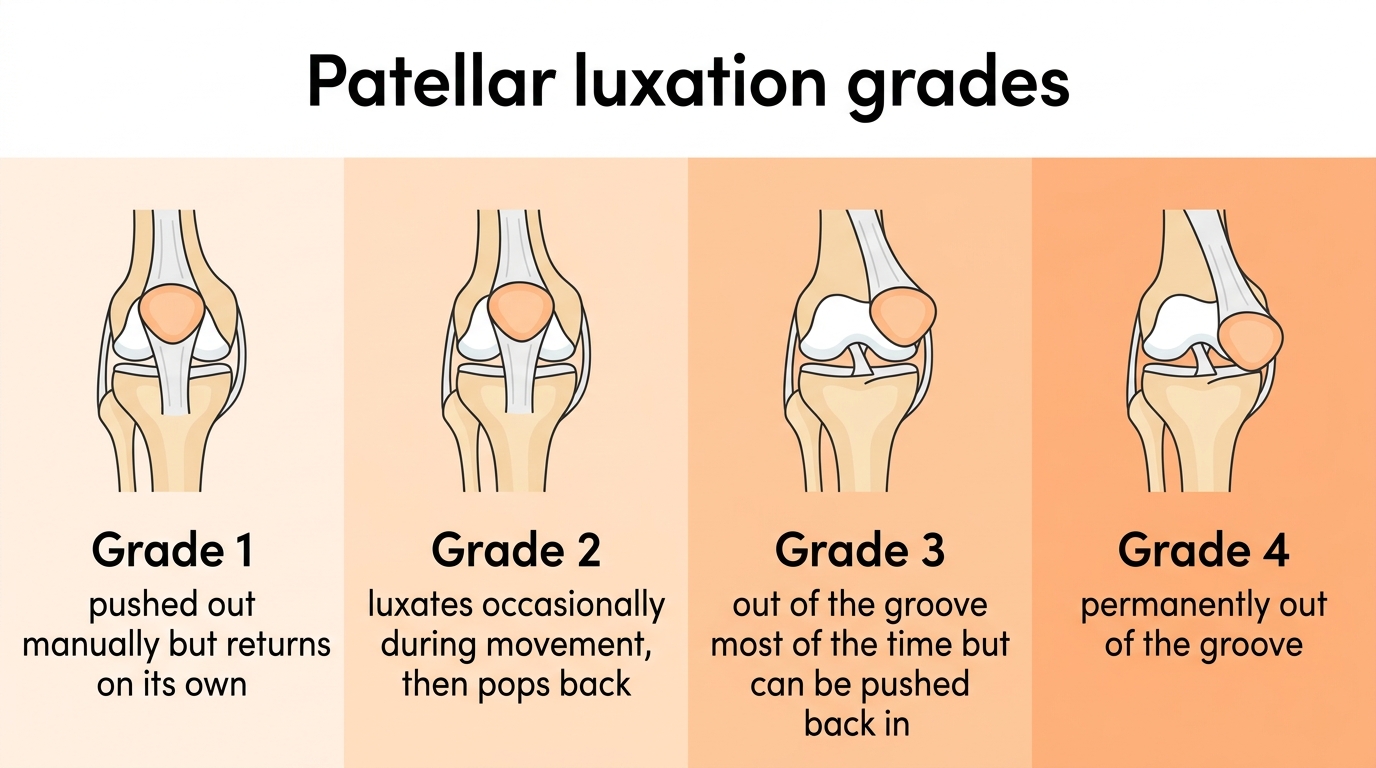
On examination, the vet manipulates the knee and feels whether, and how easily, the kneecap slips out of its groove and whether it returns on its own. From this they assign a grade, and the grading is central to everything that follows. The standard scale runs from 1 to 4 in increasing severity:
- Grade 1: the kneecap can be pushed out of the groove manually but returns to its normal position on its own immediately. The dog is often symptom-free.
- Grade 2: the kneecap luxates occasionally during movement and may stay out until it pops back, producing the intermittent skip owners notice.
- Grade 3: the kneecap is out of the groove most of the time but can be manually pushed back in, though it re-luxates.
- Grade 4: the kneecap is permanently out of the groove and cannot be manually returned; this causes the most significant functional problems and deformity.
X-rays are used to assess the joint, any associated arthritis, and the bony alignment, which helps with surgical planning, particularly in higher grades where skeletal deformity is involved. The grade, more than almost anything else, guides whether and how the condition is treated.
Weighing up the treatment options
Here the grading does a lot of the work, and there's a fairly clear, evidence-supported logic to it, though, as always, the decision for your individual dog rests with you and your surgeon.
Conservative (medical) management
For grade 1 luxations, and many mild, genuinely asymptomatic grade 2 cases, surgery is generally not recommended. These dogs are often managed conservatively, or simply monitored, with the familiar supportive measures: weight control, appropriate exercise to maintain the muscle that helps hold the kneecap in place, pain relief if and when needed, and keeping an eye on whether the grade is progressing.
Conservative management suits the milder end well, but it's worth understanding that it doesn't correct the underlying structural problem; it manages the situation. If a dog is genuinely untroubled by a low-grade luxation, that's often perfectly reasonable. The key is careful monitoring, because luxation can worsen over time, and a dog comfortable at grade 2 today may need reassessing later.
Surgical correction
For grades 2 to 4, particularly where there's lameness, pain, or progression, surgical repair is commonly recommended. The goal is to get the kneecap tracking properly in its groove and keep it there, and because there are usually several contributing factors, surgery typically combines more than one technique tailored to the individual knee. The main components are:
- Trochleoplasty (deepening the groove): if the trochlear groove is too shallow, it's surgically deepened so the kneecap sits more securely.
- Tibial tuberosity transposition (TTT): the point where the patellar ligament attaches to the shin bone is detached and moved to realign the pull of the muscles so the kneecap tracks straight, then fixed in its new position with small pins while it heals.
- Soft tissue procedures: the tissues around the kneecap are loosened on one side and tightened on the other to balance the forces holding it in place.
A surgeon chooses and combines these based on what's driving the luxation in that particular knee. In severe, grade 4 cases with significant bone deformity, more complex corrective procedures may be needed.
Outcomes are generally very good. For grades 1 to 3, the prognosis for resolving the lameness and returning to normal or near-normal function is excellent, with the large majority of dogs doing well and complications being relatively uncommon. Grade 4, with its greater deformity, has a less predictable outcome, though surgery can still help considerably. The most common complication is re-luxation, and occasionally the implants used in the tuberosity transposition can cause issues, but in experienced hands these are uncommon.
What recovery actually involves
Recovery from patellar luxation surgery follows the familiar orthopaedic pattern: a period of strict rest and controlled activity, commonly around eight weeks while the bony work, particularly the tuberosity transposition, heals, followed by a gradual, supervised return to exercise. Physiotherapy and controlled rehabilitation support a good outcome, and as with all these procedures, the result depends heavily on the recovery being done properly.
The same point applies as for the other conditions: a small dog who feels well quickly after surgery still needs holding back during the healing period, and that discipline is on you. The recovery-planning content in our surgery-decision article is there to help you think it through.
Questions worth asking your surgeon
Given how much the grade drives the decision, these questions are particularly useful:
What grade is my dog's luxation, in which knee, or both? Given that grade and my dog's symptoms, do you recommend surgery or conservative management, and why? If conservative, what would prompt us to reconsider surgery later? If surgery, which combination of techniques do you anticipate, and why those for my dog's knee? Is the cruciate ligament involved or at risk, and does that change the plan? What outcome can I realistically expect for my dog's grade? What does recovery involve? And, since both knees are often affected, will the other one likely need attention too?
Pulling it together
Patellar luxation spans a wide range, from a barely noticeable grade 1 skip that needs nothing more than monitoring, to a grade 4 deformity that significantly affects how a dog walks. The grade is the key to understanding where your dog sits and what makes sense. For the milder, untroubled end, watchful conservative management is often entirely appropriate. For symptomatic grades 2 to 4, surgery has a well-established track record and generally excellent outcomes, especially for grades 1 to 3.
What matters most is an accurate grading, clear-eyed attention to whether your dog is actually troubled by it or whether it's quietly driving joint damage, awareness of the cruciate connection, and a candid conversation with your surgeon about whether and how to intervene for your individual dog. Understood and managed well, the great majority of dogs with patellar luxation go on to comfortable, active lives.
This completes our set of condition-specific surgical guides. Read any of them alongside the surgery-decision article for the framework on deciding and planning recovery, and lean on the weight, exercise, and therapy articles throughout, since for every one of these conditions, good lifelong management is the foundation that surgery builds on rather than replaces.
References
Sister tool · Sightline
Track whether treatment is working
Sightline, a separate ConciergeVet tool, runs a short weekly check-in built on validated pain and mobility instruments, turns it into a single Sightline Score you can watch trend over weeks rather than judge on one bad day, and produces a report you can bring to your vet.
A written log, or our printable trackers, does much the same job.
See how Sightline tracks treatmentSee where your pet stands today
Tracking is the other half of managing arthritis. Take the 2-minute Mobility Check to see your pet's stage, then watch it shift as treatment takes effect.
Take the Mobility CheckYou're not doing this alone
Compare treatment journeys and talk to owners managing arthritis. Free to join.
Join PetsLikeMine