

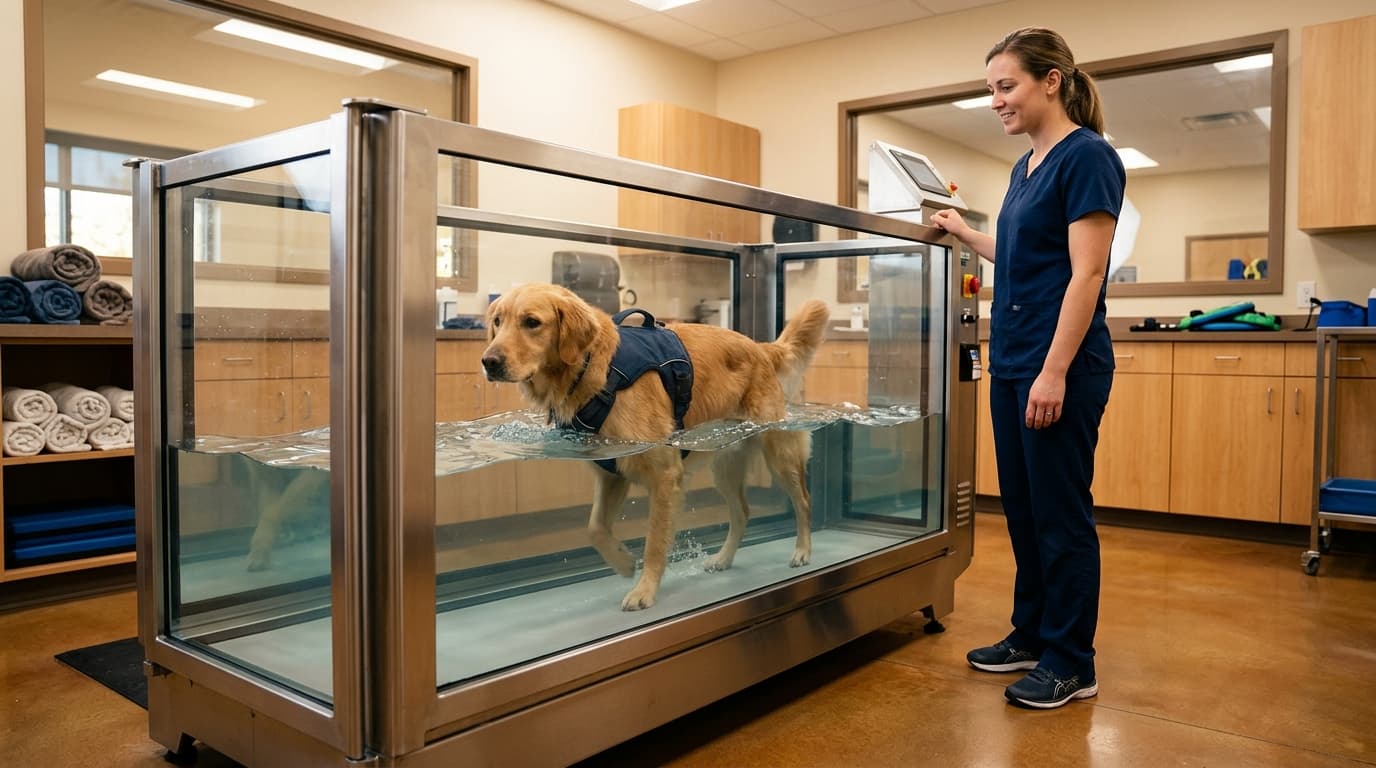
Hydrotherapy: The Complete Guide
Alastair Greenway
BVM&S MRCVS
Hydrotherapy is one of those interventions that genuinely changes outcomes for arthritic dogs. The evidence is good, the mechanism makes sense, and in many dogs the response is dramatic and visible. In the UK it's widely available too, with hundreds of qualified centres operating across the country.
It's also one of those interventions where what you actually get varies enormously depending on the centre, the practitioner and the equipment. Some hydrotherapy facilities are excellent, run by passionate, qualified professionals producing genuinely transformative results. Others are far less impressive, where dogs essentially swim laps for thirty minutes with limited therapeutic input. Knowing the difference matters.
This article aims to give you everything you need to make hydrotherapy work for your dog: what it actually involves, the difference between pool and underwater treadmill, what the evidence shows, which dogs benefit most, what to expect from sessions, how to find a properly qualified hydrotherapist, and what realistic costs look like in the UK.
A word on scope. This article is about formal canine hydrotherapy delivered by trained practitioners in dedicated facilities. If you have a swimming pool at home or your dog enjoys swimming in lakes and rivers, that's recreational swimming, which has its own benefits but isn't the same as therapeutic hydrotherapy. I'll touch on the differences but the focus is professional hydrotherapy.
What the water actually does
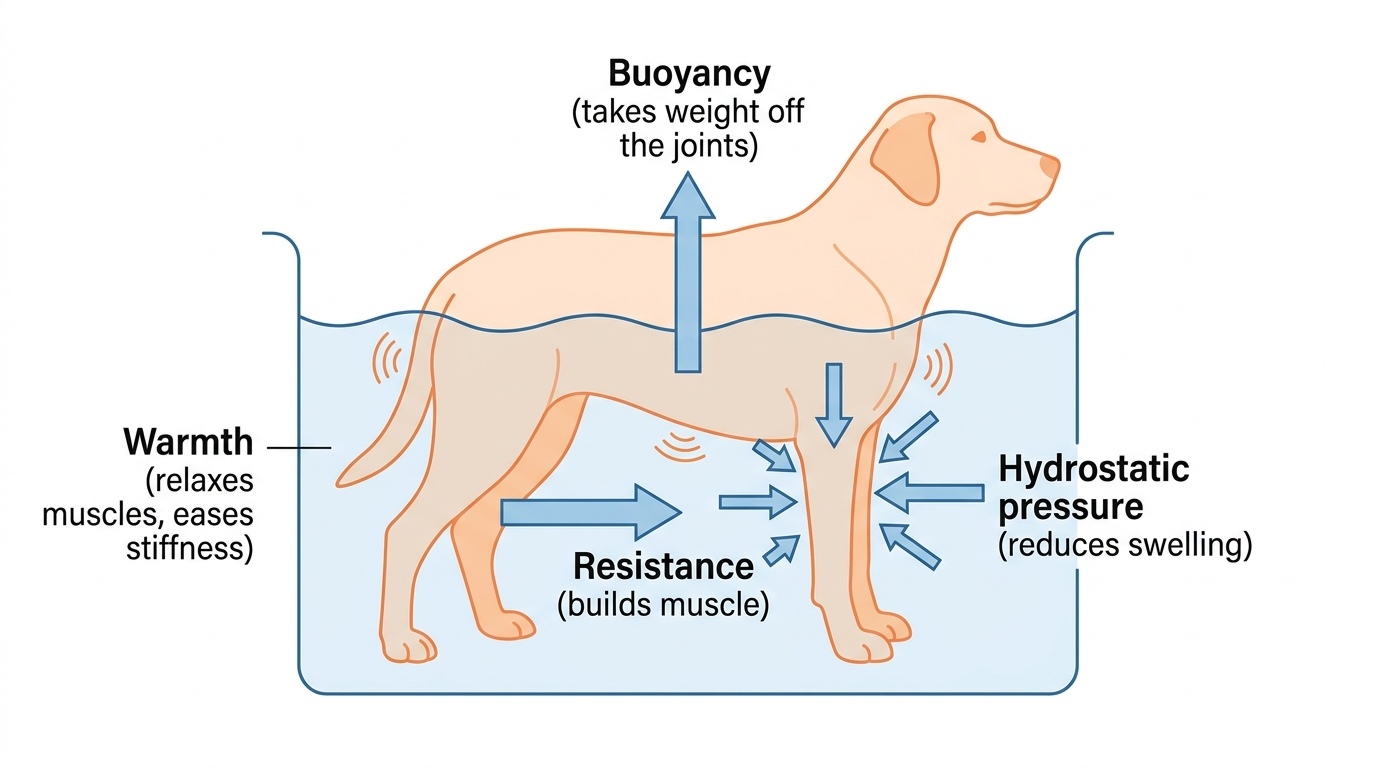
Before we get into specifics, it's worth understanding the underlying principle. Water has four properties that make it uniquely valuable for exercising arthritic dogs:
Buoyancy. When a dog is partially or fully immersed in water, the buoyant force counteracts gravity. The effective weight on their joints reduces dramatically. A dog whose hips can't comfortably support their full body weight on land can move freely in water. This allows controlled exercise that would be impossible on the ground.
Resistance. Water is denser than air. Moving through it requires more muscular effort than moving through air at the same speed. This means a dog can build muscle and cardiovascular fitness in water at lower joint loading than they could achieve on land. You get the strength benefit without the impact cost.
Hydrostatic pressure. Being submerged in water creates gentle pressure on the body that improves circulation, reduces swelling, and supports lymphatic drainage. This is part of why dogs often feel better after hydrotherapy sessions even before any specific exercise benefit kicks in.
Warmth. Therapeutic hydrotherapy pools and underwater treadmills are heated, typically to 28-32°C. Warm water relaxes muscles, reduces joint stiffness, and improves blood flow. For an arthritic dog whose joints are characteristically stiff and uncomfortable, the warmth alone provides immediate relief.
Combine these four properties and you get something genuinely special: an environment where an arthritic dog can do the kinds of structured therapeutic exercise that would otherwise be impossible. Building muscle. Improving joint range of motion. Cardiovascular conditioning. All without the painful loading that makes equivalent land exercise either unhelpful or actively damaging.
This is why hydrotherapy works so well for arthritis. It isn't magic. It's just very good physiotherapy delivered in an environment that bypasses the main limitation, joint pain on loading, that makes other exercise approaches less effective.
What the evidence shows
Hydrotherapy has reasonably good clinical evidence for arthritis management in dogs, building over the past two decades.
A 2018 Veterinary Journal study by Preston and Wills, in Labrador retrievers diagnosed with elbow dysplasia (one of the most common causes of canine OA), showed that even a single hydrotherapy session can significantly increase forelimb joint range of motion and stride length, measured with kinematic gait analysis. This is a striking finding because it suggests immediate functional improvement from individual sessions, not just cumulative effect.
A 2025 pilot study (Twarowska et al., Animals) of a 10-session underwater treadmill programme in dogs with a range of musculoskeletal disorders, using goniometric assessment of joint range of motion, documented significant improvements in flexion and extension across all six joint pairs measured.
Multiple studies have shown that hydrotherapy reduces symptom severity in dogs with osteoarthritis and can decrease the need for analgesic medication in some patients.
The mechanisms are well established. Hydrotherapy builds and maintains muscle mass that protects joints. It holds on to joint range of motion that would otherwise be lost. It improves cardiovascular fitness, which supports overall health. It reduces pain through warmth, gentle movement, and improved circulation. And it provides controlled exercise that owners can rarely replicate on land.
Broader clinical experience supports this. Hydrotherapy has been a standard recommendation in canine orthopaedic and rehabilitation practice for over two decades. The veterinary referral patterns reflect genuine clinical confidence in the modality.
There are limitations to the formal evidence base. Many studies are small, methodologies vary, and direct comparison between hydrotherapy and other interventions is limited. The exact dose-response relationship (how many sessions, how often, what specific protocols) isn't fully characterised. But the broad evidence of benefit is consistent, and the clinical practice is grounded in good science.
For owners deciding whether hydrotherapy is worth trying, the practical answer is clear: yes, for most arthritic dogs, hydrotherapy is one of the most evidence-supported and clinically valuable interventions available beyond pharmaceutical management.
Pool vs underwater treadmill
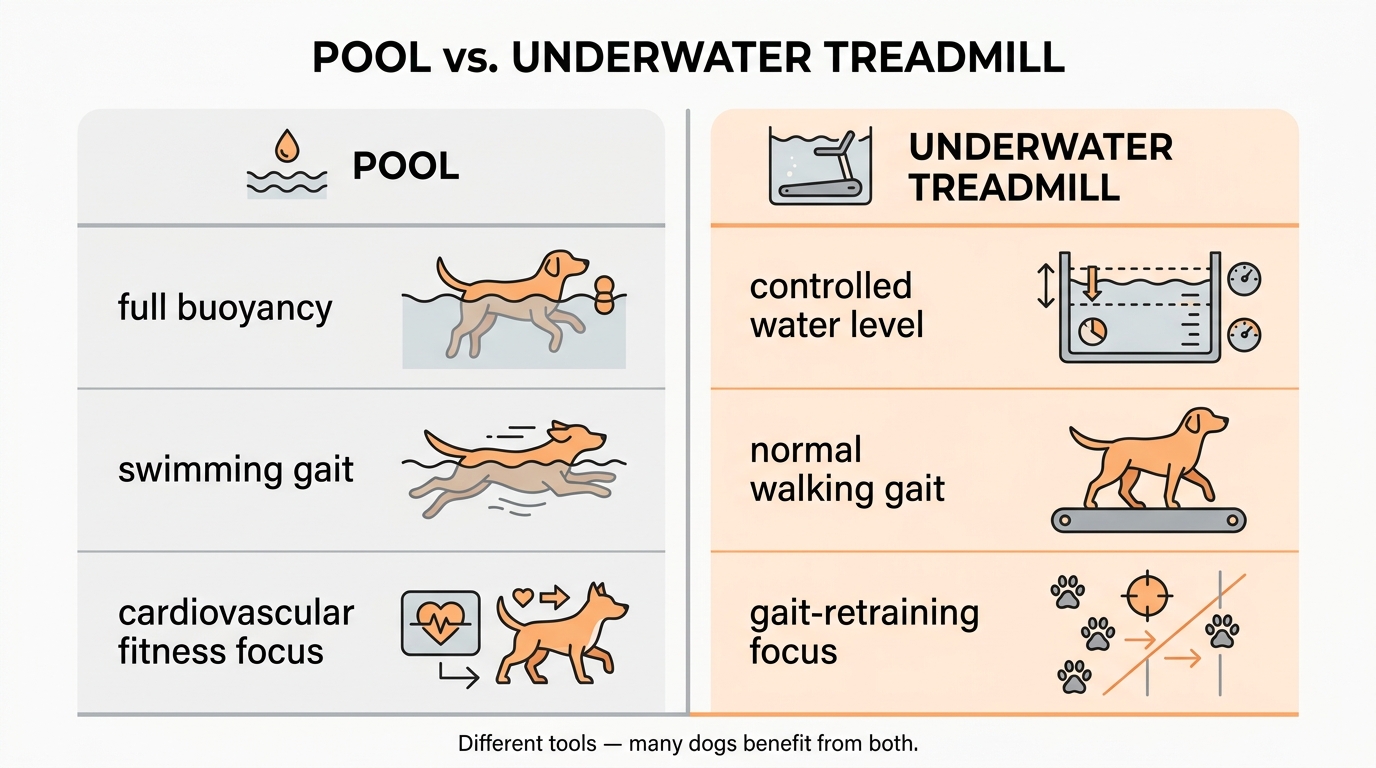
The two main forms of canine hydrotherapy in the UK are pool-based swimming and underwater treadmill therapy. Many centres offer both. Understanding the differences helps you select what's right for your dog.
Pool hydrotherapy
In pool hydrotherapy, the dog swims in a heated pool, typically with a hydrotherapist physically supporting and guiding them throughout the session. The dog wears a buoyancy aid (essentially a doggy life jacket) and the hydrotherapist directs the swim to target specific muscle groups, range of motion, and exercise intensity.
Advantages of pool hydrotherapy:
- Provides the lowest joint loading (effectively zero weight bearing in deeper water)
- Engages the full range of motion in all four limbs through swimming
- Good for cardiovascular fitness
- Many dogs find it stimulating and enjoyable
- Can be used for very advanced cases where any weight bearing is painful
- Naturally suits dogs who enjoy water
Limitations:
- Unsuitable for dogs with spinal disease. This is the most important point on this list. The swimming posture (head and neck extended up, hips and lumbar spine working hard with each kick, no supporting surface underneath) loads the spine in ways that can flare or actively worsen pre-existing spinal pathology. For dogs with IVDD (intervertebral disc disease), lumbosacral disease, thoracolumbar instability, spondylosis with active pain, recent spinal surgery, or any history of neurological signs related to the back, pool hydrotherapy carries real risk of precipitating deterioration including paresis or paralysis. Underwater treadmill is the appropriate hydrotherapy modality for these dogs and pool work should be avoided. In my clinical experience the damage from getting this wrong can be substantial and is wholly avoidable.
- The swimming gait differs significantly from walking gait, so the exercise pattern doesn't directly translate to land mobility improvement
- Dogs who aren't natural swimmers may find it stressful
- Some breeds (brachycephalic types like bulldogs and pugs) can't swim safely
- The lack of weight bearing means it doesn't directly strengthen the muscles dogs use for everyday walking
- Less precise control of exercise dosing
Underwater treadmill therapy
In underwater treadmill therapy, the dog walks on a treadmill within a sealed chamber that's filled with water to a controlled depth. The water level can be precisely adjusted (typically anywhere from just above the paws to mid-chest or higher), which controls how much weight the dog bears.
Advantages of underwater treadmill therapy:
- Replicates the walking gait pattern the dog uses on land, so improvements translate directly
- Water level can be precisely adjusted for individual dogs and conditions
- Speed and incline can be controlled
- The water level can be progressively reduced as the dog improves, building toward land mobility
- Particularly effective for retraining gait after injury or surgery
- Good for building specific muscle groups important for everyday function
- Easier for dogs who don't enjoy swimming
- More controlled exercise dosing
Limitations:
- Higher equipment costs mean fewer centres offer it (though numbers are growing)
- Sessions can be more clinically intensive and slightly more expensive
- Some dogs find the moving floor stressful initially
- Doesn't suit dogs who would struggle to walk at any speed
Which is better for arthritis?
Either can work well. For most arthritic dogs, I'd suggest underwater treadmill where available, because:
- The walking gait pattern directly improves the movement the dog uses every day
- The water level can be calibrated to their specific tolerance
- The improvement transfers more directly to land mobility
- The controlled environment allows progressive loading as they improve
There's one category of arthritic dog where underwater treadmill isn't just preferable but essentially the only safe option: dogs with concurrent spinal disease. Arthritis and spinal pathology often coexist, particularly in older dogs and in breeds prone to both (dachshunds and similar long-backed breeds, German shepherds, French bulldogs, larger breeds with combined hip and lumbosacral disease). For these dogs, pool work risks aggravating the spinal component even when the joint component would benefit. Underwater treadmill maintains a near-neutral spinal posture throughout exercise; pool swimming doesn't. If your dog has any spinal diagnosis or history of back-related neurological signs, insist on underwater treadmill, or look for a centre that offers it.
That said, pool hydrotherapy is excellent for many dogs, particularly:
- Dogs with severe arthritis who can't tolerate even minimal weight bearing
- Dogs who are natural swimmers and enjoy water
- Dogs who need maximum cardiovascular benefit at lowest joint loading
- Cases where the underwater treadmill isn't available locally
The best centres often offer both and use them in combination depending on the dog's progress and needs. Don't worry too much about choosing perfectly; either form of hydrotherapy with a good practitioner will benefit your arthritic dog.
Inside a hydrotherapy session
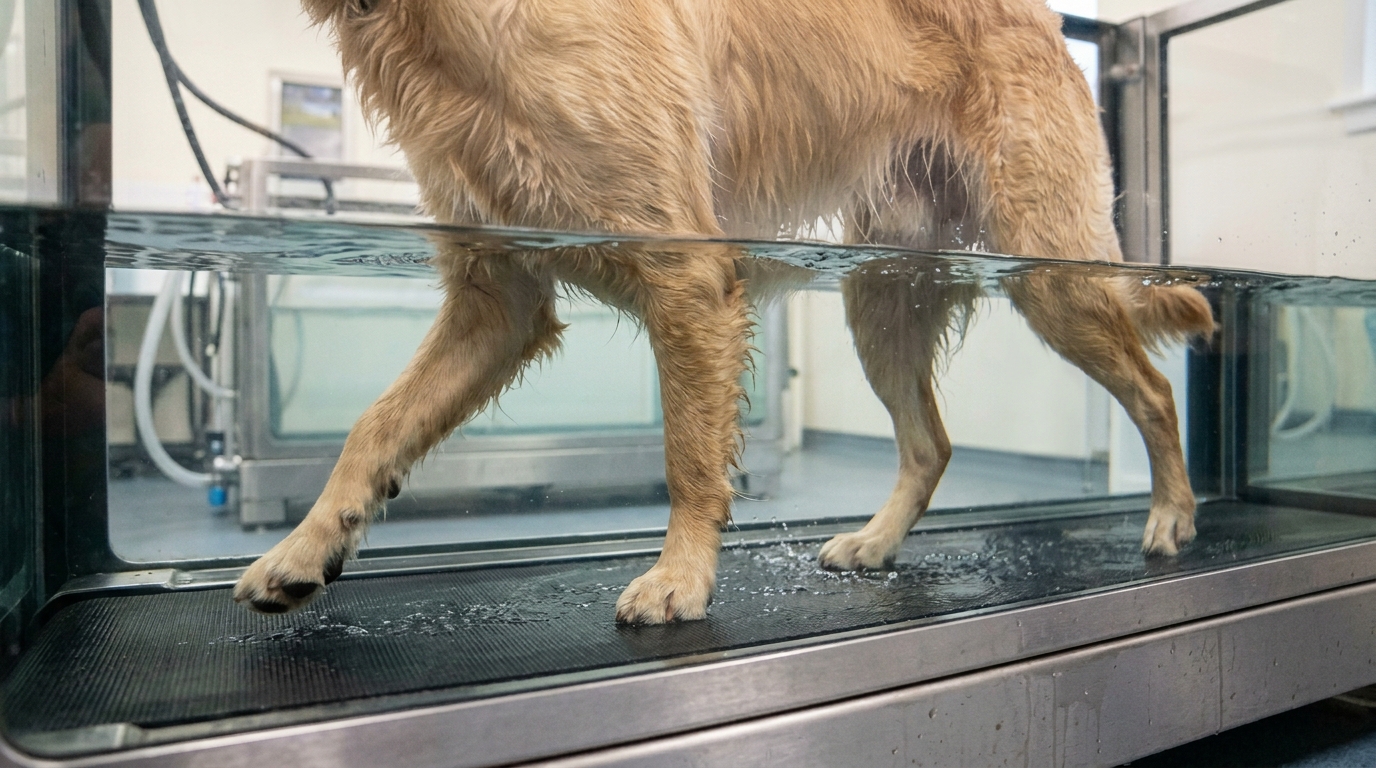
Knowing what a session looks like helps demystify the process.
The initial assessment
The first appointment is significantly longer than subsequent sessions, typically 60-90 minutes. This is a thorough assessment, not just a swim. The hydrotherapist will:
- Review the veterinary referral and any imaging or test results
- Take a detailed history including current medications and other treatments
- Conduct a gait assessment, often with the dog walking on land first
- Perform manual muscle and joint assessment
- Identify treatment goals
- Introduce the dog to the water gradually
- Have an initial brief session at low intensity
- Develop a treatment plan with frequency recommendations
This assessment is genuinely useful and the documentation often goes back to your vet. A good hydrotherapist will spot things during their hands-on examination that other clinicians may have missed.
Subsequent sessions
Standard hydrotherapy sessions are typically 30-45 minutes total, but much of that is preparation, drying, and post-session. The actual water work might be 10-30 minutes depending on the dog's tolerance and the treatment goals.
For underwater treadmill sessions:
- The dog enters the dry treadmill chamber
- Water fills to the prescribed depth
- The treadmill starts at a slow walking pace
- The hydrotherapist controls speed, incline, and water level throughout
- They observe the dog's gait and adjust based on response
- The session might include intervals of different speeds or levels
- Water drains, dog exits, gets dried thoroughly
For pool sessions:
- The dog enters the water with hydrotherapist support
- They swim laps, often supported physically through specific movements
- The hydrotherapist directs exercise to target specific areas
- Different swimming patterns target different muscle groups
- Rest periods between work intervals
- Exit, towel dry, sometimes blow dry
Most centres provide showering or rinsing facilities, soft towel drying, and some offer professional blow drying. Some have heated rooms for warming up after sessions. The post-session care matters, particularly in winter; an arthritic dog who leaves cold and damp is going to be uncomfortable for the rest of the day.
What you can observe
For dogs who enjoy the experience, hydrotherapy is often visibly therapeutic. They become more confident in the water across sessions. They show better mobility immediately after sessions, sometimes for hours. They sleep particularly well after hydrotherapy days. They typically arrive enthusiastically once they've had a few sessions.
For dogs who don't take to it, the experience is different. Some never really enjoy the water. Some find specific aspects (the noise of the pump, the moving treadmill, the harness, the wetness) genuinely stressful. The skill of the hydrotherapist matters enormously here; a good practitioner adapts to the individual dog and finds approaches that work, or recognises when hydrotherapy genuinely isn't right for that dog.
How often, for how long?
This depends on your dog's specific situation, but typical protocols look like:
Acute rehabilitation phase (post-surgery, after significant flare-up): 2-3 sessions per week for 4-8 weeks, then reducing frequency.
Chronic arthritis maintenance: Once weekly for 6-8 weeks initially, then every 1-2 weeks for ongoing maintenance, sometimes settling into every 2-3 weeks longer term.
Conditioning and prevention (younger dogs at risk, or working dogs): Weekly or fortnightly sessions ongoing.
The minimum useful frequency is typically once every 2 weeks. Less frequent than that, and the cumulative effect tends to dissipate between sessions.
Most dogs who benefit from hydrotherapy continue indefinitely. It's a chronic condition; ongoing maintenance maintains the improvement. Some can stretch sessions out over time as their condition stabilises. Some need consistent weekly sessions to maintain function.
A good hydrotherapist will help you find the right frequency for your individual dog based on response, and will tell you frankly if the dog isn't getting enough benefit to justify continued treatment.
What it costs in the UK
Hydrotherapy isn't cheap, but it's also not unreasonable given what it delivers.
Initial assessment. Typically £80-150, sometimes higher at specialist centres. This includes the longer first appointment, thorough assessment, and treatment planning.
Follow-up sessions. Most UK centres charge £30-60 per session. Average across multiple ManyPets surveys is around £36-40 per session, with a typical range of £30-50. Premium centres or those in major cities (London particularly) can charge up to £60-80 per session.
Block bookings. Many centres offer reduced rates for packages of 6-10 sessions paid upfront. Savings are typically 10-20% per session.
Additional services. Some centres charge separately for shampoo and blow dry (often £10-20 if you want professional drying), or for specific assessments like gait analysis.
Annual cost estimates. A typical maintenance regime of weekly sessions costs £1,500-2,500 per year. Less intensive regimes (every 2 weeks) cost £700-1,500 per year. More intensive rehabilitation periods can be considerably higher.
These numbers aren't trivial. Hydrotherapy represents a meaningful financial commitment for most owners. The trade-off is the very real clinical benefit and the potential to reduce other interventions (medication, supplements, vet visits) by maintaining your dog in better condition.
Pet insurance considerations. Many UK pet insurance policies cover hydrotherapy when it's been recommended by a vet and performed by a qualified hydrotherapist. Some have specific sub-limits for complementary therapies (often £500-3,000 per year). Check your policy specifically. Some insurers require pre-authorisation; others don't. The savings can be substantial for dogs needing ongoing hydrotherapy.
Finding a qualified hydrotherapist
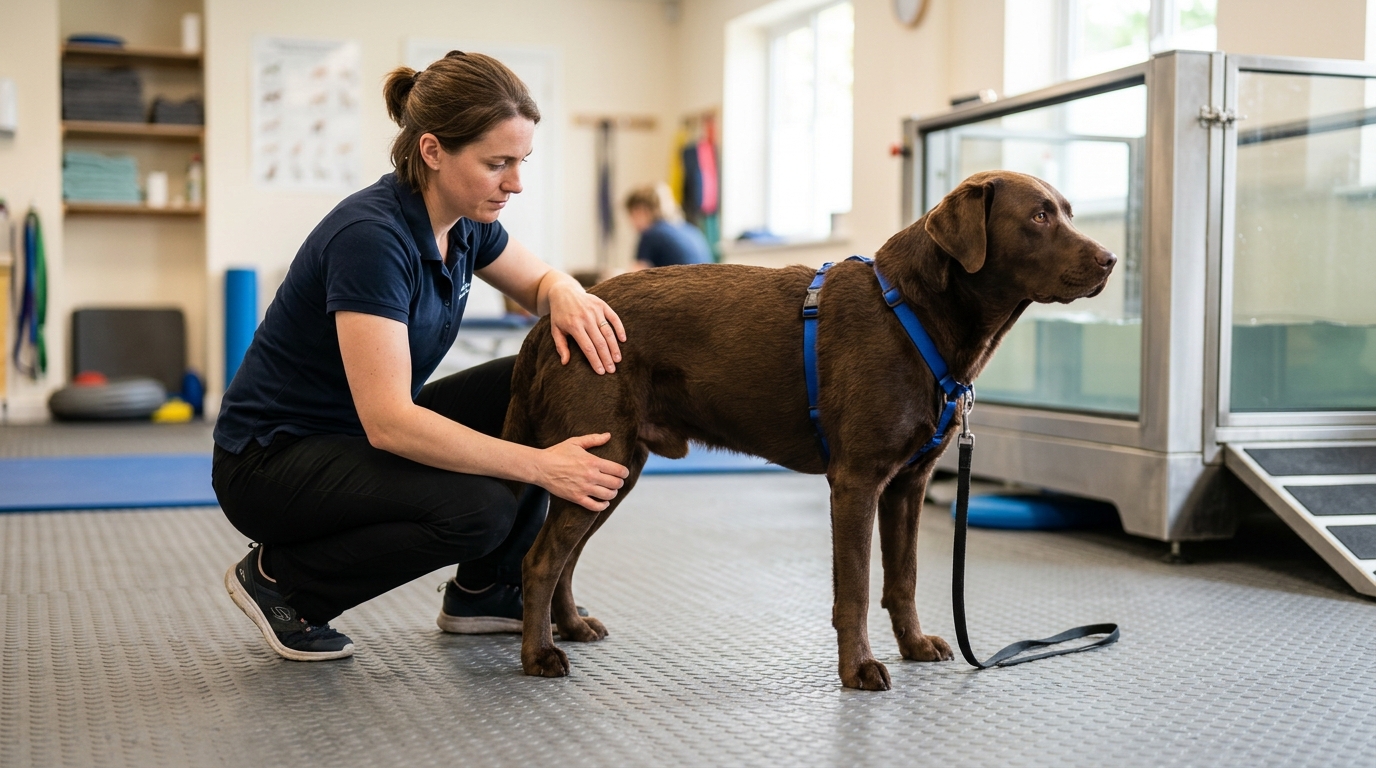
This is where the quality variation in hydrotherapy becomes important. Anyone can call themselves a "canine hydrotherapist" in the UK; there's no statutory regulation. What matters is the qualifications and professional body membership.
The main qualification
The standard qualification is the Level 3 Certificate in Canine Hydrotherapy (sometimes referred to as the OCNLR Level 3, ABC Level 3, or equivalent). This is the minimum baseline competence for an unsupervised canine hydrotherapist.
For underwater treadmill work specifically, additional Level 4 qualifications are required. A Level 3 hydrotherapist using a treadmill must be supervised by a Level 4 qualified colleague.
The professional bodies
Three main professional bodies regulate canine hydrotherapy in the UK:
Canine Hydrotherapy Association (CHA). The only inspection-controlled regulating body. CHA centres are inspected to ensure they meet quality standards. Members must maintain continuous professional development (25 hours per year) and renew first aid qualifications. Website: canine-hydrotherapy.org
National Association of Registered Canine Hydrotherapists (NARCH). Established professional body with strong member training and standards requirements. Members appear in a searchable directory. Website: narch.org.uk
Institute of Canine Hydrotherapists (ICH). Another recognised body with member standards.
Veterinary physiotherapists who also offer hydrotherapy may be members of:
ACPAT (Association of Chartered Physiotherapists in Animal Therapy). UK Chartered Physiotherapists who've completed specific animal physiotherapy training. Highest level of human physiotherapy qualification combined with animal-specific training.
IRVAP (Institute of Registered Veterinary and Animal Physiotherapists). Another physiotherapist register with animal-specific qualifications.
Centres that combine veterinary physiotherapy with hydrotherapy (often described as "rehabilitation centres") tend to provide the most comprehensive care, particularly for complex orthopaedic cases.
What to look for in a centre
Qualifications visible. The Level 3 Certificate (minimum), Level 4 for treadmill work. CHA, NARCH, or ICH membership. ACPAT or IRVAP membership for combined physio/hydro centres.
Veterinary referral. All reputable centres require veterinary referral before starting treatment. This isn't bureaucracy; it ensures the dog has appropriate diagnosis and that contraindications are identified.
Communication with your vet. Good centres send detailed reports back to your referring vet after assessment and at intervals during treatment. They want to work as part of your dog's care team, not in isolation.
Appropriate facilities. Heated water (28-32°C). Clean, well-maintained equipment. Adequate space for assessment and post-session drying. Hygienic facilities.
Properly conducted initial assessment. First appointment should be a proper clinical assessment, not just a swim. The hydrotherapist should examine the dog, take a thorough history, and develop a treatment plan with specific goals.
Realistic about outcomes. A good hydrotherapist will tell you whether your dog is likely to benefit and what to expect. They won't promise cures or push extensive treatment courses without justification.
Allows ownership of the relationship. You should be welcomed to watch sessions, ask questions, and discuss your dog's progress. Some centres have observation windows; some encourage owners to attend the entire session.
What to be cautious about
Anyone offering hydrotherapy without a recognised qualification. Some commercial pool operators offer "swim sessions" for dogs without proper qualifications. This isn't therapeutic hydrotherapy. It can also be unsafe for dogs with specific conditions.
Centres unwilling to communicate with your vet. Good practice involves veterinary collaboration. A centre that wants to operate in isolation from your vet is a red flag.
Pressure to commit to large upfront packages. Some centres push 20+ session packages with significant upfront payment. While block bookings can save money, you shouldn't be pressured into a long commitment before you know how your dog responds.
Centres making strong claims of cures. Hydrotherapy can produce remarkable results but it's not a cure for arthritis. Anyone claiming otherwise is overselling.
Underwater treadmill use by under-qualified staff. As mentioned, treadmill work requires Level 4 qualification or Level 3 with Level 4 supervision. Verify this if you're considering treadmill therapy.
Which dogs benefit most
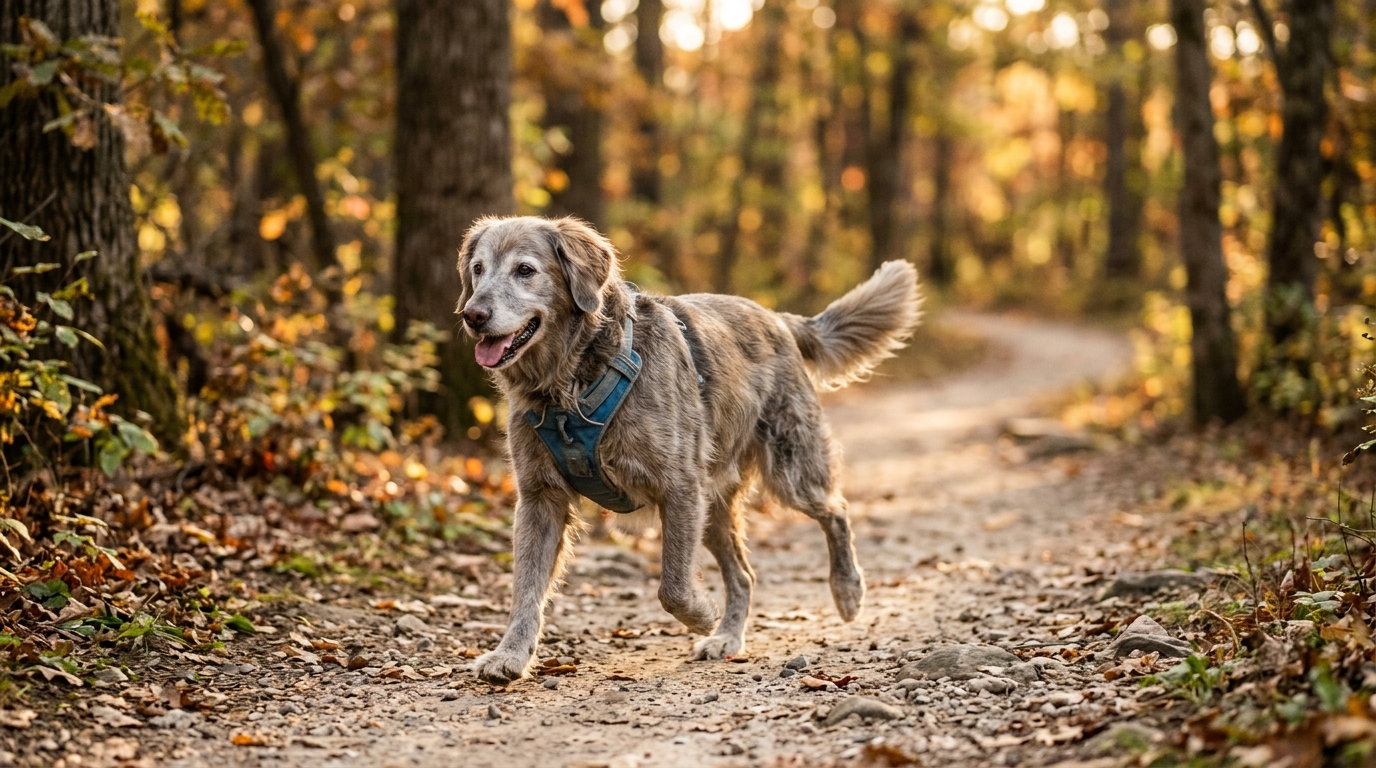
Hydrotherapy works well for a wide range of arthritic dogs, but some benefit more than others.
Particularly good candidates:
- Dogs with moderate to severe arthritis whose land exercise is limited
- Dogs recovering from orthopaedic surgery (TPLO, hip replacement, etc.)
- Overweight arthritic dogs who need exercise but can't manage extensive land walking
- Dogs with multi-joint disease where any single approach is insufficient
- Working or sporting dogs whose career is winding down due to joint disease
- Senior dogs with arthritis as part of multimodal management
- Dogs with cruciate disease (pre or post surgery)
- Dogs with spinal disease alongside arthritis (underwater treadmill only, not pool; see Pool limitations above)
Sometimes good candidates with caveats:
- Dogs with severe behavioural anxiety (need careful introduction)
- Dogs with skin conditions (water exposure may aggravate)
- Dogs with ear conformation prone to ear infections (need careful drying)
- Brachycephalic breeds (need specific hydrotherapist expertise; pool may not be safe)
- Very small or very old dogs (warmth particularly important)
Probably not suitable:
- Dogs with significant heart disease (cardiovascular load may be excessive)
- Dogs with uncontrolled seizures
- Dogs with active infections including ear, skin, or urinary
- Dogs with open wounds or recent surgical incisions
- Dogs with severe behavioural issues making safe handling impossible
- Dogs who genuinely find water deeply stressful (a few sessions to confirm is reasonable; persistent severe stress means it's not the right approach)
If you're unsure whether your dog is a good candidate, a referral consultation with a hydrotherapist will usually clarify this quickly.
Back at home, between sessions
After hydrotherapy sessions, most dogs are noticeably tired. This is normal and usually a sign they've had a meaningful workout. Some dogs sleep deeply for several hours after sessions.
Improvements in mobility are often visible within 24-48 hours of the first few sessions. Sustained improvement builds over the first 4-6 sessions. The picture becomes clear by session 8-10 whether the treatment is working well for your individual dog.
Things to watch for and discuss with your hydrotherapist:
- How long does improvement last after each session?
- Is your dog more tired than expected after sessions?
- Any signs of soreness or stiffness in the day or two after?
- Changes in their overall mobility and engagement?
- How is their sleep quality after sessions?
This information helps the hydrotherapist optimise the protocol for your individual dog.
Most of these questions are answered by memory and impression, which is fine for the loose pattern but limited when you're spending £1,500–2,500 a year and want to know whether it's earning its keep. This is one of the use cases we built PAWSCHECK for. PAWSCHECK (pawscheck.co.uk) is a separate ConciergeVet tool that produces an objective gait analysis from a short smartphone video, reviewed by a UK RCVS vet, so the gait you see at week one and the gait you see at week eight can be compared on the same metrics. It also lets you log a treatment timeline against the gait changes, which is useful when you're trying to tell whether the hydrotherapy or the medication change is doing the work.
The realistic framing is that you don't need objective measurement to know whether hydrotherapy is working. A dog who's bouncing back into the car after sessions and managing the stairs better at home is giving you good evidence. But for borderline cases, or when you're considering whether to stretch the interval out, objective gait data is genuinely useful information.
Most centres will give you specific guidance on at-home activity for the day or two after sessions. Often this involves slightly reduced normal exercise to allow recovery while the cumulative benefits build.
Hydrotherapy and other treatments
Hydrotherapy combines well with essentially every other arthritis intervention:
Medication. Hydrotherapy may allow reduction in medication doses for some dogs as their function improves. Don't reduce medication unilaterally; discuss with your vet first.
Other complementary therapies. Acupuncture and hydrotherapy combine very effectively. Many dogs receiving both show better outcomes than with either alone.
Home physiotherapy. Hydrotherapy sessions are typically 1-2 times per week; home physio exercises fill the gap between sessions. The combination is genuinely powerful.
Weight management. Hydrotherapy is excellent for overweight arthritic dogs. The water-based exercise burns calories without joint loading, supporting weight loss alongside diet management.
Diet. No specific interactions to manage.
Supplements. No interactions. Therapeutic omega-3 doses can be continued alongside hydrotherapy.
Surgery. Hydrotherapy is widely used both pre-operatively (to maintain fitness before surgery) and post-operatively (for structured rehabilitation). Many specialist surgical centres have in-house hydrotherapy facilities.
At-home swimming as an alternative
For dogs whose owners have access to safe swimming opportunities, regular swimming can provide some of the benefits of professional hydrotherapy at lower cost.
Reasonable home swimming options:
- Heated swimming pools (private or community where allowed)
- Calm sea or lake swimming in warm weather (with appropriate safety measures)
- Some larger paddling pools or specialised dog pools
Important caveats:
- Water temperature matters: cold water causes muscle tension and is counterproductive for arthritic dogs
- Safety must be paramount: lifejacket, supervision, easy exit point
- Avoid currents, deep water without supervision, and fast-flowing rivers
- Wash and dry thoroughly afterwards
- Recognise that this isn't structured therapy: you're not getting the assessment, individualised protocol, or progressive loading that professional hydrotherapy provides
For most arthritic dogs, professional hydrotherapy delivers more therapeutic value than recreational swimming. But recreational swimming alongside professional sessions, or as a supplement between them, can be a useful addition.
Is it worth it?
For owners weighing up whether hydrotherapy is worth the investment, my candid view is that it's one of the most cost-effective complementary interventions available for canine arthritis. The clinical response is generally good, the safety profile is excellent, the science is sound, and the structural benefits (muscle, joint range of motion, cardiovascular fitness) compound over time in ways that other interventions struggle to match.
For dogs whose pain is reasonably controlled but whose function isn't where you'd like it to be, hydrotherapy is one of the first things I'd add. For dogs recovering from injury or surgery, it's a standard component of rehabilitation. For dogs in the middle phases of chronic arthritis management, it often becomes a regular feature of their care for years.
The investment is real (£1,500-2,500 per year typically) but the return in quality of life can be substantial. Find a properly qualified centre, commit to a reasonable course (8-10 sessions) to see how your dog responds, and adjust from there based on what you observe.
Your arthritic dog deserves the benefit of one of the most evidence-supported interventions in canine rehabilitation. Hydrotherapy is genuinely worth the time and money for most patients.
References
- Preston T, Wills AP. A single hydrotherapy session increases range of motion and stride length in Labrador retrievers diagnosed with elbow dysplasia. The Veterinary Journal, 2018;234:105-110.
- Twarowska J, Strychalski J, Gugołek A. A pilot study on the effects of a 10-session underwater treadmill programme on canine joint range of motion. Animals (Basel), 2025;15(21):3186.
Sister tool · Sightline
Track whether treatment is working
Sightline, a separate ConciergeVet tool, runs a short weekly check-in built on validated pain and mobility instruments, turns it into a single Sightline Score you can watch trend over weeks rather than judge on one bad day, and produces a report you can bring to your vet.
A written log, or our printable trackers, does much the same job.
See how Sightline tracks treatmentSee where your pet stands today
Tracking is the other half of managing arthritis. Take the 2-minute Mobility Check to see your pet's stage, then watch it shift as treatment takes effect.
Take the Mobility CheckYou're not doing this alone
Compare treatment journeys and talk to owners managing arthritis. Free to join.
Join PetsLikeMine