


Young Dogs and Arthritis: It's Not Just an Old Dog's Disease
Alastair Greenway
BVM&S MRCVS
A two-year-old dog comes in with arthritis more often than most owners would ever guess. Maybe yours is three. Maybe just over a year old. And the vet has just used a word you'd filed away for old age.
That diagnosis can feel surreal. Arthritis is meant to be for grey-muzzled Labradors who can barely make it up the garden step, not the puppy who was tearing round the park last week. It's tempting to assume there's been a mistake. They're too young for this.
There hasn't been a mistake. Arthritis in young dogs is far more common than almost anyone realises. And catching it now, while your dog is young and the disease is still early, gives you the single biggest opportunity to influence the rest of their life.
So let's go through it properly: what young-dog arthritis actually is, why it happens, what it means for your dog's future, and what you can do about it right now to give them the best possible outcome.
How common is arthritis in young dogs?
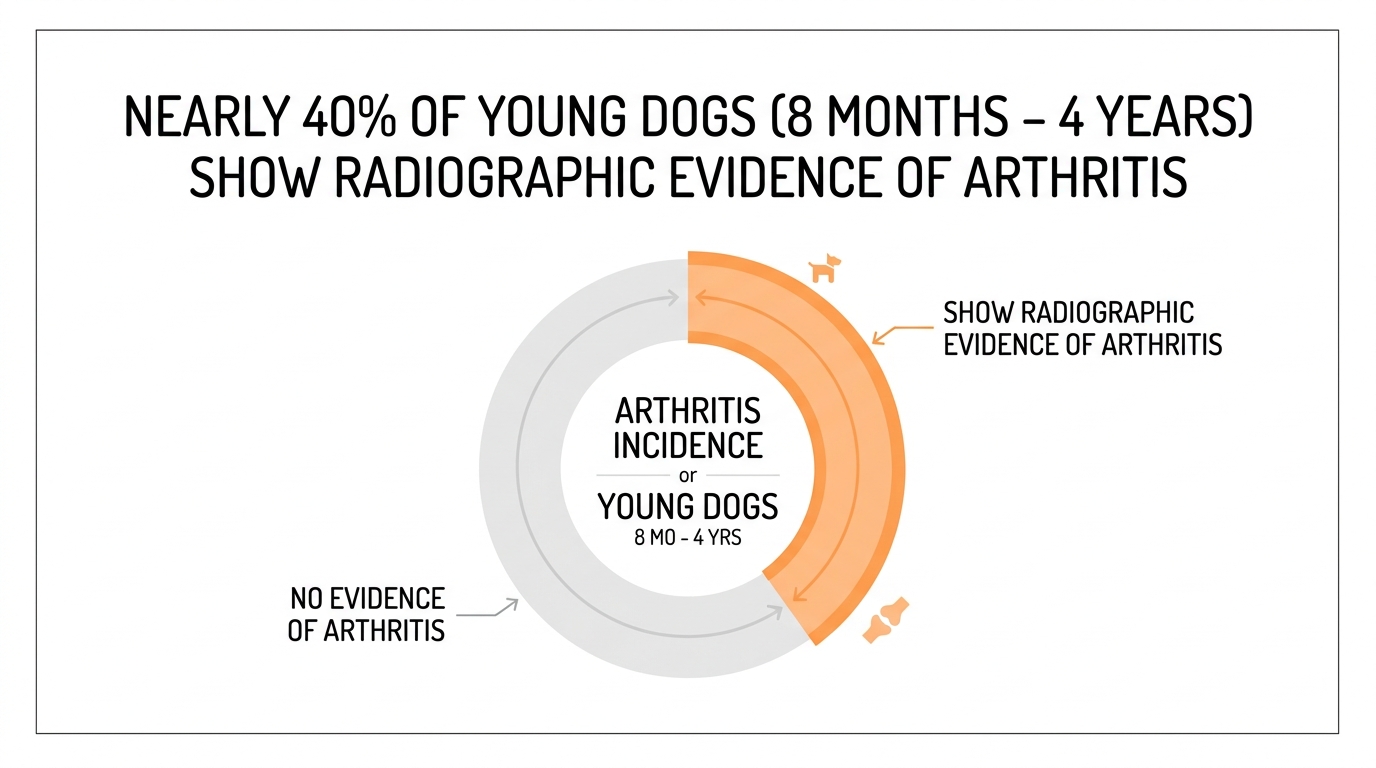
Far more common than you would believe.
A landmark 2024 study by Enomoto and colleagues, published in Scientific Reports, looked at the prevalence of arthritis in dogs aged 8 months to 4 years from a single primary care practice in the United States. The researchers examined 123 dogs across 40 different breeds. These weren't dogs referred because of joint problems. They were a general population, randomly selected from the practice's records.
The findings were striking. Nearly 40% (49 out of 123) of dogs in this young age group had radiographic evidence of osteoarthritis in at least one joint. Just over 16% had what the researchers called "clinical OA," meaning both radiographic changes and detectable joint pain on examination. If a more lenient definition of pain was used, that figure rose to 23.6%.
In a population of young dogs, between 16% and 24% had arthritis severe enough to cause demonstrable pain on examination. And in almost all of these dogs, neither the owners nor the previous veterinary visits had identified the problem.
Perhaps most alarming is what the owners reported. Of the dogs identified as having clinical OA, owners had observed signs of impairment in only about 30% of cases. In other words, in 70% of young arthritic dogs, the owners had no idea anything was wrong.
This is not a rare, exotic condition. It's an under-recognised epidemic in young dogs that the veterinary profession is only just starting to take seriously.
Why does arthritis happen in young dogs?
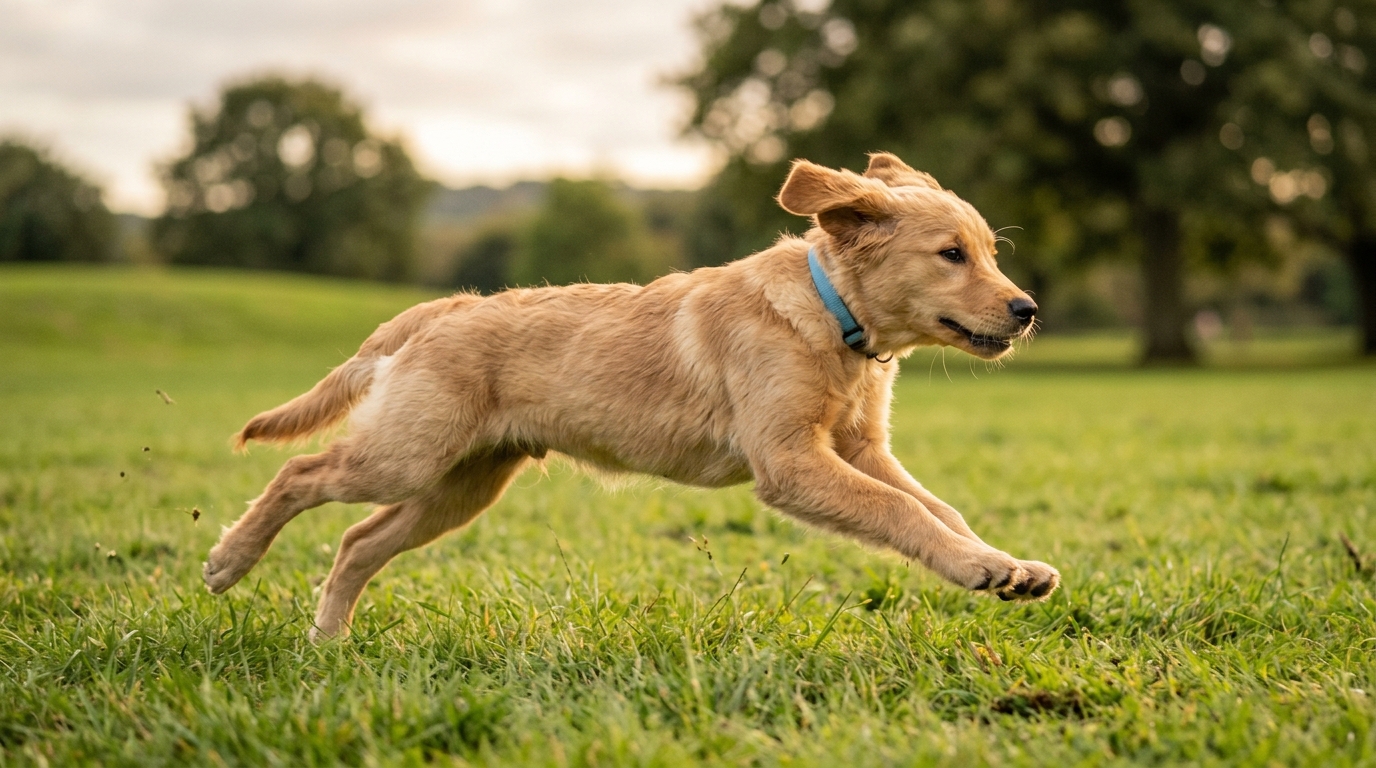
In most cases, arthritis in young dogs traces back to developmental joint disease that started in puppyhood. The joints didn't form quite right during growth, and the consequences are now showing up.
The conditions involved are largely the same ones I've covered in our article on causes of arthritis: hip dysplasia, elbow dysplasia, osteochondritis dissecans (OCD), patellar luxation, and early cruciate ligament disease. These conditions all have their origins in puppyhood, and they all produce arthritis as their inevitable consequence.
In a young dog with arthritis, the cartilage damage may already be present but the bony changes (the osteophytes you see on X-rays) often haven't fully developed yet. The pain, however, is real. Joint inflammation, synovial membrane changes, and early cartilage damage all cause pain long before the dramatic radiographic changes that we associate with end-stage disease.
That's exactly why young dogs with arthritis are so often missed. The standard mental picture of arthritis (an old dog with obvious limping and visible joint changes on X-ray) doesn't fit. The young arthritic dog often has subtler signs, more normal-looking X-rays, and a vet who isn't actively looking for joint pain because the dog is "too young."
Injury is the other major cause. A cruciate ligament rupture, a fracture involving a joint, a significant joint dislocation, or even a less dramatic injury that didn't fully heal can all trigger arthritis at a young age. The clock starts ticking the moment the joint is damaged, regardless of age.
The breeds at highest risk
Some breeds are dramatically more likely than others to develop arthritis as young dogs. If your dog is one of these breeds, the threshold for considering joint disease should be lower.
Highest risk:
- Labrador Retrievers
- Golden Retrievers
- German Shepherds
- Rottweilers
- Bernese Mountain Dogs
- Newfoundlands
- Saint Bernards
- Mastiffs and other giant breeds
Substantial risk:
- Cavalier King Charles Spaniels
- Bulldogs and French Bulldogs
- Cocker Spaniels
- Springer Spaniels
- Boxers
- German Pointers
Specific risk patterns in smaller breeds:
- Dachshunds (spinal arthritis from intervertebral disc disease)
- Pomeranians, Chihuahuas, Yorkshire Terriers (patellar luxation leading to stifle arthritis)
- French Bulldogs (multiple joints due to conformation)
But the 2024 prevalence study included 40 different breeds, and the high overall rate of arthritis wasn't confined to the "usual suspects." Mixed breed dogs, crossbreeds, and breeds not traditionally associated with joint problems all showed up in the affected group. While breed strongly influences risk, no breed is entirely safe.
Why early diagnosis changes everything
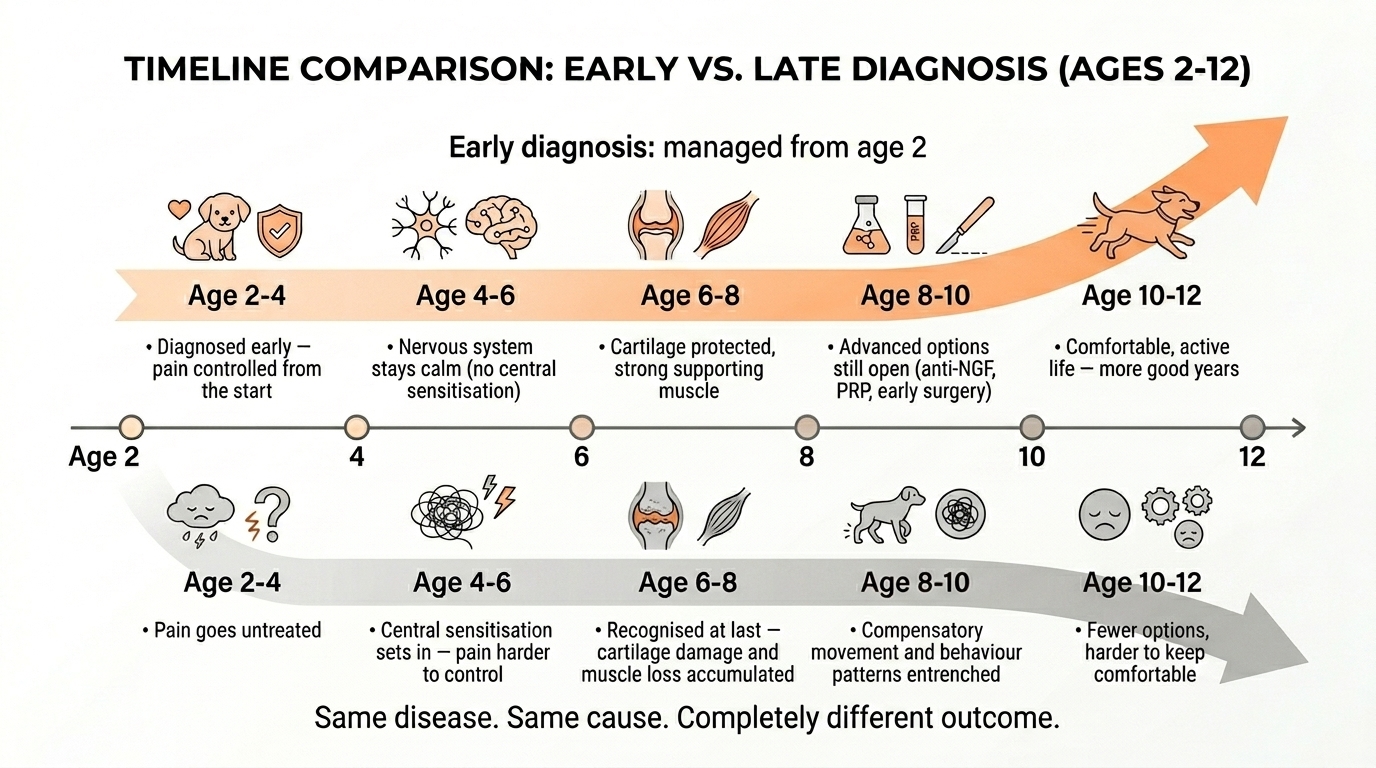
One blunt fact sits underneath all of this. Once the disease process is established, it doesn't go away. Cartilage damage that has occurred doesn't reverse. The structural changes accumulate over time.
But what happens between diagnosis and the dog's later years is profoundly influenced by what we do in the early stages.
Pain control matters more than people realise. When pain is left untreated for months or years, the nervous system itself starts to change. Pain receptors multiply. The spinal cord becomes more efficient at transmitting pain signals. Eventually, the brain can generate pain even when peripheral signals are reduced. This phenomenon, called central sensitisation, makes the pain harder to control later in life. A young dog whose arthritis pain is well managed from the start may avoid this nervous system rewiring. A young dog whose pain goes untreated for years often develops it.
Joint protection matters. Cartilage that's still relatively healthy in a young arthritic dog can be protected through appropriate exercise, weight management, and sometimes specific interventions. Once cartilage is severely damaged, your options for slowing progression narrow significantly.
Muscle mass matters. Young dogs have the capacity to build and maintain strong muscle support around their joints. Strong musculature genuinely protects joints by absorbing forces that would otherwise pass through the cartilage. A young dog who is supported into maintaining good muscle mass through their early years has a structural advantage that's much harder to claw back in middle age.
Behavioural patterns matter. Dogs who have pain from young ages often develop compensatory patterns of movement, reduced confidence with certain activities, and even subtle behavioural changes like increased anxiety or reactivity. Addressing pain early prevents these patterns from becoming entrenched.
Treatment options matter. Some of the more advanced interventions for arthritis (stem cell therapy, platelet-rich plasma injections, anti-NGF therapy) work better in earlier stages of disease when cartilage integrity is still relatively preserved. Early diagnosis opens doors that close as the disease progresses.
The point is this: the dog whose arthritis is diagnosed and managed from age two is on a fundamentally different trajectory from the dog whose arthritis is finally recognised at age eight. Same disease. Same underlying cause. Completely different outcome.
Surgical considerations: a special note for young dogs
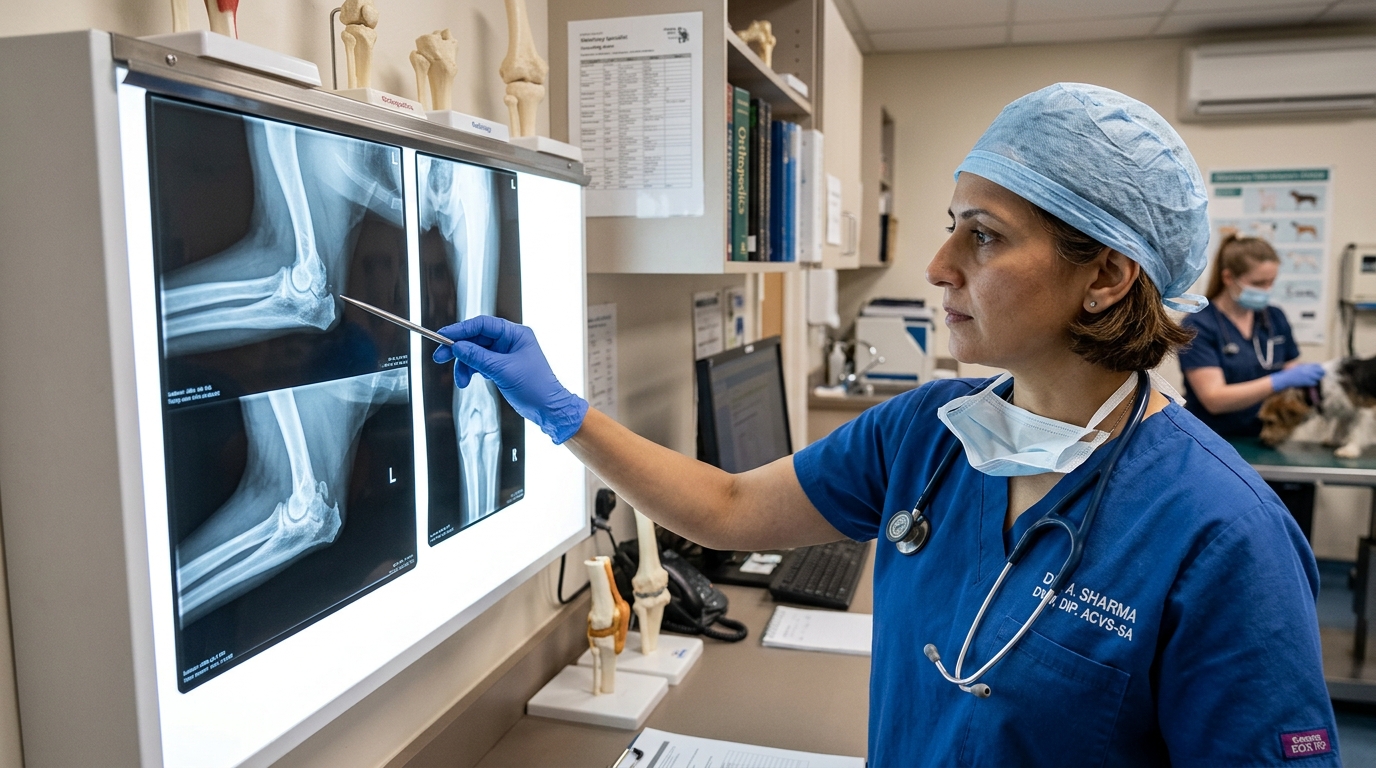
For older dogs with arthritis, the conversation is usually about medical management. Pain relief, weight loss, environmental modification, supplements, complementary therapies. Surgery is rarely the answer.
For young dogs with structural joint problems, the calculation is different.
If your young dog has been diagnosed with a specific structural problem like elbow dysplasia (especially fragmented coronoid process or OCD), hip dysplasia, or a cruciate ligament problem, surgical intervention may be on the table. The reasoning is straightforward: if you can correct or improve the underlying mechanical problem early, you may significantly reduce the rate at which arthritis progresses over the dog's life.
This isn't a decision to take lightly, and the appropriate surgical option varies enormously depending on the specific condition, the dog, and the family. But it's a genuine conversation to have, and one that's often not raised when arthritis is diagnosed in a young dog because the vet's mental model is "manage with medication."
Specific situations where surgical referral is worth considering:
Elbow dysplasia with significant clinical signs. Arthroscopic debridement of fragments, subtotal coronoid ostectomy, and other procedures can improve joint function and may slow arthritis progression in selected cases. Best done before significant arthritis has developed.
OCD lesions. Surgical removal of loose cartilage fragments and treatment of the underlying defect is often the best approach, particularly when caught early.
Hip dysplasia in dogs under 10 months. Juvenile pubic symphysiodesis (JPS) can be considered in very young dogs (typically under 5 months). Triple pelvic osteotomy (TPO) or double pelvic osteotomy (DPO) can be considered in dogs typically under 10-12 months with appropriate hip conformation. Total hip replacement remains an option later in life if needed.
Cruciate ligament disease. Surgical stabilisation (TPLO, TTA, lateral suture techniques) is typically more straightforward in younger dogs and produces better long-term outcomes when done before significant secondary arthritis develops.
Severe patellar luxation. Surgical correction in grade 3 or 4 luxation, or in dogs with significant clinical signs.
Don't assume your vet will automatically suggest a referral. Sometimes they will. Sometimes they won't, either because they're confident in their own approach or because they're unsure whether you'd want to pursue specialist input. If you have a young dog with a diagnosed structural joint problem, asking the question is reasonable: "Should we consider a specialist orthopaedic referral?" A good vet will give you a thoughtful answer.
Day-to-day management for young arthritic dogs
The principles of arthritis management for young dogs are largely the same as for older dogs (covered in detail across our other expert guides), but a few things deserve specific emphasis.
Weight management is non-negotiable
The 2024 Enomoto study explicitly identified body mass as a risk factor for OA in younger dogs. Every kilogram of excess weight on a young dog is loading their joints during the years that will determine their long-term trajectory.
If your young arthritic dog is overweight, weight management isn't optional. Get them to an ideal body condition score and keep them there. This single intervention may be more important than any medication.
Exercise needs careful thought
The instinct with a young dog is to give them lots of exercise. The instinct with an arthritic dog is to restrict them. For a young arthritic dog, neither extreme is right.
Young arthritic dogs need:
Regular, low-impact exercise. To maintain muscle mass, joint mobility, and mental wellbeing. Restricting a young dog excessively causes muscle wasting and behavioural problems.
Appropriate exercise types. Lead walking on varied terrain. Swimming where available. Controlled play. Avoiding high-impact, repetitive activities (intensive ball chasing, running on hard surfaces for long distances, jumping from significant heights).
Adaptation by joint affected. Dogs with hip arthritis often do better with steady continuous walking than with stop-start play. Dogs with elbow problems often struggle more with downhill walking and going down stairs than the equivalent uphill activity.
Recovery time. Even young arthritic dogs benefit from being kept on the right side of comfort rather than pushed into pain. The day-after assessment matters: how stiff are they the morning after a more active day?
For young dogs intended as working or sporting dogs, specific conversations about adapting their role are sometimes needed. Some young arthritic dogs can continue with modified versions of their sport. Others need to retire from that aspect of life and find different outlets. This is heartbreaking for owners who had specific plans for their dog, but the alternative is forcing a young dog with painful joints to continue doing something that hurts them.
Medication has a place
There's sometimes a reluctance to start medication in young dogs because owners (and occasionally vets) worry about "starting them on tablets so young, what will we use later?"
This concern is largely unfounded. The medications we use for arthritis pain control aren't a finite resource. We don't run out of options because we used them early. And the evidence is increasingly clear that controlling pain early in the disease process leads to better long-term outcomes, including the avoidance of central sensitisation discussed earlier.
What this means practically: if your young dog is in pain, treat the pain. Don't hold back medication to "save it for later." If NSAIDs are appropriate, use them. If anti-NGF therapy (Librela) is appropriate, consider it. If multimodal pain control is needed, provide it.
The newer medications like grapiprant (Galliprant) and anti-NGF monoclonal antibodies have been used successfully in young dogs in studies, including the same Enomoto research group's 2024 trial of grapiprant as part of a multimodal regimen in young dogs with appendicular osteoarthritis. Good response rates were demonstrated, with measurable improvements in objective gait analysis after weeks of treatment.
Supplements and nutraceuticals
Some of the supplement options have particular relevance for young arthritic dogs. Omega-3 fatty acids have the best evidence base of any joint supplement and are safe for long-term use. Green-lipped mussel extracts have shown promising results, with one specific extract (EAB-277) demonstrating effects comparable to NSAIDs in a 2024 study. Glucosamine and chondroitin remain commonly used despite mixed evidence; they appear to help some dogs but not others.
For young dogs whose arthritis you'll be managing for many years, a sensible foundation of evidence-based supplements alongside other interventions makes sense.
Watch for the other side
If your young dog has been diagnosed with arthritis on one side, the other side warrants attention.
For bilateral conditions like hip dysplasia and elbow dysplasia, both sides are often affected even if one looks worse than the other. The "good" hip is often dysplastic too, just less symptomatically. Cruciate disease is famously bilateral, with roughly one-third to one-half of dogs rupturing the cruciate in the other knee, commonly within a year or two. Patellar luxation often affects both knees.
Knowing which conditions tend to be bilateral helps you watch for early signs on the other side and intervene before that side reaches the same level of clinical disease.
The emotional reality of a young arthritis diagnosis
A few words on the emotional aspect, because the diagnosis of arthritis in a young dog often hits owners harder than the equivalent diagnosis in an old dog.
It feels deeply unfair. You imagined years of running on beaches, agility competitions, hiking holidays. The diagnosis seems to threaten all of that, and you've barely had time to build the relationship before the bad news arrived.
You might feel guilty. Did you exercise them too much as a puppy? Did you let them jump too high? Did you feed them the wrong food? The answer, almost universally, is that you didn't cause this. Developmental joint disease starts before you have meaningful influence, and it would have developed regardless of what you did.
You might grieve a future that won't happen. The agility dog who can't compete. The hiking companion who can't do long walks. The working dog who needs to retire early. It's reasonable and right to acknowledge that loss, even while you adjust to a different version of life with your dog.
You might feel isolated. Most people with young dogs aren't dealing with arthritis. The dog parks and breed forums are full of people whose two-year-old dogs are bouncing around without a care. You may feel like nobody else understands. This is where communities like PetsLikeMine genuinely help. There are many of us managing arthritis in young dogs. You're not the only one.
You might be relieved, in a strange way. If your dog has been showing subtle signs you've been worrying about, a diagnosis often brings clarity. You can finally do something about it.
All of these feelings are valid. The diagnosis is a moment that deserves the time and emotional space to process. You don't have to be brave about it immediately.
Looking ahead: what does life look like?

A young dog with arthritis can absolutely live a full, happy, comfortable life. They can still go on holidays. They can still play. They can still be the heart of your family. What changes is the texture of how they live, not the quality of it.
Most young arthritic dogs, with good management:
- Remain active and engaged
- Continue to enjoy daily walks (appropriately structured)
- Can take part in modified versions of their previous activities
- Show no obvious sign of being limited to outside observers
- Have many years of good life ahead
What you adjust:
- Exercise patterns become more deliberate and controlled
- Weight is managed more carefully than it would have been
- Regular monitoring becomes part of the routine
- Some activities may need to be substituted for others
- You become a more attentive observer of subtle changes
- Veterinary visits become more frequent than they would otherwise be
What you gain:
- A deeper understanding of your dog
- A more thoughtful relationship with their daily wellbeing
- Skills as an advocate and carer that will serve you (and them) over the years
- Membership of a community of owners who understand exactly what you're dealing with
This isn't the dog journey you expected. But it's not a worse journey. Just a different one, with its own rewards.
A few final practical points
If your dog has just been diagnosed with arthritis at a young age:
Get clarity on the specific diagnosis. "Arthritis" is the consequence. What's the cause? Hip dysplasia? Elbow dysplasia? OCD? Cruciate disease? The specific structural diagnosis influences management options, particularly surgical considerations.
Consider specialist referral. For young dogs with significant structural joint disease, a consultation with a veterinary orthopaedic surgeon is often worthwhile. They can advise on whether surgery is appropriate, what monitoring to do, and how to optimise long-term management.
Establish a baseline. Get good radiographs at the start. Note your dog's weight, body condition, and pain assessment. This baseline is invaluable for tracking changes over the months and years to come.
Plan for the long term. This is a chronic condition you'll be managing for the rest of your dog's life. Set up systems that are sustainable, not heroic short-term efforts that you can't maintain.
Use the PetsLikeMine community. There are owners in our Arthritis & MSK space managing exactly what you're managing. They have insights, suggestions, and the validation of knowing other people are doing the same thing. Don't go through this alone.
References
- Enomoto M, de Castro N, Hash J, et al. Prevalence of radiographic appendicular osteoarthritis and associated clinical signs in young dogs. Scientific Reports, 2024.
- Enomoto M, Hash J, Cole T, et al. Response to treatment with grapiprant as part of a standard multimodal regimen in young dogs with appendicular joint osteoarthritis associated pain. Frontiers in Veterinary Science, 2024.
- Roush JK, Cross AR, Renberg WC, et al. Evaluation of the effects of dietary supplementation with fish oil omega-3 fatty acids on weight bearing in dogs with osteoarthritis. Journal of the American Veterinary Medical Association, 2010.
- Kampa N, Kaenkangploo D, Jitpean S, et al. Evaluation of the comparative efficacy of green lipped mussel plus krill oil extracts (EAB-277), Biota orientalis extracts or NSAIDs for the treatment of dogs with osteoarthritis associated pain: a blinded, placebo-controlled study. Frontiers in Veterinary Science, 2024.
- Buote N, Fusco J, Radasch R. Age, tibial plateau angle, sex, and weight as risk factors for contralateral rupture of the cranial cruciate ligament in Labrador retrievers. Veterinary Surgery, 2009.
Sister tool · Sightline
Track whether treatment is working
Sightline, a separate ConciergeVet tool, runs a short weekly check-in built on validated pain and mobility instruments, turns it into a single Sightline Score you can watch trend over weeks rather than judge on one bad day, and produces a report you can bring to your vet.
A written log, or our printable trackers, does much the same job.
See how Sightline tracks treatmentSee where your pet stands today
Tracking is the other half of managing arthritis. Take the 2-minute Mobility Check to see your pet's stage, then watch it shift as treatment takes effect.
Take the Mobility CheckYou're not doing this alone
Compare treatment journeys and talk to owners managing arthritis. Free to join.
Join PetsLikeMine