


Monitoring and Knowing When Things Change
Alastair Greenway
BVM&S MRCVS
The single most useful skill you can develop as the owner of an arthritic dog or cat is the ability to monitor them well at home. It does more than any single medication, it's more reliable than any specialist appointment, and it matters more than any therapy you might consider.
The reason is simple. Chronic disease management lives in the spaces between vet visits. Your dog or cat has 4-6 vet consultations a year if they're being actively managed. That's about 60-90 minutes of clinical observation across an entire year. The rest of the time, the other 8,700+ hours, they're just living their life. You're the only person who sees those hours. The information you gather, or fail to gather, in that time determines almost everything about how their condition is managed.
This isn't theoretical. The owners whose dogs and cats do best long-term are consistently the ones who notice changes early, communicate them clearly, and engage with their veterinary team based on what they're seeing rather than waiting for crises. The owners whose animals do worst are often those whose monitoring is unstructured, who notice changes late, or who put genuine clinical deterioration down to "just getting older."
Reassuringly, effective monitoring isn't complicated. It doesn't require expensive equipment, hours of daily attention, or veterinary training. It requires a structured approach, some basic tools, and the habit of looking thoughtfully at your animal rather than just casually.
This article walks through what to monitor, how to track it without it becoming burdensome, how to interpret changes you notice, when to act on them, and how to tell normal variation apart from genuine deterioration.
I'll cover canine arthritis primarily but include cat-specific guidance throughout, because feline monitoring has particular features that warrant separate attention.
Why this matters more than you'd think
Let me spend a moment on the case for taking this seriously, because owner monitoring is one of those things that sounds tedious in theory and is genuinely transformative in practice.
Chronic disease has small daily changes that compound. Your dog doesn't lose function suddenly. They lose 2% of function over six months, slowly enough that you adapt to it without noticing. By the time it's obvious, you've already lost a year of opportunity to intervene earlier.
Memory is unreliable. When your vet asks "how has she been over the past three months?" the truthful answer is usually "I don't really remember in any detail." Without structured tracking, the past blurs into a general impression that's often wrong in important ways.
Animals mask signs. Cats especially, but dogs too. The brief window when your vet examines them may show essentially nothing useful. Your observations at home, when they're not being watched, are often the only reliable clinical data.
Early intervention matters in chronic disease. A 10% deterioration caught early is much easier to address than the same deterioration caught three months later when it's part of a larger pattern. The earlier you notice, the more options you have.
Treatment response needs evaluation. When a new medication is started, when a dose changes, when hydrotherapy begins, you need to know whether it's working. "She seems better, I think" is not adequate evaluation. Structured monitoring gives you the comparison points to actually know.
Communication with your vet improves dramatically. Specific observations get specific responses. "I'm worried she's slower" produces "let's see how things go." "Over the past 6 weeks she's stopped wanting to do the second half of our morning walk, and last week she had two days where she didn't want to come downstairs in the morning" produces a much more useful clinical conversation.
This is what we're aiming for. Not exhaustive tracking, but enough structured observation that you have specific, comparable, time-bounded information when it matters.
What to monitor
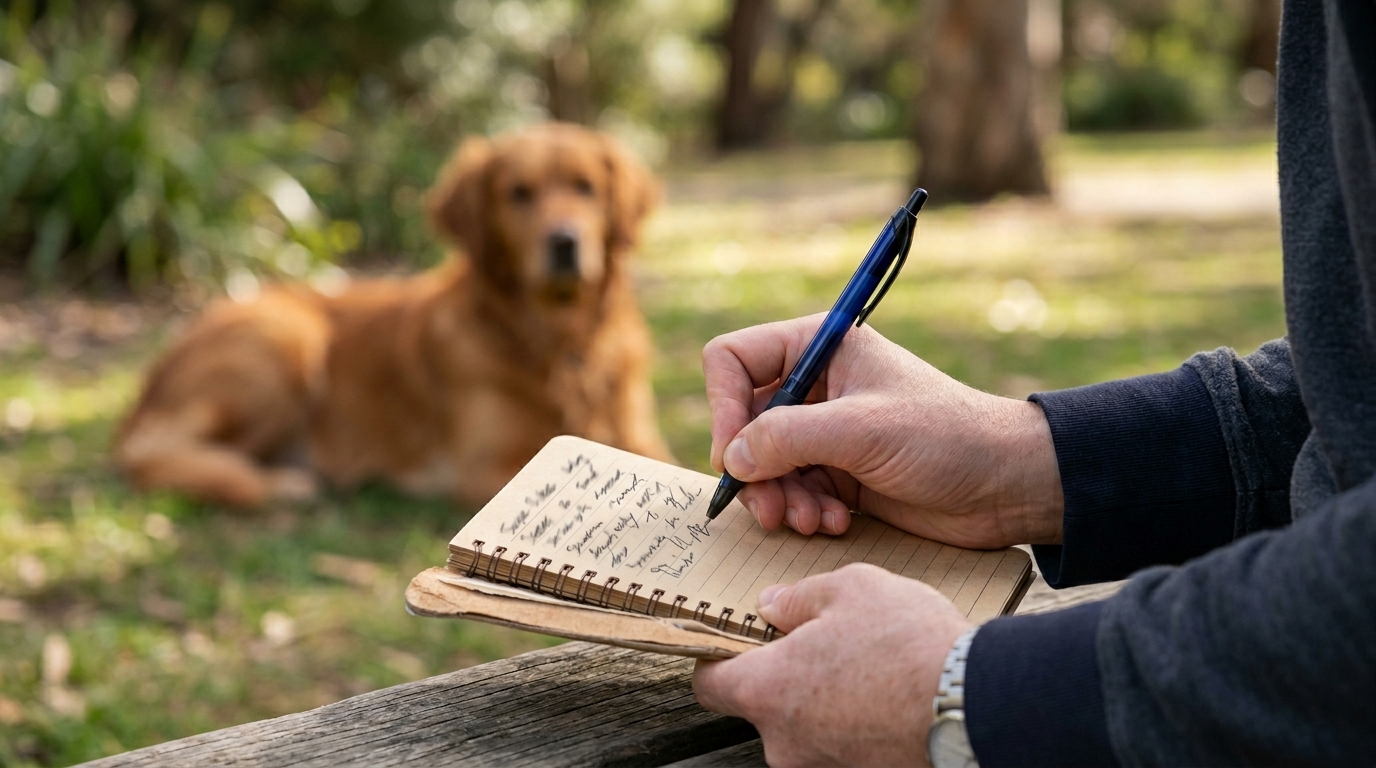
You don't need to track everything. The art is identifying the few specific things that genuinely matter for your individual dog or cat and tracking those reliably.
Core categories
Pain and stiffness patterns. How comfortable is your animal day-to-day? Is the morning bad? Evening bad? Both? Better or worse than last week, last month?
Movement and activity. What can they do? Walking distances tolerated, jumping behaviour, ability to navigate stairs or get up from rest, willingness to play, response to invitations to walk.
Sleep and rest. Quality of sleep, shifting positions, time spent resting, sleeping locations. Major changes here often signal underlying discomfort.
Eating and drinking. Appetite quality, willingness to come to the food bowl, water intake. Changes can reflect both arthritis-related issues (difficulty getting to the bowl, dental discomfort) and concurrent problems.
Engagement and behaviour. Are they interested in their normal activities? Family interaction? Toys? Routines? Withdrawal often signals chronic discomfort building.
Coat and self-care. Cats especially. Grooming quality, areas being neglected, general appearance of the coat.
Specific behaviours you've noticed. Whatever pattern matters for your individual animal. The dog who's stopped wanting to get into the car. The cat who's not using the windowsill anymore.
Cues tied to specific activities
Beyond general categories, there are specific behaviours worth watching that often reveal arthritis progression earlier than other signs:
For dogs:
- The pause before jumping into the car. Are they hesitating longer than they used to? Needing the ramp where they didn't before? Refusing entirely?
- The first 60 seconds of a walk. How stiffly are they moving when you first head out? Does this loosen up after a few minutes? Or persist?
- The greeting behaviour at the door. Has the enthusiastic greeting become more measured? Less standing up to greet?
- Getting up from rest. How smoothly do they rise? Multiple attempts? Compensating with front legs more than they used to?
- The reluctance to do specific things. Stopping mid-walk to turn home. Hesitating at thresholds. Avoiding particular surfaces.
For cats:
- The jumping calculation. Are they pausing before jumps they used to make easily? Choosing different routes up to favourite places? Stopping at certain spots entirely?
- The grooming pattern. Coat condition on the lower back, hindquarters, base of tail. Areas they can't reach.
- The litter tray behaviour. Getting in and out easily? Posturing comfortably inside? Going outside the tray?
- The bed-finding behaviour. Are they choosing warmer spots than they used to? Avoiding spots they previously liked?
- The interaction style. Coming to greet you? Tolerating being picked up? Engaging with play?
These specific behaviours often shift before more obvious signs appear. The dog who's stopped greeting you at the door for two months has been telling you something for two months. The cat who hasn't been on the windowsill since spring has been telling you something since spring.
Keeping track without it becoming a chore
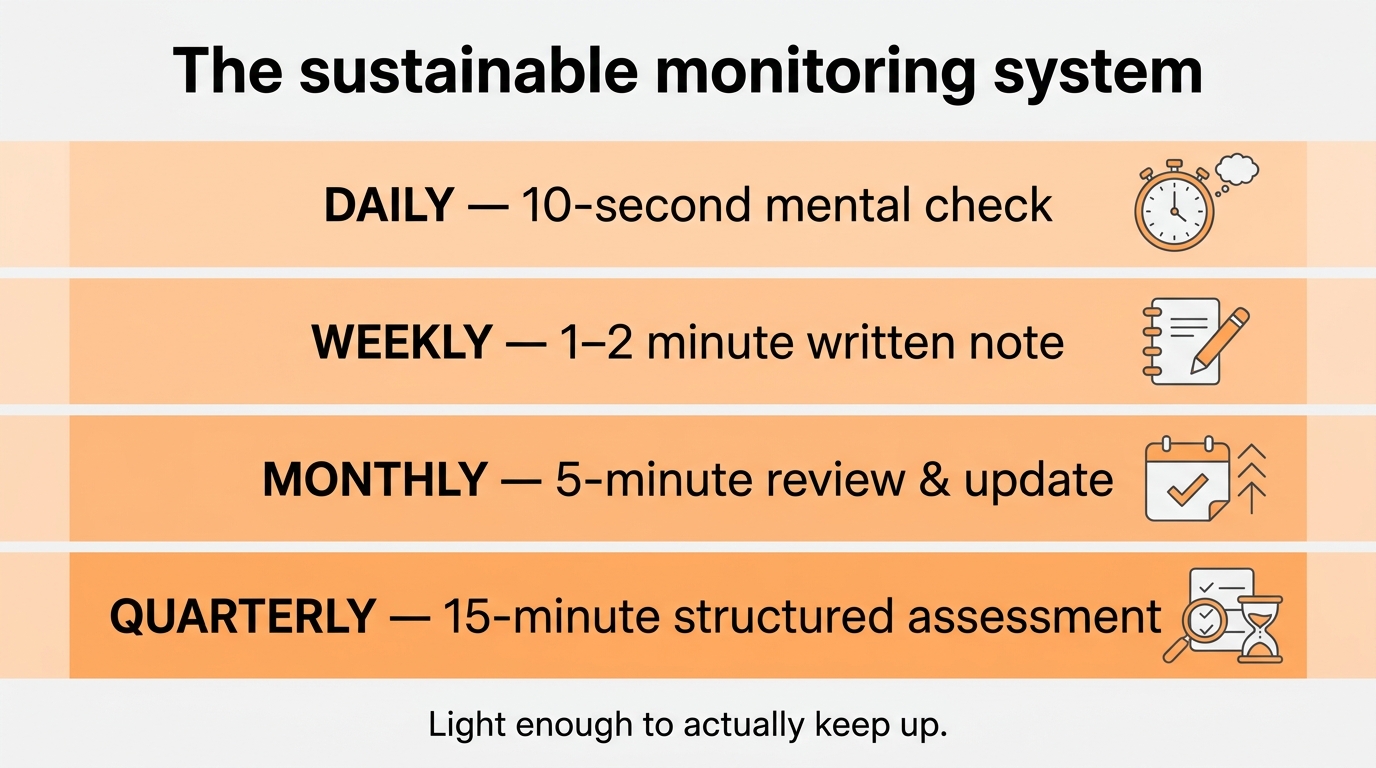
The temptation when you read about monitoring is to set up an elaborate spreadsheet, commit to daily entries, and then abandon it after two weeks because it's too much. Don't do this. The monitoring that gets done is the monitoring that's simple enough to sustain.
Three tiers of detail
I'd suggest tracking at three levels of detail:
Daily mental check-in (10 seconds). Just a quick mental note as you interact with your dog or cat. How are they today? Better, worse, same as yesterday? No writing required.
Weekly observation note (1 minute). Once a week, write a short note. Two or three sentences about how the week has been. Any specific events worth recording. Any concerns. This is the level most owners can sustain long-term.
Notable event capture (as needed). When something specific happens (a flare-up, a new behaviour, a concerning change) write it down properly with the date.
That's it. Daily, weekly, event-driven. Three to five minutes of writing per week and you have a record that's vastly more useful than memory.
Where to keep it
The format matters less than the consistency. Options:
A simple notebook by the kettle or somewhere you'll see it. Old-fashioned but it works. Easy to flip back through.
A note in your phone. Convenient if you're always with your phone. Easy to search later.
A dedicated app. Various pet health tracking apps exist. The best is whichever one you'll actually use.
The PetsLikeMine pet profile. Built specifically for this purpose, with structured fields for pain scores, observations, and care team information. Synced across your devices.
Whatever you choose, keep it accessible and don't make it too elaborate. The 30-second weekly note in a notebook is more useful than the elaborate database you stop updating after a fortnight.
A deeper look now and then
Every few months, do a more structured assessment alongside the lighter ongoing tracking. This is when you sit down and think more carefully about how things have been.
A structured assessment might cover:
Comparison to 3 months ago. Better, same, or worse on each of: pain levels, mobility, energy, engagement, sleep, appetite.
Current management satisfaction. Are you happy with how things are? What's working? What isn't?
Concerns. What worries you about how they are right now?
Goals for next 3 months. What would you like to see change or improve?
This kind of quarterly review naturally feeds into vet appointments and helps you bring useful information to consultations.
Using video for monitoring
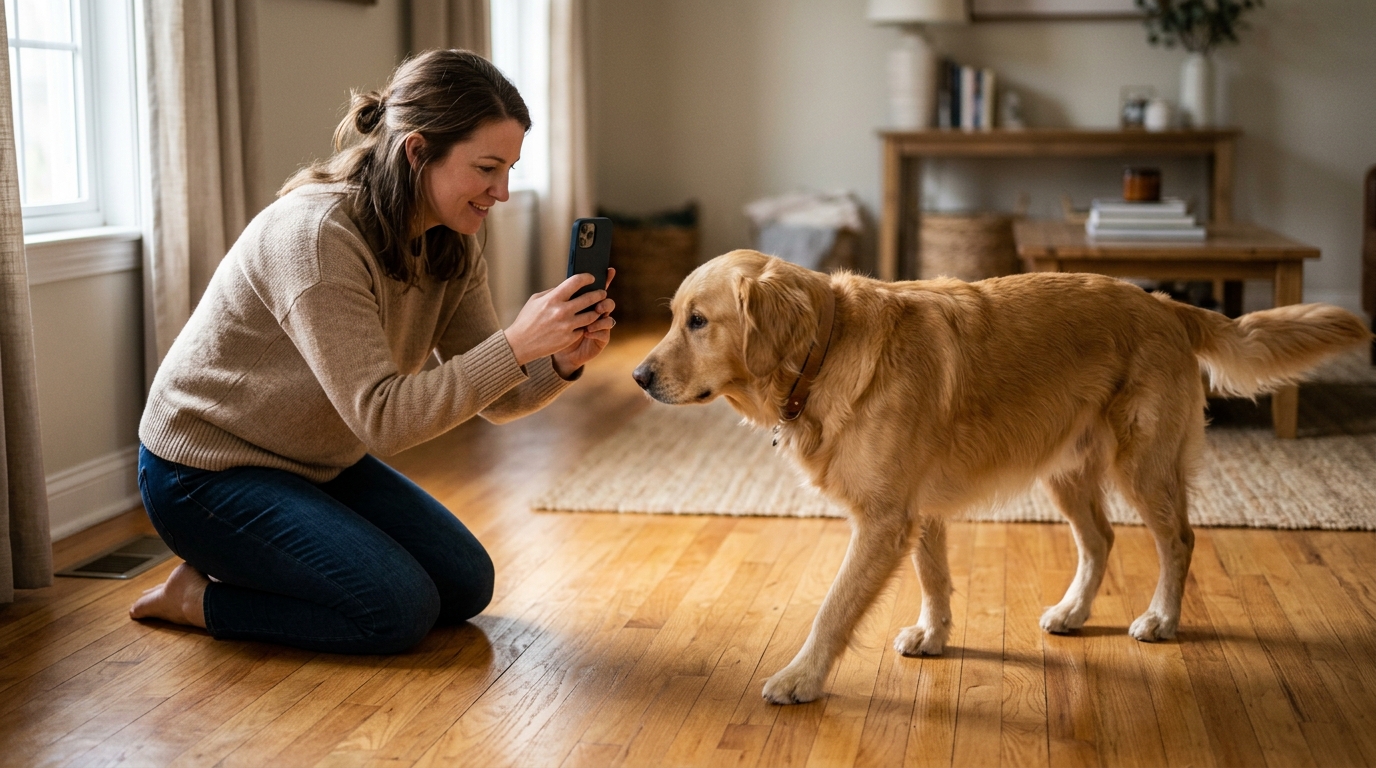
Video has become genuinely important for chronic disease monitoring. A 30-second clip of your dog walking, taken every month, gives you and your vet objective comparison material that memory simply can't match.
What to capture
The high-value clips:
Walking gait. 15-30 seconds of your dog walking on a flat hard surface (laminate floor works well; provides contrast for gait analysis). Both away from camera and toward camera if possible. Side view too.
Rising from rest. 15 seconds of your dog getting up from lying down. Capture the moment of transition; this often shows compensation patterns.
Stair navigation. If they use stairs, 15 seconds of them going up or down (down is often harder).
Specific concerns. If you've noticed a particular behaviour that worries you, capture it. The reluctance to jump into the car. The way they sit oddly. The hesitation before a specific movement.
For cats:
General movement around the house. Not always easy to capture, but a clip of them walking across a room, jumping, or navigating their environment is valuable.
Litter tray behaviour. Sensitive but useful. How they enter, how they posture, how they exit.
Grooming attempts. Watching them try to groom areas they can't reach is clinically useful information.
Keeping your videos organised
A few practical points:
Date the videos. Either in the filename or by recording a quick voice note at the start ("This is Bella, March 4th 2026"). This becomes important when comparing over months.
Create an album. Most phones let you create a dedicated photo/video album. Make one for your pet. All monitoring videos go there.
Capture monthly minimum. Even if nothing notable is happening, a monthly baseline clip is useful. Without it, when something changes you have no comparison.
Bring relevant clips to vet appointments. A specific 30-second video is often the most useful piece of information you can bring.
Where video reaches its limit
Smartphone video is genuinely useful for monitoring. It gives you and your vet objective material that memory can't match. But there's a limit to what the human eye can detect from video, even when reviewed carefully.
Peer-reviewed research has consistently shown that visual lameness assessment is unreliable. The Keegan and colleagues 2010 paper in Equine Veterinary Journal documented the repeatability problem in horses: even experienced clinicians disagree with each other and with themselves when grading mild lameness. The principle generalises to small animals. In the canine literature, Waxman, Robinson, Evans, Hulse, Innes and Conzemius showed in their 2008 Veterinary Surgery paper that subjective owner and veterinarian assessment of limb function correlates only moderately with objective force-plate measurements in dogs with experimentally induced lameness. The earliest signs of arthritis, the small changes that compound over months, the subtle gait asymmetries that precede visible limping, are by definition difficult to see with the naked eye. That's why they go missed.
This is the problem we built PAWSCHECK to address. PAWSCHECK, available at pawscheck.co.uk, uses smartphone video and AI-powered analysis to detect the small percentage gait changes that human observation routinely misses. Each report is reviewed by a UK RCVS vet before being returned. The output is a vet-reviewed gait analysis with biomechanical measurements, joint-by-joint assessment, and differential diagnoses where indicated.
For chronic disease monitoring, where the question is increasingly "is this treatment actually working?" rather than "what's going on?", objective gait analysis adds value that subjective observation can't easily match. Starting medication, recovering from surgery, beginning a new therapy: these are moments when you want to know whether what you're doing is producing actual change, not "she seems a bit better, I think."
I'm not suggesting every arthritic dog needs this kind of objective gait analysis. The structured notebook approach plus regular smartphone video plus the principles in this article will serve many owners well. But where measurement precision matters (post-surgical recovery, treatment optimisation, monitoring expensive interventions), objective gait analysis offers something subjective tracking can't.
Structured pain and quality-of-life assessment
Manual notebook tracking and video are good. Structured weekly assessment is better, because it ensures you capture the same dimensions consistently rather than whatever happens to come to mind on a given week. Standardised assessment also makes week-to-week comparison more meaningful, which is the whole point of monitoring.
Several validated veterinary assessment tools exist:
The Canine Brief Pain Inventory (CBPI), developed by Brown and colleagues at the University of Pennsylvania and validated in a 2007 American Journal of Veterinary Research paper, is the most widely used owner-completed pain assessment for chronic canine pain. It scores both pain severity and pain interference with normal life across multiple domains.
The Helsinki Chronic Pain Index (HCPI), developed by Hielm-Björkman and colleagues at the University of Helsinki and validated in a 2009 American Journal of Veterinary Research paper, is another validated owner-completed instrument widely used in canine OA research and clinical practice.
The Feline Musculoskeletal Pain Index (FMPI), developed by Benito and colleagues at North Carolina State University and validated in a 2013 Veterinary Journal paper, is the corresponding tool for owner-completed assessment of feline arthritic pain.
The Feline Grimace Scale assesses facial expression for acute pain in cats (covered in our pain recognition article).
The reality is that these tools are valuable when used, but most owners don't use them. The barriers are practical: where do you find them, how do you score them, where do you store the results, how do you visualise the trajectory over months? Without a structured way to capture and display the scores, the tools become another thing to start and abandon.
This is part of what we built Sightline for. Sightline (sightline.vet) is a separate ConciergeVet tool that operationalises structured pain and quality-of-life assessment in a way that's sustainable for owners. It asks an adaptive set of questions each week, tailored to your individual pet's species, age, and concerns, produces a composite Sightline Score with a visible trajectory over weeks and months, and can generate a clinical report you can share with your vet.
For owners caring for a pet whose disease has shifted into end-of-life territory, Sightline has a quality-of-life focus mode with daily check-ins, palliative-specific tools (including the JOURNEYS scale and the HHHHHMM Pawspice scale), and the ability for family members to follow along through a shared link.
I mention this because there's a genuine gap between the principle "monitoring matters" and the practical question "how do I actually do this in a way that doesn't fall apart after three weeks?" Notebooks work for some owners. Phone notes work for others. Structured tools work for owners who want the assessment built for them so they just have to answer the questions.
What matters is the consistency and the comparison over time, not which approach you choose.
How they look the next day
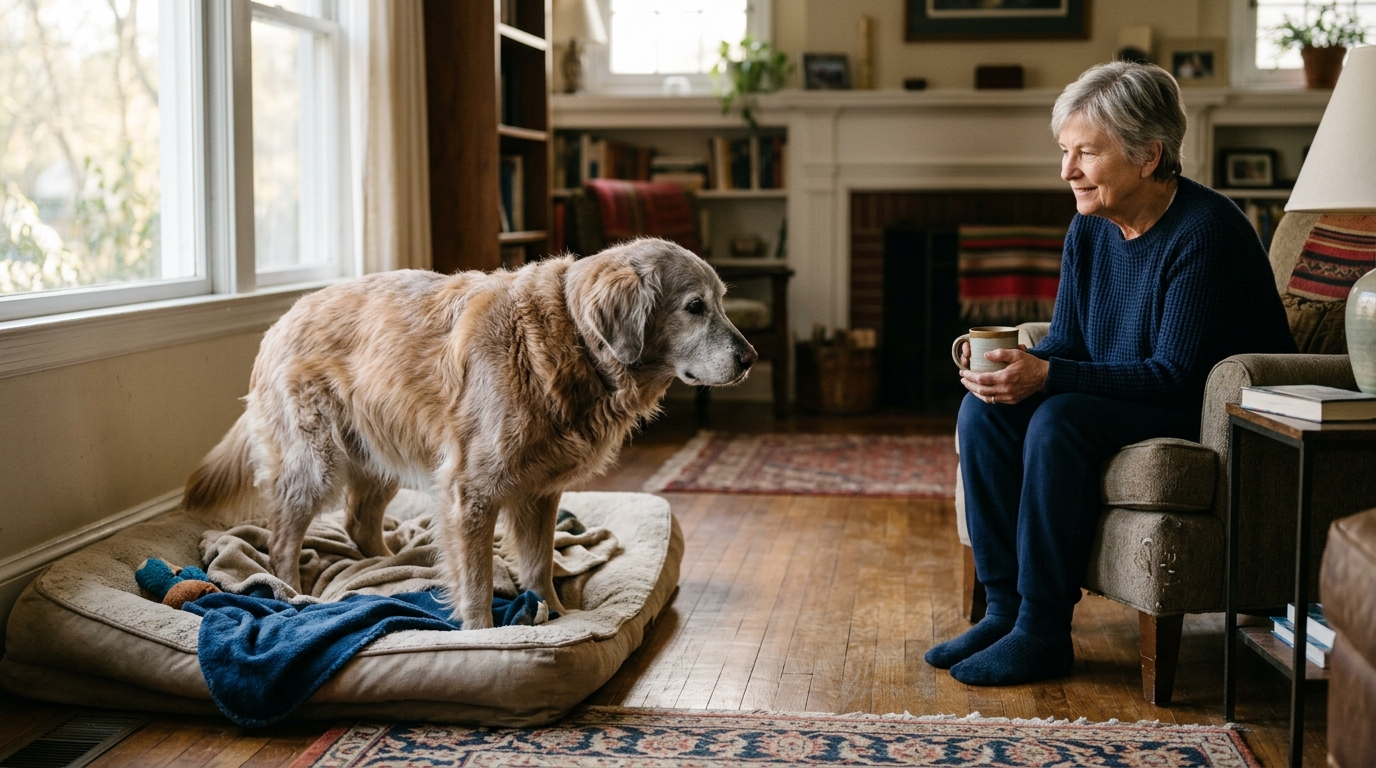
One specific monitoring principle is so consistently useful that it deserves singling out: the day-after assessment.
The idea is simple. After any specific activity or intervention, observe your dog or cat the next day. Their state 24 hours later tells you a lot about whether what you did was helpful, unhelpful, or about right.
Where it applies
After exercise. Did the morning walk leave them stiffer than usual the next morning? Or about the same? Or actually less stiff (which sometimes happens, particularly early in management)?
After hydrotherapy or physiotherapy sessions. Are they more comfortable the day after, or sore? Both are possible. The pattern tells you whether the dose is right.
After acupuncture. Most dogs are noticeably more comfortable the day after acupuncture, sometimes for several days. If you're not seeing that, the protocol may need adjusting.
After new medications. How do they look 24 hours into a new prescription? Side effects often appear in the first day or two.
After environmental changes. New ramp, new bed, new flooring. Did the change help them the next day?
After stress events. A long car journey, a visit from grandchildren, a fireworks night. Some dogs are stiffer for 24-48 hours after stressful events. Recognising this helps you support them through it.
Why it matters
The day-after assessment captures information that immediate observation misses. The walk that seemed fine at the time but produced significant soreness the next morning was actually too much. The hydrotherapy session that seemed tiring on the day but produced visible improvement next morning was the right dose.
Without the day-after habit, you make decisions based on what looked OK at the moment. With it, you make decisions based on what your animal actually tolerated.
For owners who want to formalise this slightly, a simple binary rating works: "Day after [activity/event]: Better / Same / Worse than expected." Build this into your weekly notes if it's useful.
Interpreting changes: what's normal and what isn't
Some changes are part of normal life with chronic disease. Others warrant veterinary attention. The art is in knowing which is which.
Normal variation
Things that happen normally and don't always need action:
Day-to-day pain fluctuation. Most arthritic animals have better and worse days. A bad day in isolation isn't usually a clinical event.
Weather-related changes. Cold, damp weather genuinely worsens arthritis symptoms for many animals. The day they're stiffer because it's been raining isn't always a deterioration.
Activity-related variation. Stiffer the day after a longer walk is biomechanically reasonable. The pattern matters; isolated events don't.
Mood and seasonal variation. Some animals are slower in winter than summer. Some have specific events that affect them (visits, fireworks, schedule changes).
Minor flare-ups that resolve within days. A 2-3 day spike in symptoms that returns to baseline usually doesn't warrant urgent attention. Note it in your records but don't necessarily phone the vet.
The principle: single events in isolation are usually not clinically significant. Patterns are.
Concerning changes
Things that warrant veterinary attention:
Sustained worsening over weeks. Not a bad day or a bad week, but a clear pattern that things are not as good as they were a month ago and not bouncing back.
Loss of previously preserved function. They stopped doing something they used to do reliably. Stopped greeting at the door. Stopped using the windowsill. Stopped wanting to come on walks. These specific functional losses are important.
New behaviours. Vocalising at night, hiding, sudden behavioural changes, new aggression when handled. These often signal pain or other illness building.
Changes outside the joints. Appetite loss, drinking more or less, sleep disturbance, weight loss, vomiting, diarrhoea. Arthritis isn't the only condition older animals can develop, and other problems often mimic or complicate joint disease.
Acute changes. Sudden non-weight-bearing on a limb. Acute pain reactions. Inability to rise. These are urgent and warrant prompt veterinary attention.
Lack of expected response. A new medication or therapy that doesn't produce the expected effect within the expected timeframe. This isn't an emergency but it's information that needs sharing with your vet.
Anything you genuinely worry about. Owner intuition is real clinical information. If something feels off in a way you can't articulate, that's worth a conversation with your vet.
The grey zone
Many changes don't fit neatly into either category. They might be normal variation, might be early deterioration, might be flare-ups, might be something new.
When you're not sure:
Watch over a week. Most genuine concerns persist or worsen; many normal variations resolve. A week of observation often clarifies the picture.
Phone the practice. Most UK vet practices accept phone queries from owners they know. A 5-minute conversation with a nurse or vet can often clarify whether to come in.
Document carefully. Even if you decide not to act immediately, write down what you observed. If it comes up again, you have specific notes.
Trust your judgement. You know your animal. Your instinct that something isn't right is usually accurate.
The cost of one extra vet appointment to investigate a concern that turns out to be nothing is small. The cost of missing genuine deterioration is large. When in doubt, err toward investigation.
When to act vs when to wait
Different patterns of change warrant different urgency.
Emergency: same day, urgent contact
Sudden inability to bear weight on a limb. Particularly in larger breeds, this may indicate acute injury including cruciate rupture or fracture.
Significant new pain in a previously stable animal. Vocalising, refusing to move, dramatic behavioural change.
Suspected adverse drug reaction. Vomiting, diarrhoea, bleeding, collapse following recent medication administration.
Acute deterioration in any system. Not specific to arthritis, but worth knowing. Difficulty breathing, collapse, seizures, severe pain.
Cats specifically: Sudden non-eating in cats is potentially urgent due to hepatic lipidosis risk. Male cats with urinary obstruction signs need same-day attention. Any sudden behavioural change in a previously stable cat warrants prompt assessment.
Same week: book appointment soon
Sustained worsening over recent weeks. Not bouncing back.
New medication or therapy that isn't working as expected. Adjustment may be needed.
Specific functional losses. Things they used to do that they've stopped doing for more than a week.
Side effects of medication that are bothersome but not dangerous. GI upset, lethargy, behavioural changes.
Persistent new behaviours. Hiding, vocalisation, withdrawal that doesn't resolve.
Next routine visit: note for discussion
Minor changes you've been tracking. Worth raising but not urgent.
Questions about long-term management. Treatment changes you've been considering.
Updates on home interventions. What's working, what isn't.
Routine review of plan. Periodic structured re-evaluation.
Communicating monitoring information
The value of monitoring depends on how well you communicate it to your veterinary team.
What to bring to appointments
The accumulated benefit of monitoring shows up in vet appointments. You bring:
Specific observations. "Over the past 6 weeks she's stopped greeting at the door, and last week she had three mornings where getting downstairs was difficult."
Time-bounded comparisons. "Compared to last visit she's roughly the same, but compared to six months ago she's noticeably slower."
Documented events. "She had a flare-up on March 10th that took about 4 days to settle."
Relevant video. 30-second clip of current movement vs one from six months ago.
Specific questions raised by monitoring. "I've noticed X. Is that something we should address?"
This kind of specific information enables specific clinical decisions in ways that vague impressions don't.
Between appointments
Don't hesitate to phone the practice with monitoring concerns. Modern UK practices generally welcome this; nurse-led phone consultations have become more common, and a 5-minute conversation can often resolve concerns or clarify next steps without requiring a full appointment.
When you phone:
- Have your notes ready
- Be specific about what you've observed and when
- Ask what they recommend
- Take notes on the response
The practice gets to know you as an engaged, careful owner over time. This serves your animal well.
Cat-specific monitoring considerations
Cat monitoring deserves specific attention because the dynamics are different from dogs.
What makes cat monitoring harder
They mask signs more effectively. A cat in significant discomfort may appear completely normal to casual observation.
Veterinary visits don't reveal what's happening. The cat at the vet is stressed, suppressed, and giving unreliable clinical information.
Owners often misattribute signs. "She's just got grumpy in her old age" is the standard misattribution of behavioural change driven by pain.
The signs are often subtle. Reduced jumping. Changed grooming. Litter tray difficulty. Withdrawal. Each easily dismissed individually.
What to do differently for cats
Pay particular attention to function rather than appearance. A cat who looks fine but has stopped jumping on the bed is telling you something. Don't dismiss it because they "look OK."
Watch the specific behaviours that change first. Jumping calculation. Grooming patterns. Litter tray behaviour. These shift before more obvious signs appear.
Use the Feline Grimace Scale principles. Even if you don't formally score, develop your eye for facial expression changes that may signal discomfort.
Take more video. Cats are particularly hard to assess clinically. Video of them moving around at home is more valuable for cats than for dogs because the clinical examination is less informative.
Trust gradual changes. When you find yourself saying "she just doesn't seem quite the same as she used to" without being able to articulate why, that's clinically significant. Don't dismiss it.
When ageing gets the blame
The biggest monitoring failure in cats is owners attributing real clinical changes to normal ageing. "Of course she's slower, she's 14." "She's just getting grumpier with age." "She doesn't play like she used to but she's an old cat."
These statements are sometimes true. They're also sometimes hiding genuine pain that could be treated. The default position should be that significant behavioural change in older cats warrants investigation. Treatable pain is too important to assume away.
Many of the cats I see whose pain is well-controlled were initially brought in for "she's just slowing down" type concerns by owners who half-expected to be reassured that everything was normal. The investigation found arthritis, treatment was started, and the cats transformed back into engaged, mobile creatures. That's the value of taking subtle changes seriously.
A practical monitoring routine
To make this concrete, here's what I'd suggest for a typical owner of an arthritic dog or cat.
Daily (10 seconds): Mental check-in. How are they today? Anything notable?
Weekly (1-2 minutes): Brief written note. Summary of the week. Any specific events. Any concerns. Photo or quick video if relevant.
Monthly (5 minutes): Update the pain score. Record current weight. Take a baseline video. Review the week notes from the past month.
Quarterly (15 minutes): Structured assessment. Compare to 3 months ago. Note progress, concerns, goals. Prepare for upcoming vet appointment.
Annually: Review the full year of records. Note overall trajectory. Plan for the year ahead.
Plus event-driven: Capture notable events (flares, changes, new interventions) as they happen.
This isn't onerous. The cumulative time is maybe 15-30 minutes per month, plus brief moments throughout. The clinical value it provides is enormous.
A final thought
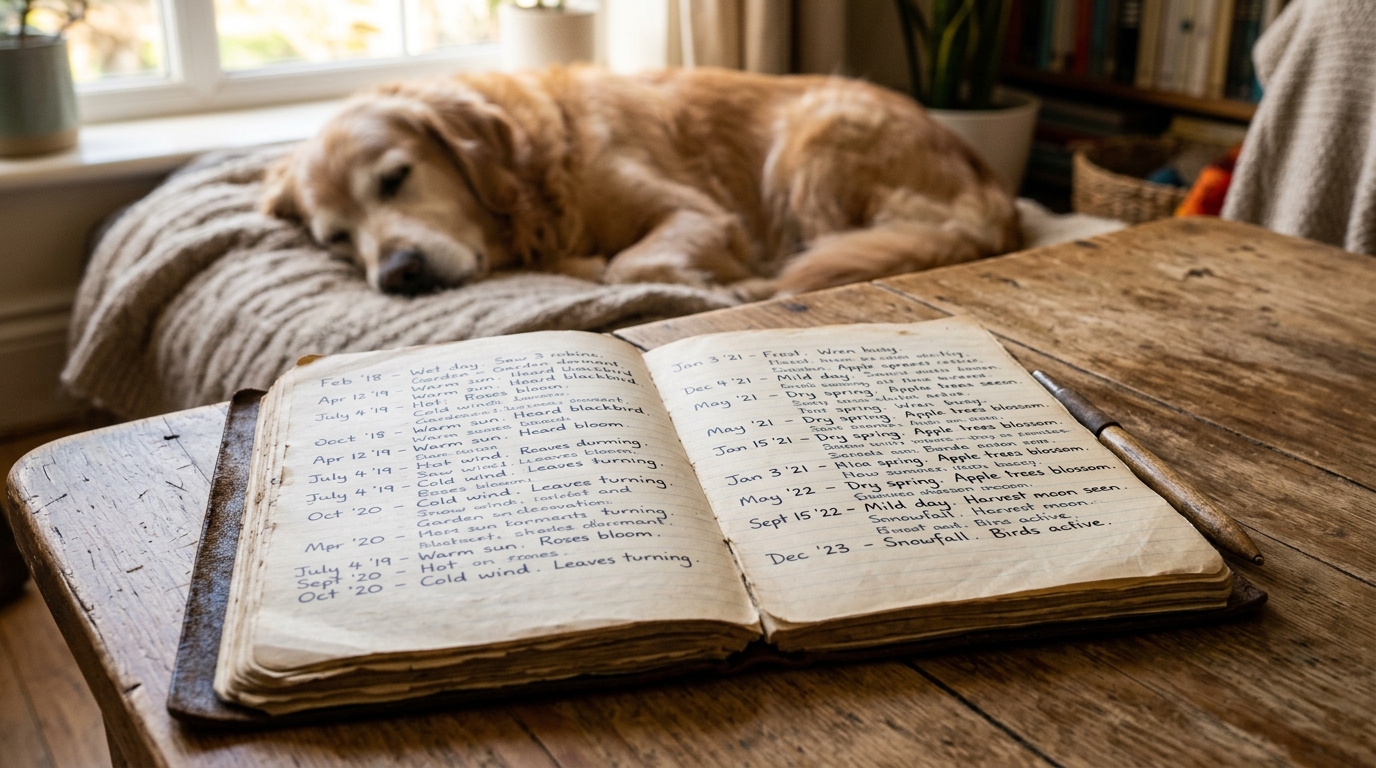
Twenty-five years of practice has taught me one consistent pattern: the owners whose animals do best are the careful observers. Not the ones with the most money for treatment, not the ones with the best vets, not the ones with the most resources. The ones who pay attention, notice changes, communicate them clearly, and engage thoughtfully with their veterinary team.
This is something every owner can become. It doesn't require veterinary training. It doesn't require expensive equipment. It requires the habit of looking thoughtfully at your animal and capturing what you see in a structured enough way to be useful later.
The information you gather about your arthritic dog or cat over the years of their chronic disease management is some of the most valuable clinical data that will inform their care. Better than any single test. More reliable than any single examination. More complete than any specialist consultation.
Start where you are. Pick a notebook, an app, or a notes file. Make a first entry today. Take a baseline video this weekend. Note any specific changes you've already observed. Build the habit gradually.
In six months you'll have a record. In two years you'll have a comprehensive history. In five years you'll have something genuinely transformative that's helped your animal receive better care than they would have received otherwise.
References
- Keegan KG, Dent EV, Wilson DA, et al. Repeatability of subjective evaluation of lameness in horses. Equine Veterinary Journal, 2010;42(2):92-97.
- Waxman AS, Robinson DA, Evans RB, Hulse DA, Innes JF, Conzemius MG. Relationship between objective and subjective assessment of limb function in normal dogs with an experimentally induced lameness. Veterinary Surgery, 2008;37(3):241-246.
- Brown DC, Boston RC, Coyne JC, Farrar JT. Development and psychometric testing of an instrument designed to measure chronic pain in dogs with osteoarthritis. American Journal of Veterinary Research, 2007;68(6):631-637.
- Hielm-Björkman AK, Rita H, Tulamo R-M. Psychometric testing of the Helsinki chronic pain index by completion of a questionnaire in Finnish by owners of dogs with chronic signs of pain caused by osteoarthritis. American Journal of Veterinary Research, 2009;70(6):727-734.
- Benito J, DePuy V, Hardie E, et al. Reliability and discriminatory testing of a client-based metrology instrument, feline musculoskeletal pain index (FMPI) for the evaluation of degenerative joint disease-associated pain in cats. The Veterinary Journal, 2013;196(3):368-373.
Free downloads
Companion worksheets to put what you've read into practice. Free PDFs, print at home.
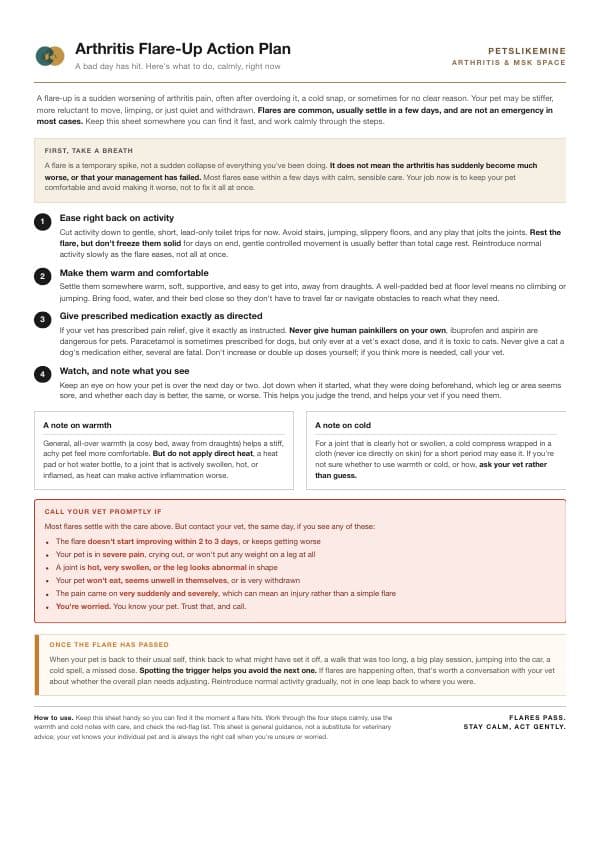
Arthritis Flare-Up Action Plan
PDF · 139 KBWhat to do when arthritis suddenly worsens. A calm, step-by-step plan for the first few days of a flare: ease back, keep them comfortable, give prescribed medication exactly as directed, and watch for the red flags that mean call the vet today. Flares are common and usually pass.
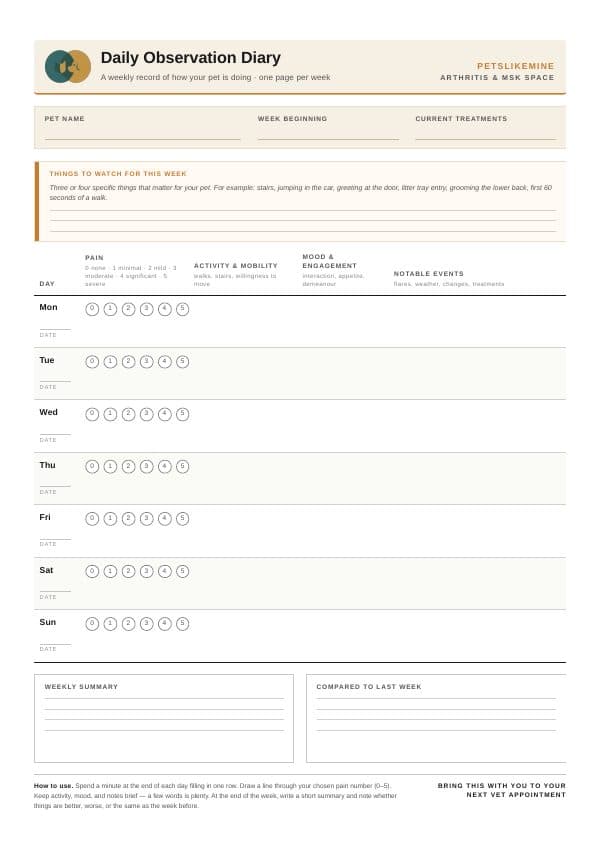
Daily Observation Diary
PDF · 354 KBA weekly record of how your pet is doing, one page per week. The small details that compound across months: stiffness on rising, willingness on walks, mood, appetite, and the moments your gut says something's shifted.
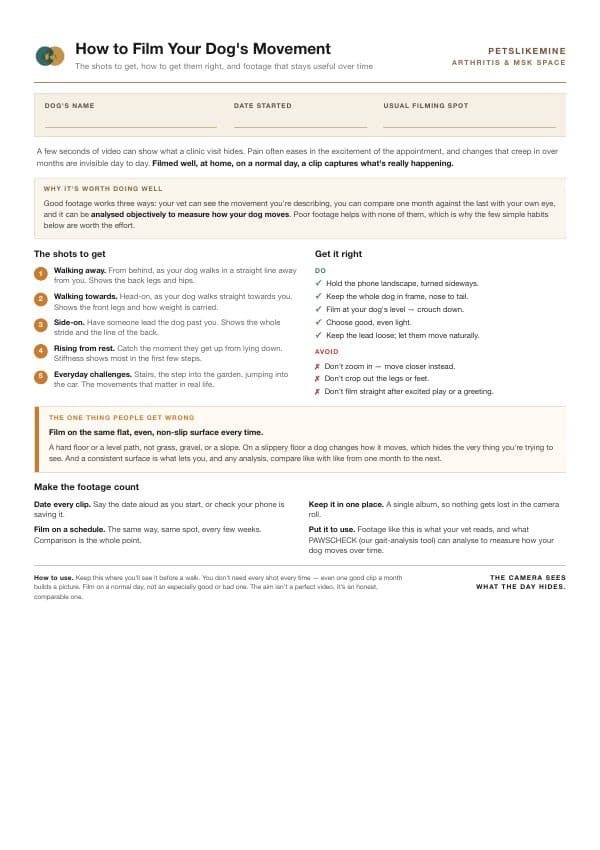
How to Film Your Dog's Movement
PDF · 127 KBA printable guide to capturing video your vet, and you, can actually use. The five shots that show how your dog really moves, how to get them right, and the one detail that makes or breaks the footage: the surface. Film on a normal day and the camera catches what a clinic visit often hides.
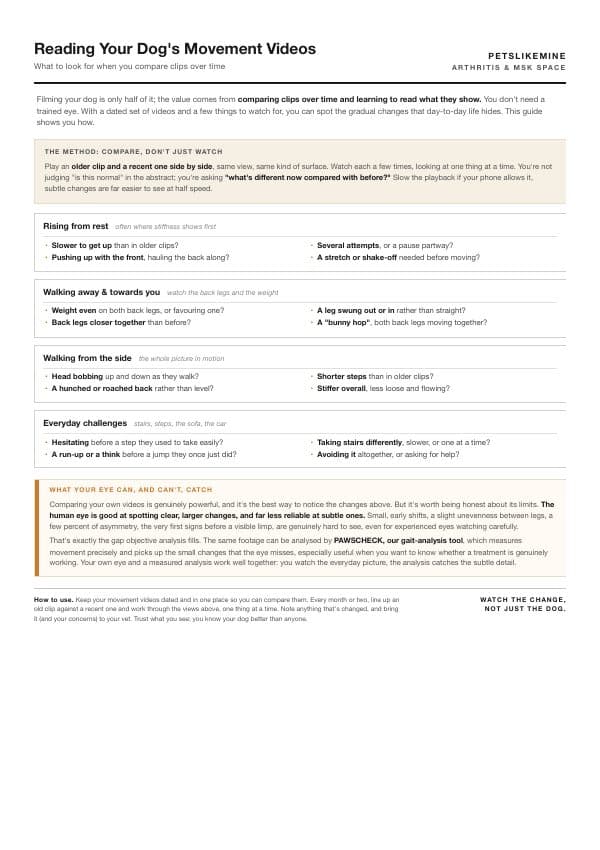
Reading Your Dog's Movement Videos
PDF · 89 KBThe companion to the filming guide: how to actually read the clips you have captured. Line up an older video against a recent one, watch one thing at a time across four everyday views, and spot the gradual changes day-to-day life hides. With an honest note on the subtle shifts the eye misses, and where objective gait analysis picks up.
Sister tool · Sightline
Track whether treatment is working
Sightline, a separate ConciergeVet tool, runs a short weekly check-in built on validated pain and mobility instruments, turns it into a single Sightline Score you can watch trend over weeks rather than judge on one bad day, and produces a report you can bring to your vet.
A written log, or our printable trackers, does much the same job.
See how Sightline tracks treatmentSee where your pet stands today
Tracking is the other half of managing arthritis. Take the 2-minute Mobility Check to see your pet's stage, then watch it shift as treatment takes effect.
Take the Mobility CheckYou're not doing this alone
Compare treatment journeys and talk to owners managing arthritis. Free to join.
Join PetsLikeMine