

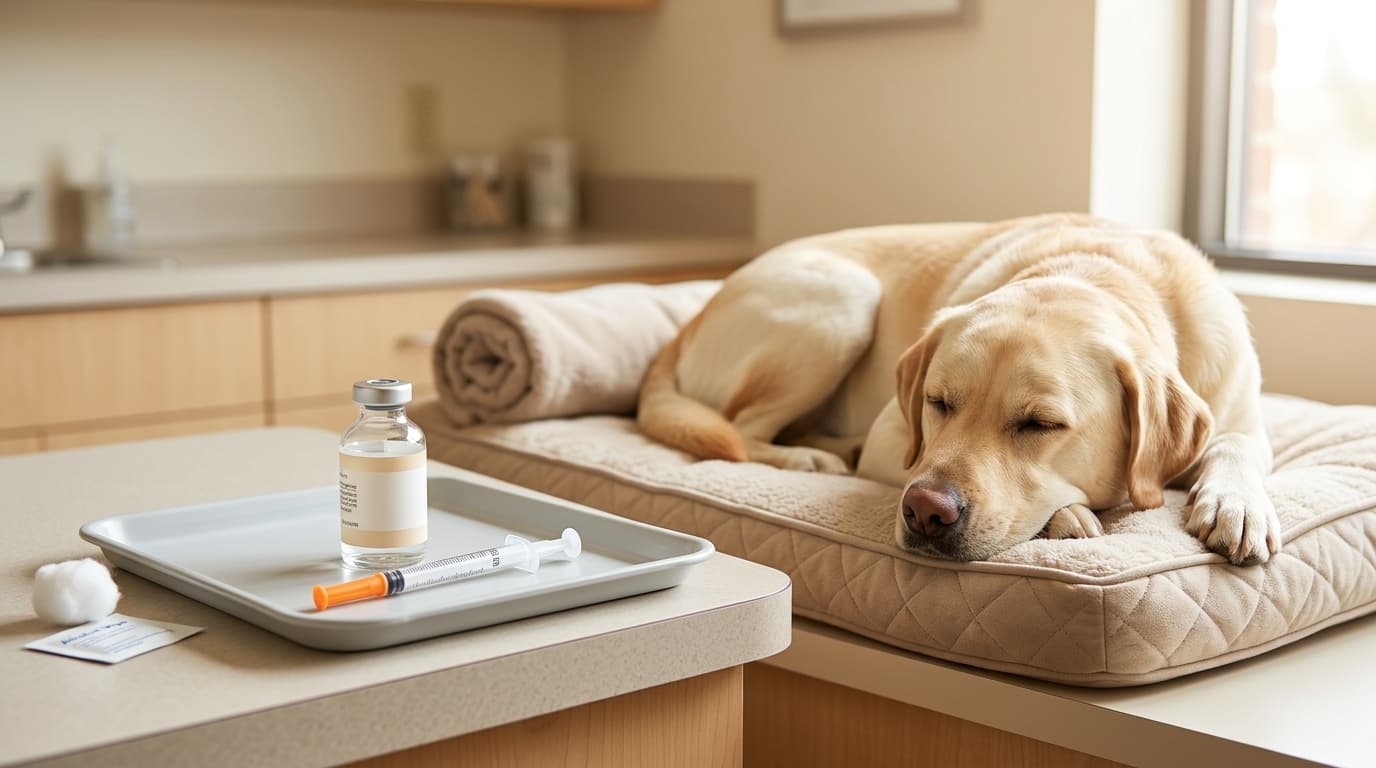
Librela: What You Need to Know
Alastair Greenway
BVM&S MRCVS
Librela is one of the most discussed veterinary medications of the past few years, and for good reason. When it launched, it represented a genuine breakthrough in canine arthritis pain management, offering a completely new mechanism of action and a different side effect profile from traditional NSAIDs. For many dogs, it has been transformative. For some dogs, it has been associated with concerning adverse events that have prompted ongoing safety reviews.
The internet is full of strong opinions in both directions. Some owners credit Librela with giving their dog years of comfortable life they otherwise wouldn't have had. Others blame Librela for serious deterioration in their dog's condition. Veterinary opinion ranges from enthusiastic endorsement to outright avoidance. And the scientific literature is still evolving as we accumulate real-world experience.
This article aims to give you a balanced picture. Not promotional content from the manufacturer. Not alarmist warnings from concerned owners. The actual state of the evidence, the legitimate questions, the real benefits, and the real concerns, all presented so you can make an informed decision about whether Librela is right for your dog.
If you have a dog with arthritis, this is one of the most important medication conversations you'll have with your vet, so it's worth understanding properly.
What Librela actually is
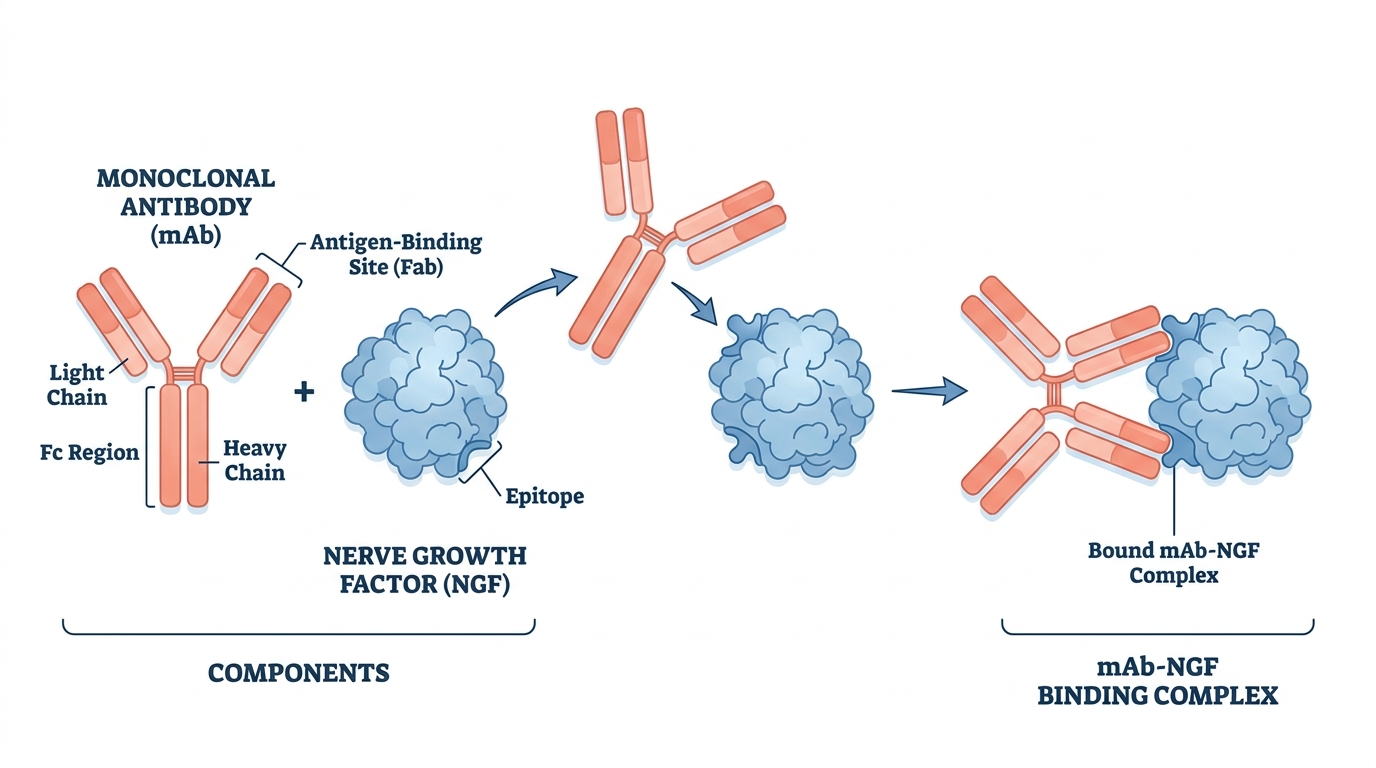
Librela (active ingredient: bedinvetmab) is a monoclonal antibody therapy. To understand what that means, it helps to know a bit about how monoclonal antibodies work.
Antibodies are proteins your immune system normally makes to recognise and neutralise specific targets, like bacteria, viruses, or other foreign substances. A monoclonal antibody is a designed, manufactured antibody that targets one specific molecule, with extraordinary precision. Modern medicine has used monoclonal antibodies to treat cancers, autoimmune diseases, and other conditions in humans for over two decades. They've revolutionised treatment of many human conditions.
Librela was developed by the veterinary pharmaceutical company Zoetis as a monoclonal antibody specifically designed to target a protein called nerve growth factor (NGF) in dogs. The antibody binds to NGF in the dog's body and prevents it from doing what it would otherwise do.
NGF is a signalling molecule that's involved in maintaining and amplifying pain in chronic conditions like arthritis. In a healthy joint, NGF levels are low. In an arthritic joint, NGF levels increase, and this increase sensitises nerves in the area to pain signals. The chronic pain of arthritis is partly driven by ongoing NGF activity, which keeps the pain system in an active state even when the actual joint damage isn't progressing dramatically.
By neutralising NGF, Librela interrupts this pain amplification. The nerves become less sensitive. The pain signals quieten down. In many dogs, the result is dramatic improvement in comfort and mobility.
The drug is given as a monthly subcutaneous injection at the veterinary clinic. It can't be self-administered at home, partly because it requires correct dosing by weight, and partly because monoclonal antibodies need to be stored and handled carefully.
How it differs from traditional NSAIDs
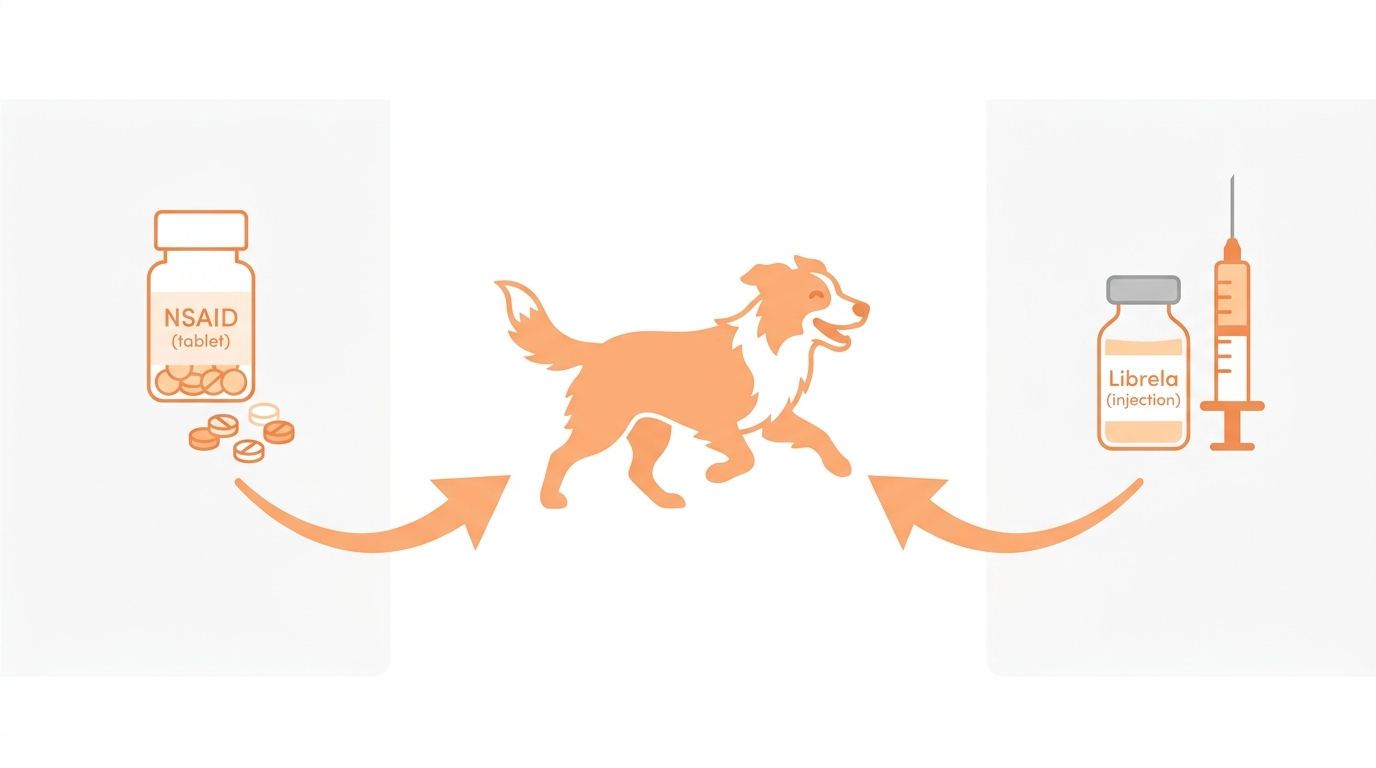
To understand Librela's place in the arthritis toolkit, it helps to compare it directly with traditional NSAIDs like meloxicam or carprofen.
Mechanism:
- NSAIDs block enzymes (COX-1 and COX-2) that produce inflammatory chemicals throughout the body
- Librela binds to and neutralises one specific protein (NGF)
Effect on inflammation:
- NSAIDs are genuinely anti-inflammatory drugs. They reduce swelling, heat, and the inflammatory cascade
- Librela primarily reduces pain signalling. It's not classified as an anti-inflammatory in the traditional sense
Route and frequency:
- NSAIDs are typically oral medications given daily
- Librela is a monthly injection given at the vet clinic
Side effects profile:
- NSAIDs can affect the kidneys, liver, and gastrointestinal tract. Blood monitoring is required for long-term use
- Librela doesn't act on those organs in the same way, so it can be used in dogs where NSAIDs would be problematic. However, it has its own distinct adverse event profile (discussed in detail below)
Onset:
- NSAIDs typically produce noticeable improvement within hours to days
- Librela's effects build over 7-14 days after the first injection, with full effect usually visible by the second or third monthly dose
Cost:
- Modern NSAIDs cost approximately £10-30 per month for a medium-sized dog
- Librela costs approximately £60-90 per monthly injection in UK practice
Convenience:
- NSAIDs need daily administration, which some dogs (and some owners) struggle with
- Librela requires a monthly vet visit but no daily medication
Neither is strictly "better." They serve different roles, and many dogs do best on a combination.
What the original trials showed
Librela was approved by the European Medicines Agency in 2020 and the US FDA in 2023. The approval was based on clinical trials that demonstrated meaningful improvements in pain and mobility in dogs with osteoarthritis.
The original pivotal study (Corral et al., 2021) was a prospective, randomised, blinded, placebo-controlled study across multiple veterinary clinics. Dogs with diagnosed osteoarthritis received either Librela or a placebo injection monthly. Outcomes were measured using validated owner-reported pain scales, clinical examination findings, and quality of life assessments.
The dogs receiving Librela showed significantly greater improvements in pain scores, function, and quality of life compared to those receiving placebo. The effects were generally seen by day 7-14 after the first injection and maintained or improved with subsequent monthly doses. Adverse events in the trial were predominantly mild and typically transient.
Those trial results were enough to secure regulatory approval, and Librela came to market with a strong evidence base for short-term efficacy.
What real-world use looks like at its best
For many, many dogs, Librela has worked exactly as the trials suggested it would. The pattern most veterinarians have seen is striking: dogs who were stiff, withdrawn, and clearly uncomfortable on NSAIDs alone come back to life on Librela. Owners describe their dogs "becoming themselves again," resuming activities they'd given up, sleeping better, engaging more.
Let me be clear about this. In my own practice, I've seen Librela transform dogs whose pain wasn't being adequately controlled by other approaches. Older dogs, particularly, who couldn't tolerate NSAIDs because of kidney issues but who were clearly suffering, have had their final years made significantly more comfortable by Librela. That's a real benefit, and it shouldn't be lost in any subsequent discussion of risks.
Here are the specific situations where Librela has been most valuable in real-world practice:
Dogs who can't tolerate NSAIDs. Dogs with renal disease, liver disease, or significant gastrointestinal sensitivity, for whom NSAIDs aren't an option, have a real alternative for chronic pain management.
Older dogs with multiple health issues. When the medication picture is already complex, a once-monthly injection that doesn't interact with kidneys, liver, or stomach can simplify management.
Dogs whose pain wasn't well controlled on NSAIDs alone. Adding Librela to existing NSAID therapy, or switching to Librela, has produced better pain control for many dogs.
Owners who struggle with daily medication. Twice-daily tablets work in theory but not always in practice. A monthly injection removes the compliance issue.
Cases of central sensitisation. Because Librela works on the pain signalling itself rather than on the inflammation, it has theoretical and practical advantages for dogs whose chronic pain has become entrenched in their nervous system.
For these dogs and these owners, Librela has been a genuine step forward.
What the post-marketing safety data shows
Since Librela came to market, regulatory bodies have been actively monitoring adverse events. Over time, this monitoring has revealed patterns that weren't fully apparent in the original clinical trials. That isn't unusual for any new medication. Pre-approval trials, however well designed, involve relatively small numbers of dogs over relatively short periods, and real-world post-marketing surveillance reveals the full picture.
In December 2024, the US FDA issued what's called a "Dear Veterinarian Letter" notifying veterinarians of adverse events that had been reported in dogs treated with Librela. By the time of the letter, the FDA's Center for Veterinary Medicine had received over 3,600 case reports linked to Librela. Some of the most frequently reported adverse events included:
- Ataxia (loss of coordination, with the dog appearing wobbly or drunk)
- Seizures
- Paresis (weakness or partial paralysis)
- Recumbency (inability to stand or move normally)
- Urinary incontinence
- Polyuria and polydipsia (increased thirst and urination)
- Death, including euthanasia, as an outcome in some cases
Notably, several of the most frequently reported signs (including ataxia, which appeared in roughly 17% of cases) weren't on the original product labelling. The FDA letter also noted that two-thirds of cases reported clinical signs occurring within the first week of administration, with 30% within the first day. Signs were observed after the initial dose in 70% of the reported cases.
The letter was a regulatory action prompted by the volume and seriousness of reported events. It wasn't a withdrawal of the product, but it was a clear signal that the safety profile was more complicated than originally understood.
Separately, the European Medicines Agency has been conducting its own pharmacovigilance review, and academic researchers have published analyses of adverse event reporting from European sources. A 2025 paper by Farrell et al. in Frontiers in Veterinary Science used the EudraVigilance database to analyse musculoskeletal adverse events specifically. The paper reported a significantly elevated rate of serious musculoskeletal adverse events in dogs treated with bedinvetmab compared to six other osteoarthritis medications. These events included ligament and tendon injuries, polyarthritis, fractures, musculoskeletal neoplasia, septic arthritis, and what's been called "rapidly progressive osteoarthritis" or accelerated joint destruction.
The concern about accelerated joint destruction has historical context. Anti-NGF monoclonal antibodies were investigated in humans for osteoarthritis pain in the 2010s. The human trials showed efficacy but were affected by reports of rapidly progressive osteoarthritis in some patients, where joints deteriorated unusually quickly. This human experience contributed to anti-NGF drugs not being approved for routine use in human osteoarthritis pain. Whether similar effects might occur in some dogs has been one of the key ongoing concerns about Librela.
The picture is complicated by the response from Zoetis and other researchers. Zoetis has published its own pharmacovigilance data, with the 2025 paper noting that the most commonly reported adverse events following the distribution of over 18 million doses of bedinvetmab are considered rare or very rare. There has also been significant scientific debate about the methodology of the Farrell et al. paper, with subsequent commentaries (some Zoetis-funded, some independent) raising questions about the analysis. This is a genuinely active area of scientific debate.
Weighing it up for your own dog
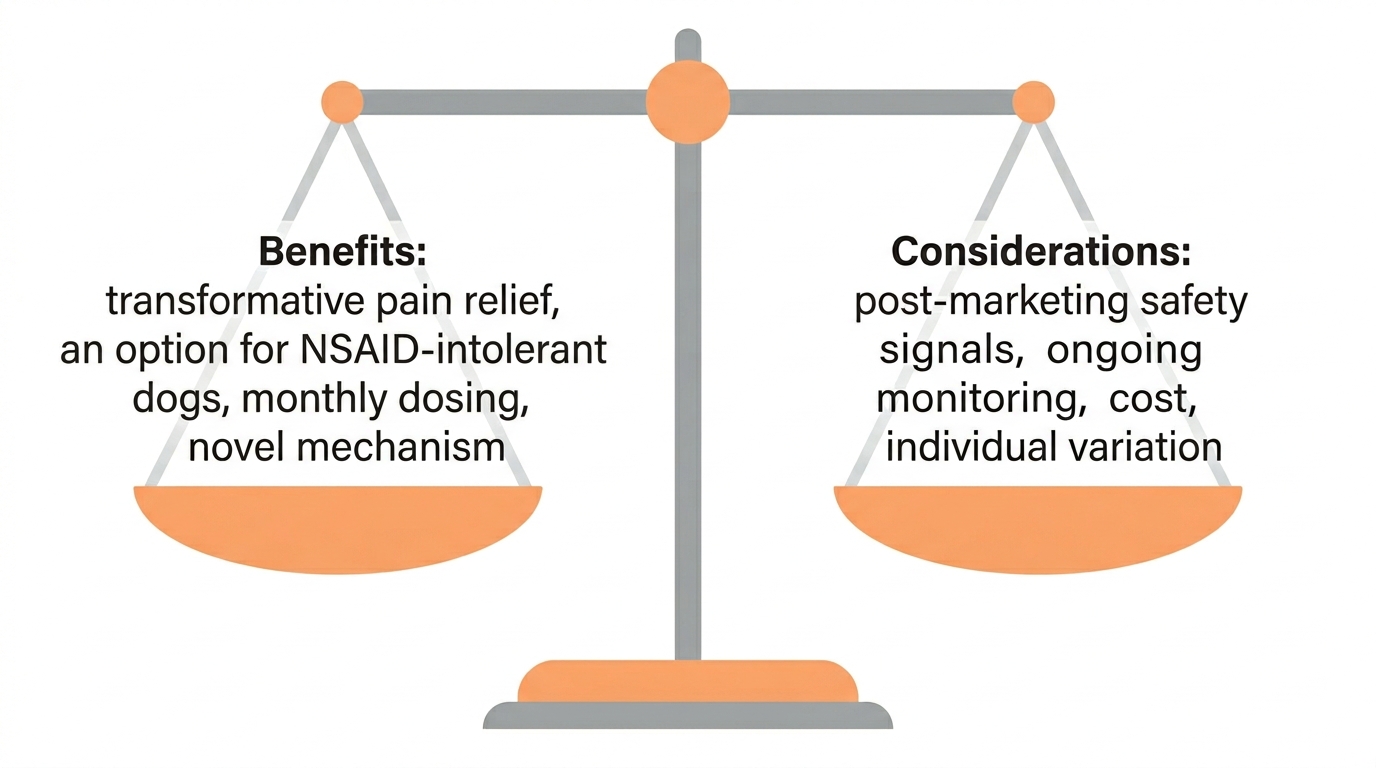
Reading the above might feel alarming, so let me put it in context.
Over 18 million doses of Librela have been administered globally. The total number of adverse event reports, while concerning in absolute numbers, represents a small percentage of total doses given. Many of the most concerning events are considered rare or very rare according to standard veterinary pharmacovigilance definitions.
That said, "rare" doesn't mean "doesn't happen." For an individual dog who experiences a serious adverse event, the population statistics offer little comfort. And the cumulative evidence has been significant enough to prompt regulatory action and ongoing scientific review.
The practical question for any individual dog owner is this: how do I weigh up the very real potential benefits against the potential risks?
There's no single right answer. It depends on:
The severity of your dog's pain. A dog with severe pain that isn't being controlled by other means has a different risk-benefit calculation than a dog whose pain is moderate and could be managed adequately with NSAIDs.
Other available options. A dog who can take NSAIDs effectively may not need to take on the Librela risk profile. A dog who can't tolerate NSAIDs has fewer alternatives.
Concurrent health issues. Dogs with neurological conditions, those who are already weak or unsteady, or those with significant other diseases may have a different risk profile.
Age and life expectancy. The discussion is different for a 12-year-old dog with limited remaining time than for a 5-year-old dog who will potentially be on treatment for many years.
Your own risk tolerance. Some owners feel strongly about minimising any possible adverse drug effects. Others prioritise pain control above all else. Both perspectives are legitimate.
Having the conversation with your vet

If you and your vet are considering Librela for your dog, these are the questions worth discussing:
Why Librela specifically? What's the case for this drug over the alternatives in your dog's situation? Is it because NSAIDs aren't an option, because NSAIDs haven't worked well enough, because of convenience, or something else?
What are the alternatives? Have you tried optimised NSAID therapy first? What about adjuncts like gabapentin or amantadine? What about multimodal approaches with weight management, exercise modification, and complementary therapies?
What's the expected benefit? Realistically, what improvement should you be looking for? Some dogs are transformed, others see modest improvement, others don't respond. Setting expectations matters.
What's the trial period? How will you decide whether it's working? When will you reassess? What would prompt stopping?
What warning signs should I watch for? Specifically, what should prompt me to contact you between injections? Knowing what to watch for is empowering.
Are there reasons we shouldn't try this in my dog? Are there factors in my dog's history or current condition that make Librela a higher-risk choice?
What's the cost and commitment? Both financially and practically, what am I signing up for?
A good vet will engage seriously with these questions. If you feel rushed or pressured into a decision either way, slow down. This is a significant medication choice and it deserves proper consideration.
If your dog is already on Librela and doing well
If your dog has been on Librela for some time and is responding well without obvious adverse effects, the picture is reassuring. The most concerning adverse events tend to occur in the first few doses. Dogs who have tolerated several doses without incident are demonstrating that they're not in the subset who react badly.
Continuing Librela in a dog who's responding well is a reasonable decision. Monitoring should continue, and any new concerning signs should prompt prompt contact with your vet. But you don't need to panic and stop treatment because of media coverage of adverse events that haven't affected your dog.
The risk-benefit balance for a dog who is benefiting from Librela without complications is generally favourable to continuing. Your dog is more comfortable. They're moving better. They're engaging with life. These are real benefits.
If your dog is starting Librela
For dogs about to start Librela, a careful first injection and close monitoring afterwards is the sensible approach.
Monitor closely after the first injection. The first week is the most common time for adverse events. Pay close attention to your dog's coordination, alertness, mobility, eating, drinking, and toileting. Take a baseline video of your dog walking before the injection so you have something to compare to.
Don't ignore subtle changes. Wobbliness, weakness, unusual sleepiness, change in toileting habits, or any unexplained deterioration in the days after the injection warrants a phone call to your vet. Better to report and be reassured than to wait and miss something.
Set an evaluation point. Agree with your vet at what point you'll assess whether the treatment is working. Typically, after the second or third monthly injection is reasonable.
Track response objectively. Use a pain diary, video clips, or specific markers (how far they walk, whether they can jump onto the sofa, how stiff they are in the morning). Subjective impressions are easy to bias in either direction, both ways: an owner who's hoping for a transformation will see one before it's really there, and an owner who's worried about adverse events will see decline that isn't real.
If you'd like a more structured option, this is exactly the question we built Sightline for. Sightline (sightline.vet) is a separate ConciergeVet tool that produces a single tracked pain and quality-of-life score from a short weekly assessment, so the before-injection and after-injection picture is on the same scale rather than competing impressions. A simple written log does much the same job. The important thing is to commit to some before-and-after comparison rather than relying on memory.
If your dog has had a possible adverse event
If your dog has experienced concerning signs after starting Librela, please take this seriously:
-
Contact your vet promptly. Don't wait for the next scheduled appointment if your dog has developed new neurological signs, weakness, severe lethargy, or other significant changes.
-
Report the event. In the UK, your vet can report adverse events to the Veterinary Medicines Directorate. This contributes to ongoing safety monitoring and helps build the picture of what's happening at population level.
-
Don't continue Librela without veterinary review. If there's any suggestion that an adverse event is occurring, the next dose shouldn't be given without thorough reassessment.
-
Be specific in your description. "He's not himself" is harder to evaluate than "since the injection he's been unsteady on his back legs, stumbling on stairs, and seems weaker getting up."
Where the science is going
This story is still being written. Ongoing pharmacovigilance data will continue to clarify the safety profile. Academic research will continue to investigate whether the concerning signals represent true causal effects or other explanations. Regulatory bodies will continue to monitor and may update guidance as the picture becomes clearer.
What seems likely is that Librela will continue to have a role in canine arthritis management, but perhaps a more carefully targeted role than the enthusiastic early adoption suggested. The drug genuinely helps many dogs. It also genuinely doesn't suit some dogs. The skill is in identifying which is which, which is exactly what good clinical decision-making is supposed to do.
The bigger picture

Librela is a medication with both significant benefits and meaningful risks. That's not unusual in medicine, veterinary or human. Most powerful drugs have meaningful side effect profiles. The question is whether the benefits outweigh the risks for the individual patient.
For some dogs, the answer is clearly yes. For others, it's clearly no. For many, it's a careful judgement made in conversation between an attentive owner and a thoughtful vet.
Give yourself permission to make that judgement carefully. To ask questions. To not feel pressured in either direction by online opinions or marketing materials. To insist on understanding what you're agreeing to before agreeing to it.
Your dog's comfort matters. So does their safety. Both can be optimised through good information, good clinical decision-making, and ongoing communication with your vet. Librela can be part of that, but it needs to be the right choice for the right dog at the right time.
If you've had an experience with Librela, positive or negative, the community in the Arthritis & MSK space wants to hear about it. Shared experience helps every owner make better-informed decisions for their own dog.
References
- European Medicines Agency. Librela (bedinvetmab): summary of product characteristics. Marketing authorisation, 2020.
- US Food and Drug Administration, Center for Veterinary Medicine. Dear Veterinarian Letter notifying veterinarians about adverse events reported in dogs treated with Librela (bedinvetmab), December 2024.
- Corral MJ, Moyaert H, Fernandes T, et al. A prospective, randomized, blinded, placebo-controlled, multisite clinical study of bedinvetmab, a canine monoclonal antibody targeting nerve growth factor, in dogs with osteoarthritis. Veterinary Anaesthesia and Analgesia, 2021.
- Farrell M, Waibel FWA, Carrera I, et al. Musculoskeletal adverse events in dogs receiving bedinvetmab (Librela). Frontiers in Veterinary Science, 2025;12:1581490.
- Monteiro BP, Simon A, Knesl O, et al. Global pharmacovigilance reporting of the first monoclonal antibody for canine osteoarthritis: a case study with bedinvetmab (Librela). Frontiers in Veterinary Science, 2025;12:1558222.
- Brunke MW, Dewey CW. Commentary: Musculoskeletal adverse events in dogs receiving bedinvetmab (Librela). Frontiers in Veterinary Science, 2025;12:1628681.
- Simon A, Monteiro BP, Knesl O, Werts A. Commentary: Musculoskeletal adverse events in dogs receiving bedinvetmab (Librela). Frontiers in Veterinary Science, 2025;12:1663398.
Sister tool · Sightline
Track whether treatment is working
Sightline, a separate ConciergeVet tool, runs a short weekly check-in built on validated pain and mobility instruments, turns it into a single Sightline Score you can watch trend over weeks rather than judge on one bad day, and produces a report you can bring to your vet.
A written log, or our printable trackers, does much the same job.
See how Sightline tracks treatmentSee where your pet stands today
Tracking is the other half of managing arthritis. Take the 2-minute Mobility Check to see your pet's stage, then watch it shift as treatment takes effect.
Take the Mobility CheckYou're not doing this alone
Compare treatment journeys and talk to owners managing arthritis. Free to join.
Join PetsLikeMine