

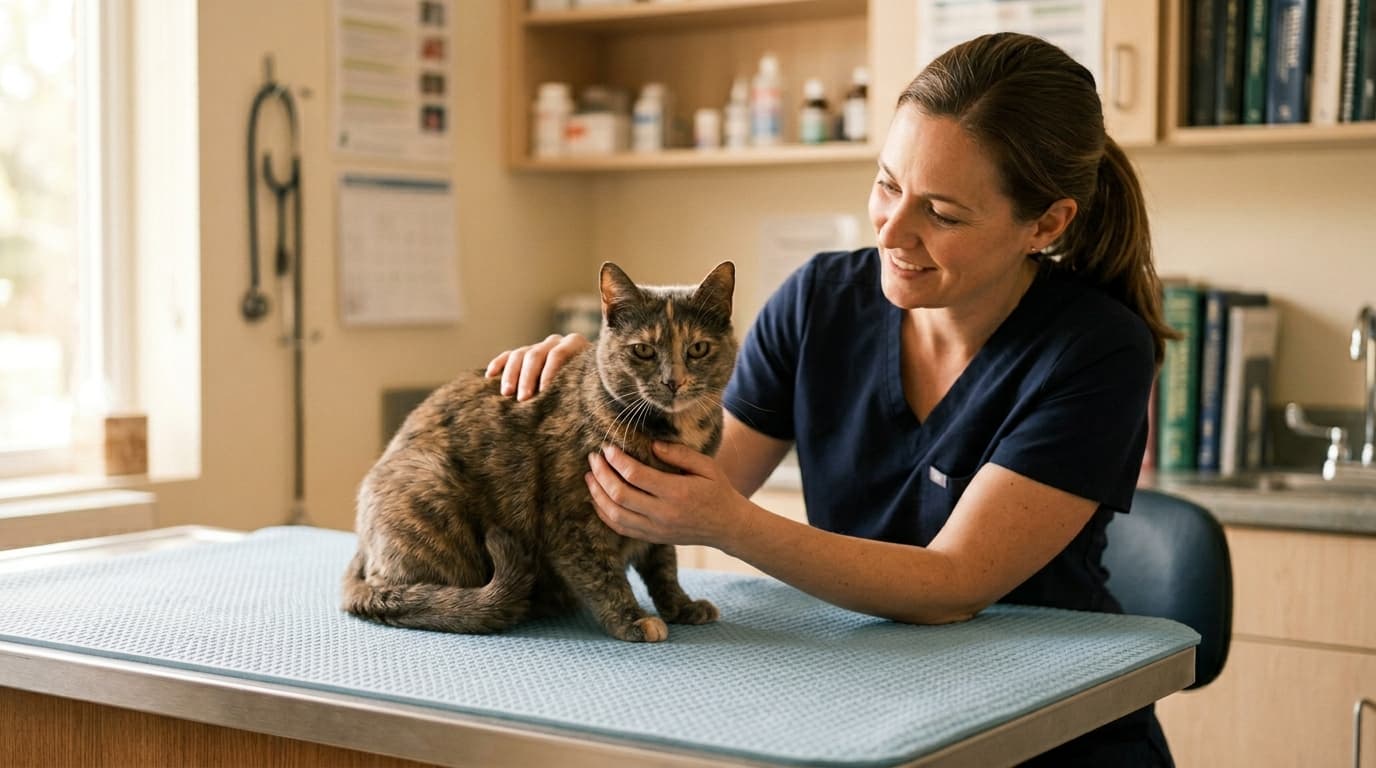
The Cat-Friendly Vet Visit: Getting a Real Picture of a Stoic Patient
Alastair Greenway
BVM&S MRCVS
A frightened cat on a cold steel table will not limp, will not play, and will not show you the stiffness you see every day at home. The vet examines the cat in front of them, and that cat is not your cat. So this article is about getting a visit that produces a real assessment: reducing the stress that hides everything, and bringing the evidence the consult room cannot generate.
I see this constantly, and it frustrates owners enormously. You know your cat is struggling. You have watched them stop jumping onto the windowsill, seen them hesitate at the stairs, noticed the matted fur over their back. You bring them in, and the cat that comes out of the carrier is a tense, flattened, wide-eyed creature who sits rigid on the table and shows none of it. The exam comes back unremarkable, and you go home feeling unheard, with your cat no better off.
Why a normal exam can miss arthritis
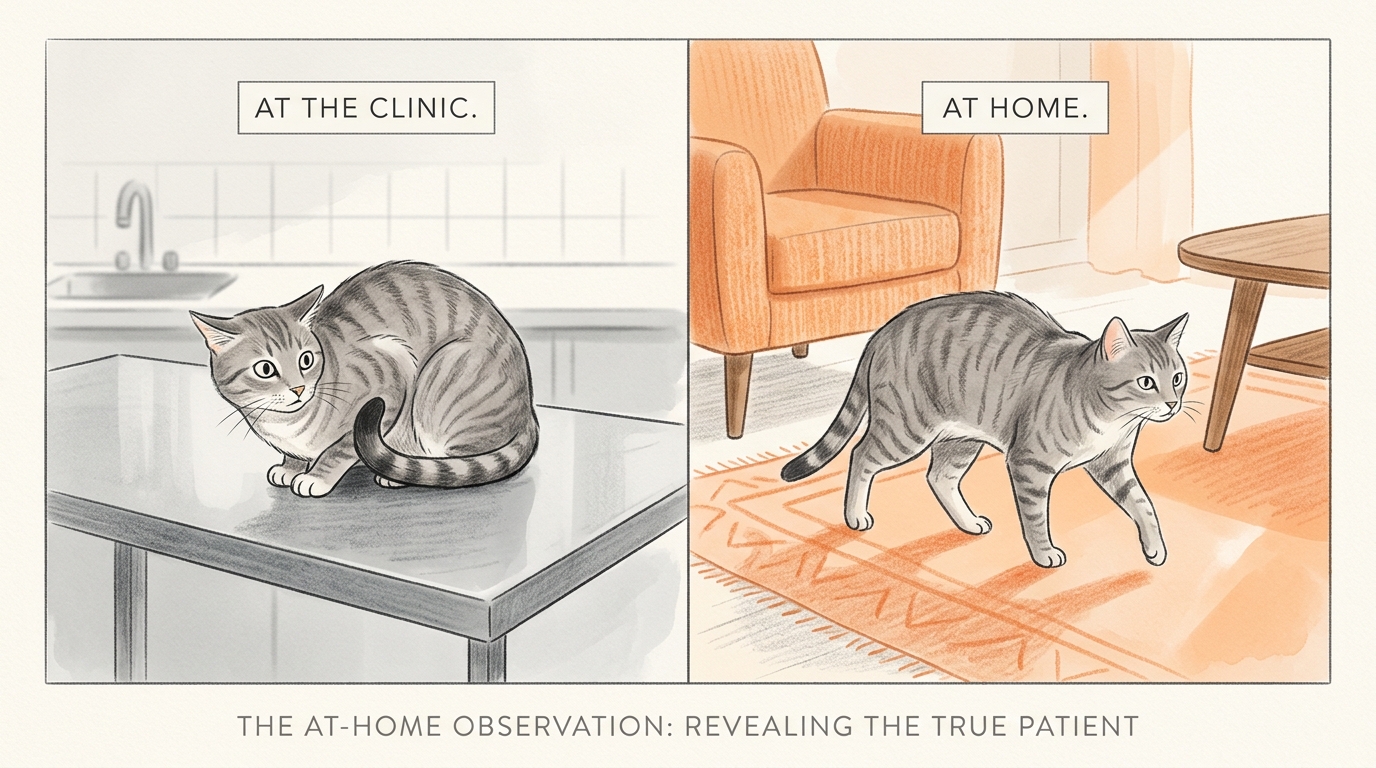
Cats are masters at hiding pain, and a veterinary visit turns that instinct up to maximum. Fear and the adrenaline that comes with it actively suppress the very signs we are looking for. A stressed cat tenses every muscle, freezes, or tries to hide, and a cat in that state simply will not move the way they do at home. The subtle stiffness, the reluctance, the altered gait, all of it can vanish under the flood of stress hormones.
This has a vital consequence that every owner should understand: a normal-looking clinic exam does not rule out arthritis. The cat we meet on the table is not the cat you live with, and the absence of visible signs in that frightened animal tells us much less than people assume. Nobody is at fault here; it is simply the nature of cats. But it is exactly why lowering the stress and bringing home evidence matter so much. They are how we get past the stoic mask to the real patient underneath.
Pre-visit calm: gabapentin before the appointment
One of the most useful changes in feline practice in recent years is the routine use of a single dose of gabapentin before a vet visit. It has genuinely transformed difficult appointments.
The evidence is good. A randomised, blinded trial gave cats with a history of stress or difficult behaviour either gabapentin or a placebo before their visit, and found that the gabapentin meaningfully reduced signs of stress during both transport and examination, and made the cats easier and calmer to handle. In the study, owners gave the dose roughly 90 minutes before putting the cat in the carrier.
Be clear about what this is and is not. The aim is not to dope your cat into oblivion. It is to take the edge off the fear enough that the real cat can be assessed, the genuine stiffness can show, and the exam can actually tell us something. You should expect some mild sedation and a bit of wobbliness, that is the medicine working, and it wears off. One practical note worth mentioning, especially given how often arthritic cats also have kidney disease: cats with reduced kidney function clear gabapentin more slowly, so the dose is often reduced in those cats. As with anything, the dose and suitability are for your vet to decide, but it is well worth asking about if your cat finds visits distressing.
Getting them there: the carrier and the journey
The appointment effectively begins the moment the carrier comes out, and a bad journey sets a tone that is hard to recover from. A cat who arrives already terrified is much harder to settle and assess.
A few things help a great deal. Leave the carrier out at home as normal furniture, not a box that only appears before dreaded trips, so it stops being a warning sign. Make it a nice place with a familiar blanket inside. On the day, cover the carrier with a towel to make it a dark, secure den, which most cats find far calmer than seeing the world rush past. Synthetic pheromone sprays in the carrier can help some cats settle. And a carrier that opens from the top, as well as the front, is genuinely worth having, because it lets the cat be lifted out gently, or even examined while still sitting in the base, rather than being dragged out of a front hatch. These small things change how the cat arrives, and how the cat arrives shapes the whole visit.
Choosing and using a cat-friendly practice
Not all veterinary settings are equally suited to cats, and it is entirely reasonable to seek out one that is. There is a formal accreditation for this: the Cat Friendly Clinic scheme, run by the International Society of Feline Medicine, recognises practices that have made specific changes to reduce feline stress. In practice this can mean separate feline waiting areas away from barking dogs, staff trained in low-stress handling, quieter wards, and an overall approach designed around how cats actually experience the clinic.
What the accreditation does not do is guarantee a perfect visit for every cat, and it is worth describing it accurately rather than overclaiming. But it is a genuine signal that a practice has thought seriously about feline stress, and if your cat finds visits hard, it is reasonable to seek out a cat-friendly practice, or simply to ask your own practice for the low-stress measures, a quiet room, minimal waiting, gentle handling, that make the biggest difference. Asking for these things is not being a difficult client; it is helping us do a better job for your cat.
What to bring: the home evidence
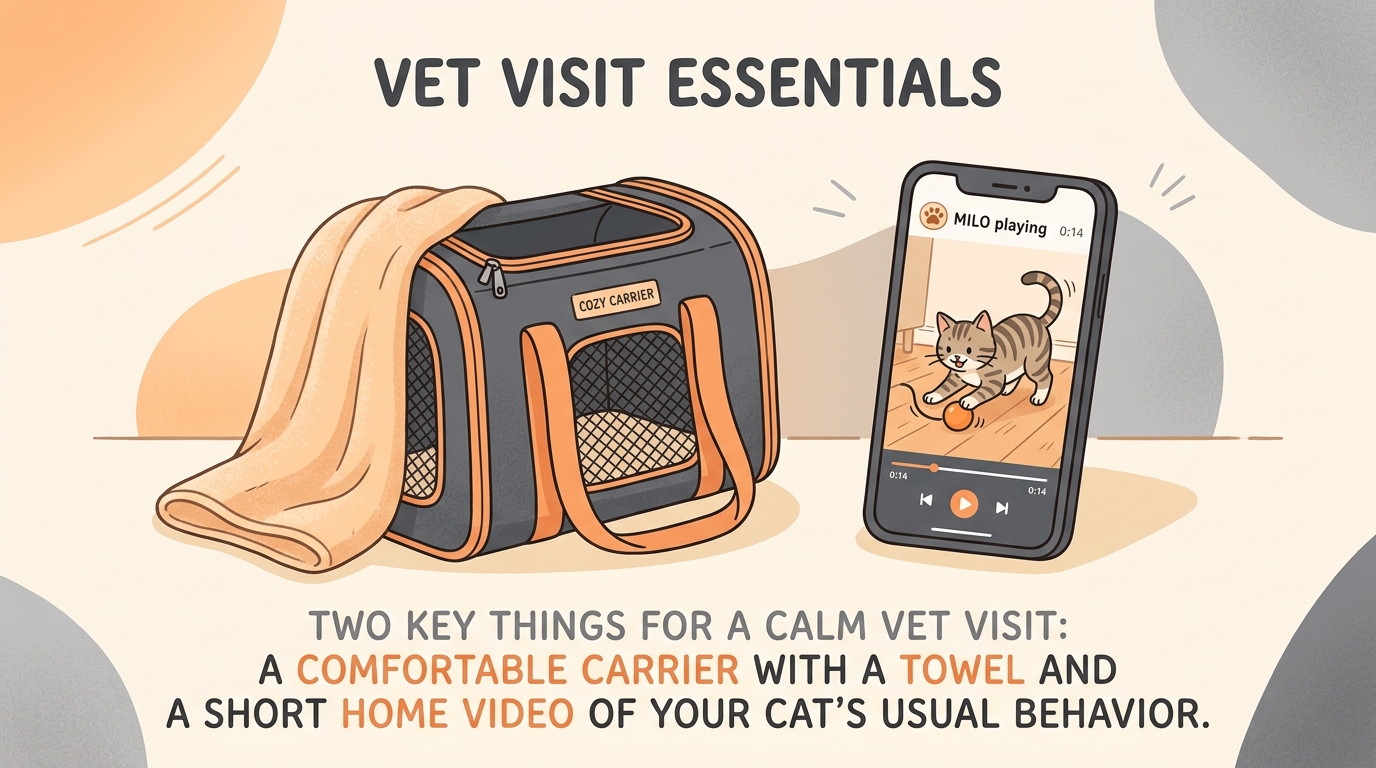
To my mind this is the single most valuable thing an owner can do, and it directly solves the stoic-patient problem. If the cat on the table will not show us the signs, bring us the signs from home.
The most useful thing of all is short phone videos. A clip of your cat jumping up or, tellingly, choosing not to; a clip of them on the stairs; a clip of them walking away from the camera; a clip of them getting in and out of the litter tray. These few seconds of real footage from home can tell us more than the entire physical exam of a frightened cat, because they show the actual patient living their actual life. Alongside the videos, bring notes on what you have noticed: changes in jumping, grooming, litter-tray habits, sleeping, sociability, and a completed screening checklist if you have been using one. We cover what to record, and how, in our article on monitoring your cat at home, and that home record is exactly what turns a vague worry into something we can act on.
This home evidence is the diagnostic the consult room cannot produce. Please do bring it. It changes appointments.
During the consultation
A few things during the consultation itself help us get a true assessment.
Let the cat settle before anything happens; a few minutes to come out of the carrier in their own time, ideally in a quiet room, is well spent. Ask for them to be assessed on a non-slip surface, a towel or mat rather than bare steel, so a stiff cat is not scrabbling for grip and tensing further. Where it suits the cat, examination on the floor or on your lap can be far more productive than on the table. Minimal restraint is the modern approach: a cat held down hard becomes more frightened and less assessable, not less. And do ask questions, what the vet is feeling for, what they make of the home videos, what the options are. A good feline vet will welcome all of this. The goal we share is to see past the mask to the cat underneath, and a calm cat, gently handled, with home evidence to hand, is one we can actually assess.
After the visit
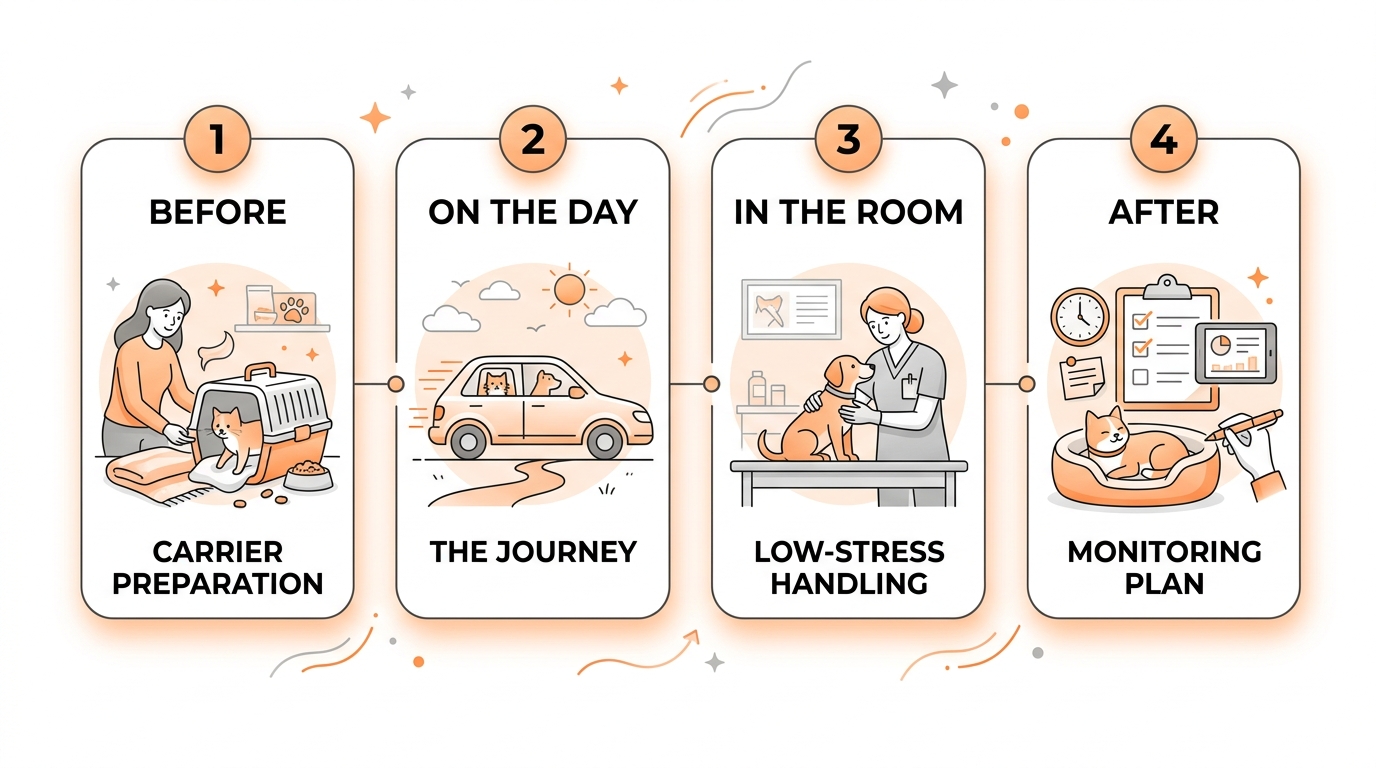
A productive visit should end by setting up the next one to be even better. Before you leave, agree a plan: what to monitor at home, what would prompt an earlier return, and when the next check should be. That way the next appointment builds on this one rather than starting cold, and the home monitoring between visits becomes the thread that ties the whole picture together. Arthritis is a long condition, managed over years, and the visits are most useful when each one stands on the evidence gathered since the last.
The overarching message is simple. The frightened cat on the table is not the cat you need us to assess, so do two things: lower the fear, with a calm journey, a calm practice, and a pre-visit dose if your vet advises it, and bring the real cat with you, in the form of videos and notes from home. Do those two things, and a visit that might have produced a shrug and an "I can't see anything wrong" instead produces a real assessment, and real help, for the cat you actually live with.
References
- van Haaften KA, Forsythe LRE, Stelow EA, Bain MJ. Effects of a single preappointment dose of gabapentin on signs of stress in cats during transportation and veterinary examination. Journal of the American Veterinary Medical Association, 2017.
- Rodan I, Sundahl E, Carney H, et al. AAFP and ISFM feline-friendly handling guidelines. Journal of Feline Medicine and Surgery, 2011.
- Taylor S, St Denis K, Collins S, et al. 2022 ISFM/AAFP Cat Friendly Veterinary Interaction Guidelines: approach and handling techniques. Journal of Feline Medicine and Surgery, 2022.
Sister tool · Sightline
Track whether treatment is working
Sightline, a separate ConciergeVet tool, runs a short weekly check-in built on validated pain and mobility instruments, turns it into a single Sightline Score you can watch trend over weeks rather than judge on one bad day, and produces a report you can bring to your vet.
A written log, or our printable trackers, does much the same job.
See how Sightline tracks treatmentSee where your pet stands today
Tracking is the other half of managing arthritis. Take the 2-minute Mobility Check to see your pet's stage, then watch it shift as treatment takes effect.
Take the Mobility CheckYou're not doing this alone
Compare treatment journeys and talk to owners managing arthritis. Free to join.
Join PetsLikeMine