

Recognising Pain in Cats: Even Harder Than Dogs
Alastair Greenway
BVM&S MRCVS
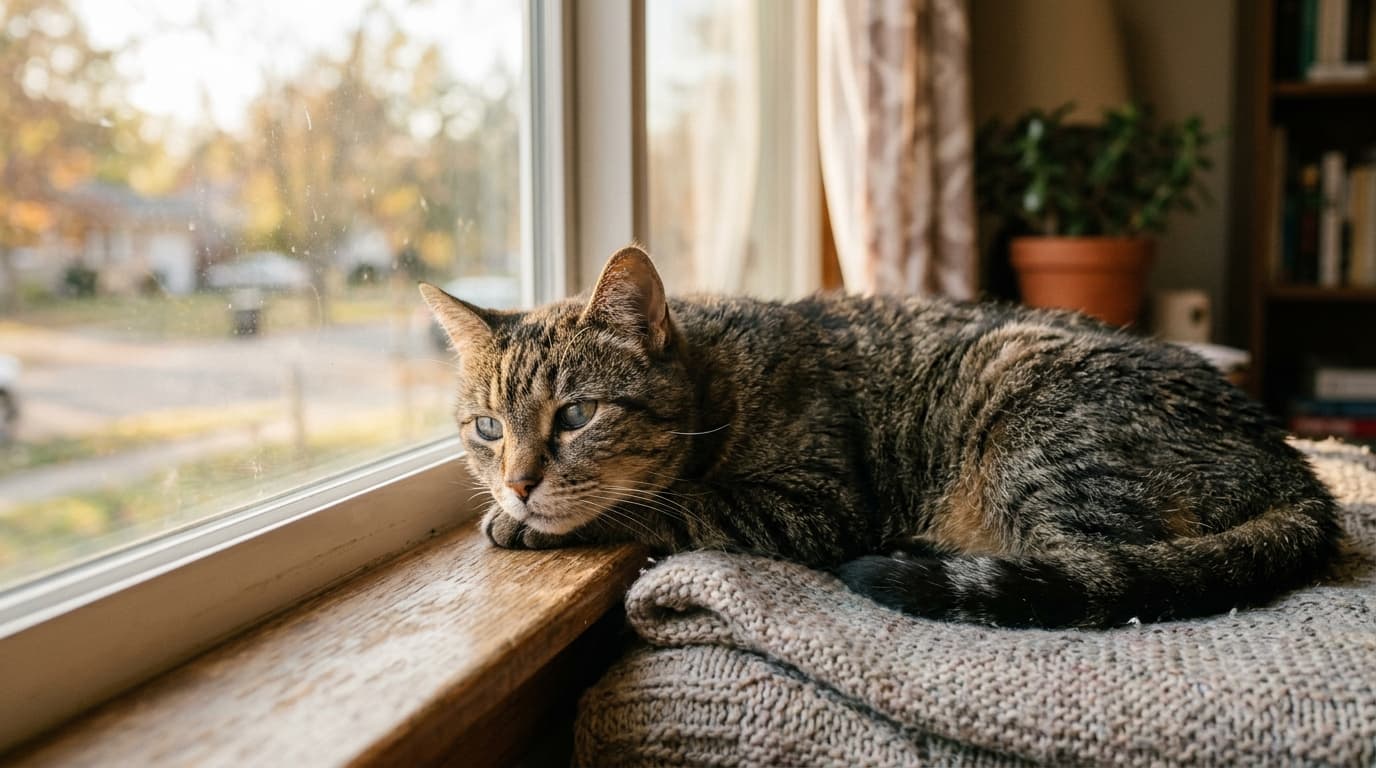
Recognising pain in dogs is harder than most owners realise, as our article on how dogs hide pain explains. With cats, the difficulty multiplies. Cats are extraordinarily good at concealing discomfort, often to the point where they appear completely normal until an underlying condition has progressed significantly. The signs that do exist are subtler than in dogs, more variable, and more easily put down to personality or "just being a cat."
None of this means cats feel less pain. There's no evidence that cats experience pain less acutely than dogs or humans. The neurological and physiological mechanisms are essentially the same. What differs is the expression. A cat in significant pain may appear to most observers to be doing nothing particularly unusual. They may eat, drink, use the litter tray, and move around the home, all while experiencing genuine discomfort.
This article is about how to read your cat. Not just the obvious signs, which usually only appear when pain is severe, but the subtle and behavioural changes that, once you know to look for them, become your most reliable indicator of what your cat is actually experiencing.
If you have a senior cat, or a cat with diagnosed arthritis or any other chronic condition, this is one of the most useful skills you can develop. Better pain recognition leads to better treatment, which leads to better quality of life. And cats deserve much more attention to their pain than they typically receive.
Why cats are so hard to read
Cats evolved as both predators and prey animals. Solitary hunters who, despite being effective predators of small animals, were themselves vulnerable to larger predators. In the wild context, displaying weakness has serious consequences. A predator showing pain becomes less effective at hunting. A vulnerable animal becomes prey.
So their evolutionary heritage strongly favours pain concealment. The cats whose ancestors masked pain effectively survived to reproduce. The ones who advertised their discomfort were taken out of the gene pool. This isn't speculative; it's basic ecology. Domestic cats retain this instinct fully, regardless of how comfortable their actual lives are.
There's also a structural element. Cats are small, agile, and quadrupedal. They have remarkable capacity to compensate for pain by subtly shifting weight, choosing different routes, or adapting their movement patterns. A small change in how a cat moves may be undetectable to an owner but may represent significant accommodation of discomfort.
And then there's the cultural factor. We've spent decades dramatically underdiagnosing pain in cats compared to dogs. Veterinary education has historically given more attention to canine pain than feline pain. Pain medication options for cats have been more limited, though that's changing. Owners often haven't been asked about pain in their cats during routine veterinary visits. The whole system has been less attentive to feline pain than it should be.
Studies have consistently shown that cats are prescribed fewer analgesic drugs than dogs for similar conditions. This isn't because cats need less pain control. It's because their pain has been historically underrecognised.
Put evolutionary masking, biomechanical compensation, and clinical underestimation together, and significant feline pain often goes undetected. Your job as an owner is to be the person who notices what others might miss.
The signs you should know
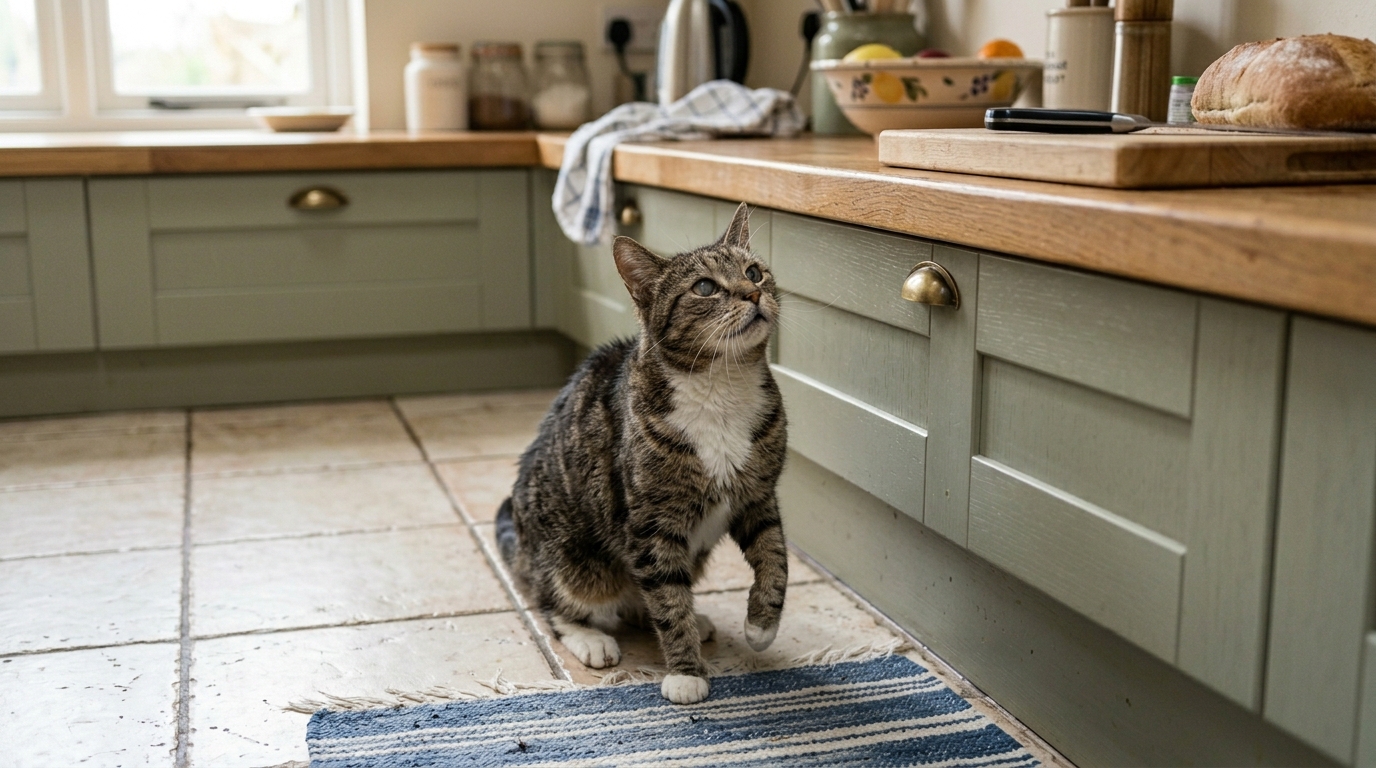
Let me run through the signs of pain in cats, from the most obvious, which you may already know, to the subtle ones that most people miss.
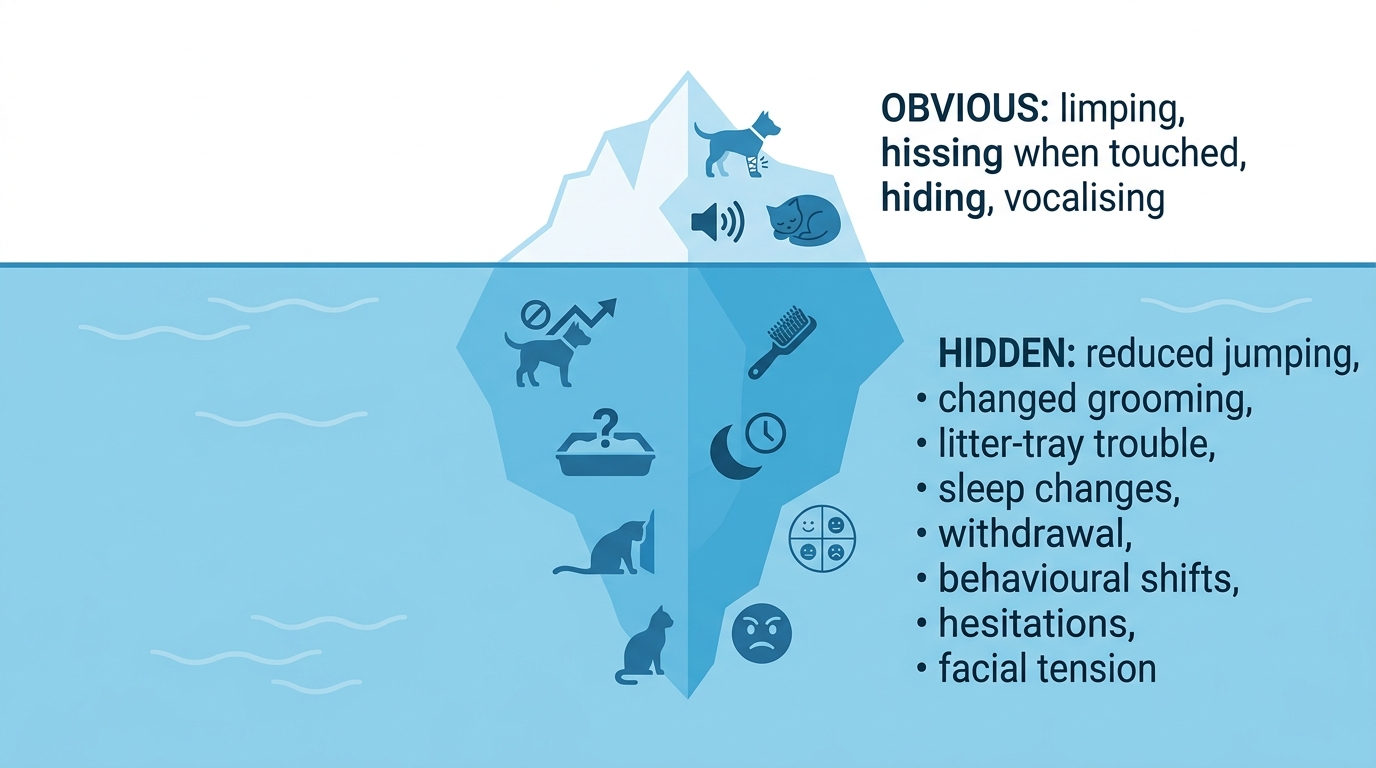
Obvious signs
These are the ones that even people who don't know much about cats might notice. Unfortunately, they usually only appear when pain is significant and untreated, often in the late stages of a chronic condition.
Vocalisation. A cat who suddenly starts meowing, growling, or hissing more than usual may be expressing pain. Yowling at night, particularly in older cats, can be a pain sign, though it can also indicate cognitive dysfunction, hyperthyroidism, and other conditions.
Hiding. A cat who suddenly retreats to unusual hiding places, under beds, in cupboards, in unused rooms, is often telling you they're not feeling well. Cats hide when they feel vulnerable, and pain is one of the most common triggers.
Aggression when touched. A previously placid cat who hisses, growls, or swipes when handled may be experiencing pain in the area being touched. This is one of the more reliable signs because it's a direct response to a specific physical stimulus.
Obvious limping. Less common than in dogs, but possible. A cat who's holding up a paw, walking on three legs, or showing clear asymmetry in their gait has acute pain in that limb.
Reduced food and water intake. Particularly significant in cats. A cat who stops eating is a cat who needs urgent assessment. Anorexia in cats can quickly lead to hepatic lipidosis, a serious liver condition, on top of whatever was causing the loss of appetite.
Difficulty using the litter tray. Posturing oddly, going outside the tray, urinating or defecating in unusual places. Often a pain sign related to the act of squatting or stepping into the tray.
These signs warrant prompt veterinary attention. They're not subtle, and by the time they appear, significant discomfort is usually present.
The subtle signs (where most pain hides)
This is where most chronic pain in cats is detected, by owners who know what they're looking for.
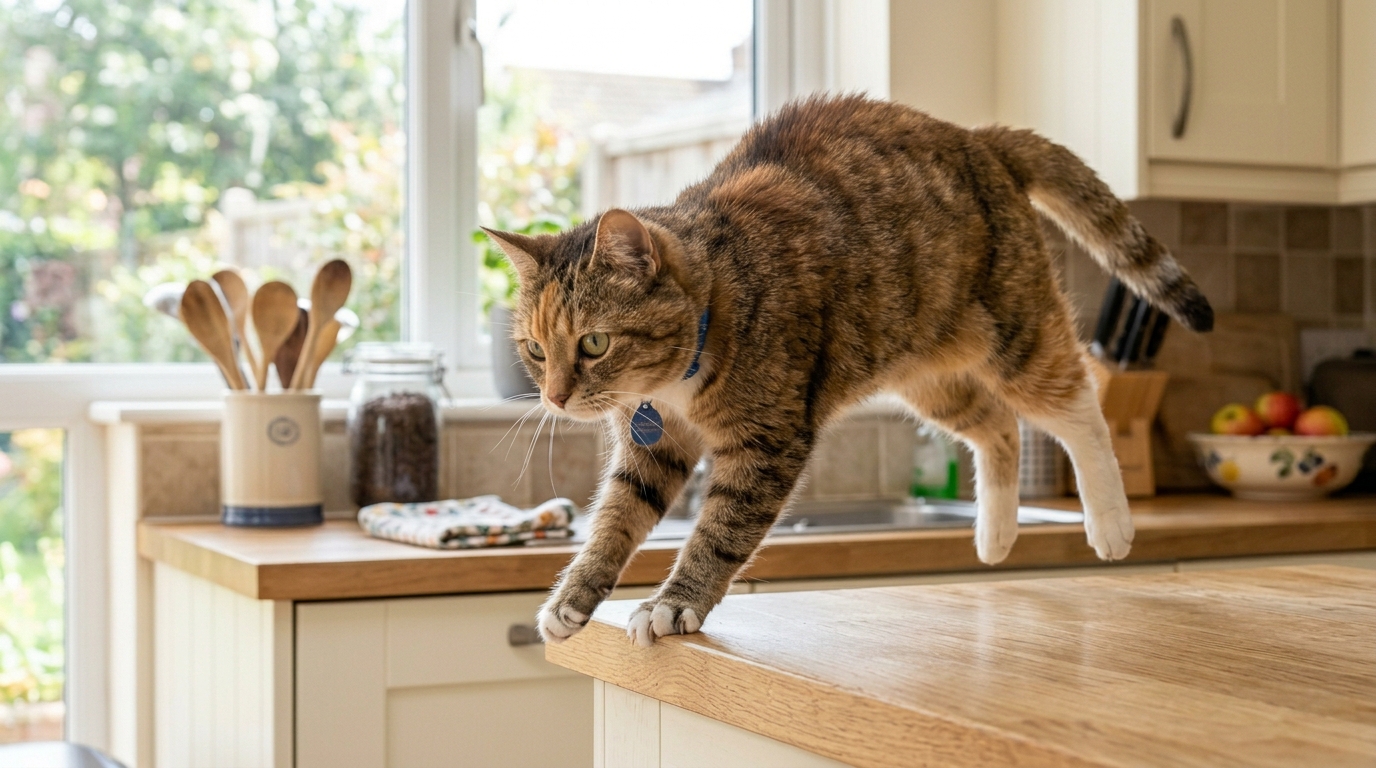
Reduced jumping. This is probably the single most reliable indicator of chronic pain in cats, particularly arthritis. A cat who used to leap onto kitchen worktops in a single bound now hesitates. They jump less often. They use stepping stones to reach high places. They simply don't go to places they used to access.
When you find yourself thinking "she doesn't come up on the bed anymore" or "he hasn't been on the windowsill for ages," that's significant information. Cats don't suddenly lose interest in vertical space without a reason. The reason is usually pain.
Changed jumping technique. Before they stop jumping entirely, you may notice them calculating more carefully. They crouch lower before takeoff. They land more heavily, sometimes audibly. They scramble rather than leap cleanly. They make multiple attempts where they used to succeed first time.
Stiffness after rest. Just like dogs and humans, cats with chronic pain are often stiffest when they first get up. You might notice them moving awkwardly for the first minute or two after waking, then loosening up. Watch them rising from sleep in the morning.
Reduced grooming. Cats are obsessive groomers when they're well. A cat in chronic pain often can't reach all the places they used to easily clean. Hair becomes unkempt, particularly on the lower back, hindquarters, base of the tail, and the back of the legs. These are areas that require spinal flexion and twisting to reach.
The coat may look "different" in a way you can't immediately articulate. Slightly greasy. Slightly matted. A bit fluffier or scruffier than it should be. This is often early arthritis or other chronic pain.
Over-grooming in specific areas. The opposite presentation, also significant. Some cats lick obsessively at a painful joint, creating bald patches or skin irritation. If your cat has developed a spot where they're over-grooming, particularly over a joint, consider pain as the underlying cause rather than treating it as a skin problem.
Litter tray issues. This one gets misattributed constantly. A cat with sore hips or a stiff back may find it difficult to climb into a high-sided litter tray, may struggle to posture properly inside it, may have trouble with the squat. The result is going outside the tray, going just at the edge, or finding alternative toileting spots elsewhere in the house.
Most owners attribute this to behaviour, stress, or a urinary problem. It's often none of those things. It's a cat in physical pain trying to manage their normal needs with a body that hurts.
Changes in resting position. A cat in chronic pain often sleeps in different positions than they used to. They may avoid curling tightly into a ball because the position causes joint discomfort. They may rest in more sprawled positions. They may shift more frequently. They may avoid certain surfaces they used to favour because the firmness or warmth has changed in significance to them.
Reduced activity. A cat who plays less, patrols less, watches the world less, and sleeps more. This is widely attributed to "just getting old" but is often pain.
Changes in interaction. This is the one that owners often most clearly recognise once it's pointed out. The cat who's less interested in being picked up. Who doesn't come to greet you at the door anymore. Who tolerates stroking but doesn't actively seek it. Who avoids being touched on certain parts of their body. Who has become quieter, more reserved, more independent than they used to be.
This isn't normal ageing in a healthy cat. It's withdrawal, and chronic pain is the most common cause.
Temperament changes. A previously friendly cat becoming grumpy. A confident cat becoming anxious. A sociable cat becoming withdrawn. Chronic pain genuinely changes personality. The cat who's "just getting moody in their old age" is often a cat experiencing discomfort that's affecting their entire emotional state.
Hesitation at jumps and steps. Watch your cat approaching things they used to navigate easily. The countdown before jumping. The pause before stepping over a threshold. The visible mental calculation about whether it's worth the effort. These hesitations are pain assessments your cat is doing in real time.
Reduced response to favourite things. The toy that used to drive them mad now elicits a half-hearted swipe. The treat that brought them running now barely raises an ear. The window where they used to sit for hours doesn't hold their interest. The reduced engagement with previously beloved things is often pain reducing their capacity for joy.
Sleeping more. Difficult to evaluate because cats sleep a lot anyway. But if your cat seems to be sleeping more than they used to, particularly in adulthood (not just kittens and oldest seniors), that's worth noting. Chronic pain and discomfort drives more sleep.
Reduced claw maintenance. Cats normally scratch surfaces to maintain their claws. A cat scratching less means claws growing longer, which makes movement on hard floors even more awkward, compounding the original problem. The scratching post that used to be heavily used and is now ignored is information.
None of these signs in isolation proves pain. But if your cat is showing two or three of them, particularly if those signs have developed gradually over months or years, the likelihood is high.
The Feline Grimace Scale
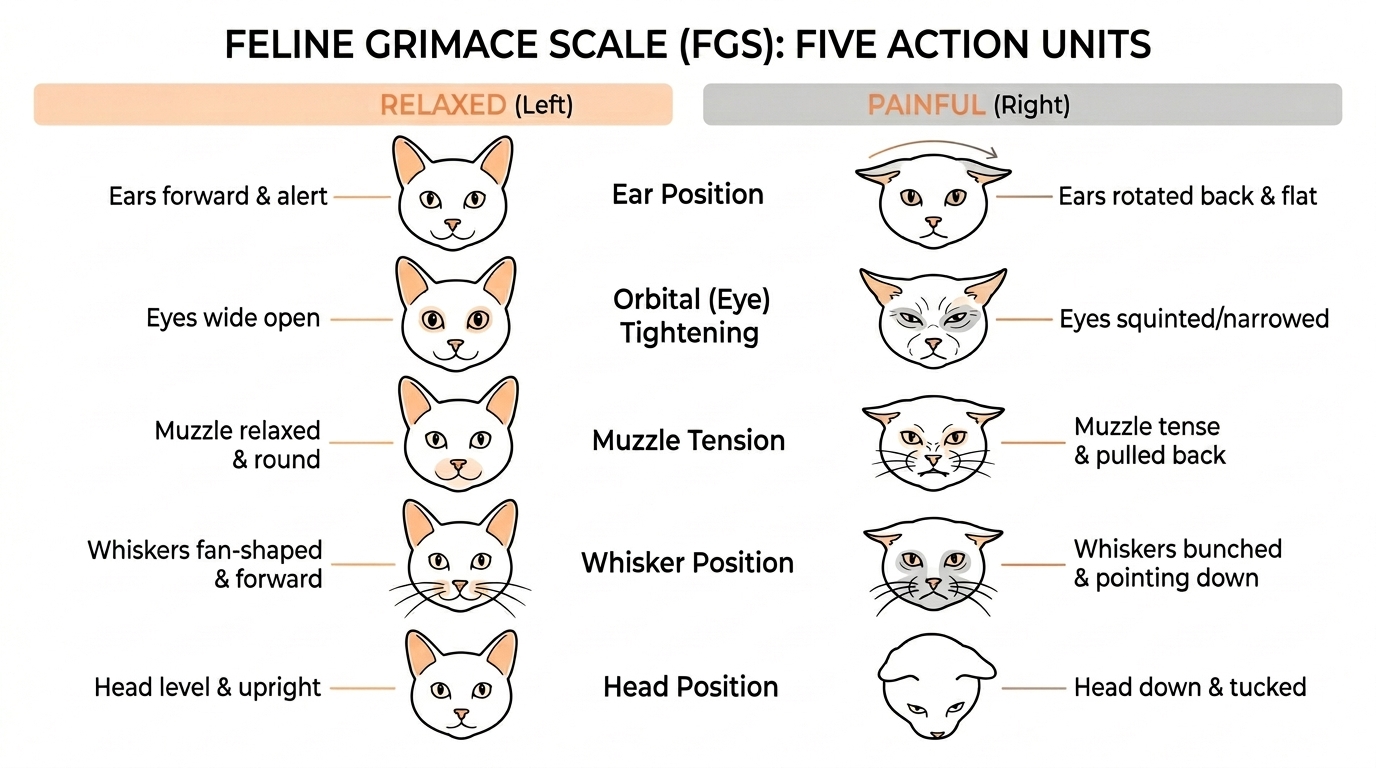
In the last decade, veterinary medicine has developed validated tools for assessing pain in cats based on their facial expressions. The most widely used of these is the Feline Grimace Scale, developed and validated by Evangelista and colleagues at the Université de Montréal and published in Scientific Reports in 2019.
The scale evaluates five specific facial features (called "action units"):
Ear position. Forward and upright is normal. Slightly flattened or rotated outward suggests pain. Fully flattened against the head suggests significant pain.
Orbital tightening. The eyes being relaxed and open is normal. Slight squinting or partial closure suggests pain. Tightly closed or markedly squinted eyes suggest significant pain.
Muzzle tension. The muzzle being relaxed, with the area between the eyes and nose appearing smooth and rounded, is normal. Tension creating a more elongated, oval, or pointed appearance suggests pain.
Whisker position. Whiskers relaxed and pointed slightly downward and outward is normal. Whiskers pushed forward, stiff, or held tightly suggests pain.
Head position. Head held above the shoulder line, alert and engaged, is normal. Head lowered to or below the shoulder line, particularly with reduced movement, suggests pain.
Each feature is scored 0 (normal), 1 (moderately affected), or 2 (markedly affected). The total score gives a number out of 10 (or 4 out of 8 if one feature can't be assessed). A score of 4 or above out of 10 is considered the threshold at which pain treatment is appropriate.
How to use it at home
The Feline Grimace Scale is freely available online with photographs showing each scoring level. Spend some time looking at the reference images, even when your cat is well. Build a mental picture of what each scoring level looks like.
Then, when you're concerned about your cat:
- Approach calmly, don't force interaction
- Observe from a few feet away, ideally when the cat doesn't know they're being watched
- Look at the face in a moment of rest
- Mentally score each feature
- Compare to your sense of their normal baseline
The original scale was validated for acute pain in clinical settings, so its application to chronic pain at home is less precise. But the principle is sound: a cat showing multiple action units pointing toward pain probably is experiencing it.
A few caveats worth knowing
A few things to keep in mind about the Feline Grimace Scale:
It was validated for acute pain. Its use for chronic pain is less well-established. A cat with chronic arthritis may not always display the same facial pattern as a cat with acute post-surgical pain. The scale is suggestive but not definitive for chronic conditions.
Individual baselines vary. Some cats have naturally more squinted-looking eyes, or whiskers held in slightly different positions. Knowing your individual cat's normal expression matters; otherwise, you may interpret normal individual variation as pain.
It doesn't work well in stressed cats. A cat in a strange environment, being handled, or recently transported will show some of the same signs from stress alone. Home assessment is more reliable than clinic assessment.
It's one tool, not the only tool. The grimace scale is most valuable as part of a wider assessment that includes the behavioural signs we covered above. Don't rely on facial scoring alone.
That said, learning to read your cat's face is genuinely useful. It gives you another data point. And the act of paying attention to facial expression makes you more attentive overall.
What pain does to your cat's brain
There's an aspect of chronic pain in cats that's worth understanding, because it changes how you think about treatment.
Chronic, untreated pain doesn't just make a cat uncomfortable. It changes how their nervous system processes signals over time. Pain pathways become more efficient. The spinal cord and brain become more sensitive. Eventually, the nervous system can generate or amplify pain signals beyond what the underlying tissue damage would suggest.
This is the same central sensitisation process we describe in our article on chronic pain in dogs. It happens in cats too, and it has the same implications.
A cat whose pain has been managed early and consistently is in a different position from a cat whose pain has been undetected and untreated for years. The early-managed cat may have a nervous system that hasn't developed significant sensitisation. The long-untreated cat may have a system that's become hyperresponsive to pain signals, requiring more aggressive multimodal management to control.
This is one of many reasons to take feline pain seriously from the earliest signs. The longer pain runs unmanaged, the harder it becomes to manage later.
When pain is sudden vs gradual
The signs and significance of pain differ depending on whether it came on suddenly or gradually.
Sudden onset signs
A cat who was apparently well yesterday and is now showing pain signs today needs urgent assessment. Sudden-onset pain in cats can indicate:
- Acute injury (falls, road accidents, fights)
- Acute joint problems (rare in cats but possible)
- Urinary tract obstruction (a true emergency in male cats; can be fatal within hours)
- Sudden onset of certain infections
- Acute internal problems (gut obstruction, pancreatitis, others)
- Sudden cardiac problems
If your cat is showing acute pain signs (vocalising, hiding suddenly, not eating, straining unproductively in the litter tray, behavioural change within hours), don't wait. Get them to a vet. Some of these conditions have very short windows for effective treatment.
Gradual onset
This is where chronic pain hides. The signs have developed over weeks, months, or years. Your cat has been quietly adapting, and you've been quietly adapting your perception of normal alongside.
Gradual onset pain warrants careful assessment but doesn't usually require emergency attention. Book an appointment with your vet, prepare a list of what you've noticed, take video if possible, and have a proper conversation about what's been happening.
Here's the catch with gradual pain: it's often more significant than owners realise. Months of quiet discomfort that the cat has been managing becomes apparent only when you list out the accumulated changes. Don't underestimate the importance of chronic gradual pain just because it doesn't seem urgent.
Common conditions causing pain in cats
For context, the most common causes of pain in cats include:
Dental disease. Extremely common in cats, particularly tooth resorption (where teeth dissolve from the inside) and severe periodontal disease. Cats with significant dental pain often continue to eat, sometimes selectively avoiding hard food. The pain can be considerable.
Osteoarthritis. Covered in detail in our article on feline arthritis. Up to 90% of cats over 12 have radiographic evidence, and only a tiny fraction are diagnosed.
Chronic kidney disease. Not directly painful in the way arthritis is, but causes significant discomfort and gastrointestinal upset. Very common in older cats.
Hyperthyroidism. Doesn't usually cause pain but causes restlessness, agitation, and behavioural change that can look pain-like. Common in older cats.
Lower urinary tract disease. Including feline idiopathic cystitis and stones. Causes significant pain and changes in litter tray behaviour. Particularly important to recognise in male cats due to obstruction risk.
Gastrointestinal disease. IBD, lymphoma, and other GI conditions can cause chronic abdominal pain that's expressed as changed eating, reduced grooming, and behavioural change.
Pancreatitis. Particularly chronic pancreatitis, which is common but underdiagnosed in cats. Causes intermittent or persistent abdominal discomfort.
Skin conditions. Itchy skin disease is uncomfortable. Some skin conditions in cats are genuinely painful.
Cancer. Various malignancies cause pain through tumour growth, invasion of tissues, or secondary effects.
Eye and ear conditions. Often painful, and the discomfort can drive significant behavioural change.
If you're seeing pain signs in your cat and you don't know the underlying cause, your vet's job is to work that out. A thorough physical examination, blood tests, urine tests, and possibly imaging can usually identify what's going on.
How to make the most of the vet visit
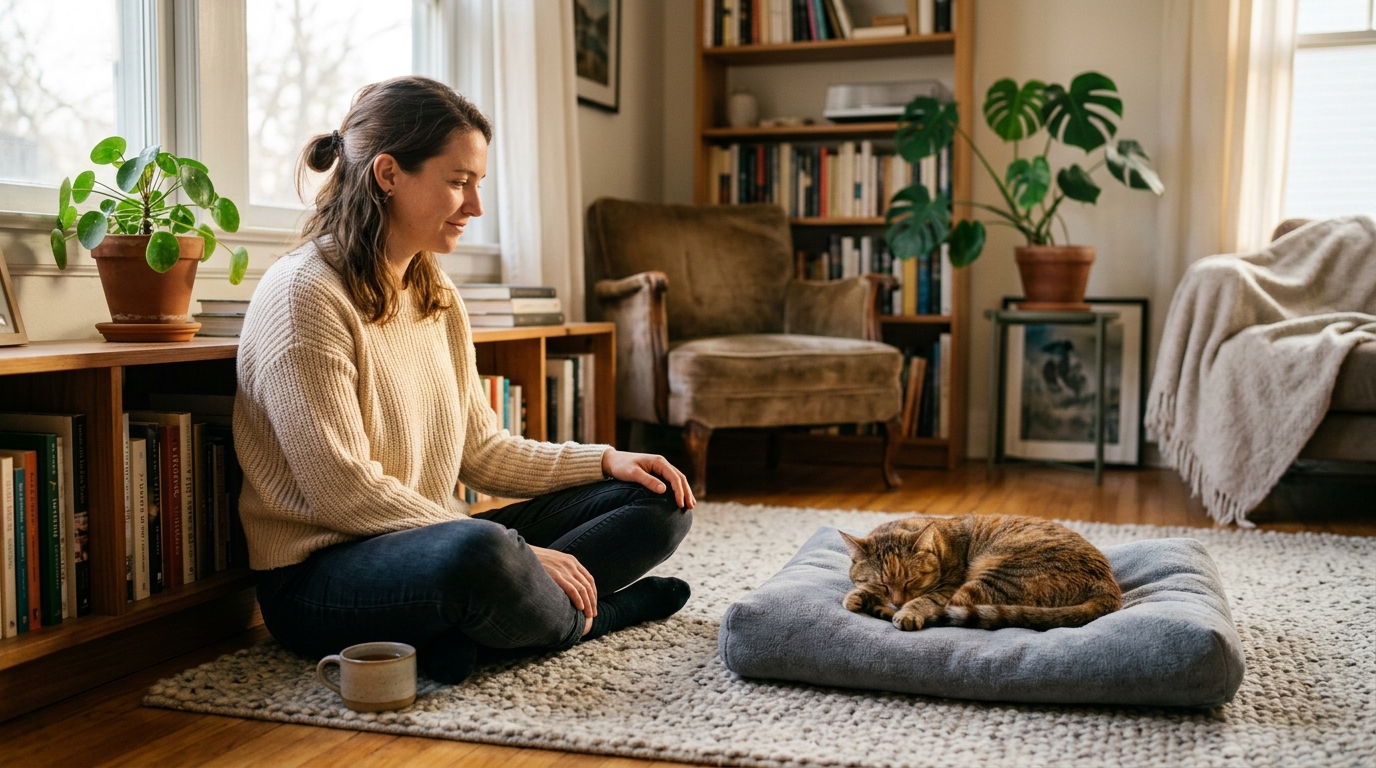
If you're bringing your cat to the vet because you suspect pain, prepare carefully. Cats often behave very differently in the clinic than at home (typically subdued and quiet, sometimes aggressive from stress, almost always with their pain signs masked by adrenaline).
Before the appointment:
Make notes about what you've observed. Specific behaviour changes, when they started, what makes them better or worse. The more specific the better.
Take video. A short clip of your cat moving around the house, getting up from rest, attempting to jump, using the litter tray. Whatever's relevant. Your vet will see much more useful information from your video than from the cat sitting tensely on the consulting room table.
Bring a clean litter tray sample if relevant. Particularly if litter tray issues are part of the picture. Your vet may want to test the urine.
Don't feed for a few hours before the visit if blood tests are likely. Particularly relevant if metabolic or endocrine causes are being considered.
Bring the cat in a secure carrier with familiar bedding. Less stress means more useful examination.
During the appointment:
Tell the full story, not just the headline. "She's been a bit quieter recently" misses important detail. "Over the last six months I've noticed she stopped jumping on the bed in March, started peeing just outside the litter tray in May, and seems reluctant to be picked up since the summer" tells your vet what's actually going on.
Don't downplay. Cats are masters of looking fine in front of vets, and owners often feel a bit silly bringing them in for vague concerns. Trust your observations. You know your cat better than the vet can in fifteen minutes.
Ask for a thorough examination. A full feline assessment includes palpation of joints, abdomen, lymph nodes, dental check, eye and ear examination. Don't accept a quick stethoscope check as adequate for a pain investigation.
Ask about pain assessment specifically. "Could this be pain-related?" is a legitimate question. Don't be afraid to raise it.
Discuss treatment options. Including modern feline pain medications (Solensia for arthritis, NSAIDs at appropriate doses, gabapentin for neuropathic pain, others as relevant).
Treatment matters
This is worth stating clearly: cats with chronic pain genuinely benefit from treatment, often dramatically.
The arrival of Solensia (frunevetmab) in particular has changed feline arthritis management. The development of better feline-specific NSAIDs and clearer guidelines on their long-term use has expanded treatment options. The use of gabapentin and other adjunct medications in cats has become more refined. Multimodal pain management protocols similar to those used in dogs are increasingly applied to cats.
Many cats whose pain is treated effectively transform within weeks. Cats who had stopped jumping start jumping again. Cats who had become withdrawn re-engage with their households. The "change" you may have attributed to aging often reverses partially or fully when pain is managed.
Don't accept the position that "this is just how she is now" without exploring whether pain might be the explanation and whether treatment could change things.
What to do this week
If you suspect your cat might be in pain:
1. Spend some time observing carefully. Watch them move, jump, get up from rest, interact with you and the environment. Make notes.
2. Take some video of their normal daily activity. Save it. This is valuable for comparing future state.
3. Look at the Feline Grimace Scale online and familiarise yourself with the action units. Score your cat over a few days.
4. List the specific changes you've noticed over the past months or year. Write them down with timing.
5. Book a vet appointment specifically to discuss pain. Not the next vaccination appointment with the issue mentioned in passing. A dedicated appointment with time to discuss what's going on.
If you'd like a more structured way of doing the observation and scoring over weeks rather than a single look, that's part of what we built Sightline for. Sightline (sightline.vet) is a separate ConciergeVet tool that supports cats specifically and uses a short adaptive weekly assessment to track a single pain and quality-of-life score over time. Cats are exactly the species this kind of tracking helps with most, because the everyday signs are subtle enough that memory alone struggles to hold the trend.
A written log does the same job if you keep it up. The principle is what matters: cats reveal themselves slowly, and "she's just getting older" is what you say when you don't have a record to argue with.
These five actions in the next week can lead to a diagnosis that transforms your cat's daily life.
References
Free downloads
Companion worksheets to put what you've read into practice. Free PDFs, print at home.
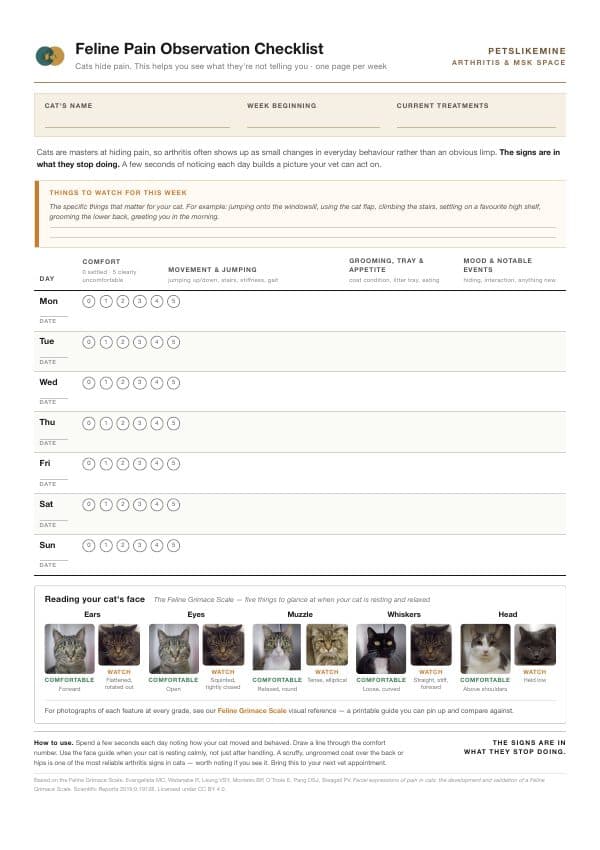
Feline Pain Observation Checklist
PDF · 566 KBA week-by-week record built around how cats really show pain. Not an obvious limp, but the things they quietly stop doing: jumping onto the windowsill, using the cat flap, grooming, settling on a favourite high shelf. A few seconds of noticing each day builds a picture your vet can act on.
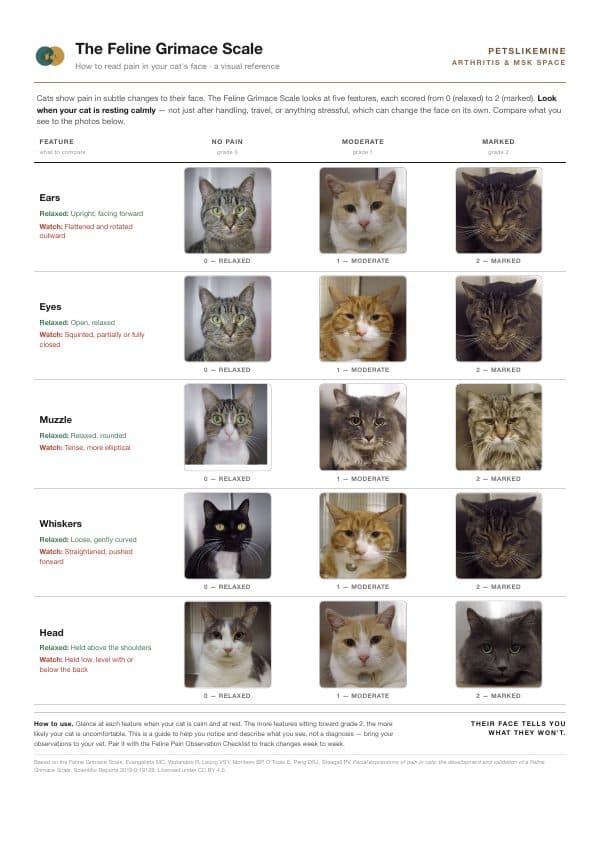
The Feline Grimace Scale
PDF · 699 KBHow to read pain in your cat's face. The Feline Grimace Scale scores five features, from the ears and eyes to the muzzle and whiskers, each from 0 to 2. A visual reference for spotting discomfort when your cat is resting calmly, with photos to compare against.
Sister tool · Sightline
Track whether treatment is working
Sightline, a separate ConciergeVet tool, runs a short weekly check-in built on validated pain and mobility instruments, turns it into a single Sightline Score you can watch trend over weeks rather than judge on one bad day, and produces a report you can bring to your vet.
A written log, or our printable trackers, does much the same job.
See how Sightline tracks treatmentSee where your pet stands today
Tracking is the other half of managing arthritis. Take the 2-minute Mobility Check to see your pet's stage, then watch it shift as treatment takes effect.
Take the Mobility CheckYou're not doing this alone
Compare treatment journeys and talk to owners managing arthritis. Free to join.
Join PetsLikeMine