

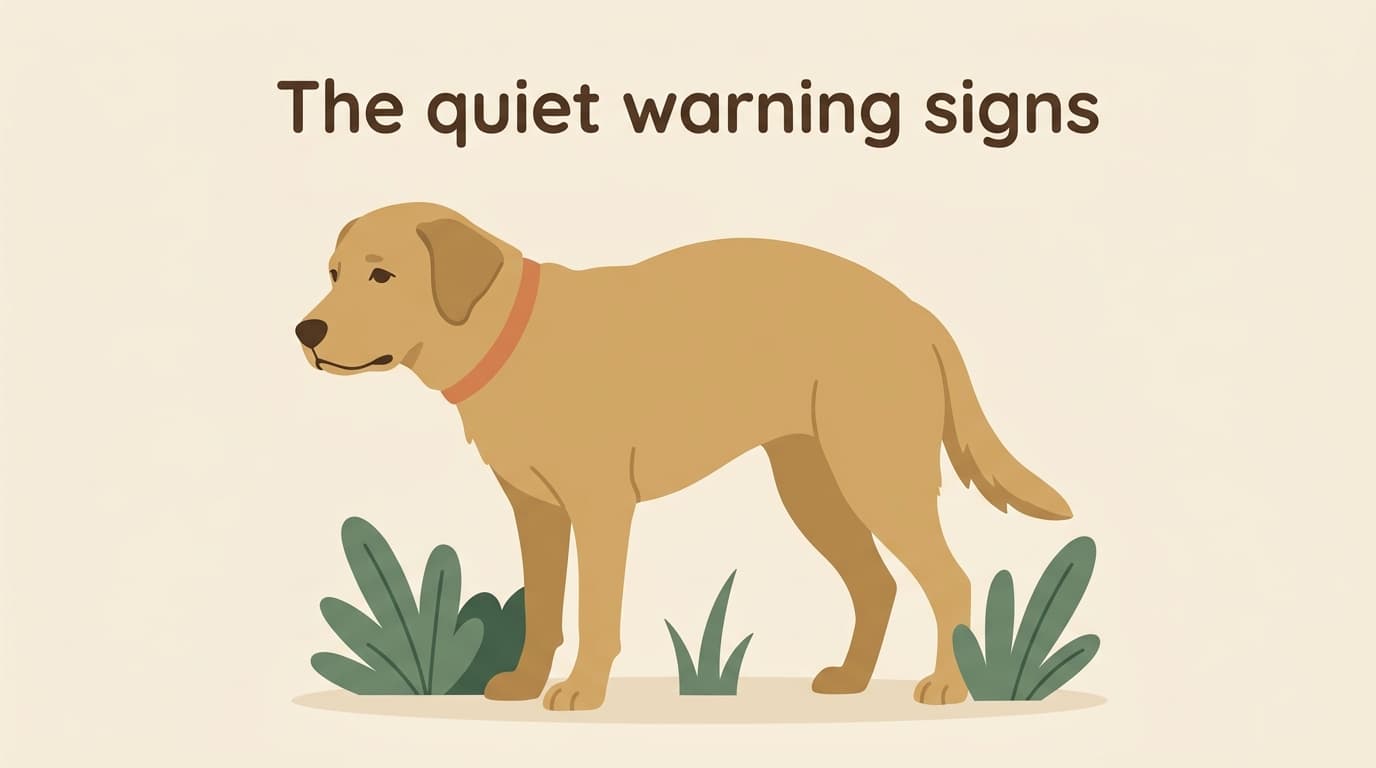
The Early Warning Signs: Spotting a Disc Problem Before It's a Crisis
Alastair Greenway
BVM&S MRCVS
Most owners meet intervertebral disc disease as a sudden catastrophe: a dog that was fine in the morning is dragging its back legs by lunchtime. But it doesn't always arrive without warning. Quite often there's a quieter phase first, a few days of a dog being subtly "off", in pain or stiff but still walking, before any dramatic weakness appears. Recognising that early warning phase is genuinely valuable, because acting at the pain stage, with rest and a vet visit, can sometimes head off a crisis altogether. This guide is the calm, pre-crisis companion to our emergency article: how to spot the subtle signs of a disc problem before it becomes paralysis, and what to do about them, without scaremongering.
One thing to settle before we start. The point here is awareness, not anxiety. Most stiff or sore days in most dogs are not the start of a disc catastrophe, and this isn't about inspecting your dog fearfully for doom. It's simply about knowing what early disc pain can look like, so that if you do see it, you act sensibly and promptly rather than waiting for it to become an emergency.
What early disc pain looks like
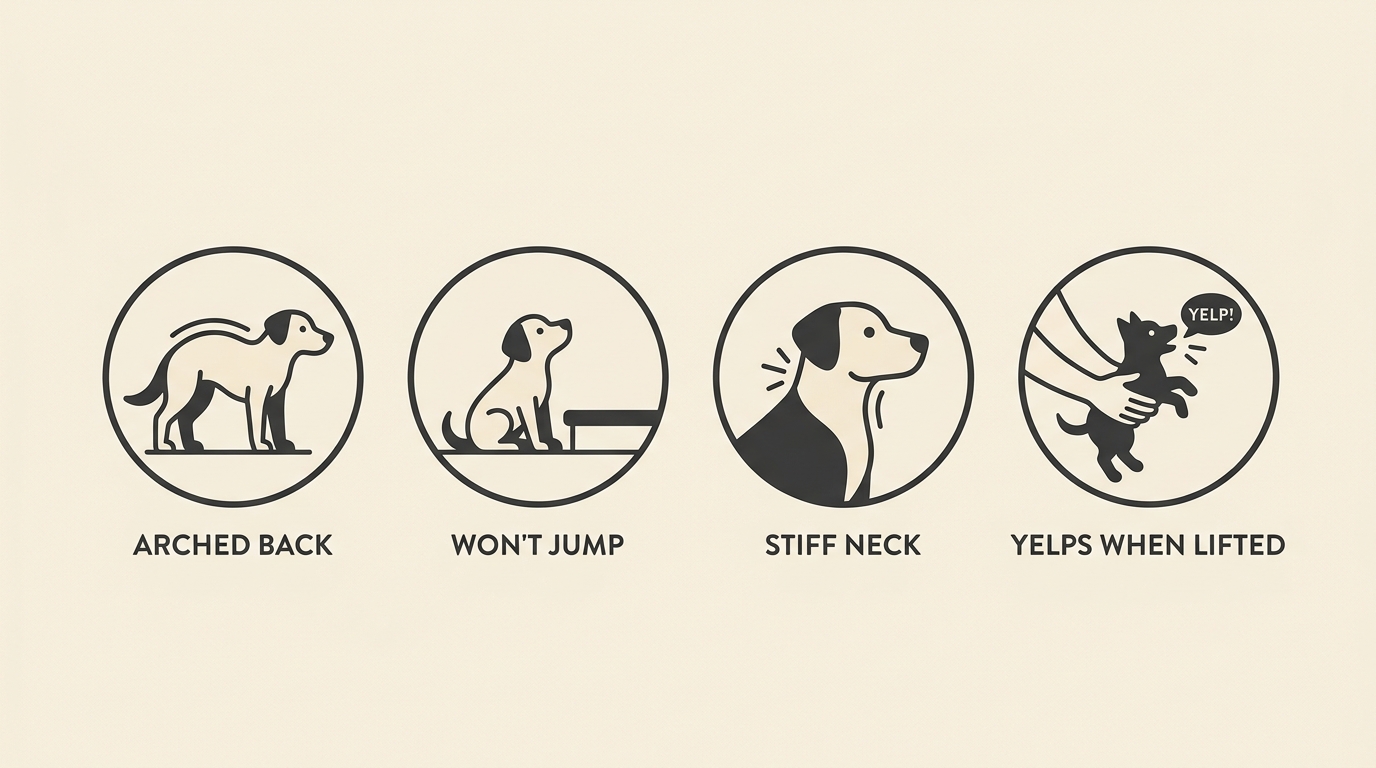
Early disc trouble often shows itself as pain and discomfort rather than the obvious weakness people associate with IVDD, and the signs can be easy to dismiss as your dog "just being a bit off". Knowing them helps you take them seriously. The things to look out for include an arched or roached back, where your dog stands or moves with its spine hunched up rather than level, which can be a sign of pain in the back. A "frozen" or reluctant-to-move look, where your dog seems oddly still, stiff, or unwilling to move about as freely as usual, is another. For neck disc problems, a low head carriage and neck stiffness, your dog holding its head down and being reluctant to lift or turn it, are characteristic. Yelping or crying out when picked up, when jumping, or seemingly out of nowhere can signal a painful spine. Trembling or shaking can accompany pain. A new reluctance to do things that involve the spine, going up or down stairs, jumping onto the sofa or into the car, is telling, especially in a dog that used to do these happily. And a tucked-up, tense belly can go along with back pain.
None of these on its own proves a disc problem, and any of them can have other causes, but a dog showing one or several of these signs, especially suddenly, is a dog showing possible early signs of disc pain, and that's worth taking seriously rather than shrugging off. You know your dog's normal demeanour and movement; a clear, unexplained change toward stiffness, reluctance, and signs of pain is the thing to notice.
Pain now, weakness later
Why these early signs matter comes down to the way disc problems can unfold. In many cases, pain comes first and neurological signs, the weakness, wobbliness, and paralysis, come later, if the problem progresses. A disc that's beginning to cause trouble may first produce pain as it irritates the structures around it, and only later, if more disc material herniates against the spinal cord, cause the loss of function that constitutes the emergency.
This sequence is exactly what makes the early warning phase so valuable. If pain can be the first sign, then noticing and acting on that pain, by resting your dog and getting it seen, gives you a window to intervene before, and ideally instead of, the neurological signs developing. Resting a painful back early takes the strain off a disc that may be on the brink, and a vet can assess the problem and start appropriate treatment while it's still "just" pain. There's no guarantee that early action prevents every progression, some disc events happen too fast and too completely for any warning, but acting at the pain stage genuinely offers a chance to head off a worse outcome, which is far better than waiting to see if the weakness comes. In short: don't dismiss the pain as a minor thing to monitor; treat it as the early warning it may be.
Spotting the signs: what to do next
So, if you notice these early warning signs in your dog, here's the sensible response, which is calm and prompt rather than panicked. First, restrict your dog's activity straight away, as a precaution. Stop the jumping, the stairs, the rough play, and the off-lead charging about, and keep your dog quiet and confined while you get it checked, because if this is an early disc problem, that rest is exactly what takes the pressure off and it costs nothing to start. Keep walks short and on the lead. Our crate-rest guide covers how to confine a dog properly if it comes to that.
Second, book a vet appointment promptly. This doesn't necessarily mean an emergency dash, a dog that's in some pain but walking normally usually warrants a prompt ordinary appointment rather than the out-of-hours service, but it does mean getting it seen soon rather than waiting to see if it passes. Your vet can examine your dog, judge whether this looks like a disc problem, and start appropriate treatment, pain relief and rest, at the early stage where it may do the most good. Third, and importantly, don't simply "wait and see" if the signs are escalating. Early pain that you're resting and getting checked is one thing; signs that are getting worse, or any hint of the weakness we come to next, mean the situation is changing and needs faster action. The watchword is prompt, sensible action: rest now, vet soon, and stay alert to any worsening.
Where a warning sign tips into an emergency
Finally, you need to know the line where an early warning tips into a genuine emergency, because the calm, prompt-appointment approach above applies to the pain-and-stiffness stage, not to neurological signs. If, at any point, your dog develops any of the following, it has crossed into emergency territory and needs urgent veterinary attention, treat it as an emergency, not a "book an appointment" situation: wobbliness or unsteadiness in the back legs, knuckling or dragging the back paws, an inability to stand or walk, or a sudden inability to wee. These signs mean the spinal cord is now affected, not just irritated, and the urgency changes completely.
Our emergency guide and our triage checker cover exactly what to do if you see these, and the underlying rule throughout IVDD holds here too: if in any doubt, treat it as an emergency. So the early warning signs here mean "rest and a prompt vet visit"; the moment any neurological sign appears, it means "act now". Knowing both, and the line between them, is what lets you respond correctly at each stage.
So, to close on the reassuring and practical note this deserves: an early disc twinge is not a disaster, it's an opportunity. Spotting the subtle signs, an arched back, a reluctance to jump, a stiff neck, an unexplained yelp, and responding with prompt rest and a vet visit, gives you a real chance to head off a crisis at the stage where it's most treatable. Stay aware without being anxious, act promptly without panicking, and keep our emergency guide and triage checker to hand for the moment, should it ever come, that a warning sign becomes something more. Most of the time, early action and a vet's care at the pain stage is exactly what a worried owner can most usefully do.
References
Sister tool · Sightline
Track whether treatment is working
Sightline, a separate ConciergeVet tool, runs a short weekly check-in built on validated pain and mobility instruments, turns it into a single Sightline Score you can watch trend over weeks rather than judge on one bad day, and produces a report you can bring to your vet.
A written log, or our printable trackers, does much the same job.
See how Sightline tracks treatmentTrack the recovery, day by day
Recovery from a disc injury is all about the trend. Log the daily milestones through crate rest and rehab so you can see real progress, not just good and bad days.
Open the Recovery TrackerYou're not doing this alone
Compare treatment journeys and talk to owners managing IVDD. Free to join.
Join PetsLikeMine