

Keeping an older pet moving: exercise, joints and staying strong
Alastair Greenway
BVM&S MRCVS
Somewhere in the middle of a pet's life, a kind instinct quietly takes over. The walks get a little shorter, the jumps a little more careful, and without quite deciding to, you begin to wrap them in cotton wool. Fewer stairs. A gentler game. Best not tire her out. It comes from love, and from a sensible-sounding idea that an older body should be spared. For most older pets, though, that instinct is exactly the wrong one.
Movement is one of the few genuinely powerful medicines you give for free, every day, and the ageing body needs more of it, not less. None of this is about pushing a tired pet or chasing the dog they used to be. It is about protecting the strength and stamina they still have, for as long as possible, on what is usually a long and good plateau.
"Rest the joints, don't wear them out" is the first idea to let go of
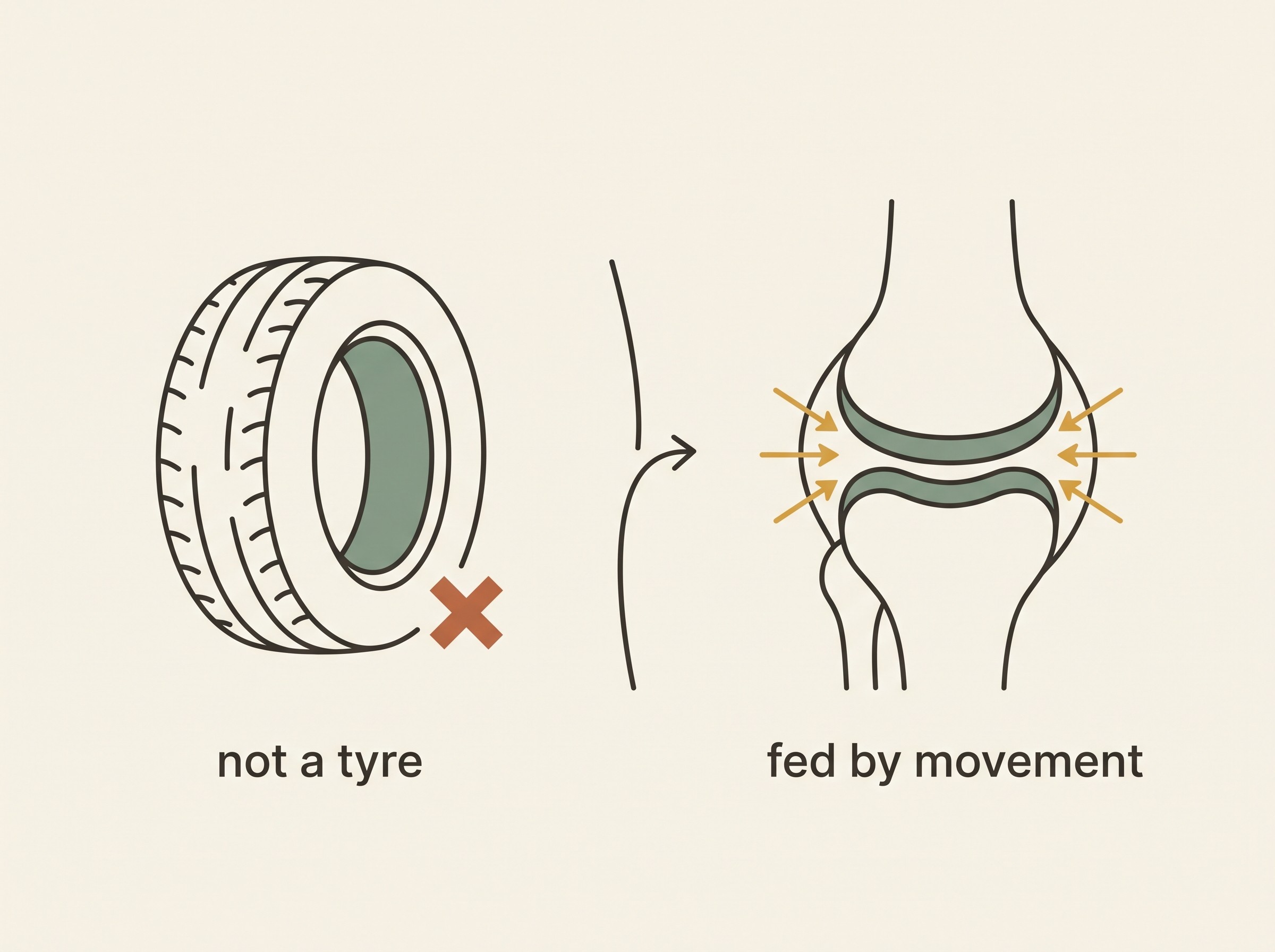
Most of us picture joints as something like tyres: a fixed amount of tread that wears thinner the more you use it, so the careful thing is to use them less. It is an intuitive picture, and it is wrong. Cartilage is living tissue with no blood supply of its own, and it is fed by movement: the gentle squeeze-and-release of a joint in motion pumps nutrients in and waste out. A joint that stops moving is not being saved. It is being starved, growing stiffer and sorer as the muscle around it wastes away.
The evidence backs keeping going rather than stopping. A veterinary review of physiotherapy for arthritic dogs makes the point directly: the idea that arthritis is simple "wear and tear" is mistaken, and while excessive activity that clearly worsens the limp should be avoided, moderate activity is beneficial, not harmful (Mille et al., 2022). A study of sixty Labradors with hip problems found the same in real homes: dogs that exercised more each day tended to be less lame, and the more regular the exercise, the stronger that link became (Greene et al., 2013). That does not mean more is always better, or that you should route-march a sore old dog. It means the real direction of travel is keep moving gently, not stop to protect the joints.
So let me use the clinical word once and then mostly set it aside, because it frightens people more than it should: the sore, stiff joints behind most of this are arthritis, and arthritis is one of the most manageable things in an older pet. The aim here is to help you keep your pet moving with it, comfortably, rather than letting the joints seize up around a life that has gone still.
Muscle: the brace that holds the joint together
Here is the part the bathroom scales hide completely. As a pet ages, muscle quietly melts away and fat takes its place, so the weight can stay almost exactly the same while the body underneath changes profoundly (Tufts Petfoodology). A pet can even be carrying too much weight and losing muscle at the same time. This age-related thinning has a clinical name, sarcopenia, but the everyday meaning is simpler: an older body that is not asked to do much gradually stops being able to.
This matters enormously, because muscle is the joint's own natural brace. Strong muscle around a hip or knee takes the load and holds the joint steady; as it fades, the joint does more of the work alone, which hurts more, so the pet moves less, so the muscle fades faster. It is a slow downward spiral, and gentle movement is the single best thing that interrupts it.
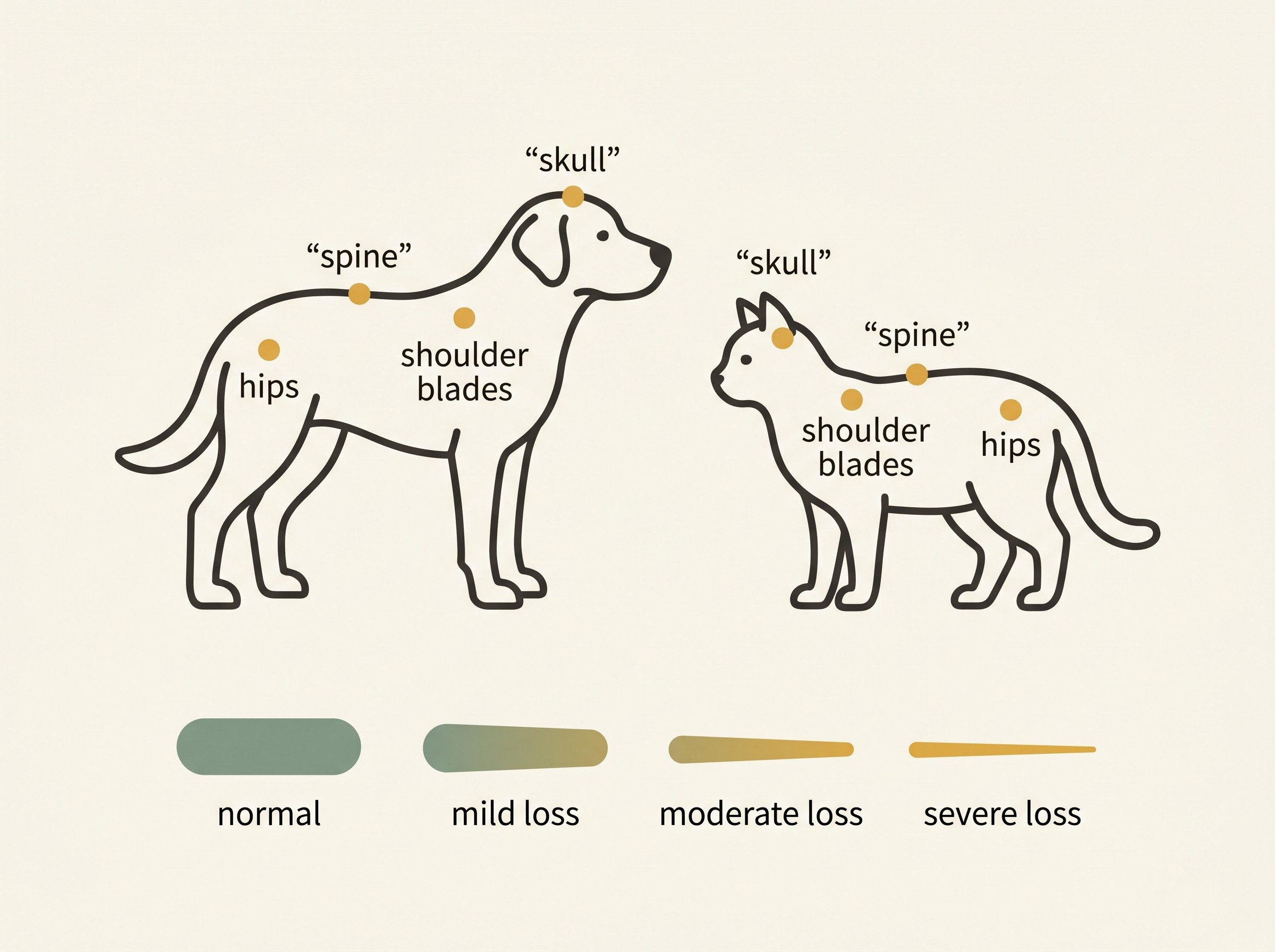
You can learn to read it with your hands, because your vet checks the same thing. Vets score muscle separately from fat, on a simple scale of normal, mild, moderate or severe loss, by feeling four places: along the spine, over the shoulder blades, across the top of the skull, and over the hips (Tufts Petfoodology; Preventive Vet). The spine shows it first. Run a slow hand down your pet's back and hindquarters every week or two, and you will notice whether the muscle feels full and rounded or thin over the bone.
One firm caution, because the slow version above is the normal kind. Muscle or weight that is visibly melting away over weeks, especially with any change in appetite, thirst or energy, is not ordinary ageing and is not something you exercise your way out of. That is a red flag for a treatable illness behind the scenes, from dental pain to kidney, thyroid or other disease, and it needs a vet rather than a longer walk (why weight loss is never "just old age"). Keep the two pictures separate: slow thinning you can help with movement and good feeding; rapid loss you take to the vet.
Comfort comes first, then movement, and the order really matters
If your older pet has more or less stopped moving of their own accord, please do not read the rest of this as a list of ways to make them. A pet that will not move is usually a pet that cannot move comfortably, and the first question is not "how do I exercise them?" but "what is making this hard, and can we ease it?" Slowing down is a symptom, not a decision your pet has made, and most of the time there is something fixable underneath.
You cannot out-exercise a sore joint, and you should not try. The order that works is comfort first, then movement: get the pain assessed and treated, and the movement very often returns on its own. Your vet has a real toolkit, from pain-relieving medicines (the anti-inflammatory class is the usual mainstay, alongside newer options) to weight control, joint diets and referral for physiotherapy or hydrotherapy. I will not give doses, because the right medicine and amount for your pet, weighed against their kidneys, heart and everything else, is a conversation for your vet alone. The point is that pain relief and gentle exercise are partners, not alternatives: treating the soreness makes the movement possible, and the movement keeps the body strong enough to need less help later. If you are not sure whether you are seeing pain, age or something else, is it pain, age, or disease? walks through how to tell, and the whole Arthritis space is there to help you tackle sore joints rather than tolerate them.
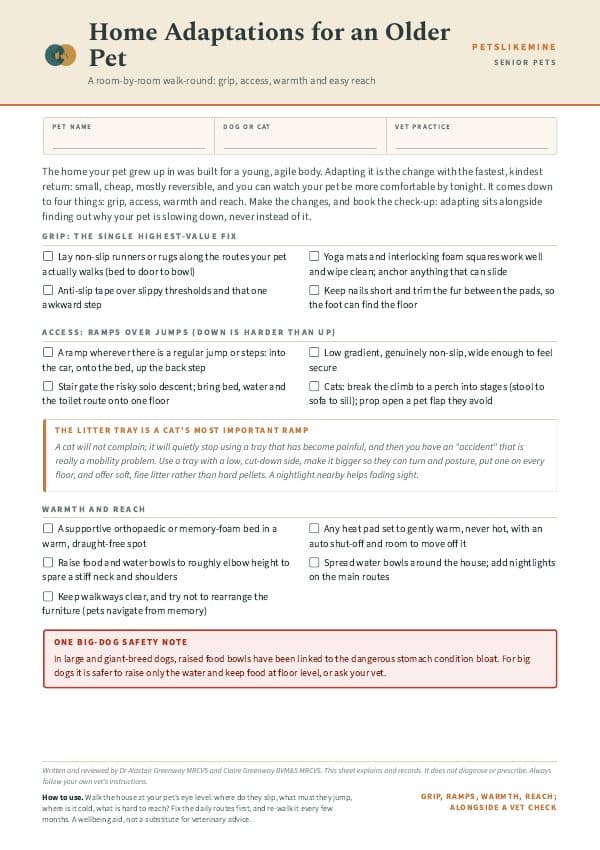
Two small comforts help before any walk or game. The first is warmth: cold stiffens an old body, so a few minutes of slow pottering as a warm-up loosens it, and a coat helps on cold mornings for a short-haired or small dog. A warm (never hot) compress held against a stiff hip for ten to fifteen minutes can ease the first stiff steps, as long as it is padded with a towel, tested against your own skin first, and kept off any fresh injury (Pet Health Network). The second is grip: a pet skidding on a hard floor learns to dread crossing it, so a few runners, rugs or yoga mats over the routes they use most turn a frightening slip into confident steps. We gather these adjustments in making your home work for an older pet.
A gentle playbook for keeping a dog moving
For dogs, the most useful rule comes straight from UK veterinary advice and is worth pinning up: little and often. Joints stiffen most when they have not been used, so several short, gentle outings beat one long expedition, and a steady daily rhythm does more good than the occasional big day out (PDSA). The aim is to keep the engine ticking over, not to test it.
In practice, for an older dog:
- Shorten the route, not the habit. A daily walk half its old length, with rest stops along the way, keeps the joints supplied and the muscle working. What to avoid is stopping walks altogether, which is what tips a stiff dog into a weak one.
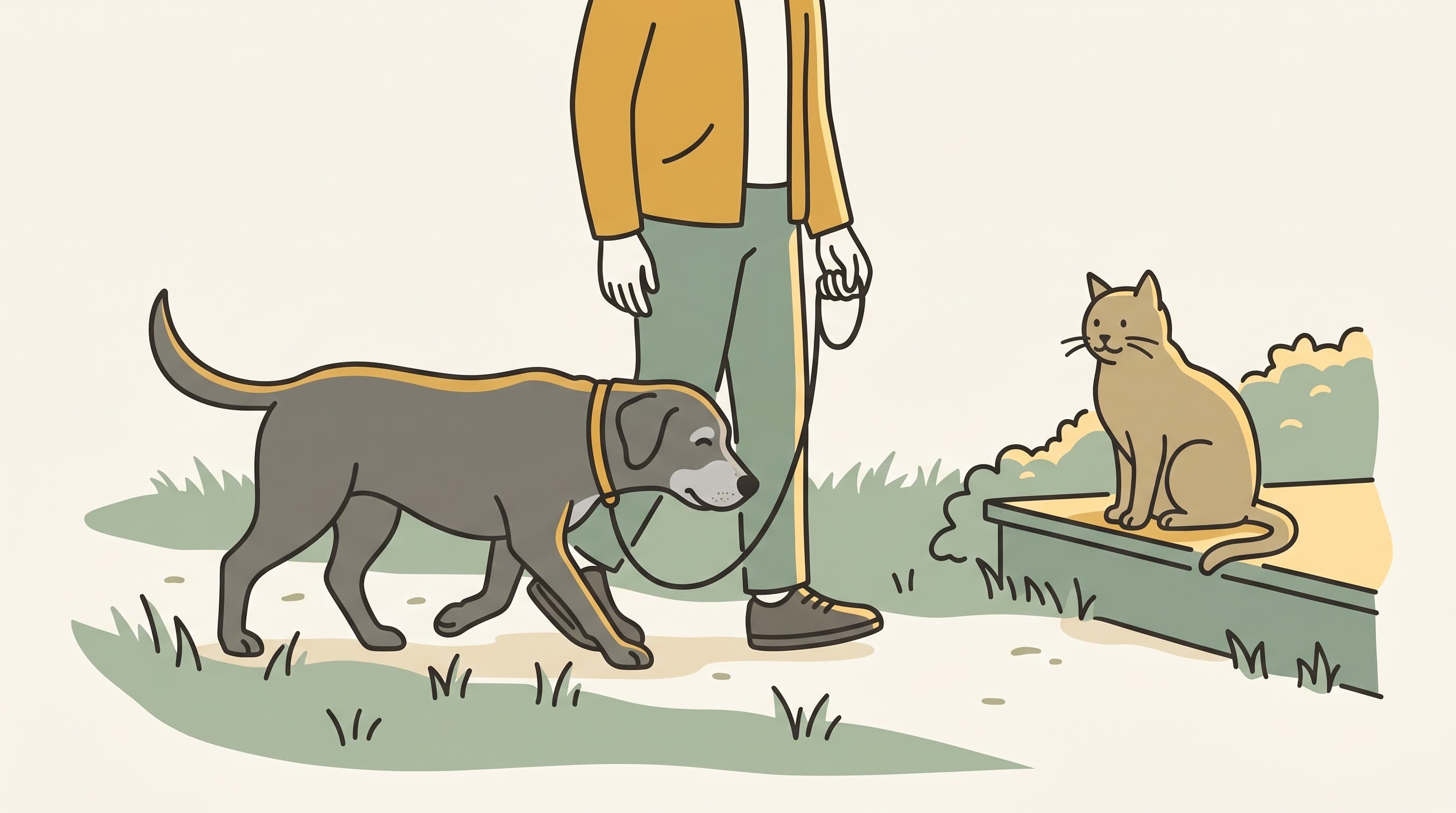
- Make it a sniffing walk. A slow amble where your dog reads every lamppost is gentle on the joints, brilliant for an ageing mind, and tires them pleasantly without the pounding of a run. A short, snuffly walk is not a lesser one.
- Keep it low-impact. Lead walks on the flat or up gentle slopes, gentle play and swimming are kind to sore joints; hard sprinting, sudden turns, jumping for a ball and skidding stops are the high-impact moves to ease off. Swimming and professional hydrotherapy are especially good, because the water lets a dog work the muscles hard while the joints barely take any load (Mille et al., 2022; PDSA).
- Work the balance, gently. Slow walking over varied ground, weaving between your legs, or stepping over a broomstick on the floor asks the body to balance and place each foot, keeping the coordination that stops an older dog from stumbling. A veterinary physiotherapist can build a home programme if you want one.
- Always go at their pace. Days vary, and a good owner reads them. If your dog lies down, lags or looks like they have had enough, the walk is finished, not a hurdle to push through. The dog in front of you sets the length, not the clock.
A gentle word about how much. It is tempting to read "dogs that exercised more were less lame" as a target, but that finding describes dogs already coping well moving more freely; it is not a licence to march a sore dog further than they want to go (Greene et al., 2013). The truthful version is gentler: a bit more movement, spread through the day, at a level that leaves your dog loose and content rather than stiffer the next morning. The morning after is your best gauge.
The hard part is knowing whether you are holding steady or quietly sliding, because the change is slow and the dog looks much the same day to day. This is where a little tracking earns its keep. Our Mobility Check lets you score how your dog is actually moving and watch the trend over weeks, and a thirty-second phone video of your dog getting up from lying down tells your vet far more than any description, because most dogs trot around the consulting room looking deceptively fine.
With cats, the same goal takes a different shape
Cats need every word of this just as much as dogs, and they are the ones we miss, because nobody walks a cat or throws a ball for one. There is no shortened walk to notice and no refused game to worry about. An arthritic cat simply, quietly, rearranges its whole life around the soreness, stops jumping and climbing, and the muscle wastes away in silence. Sore joints are, if anything, even more common in old cats than old dogs. So the goal is identical, keep them moving to protect joints and muscle, but for a cat "exercise" means play and access, not a walk:
- Gentle hunting play, little and often. A few short sessions a day with a feather wand, a toy mouse dragged along the floor or a slow laser dot encourage your cat to stalk, pounce and stretch, keeping joints supple and muscle toned. Keep it low and unhurried, with a treat to "catch" at the end so a laser game does not just frustrate them. Shorter and gentler than their kitten days is exactly right (International Cat Care).
- Give them back their high places, with steps. A cat that has abandoned the windowsill, the bed or the sofa is usually telling you the jump now hurts. Ramps, a footstool, or a couple of stable boxes as a staircase let them reach a favourite perch again, which means more movement and a happier cat (VCA Hospitals).
- Make the basics easy to reach. A litter tray with one low side to step into rather than climb, food and water that needs no jump, and warm soft beds in easy spots all keep an old cat using their body instead of holding it still. The same adaptations are gathered in making your home work for an older pet.
- Keep them lean. Every extra pound is extra load on sore feline joints, so getting an overweight cat to a healthy weight is one of the most effective things you can do for their mobility (International Cat Care). Let your vet guide it, because crash dieting a cat is genuinely dangerous.
If your cat has stopped jumping, grooming their back end, or using the litter tray reliably, that is not simply an old cat being an old cat; it is very often treatable joint pain, and worth a vet visit before you adapt around it. The Arthritis space covers cats fully, and once the pain is eased, gentle play and easy access are how you keep the body working.
This week's jobs, and the longer thread
Movement is one of the rare medicines with no prescription and almost no downside, as long as it is gentle, regular and matched to the pet in front of you. A few small jobs get you started:
- Feel the muscle. Run a slow hand down the spine and over the hips, noting whether it feels full or thin over the bone. Do it again in a fortnight, so you are watching a trend rather than guessing.
- Time what they do now. Roughly how long is the current walk, or how many minutes of play does your cat manage? Write it down as a baseline, and let the morning after tell you whether it suited them.
- Set them up to succeed. A warm-up before activity, a coat on cold days, grippy mats over slippery floors, and ramps or steps to the places a cat or small dog has stopped reaching.
- Weigh them. A lean pet moves more easily and hurts less. If the number is creeping up, or dropping, raise it with your vet.
- Log their Vitality and run a Mobility Check. Energy, muscle and how they move are exactly what these track, so you can catch a slide early and show your vet what really happens at home rather than what the consulting room sees.
- Book the senior check, or sooner if they are reluctant to move. A sudden unwillingness to walk, jump or climb is pain talking, not age, and it earns a vet visit rather than a longer rest.
Adapting an active pet to a gentler routine can stir up its own quiet grief, the shortened walk you both used to love, the game that has to end early. You are not alone in that, and our senior community is full of owners trading what has worked, from hydrotherapy pools to the perfect set of cat steps. For anyone much further down the road, with a pet whose movement is fading despite everything, that is a different and tender question, held gently in tracking good days and bad days and the Rainbow Bridge space when the time comes. For most older pets, though, the road ahead is long, and this week's task is the hopeful one: keep them moving, gently, every day, so the body stays strong enough to carry them comfortably through the good years ahead.
Free downloads
Companion worksheets to put what you've read into practice. Free PDFs, print at home.
Sister tool · Sightline
Track quality of life over time
Sightline, a separate ConciergeVet tool, runs a short adaptive weekly assessment with a quality-of-life focus mode built around exactly these frameworks, tracks a single composite score over time so you can see the trend rather than judge a single bad day, and produces a Sightline Report PDF you can bring to your vet.
A written log, or our printable quality-of-life sheet, does much the same job.
See how Sightline tracks quality of lifeKeep track of how your pet is doing
The owners who cope best are the ones who notice changes early. A simple health log shows you what is working, and what is not, before the next vet visit.
Start tracking, freeYou're not doing this alone
Compare treatment journeys and talk to owners managing senior pets. Free to join.
Join PetsLikeMine