

Fructosamine and the Vet Rechecks: The Bigger Picture of Control
Alastair Greenway
BVM&S MRCVS
A few weeks into life with a diabetic pet, the rechecks start to feel like a ritual. You bring your dog or cat in, often with a phone full of home readings, the vet draws a little blood, weighs them, has a feel, and then talks about a number you may never have heard of: fructosamine. And a fair question forms, especially if you've been pricking ears at home: what is this test actually adding? The answer is the bit the forums skip. It's a brilliant, stress-proof average with two real failings that mean you should never read it on its own.
What fructosamine actually is
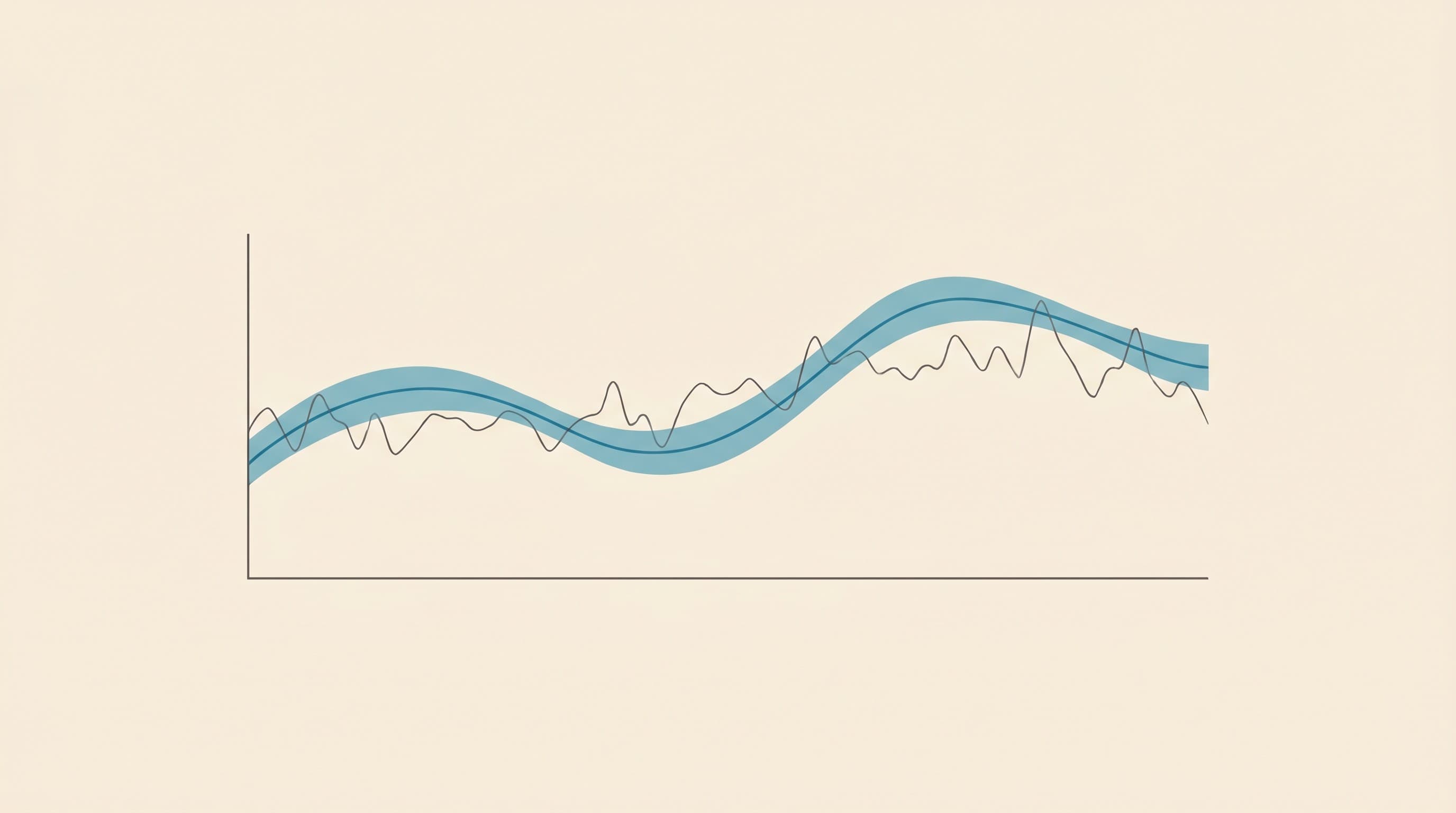
Fructosamine is glucose that has stuck, more or less permanently, to the proteins in the blood, mainly albumin. The more glucose has been floating around in recent weeks, the more gets bound on, so the level reflects the average blood glucose over roughly the previous one to three weeks (Behrend et al., 2018; Taylor et al., 2025). A spot glucose tells you the weather right now. Fructosamine tells you the climate of the last fortnight.
That memory is why it earns its place. A single blood glucose can be thrown completely by one bad moment, the frightened cat being the classic example, but fructosamine doesn't budge for a single spike (Behrend et al., 2018; Crenshaw & Peterson, 1996). That property first earned it a place at diagnosis, covered in getting the diagnosis; what matters here is its second career, the steady average you trend across months and years of treatment.
The reassuring average that can lie
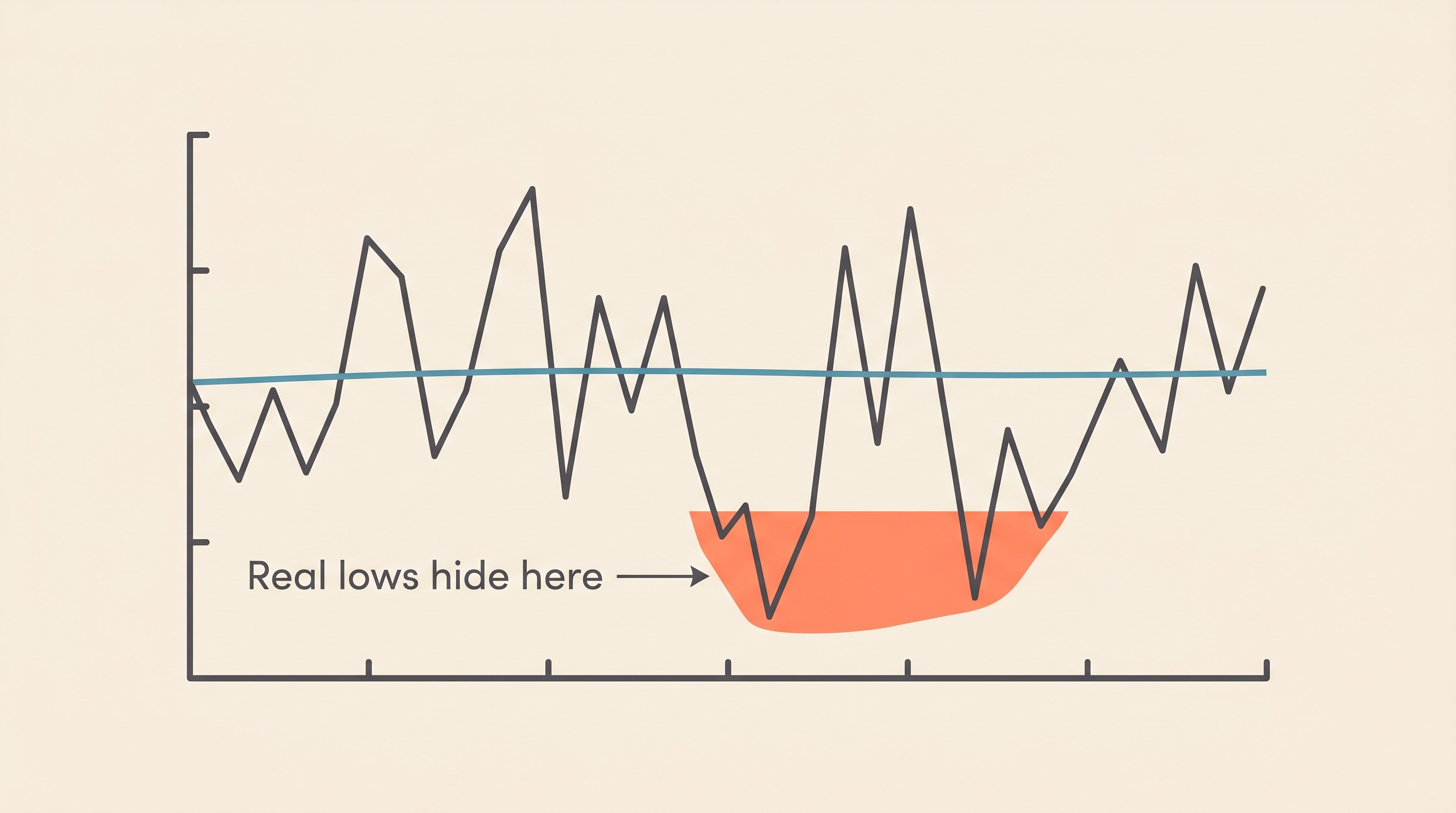
Fructosamine is an average, and an average can lie by being reassuring. A pet can swing between long stretches of high glucose and unpredictable dips into dangerously low glucose, and those extremes can cancel out, so the fructosamine lands in a comfortable-looking middle while the reality underneath is anything but. As one feline review puts it, short periods of hypoglycaemia can go undetected if there are also prolonged bouts of high glucose, because the result is only an average over time (Bugbee & Fujishiro). A good-looking fructosamine can never show you the lows, and the lows are the part that hurts a diabetic pet fastest.
This leads to a truth that catches many owners out. A low, or low-normal, fructosamine is not a gold star, even though every instinct says lower must be better. A fructosamine in the lower half of, or below, the reference range usually means the pet has been spending real time hypoglycaemic, classically from too much insulin or a rebound effect (Bugbee & Fujishiro). The evidence backs this: in diabetic dogs, a lower fructosamine was significantly associated with suspected hypoglycaemic episodes (496 versus 572 µmol/L) (Kuzi et al., 2023), and in a treated cat, a fructosamine dropping into the normal range should prompt a check for overdosing (Taylor et al., 2025). So if the number comes back surprisingly low, you hunt for hidden lows, you don't relax, and you never push the dose up chasing a single high. The hypo emergency and the rebound behind these patterns have their own guides, hypos and the Somogyi effect. For the same reason, fructosamine is the wrong tool for a pet whose diabetes is swinging all over the place, or where a rebound is suspected: you need the shape of the day, a curve or sensor, not one bland average (Ward, 2019). It's a tool for the settled pet, not the crisis.
When the number and the pet disagree
Now the real heart of it: the lab value and how your pet looks frequently do not line up, and when they argue, you investigate rather than obey the number. This is one of the better-studied questions in the field. In a study of 53 insulin-treated diabetic dogs, the glucose and fructosamine results matched the clinical assessment of good control only about three times in five (Briggs et al., 2000). A modern study put it more starkly: in 28 diabetic dogs, fructosamine agreed with the clinical classification for only 14, fifty per cent, no better than a coin toss (Norris & Schermerhorn, 2022). Measured carefully, it's only moderately predictive of clinical status, so a result that disagrees with the picture, or that has come down low, warrants extra monitoring such as a sensor (Kuzi et al., 2023). A separate study using flash sensors as the reference agreed bluntly: fructosamine cannot reliably tell good, moderate and poor control apart, and cannot replace repeated glucose measurements (Zeugswetter et al., 2022).
So fructosamine is a useful average, not a verdict. If the number looks good but your pet is drinking buckets and losing weight, the pet is right and the number needs explaining. In 85 diabetic dogs, the time in a healthy glucose range, the time above it and the mean glucose all tracked with the clinical picture in a way a one-off fructosamine cannot (Del Baldo et al., 2025), which is exactly why a discordant or low result is a prompt to reach for richer monitoring. The sensor and the curve are covered in continuous glucose monitoring and reading a glucose curve; fructosamine points, the curve and the clinical picture decide.
How often you go back
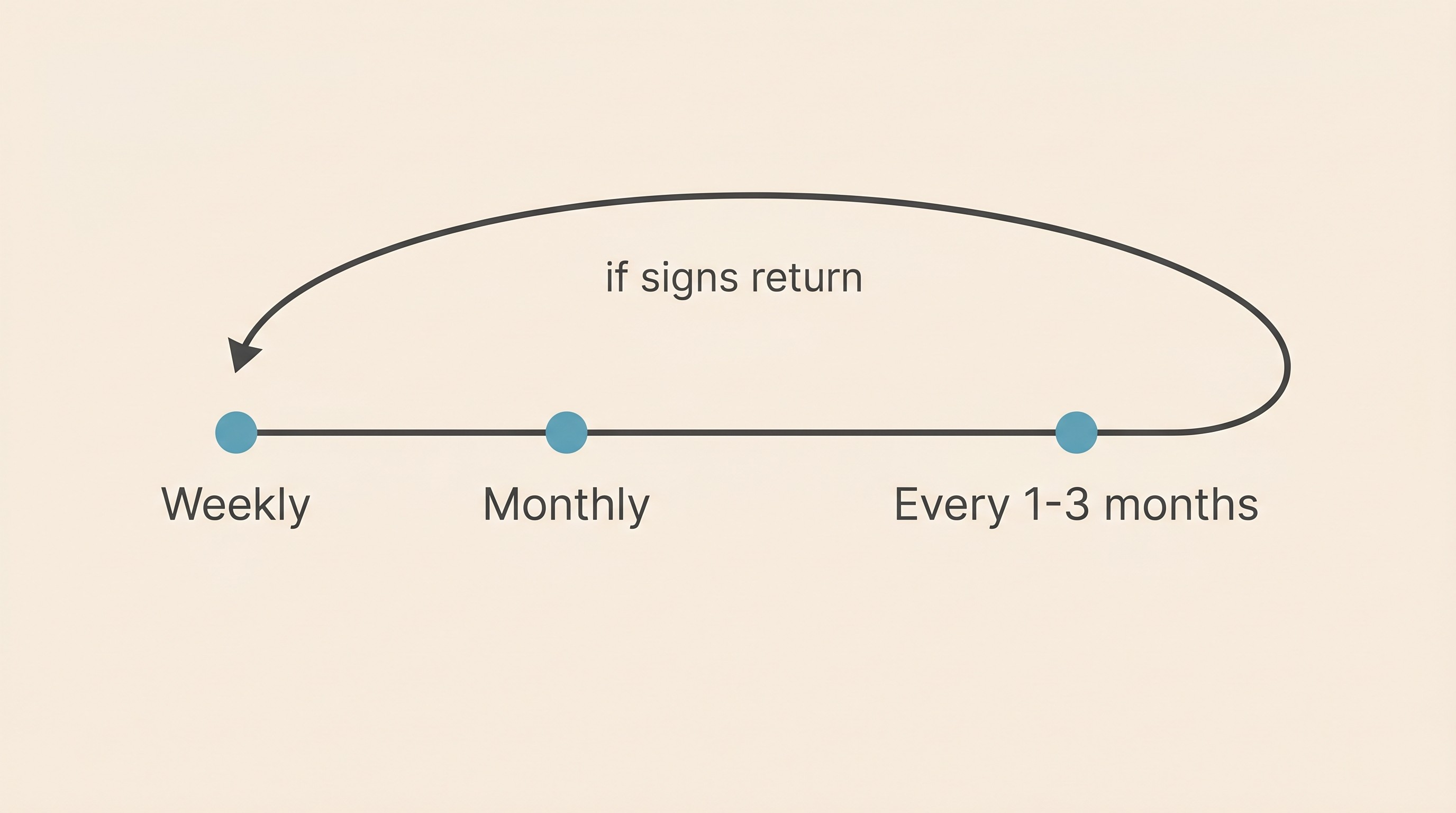
So how often should all this happen? The cadence is a default, not a cage, and the shape is clear: frequent at the start, spaced out once stable, straight back in if anything shifts. At the beginning, and after any dose change, you have to give the body time to settle. Wait seven to fourteen days after a change before reassessing the effect, because it genuinely takes that long for a pet to adjust (Ward, 2019; Behrend et al., 2018). For cats, the feline guidelines front-load the early checks, examining the cat at the end of weeks one, two and four (Taylor et al., 2025). Expect to be back and forth early on: that isn't a sign anything is wrong, it's how the right dose is found safely.
Once your pet is settled, the signs controlled, the weight steady and the dose unchanged, the rechecks space right out, typically to every one to three months, and in a stable cat as far as one to six (Behrend et al., 2018; Bugbee & Fujishiro). The one override: you go back sooner if the old signs creep back, if you worry about a hypo, or if your pet falls ill (Behrend et al., 2018; Taylor et al., 2025).
Inside a recheck
A recheck is never just a blood test; it weaves several streams together, and the blood number is only one. Your vet will take a history of the signs, the thirst, the urinating, the appetite, the energy; weigh your pet and assess body condition, because a steady or recovering weight is one of the best signs of good control while ongoing weight loss is a quiet warning; examine your pet; and look at the glucose data, a fructosamine, a curve or sensor trace, or both, sometimes with a urine check for glucose and ketones (Behrend et al., 2018; Bugbee & Fujishiro). The home log or sensor data you bring is part of this, not a substitute for the visit, because combining what you report with the biochemical data is what makes the assessment accurate (Bugbee & Fujishiro). The deeper teaching on which signs to watch lives in what to watch at home, and a folder of scattered readings becomes a readable trend once the data in the Glucose Companion does the plotting for you.
People want a target to hold, so here is one with a firm caveat. Many vets and owners are content when fructosamine sits around 350 to 450 µmol/L, and results above 450 suggest poorer control and a reason to review the patient (Behrend et al., 2018; IDEXX UK). But a diabetic's fructosamine is expected to sit above the healthy non-diabetic range (Taylor et al., 2025), the exact figures shift between labs and analysers, and you can only compare like with like from the same lab, so the trend over time matters far more than any single absolute (IDEXX UK). These are bands to orient yourself, never a universal pass or fail line.
When your pet looks well, the clinical read often outweighs the lab number (Ward, 2019). A recheck might point towards a dose change, but fructosamine is only ever one input the vet weighs, and you should never adjust insulin yourself off a single result, the subject of how dose titration works.
A feline twist, and the bigger goal
One species-specific point keeps the dog-versus-cat distinction crisp. In a cat, a recheck that comes back "too good," a fructosamine fallen into the normal range or a glucose running low, isn't only an overdose flag. It can be the first hint the cat is heading for remission, the real possibility of coming off insulin altogether, at which point the dose may need cutting and the cat watched closely (Taylor et al., 2025). That is very much a cat thing, and the remission story lives in feline diabetic remission. A diabetic dog, by contrast, is insulin-dependent for life with no remission to aim for, so a too-good number in a dog just means look for the lows. Same test, two diseases. And in either species, if control is genuinely slipping, the answer is rarely to keep ratcheting the insulin up; a good vet hunts for why, in the concurrent diseases that fight insulin.
The thread through all of it is this. The aim was never a textbook-perfect glucose; it's a well, comfortable pet with a good quality of life, the signs controlled and the lows kept at bay, and the evidence freely admits there's no proof a particular target number buys a particular outcome (Taylor et al., 2025). So as the rechecks settle into the background, let the fructosamine be what it is: a useful, solid average, read alongside the curve, the signs and the weight, never on its own. What good control actually looks and feels like day to day is in the well-controlled diabetic pet.
References
- Behrend E, Holford A, Lathan P, Rucinsky R, Schulman R. 2018 AAHA Diabetes Management Guidelines for Dogs and Cats. Journal of the American Animal Hospital Association. 2018;54(1):1-21.
- Briggs CE, Nelson RW, Feldman EC, Elliott DA, Neal LA. Reliability of history and physical examination findings for assessing control of glycemia in dogs with diabetes mellitus: 53 cases (1995-1998). Journal of the American Veterinary Medical Association. 2000;217(1):48-53.
- Bugbee A, Fujishiro M. Managing Feline Diabetes Mellitus. Today's Veterinary Practice. 2019.
- Crenshaw KL, Peterson ME, Heeb LA, Moroff SD, Nichols R. Serum fructosamine concentration as an index of glycemia in cats with diabetes mellitus and stress hyperglycemia. Journal of Veterinary Internal Medicine. 1996;10(6):360-364.
- Del Baldo F, Tardo AM, Gilor C, et al. FreeStyle Libre-derived metrics in assessing glycemic control in diabetic dogs. Journal of Veterinary Internal Medicine. 2025;39(4):e70151.
- IDEXX Reference Laboratories UK. Canine and feline fructosamine reference intervals.
- Kuzi S, Mazaki-Tovi M, Abu Ahmad W, Ovadia Y, Aroch I. Clinical utility of serum fructosamine in long-term monitoring of diabetes mellitus in dogs. Veterinary Record. 2023;192(2):e2236.
- Norris O, Schermerhorn T. Relationship between HbA1c, fructosamine and clinical assessment of glycemic control in dogs. PLoS One. 2022;17(2):e0264275.
- Taylor S, Cannon M, Church D, Fleeman L, Fracassi F, Gilor C, Mott J, Niessen S. 2025 iCatCare consensus guidelines on the diagnosis and management of diabetes mellitus in cats. Journal of Feline Medicine and Surgery. 2025;27(11):1098612X251399103.
- Ward CR. Treating and Managing Diabetes Mellitus in Dogs. Today's Veterinary Practice. 2019.
- Zeugswetter FK, Luckschander-Zeller N, Karlovits S, Rand JS. Evaluation of fructosamine concentration as an index marker for glycaemic control in diabetic dogs. Veterinary Record. 2022;191(7):e244.
Keep track of how your pet is doing
The owners who cope best are the ones who notice changes early. A simple health log shows you what is working, and what is not, before the next vet visit.
Start tracking, freeYou're not doing this alone
Compare treatment journeys and talk to owners managing diabetes mellitus. Free to join.
Join PetsLikeMine