

Daily life with an atopic pet: bathing, barrier, omega-3 and lowering the load
Alastair Greenway
BVM&S MRCVS
Most atopic pets come to this point with a diagnosis, a plan, and a drug or two doing the heavy lifting. This article is about everything else: the unglamorous things you do at home between appointments. None of it replaces the medicine. What it does, done consistently, is lower how much medicine your pet needs to stay comfortable, a real and worthwhile goal that most product pages quietly oversell. So this piece tells you what genuinely helps and is straight about exactly how much each measure is proven to do.
Why every home measure pulls in the same direction
Atopic flares are not switched on by a single thing. They happen when the total irritant load, allergens on the skin, a leaky barrier, dryness, a flea or two, a grumbling infection, stacks above your pet's personal tolerance (Olivry et al., 2015). Every home measure here works the same way: it takes one layer off the pile and buys a little headroom under the line. That idea, the itch threshold, is explained properly in the itch threshold, and it is why lots of small habits beat one miracle product, and why none of them is a cure alone.
This routine is not fringe or alternative, either. The international veterinary dermatology guidelines (ICADA) place skin and coat hygiene, more frequent bathing and essential fatty acid intake among the very first steps of managing chronic atopic dermatitis, alongside the drugs rather than instead of them (Olivry et al., 2015). It is mainstream first-line maintenance. The counterweight worth keeping in mind: for most atopic pets this layer reduces the dose needed but rarely removes the need entirely, and the evidence behind several of these measures is only modest (Olivry et al., 2015; Olivry and Bizikova, 2013).
Bathing: the strongest of the home measures
Bathe your pet properly and regularly: of all the home measures, this has the best support. The ICADA consensus recommends bathing at least once weekly with a mild, non-irritating shampoo and lukewarm water, and goes as far as saying the intensity and frequency of bathing may be the single most important factor in relieving itch (Olivry et al., 2015).
It helps because bathing physically lifts allergens (pollen, dust-mite debris) and microbial load off the skin, rehydrates it and soothes inflammation, all of which lightens the load on an over-reactive barrier (Olivry et al., 2015). In atopic pets, allergens get in through the skin itself, the so-called epicutaneous route (Marsella et al., 2011), so rinsing them off before they cross a faulty barrier is the point.
A few technique points, because this is what owners actually want to know:
- Lukewarm, never hot. Hot water aggravates the itch and dries the skin out (Olivry et al., 2015).
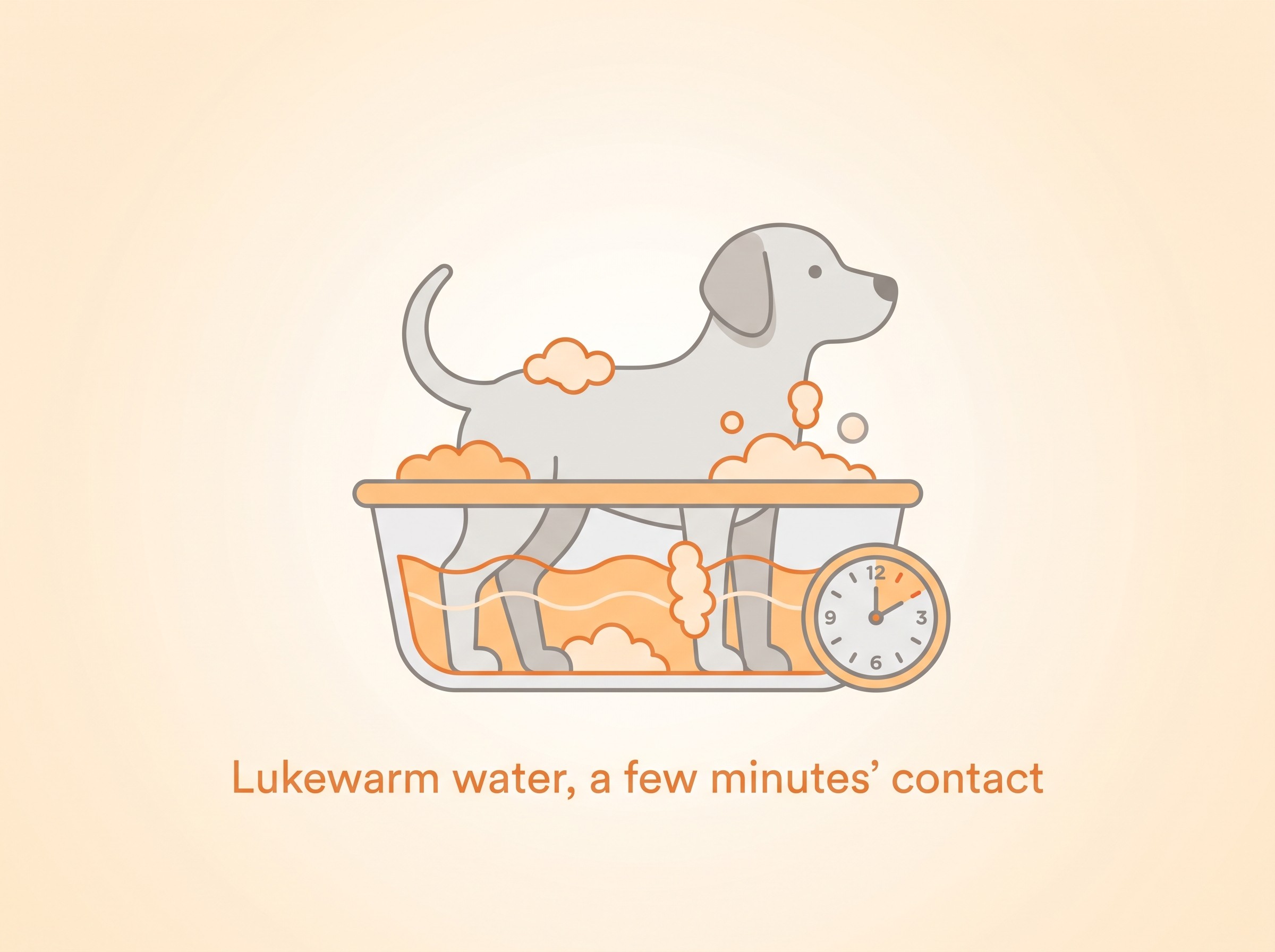
- Leave the lather on for a few minutes, but you need not be heroic. Older advice quoted a full ten minutes, but a study of a 3% chlorhexidine/ophytrium shampoo in healthy dogs found no meaningful difference in antimicrobial effect between three, five and ten minutes of contact (McHale et al., 2026). So leave it on a few minutes rather than rinsing straight off, but do not fight your pet for ten. (That study measured germ-killing on healthy skin, so this is for routine soothing baths, not a claim that a quick wash clears an established infection.)
- Frequency is individual. At least weekly is the floor during active management (Olivry et al., 2015); some pets need twice weekly in a bad patch and less when settled. Tracking, below, is how you find your pet's number.
- Shampoo choice. A mild, soap-free base is the default. Specific soothing formulations (for example those built around phytosphingosine and lipids, or lipids with complex sugars and antiseptics) show a modest benefit on lesions and itch, greatest in milder disease (Olivry et al., 2015). Medicated antimicrobial shampoos are a different tool, for when infection is part of the picture, and that decision belongs with skin and ear infections.
One caveat, so you judge bathing by results and not faith: even bathing is not magic. A small randomised study (17 dogs) found weekly bathing improved skin lesion scores but produced no significant change in the owner-rated itch score over a month (Taguchi et al., 2024), and over-bathing or the wrong product can itself dry and irritate the skin (Olivry et al., 2015). So do it, do it properly, and change product if things get drier rather than better. That study does not overturn the consensus that bathing helps, but its fine-bubble arm did beat plain shampoo on lesions, so technique and product genuinely matter.
A note for cat owners: bathing many cats is, to put it gently, harder, and plenty tolerate a damp wipe-down better than a full bath. The feline routine has its own wrinkles, covered in feline atopic syndrome.
Barrier repair: plausible, but mind the marketing
Atopic skin has a measurably faulty barrier: abnormal surface lipids, fewer and more disordered ceramides, more water lost through the skin, so it dries out and lets allergens in more easily (Olivry, 2011). The fuller explainer lives in atopic dermatitis explained; that one-line version is the reason moisturising topicals and dietary fats are talked about at all.
Here is the verdict product marketing will not give you. Barrier-repair topicals, the ceramide and lipid "spot-on" pipettes, sprays and mousses, are biologically plausible and can normalise the skin's lipid profile in the lab, but solid proof that any one of them changes how a pet actually does is still thin, and the consensus does not recommend them as a standalone treatment (Olivry et al., 2015; Marsella, 2013; Olivry, 2011). So treat them as reasonable adjuncts on top of bathing and the medical plan, not something to spend a fortune on expecting a transformation: try one, judge it on the skin over a few weeks, drop it if nothing changes. They help most on dry, scaly skin and least where the problem is greasy yeast overgrowth, which needs a different approach (see dandruff, greasy coat and seborrhoea).
Omega-3 and diet: worthwhile, slow, and badly oversold
This is the most over-sold layer, so it gets the most precise treatment. What the evidence actually supports: oral essential fatty acids, chiefly the marine omega-3s EPA and DHA from fish oil, may give a small reduction in the signs of atopic dermatitis, but the improvement is limited, they are not suitable as a sole treatment, and there is no proven best combination, ratio, dose or formulation (Olivry et al., 2015; Olivry and Bizikova, 2013). Anyone selling fish oil as an itch cure is overstating it.
There are two genuine reasons to bother anyway. The first, and the real win, is that it is drug-sparing: in a randomised, double-blind, placebo-controlled trial, dogs given essential fatty acids needed significantly less prednisolone than those on placebo, the difference reaching significance from day 64 onwards (Saevik et al., 2004), and the same effect has since been shown for ciclosporin (Müller et al., 2016). The second is broader support for the coat and the skin's overall lipid picture (Olivry et al., 2015).
The thing nobody tells owners: it is slow. The benefit, if it comes, is typically not seen before about two months of consistent supplementation, and the steroid-sparing effect above only emerged after roughly that long (Olivry et al., 2015; Saevik et al., 2004). If you try fish oil for a fortnight and give up, you have not given it a fair run. This slow, "is it doing anything?" question is exactly what the Skin & Itch Tracker is built to answer: log the itch score before you start and watch the trend over the following months, rather than trusting a hunch. Owner itch scoring is a validated, vet-recognised measure (Hill et al., 2007; Rybníček et al., 2009), which is what makes that tracked number meaningful and not just a feeling.
On dose, agree the actual number with your vet, but as a ballpark, therapeutic marine omega-3 for itchy skin in dogs is commonly given in the region of tens of milligrams of EPA per kilogram per day, drawn from the canine skin and inflammatory studies (Bauer, 2011). More is not automatically better: the safe upper limit is not formally established, so caution is advised at high doses, where there are possible effects on clotting (the evidence is mixed), looser stools, and a load of extra calories (Bauer, 2011). Quality matters too: fish oil oxidises and goes rancid easily as a liquid at room temperature, so buy from a reputable maker, store it cool and sealed, and bin it if it smells off. And check before stacking a supplement on top, because many therapeutic skin diets already contain substantial EPA and DHA, and such a diet is itself a reasonable route to supplementation (Bauer, 2011; Olivry et al., 2015). If your pet is also on a food trial, that is its own piece of work, owned by the Food Allergies group and logged in the Elimination-Diet Companion.
Lowering the allergen load at home: good habits, not a budget priority
This is where the evidence is thinnest, and you deserve to be told so. House dust mites are the single most important allergen source for atopic dogs worldwide, so reducing exposure is biologically sensible, but which specific measures actually prevent flares has never been established, and the consensus rates this layer only modestly, resting on a single uncontrolled study (Olivry et al., 2015). So the right framing is low-cost good habits, not an expensive crusade.
The measures worth doing, all cheap and unlikely to harm: wash pet bedding hot and regularly; cut down soft furnishings and clutter where your pet sleeps; vacuum often; keep your pet out of the dustiest rooms. A quick paw-wipe and rinse after walks in pollen season is sensible too, taking allergen off the feet and coat before it crosses the faulty barrier, the same logic as bathing (Marsella et al., 2011). And if your tracking has flagged a particular trigger, a certain grass, smoke, a specific bedding, avoid it.
What not to do matters just as much. Do not be talked into air purifiers, anti-mite sprays and special vacuums on the promise of a cure: this is the softest of the four layers, and your money is better spent elsewhere. And steer well clear of aggressive "natural" remedies. Strong essential oils, undiluted vinegar and harsh scrubbing can damage an already-fragile barrier, and tea tree oil in particular is genuinely dangerous: concentrated tea tree oil applied to dogs and cats causes a recognised toxicosis, with most exposed animals in one large case series developing adverse effects (Khan et al., 2014).
Building a rhythm you can actually keep
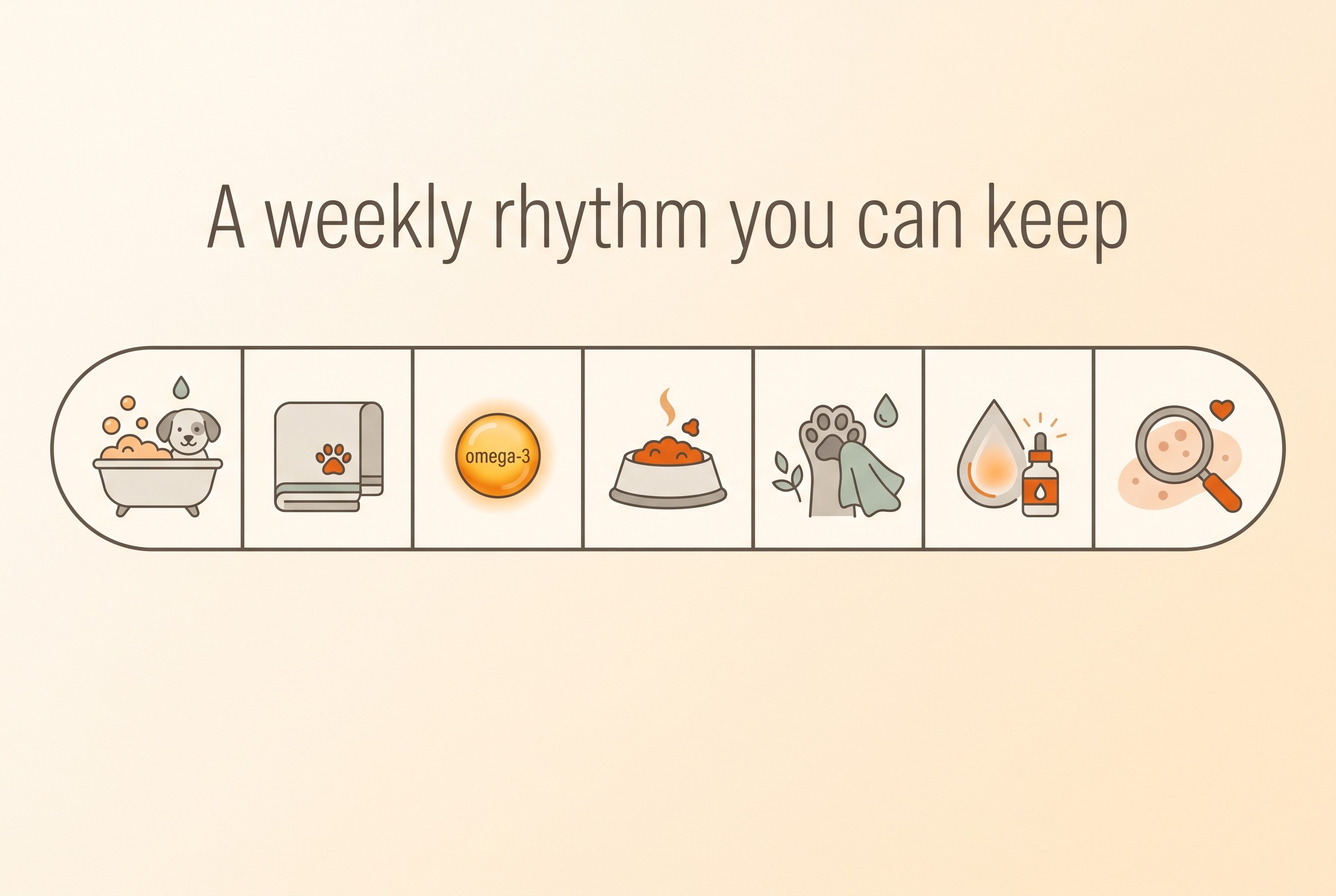
The best routine is the one you can sustain: a set bath day, omega-3 with breakfast, a paw-wipe by the door and a quick weekly skin check, done every week, beats an ambitious regime abandoned after a fortnight.
Tracking is what makes the whole thing rational. Because every pet's threshold and triggers differ, and the evidence for several of these measures is only "maybe", the single way to know what is actually helping yours is to watch the itch score over time as you add or change things. The Skin & Itch Tracker does that: it surfaces your pet's own seasonal pattern and hands your vet real data at the next visit instead of an impression. (The home-exam and scoring method itself is owned by checking your pet's skin at home.)
One last thing competitor pages get wrong: they flatten these layers into one undifferentiated "do all the things". They are not equal. Bathing is the best supported; omega-3 is modest but real, slow and usefully drug-sparing; barrier topicals are plausible with thin evidence and fine as adjuncts; home allergen measures are the weakest, worth doing only as cheap good habits. Spend your effort in that order.
And none of it sits above the medicine. Ears that flare, or an infection brewing, are their own jobs, handed to recurrent ear infections and skin and ear infections, and the medical toolkit this whole routine sits underneath is your treatment toolkit. Keep the rhythm up, watch the tracked score, and treat the next creeping rise or first hot patch as a cue to step up the plan early rather than wait, which is where riding out a flare takes over.
References
- Olivry, T., DeBoer, D. J., Favrot, C., Jackson, H. A., Mueller, R. S., Nuttall, T., Prélaud, P., & the International Committee on Allergic Diseases of Animals (ICADA). (2015). Treatment of canine atopic dermatitis: 2015 updated guidelines from the International Committee on Allergic Diseases of Animals (ICADA). BMC Veterinary Research, 11, 210. (PMC4537558)
- Saevik, B. K., Bergvall, K., Holm, B. R., Saijonmaa-Koulumies, L. E., Hedhammar, A., Larsen, S., & Kristensen, F. (2004). A randomized, controlled study to evaluate the steroid sparing effect of essential fatty acid supplementation in the treatment of canine atopic dermatitis. Veterinary Dermatology, 15(3), 137-145.
- Müller, M. R., Linek, M., Löwenstein, C., Röthig, A., Doucette, K., Thorington, K., & Mueller, R. S. (2016). Evaluation of cyclosporine-sparing effects of polyunsaturated fatty acids in the treatment of canine atopic dermatitis. The Veterinary Journal, 210, 77-81.
- Olivry, T., & Bizikova, P. (2013). A systematic review of randomized controlled trials for prevention or treatment of atopic dermatitis in dogs: 2008-2011 update. Veterinary Dermatology, 24(1), 97-117.e25-26.
- Olivry, T. (2011). Is the skin barrier abnormal in dogs with atopic dermatitis? Veterinary Immunology and Immunopathology, 144(1-2), 11-16.
- Marsella, R. (2013). Fixing the skin barrier: past, present and future, man and dog compared. Veterinary Dermatology, 24(1), 73-76.e17.
- Taguchi, N., Onishi, I., Iyori, K., & Hsiao, Y.-H. (2024). Preliminary evaluation of a commercial shampoo and fine bubble bathing in the treatment of canine atopic dermatitis: a single-blinded, randomised, controlled study. Veterinary Dermatology, 35(4), 400-407.
- McHale, M., Bettenay, S., Paterson, G. K., Nuttall, T., & Robinson, V. (2026). Evaluation of the antimicrobial activity of a 3% chlorhexidine/ophytrium mousse and shampoo in 18 healthy dogs. Veterinary Dermatology, 37(3), 345-352.
- Bauer, J. E. (2011). Therapeutic use of fish oils in companion animals. Journal of the American Veterinary Medical Association, 239(11), 1441-1451.
- Hill, P. B., Lau, P., & Rybnícek, J. (2007). Development of an owner-assessed scale to measure the severity of pruritus in dogs. Veterinary Dermatology, 18(5), 301-308.
- Rybnícek, J., Lau-Gillard, P. J., Harvey, R., & Hill, P. B. (2009). Further validation of a pruritus severity scale for use in dogs. Veterinary Dermatology, 20(2), 115-122.
- Marsella, R., Olivry, T., Carlotti, D.-N., & the International Task Force on Canine Atopic Dermatitis. (2011). Current evidence of skin barrier dysfunction in human and canine atopic dermatitis. Veterinary Dermatology, 22(3), 239-248.
Keep track of how your pet is doing
The owners who cope best are the ones who notice changes early. A simple health log shows you what is working, and what is not, before the next vet visit.
Start tracking, freeYou're not doing this alone
Compare treatment journeys and talk to owners managing allergies & skin. Free to join.
Join PetsLikeMine