


Living with a chronically sick gut: B12, fibre, the microbiome and managing flares
Alastair Greenway
BVM&S MRCVS
A few weeks after a chronic enteropathy diagnosis, once the worst of the diarrhoea has settled and the food has been changed, a quieter question tends to surface: what now? This article is the answer to that one. Not what chronic enteropathy is, how it is diagnosed, or which medicines go where, because those have their own homes in this space, but the supportive scaffolding around them that keeps good days outnumbering bad.
Playing the long game: control rather than cure
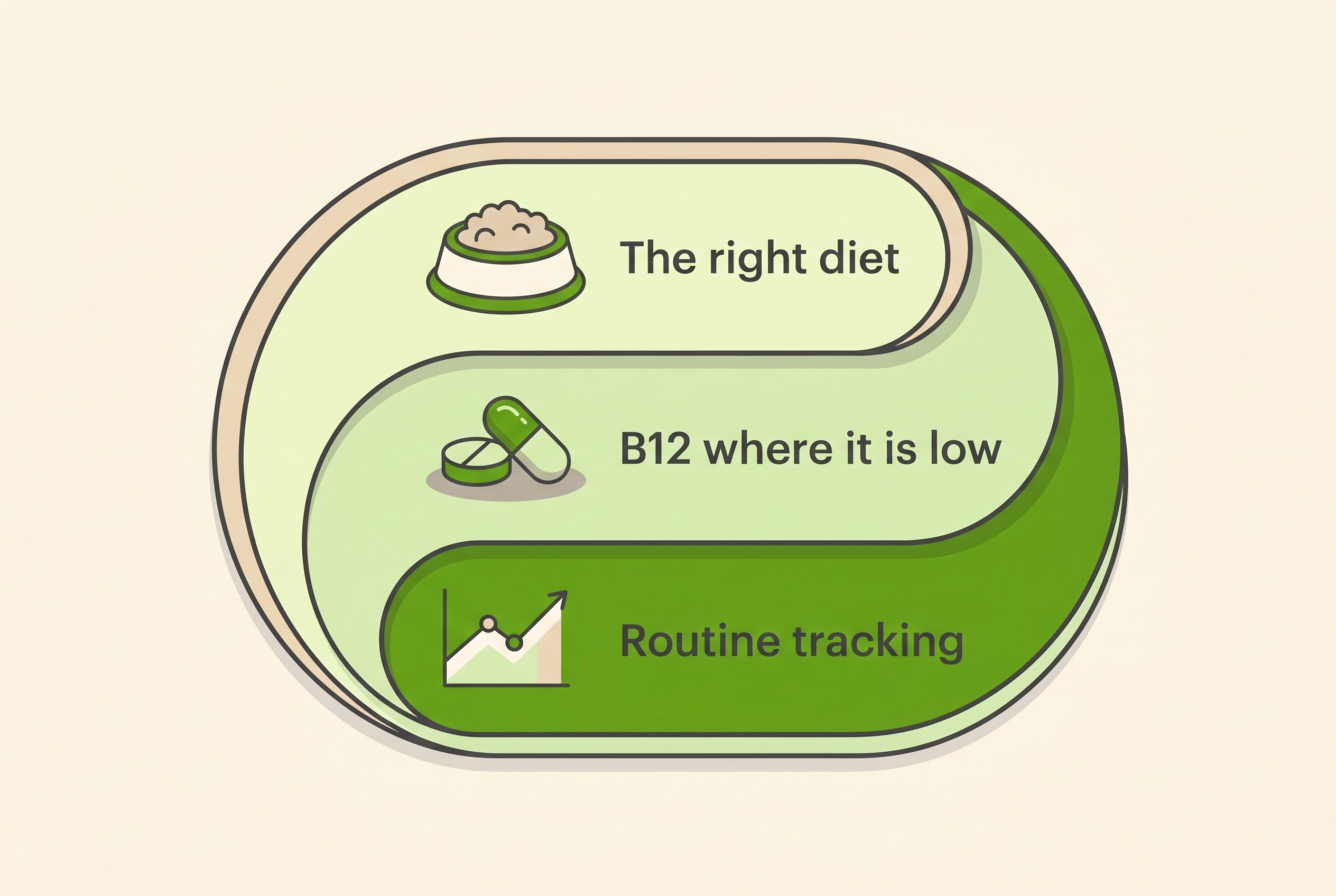
Most chronic enteropathy is managed rather than cured (Dandrieux, 2016). I say that not to deflate you but to free you: once you stop waiting for a finish line you can settle into something more sustainable, the lowest treatment that keeps your pet well, fed consistently and watched gently. The largest group, the food-responsive ones, often do very well long-term, frequently on the right diet alone, but they relapse if the regime slips (Allenspach et al., 2007; Dandrieux, 2016; Heilmann et al., 2026). A flare, when it comes, is a setback to manage rather than a failure on your part, and many of these dogs and cats live full, normal-length lives.
The catch is that you cannot manage what you cannot see. Response and relapse in chronic enteropathy are judged on the things you can measure, the stool and the bodyweight, not on a general sense of how your pet looks on the day (Allenspach et al., 2007). A faecal score creeping up, an appetite quietly tailing off: those early signals are far easier to read against a logged baseline than from memory. This is why I steer owners towards the Faecal Score Tracker from the outset, before anything has gone wrong, so the normal pattern is on record and any drift stands out. (The 1 to 7 scoring chart, and how to photograph and describe stool, lives in describing symptoms to your vet.)
Cobalamin: the cheap fix that gets missed
If there is one thing I want to lodge in your mind, it is vitamin B12, properly called cobalamin: undramatic, inexpensive, and overlooked far too often.
Low blood cobalamin is common in chronic gut disease. Reported rates of hypocobalaminaemia in canine chronic inflammatory enteropathy run roughly 19 to 38 per cent, and higher still in exocrine pancreatic insufficiency, around 82 per cent of those dogs (Kather et al., 2020). The reason is mechanical: B12 is absorbed right at the end of the small intestine, the ileum, by a route that depends on both a working pancreas and a healthy gut wall, and chronic enteropathy disrupts exactly that machinery (Kather et al., 2020).
Low cobalamin is not a passenger, though; it flags a worse outcome. It was among the risk factors for a negative outcome in dogs with chronic enteropathy, and low B12 at diagnosis predicts pets likely to be refractory to treatment (Allenspach et al., 2007; Kather et al., 2020). So a pet that will not respond may simply have an unaddressed deficiency dragging it down, worth measuring and correcting before anyone concludes the disease itself is resistant. B12 is also needed for the gut lining to renew itself and for normal energy and appetite, so correcting it is sometimes the single change that lets a stuck pet gain weight again (Kather et al., 2020).
Here is the bit owners rarely expect. The old assumption was a monthly B12 injection, but for most dogs a daily tablet works as well. Daily oral cyanocobalamin restored normal serum cobalamin in dogs with chronic enteropathy (Toresson et al., 2016), and a randomised comparison found oral and injectable had the same effect on serum cobalamin and on methylmalonic acid, the marker of whether the vitamin is actually reaching the cells (Toresson et al., 2019). More recent trials agree both routes work (Chang et al., 2022; Dor et al., 2024). So the owner who dreads regular jabs can usually give a tablet at home.
This is "monitor and confirm", though, not "tablet and forget". In that cellular-marker study neither route fully normalised methylmalonic acid in every dog by day 90, and a minority respond only modestly to the oral form (Toresson et al., 2016; Toresson et al., 2019). So the modern recommendation is to measure serum cobalamin, supplement where it is low or low-normal with signs, then recheck to confirm it has corrected (Kather et al., 2020; Heilmann et al., 2026). I am deliberately not printing a dose, which is your vet's call, and where cobalamin sits within EPI is covered in managing EPI. Cats need this attention too, sometimes more so, but the feline picture has its own home in feline chronic enteropathy.
Feeding for the long haul, and the truth about fibre
Once a diet trial has found the food your pet does well on, the job changes from detective work to discipline. The mechanics of that trial, hydrolysed versus novel protein and the two-to-three-week read, belong to the diet trial article and the Diet-Trial Companion. The long-term task is harder than it sounds: stick to the food that holds the gut steady, and resist the slow drift back to old treats, table scraps and flavoured chews. (If your pet also has itchy skin, the cutaneous side of food reactions lives in the Allergies and Skin space at food allergies explained; the gut articles own only the digestive side.)
Fibre is a useful lever, with one caveat. For a real subset of dogs, especially those with large-bowel signs (loose, frequent, urgent, mucousy stool), added soluble fibre helps. Psyllium is the best-studied: added to a highly digestible diet, it improved or resolved chronic large-bowel diarrhoea in most dogs in the classic series of 37 cases (Leib, 2000), and a modern study in police working dogs found a very good or good response in around nine in ten (Alves et al., 2021). Fibre acting as a prebiotic and a fuel for the cells lining the colon is a recognised tool in canine and feline gut disease (Moreno et al., 2022). But it suits the right pet, not every pet, and more is not better: over-supplementing can worsen stool or cause wind, so the amount is titrated to a formed-not-firm stool, another job the Faecal Score Tracker does well, and one to add on your vet's advice (Moreno et al., 2022). And a word on pumpkin, which so many owners reach for: a spoonful is harmless and a modest source of soluble fibre, but it is not a treatment for chronic enteropathy, so do not expect it to do the heavy lifting.
The microbiome, told straight
This is the part of the internet most thick with hype, so let me be plain. The dysbiosis is real, not marketing. Dogs with chronic enteropathy have a reproducibly altered gut microbiome, with reduced diversity, fewer beneficial bacteria such as Faecalibacterium and Clostridium hiranonis, and more E. coli, and there is a validated faecal dysbiosis index, a qPCR panel of seven bacterial groups, that can measure it (AlShawaqfeh et al., 2017; Suchodolski, 2022). The real question is what an owner can usefully do about it.
The first answer is a quiet one: protect what you have. Antibiotics damage the very microbiome we are trying to nurture. Fourteen days of metronidazole in healthy dogs reduced microbial richness and key bacteria and impaired their bile-acid handling, none of it fully recovered four weeks after stopping (Pilla et al., 2020). That is why long-term antibiotics are no longer the reflex they once were, and why a flare plan should not start with leftover tablets. The fuller argument lives in antibiotics for diarrhoea, and where they still fit in the treatment article.
What about the headline interventions? Faecal microbiota transplantation deserves a fair hearing without overselling. It can shift the dysbiosis index back towards normal where metronidazole cannot (Chaitman et al., 2020), and uncontrolled case series have looked encouraging. But the first blinded randomised controlled trial in dogs with chronic enteropathy found no significant added benefit over standard care: improvement at day 90 was 76 per cent with the transplant versus 73 per cent with a diet change alone (Allerton et al., 2026). So it is a promising tool some specialists reach for in refractory cases, not a proven shortcut to chase.
Probiotics deserve the same caution. Quality and labelling vary widely between products, and any benefit is strain-specific, so a clinician should be able to point to evidence for the particular strain used (Schmitz and Suchodolski, 2016; WSAVA GI Guidelines). A specific multi-strain probiotic produced measurable microbiological, immunological and clinical improvement in canine inflammatory bowel disease, but the dogs on conventional treatment reached remission faster, so even a good probiotic is a modest adjunct rather than a standalone therapy (Rossi et al., 2014; White et al., 2017). An evidenced strain may help around the edges; a generic supermarket yoghurt or unspecified powder is unlikely to do much. Ask your vet which strain has evidence, rather than buying on the packaging.
A flare plan you agree in advance
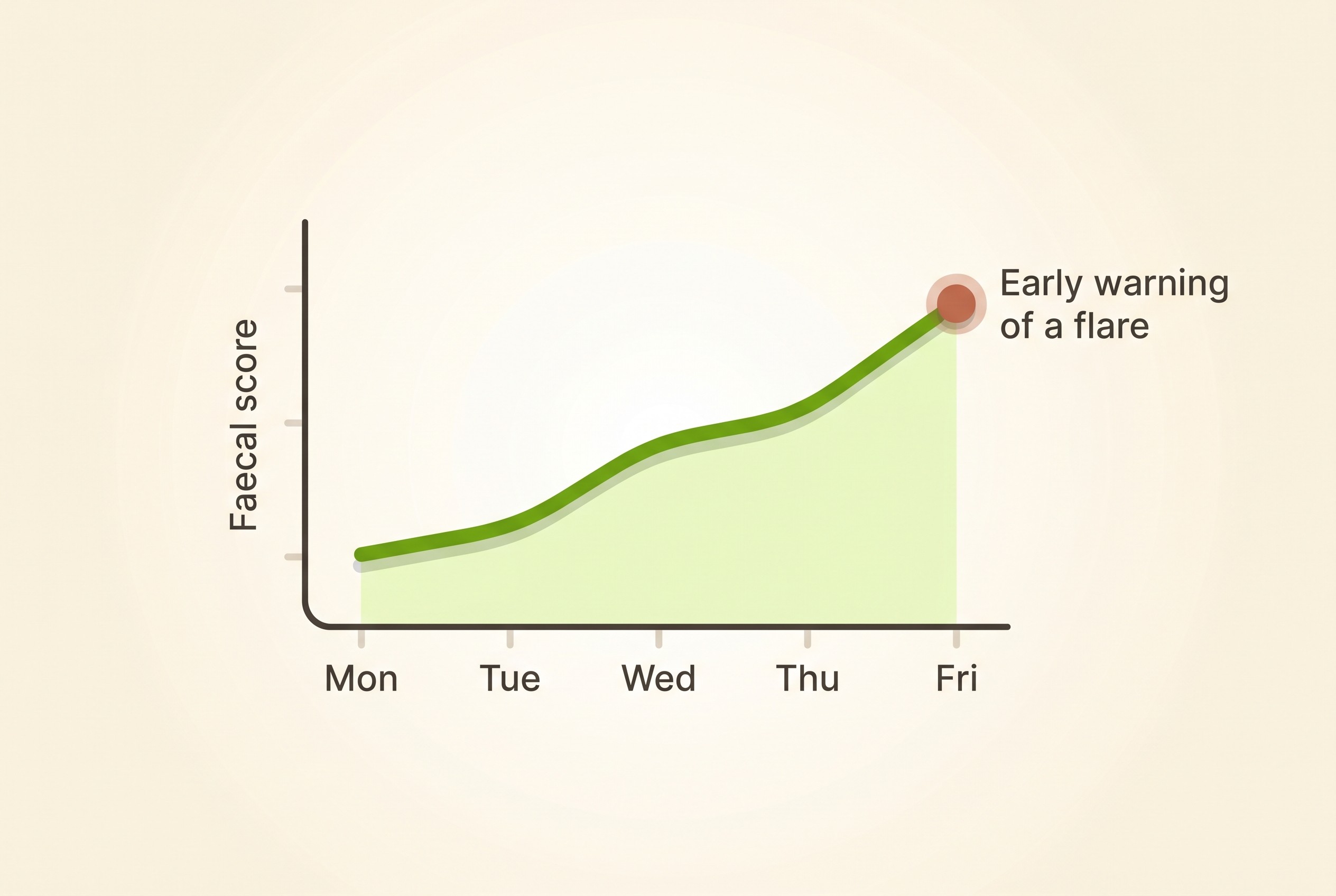
The best flares are the ones you catch early, with data rather than vibes. The earliest signals are a faecal score creeping up over a few days, stool frequency rising, appetite or energy dropping, and the odd bout of vomiting, which are exactly the signs the clinical activity indices use (Allenspach et al., 2007). Owners who log routinely spot this days sooner, the most concrete reason I keep returning to the Faecal Score Tracker.
Agree the plan with your vet in advance, while things are calm, because its precise shape depends on which subset of chronic enteropathy your pet has (Heilmann et al., 2026). I will describe the shape, not the drugs: usually tightening straight back to the strict diet and dropping any extras that have crept in, rechecking B12 if it is overdue, deliberately not reaching for leftover antibiotics, and a clear, pre-agreed threshold for picking up the phone. That "when to call" line matters: if a flare tips into repeated vomiting, blood, marked lethargy, a painful belly or refusal to eat, it is no longer a flare to ride out, and digestive emergencies is where the genuine red flags live. If you are unsure which side of that line you are on, the Vomiting and Diarrhoea Triage can help, and so can a quick call to your practice.
The realistic outlook is a good one: most well-managed dogs and cats with chronic enteropathy live normal lifespans with good quality of life, and the lowest-effective-treatment principle means many need less medication over time, not more (Allenspach et al., 2007; Heilmann et al., 2026). So if you do one thing today, log a baseline faecal score. Then at your next appointment ask two questions: is my pet's B12 where it should be, and what exactly is our flare plan. Those two answers will carry you a long way into the calm, ordinary years ahead.
References
- Allenspach, K., Wieland, B., Gröne, A., & Gaschen, F. (2007). Chronic enteropathies in dogs: evaluation of risk factors for negative outcome. Journal of Veterinary Internal Medicine, 21(4), 700-708.
- Allerton, F., et al. (2026). Clinical benefit of faecal microbiota transplantation administered via a single retention enema as an adjunctive treatment in dogs with chronic enteropathy: a randomised controlled trial. Journal of Small Animal Practice.
- AlShawaqfeh, M. K., Wajid, B., Minamoto, Y., Markel, M., Lidbury, J. A., Steiner, J. M., Serpedin, E., & Suchodolski, J. S. (2017). A dysbiosis index to assess microbial changes in fecal samples of dogs with chronic inflammatory enteropathy. FEMS Microbiology Ecology, 93(11), fix136.
- Alves, J. C., Santos, A., Jorge, P., & Pitães, A. (2021). The use of soluble fibre for the management of chronic idiopathic large-bowel diarrhoea in police working dogs. BMC Veterinary Research, 17(1), 100.
- Chaitman, J., Ziese, A.-L., Pilla, R., Minamoto, Y., Blake, A. B., Guard, B. C., Isaiah, A., Lidbury, J. A., Steiner, J. M., Unterer, S., & Suchodolski, J. S. (2020). Fecal microbial and metabolic profiles in dogs with acute diarrhea receiving either fecal microbiota transplantation or oral metronidazole. Frontiers in Veterinary Science, 7, 192.
- Chang, C.-H., Lidbury, J. A., Suchodolski, J. S., & Steiner, J. M. (2022). Effect of oral or injectable supplementation with cobalamin in dogs with hypocobalaminemia caused by chronic enteropathy or exocrine pancreatic insufficiency. Journal of Veterinary Internal Medicine, 36(5), 1607-1621.
- Dandrieux, J. R. S. (2016). Inflammatory bowel disease versus chronic enteropathy in dogs: are they one and the same? Journal of Small Animal Practice, 57(11), 589-599.
- Dor, C., Nixon, S., Salavati Schmitz, S., Bazelle, J., Černá, P., Kilpatrick, S., Harvey, N. D., & Dunning, M. (2024). Efficacy and tolerance of oral versus parenteral cyanocobalamin supplement in hypocobalaminaemic dogs with chronic enteropathy: a controlled randomised open-label trial. Journal of Small Animal Practice, 65(5), 317-328.
- Heilmann, R. M., Jergens, A. E., Kathrani, A., et al. (2026). ACVIM-endorsed statement: consensus statement and systematic review on guidelines for the diagnosis and treatment of chronic inflammatory enteropathy in dogs. Journal of Veterinary Internal Medicine, 40(1), aalaf017.
- Kather, S., Grützner, N., Kook, P. H., Dengler, F., & Heilmann, R. M. (2020). Review of cobalamin status and disorders of cobalamin metabolism in dogs. Journal of Veterinary Internal Medicine, 34(1), 13-28.
- Leib, M. S. (2000). Treatment of chronic idiopathic large-bowel diarrhea in dogs with a highly digestible diet and soluble fiber: a retrospective review of 37 cases. Journal of Veterinary Internal Medicine, 14(1), 27-32.
- Moreno, A. A., Parker, V. J., Winston, J. A., & Rudinsky, A. J. (2022). Dietary fiber aids in the management of canine and feline gastrointestinal disease. Journal of the American Veterinary Medical Association, 260(S3), S33-S45.
- Pilla, R., Gaschen, F. P., Barr, J. W., Olson, E., Honneffer, J., Guard, B. C., Blake, A. B., et al. (2020). Effects of metronidazole on the fecal microbiome and metabolome in healthy dogs. Journal of Veterinary Internal Medicine, 34(5), 1853-1866.
- Rossi, G., Pengo, G., Caldin, M., Palumbo Piccionello, A., Steiner, J. M., Cohen, N. D., Jergens, A. E., & Suchodolski, J. S. (2014). Comparison of microbiological, histological, and immunomodulatory parameters in response to treatment with either combination therapy with prednisone and metronidazole or probiotic VSL#3 strains in dogs with idiopathic inflammatory bowel disease. PLoS One, 9(4), e94699.
- Schmitz, S., & Suchodolski, J. (2016). Understanding the canine intestinal microbiota and its modification by pro-, pre- and synbiotics: what is the evidence? Veterinary Medicine and Science, 2(2), 71-94.
- Suchodolski, J. S. (2022). Analysis of the gut microbiome in dogs and cats. Veterinary Clinical Pathology, 50(Suppl 1), 6-17.
- Toresson, L., Steiner, J. M., Suchodolski, J. S., & Spillmann, T. (2016). Oral cobalamin supplementation in dogs with chronic enteropathies and hypocobalaminemia. Journal of Veterinary Internal Medicine, 30(1), 101-107.
- Toresson, L., Steiner, J. M., Spodsberg, E., Olmedal, G., Suchodolski, J. S., Lidbury, J. A., & Spillmann, T. (2019). Effects of oral versus parenteral cobalamin supplementation on methylmalonic acid and homocysteine concentrations in dogs with chronic enteropathies and low cobalamin concentrations. The Veterinary Journal, 243, 8-14.
- White, R., Atherly, T., Guard, B., Rossi, G., Wang, C., Mosher, C., Webb, C., Hill, S., Ackermann, M., Sciabarra, P., Allenspach, K., Suchodolski, J., & Jergens, A. E. (2017). Randomized, controlled trial evaluating the effect of multi-strain probiotic on the mucosal microbiota in canine idiopathic inflammatory bowel disease. Gut Microbes, 8(5), 451-466.
- WSAVA Gastrointestinal Standardization Group. WSAVA Global Gastrointestinal Guidelines. World Small Animal Veterinary Association.
Keep track of how your pet is doing
The owners who cope best are the ones who notice changes early. A simple health log shows you what is working, and what is not, before the next vet visit.
Start tracking, freeYou're not doing this alone
Compare treatment journeys and talk to owners managing digestive health. Free to join.
Join PetsLikeMine