

Weight, Dental Disease and the Other Things That Quietly Wreck Control
Alastair Greenway
BVM&S MRCVS
There's a particular call I take more than any other from a settled diabetic family. The pet was doing well, the numbers had stopped sliding around, the dose hadn't changed in months. Then it all drifts: more water in the bowl, a litter tray needing doing twice as often, a morning glucose that creeps up and stays up. The owner, who has done everything right, arrives half-convinced they've started giving the injections wrong.
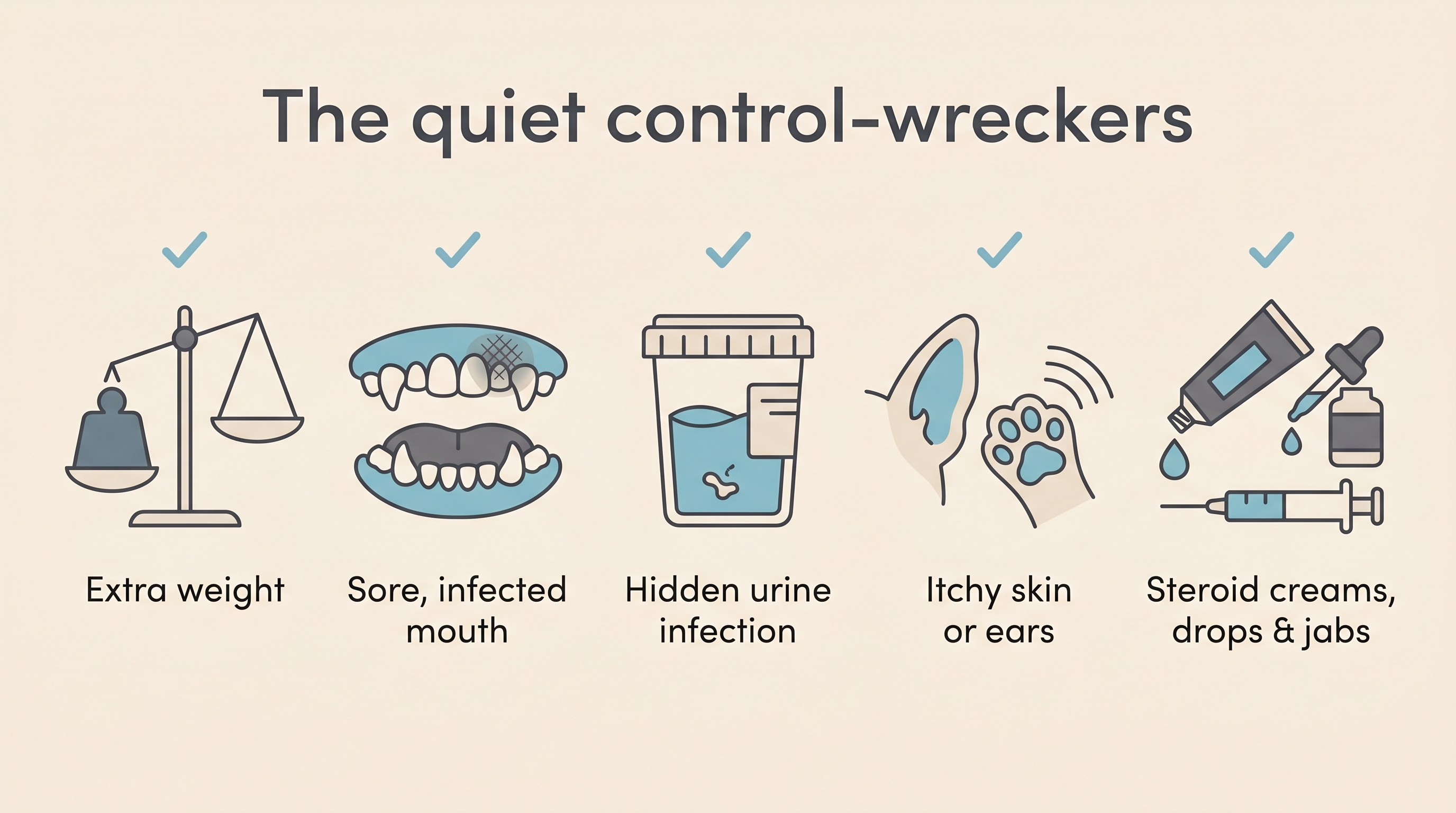
When a previously-stable diabetic slips, it's rarely because you've failed at the injections. Far more often, something else has quietly turned up and started fighting the insulin, and the commonest culprits are ordinary and fixable: a bit of extra weight, a sore mouth, a hidden urine infection, an itchy patch of skin or ears, or a steroid cream you didn't think to mention. The right move isn't to keep nudging the dose up. It's to go looking for the reason.
How background problems push the insulin around
Almost any source of infection or inflammation in the body can blunt how well the tissues respond to insulin (Ridgway, 2015), so the same dose stops doing the same job and a comfortably-controlled pet starts to look under-dosed. The veterinary consensus names this plainly: a diabetic's responsiveness to insulin can be reduced by concurrent inflammatory, infectious, neoplastic or hormonal disorders, and the commonest concurrent problems are hyperadrenocorticism, urinary tract infection, dermatitis, otitis, acute pancreatitis, neoplasia and hypothyroidism (Behrend et al., 2018). Three of those seven, the urine infection, the skin and the ears, are exactly the everyday things this article is about.
That matters because the obvious-looking response, reaching for more insulin, is often the wrong first move. Factors other than true insulin resistance are the more common causes of poor control early on, so the teaching is to find the cause and treat it, then re-regulate around it, rather than chasing higher doses (Ridgway, 2015). There is a dose level at which your vet starts formally hunting for a hidden driver, but that work-up lives in its own guide, when the insulin just won't work. So please don't increase the dose yourself off a single high reading. Control is about trends, not one number, and the dangerous mistake is to keep climbing the dose when the real problem is something else.
Weight: the biggest everyday lever (and it differs in cats and dogs)
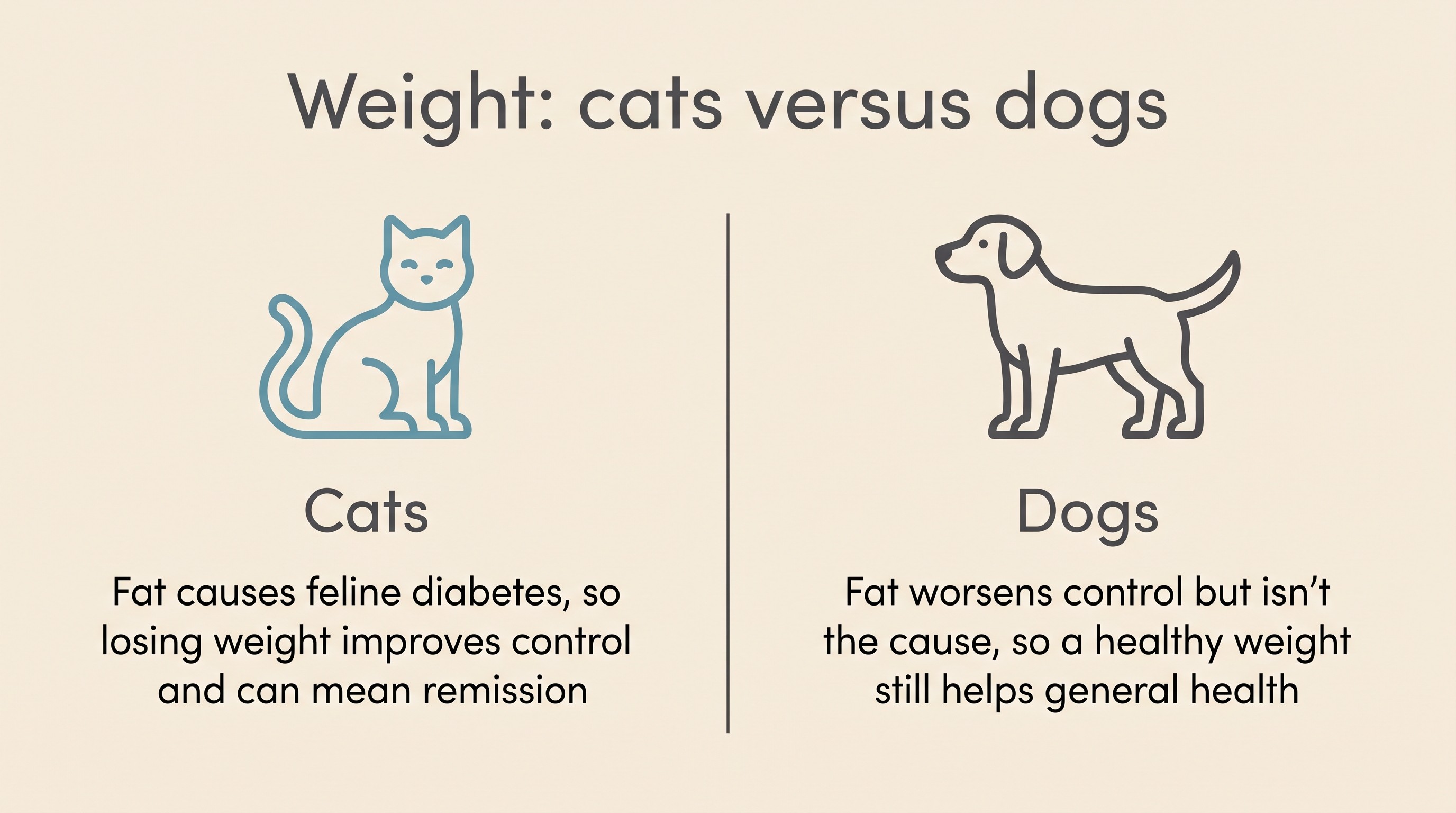
Weight is the destabiliser you have the most direct control over, but I have to be precise, because it does genuinely different things in a cat and a dog, and almost every page online blurs the two.
In cats, fat is not innocent. Obesity is a real cause of insulin resistance and of feline diabetes: overweight cats are two to four times more likely to develop diabetes than ideal-weight cats, with roughly a 30% decline in insulin sensitivity for every kilogram of excess body weight (Clark & Hoenig, 2021), and one experimental study found about a 52% fall as cats became obese (Appleton et al., 2001). The hopeful flip side: getting that weight off normalises insulin sensitivity, can lower the dose, and improves the odds of control and even remission (Clark & Hoenig, 2021; Taylor et al., 2025). It pays to act early, because losing at least 2% of body weight in the first month of insulin treatment is one of the better predictors of remission, with one report describing roughly a fifteen-fold increase in the odds of coming off insulin (Taylor et al., 2025). For a fat diabetic cat, weight loss is one of the most powerful things you can do. The remission playbook is in giving your cat the best shot at remission, and diet as a control lever in diet as a lever.
In dogs, the story is genuinely different. Obesity worsens insulin sensitivity and makes control harder, but it is not an established cause of canine diabetes the way it is in cats. Canine diabetes is largely immune-mediated and pancreas-related, and as the research bluntly notes, dogs are resistant to developing type-2 diabetes; the large UK primary-care data did not confirm obesity as a risk factor for the disease at all, concluding more research is needed to establish the link (Heeley et al., 2020). The fair summary is a specialist's: in dogs, obesity causes a reversible, usually fairly mild insulin resistance, readily overcome by adjusting the dose and by weight loss (Ridgway, 2015). So a healthy weight still helps a diabetic dog's control and general health, but don't let anyone sell it as the cause of the disease, or as a cure.
Either way, the safety rule is the part owners miss. Weight comes off slowly and under supervision, around 0.5 to 1% of body weight a week for a cat, aiming for a body condition score of 5 out of 9 (Taylor et al., 2025), and roughly 1 to 2% a week for an overweight dog (Behrend et al., 2018). Here is the key seam: losing weight lowers insulin need, so the dose that suited a heavier pet can become too much as the weight comes off. Reduce it with your vet as you go, with home monitoring, or your pet can tip into a hypo. One universal caveat: a thin diabetic should never be put on a slimming diet. The goal is to normalise weight, not strip it off a pet who hasn't got it to spare (Behrend et al., 2018). For context, pet obesity is rife in the UK, with vets estimating around 46% of dogs overweight or obese and most owners under-recognising it (PDSA PAW Report, 2023).
A sore mouth nobody connects to the numbers
If weight is the lever owners know, dental disease is the one they almost never connect, and it's among the most satisfying to fix. Periodontal disease, the chronic infection and inflammation of the gums and tooth roots, is the commonest oral disease in dogs and cats and tends to be worse in diabetics. The mechanism is the same low-grade-inflammation story as everywhere else here: a mouth full of chronic infection pours inflammatory signals into the body that blunt insulin's effect, the same two-way loop long established in human diabetes.
What lifts this from theory to something I can point to is direct evidence in dogs. In a recent prospective case series of ten dogs with poorly-regulated diabetes and periodontal disease, treating the periodontal disease improved their markers of glycaemic control, measured by fructosamine, HbA1c and inflammatory markers before treatment and monthly for three months, with the effect most conspicuous in the dogs whose disease was most severe (Nivy et al., 2024; Schermerhorn, 2024).
Let me be straight about that study rather than oversell it: it was small, only ten dogs, ran just three months, and the dogs' day-to-day signs didn't obviously change even as the laboratory markers improved. So I wouldn't promise a dental transforms control. But a sore, infected mouth is a real and fixable destabiliser, treating it can genuinely help, and it's worth doing for your pet's comfort regardless. An annual dental check, plus the odd look for red gums, brown tartar or bad breath, is one of the easier wins here.
Steroids and other drugs: the one owners don't connect
This is the destabiliser that good intentions trip over. Glucocorticoids, steroids, are potent drivers of insulin resistance and high blood sugar, and that includes not just tablets and injections but topical preparations: steroid skin creams, ear drops and eye drops all count.
The evidence is concrete in both species. In cats, a cohort on high-dose prednisolone (at least 1.9 mg/kg/day for more than three weeks) saw 9.7% develop steroid-induced diabetes, the great majority within the first three months (Nerhagen et al., 2021), and reassuringly, cats who become diabetic on steroids are more likely to remit once the steroid is stopped (Taylor et al., 2025). In dogs, UK primary-care data make it vivid: dogs had roughly four times the odds of being diagnosed with diabetes if exposed to glucocorticoids in the six weeks beforehand (Heeley et al., 2023). The mechanism is that steroids tell the liver to pump out more glucose and stop the tissues taking it up properly (Heeley et al., 2023; Ridgway, 2015). The same effect comes from progestogen hormones, so an unspayed female's season is worth flagging too.
Owners often don't realise that a cream for an itchy paw, an ear or eye drop, or a steroid jab for some unrelated problem can knock a diabetic's control sideways. Two rules. First, tell every vet, nurse and pharmacist your pet is diabetic, every time, so nobody reaches for a steroid without weighing it. Second, never stop or change a steroid abruptly yourself: they usually have to be tapered, and stopping suddenly can cause real harm. If your pet is on one and the diabetes is misbehaving, that's a conversation with your vet, not a kitchen-table decision.
Beyond the everyday stuff sit bigger, less common drivers your vet looks for next: Cushing's disease, acromegaly, an overactive thyroid, pancreatitis, and the full hormonal picture in an intact female. Those get their proper explanation in the concurrent diseases that fight your insulin. For now, just know that if the ordinary suspects are ruled out and control is still poor, that's where the trail leads.
Boring habits that catch all of this early
Most of what wrecks a diabetic's control is catchable in ordinary care, long before it becomes a crisis. Weigh your pet regularly and learn to body-condition score them, using the same scales and log you already keep. Look in the mouth now and then, and don't skip the annual dental. Watch for the itch-and-smell of a skin or ear problem, and mention any new thirst, increased weeing or off-food spell promptly, because it could be a brewing infection, and an off-food, vomiting diabetic can occasionally tip towards the more serious emergency of ketoacidosis. And flag the diabetes at every appointment, so no one reaches for a steroid unawares.
The thread that ties it together is the trend. Logging weight, the recheck numbers and your pet's glucose in one place, such as the Glucose Companion, means drifting control shows up as a slow bend in the line well before it shows up as a sick pet, and the same record shows the glucose recovering once you've fixed the cause. The formal recheck rhythm and what fructosamine adds is in fructosamine and the vet rechecks.
So if your pet's control has slipped, please don't assume you're failing at the injections. The far likelier story is one of these ordinary, fixable things, and the productive next step isn't a bigger dose, it's a careful look for the reason, with your vet, starting with the boring suspects first. That's the most hopeful thing about this stage: the commonest things that wreck control are also the ones you can do something about.
References
- Appleton, D. J., Rand, J. S., & Sunvold, G. D. (2001). Insulin sensitivity decreases with obesity, and lean cats with low insulin sensitivity are at greatest risk of glucose intolerance with weight gain. Journal of Feline Medicine and Surgery, 3(4), 211-228.
- Behrend, E., Holford, A., Lathan, P., Rucinsky, R., & Schulman, R. (2018). 2018 AAHA diabetes management guidelines for dogs and cats. Journal of the American Animal Hospital Association, 54(1), 1-21.
- Clark, M., & Hoenig, M. (2021). Feline comorbidities: Pathophysiology and management of the obese diabetic cat. Journal of Feline Medicine and Surgery, 23(7), 639-648.
- Heeley, A. M., O'Neill, D. G., Davison, L. J., Church, D. B., Corless, E. K., & Brodbelt, D. C. (2020). Diabetes mellitus in dogs attending UK primary-care practices: frequency, risk factors and survival. Canine Medicine and Genetics, 7, 6.
- Heeley, A. M., O'Neill, D. G., Davison, L. J., Church, D. B., Corless, E. K., & Brodbelt, D. C. (2023). Assessment of glucocorticoid and antibiotic exposure as risk factors for diabetes mellitus in selected dog breeds attending UK primary-care clinics. Veterinary Record, 192, e2785.
- Nelson, V., Downey, A., Summers, S., & Shropshire, S. (2023). Prevalence of signs of lower urinary tract disease and positive urine culture in dogs with diabetes mellitus: a retrospective study. Journal of Veterinary Internal Medicine, 37(2), 550-555.
- Nerhagen, S., Moberg, H. L., Boge, G. S., & Glanemann, B. (2021). Prednisolone-induced diabetes mellitus in the cat: a historical cohort. Journal of Feline Medicine and Surgery, 23(2), 175-180.
- Nivy, R., et al. (2024). Preliminary evaluation of the impact of periodontal treatment on markers of glycaemic control in dogs with diabetes mellitus: a prospective, clinical case series. Veterinary Record, 194, e3310.
- PDSA. (2023). PDSA Animal Wellbeing (PAW) Report 2023. People's Dispensary for Sick Animals.
- Ridgway, M. (2015). When the insulin isn't working: II. Management of the insulin-resistant patient. University of Illinois College of Veterinary Medicine conference proceedings.
- Schermerhorn, T. (2024). Treating inflammatory conditions such as periodontal disease can improve glycaemic control in diabetic dogs. Veterinary Record, 194(1), 34-35.
- Taylor, S., Cannon, M., Church, D., Fleeman, L., Fracassi, F., Gilor, C., Mott, J., Niessen, S., et al. (2025). iCatCare 2025 consensus guidelines on the diagnosis and management of diabetes mellitus in cats. Journal of Feline Medicine and Surgery, 27(11), 1098612X251399103.
- Weese, J. S., Blondeau, J., Boothe, D., Guardabassi, L. G., Gumley, N., Papich, M., Jessen, L. R., Lappin, M., Rankin, S., Westropp, J. L., & Sykes, J. (2019). International Society for Companion Animal Infectious Diseases (ISCAID) guidelines for the diagnosis and management of bacterial urinary tract infections in dogs and cats. The Veterinary Journal, 247, 8-25.
Keep track of how your pet is doing
The owners who cope best are the ones who notice changes early. A simple health log shows you what is working, and what is not, before the next vet visit.
Start tracking, freeYou're not doing this alone
Compare treatment journeys and talk to owners managing diabetes mellitus. Free to join.
Join PetsLikeMine