

Pancreatitis: the painful belly, and the fatty-meal myth
Alastair Greenway
BVM&S MRCVS
Two worries tend to walk in alongside this word. One is fear, because a vet has said "pancreatitis" and it sounded grave. The other is guilt, because someone slipped him a slice of the Christmas ham and now here you both are. I'd like to ease both of those, because the modern picture of this disease is kinder than the old folklore suggests.
Pancreatitis means inflammation of the pancreas. It ranges from a mild bout that settles in days to a serious, body-wide illness, and it looks genuinely different in dogs and cats. Much of the folklore around it does not hold up: that one fatty meal must be to blame, or that a single blood test gives a clean yes or no. The acute attack's treatment, the long-term feeding and the slow grumbling form each have their own guide, which I'll point to as we go.
The gland, and how it turns on itself
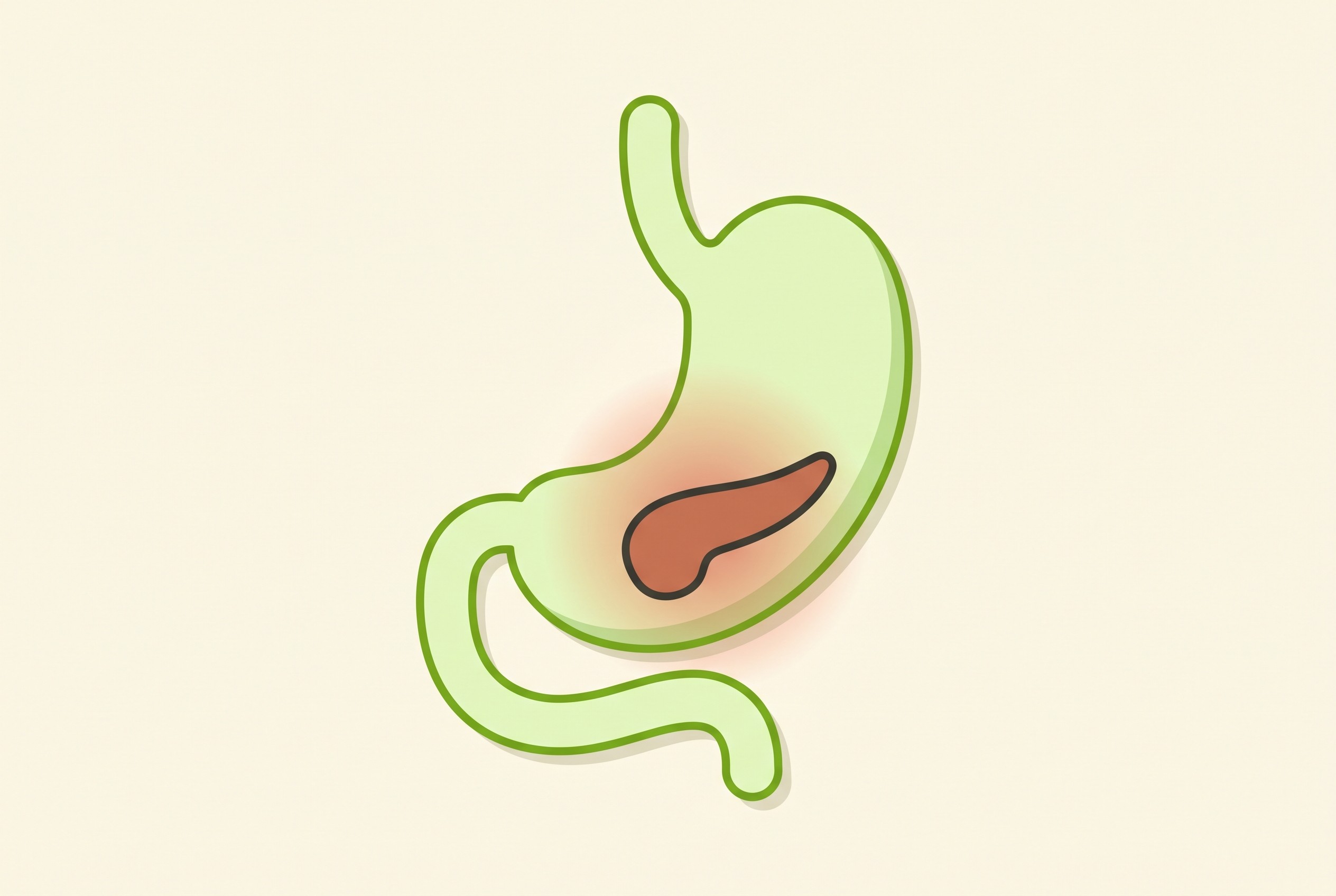
The pancreas is a small gland tucked beside the stomach and the first part of the small intestine, and it does two separate jobs. One is to make digestive enzymes, which it releases into the gut to break food down. The other is to make hormones, insulin among them. This article is about the enzyme-making side inflaming. When that gland instead stops making enough enzymes, that is a different problem called exocrine pancreatic insufficiency, covered in what EPI is; and the hormone side failing is diabetes, which lives in the Endocrine and Hormones space (Watson, 2015; Cridge et al., 2022).
Here is the slightly alarming part. These enzymes are powerful, so the body keeps them switched off until they reach the gut; in pancreatitis that safety catch fails and they activate too early, inside the pancreas itself. In effect the gland begins to digest itself, and the inflammation can spill into the surrounding fat and, when severe, the whole body, which is why a pet can become so unwell so fast (Watson, 2015; Cridge et al., 2022).
The single thing I most want owners to take from this is that it hurts. Acute pancreatitis is genuinely painful in dogs, and that pain is easy to miss, which is why most affected dogs should simply be assumed to need pain relief rather than made to earn it (Mansfield and Beths, 2015). In cats it is harder still to read, because cats hide discomfort so well. So if your pet seems sore, withdrawn or just not themselves, they are not being dramatic, and how a flare is managed belongs to the pancreatitis flare.
Acute, chronic, and the feline exception
There are two broad shapes to this disease. Acute pancreatitis is a sudden bout of inflammation. In a dog the classic picture is vomiting, a tender belly (some adopt a hunched, "praying" posture, front end down and bottom up), going off food, and lethargy, sometimes with diarrhoea (Watson, 2015; Cridge et al., 2021). It can be mild and self-limiting, or a dangerous, hospital-level illness.
Chronic pancreatitis is the quieter cousin: low-grade, smouldering, recurrent inflammation that can slowly scar the gland over months and years. It is far more common than anyone used to think: in a UK first-opinion post-mortem study, chronic pancreatitis was found in around 34% of dogs even though most were never diagnosed with it in life (Watson et al., 2007). That form gets its own discussion in chronic, grumbling pancreatitis, so I'll leave the depth there.
Cats genuinely are not just small dogs here. Feline pancreatitis is mostly the chronic form, and the signs are vague: lethargy, a poor appetite or none, dehydration and weight loss, while vomiting and a painful belly (the dog's headline symptoms) are far less reliable pointers (Forman et al., 2021). The take-home for cat owners: a cat who has simply gone quiet and off their food deserves a proper look, because there may be no vomiting to sound the alarm. One aside, so the word is familiar if your vet uses it: in cats, pancreatitis often travels with inflammation of the bile ducts and the intestine, a trio clinicians call triaditis, which is part of why feline tummy disease is so hard to pin down (Forman et al., 2021).
Why the ham slice rarely did it
This is the part most owners need to hear. A single fatty meal is one recognised trigger of pancreatitis in dogs. It is not the cause, and usually not your fault.
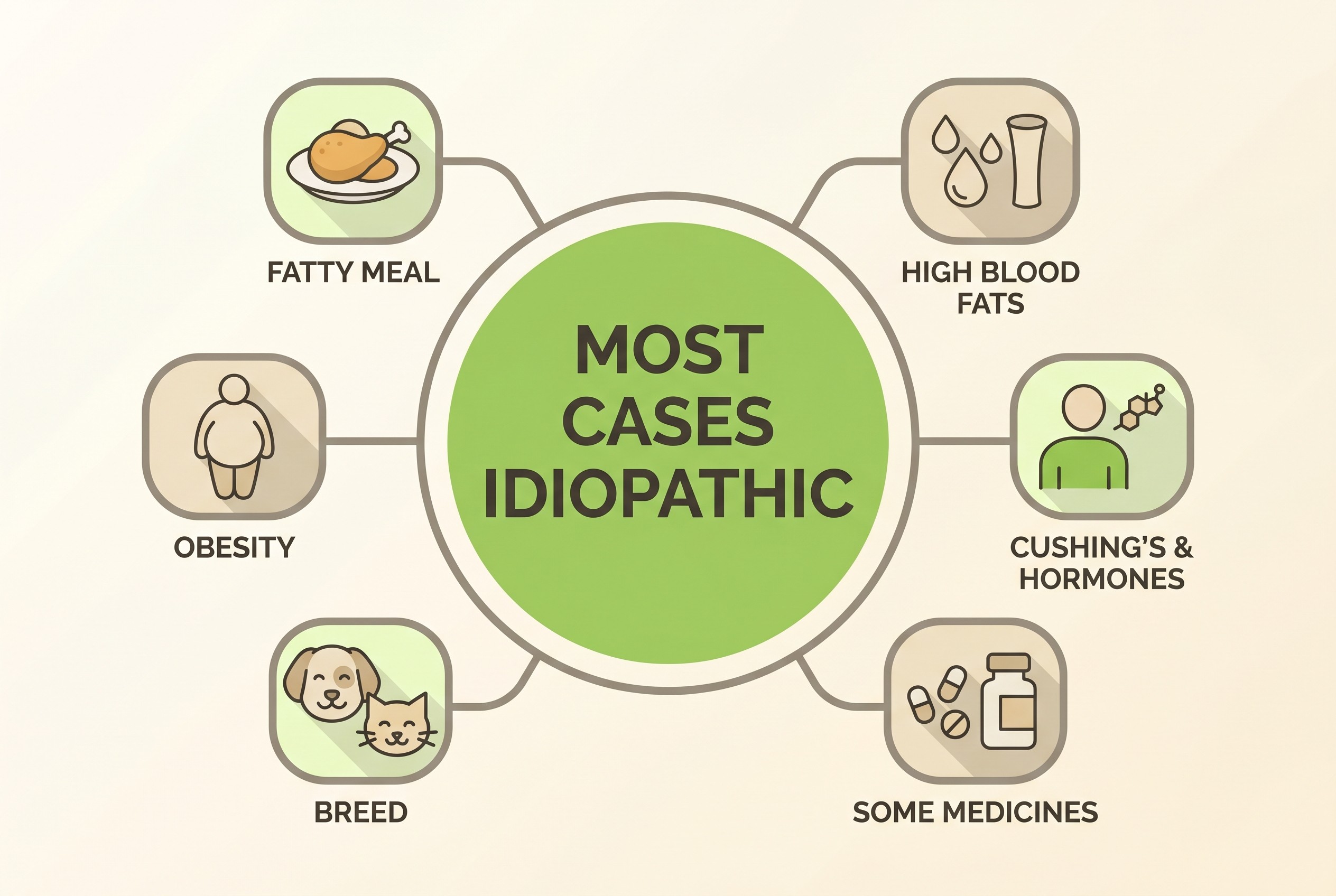
The modern position is that most canine pancreatitis is idiopathic, which means that after looking, no single specific cause is found (Cridge et al., 2022). That is not a cop-out but the genuine state of the evidence. The image of one ham sandwich flicking a switch in an otherwise perfect pancreas is, for most dogs, just wrong: the disease was usually built on more than one factor.
I don't want to swing too far the other way, because diet does matter. A high-fat dietary indiscretion is a real risk factor in dogs and can tip a susceptible animal into an attack, and your vet will reasonably ask about it in recurrent cases (Cridge et al., 2022). So fat can be a trigger, especially on top of other risk, but it is rarely the whole story, and blaming yourself for one treat usually isn't supported by the science. What "low-fat feeding" means in practice belongs to feeding for a pancreas.
It helps to see how many other things sit alongside diet. Some dogs run high blood fats, a state called hypertriglyceridaemia, the classic example being the miniature schnauzer: around a third of healthy schnauzers (32.8% of 192 in one study) have raised fasting triglycerides, rising to over three-quarters past nine years, and schnauzers who have had pancreatitis tend to have higher triglycerides even when well (Xenoulis et al., 2007; Xenoulis et al., 2011). Several hormonal diseases are linked too, including Cushing's (hyperadrenocorticism), diabetes and an underactive thyroid, which live in the Endocrine and Hormones space (Cridge et al., 2022). So are certain medicines: at least 10% of epileptic dogs on combined potassium bromide and phenobarbital developed probable pancreatitis in one study, against 0.3% on phenobarbital alone (Gaskill and Cribb, 2000). Add breed predisposition and obesity, and this is plainly a multifactorial disease, not a one-meal accident (Watson, 2015; Cridge et al., 2022).
And cats are not a fatty-meal story at all. In cats, dietary fat is not an established trigger, and most cases are idiopathic, so please don't carry the dog folklore across to your cat (Forman et al., 2021).
Diagnosis: why one test is rarely enough
Diagnosing pancreatitis is also fuzzier than some marketing implies: there is no perfect single test and no agreed gold standard, which is why a good vet weighs three things together, the clinical picture, a blood test and a scan (Cridge et al., 2021).
The most useful blood test is a pancreas-specific lipase (Spec cPL in dogs and Spec fPL in cats; the in-house quick version is the SNAP cPL or fPL). Its accuracy depends on how ill the animal is. Measured against tissue samples, its sensitivity runs from roughly 21% in mild disease to around 71% in more severe disease, with high specificity (Cridge et al., 2021; Trivedi et al., 2011). So a normal result does not fully rule pancreatitis out, especially in a mild case, while a raised result strongly supports the diagnosis without proving it.
The in-house SNAP is worth a word, because owners are sometimes told it has "confirmed" pancreatitis, and it hasn't, quite. It is built to be sensitive, so it throws false positives (a 41% rate in one report), which means a positive SNAP is a prompt to confirm with the quantitative Spec cPL: a screen, not a diagnosis (Cridge et al., 2021). The older amylase and lipase tests are unreliable here, often normal even in affected animals, particularly cats (Cridge et al., 2021; Forman et al., 2021).
An abdominal ultrasound scan is the third piece, useful but operator-dependent: the changes it shows can lag behind how the animal actually feels, so a normal scan does not exclude the disease either, and in cats it is less sensitive again (Cridge et al., 2021). None of this means tests are useless. It means pancreatitis is read as a picture built from signs, blood and imaging, where no single number says yes or no, and a vet may sensibly treat a strong suspicion even when one test sits on the fence.
Where this leaves you, and the outlook
If your pet is unwell right now, with a sore belly and repeated vomiting, work out how urgent it is. Our Vomiting and Diarrhoea Triage walks you through "watch, book or go now", and a very painful belly, relentless vomiting or a collapsing pet is an emergency that the digestive emergencies guide covers. Over the longer haul, logging appetite, vomiting, stool and weight in the Faecal Score Tracker builds exactly the pattern that helps a vet spot a recurring or smouldering pancreas problem.
On outlook, the picture cuts both ways. Most mild cases recover well with good supportive care, and that is where most pets sit. But the severe end of acute pancreatitis is dangerous: published case-fatality figures range widely and depend heavily on severity, which is why vets use scoring systems built around warning signs such as a body-wide inflammatory response, clotting problems, rising kidney values and low blood calcium (Fabrès et al., 2019). I won't quote one scary mortality figure, because it would misrepresent the common, recoverable case while underplaying the serious one. Over years, chronic or repeated inflammation can erode the gland, occasionally towards diabetes or EPI, a further reason to catch the chronic form early.
The field is also still moving. The old instinct to "rest the pancreas by starving it" has been overturned, with early feeding now preferred because gut rest hinders recovery (Mansfield et al., 2011). A newer hospital medicine for the acute phase, fuzapladib, has been conditionally approved in the United States, but its UK and EU availability is not yet established, so it is best thought of as emerging rather than a routine cure here (AVMA, 2022). What good acute care looks like, the modern blend of fluids, pain relief, anti-nausea medicines such as maropitant (Cerenia) and early feeding, is owned by the pancreatitis flare.
So whether you arrived here frightened or quietly guilty, hold on to two things: the common form is recoverable, and for most pets this was never about one meal. A diagnosis is the start of a plan, not a verdict on you, and the only useful question now is what to do next.
References
- Cridge, H., Twedt, D. C., Marolf, A. J., Sharkey, L. C., & Steiner, J. M. (2021). Advances in the diagnosis of acute pancreatitis in dogs. Journal of Veterinary Internal Medicine, 35(6), 2572-2587.
- Cridge, H., Lim, S. Y., Algül, H., & Steiner, J. M. (2022). New insights into the etiology, risk factors, and pathogenesis of pancreatitis in dogs: Potential impacts on clinical practice. Journal of Veterinary Internal Medicine, 36(3), 847-864.
- Fabrès, V., Dossin, O., Reif, C., et al. (2019). Development and validation of a novel clinical scoring system for short-term prediction of death in dogs with acute pancreatitis (the CAPS score). Journal of Veterinary Internal Medicine, 33(2), 499-507.
- Forman, M. A., Steiner, J. M., Armstrong, P. J., et al. (2021). ACVIM consensus statement on pancreatitis in cats. Journal of Veterinary Internal Medicine, 35(2), 703-723.
- Gaskill, C. L., & Cribb, A. E. (2000). Pancreatitis associated with potassium bromide/phenobarbital combination therapy in epileptic dogs. Canadian Veterinary Journal, 41(7), 555-558.
- Mansfield, C. S., & Beths, T. (2015). Management of acute pancreatitis in dogs: a critical appraisal with focus on feeding and analgesia. Journal of Small Animal Practice, 56(1), 27-39.
- Mansfield, C. S., James, F. E., Steiner, J. M., et al. (2011). A pilot study to assess tolerability of early enteral nutrition via esophagostomy tube feeding in dogs with severe acute pancreatitis. Journal of Veterinary Internal Medicine, 25(3), 419-425.
- Trivedi, S., Marks, S. L., Kass, P. H., et al. (2011). Sensitivity and specificity of canine pancreas-specific lipase (cPL) and other markers for pancreatitis in 70 dogs with and without histopathologic evidence of pancreatitis. Journal of Veterinary Internal Medicine, 25(6), 1241-1247.
- Watson, P. (2015). Pancreatitis in dogs and cats: definitions and pathophysiology. Journal of Small Animal Practice, 56(1), 3-12.
- Watson, P. J., Roulois, A. J. A., Scase, T., et al. (2007). Prevalence and breed distribution of chronic pancreatitis at post-mortem examination in first-opinion dogs. Journal of Small Animal Practice, 48(11), 609-618.
- Xenoulis, P. G., Suchodolski, J. S., Levinski, M. D., & Steiner, J. M. (2007). Investigation of hypertriglyceridemia in healthy Miniature Schnauzers. Journal of Veterinary Internal Medicine, 21(6), 1224-1230.
- Xenoulis, P. G., Levinski, M. D., Suchodolski, J. S., & Steiner, J. M. (2011). Serum triglyceride concentrations in Miniature Schnauzers with and without a history of probable pancreatitis. Journal of Veterinary Internal Medicine, 25(1), 20-25.
- AVMA. (2022). FDA conditionally approves first drug for acute onset of pancreatitis in dogs. American Veterinary Medical Association news.
Keep track of how your pet is doing
The owners who cope best are the ones who notice changes early. A simple health log shows you what is working, and what is not, before the next vet visit.
Start tracking, freeYou're not doing this alone
Compare treatment journeys and talk to owners managing digestive health. Free to join.
Join PetsLikeMine