

Seizure First Aid: What to Do and What Not to Do
Alastair Greenway
BVM&S MRCVS
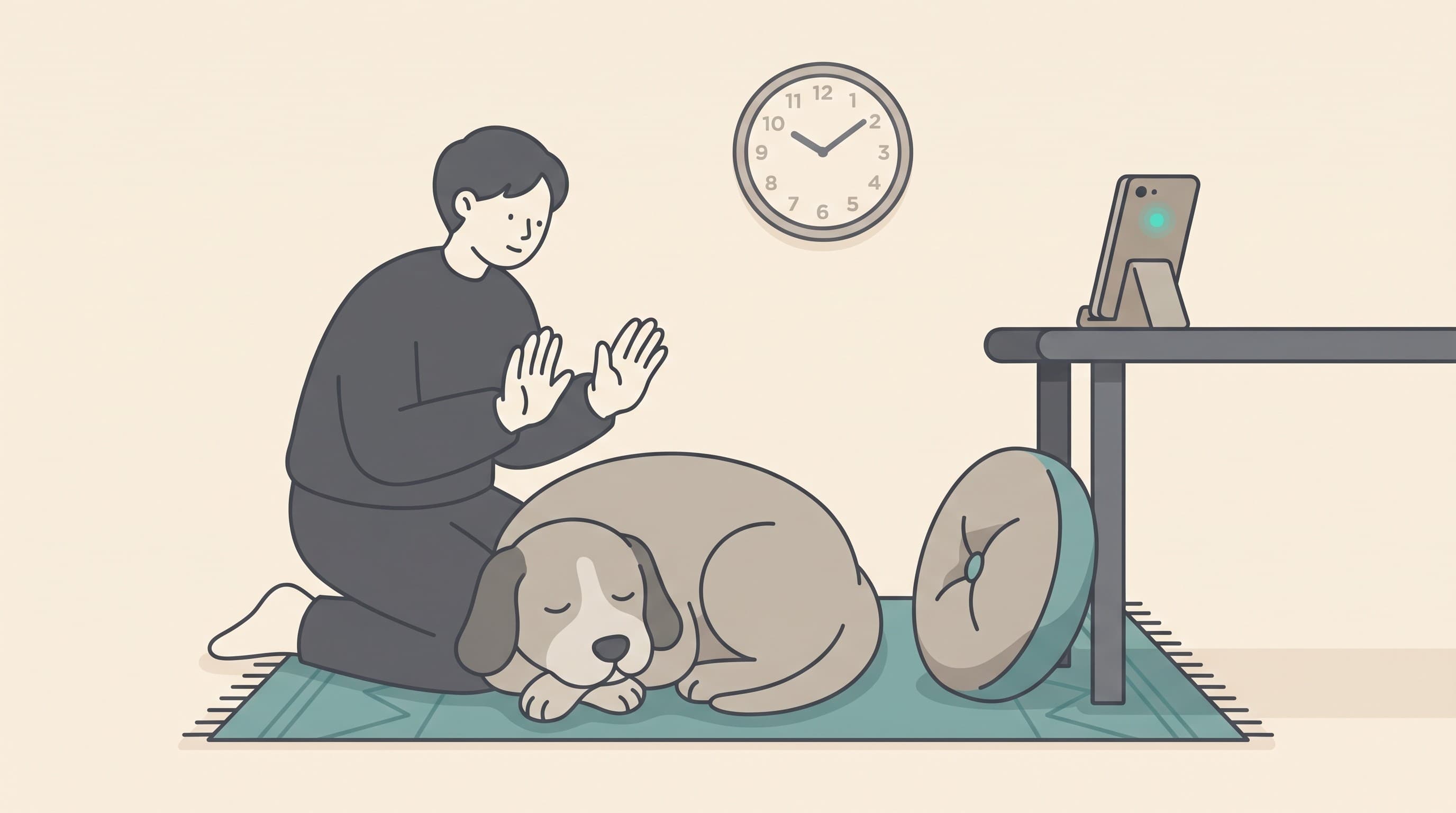
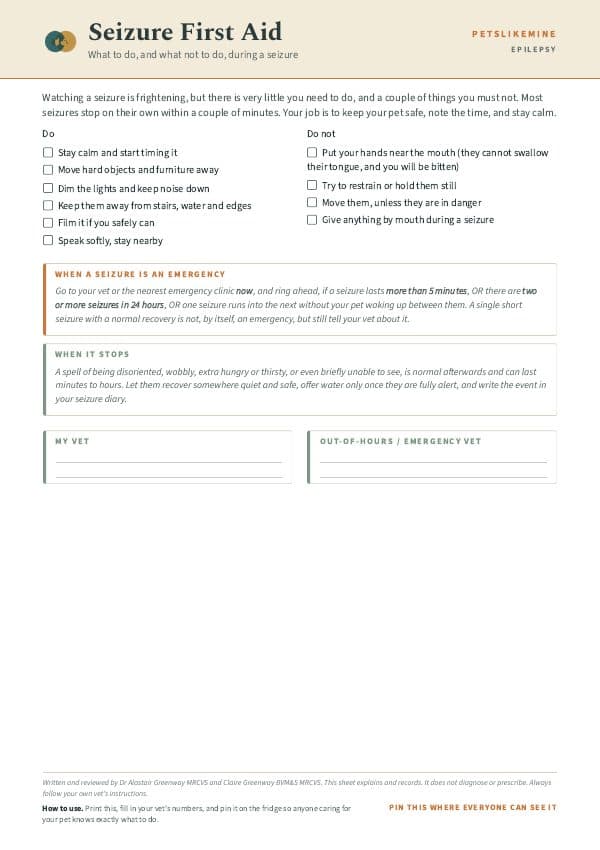
Phone in one hand, dog or cat seizing on the floor in front of you: start here and read the rest later. Stay calm. Don't touch their mouth. Move hard objects out of the way. Note the time. Don't hold them still. Most single seizures stop on their own within a couple of minutes, and your pet is unconscious and feels no pain while it's happening (VCA; AKC, 2021). Your job right now is small and specific: keep them safe, keep yourself safe, and time it. Everything below explains why, what to do when it stops, and the one line that marks an emergency.
During the seizure
Stay calm and keep yourself safe. It is genuinely frightening to watch, but a single seizure is usually brief and self-limiting, and your pet isn't suffering during it (VCA; AKC, 2021). A calm head lets you do the few useful things below.
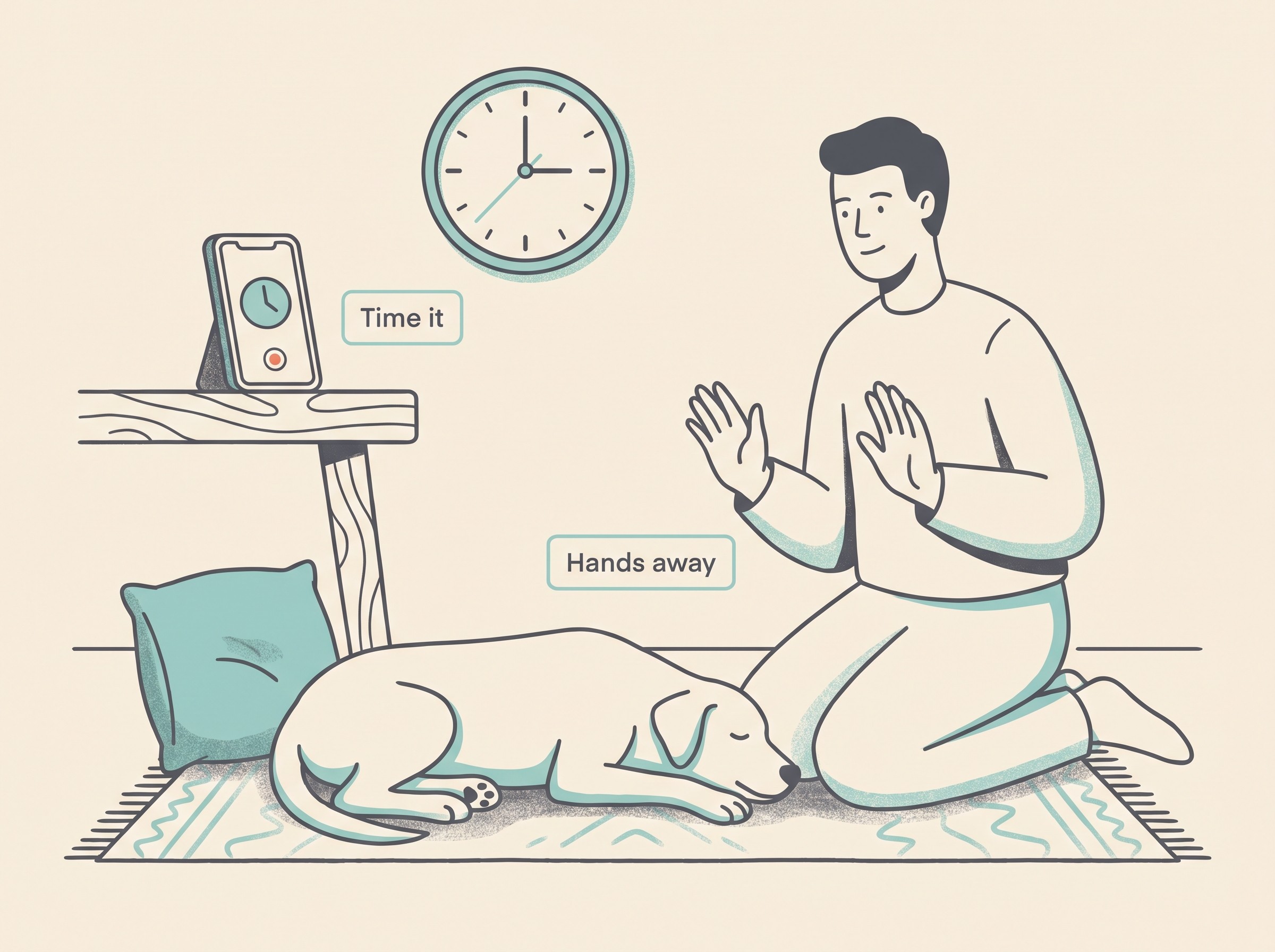
Note the time it starts, and the time it stops. This is the single most important fact you can give your vet, because duration is what decides whether this becomes an emergency (VCA). Time runs strangely when you're frightened, so glance at a clock or start the timer on your phone rather than trusting your sense of it.
Film it if you can do so safely. Video footage is the most useful diagnostic aid an owner can provide, because seizures almost never happen in front of the vet, and what the episode actually looks like helps guide the diagnosis (De Risio et al., 2015). Prop the phone up rather than crouching over your pet, and never put yourself between them and harm to get a better shot. There's a knack to it, covered in how (and why) to film a seizure.
Move hazards away from your pet, not the other way around. The paddling limbs and thrashing are how seizing pets hurt themselves, so slide furniture, hard objects and sharp edges out of reach rather than trying to lift or reposition your pet (VCA).
Keep them away from stairs, edges and water. The one reason to move them is genuine danger: a pet seizing at the top of a staircase or beside a pool or pond. Falls and drowning are real risks during a seizure, so if they're somewhere dangerous, ease them gently somewhere safe.
Lower the lights, the noise and your voice. Reducing stimulation helps, and a calm, quiet, dimly lit room makes the recovery easier too (VCA).
What not to do, and why
This list matters as much as the first, because the instinctive responses are often the harmful ones.
Do not put your hands, fingers or any object in or near the mouth. There are two reasons, both important. The first is that the old idea about a pet "swallowing its tongue" is simply a myth: a dog or cat cannot swallow its own tongue during a seizure (AKC, 2021; VCA). There is nothing to pull forward and nothing to clear. The second is that the jaw can clamp shut involuntarily and with real force, and a hand in the way can be bitten very badly (VCA). Your pet isn't doing this on purpose. They're unconscious and can't control it, which is exactly why your fingers don't belong near their teeth.
Do not try to restrain them or hold them still. Pinning a seizing pet down doesn't stop the seizure, and it risks injuring both of you (VCA). It will pass on its own. Let it.
Do not give any medication, food or water by mouth during a seizure. Your pet is unconscious and cannot swallow, so anything you put in their mouth risks going into the airway and causing choking or aspiration (Boland and Angles, 2010). This includes their usual tablets. If your vet has prescribed a rescue medication for a pet who has clusters, it is given by a specific route they've shown you, rectally or up the nose, never by mouth. Using it correctly is covered in managing cluster seizures at home.
Once it stops
When the active seizure ends, your pet won't simply snap back to normal. Expect a recovery period, the post-ictal phase, in which they may be disorientated, wobbly, temporarily blind, pacing, ravenously hungry or clingy. This is normal and it is not a relapse. Keep the room quiet and safe and resist the urge to fuss or crowd them. This stage has a guide of its own: the hours afterwards.
Offer water only once your pet is fully alert and able to stand and swallow normally, not a moment before. The same swallowing problem that made oral medication dangerous applies until they've come round properly.
Then log it: date, time, how long it lasted, what it looked like, the recovery, and any medication given or missed. Frequency and duration are the numbers your vet treats against, and a remembered episode is worth far less than a written record. The seizure diary is built for exactly this, including the timer for the next one.
The line that marks an emergency
Most single seizures are not, by themselves, an emergency. But some are, and the line is specific. Go to your vet or emergency vet now, ringing ahead so they're ready, if any of these happen:
- a seizure lasting more than 5 minutes; or
- two or more seizures in 24 hours; or
- seizures running into each other without your pet recovering consciousness in between.
These are not arbitrary thresholds. A seizure that crosses five minutes is treated as status epilepticus, and seizures clustering or running together can become self-sustaining and injure the brain (Charalambous et al., 2024). Status epilepticus carries a real risk to life, with reported mortality of roughly a quarter to over a third of cases (Charalambous et al., 2024), which is why you go straight in. The why, and what the emergency team does when you arrive, lives in is this an emergency? status epilepticus and cluster seizures.
A single short seizure with a full recovery is frightening, but it is not in this emergency category. Still log it and tell your vet, but you don't need to rush to the out-of-hours clinic for one brief episode that resolves.
One thing bears repeating whenever medication comes up: if your pet is already on anti-seizure medication, never stop it abruptly. Sudden withdrawal can itself trigger clusters or status (Bhatti et al., 2015).
If it was the first one
Ring your vet about a first-ever seizure even if it was short and your pet seems fine afterwards. A first seizure always warrants a call (VCA). It may be nothing serious, but it's the start of building a picture, and a good history is the foundation of working out what's behind it (De Risio et al., 2015).
It helps to have your answers ready, because your vet will want to know much the same things each time: when it happened and how long it lasted, what it looked like (this is where your video earns its keep), whether your pet has had one before, anything they might have eaten or been exposed to, what medication they're on, and any recent changes in their health. None of this needs to be perfect, just accurate, and it's far easier if you've jotted it down rather than trying to recall it later.
A note for cat owners
Everything above applies just as much to cats: don't touch the mouth, don't restrain, time it, film it, protect them from hazards, log it. The first aid doesn't change with species.
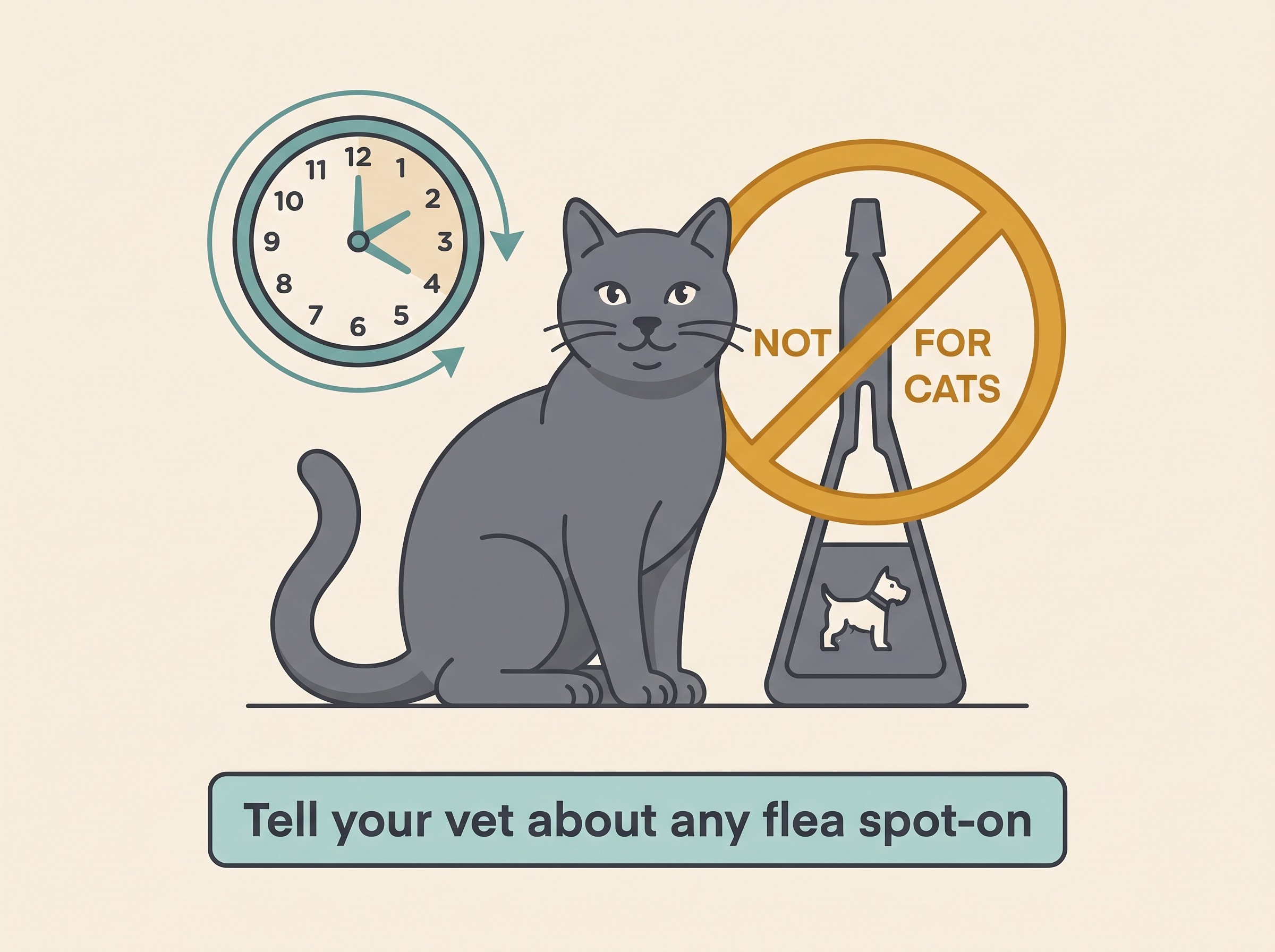
There is one cat-specific thing to add. A cat that has had a seizure, or that is trembling and twitching, is a cat whose vet needs to hear about any flea or tick spot-on product used recently, on the cat or on a dog in the house. Permethrin poisoning, nearly always from a dog's spot-on product applied to a cat or from close contact with a freshly treated dog, is a common and preventable cause of feline tremors and seizures, and a true emergency. In the largest case series, 41 of 42 affected cats had been given a canine spot-on permethrin product, and muscle tremors affected 86% of them and seizures a third, usually within hours (Boland and Angles, 2010). Cats can't break permethrin down well, so a dose that's harmless to a dog builds up and becomes dangerous to them (Boland and Angles, 2010). The reassuring half of that study is that with prompt treatment most cats recover, around four in five surviving to go home (Boland and Angles, 2010). So if there's any chance of exposure, say so straight away. It changes what the vet does next.
So when the room is quiet again and your pet is coming round, you've already done the things that matter: you kept them safe, you kept your hands clear, you noted the time. Write this one down in the seizure diary and ring your vet. And if it ever crosses that emergency line, a seizure over five minutes, two or more in a day, or one running into the next, you don't wait. You ring ahead and you go.
References
- De Risio, L., Bhatti, S., Muñana, K., Penderis, J., Stein, V., Tipold, A., et al. (2015). International veterinary epilepsy task force consensus proposal: diagnostic approach to epilepsy in dogs. BMC Veterinary Research, 11, 148.
- Bhatti, S. F. M., De Risio, L., Muñana, K., Penderis, J., Stein, V. M., Tipold, A., et al. (2015). International Veterinary Epilepsy Task Force consensus proposal: medical treatment of canine epilepsy in Europe. BMC Veterinary Research, 11, 176.
- Charalambous, M., Muñana, K., Patterson, E. E., Platt, S. R., & Volk, H. A. (2024). ACVIM Consensus Statement on the management of status epilepticus and cluster seizures in dogs and cats. Journal of Veterinary Internal Medicine, 38(1), 19-40.
- Boland, L. A., & Angles, J. M. (2010). Feline permethrin toxicity: retrospective study of 42 cases. Journal of Feline Medicine and Surgery, 12(2), 61-71.
- VCA Animal Hospitals. Seizures in Dogs (C. Barnes, M. Weir, E. Ward, & R. Gollakner). Retrieved from
- American Kennel Club. (2021). Canine Epilepsy: Demystifying the Myths (reviewed by G. B. Cherubini). Retrieved from
Free downloads
Companion worksheets to put what you've read into practice. Free PDFs, print at home.
Keep track of how your pet is doing
The owners who cope best are the ones who notice changes early. A simple health log shows you what is working, and what is not, before the next vet visit.
Start tracking, freeYou're not doing this alone
Compare treatment journeys and talk to owners managing epilepsy. Free to join.
Join PetsLikeMine