

Kennel Cough and Leptospirosis: The Annual Ones
Alastair Greenway
BVM&S MRCVS
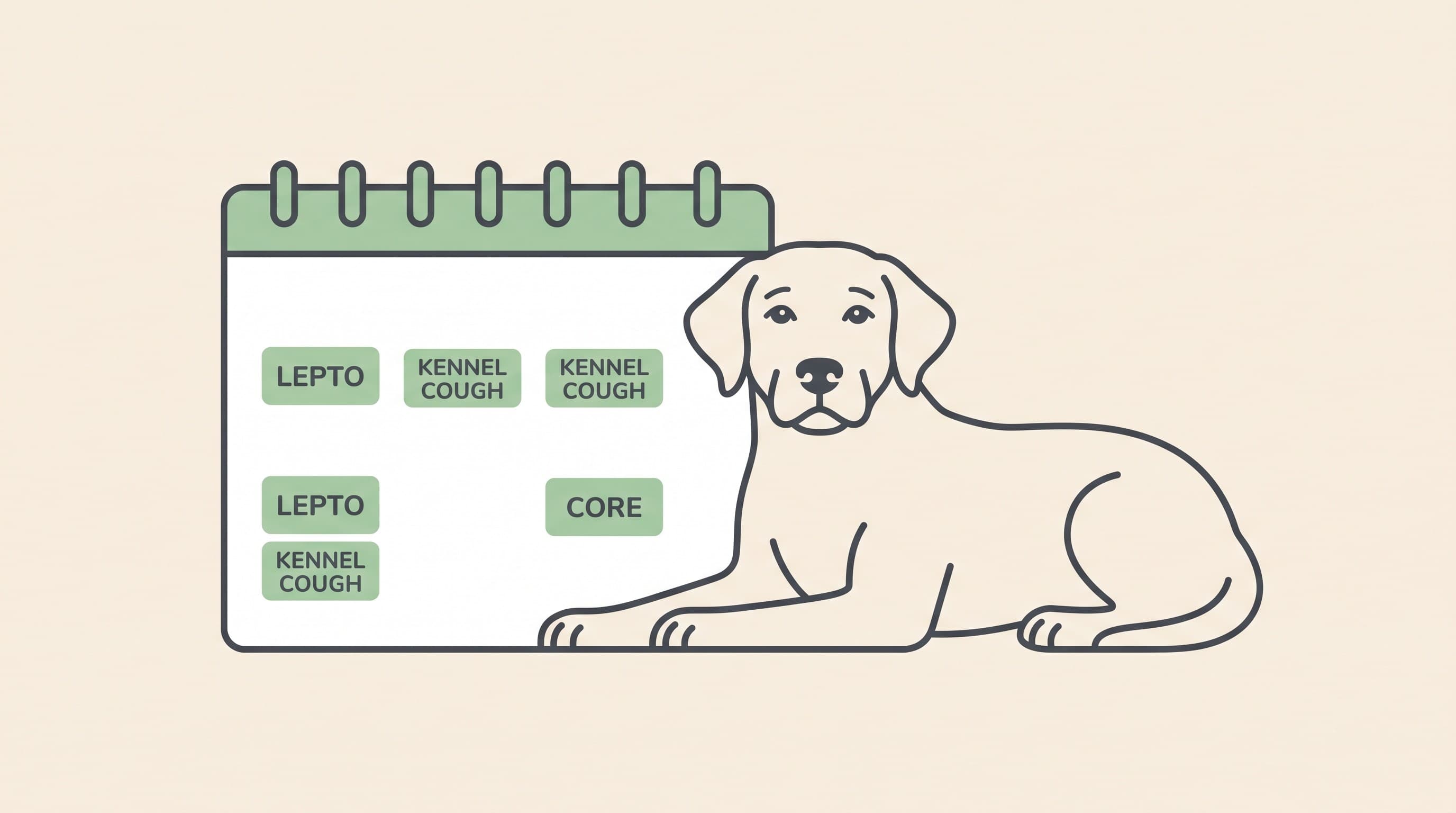
If you've read that the core dog vaccines only need giving every three years, a very reasonable question follows: so why does my vet still want a jab every year? You're not being upsold. The answer is that a couple of the most important dog vaccines simply don't last as long as the core ones, and they're the reason "annual" is still the right word for most dogs.
The two doing most of that work are leptospirosis and kennel cough. They're different diseases with different vaccines, but they share one feature: shorter-lived immunity that needs topping up more often than the core viral vaccines. Here's what each one is, why it matters, and how to work out what your own dog actually needs.
First, why these ones are annual and the core ones aren't
It comes down to what kind of vaccine each is. The core vaccines (distemper, hepatitis, parvovirus) are against viruses, and they produce long-lasting immunity, which is why current WSAVA guidance gives them no more often than every three years after the puppy course and the first booster (WSAVA 2024).
Leptospirosis is caused by bacteria, and the kennel cough vaccine largely targets a bacterium too (Bordetella). Killed and bacterial vaccines of this kind generally produce shorter-lived protection, so they're boosted more frequently, typically once a year. That's not a marketing decision; it's the biology of the vaccine. It's also why a titre test, which only reads core viral immunity, can never tell you anything about your dog's lepto or kennel cough cover. More on that below.
Leptospirosis: the one you really don't want to skip
Leptospirosis ("lepto") is a bacterial infection your dog picks up from water and damp ground contaminated with the urine of infected animals, especially rats and wildlife. Puddles, ponds, canals, rivers, muddy fields: anywhere a rat has been is a potential source.
In dogs it causes kidney and liver failure, and it is frequently fatal even with intensive treatment. Two things make it especially serious:
- It's widespread in the UK, including in towns and cities, not just on farms. Any dog that drinks from puddles, swims, or noses around where rats have been is potentially exposed.
- It's zoonotic. Lepto can infect people, where it's known as Weil's disease, and it can be serious in humans too. So vaccinating your dog also protects your household.
This is exactly the kind of disease the vaccine exists for: common, dangerous, and preventable. For the overwhelming majority of UK dogs, keeping lepto cover current is straightforward good sense, and letting it lapse is one of the genuinely risky corners to cut. UK lepto vaccines are typically given as an initial two-dose course and then boosted annually.
A note on the different versions: you may see "L2" and "L4" mentioned, referring to how many strains (serovars) of the bacteria the vaccine covers. Which is appropriate for your dog is a genuine clinical conversation, and it's one to have with your vet rather than something to settle from an article.
You may also have read scare stories linking the lepto vaccine, particularly L4, to a wave of serious reactions. It's worth being clear-eyed here: as with any vaccine, adverse reactions can happen, but they're uncommon, and the regulators who monitor these products have reviewed the lepto vaccines and continue to support their use because the disease they prevent is so dangerous. If your dog has reacted to a vaccine before, that's a real conversation to have (see Vaccine Reactions and the Over-Vaccination Debate), but a general fear of the vaccine is not a good reason to leave a dog exposed to a fatal, zoonotic disease.
Kennel cough: lifestyle-based, but more relevant than the name suggests
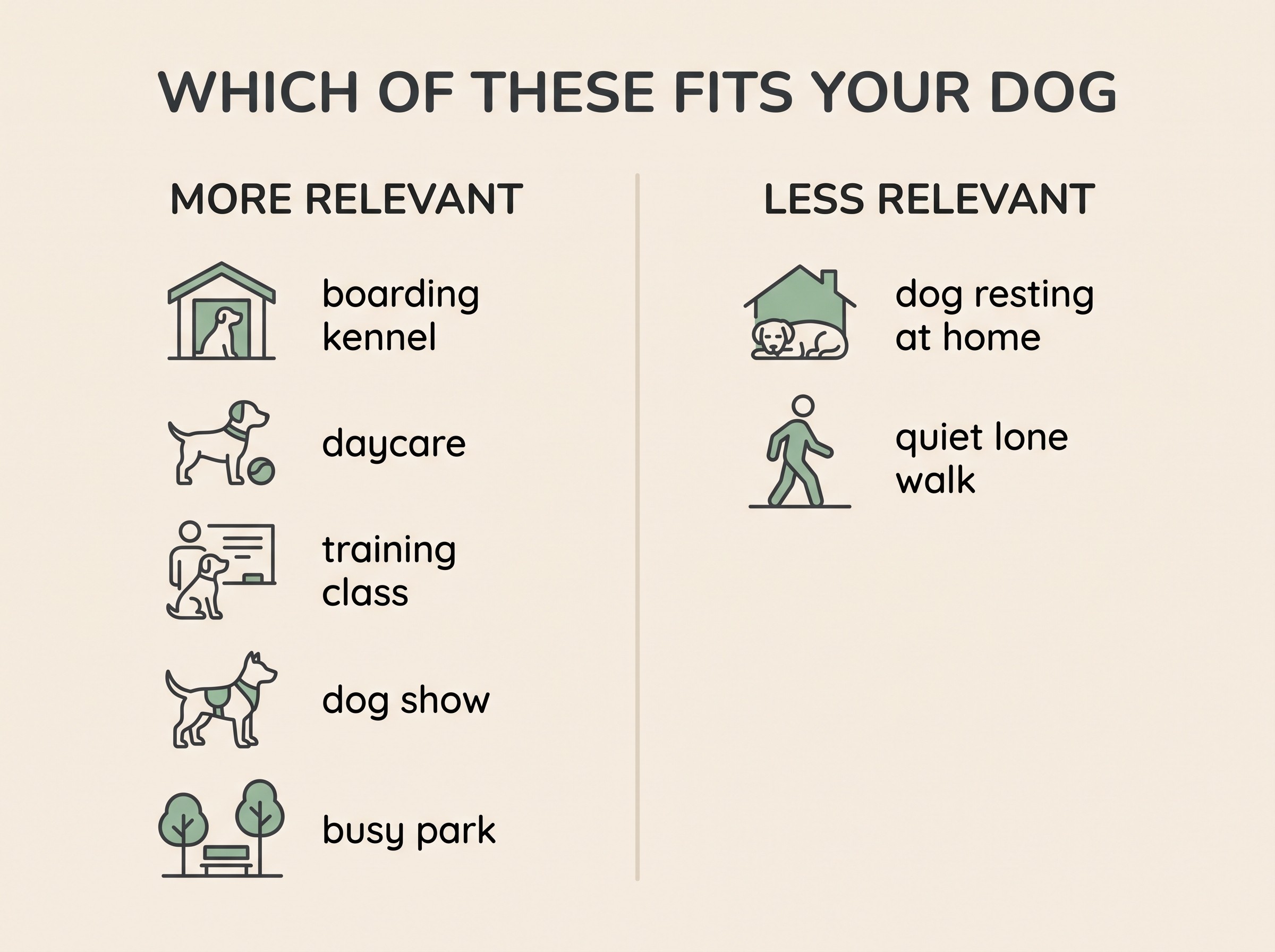
"Kennel cough" is the everyday name for canine infectious respiratory disease, and the name undersells how easily it spreads. Your dog doesn't have to set foot in a kennel to catch it. It passes between dogs that meet anywhere: daycare, training classes, shows, grooming, busy parks, even a sniff at the same lamppost.
It's usually caused by a mix of agents, most commonly the bacterium Bordetella bronchiseptica and canine parainfluenza virus, and the vaccine targets these. The classic sign is a harsh, honking cough that sounds alarming. In an otherwise healthy adult dog it's often self-limiting, but it can be genuinely serious in puppies, older dogs, and those with existing heart or lung problems, and a houseful of coughing dogs is miserable for everyone.
The kennel cough vaccine is often given up the nose (intranasal) rather than by injection, which prompts local immunity where the infection takes hold. It's typically boosted annually, and many boarding kennels and daycare providers require it, sometimes within a specific window before your dog's stay, so it's worth checking their rules well ahead of a holiday.
One honest caveat worth knowing: because kennel cough is caused by a mix of bugs, the vaccine reduces the risk and tends to make illness milder, but it can't promise your dog will never pick up a cough. That's not a mark against it, it's just how respiratory vaccines work, and it's the same reason your own flu jab lowers rather than abolishes your risk. If your dog does develop a cough, most healthy adults recover with rest and time, but see your vet if the cough is severe, lasts more than a week or so, or your dog is off-colour, breathless or off their food, and keep a coughing dog away from others while it's contagious.
Because kennel cough is genuinely lifestyle-based, this is a real "does my dog need it?" conversation rather than an automatic yearly default. A dog that boards, socialises heavily or competes is a clear yes. A dog that lives quietly and rarely meets others is a proper discussion to have with your vet.
What about cats?
This is a dog-led topic because lepto and kennel cough are primarily canine concerns, but cats aren't entirely outside it and deserve more than a footnote.
- Cats have their own respiratory infections, principally cat flu (feline herpesvirus and calicivirus), which are covered within the feline core vaccines rather than by a separate "kennel cough" jab. Bordetella vaccination for cats does exist and is used in some multi-cat or rescue settings, but it isn't a routine part of most pet cats' schedules.
- Leptospirosis is very rarely a clinical problem in cats, and cats aren't routinely vaccinated against it.
So if you have a cat, the "annual ones" question looks quite different, and the right read for you is Cat Vaccinations: What Your Cat Actually Needs, which covers the feline core, FeLV, and what an indoor cat genuinely requires.
Why a titre test doesn't help here
Because these two vaccines are the reason for the yearly visit, it's worth heading off a common misunderstanding. You may have read that a titre test (a blood test for antibody levels) can prove your dog is still immune and let you skip the booster.
A titre only measures immunity to the core viral diseases: parvovirus, distemper and infectious hepatitis. It tells you nothing about leptospirosis or kennel cough, because those need boosting on their own schedule regardless of any antibody result. So even a dog with a strong core titre still needs its lepto and kennel cough cover kept up if those are appropriate for its lifestyle. A titre is never a route to skipping the annual visit entirely. The full picture is in Titre Testing: When It Makes Sense and What It Can't Tell You.
Putting it together
So, back to the question this piece started with. The reason your vet still wants to see your dog every year, even though the core jab is triennial, is largely these two: the lepto cover most dogs genuinely need, and the kennel cough cover many do, both boosted annually because their immunity is shorter-lived. Add the annual health check that comes with the visit, and the yearly appointment earns its place even in a non-core year. That bundling is explained in full in Do Dogs Really Need a Booster Every Year?.
The conversation to have with your vet is a specific one, not a blanket yes or no:
"Given where we live and what my dog does, is lepto cover due this year, and does he actually need the kennel cough vaccine for his lifestyle?"
Lepto, for nearly all UK dogs, is a straightforward yes. Kennel cough genuinely depends on your dog's world. Your vet knows both your dog and the local disease picture, so they're far better placed to tailor this than any general schedule. Once you've settled it, you can set the annual reminders in the Preventive Care Scheduler so they surface at the right time each year.
References
- Squires RA, et al. WSAVA Vaccination Guidelines, 2024. *Journal of Small Animal Practice*.
- NOAH Compendium of Data Sheets for Animal Medicines: leptospirosis (L2/L4) and *Bordetella*/parainfluenza vaccine schedules and intervals.
- UK Health Security Agency / NHS: leptospirosis (Weil's disease) as a zoonosis.
- AAHA/AAFP Feline Vaccination Guidelines, 2020: feline respiratory disease within core; *Bordetella* use in cats.
Free downloads
Companion worksheets to put what you've read into practice. Free PDFs, print at home.
Keep track of how your pet is doing
The owners who cope best are the ones who notice changes early. A simple health log shows you what is working, and what is not, before the next vet visit.
Start tracking, freeYou're not doing this alone
Compare treatment journeys and talk to owners managing staying well. Free to join.
Join PetsLikeMine