

Vaccine Reactions and the Over-Vaccination Debate
Alastair Greenway
BVM&S MRCVS
Your pet had a jab, and by the evening they were a bit quiet, a bit off their food, maybe sore where the needle went in. It's unsettling, and it's easy to end up down a rabbit hole where everything from a stiff leg to a serious illness gets blamed on the vaccine. On the other side, some owners are so worried about reactions that they consider skipping vaccination altogether.
This piece is the calm middle. What a normal post-vaccine reaction looks like, what a genuine adverse reaction looks like, what the "over-vaccination" debate is really about and where it's overblown, and how to make a sensible plan with your vet if your pet has reacted before. As with everything in this space, the aim is to give you the vocabulary for a better conversation, not a reason to leave your pet unprotected.
First, what these vaccines are actually preventing
It's worth grounding the whole discussion, because a reaction only matters in the context of what the vaccine is doing for your pet. The core vaccines protect against diseases that genuinely kill:
- In dogs, parvovirus (a devastating, often fatal gut infection, especially in puppies) and distemper (a frequently fatal viral disease of the nervous system).
- In cats, panleukopenia (feline "parvo", which wipes out kittens) and the cat flu viruses.
- And leptospirosis in dogs, which is fatal and can pass to people.
These are not diseases to weigh lightly against a day of feeling quiet. For the overwhelming majority of pets, the balance between a mild, brief reaction and protection from a killer disease is not a close call. That balance is exactly what the profession's guidance is built to optimise, and it's why the modern approach is about giving what's needed on the right schedule, not about giving less for its own sake.
What a normal reaction looks like
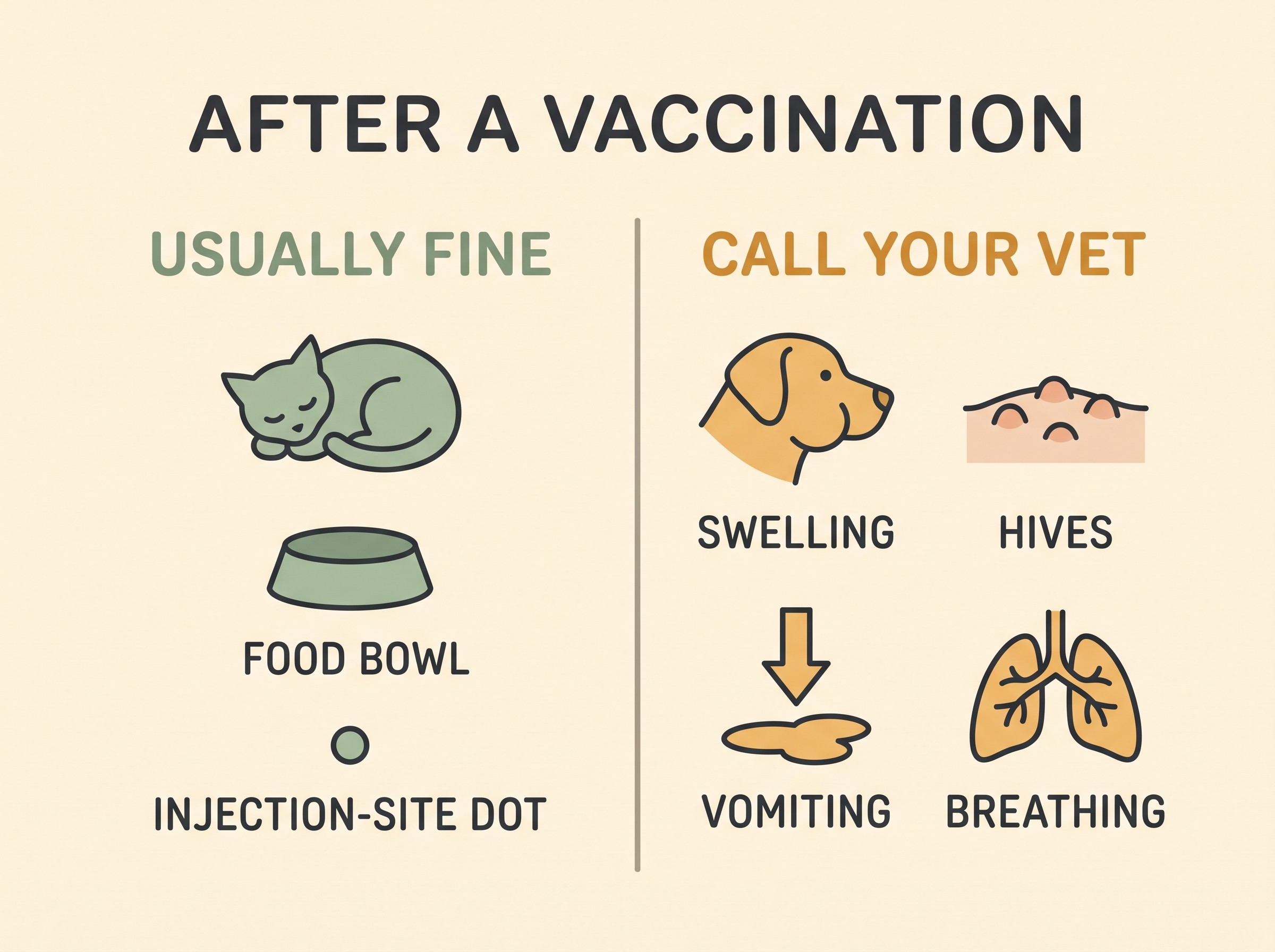
Most pets sail through vaccination with nothing at all. Of those who do react, the vast majority have a mild, short-lived response that reflects the immune system doing precisely what the vaccine asked it to. Typically in the first day or two you might see:
- being a bit quiet, sleepy or subdued
- a reduced appetite for a meal or so
- mild soreness, swelling or tenderness at the injection site
- a slightly raised temperature
This is normal, expected, and usually resolves on its own within a day or two. A quiet evening and a good sleep is the common story, and it isn't a sign anything has gone wrong. A small firm lump at the injection site can also appear and usually settles over a couple of weeks.
What a genuine adverse reaction looks like
Less commonly, a pet has a true adverse reaction that does need veterinary attention. The one to know about is an allergic (hypersensitivity) reaction, which usually comes on within minutes to a few hours of the jab. Signs include:
- facial swelling, particularly around the muzzle and eyes
- hives or lumpy, itchy skin
- vomiting or diarrhoea soon after the vaccine
- in the most severe and rare cases, collapse, breathing difficulty or a true anaphylactic reaction, which is an emergency
If you see facial swelling, hives, repeated vomiting, or any breathing difficulty or collapse after a vaccination, contact your vet straight away. These reactions are uncommon, and they're very treatable when caught early, which is one reason vets like vaccinations done during clinic hours.
There's also a specific, rare feline concern worth naming honestly: injection-site sarcomas in cats, a type of tumour that can develop at an injection site. Because the risk is very low but real, feline vaccination protocols and injection-site practices have been designed specifically to minimise it, which is part of why your vet is careful about where and how a cat is vaccinated. If you ever notice a lump at a cat's injection site that is growing, persists beyond a few weeks, or is larger than a couple of centimetres, have your vet check it.
The over-vaccination debate: what's real and what's overblown
"Over-vaccination" is a phrase that carries a lot of freight, and it's worth separating the legitimate professional point from the online exaggeration.
The legitimate point is simply this: there's no benefit in giving a vaccine more often than needed, and the profession has moved to reflect that. Current WSAVA guidance gives the core vaccines no more often than every three years after the primary course and first booster, precisely because annual core boosting doesn't add protection (WSAVA 2024). Vaccinating appropriately, matching the schedule to real need, is mainstream veterinary medicine, not a fringe position. If you've been giving every vaccine every year, the honest news is that current guidance may already mean less core vaccination, and your vet can tell you what's genuinely due.
Where it becomes overblown is when "don't over-vaccinate" slides into "vaccines cause a long list of chronic illnesses" or "it's safer not to vaccinate at all". The evidence doesn't support attributing broad chronic disease to routine vaccination, and the diseases the core vaccines prevent are catastrophically more dangerous than the vaccines themselves. Choosing not to vaccinate doesn't remove risk; it swaps a small, mostly mild, manageable risk for a large and sometimes fatal one.
So the honest framing is: yes, give vaccines appropriately rather than reflexively; no, that is not a reason to leave a pet unprotected against parvo, distemper or lepto.
How the profession already reduces reaction risk
It's reassuring to know that a lot of what worries owners has already been built into how vaccines are used. The move to triennial core boosting means the core vaccines are simply given less often than they once were, which reduces total lifetime exposure without reducing protection. Feline injection-site practices were changed specifically to lower the risk of the rare injection-site sarcoma. And every genuine suspected reaction can be reported through the Veterinary Medicines Directorate's surveillance scheme, so these products keep being monitored in real-world use long after they're licensed (VMD).
There's also a practical reason vets like vaccinations done in normal clinic hours rather than squeezed in at the end of the day: the rare serious reactions happen soon after the jab, and being minutes from help matters. If your pet has a known reaction history, mention it every time, even at a new practice, so it can be factored into the plan.
If your pet has reacted before: making a plan, not a stand
If your pet has had a genuine reaction, that's exactly the situation where a thoughtful, individualised plan with your vet earns its keep. Depending on what happened, options your vet might discuss include:
- Titre testing for the core viral diseases, to confirm your pet is already protected and avoid an unnecessary repeat core dose. Remember a titre covers only parvo, distemper and hepatitis, and never lepto or kennel cough, so it can't replace those. The full picture is in Titre Testing: When It Makes Sense and What It Can't Tell You.
- Spreading vaccines out rather than giving several at once, where appropriate.
- Pre-medication or monitoring around vaccination for a pet with a known reaction history.
- Reassessing which non-core vaccines are genuinely needed for your pet's lifestyle, which is a reasonable, guideline-consistent conversation.
Notice what's not on that list: quietly stopping. A reaction is a reason to individualise, and your vet reports genuine adverse reactions through the official scheme so the safety of these products keeps being monitored, not a reason to leave core diseases unguarded.
The conversation to have
If your pet was simply quiet and sore after a jab, that's almost certainly a normal reaction, and it isn't a warning sign about future vaccination. If something more concerning happened, or you're anxious about it, the productive question for your vet is:
"My pet reacted like this last time. Given what the reaction was, how can we keep them protected against the serious diseases while minimising the chance of it happening again?"
That question keeps your pet protected and takes your worry seriously at the same time, which is the whole point. Your vet knows your animal's history and can build a plan around it, and you can note the agreed schedule in the Preventive Care Scheduler so nothing that matters slips through while you're being cautious. If you want the wider map of what's core, what's lifestyle-based, and how often, start with The UK Dog and Cat Vaccination Schedule Explained.
References
- Squires RA, et al. WSAVA Vaccination Guidelines, 2024. *Journal of Small Animal Practice*.
- AAHA/AAFP Feline Vaccination Guidelines, 2020: feline vaccination reactions and feline injection-site sarcoma guidance.
- Veterinary Medicines Directorate (VMD): Suspected Adverse Event reporting scheme for veterinary medicines.
- NOAH Compendium: product datasheets, listed adverse reactions and site/handling advice.
Keep track of how your pet is doing
The owners who cope best are the ones who notice changes early. A simple health log shows you what is working, and what is not, before the next vet visit.
Start tracking, freeYou're not doing this alone
Compare treatment journeys and talk to owners managing staying well. Free to join.
Join PetsLikeMine