

Cat Vaccinations: What Your Cat Actually Needs
Alastair Greenway
BVM&S MRCVS
Cat vaccination gets far less airtime than dog vaccination, which is a shame, because cat owners are left with two very common and very reasonable questions: does my indoor cat really need anything, and if she does go out, what's genuinely worth having? The honest answers matter, because a couple of the diseases we vaccinate cats against are quietly devastating, and because the right plan for a cat is genuinely different from the right plan for a dog.
So this is the cat's own guide, not a footnote to a dog article. What the core vaccines are and what they prevent, why even indoor cats need them, what FeLV is and why it's now considered core for younger and outdoor cats, and how to work out what your particular cat needs.
The feline core: what every cat should have
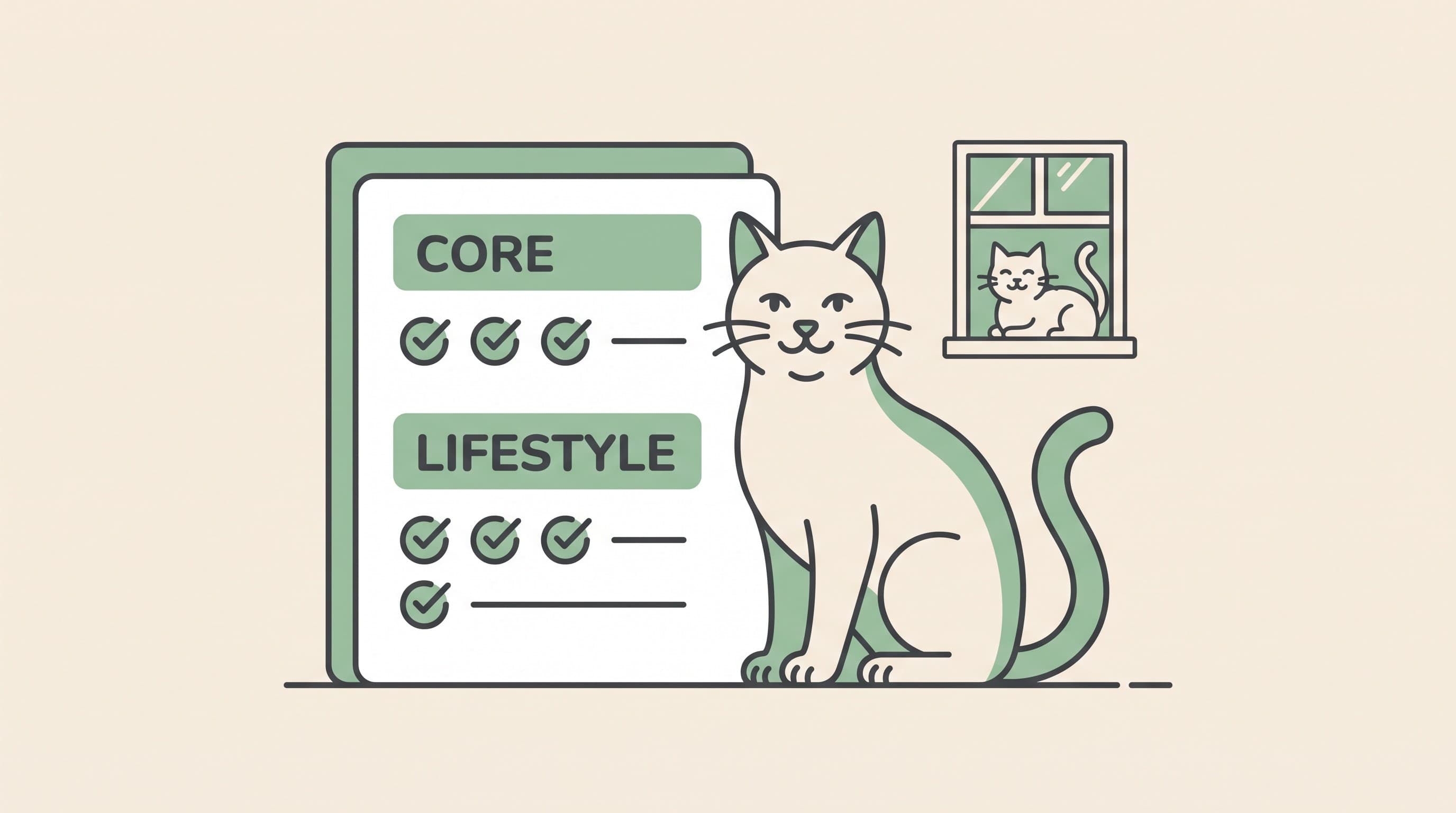
Just like dogs, cats have a set of core vaccines: the ones recommended for essentially every cat because the diseases are severe and widespread. Before we talk about how often, here's what they actually prevent, because these are not mild illnesses.
- Feline panleukopenia (FPV): sometimes called feline infectious enteritis or feline "parvo". This virus destroys white blood cells and the lining of the gut, and in unvaccinated kittens it is frequently fatal. It's also very hardy in the environment, which matters enormously for the indoor-cat question below.
- Feline herpesvirus (FHV-1) and feline calicivirus (FCV): the two main causes of cat flu. The name sounds trivial; the disease often isn't. It can cause severe upper respiratory illness, painful mouth ulcers, eye damage, and lasting problems, and it's especially serious in kittens. Herpesvirus, once caught, tends to stay for life and flare in times of stress.
These three, FPV, FHV-1 and FCV, make up the feline core (AAHA/AAFP 2020). They're often given together in one vaccine.
Why even an indoor-only cat needs the core vaccines
This is the point cat owners most often push back on, and understandably: if she never goes outside, where's the risk? Here's the honest answer.
Panleukopenia virus is extremely tough and doesn't need another cat to arrive. It can survive in the environment for a long time and be carried into your home on shoes, clothing and hands. Your cat doesn't have to meet an infected cat to be exposed; you can bring the virus to her.
On top of that, cat flu viruses are widespread, indoor cats sometimes end up outdoors unexpectedly (an open window, an escape, a move), and any cat may one day need to go into a cattery or a vet hospital where other cats have been. "She never goes out" reduces some risks, but it doesn't make the core diseases irrelevant. So indoor cats still need their core vaccines. What genuinely changes for an indoor cat is the non-core picture, which we'll come to.
The kitten course, the first booster, then triennial core
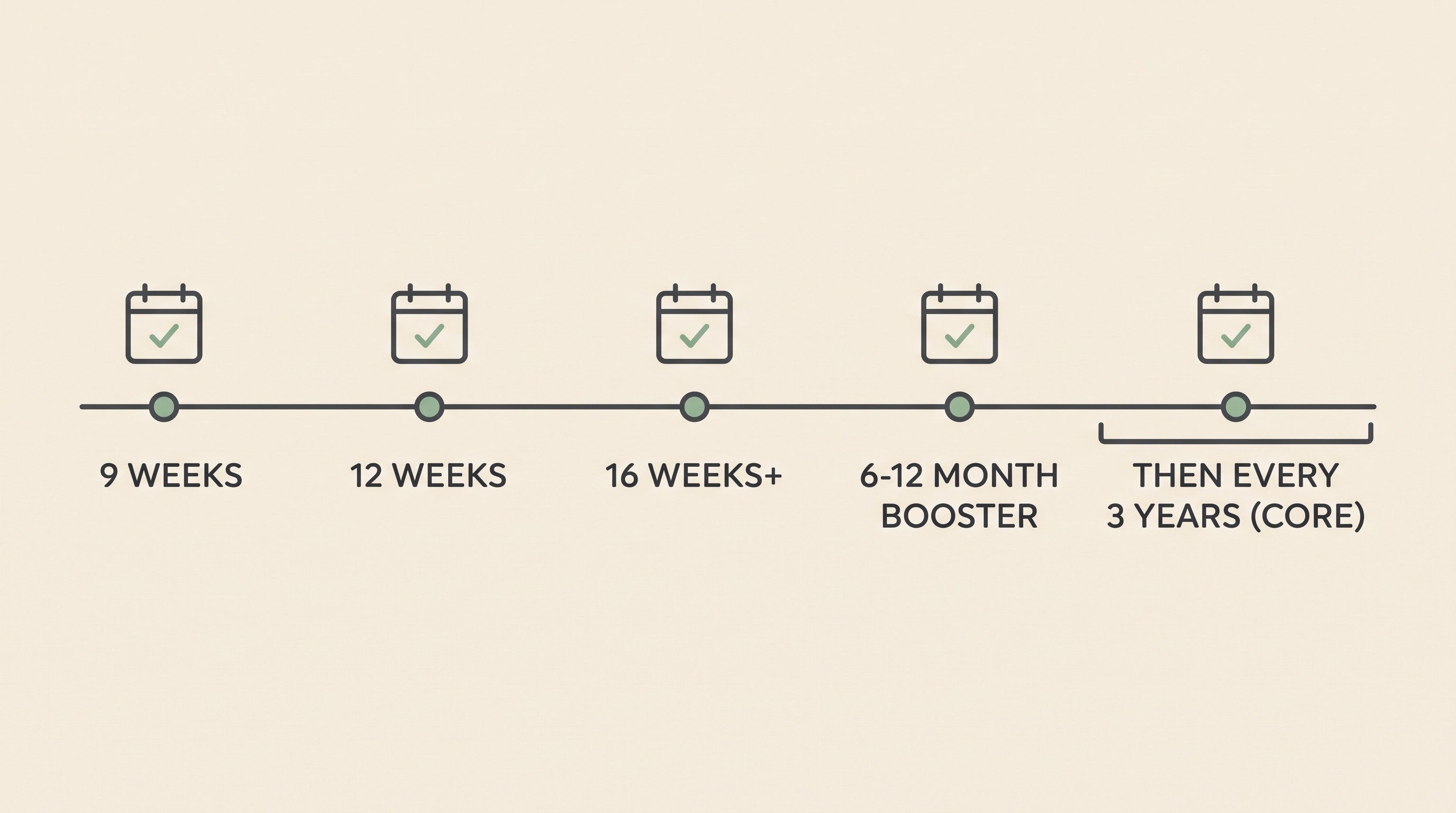
The schedule for cats follows the same shape as dogs. Kittens get a primary course of two or more doses a few weeks apart, because the protection they inherit from their mother fades over the early weeks and can block a vaccine while it lingers. As with puppies, the final dose of the primary course is given at 16 weeks of age or older to make sure it takes once maternal antibodies have gone (WSAVA 2024).
After the kitten course comes a booster at 6 to 12 months. And after that, the core vaccines are given no more often than every three years (WSAVA 2024). So, exactly like dogs, the core cat vaccines are not an annual event once your cat is through the early stages. The reasons a vet may still want to see your cat yearly are the non-core vaccines that are due annually for at-risk cats, and the health check, which for cats is especially valuable because they're such good hiders of illness.
FeLV: the one that's changed, and why it's now core for many cats
Feline leukaemia virus (FeLV) is a serious viral infection spread between cats, mainly through prolonged close contact, mutual grooming, sharing bowls, bites and from queen to kittens. It attacks the immune system and is associated with anaemia, immune suppression and certain cancers, and it shortens the lives of infected cats. There's no cure, so prevention is the whole game.
Here's the change that catches owners out. Under current WSAVA guidance, FeLV vaccination is now considered core for all cats under one year of age, and for older cats with outdoor access or who otherwise meet other cats (WSAVA 2024). The thinking is that young cats are both more likely to be exposed and more vulnerable to becoming permanently infected, so protecting kittens and young cats is a priority even if you expect them to be mostly indoors. For older, strictly-indoor cats with no contact with other cats, FeLV becomes a non-core, lifestyle-based decision.
FeLV vaccination, where it's appropriate, is boosted on its own schedule (often annually or as your vet advises), separate from the triennial core. If your cat goes outside and meets others, this is one of the most worthwhile conversations to have.
The other lifestyle vaccines
Beyond core and FeLV, there are a few non-core feline vaccines chosen by circumstance rather than given by default:
- Chlamydia felis and Bordetella: sometimes used in multi-cat households, breeding colonies or rescue and rehoming settings where these respiratory pathogens circulate. Not routine for most single pet cats.
- Rabies: required if you're taking your cat abroad and back under the pet travel scheme; not otherwise given in the UK.
Whether any of these apply to your cat depends entirely on her life, which is exactly the kind of thing your vet can judge once they know your household.
A quick word on a virus people often confuse with FeLV: feline immunodeficiency virus (FIV), sometimes called "cat AIDS". It's a separate infection, spread mainly through bite wounds from fighting, so it's most relevant to un-neutered, roaming, territorial cats. An FIV vaccine has existed but is not routinely available or used in the UK, and prevention rests more on neutering and managing fighting risk than on vaccination. It's worth knowing the two are different so you're not left thinking the FeLV jab covers FIV, because it doesn't.
Why the yearly check matters especially for cats
If the core vaccines are triennial, it's fair to ask why bother seeing the vet in the in-between years at all. For cats, the answer leans even harder on the health check than it does for dogs, because cats are extraordinary at hiding illness. A cat can be in the early stages of kidney disease, dental disease, an overactive thyroid, weight loss or a heart problem and still look, to a loving owner at home, completely normal. Many of the conditions that shorten cats' lives are far more manageable when caught early, and the annual (or, for older cats, twice-yearly) examination is often how they're first picked up, through a weight change, a heart murmur, a dental problem or a subtle finding on examination.
So even in a year with no vaccine due, the visit is doing real work. If you want the full picture of what happens in that appointment, see The Annual Health Check: What Your Vet Actually Looks For.
Working out what your cat actually needs
Put together, the honest shape of it is:
- Every cat, indoor or outdoor: the core vaccines (FPV, FHV-1, FCV), kitten course and first booster, then no more often than every three years.
- Every kitten and young cat under one year: FeLV as core, because young cats are the most vulnerable.
- Cats with outdoor access or contact with other cats: FeLV kept up, and a conversation about any other non-core vaccines that fit their life.
- Older, strictly-indoor, no-other-cats cats: core still needed; FeLV and other non-core vaccines become individual decisions.
Because this genuinely depends on your cat's world, the useful thing to bring to your vet is honest detail about her life: does she go outside, does she meet other cats, is she going into a cattery this year, are there other cats in the home. The question to ask is:
"Given how my cat actually lives, which vaccines are core and due, and is FeLV recommended for her age and lifestyle?"
Your vet knows both your cat and the local disease picture, so they can tailor this far better than any general list. If you're an indoor-cat owner also wondering about fleas and worms, the same honest, risk-based thinking applies there, and it's covered in Indoor-Only Cats: Do They Need Flea and Worm Treatment?. For the whole-household map of dog and cat vaccines side by side, see The UK Dog and Cat Vaccination Schedule Explained, and once you've settled your cat's plan you can set the core and FeLV reminders separately in the Preventive Care Scheduler.
References
- AAHA/AAFP Feline Vaccination Guidelines, 2020: feline core (FPV, FHV-1, FCV); risk-based non-core; triennial core in low-risk adults.
- Squires RA, et al. WSAVA Vaccination Guidelines, 2024. *Journal of Small Animal Practice*.
- NOAH Compendium: feline vaccine datasheets, including FeLV and Chlamydia/Bordetella schedules.
- GOV.UK: pet travel scheme (rabies) requirements for cats.
Free downloads
Companion worksheets to put what you've read into practice. Free PDFs, print at home.
Keep track of how your pet is doing
The owners who cope best are the ones who notice changes early. A simple health log shows you what is working, and what is not, before the next vet visit.
Start tracking, freeYou're not doing this alone
Compare treatment journeys and talk to owners managing staying well. Free to join.
Join PetsLikeMine