

Halos, Mats and Aids: What Actually Helps (and DIY Options)
Alastair Greenway
BVM&S MRCVS
Almost every owner I see arrives at the same practical question once the diagnosis has settled, usually with a browser tab or two already open: is one of those halo things worth it, and what actually helps? That deserves a straight answer rather than a sales pitch. The trouble is that the loudest voices here are the people selling the kit, and they tend to sound very sure. So here is the straight version, with nothing to push. A halo can genuinely help some pets, especially early on and in unfamiliar places, but it's an optional aid rather than a test you pass or fail, and a blind dog or cat can live a full, happy life without one (Beal, 2023). The kit is there to help confidence along, not because a good owner must buy it.
What a halo actually is, and what it does
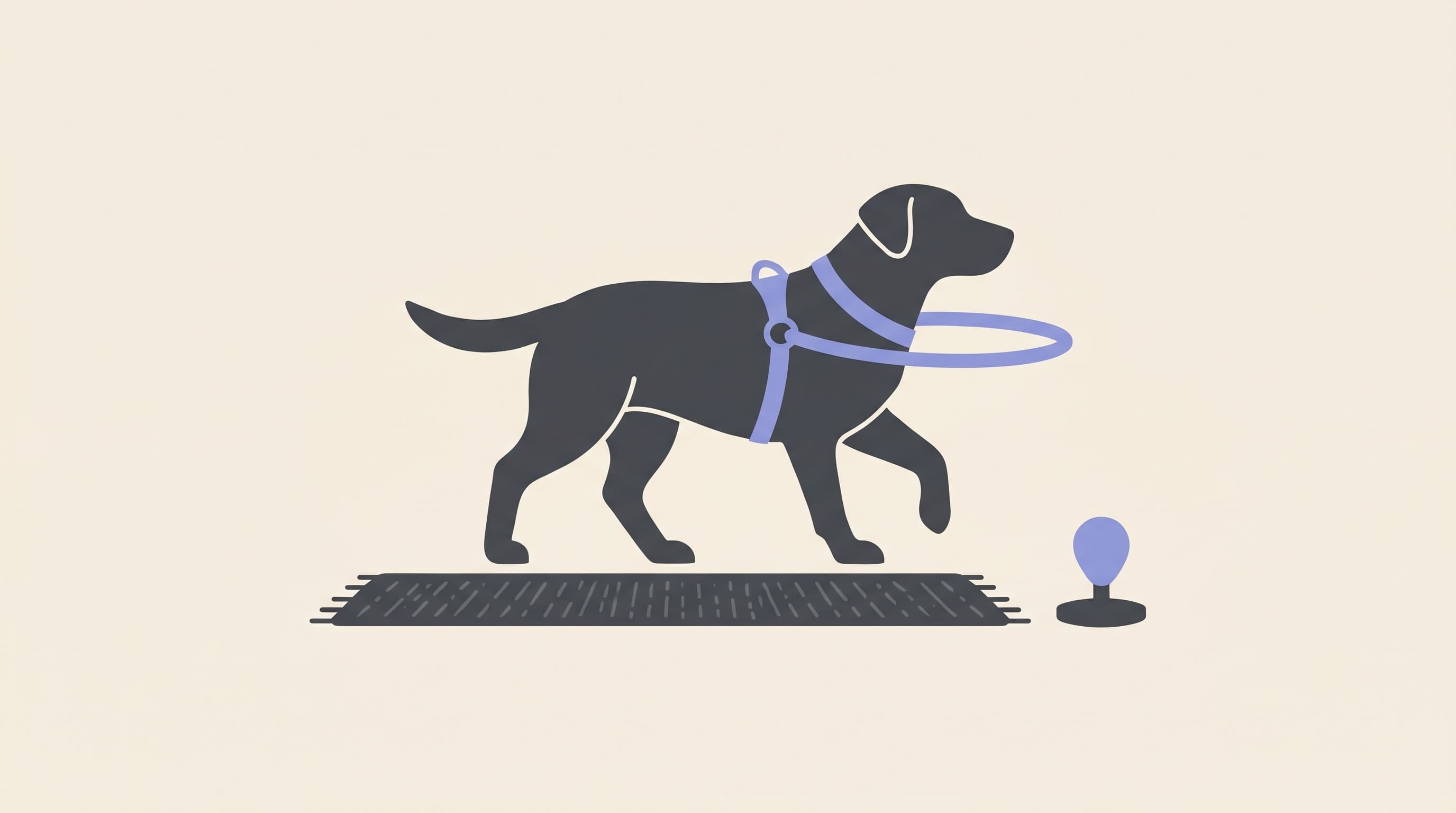
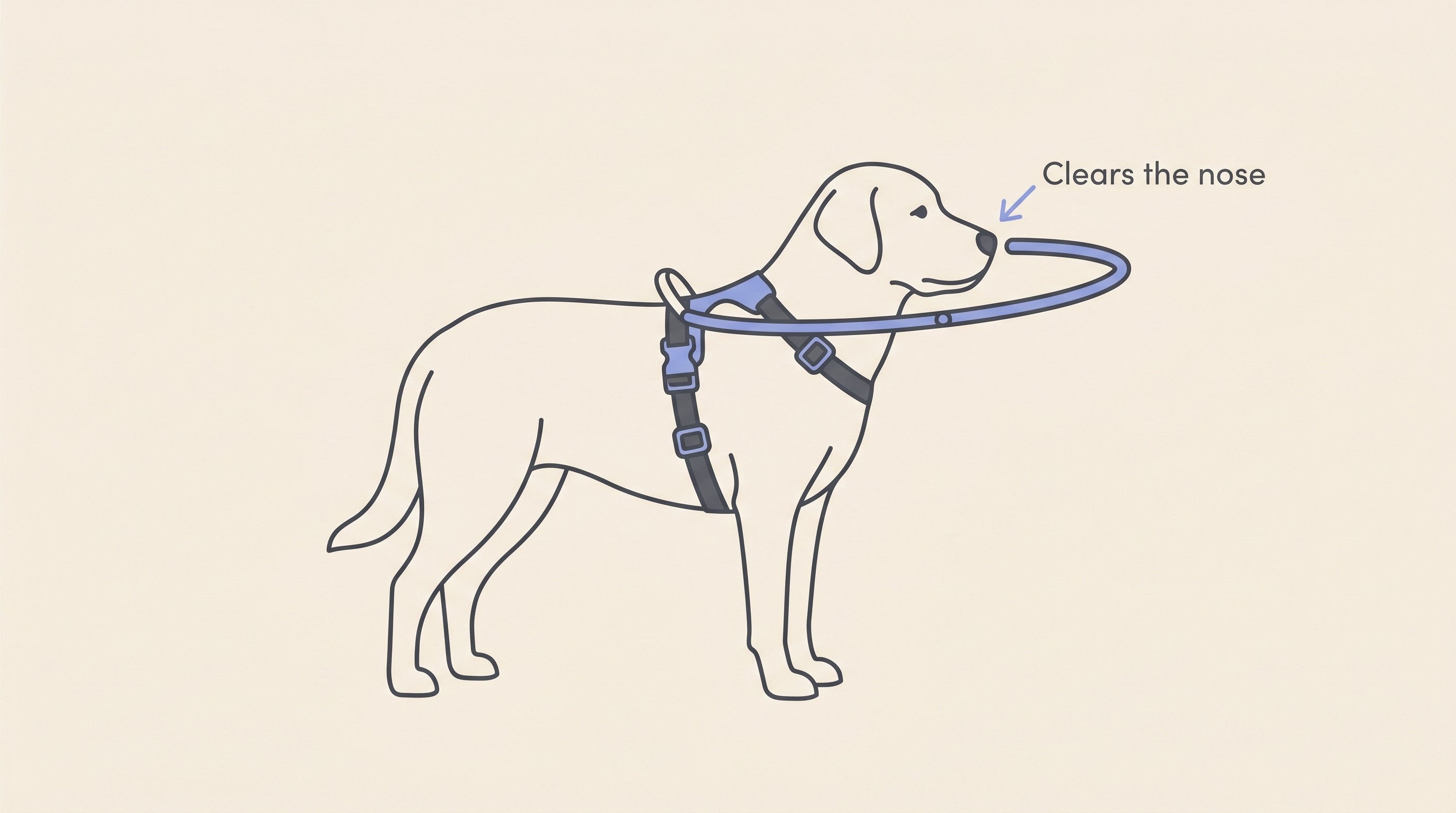
A halo, sometimes called a bumper or a blind-dog bumper, is a lightweight hoop worn on a harness or vest that sits roughly in line with your pet's nose. As your pet moves, the hoop bumps walls, furniture and table legs before its face does, giving a change-direction cue and sparing the head a knock (Beal, 2023; Envision More Veterinary Ophthalmology, 2022). That's the whole mechanism. A specialist ophthalmology practice describes it as a halo-type vest with a lightweight bumper that protects the face from collisions (Envision More Veterinary Ophthalmology, 2022), and your own vet or an eye specialist may be the one to suggest a dog bumper if your pet keeps walking into things (Patterdale, 2026). The hoop has to be set so it projects a little beyond the nose and sits level, which is the fitting point I'll return to, because it is the difference between an aid that works and one that gets abandoned in a cupboard.
Helps many, needed by none
This is the part the vendor pages skip, so I'll hold both halves of it plainly. The it-helps half is real. A halo can be a genuine comfort to a pet that has recently lost its sight, and with it some confidence, or one whose vision is fading gradually (Walkin' Pets, a). New or unfamiliar spaces are where it earns its keep most, which is why specialists often mention it for travel and visits away from home (Envision More Veterinary Ophthalmology, 2022). It's a recognised accommodation, named among the usual options for a blind pet alongside things like gating the stairs (Vahrenwald, AAHA), so if your pet keeps clipping the same door frame, trialling one is sensible.
Now the half the listicles leave out. Not every blind pet needs an assistive device like this (Walkin' Pets, a), and plenty do beautifully without one. The picture from the vet sources is that a pet losing vision slowly tends to adapt well and not need much extra help, whereas one that loses it suddenly leans on more support early on (Beal, 2023). So the gradual-loss dog dozing through this whole transition may never need a hoop, while the cat or dog whose world went dark in a fortnight is exactly the one a halo can carry through the worst weeks. A new harness can also startle a pet at first, between the unfamiliar weight and the small sounds it makes (Walkin' Pets, a), so it isn't always love at first wear.
One caveat matters for trusting the rest of this. There's no trial evidence that halos improve outcomes; what we have is owner experience and clinical recommendation, which is worth something but isn't hard proof. So I say many owners find and vets often suggest, never studies show. If a product page claims a halo is guaranteed to work, or that a good owner buys one, that's marketing, not medicine.
Giving a halo a fair go, and the DIY route
If you do try one, two things decide whether it works, and neither is the brand. The first is fit, and getting it wrong is the commonest reason a halo seems useless at first. The hoop needs to sit level and project just past the nose, on a harness rather than a collar so it stays stable (Walkin' Pets, a; Muffin's Halo for Blind Dogs). Too short and the face reaches the wall before the hoop does, so it never gets the chance to do its one job; lopsided and it bumps unpredictably, which unnerves a pet rather than reassuring it. It is worth spending a quiet ten minutes adjusting it on a calm, sighted-by-memory day before you judge whether it helps. The second thing is how you introduce it. Bring it in gradually, a few minutes at a time, so your pet acclimatises to the feel and the faint noises it makes (Walkin' Pets, a), and use it under supervision: even the retailers are clear that a halo should not be left on an unattended pet (Walkin' Pets, a), because a hoop that snags on a chair leg or a stair gate with nobody watching is a hazard, not a help. Take it off for rest, and check nothing's rubbing behind the legs or across the chest.
Now for the bit nobody selling halos wants you to know: a homemade one works just fine, and costs almost nothing. The whole idea began as a DIY fix. A few years ago an owner built a Bumper Buddy for their cataract-blinded dog from an adapted harness with a plastic hanger strap bent into a hoop at chest height, so that when the bumper hits something the dog knows to change direction, and reported that he safely found his way through the house and could explore again without fear, that it gave him his confidence back (HuffPost UK, 2015). The recipe is simple and forgiving. Fix a sturdy but flexible hoop to a well-fitting harness (not a collar, so it holds steady), keep it parallel to the floor, and smooth off any sharp edges first so nothing can scratch. A rough way to size it is to measure from the back strap of the harness to the tip of the nose, add a few inches so the hoop sits beyond the face, then double that for the strip length (Cosgrove, 2025). Treat those numbers as a starting point, not a rule, because they come from an owner guide rather than any clinical source; the real test is simply that the hoop reaches obstacles before the nose does and nothing digs in. Then supervise it exactly as you would a bought one. A DIY hoop is the same idea for the price of a coat hanger, and no poor relation of the shop version.
The aids that usually matter more than a halo
If you only have budget and energy for one thing, don't spend it on a hoop. Spend it on the home. A blind pet navigates by a memorised map of your home, built from memory, scent and sound, and it becomes remarkably good at it once that map has set (Envision More Veterinary Ophthalmology, 2022). The single biggest thing you can do is protect that map by not rearranging the furniture: a pet learns its area well even when blind, but is under real strain if that changes too much or too often (Coates, 2019), and keeping things in their usual spots is the quiet, free foundation everything else sits on (Envision More Veterinary Ophthalmology, 2022; Patterdale, 2026). That costs nothing, and it outperforms any gadget on the market.
On top of a stable layout, the genuinely useful aids are the cheap ones. Textured mats and runners give your pet underfoot signposts, a change in surface that says you are at the top of the stairs or by the back door. Pet-safe scent markers help it tell one area from another. A bell on a companion pet's collar lets it track where the other animal is. None of that is a gadget, yet together it does most of the heavy lifting, so the better buy is usually a couple of rugs, a few scent cues and an unmoved sofa, not a halo. If you want a sense of how your pet's confidence is trending as you put these in, the at-home vision check gives you a simple repeatable way to notice whether things are settling or slipping over the weeks.
I'm giving you the verdict here rather than the method on purpose, because the full room-by-room how-to is its own piece: see home-proofing for a blind pet. The bell-on-yourself, talk-before-you-touch side, using your own voice so your pet can locate you, belongs with communicating with a blind pet.

Nightlights, but only if there's some sight left
One aid gets recommended too widely, so let me be precise. A nightlight helps the pet that still has some vision, not a fully blind one. For a dog with a little residual sight, turning on a nightlight can genuinely help it see better in the dark, because even good canine night vision still needs a bit of light to work with (Kearley, 2021), and for a cat that still has light perception, putting a light on when you come into the room can help too (Walkin' Pets, b). That's the right tip for low-vision or partially-sighted pets, and for the conditions where night vision fades first while daylight sight hangs on for a while.
But be realistic about which pet you have. A completely blind pet gains nothing from a nightlight, because it navigates by map, scent and sound, not by light, and leaving a lamp on for it is for your comfort, not its. So it's a small, real kindness for the right pet and simply irrelevant for a fully blind one, with no harm either way.
Cats, and the wider world
Cats often need a halo even less than dogs. They lean heavily on their whiskers to judge distance and on the scent glands in their paws to map their surroundings, and on the whole they adapt well to losing their sight (Cats Protection). So for most blind cats the answer is simply no: keep the layout stable, leave the litter tray exactly where it is as a fixed reference point (Walkin' Pets, b), and let the whiskers do their job. A halo can still suit the minority that keep colliding or have clearly lost their nerve (Walkin' Pets, b), but cats are fussier than dogs about wearing anything, so introduce it gently, in short spells, and don't force the issue if your cat plants itself and refuses to move. The deep feline version, vertical navigation, whiskers in detail, multi-cat homes, lives in blind cats.
For life outside, the blind-dog vest that tells strangers to give your dog space, and a steering harness for guidance, are real and useful aids (Beal, 2023). I'll name them and hand you on, because walks, telling other people, and briefing groomers and walkers are a subject of their own: see blind pets out and about.
Where this leaves you
So here's how I'd approach it. Start with the cheap, reversible things, a stable layout, a few textured mats, some scent markers, a bell on the other pet, a nightlight if there's still some sight to use, because most pets get most of the way on those alone. Then, if your pet is bumping its head and visibly losing confidence, trial a halo, bought or homemade, fitted to clear the nose and used under supervision. Some take to one gladly; others sail through without ever needing it, and a halo-free pet is no failure on your part. Aids are tools, not a verdict on how good an owner you are. Blind dogs and cats live full, happy lives without vision (Beal, 2023), and the steady home and routine you build does far more than any hoop ever will. To work the whole setup through at your own pace, the blind-pet home checklist is where I'd start.
References
- Beal, A. (2023). Blindness in Dogs. PetMD, 8 December 2023.
- Coates, J. (DVM, medical reviewer). PetMD Editorial. (2019). What to Expect When You Adopt a Blind Dog. PetMD, updated 2 May 2019.
- Kearley, M. (DVM). (2021). Can Dogs See in the Dark? PetMD, 26 October 2021.
- Envision More Veterinary Ophthalmology. (2022). What Disability? How to Help Your Blind Pet Live a Fulfilling Life. 20 December 2022.
- Patterdale, S. (CPDT-KA, CTDI). (2026). Supporting a Blind Dog: How to Help Them Adjust. American Kennel Club, updated 27 April 2026.
- Cats Protection. How to Look After Blind Cats.
- Walkin' Pets (handicappedpets.com). (a) Should You Get a Blind Dog Halo?
- Walkin' Pets (handicappedpets.com). (b) Living with a Blind Cat: Rules to Live By.
- HuffPost UK. (2015). Homemade Bumper Device Helps Blind Dog Walk With Confidence. 31 July 2015.
- Cosgrove, N. (2025). How to Make a DIY Blind Dog Bumper. Hepper Pet Resources, updated 29 October 2025.
- Muffin's Halo for Blind Dogs. Product and FAQ pages.
- Vahrenwald, M. K. (DVM, CVJ). Living with a Blind or Deaf Pet: Tips from the Vet. American Animal Hospital Association (AAHA).
Keep track of how your pet is doing
The owners who cope best are the ones who notice changes early. A simple health log shows you what is working, and what is not, before the next vet visit.
Start tracking, freeYou're not doing this alone
Compare treatment journeys and talk to owners managing vision & eye health. Free to join.
Join PetsLikeMine