

The first vet visit and the microchip law
Alastair Greenway
BVM&S MRCVS
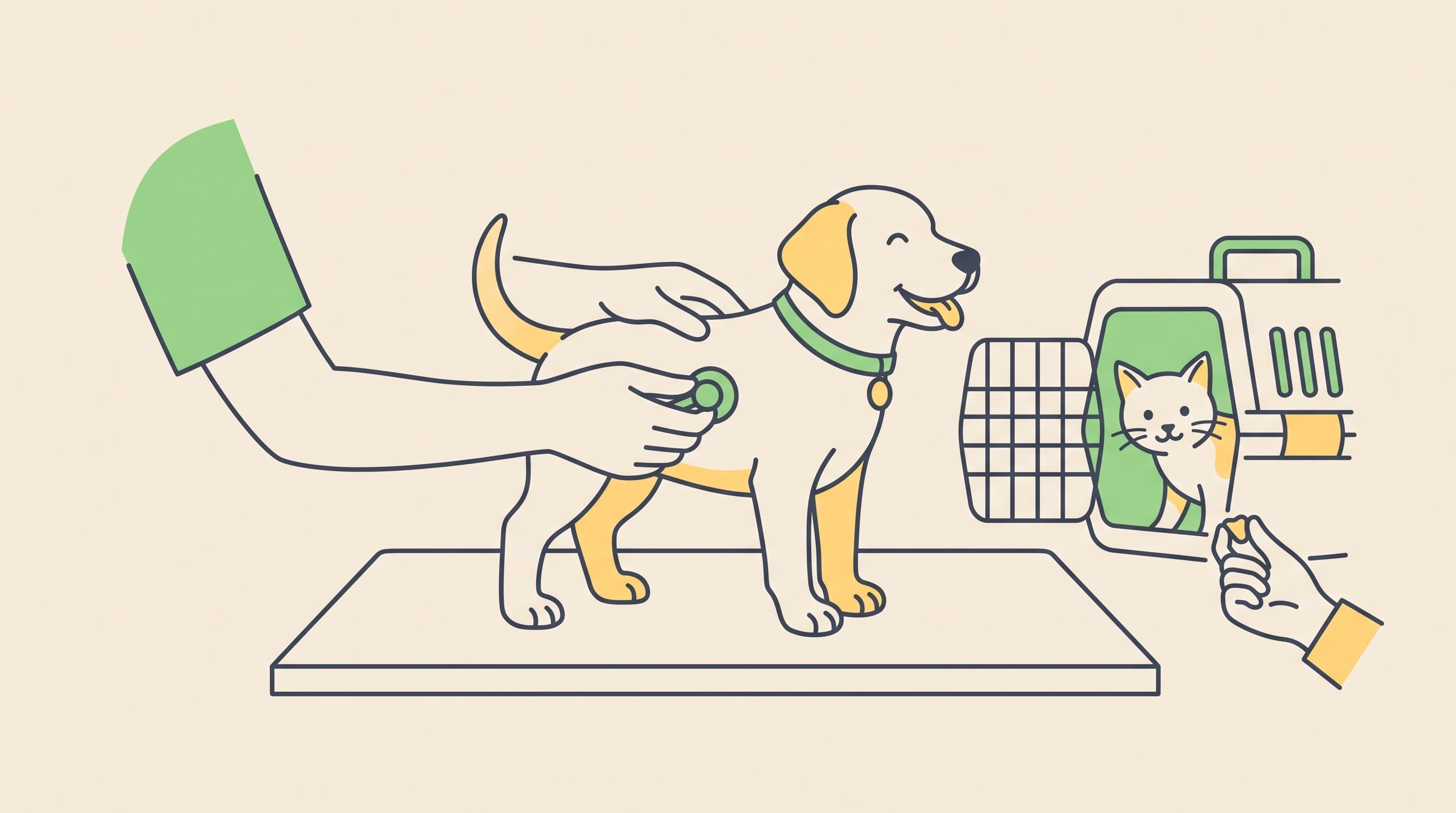
Booking your new puppy or kitten in for its first proper vet visit is one of the best things you can do in the first week, and yet a lot of people put it off, either because they are not sure what happens, or because they worry it will be an ordeal for a small animal. Let me take the mystery out of it, because the first visit is genuinely one of the nicer appointments a vet gets to do. Nobody is ill. It is a health check, a plan, and a chance to ask everything on your mind, and a good practice will treat it as the start of a long relationship rather than a five-minute box-tick.
It is also where a couple of legal duties get sorted, including one that changed recently for cats, so it is worth knowing where you stand.
When to go, and getting there calmly
Aim to see your own vet within the first few days of bringing your pet home. There are two reasons for the hurry, and neither is alarming. First, a young animal that has just changed homes occasionally brings a hidden problem with it, and it is far better to find it early. Second, many rescues and reputable breeders sell with a short window in which a free or discounted health check is expected, and some sales contracts even ask for a vet check within a set number of days, so an early visit protects you there too.
Getting there matters more than people expect. A puppy or kitten's very first trip to the vet is a golden socialisation opportunity, and you want it to be a good memory rather than a scary one. Bring a kitten in a secure carrier with a familiar-smelling blanket, cover the carrier with a towel so the waiting room feels less overwhelming, and for both species, bring some tasty treats so the vet and the nurse can hand them over. A puppy that gets chicken on the consult table learns that the vet is a place where nice things happen, which pays off for the next fifteen years. If you can, feed lightly beforehand so treats are appealing but avoid a full stomach in a car-sick youngster.
What actually happens: the health check
The heart of the visit is a nose-to-tail examination, and it is worth knowing what your vet is quietly checking so you can see how much is going on in what looks like a quick once-over.
Your vet will typically:
- Listen to the heart and lungs. Puppies and kittens can be born with heart murmurs, some innocent and some not, and picking one up early changes the plan. Certain breeds are more prone to heart conditions, which is exactly the kind of thing the breed lens at /breeds is there to flag from day one.
- Check the mouth, teeth and bite. They will look at how the jaw meets and whether the baby teeth are coming through normally. Dental care starts younger than most people think (the Teeth & Mouth space has the home-care groundwork).
- Feel the tummy for anything unexpected, and check that a male puppy or kitten has both testicles descended.
- Examine the eyes, ears, skin and coat for infections, mites or fleas, and check for the umbilical hernias that are common and usually minor in youngsters.
- Check the joints and the way they move. In some breeds, an early feel of the hips and joints starts a conversation about lifelong joint health (Arthritis and Mobility sits downstream of this).
- Weigh your pet. That first weight is not just a number, it is the first point on a growth curve, and plotting it against validated centiles from here on is one of the most useful things you can do (Growth charts and a healthy weight for young pets).
Do not be shy about asking the vet to talk you through what they find. This is the appointment to ask "is that lump normal?", "is she a good weight?", "what should I watch for with this breed?". You are not wasting their time. That is the job.
The vaccination and worming plan
The first visit is usually where your pet's vaccination course either begins or gets planned out, and where the parasite plan is set for your individual animal.
Vaccination has real UK-specific nuance (the 10-week-finish versus 16-week-dose question), and rather than repeat it here, it has its own detailed piece: The UK vaccination schedule explained. The short version is that your vet will start or map out the core course and tell you when your pet can safely go out. Ask the two questions that cut through the confusion: which products is my pet having, and do we need a dose at 16 weeks or are we relying on the 12-month booster?
Worming and flea control also get set here, on a real schedule rather than pet-shop guesswork, and the dose is matched to your growing pet's weight. The full plan, including the important reasons never to put a dog product on a cat, is in Worming and flea control in the first year. Between the jabs and the worming, there are three or four vet contacts packed into the first sixteen weeks, which is a lot to keep track of, so this is the natural moment to set up the Vaccination & worming scheduler so the reminders come to you.
The microchip law: your legal duties
Now the legal part, stated plainly, because the rules genuinely changed for cats and a lot of owners have not caught up.
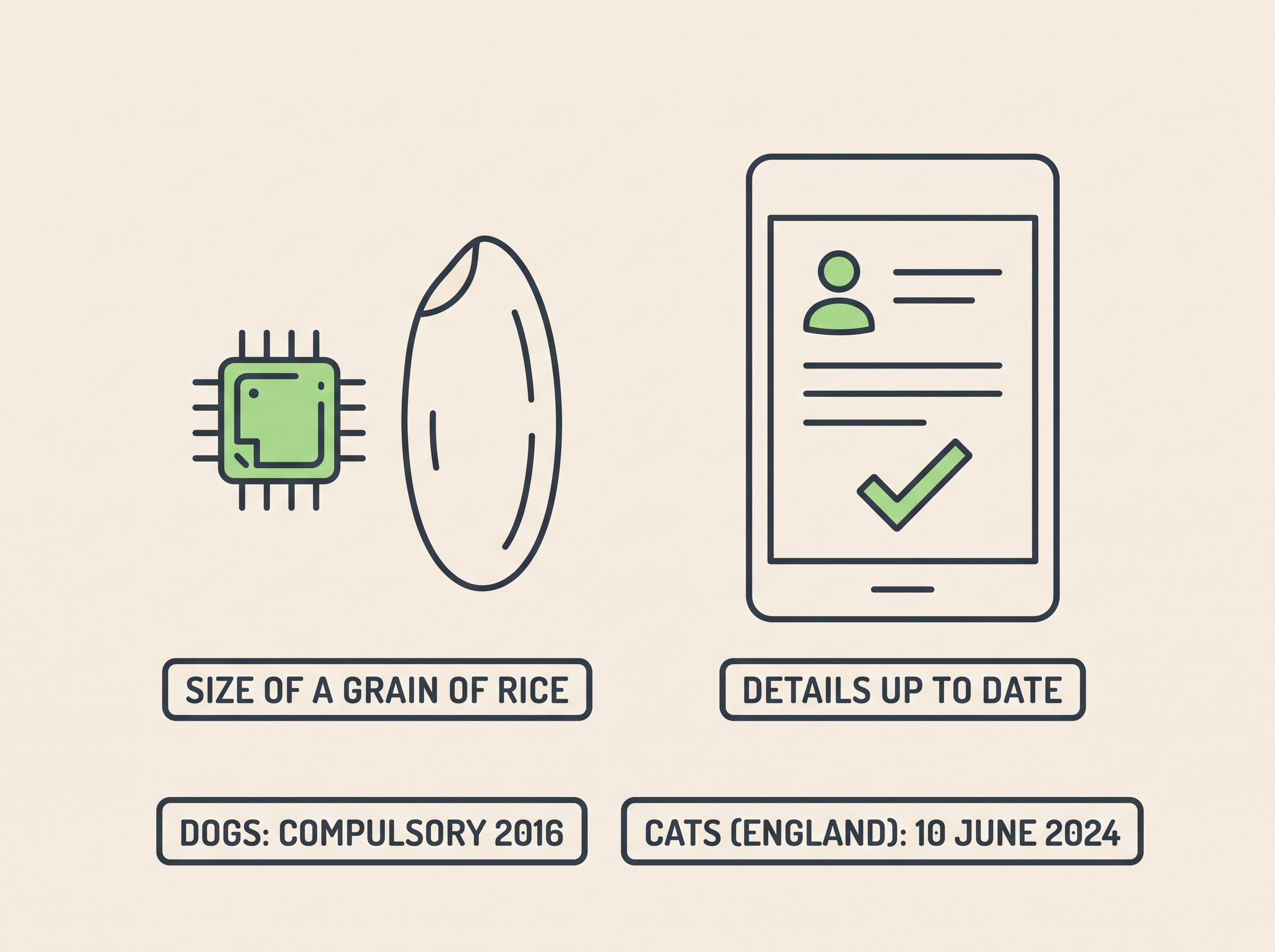
For dogs, microchipping has been compulsory in the UK since 2016. Every dog must be microchipped and the details registered on an approved database by the age of eight weeks, and in practice a reputable breeder will have done this before your puppy comes home. On top of the chip, a dog in a public place must also wear a collar and tag showing the owner's name and address, under separate long-standing law (Control of Dogs Order 1992) (UK Government, 2016; DEFRA).
For cats in England, microchipping became compulsory on 10 June 2024. All cats in England over the age of 20 weeks must now be microchipped and registered on a compliant database, with owners given time to comply and fines possible for those who do not (UK Government / DEFRA, 2024). This was a significant and welcome change, because a microchip is the single best way to reunite a lost cat with its family.
A microchip is a tiny device, about the size of a grain of rice, placed under the skin between the shoulder blades. It is quick, and while a puppy or kitten may feel a brief pinch, it is well tolerated and often done during a routine visit if it has not been done already. Your vet or a nurse can check that an existing chip is present and readable, which is worth doing even if you have been told it is there.
The bit everyone forgets: register and update the details
Here is the part that catches good owners out, and it matters more than the chip itself. A microchip only works if the contact details on the database are current and are yours. A chip registered to the breeder, or to your old address and a dead phone number, will not get your pet home.
So at or just after the first visit, do two things. Confirm your pet is chipped and find out which database it is on, then transfer the registration into your name and check every detail is right. It usually takes a few minutes online and sometimes a small fee. Then remember to update it whenever you move house or change your phone number, for the rest of your pet's life. It is the least glamorous job in this whole space and one of the most important.
Neutering and the longer view
Your vet will often raise neutering at or soon after the first visit, and it is worth knowing in advance that the modern answer is not a single age, and that dogs and cats are handled very differently.
For dogs, the old "neuter at six months" rule is genuinely out of date, and the right timing now depends on breed, size and sex, so it is a real conversation rather than a fixed date (When to neuter your dog: the breed and size evidence). For cats, the picture is almost the opposite: four months is the right time, because a kitten can become pregnant surprisingly young, and waiting causes accidental litters (When to neuter your cat: the four-month myth-buster). If your vet mentions these at the first visit, that is them planning ahead, not rushing you.
Making the most of it
A first vet visit is short, so it helps to come prepared. Bring any paperwork the breeder or rescue gave you (vaccination cards, microchip details, worming records, the pedigree or contract), the food your pet is currently eating so the vet can advise on any change, and a written list of your questions, because they always evaporate the moment you sit down. If you have started a profile for your pet, jot the breed in, because that is what lets the record begin flagging what to watch and lets the vaccination and worming reminders find you.
Most of all, treat this visit as the beginning of a partnership. The single most valuable thing you build in the first year is not any one appointment, it is a relationship with a practice that knows your pet from its very first weeks. That relationship, and the record that starts today, is what makes every future decision, from a limp to a lump to a life-stage change, easier and better informed. Get the chip details into your name, set the vaccination and worming reminders going, and you have done the two most important administrative jobs of the whole first year.
References
- UK Government (2016). The Microchipping of Dogs (England) Regulations 2015 (in force 6 April 2016), and equivalent regulations across the UK.
- UK Government / DEFRA (2024). The Microchipping of Cats and Dogs (England) Regulations 2023; compulsory cat microchipping from 10 June 2024 (cats over 20 weeks).
- Control of Dogs Order 1992 (collar and tag requirement in a public place).
- WSAVA Vaccination Guidelines Group (2024). Guidelines for the Vaccination of Dogs and Cats.
- RCVS / RSPCA / PDSA new-pet health-check guidance.
Free downloads
Companion worksheets to put what you've read into practice. Free PDFs, print at home.
Your Puppy or Kitten's First-Year Health Schedule
PDF · 245 KBA fill-in wall planner for vaccinations, worming and flea control by age, explaining the 10-week versus 16-week finish and leaving the exact dates for your vet to set.
Buying Well: The Puppy Contract and Kitten Checklist, Explained
PDF · 255 KBThe bad-seller red flags and what good documentation looks like, pointing to the AWF/RSPCA Puppy Contract and the Cat Group/iCatCare Kitten Checklist as the real tools, with Lucy's Law and microchip-law notes.
Keep track of how your pet is doing
The owners who cope best are the ones who notice changes early. A simple health log shows you what is working, and what is not, before the next vet visit.
Start tracking, freeYou're not doing this alone
Compare treatment journeys and talk to owners managing new puppy & kitten. Free to join.
Join PetsLikeMine