


Worming and flea control in the first year
Alastair Greenway
BVM&S MRCVS
If you have ever stood in a pet shop aisle staring at a wall of wormers and flea spot-ons, feeling faintly grossed out and completely unsure which one is "right", this is the article for you. Parasite control is one of those jobs that sounds simple and turns out to be surprisingly easy to get wrong, and the stakes are higher than most people realise, both for your pet and, in the case of worms, for the children in your home.
The good news is that once you understand the "why" behind the schedule, it stops being guesswork. There is a real, evidence-based plan for the first year, and it is not the same as grabbing whatever is on offer at the supermarket. Let me walk you through it the way I would at the kitchen table.
Why young animals carry worms so early
It surprises a lot of new owners to learn that puppies and kittens are very often born with worms, or pick them up in the first days of life, long before they have set a paw outside.
The main culprit is the roundworm, and the biology is worth knowing because it explains the whole schedule. Roundworm larvae can lie dormant in a mother's tissues and reactivate during pregnancy, passing to the unborn puppies across the placenta and, in both puppies and kittens, through her milk when they nurse (ESCCAP UK & Ireland, 2025). So a squeaky-clean litter from a spotless home can still be carrying a worm burden from day one, simply because that is how the parasite's life cycle works. This is exactly why worming starts young and happens often in the first months, when a heavy worm burden can genuinely make a small animal unwell, causing a pot-belly, poor growth, vomiting or diarrhoea.
The first-year worming schedule
Here is the cadence that vets across the UK work to, taken from the ESCCAP UK & Ireland guidelines, which are the standard reference for parasite control in this country.
For puppies and kittens, worming is frequent in the first months and then steps down:
- Roughly every two weeks from around 2 weeks of age until 12 weeks (ESCCAP UK & Ireland, GL1, 2025).
- Then monthly until around 6 months of age.
- After that, a risk-based adult schedule, which for many pets means roughly every three months, but genuinely depends on lifestyle, whether there are young children in the home, hunting habits and local risks (ESCCAP UK & Ireland, 2025).
Do not worry about memorising the numbers. The important idea is that early worming is deliberately frequent, it tapers as your pet grows, and the exact plan should come from your vet for your individual animal. The reason it is worth getting right rather than approximate is the next section.
The worms that matter, and the one that affects your children
Not all worms are equal, and two in particular are the reason the schedule looks the way it does.
Roundworm (Toxocara) is the big one, and not only for your pet. Toxocara is a zoonosis, meaning it can infect people, and children are most at risk because they play on the ground and are less fastidious about washing their hands. If a child accidentally swallows Toxocara eggs from contaminated soil or from an infected animal, the larvae can migrate through the body, and in rare cases can damage the eye, a condition called ocular toxocariasis (ESCCAP UK & Ireland, 2025; UKHSA/public-health guidance). This is not a reason to panic, and it is very much not a reason to rehome a pet, but it is precisely why the early worming schedule exists and why worming before letting a puppy or kitten around toddlers is genuinely a health measure, not fussiness. Good hygiene, prompt poo pick-up, and keeping to the worming plan between them make the risk very small.
Tapeworm is the other common one, and it has a neat connection to the next topic: one of the most common tapeworms is caught by a pet swallowing an infected flea during grooming. So flea control and tapeworm control are linked, which is one reason a joined-up parasite plan beats treating each thing in isolation.
Lungworm (Angiostrongylus vasorum) deserves a special mention for UK dogs, because it has spread across much of the country in recent years and it is genuinely dangerous. Dogs pick it up by eating slugs and snails, or the slime trails they leave on grass, toys and water bowls left outside, sometimes without the owner ever seeing them do it. Lungworm can cause breathing problems, bleeding disorders and, untreated, death (ESCCAP UK & Ireland, 2025; UK veterinary surveillance). The critical point for buying products is this: not every wormer covers lungworm. A cheap over-the-counter roundwormer may do nothing against it. This is one of the strongest reasons to use a vet-led plan rather than pick a box off a shelf, because your vet will make sure the product actually covers the risks your dog faces. (If breathing ever becomes a worry, the Breathing and Airways space sits downstream of this.)
Fleas: the 95% you cannot see
Now to fleas, and the single most useful thing to understand about them, which changes how you treat them entirely.
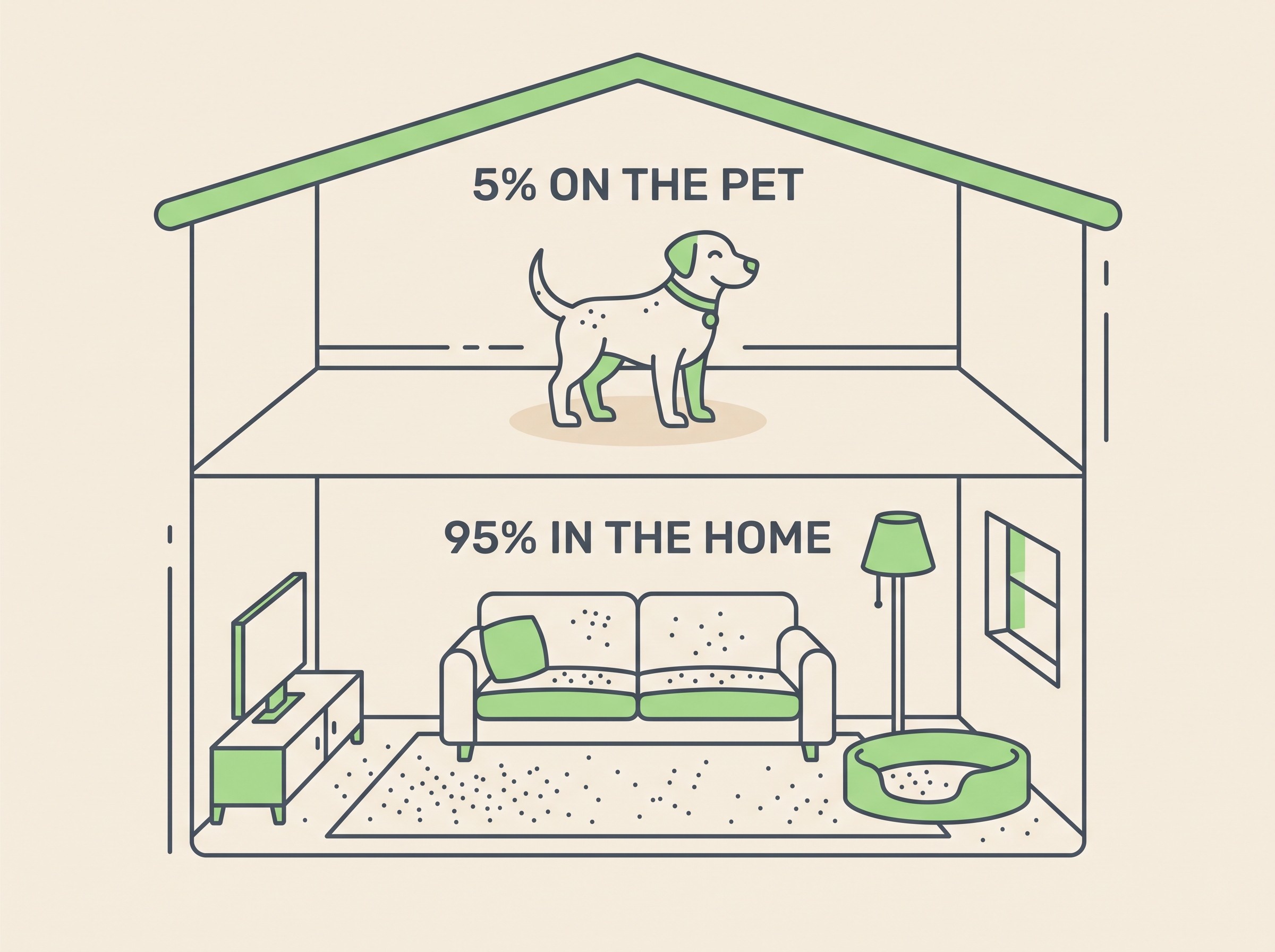
When you see a flea on your pet, you are seeing a tiny fraction of the problem. The adult fleas living on the animal are estimated to be only around 5% of a flea population, with the other 95% present in the environment as eggs, larvae and pupae in your carpets, sofas, pet beds and floorboards (ESCCAP / veterinary parasitology consensus). This is why treating the pet alone so often fails: you kill the fleas you can see, and a fresh wave hatches out of the carpet a fortnight later, and you conclude the product "didn't work" when really the house was never treated.
So effective flea control is year-round and environmental. Central heating means fleas breed happily indoors through the winter, so the old idea of a "flea season" is outdated. A proper plan means treating the pet on a regular schedule and, if there is an established infestation, treating the home too, with thorough vacuuming (which also encourages the pupae to hatch where the treatment can reach them) and washing bedding hot. Your vet can advise on a household treatment if you need one. Fleas are not a sign of a dirty home, they are just very good at what they do, so there is no shame in dealing with them, only sense in doing it properly.
Why a vet-led plan beats supermarket guesswork
Pulling this together, there are three concrete reasons the wall of supermarket products so often leads owners astray.
First, spectrum. As we have seen, not every product covers lungworm, and many do not cover tapeworm, so a cheap box may leave real gaps. Your vet chooses a product, or a small combination, that covers the parasites your individual pet is actually exposed to.
Second, dose and growth. Parasite treatments are dosed by body weight, and a puppy or kitten is a moving target, potentially doubling its weight in a matter of weeks. A dose that was right last month may be wrong today, which is another reason the plan is tied to your pet's growth and why the Growth charts and a healthy weight for young pets tracking dovetails so neatly with this. Guessing the dose risks either under-treating (no effect) or, at the other extreme, harm.
Third, and this is the one that can be fatal, species. This is the hard safety line of the whole article, so I will say it very directly: never use a dog flea or worming product on a cat. Many dog spot-on flea products contain permethrin or related pyrethroids, and while these are safe for dogs, they are highly toxic to cats, causing tremors, seizures and, without prompt treatment, death (International Cat Care; VPIS/animal poison-line data). This is one of the most common and most preventable feline poisonings a vet sees. It happens to loving, careful owners who simply used the wrong product or, occasionally, treated the dog and let the cat groom it. Always use a product licensed for the species and weight in front of you, and if you have both a cat and a dog, keep them apart after treating the dog until it has dried and been absorbed. While we are here: some "natural" and herbal wormers sold online simply do not work and can give false reassurance, so treat those claims with real caution too.
How it all fits together
You may have noticed that worming, fleas, vaccination and growth all keep referring to each other, and that is not an accident. The first year is a run of overlapping schedules, and the whole point of getting a plan rather than a pile of products is that they can be coordinated.
The vaccination visits (The UK vaccination schedule explained) are natural moments to check the worming and flea plan and adjust the dose for your pet's new weight, and your vet will often line these up. The first vet visit is where the plan gets set in the first place. And because there is a lot to track across the first sixteen weeks, the Vaccination & worming scheduler can hold your pet's actual parasite plan, remind you when each treatment is due, and prompt a dose review as your pet grows, so nothing quietly lapses.
The one thing to do today
If all of this feels like a lot, reduce it to a single action: do not buy your parasite control off a shelf on a guess. Book, or use, your vet visit to set a proper plan for your individual pet, one that covers roundworm and lungworm where relevant, matches the dose to a fast-growing weight, and uses only products licensed for the right species. Then let the reminders carry the schedule for you.
Do that, keep to the early worming cadence, wash your hands and pick up after your pet around children, and you have handled the two things new owners most often get wrong, kept the worms away from the kids, and avoided the single most preventable poisoning in cats. That is a very good first-year job well done.
References
- ESCCAP UK & Ireland (2025). GL1: Worm Control in Dogs and Cats (7th edition). European Scientific Counsel Companion Animal Parasites, UK & Ireland.
- ESCCAP UK & Ireland (2025). Control of Ectoparasites in Dogs and Cats / flea guidance.
- UK Health Security Agency (UKHSA) / public-health guidance on Toxocara and toxocariasis, including ocular toxocariasis risk to children.
- International Cat Care / iCatCare. Guidance on permethrin/pyrethroid toxicity in cats from dog spot-on products.
- Veterinary Poisons Information Service (VPIS) / Animal PoisonLine data on feline permethrin poisoning.
- UK lungworm (Angiostrongylus vasorum) veterinary surveillance / spread data.
Free downloads
Companion worksheets to put what you've read into practice. Free PDFs, print at home.
Keep track of how your pet is doing
The owners who cope best are the ones who notice changes early. A simple health log shows you what is working, and what is not, before the next vet visit.
Start tracking, freeYou're not doing this alone
Compare treatment journeys and talk to owners managing new puppy & kitten. Free to join.
Join PetsLikeMine