

The Emotional Toll of Caring for a Pet With Epilepsy
Alastair Greenway
BVM&S MRCVS
When UK researchers sat down with owners living alongside canine epilepsy, the phrase they chose for the study came straight from those owners' own mouths: "We have a ticking time bomb" (Pergande et al., 2020). It captures the whole thing. The seizure itself is only part of what wears people down. The rest is the waiting, and that exhaustion is a real, documented, common experience with a name attached to it. If it has left you frightened and braced even while your dog sleeps at your feet, that isn't you being soft, and you're very far from alone.
This article is about you, the human at the other end of the lead, and what the evidence says about looking after yourself while you look after them. The clinical detail belongs to its sibling articles, and I'll point you to them as we go.
The dread has a name, and the data backs it up
For many owners, the hardest part of epilepsy isn't the seizure in front of them. It's the constant, low-level dread of the one that hasn't happened yet. Because seizures are unpredictable, owners describe a persistent worry about when the next one will come, not just what it will look like (Pergande et al., 2020). Your dog can look completely normal, tail wagging, ball in mouth, and you're still braced. That is exactly what the "ticking time bomb" image is getting at: the bomb is quiet most of the time, and the quiet is its own kind of torture.
This anticipatory anxiety is the core feeling, and naming it matters because it's so often dismissed, by others and by ourselves. "But he seems fine?" Yes. And you're still scanning him, all day, for the flicker that says it's starting.
That scanning is near-universal, which should reassure rather than alarm you. In a UK study of 1,288 owners, 64.9% reported noticing pre-seizure changes in their dog and 59.6% believed they could predict an upcoming seizure, often picking up on increased clinginess (25.4%), restlessness (23.1%) or fearful behaviour (19.4%) (Finnegan et al., 2020). So if you find yourself watching your dog like a hawk, you're doing what most owners in your position do. The watching is normal. It's also exhausting, and running a private radar station every waking hour takes a toll.
More than the worry alone
It rarely stops at anxiety. The same research mapped how far the load spreads, and each piece is something owners tend to carry silently, assuming it's just them.
Sleep goes first for many people. Night-time seizures, and the fear of sleeping through one, directly disrupt owners' sleep, which compounds the daytime stress (Pergande et al., 2020). I single this out because sleep deprivation is both a genuine harm and one of the more fixable parts of this, and I'll come back to it.
Then life reorganises itself around the dog, sometimes drastically. Owners in the study reported giving up holidays, cancelling social plans, never leaving the dog unsupervised, and in some cases cutting their working hours or stopping work altogether to provide care (Pergande et al., 2020). This is the quiet engine of so much guilt and isolation, and I want to name it without a shred of judgement. Rearranging your whole life around a vulnerable animal is an act of love, even when it leaves you frayed.
And it can be lonely. Because epilepsy is episodic and invisible between events, the people around you often don't grasp the weight of it. One owner described a friend who became "exasperated" with their constant worry (Pergande et al., 2020). If you have felt that others think you're overreacting about a dog who "looks fine", that sense of being alone in it is itself a documented part of this condition, not a personal failing.
Now for the point where lived experience turns into hard data. When researchers compared owners of chronically or terminally ill pets against matched owners of healthy pets, the sick-pet owners showed significantly greater caregiver burden, more stress, more symptoms of depression and anxiety, and poorer quality of life, with every one of those differences highly statistically significant (Spitznagel et al., 2017). Burden was measured with a modified Zarit Burden Interview, a tool built and validated for people caring for a relative with dementia. Pointed at pet owners, it lit up. Epilepsy is exactly the kind of chronic, unpredictable, demanding illness that drives this, so when I say you're not imagining it, I mean there is a measurable, validated phenomenon with your name on it.
When the seizure ends but the hard part doesn't
There is one more thing owners consistently tell us is harder than expected, and it's the aftermath. In a survey of 292 owners, 97% reported post-ictal signs, the disorientation, pacing, temporary blindness and "not-rightness" that can follow a seizure, and 61% rated those signs as moderate or severe. Notably, the longer that recovery period dragged on, the greater the negative impact on the owner's own quality of life (Kähn et al., 2023).
That finding matters because it validates something people feel guilty about. Sitting with a dog who is awake but lost, who doesn't quite know you for an hour or two, who paces and bumps into things, is draining in a way that's hard to explain to anyone who hasn't done it. It's allowed to be hard. The clinical detail of that phase, what's normal, what helps, when it's a red flag, lives in the post-ictal phase. Here I'll only say this: if the recovery hours wipe you out, that is a recognised part of the load, not weakness.
Lowering the bar you're holding yourself to
Measure your worth as an owner by the seizure count and you have set yourself an impossible exam, because the realistic goal of epilepsy treatment is reduction, not cure. A "responder" is usually a dog whose seizures drop by at least half, and complete freedom from seizures is uncommon. When researchers looked at what owners actually value, they consistently rated their dog's quality of life above seizure frequency (Packer & Volk, 2015). Owners instinctively knew that a happy dog who still has the occasional seizure is doing well, and the evidence backs that instinct.
So let the question change. Not "did we get to zero?" but "is my dog enjoying her life, and am I able to enjoy mine alongside her?" That is a kinder bar, and the right one. The fuller picture of a good outcome over the years sits in can a dog with epilepsy live a normal life, which is where I'd send you for the prognosis itself.
There's one more reassurance worth hearing. If your dog has seemed more anxious or clingy since the seizures began, that's recognised too: behavioural changes, including increased fear and anxiety, frequently emerge in dogs after epilepsy onset, independent of medication (Shihab et al., 2011). A more anxious dog can ratchet up an already-stretched owner, so it's worth knowing it isn't you, and that it's often manageable with your vet's help. One more reason the strain you're under is the disease's doing, not a sign you're falling short.
Practical coping: control you can actually hold
Validation only goes so far. Here is what the evidence says genuinely helps.
Routine, and the diary as restored control. Owners in the qualitative study found that a strict routine reduced their feelings of uncertainty, and that keeping detailed seizure records, the act of logging and looking for patterns, was a beneficial way to cope, a way to feel active rather than helpless (Pergande et al., 2020). I love this finding, because it means the seizure diary isn't only clinical admin for your vet. It is a recognised psychological coping mechanism. When everything about epilepsy feels unpredictable, the diary is one concrete thing you can do, a piece of control you can hold in your hand. Our Seizure Diary is built for exactly this, and the how-to of logging well lives in keeping a seizure diary. Think of it less as paperwork and more as something to do with the worry.
Share the care, and protect your sleep. One person should not be the permanent night nurse. If there's anyone, a partner, a family member, a friend, who can take a night so you can sleep properly, that isn't indulgence, it's maintenance. Sleep loss is one of the real harms here (Pergande et al., 2020), and it's one you can chip away at by sharing the watch. If you find yourself wondering about overnight monitoring of any kind, raise it with your vet rather than acting on what a forum is selling.
Look after the human, openly. This is the one I most want owners to hear. You are allowed to need help yourself. If anxiety, low mood or exhaustion become persistent, please treat that as seriously as you would treat a symptom in your dog and speak to your own GP. The caregiver-burden data is unambiguous that this load is real and that it affects owners' mental health (Spitznagel et al., 2017). Looking after yourself isn't taking something away from your dog. It is how you keep being able to look after her.
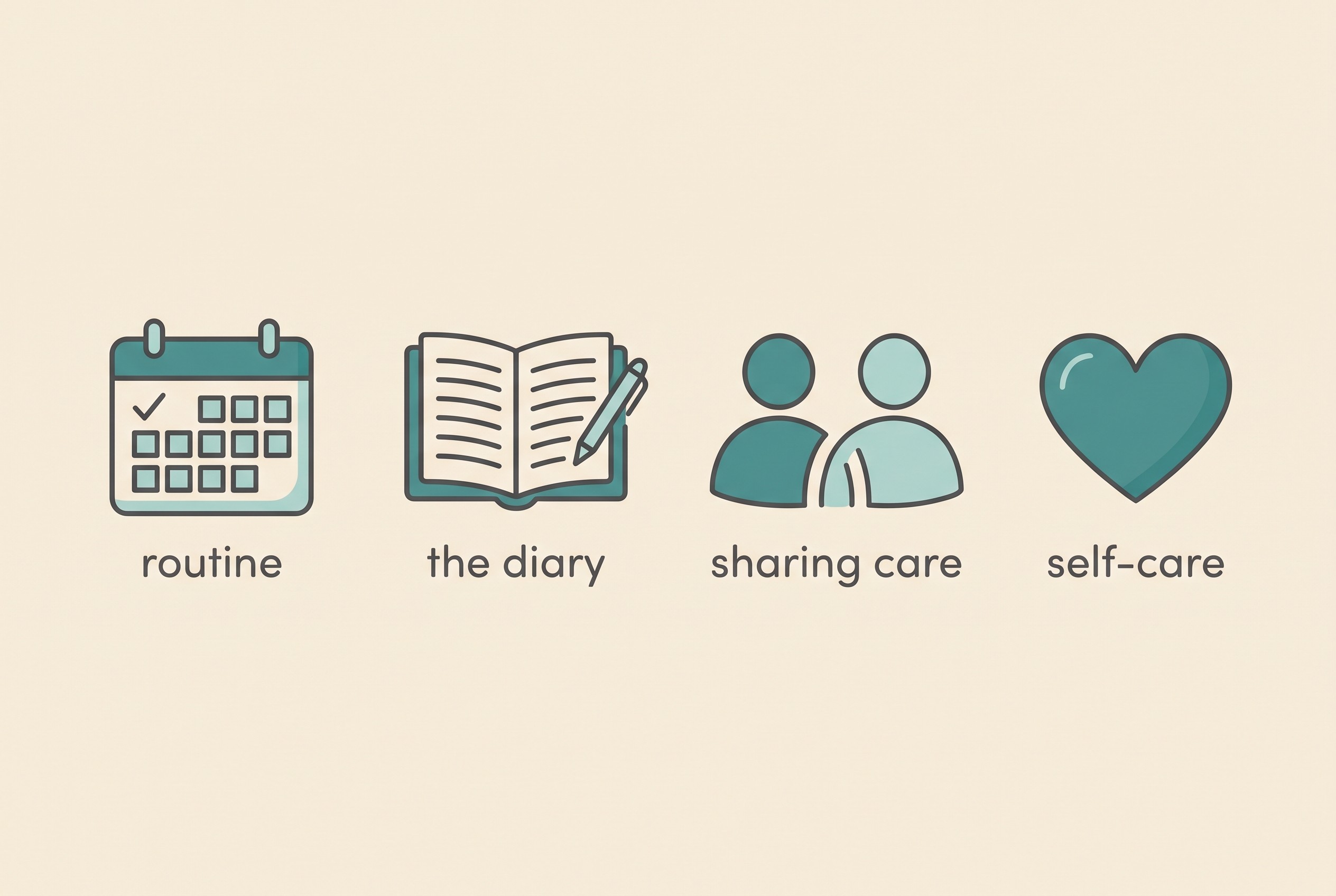
Find the right kind of company. Peer support from other epilepsy-pet owners can be a genuine relief, the comfort of talking to people who simply get it. But the same study sounded a real note of caution: unmoderated forums can be "scary and overwhelming" and a source of misinformation, and owners did best in supportive, moderated spaces (Pergande et al., 2020). That is precisely why we built the epilepsy community here the way we did: a place to feel understood and less alone, without the 2am rabbit holes and the cure stories that frighten more than they help. There are people a click away who are living the same days you are.
Where this leaves you
I can tell you what tends to happen. For most well-controlled dogs, and their people, life does settle into something workable. The dread rarely vanishes overnight, but as control improves and the routine becomes second nature, the load usually eases. The hypervigilant, sleepless early months are often the hardest, and they are usually not the whole story.
And help exists on every front, which is the thing to hold onto on a bad night. Your vet for your dog, including the behavioural changes and recovery periods that wear you both down. The community here for the relief of being understood. And your own GP for you, because your wellbeing counts in this too.
The questions about the road ahead belong to normal life with epilepsy. The hardest questions of all, about quality of life and the decisions some owners eventually face, are held gently in quality of life and difficult decisions, for if and when you ever need them. Today, though, the only task is this: be as kind to yourself as you're being to your dog. You're doing something genuinely hard, the evidence says so, and you're doing it out of love. That counts for a great deal.
A brief word for cat owners. The published research here is overwhelmingly about dogs, so I've written it that way to stay true to the evidence. But the caregiver-burden study included cats too (Spitznagel et al., 2017), and the pressures, the unpredictability, the vigilance, the reorganised life, apply just as much if it's a cat you're caring for. None of this is any less real because your patient purrs.
References
- Finnegan, S. L., Volk, H. A., Asher, L., Daley, M., & Packer, R. M. A. (2020). Investigating the potential for seizure prediction in dogs with idiopathic epilepsy: owner-reported prodromal changes and seizure triggers. Veterinary Record, 187(4), 152.
- Kähn, C., Meyerhoff, N., Meller, S., Nessler, J. N., Volk, H. A., & Charalambous, M. (2023). The postictal phase in canine idiopathic epilepsy: semiology, management, and impact on the quality of life from the owners' perspective. Animals, 14(1), 103.
- Packer, R. M. A., & Volk, H. A. (2015). Epilepsy beyond seizures: a review of the impact of epilepsy and its comorbidities on health-related quality of life in dogs. Veterinary Record, 177(12), 306-315.
- Pergande, A. E., Belshaw, Z., Volk, H. A., & Packer, R. M. A. (2020). "We have a ticking time bomb": a qualitative exploration of the impact of canine epilepsy on dog owners living in England. BMC Veterinary Research, 16(1), 443.
- Shihab, N., Bowen, J., & Volk, H. A. (2011). Behavioral changes in dogs associated with the development of idiopathic epilepsy. Epilepsy & Behavior, 21(2), 160-167.
- Spitznagel, M. B., Jacobson, D. M., Cox, M. D., & Carlson, M. D. (2017). Caregiver burden in owners of a sick companion animal: a cross-sectional observational study. Veterinary Record, 181(12), 321.
Keep track of how your pet is doing
The owners who cope best are the ones who notice changes early. A simple health log shows you what is working, and what is not, before the next vet visit.
Start tracking, freeYou're not doing this alone
Compare treatment journeys and talk to owners managing epilepsy. Free to join.
Join PetsLikeMine