


Quality of Life and the Honest, Hard Decisions
Alastair Greenway
BVM&S MRCVS
The numbers won't settle no matter what you try. Or the cost has crept beyond what you planned. Or your pet is simply old, and you're starting to wonder whether you're holding on for them or for yourself. Whichever of those it is, let me start with what I'd say if you were sitting across the consult room from me: you are allowed to ask this question, and asking it does not make you a bad owner. It makes you a thoughtful one.
This is the hardest page in this space to write, and I've tried to write it the way I'd talk to you in person. The aim is to help you step back from the daily grind of injections and readings and look clearly at the whole animal, and at yourself. I'll be straight about when continuing is the kindest thing, when letting go is, and the cases that look hopeless and simply aren't.
You are not the only one making this choice
Owners often arrive at this conversation feeling they've failed in some private, shameful way. They haven't, and the data says so. In the largest survey of its kind, more than a thousand vets were asked about euthanasia in diabetic pets. A median of around one in ten diabetic pets are put to sleep at the point of diagnosis, and a further one in ten or so within the first year (Niessen et al., 2017). This is not a rare, unspeakable choice that only you have considered. It is, quietly, one of the commoner stories in diabetes.
When those same vets were asked why, the reasons were plain and human. Rated as of great importance were concurrent disease in 45% of cases, cost of treatment in 44%, the animal's age in 37%, difficulty getting the diabetes controlled in 35%, the pet's own welfare in 35%, and the impact on the owner's life in 32% (Niessen et al., 2017). I list those not to depress you but to validate you. Cost is on that list. Your own capacity is on that list. These are not shameful intrusions on a "pure" medical decision; they are part of it, and good vets have always known it.
Looking at the whole animal, not just the numbers
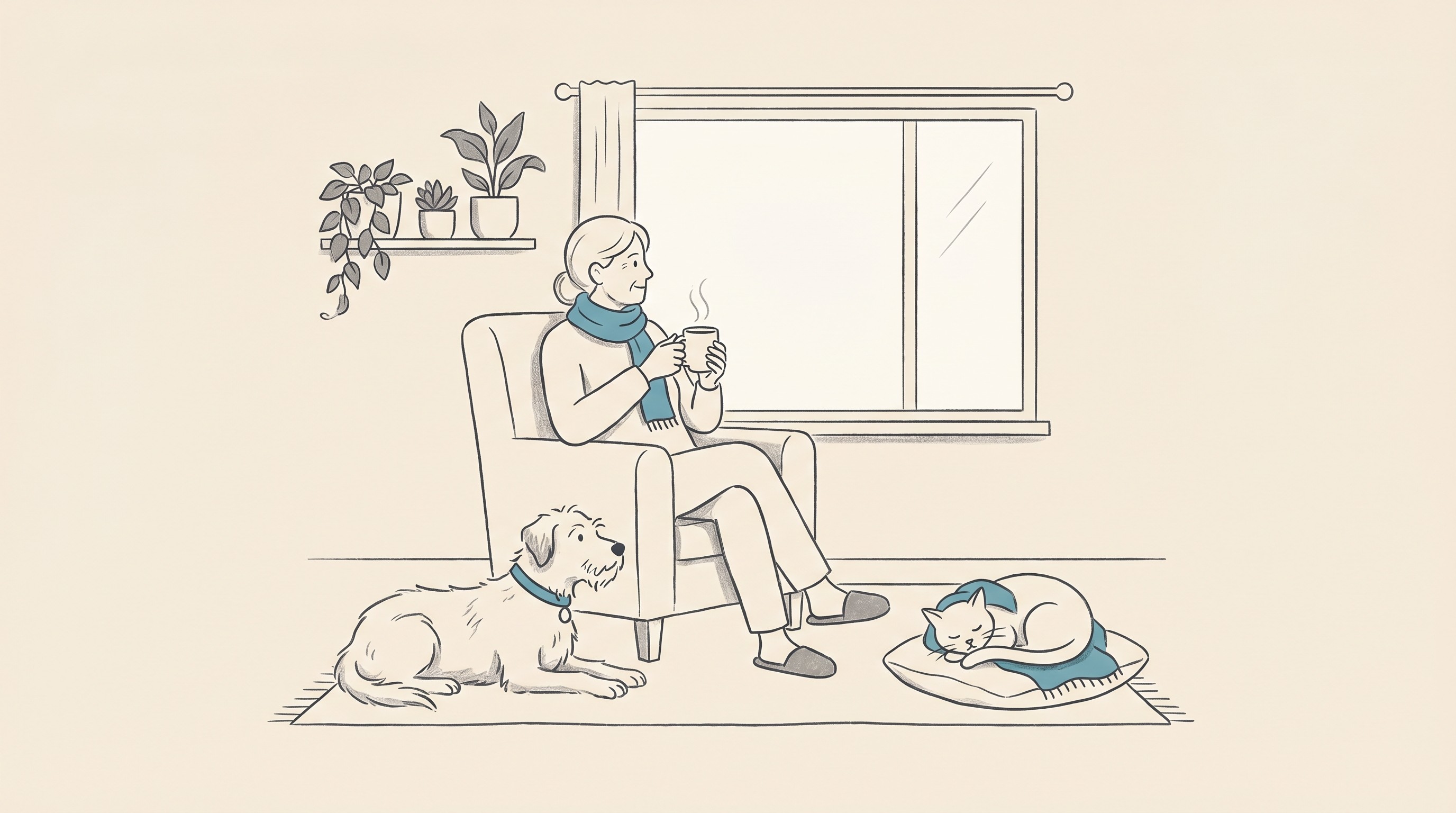
Here is something I wish every diabetic-pet owner heard on day one: the modern goal of treating diabetes is not a perfect glucose number. It is a pet who feels well, whose troublesome signs are gone or nearly gone, with no frightening hypos, and an owner who feels their pet's quality of life is good (Behrend et al., 2018). The guidelines put it about as bluntly as guidelines ever do: clinical signs supersede all else (Behrend et al., 2018; Sparkes et al., 2015). You are not failing because a reading was high; you are succeeding if your pet is comfortable and themselves.
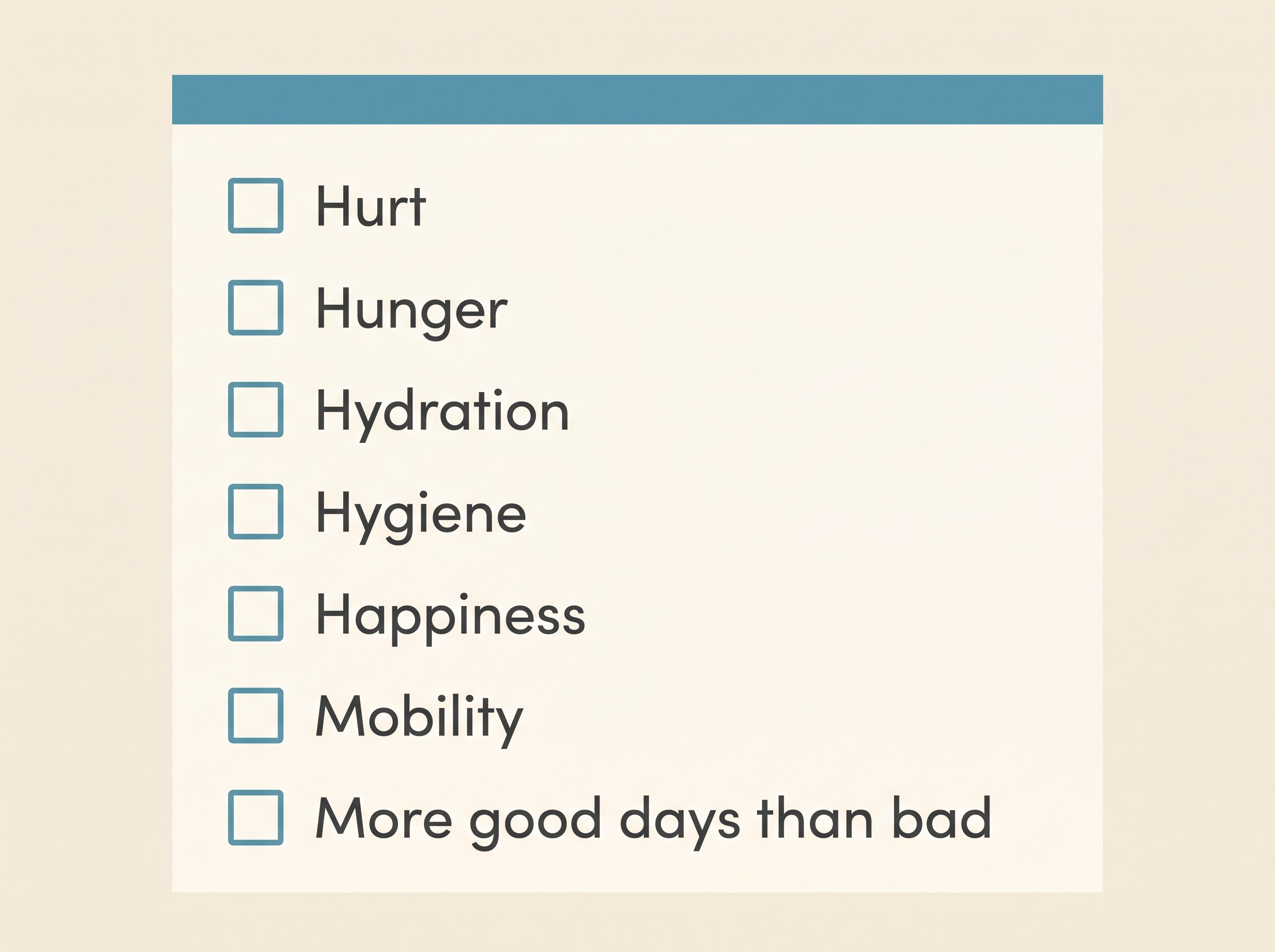
So assess that. A structured way many owners find helpful is the HHHHHMM scale: you score, each out of ten, your pet's Hurt, Hunger, Hydration, Hygiene, Happiness, Mobility, and whether they have More good days than bad (Villalobos, 2011). It turns the vague feeling that "something's not right" into something you can track over a fortnight and talk through with your vet.
Over that scaffold, lay a diabetes-aware overlay. The validated quality-of-life tool built for diabetic pets, the DIAQoL-pet, asked owners what most affected their lives, and the answers are humbling and very human: worry, worry about hypos, worry about a dog going blind, the difficulty of ever boarding or going on holiday, the struggle to leave the pet with friends or family, the dent in a social life, the cost, and a nagging wish for more control (Niessen et al., 2010; Niessen et al., 2012). If you recognise yourself in that list, you are not weak. That list is the disease, not a character flaw. So ask the diabetes-specific questions too. Are the hypos frequent and frightening? Is the endless thirst and weeing distressing for your pet, or just for your carpets? Is your pet still themselves?
When you're the one running on empty
I want to talk about you directly, because most pages won't. The strain of caring for a chronically ill pet is real and measurable: owners of seriously ill animals carry significantly more caregiver burden, stress, anxiety and low mood, and a poorer quality of life of their own, than owners of healthy pets (Spitznagel et al., 2017). Diabetes, with its twice-daily injections, its tether to a feeding clock, its night-time hypo worries and its expense, is a textbook example of the care that does this. If you feel frayed, that is a normal response to a demanding job, not you being dramatic.
And here is the part to hold on to. In owners of pets with chronic illness, that burden is linked to whether someone starts to consider euthanasia, but good treatment satisfaction and feeling well supported by your vet are protective against reaching that point (Spitznagel et al., 2022). So if you're struggling, don't suffer in silence until you crack. Tell your vet. A frank conversation about simplifying the routine, a different insulin or feeding rhythm, or just being heard, can change the whole picture for you, and therefore for them.
Most "hopeless" cases turn out not to be
Please read this part before anything else, and let it be the reason you make a phone call before you make a decision in a low moment.
A great many diabetic pets who look impossible to control are not. There is nearly always a findable, fixable reason hiding underneath: it might be injection technique, how the insulin is stored, or a concurrent illness like a urinary infection or dental disease quietly driving up insulin resistance. The unstable, brittle diabetic lays out exactly how a good vet hunts the cause down. Here is the hope: before you decide your pet's diabetes is untreatable, get that work-up done, and get a second opinion if you need one. A lot of "this isn't working" turns out to be "we haven't found the missing piece yet."
The survival figures back this up. In a large UK study, dogs lived a median of around 15.6 months from diagnosis, rising to about 20.2 months once they'd survived the first week, and 92.5% of those that died were put to sleep rather than dying of the disease itself (Heeley et al., 2020). The early window is the dangerous one, and getting past it changes the outlook substantially. Cats fare similarly or better: median survival runs to a year or two, nearly a third achieve remission and come off insulin entirely, and cats with a better quality of life after diagnosis live longer, by around half a year (Rothlin-Zachrisson et al., 2023). Yet around 15% of diabetic cats are put to sleep within the first four weeks (Rothlin-Zachrisson et al., 2023). The decision point clusters right at the start, often before the pet has had a fair trial at all. The fuller prognosis picture sits in is diabetes a death sentence?; the point here is simply that early despair is usually misplaced.
One caveat, because I will not mislead you to comfort you. "Fixable" means something different in dogs and cats. In dogs, diabetes comes from largely irreversible loss of the insulin-producing cells, so dogs need insulin for life and do not go into remission (Behrend et al., 2018; Gilor et al., 2016). The hope for a dog is recoverable control and a good life, not a cure. In cats, the disease is more like human type 2 and the early changes can reverse, which is why feline remission is genuinely possible if it's caught early (Gilor et al., 2016). So when I say most instability is solvable, I mean the chaos is usually fixable and a comfortable life recoverable. I do not mean a dog will ever come off insulin.
A small but important aside, because it can masquerade as the very decline you're weighing. A diabetic pet who suddenly goes wobbly, weak, dull, trembling, or collapses may not be "fading", they may be having a hypo, which is an emergency you can often turn around in minutes. Rub glucose, honey or sugar onto the gums, never pour liquid into a pet who can't swallow, and get to a vet now. Do not give more insulin into a suspected hypo. I've seen owners mistake a treatable low for the end, so please read the hypoglycaemia emergency guide before you conclude anything from a frightening collapse.
When letting go is the kindest answer
And yet, with all that hope laid out plainly, there are times when the kindest choice is to say goodbye. Sometimes a pet has a serious second illness the diabetes complicates beyond what's fair to ask of them. Sometimes the disease genuinely cannot be settled despite a proper work-up and patient effort, and the day-to-day has become more bad than good. Sometimes the cost or the sheer relentlessness of the care has reached a point you cannot sustain, and that, too, is a valid part of the calculus rather than a betrayal (Niessen et al., 2017). The money side has its own home in the cost and insurance guide, and there are often more options than people realise before the door truly closes. But choosing to stop because you genuinely cannot carry on is not abandonment. It is a limit, and limits are human.
When it is the right choice, a planned, peaceful goodbye is an act of love, not a failure. A calm, gentle end at a time of your choosing can spare your pet a crisis death, the kind of frightening collapse uncontrolled diabetes can end in. The relief of suffering is a legitimate goal in its own right (Behrend et al., 2018), and there is no medal for making an animal endure more so you can feel you tried everything.
Where to take this next
One practical thing above all: don't make this judgement on a single bad night or a single bad number. Diabetes is a disease of trends, and so is quality of life. Score the HHHHHMM list for a fortnight and keep a careful log. The Glucose Companion earns its keep in exactly this moment: seeing the real shape of your pet's control over weeks, and exporting it for your vet, can show you whether control is genuinely failing or quietly recoverable, which is exactly what you need to know before deciding anything.
Then talk to your vet, properly and openly, about all of it: the numbers, the cost and your own exhaustion alike. Whatever you choose, choose it for your pet and choose it informed.
References
- Behrend, E., Holford, A., Lathan, P., Rucinsky, R., & Schulman, R. (2018). 2018 AAHA Diabetes Management Guidelines for Dogs and Cats. Journal of the American Animal Hospital Association, 54(1), 1-21.
- Gilor, C., Niessen, S. J. M., Furrow, E., & DiBartola, S. P. (2016). What's in a Name? Classification of Diabetes Mellitus in Veterinary Medicine and Why It Matters. Journal of Veterinary Internal Medicine, 30(4), 927-940.
- Heeley, A. M., O'Neill, D. G., Davison, L. J., Church, D. B., Corless, E. K., & Brodbelt, D. C. (2020). Diabetes mellitus in dogs attending UK primary-care practices: frequency, risk factors and survival. Canine Medicine and Genetics, 7, 6.
- Niessen, S. J. M., Powney, S., Guitian, J., Niessen, A. P. M., Pion, P. D., Shaw, J. A. M., & Church, D. B. (2010). Evaluation of a quality-of-life tool for cats with diabetes mellitus. Journal of Veterinary Internal Medicine, 24(5), 1098-1105.
- Niessen, S. J. M., Powney, S., Guitian, J., Niessen, A. P. M., Pion, P. D., Shaw, J. A. M., & Church, D. B. (2012). Evaluation of a quality-of-life tool for dogs with diabetes mellitus. Journal of Veterinary Internal Medicine, 26(4), 953-961.
- Niessen, S. J. M., Hazuchova, K., Powney, S. L., Guitian, J., Niessen, A. P. M., Pion, P. D., Shaw, J. A. M., & Church, D. B. (2017). The Big Pet Diabetes Survey: Perceived Frequency and Triggers for Euthanasia. Veterinary Sciences, 4(2), 27.
- Rothlin-Zachrisson, N., Öhlund, M., Röcklinsberg, H., & Ström Holst, B. (2023). Survival, remission, and quality of life in diabetic cats. Journal of Veterinary Internal Medicine, 37(1), 58-69.
- Sparkes, A. H., Cannon, M., Church, D., Fleeman, L., Harvey, A., Hoenig, M., Peterson, M. E., Reusch, C. E., Taylor, S., & Rosenberg, D. (2015). ISFM consensus guidelines on the practical management of diabetes mellitus in cats. Journal of Feline Medicine and Surgery, 17(3), 235-250.
- Spitznagel, M. B., Jacobson, D. M., Cox, M. D., & Carlson, M. D. (2017). Caregiver burden in owners of a sick companion animal: a cross-sectional observational study. Veterinary Record, 181(12), 321.
- Spitznagel, M. B., Gober, M. W., & Patrick, K. (2022). Relationships among owner consideration of euthanasia, caregiver burden, and treatment satisfaction in canine osteoarthritis. The Veterinary Journal, 286, 105868.
- Villalobos, A. E. (2011). Quality of Life Scale (HHHHHMM Scale). In Canine and Feline Geriatric Oncology: Honoring the Human-Animal Bond. Wiley-Blackwell.