

Allergy tests that work, and the ones that waste your money
Alastair Greenway
BVM&S MRCVS
When a pet is itchy, "just get an allergy test" sounds like the sensible, scientific next step. You post a kit through the letterbox, or your vet draws a little blood, and a tidy list comes back telling you exactly what your dog or cat is allergic to. It feels like an answer. The hard truth is that some of those tests measure nothing at all, and even the genuinely good ones do not do the job most owners think they do. Knowing which is which can save you a lot of money and a lot of wasted months chasing the wrong thing while your pet keeps scratching.
When testing comes up anywhere else in this space, this is where it gets explained. We will take the tests in order, from the ones to avoid completely to the ones that genuinely earn their place.
The hair and saliva kits: a test that calls a toy allergic
These are the kits sold straight to owners, online or in pet shops. You snip a bit of fur, swab some saliva, post it off, and a few weeks later a confident report lands listing dozens of foods and environmental triggers your pet is supposedly reacting to. They are cheap, they feel proactive, and on the published evidence they are worthless.
That is not rhetoric. Two independent teams put these kits to the test in the most damning way possible: they sent in fake samples. In one study, researchers submitted fur and saliva from a known allergic dog and a known healthy dog, alongside five samples of fake fur and some plain water. Every sample came back "allergic", including the synthetic fur and the water, and when the same samples were sent in again, the results changed (Coyner and Schick, 2019). A larger study did the same on a bigger scale: seven healthy animals, six atopic ones, and eleven samples of synthetic fur and saline, producing more than 12,000 results across 35 submissions. The kit returned positives for everything, the fakes included, and could not tell a healthy pet, an allergic pet and a nylon offcut apart. Its repeatability was no better than chance (Bernstein et al., 2019).
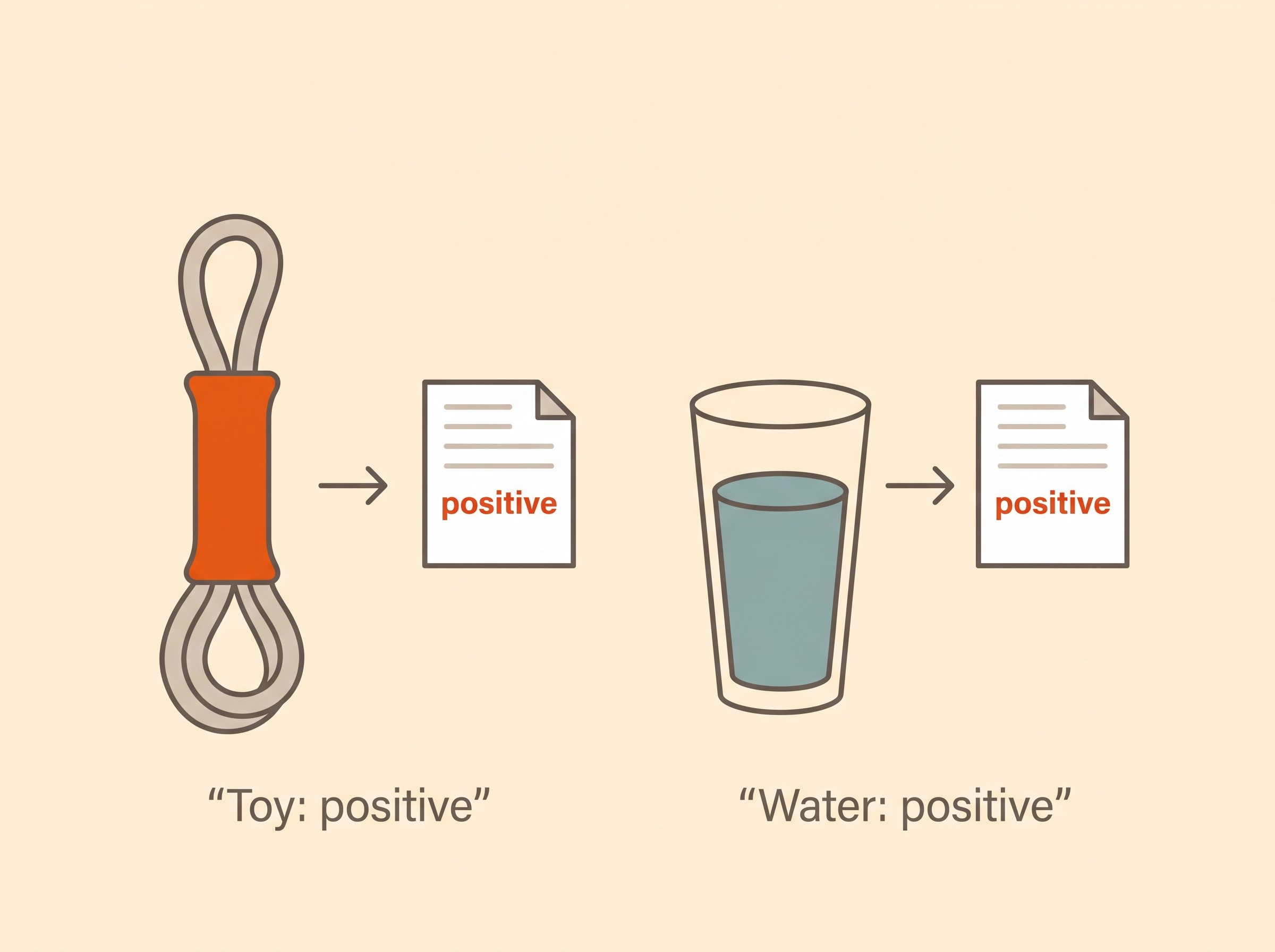
Why do the kits behave this way? Because they are not antibody tests in any real sense. The one examined in the larger study reads samples by a claimed "bioresonance" or energy signal rather than by measuring anything in the blood or saliva (Bernstein et al., 2019). That is how a cup of water can be allergic to dust mites. A test that cannot distinguish your dog from a toy cannot tell you anything useful about your dog, however polished the report looks. If you have already paid for one and it named some foods, please do not act on it, and do not let it talk you into or out of a treatment plan.
No blood, saliva or hair test can diagnose a food allergy
This is the next big one, because food allergy is where owners most want a quick answer, and where the marketing is most tempting. The reality is blunt: no blood test, no saliva test, no hair test and no skin patch test can reliably diagnose a food allergy in a dog or cat.
The most authoritative review of this question pulled together 23 studies and found that food-specific blood antibody tests (IgE and IgG) have poor repeatability and highly variable accuracy, and that no laboratory test was reliable enough to recommend for diagnosis. The reference standard remains an elimination diet followed by a deliberate re-challenge (Mueller and Olivry, 2017). Two further studies tested the consumer-facing kits head-on. One found that a commercial saliva test and a blood IgE test simply could not separate food-allergic dogs from healthy ones (Udraite Vovk et al., 2019). The other tested clinically healthy dogs and found the serum and saliva assays threw up positives with no meaningful relationship to what the dogs had actually been eating (Lam et al., 2019). In other words, the test flags foods your pet is not even reacting to.
The practical upshot is liberating once you accept it. The only valid food "test" is the diet trial: feeding a carefully chosen diet for long enough, then challenging with the old food to confirm. This article does not teach you how to run one, because the elimination diet article owns that in full, and the Elimination-Diet Companion walks you through it day by day, tracking what goes in the bowl and how the itch responds. That tool is, quite literally, how you run the real test instead of buying a fake one.
Blood and skin tests are real, but they do a different job
Now to the tests your vet might genuinely offer: a blood test that measures allergen-specific IgE (serology) and intradermal testing, where tiny amounts of allergen are injected into shaved skin and the reactions read. These are real, validated tests done in proper laboratories, and the intradermal one is a referral-level procedure that usually needs sedation and a washout period off anti-itch drugs and steroids first, so it is not something to order on a whim. So why have they not appeared in the "good" column yet? Because they do not diagnose allergy either, and that single misunderstanding is responsible for an enormous amount of wasted money and misdirected treatment.
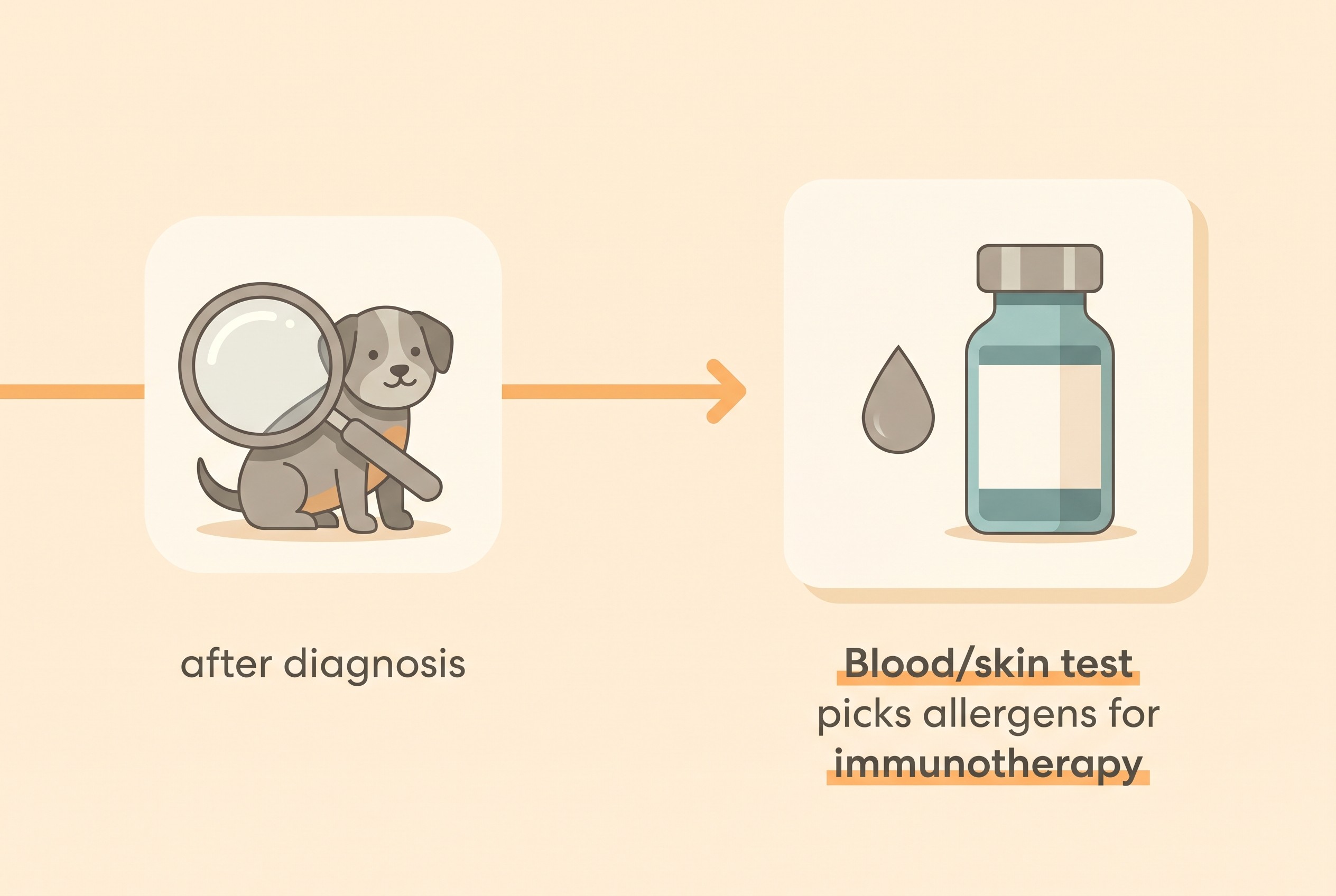
The international dermatology guidelines could not be clearer. These tests are not screening tests and should be used only to confirm a clinical diagnosis that has already been made, and then for one purpose: to identify which allergens to include in a course of immunotherapy (Hensel et al., 2015). The reason they cannot diagnose is simple and surprising. Perfectly healthy, non-allergic dogs commonly carry allergen-specific IgE and react on these tests, so a positive result often shows up in a dog with no allergy at all (Hensel et al., 2015). A "positive" to grass or house dust mite does not mean that allergen is making your pet ill. It might just mean your pet, like many healthy pets, has antibodies to it.
This is the heart of the matter, so let us state it plainly. Atopic dermatitis is a clinical diagnosis of exclusion, reached by ruling other things out, not by a test result. The validated clinical criteria that vets use support a diagnosis but cannot confirm it on their own, which is exactly why other itchy diseases still have to be excluded first and a test alone can never settle it (Favrot et al., 2010); the full reasoning lives in the diagnosis article. Run a blood or skin test on an itchy pet that has not been properly worked up, and you can get a confident-looking list of "allergens" that sends you chasing pollen or dust mites while the real driver, very often fleas or a food, goes untreated. The test was not wrong about the antibodies. It was just asked the wrong question.
It is fair to add that even when these tests are used for their proper job, they have limits. There is no agreed standard across laboratories for which allergens to test or how to score them, and results from different labs do not agree well with each other (Hensel et al., 2015). That does not make them useless. It makes them a tool with a narrow, specific purpose, which brings us to where your money should actually go.
Where the money should go
Spend the money on getting to a diagnosis the right way, and on the one treatment that changes the disease. Almost nothing else.
For any itchy pet, the work that earns its keep is the rule-out work-up: thorough flea control, treating any skin infection, and then a diet trial. That sequence is owned by the funnel article, why is my pet itchy, and it is where the first pound is best spent, not on a kit. Done properly, the work-up either solves the problem or leaves atopy as the remaining explanation, all without a single allergy test.
Serum or intradermal testing finally earns its cost at one specific moment: once a pet has been diagnosed atopic and you and your vet decide to pursue allergen-specific immunotherapy, the desensitising course that is the only treatment shown to change the underlying disease rather than just damp the symptoms. At that point the test does its real job, choosing what goes into the bespoke immunotherapy. About six in ten dogs respond meaningfully, roughly 60% good-to-excellent by nine months, and the figure climbs further in dogs seen regularly for follow-up (Fennis et al., 2022). The detail of how immunotherapy works belongs to the immunotherapy article, but that is the prize the testing serves, and the reason getting the right allergens matters.
So the money to avoid is easy to name. The hair and saliva kit measures nothing (Coyner and Schick, 2019; Bernstein et al., 2019). And a blood or skin panel ordered to diagnose, rather than to select immunotherapy allergens, is the wrong test for the job, and can send you down the wrong path.
What about cats?
The same rules apply. If anything, the food and blood tests perform even less well in cats than in dogs (Mueller and Olivry, 2017), so the message is identical: the diet trial is the real food test, and serology is for choosing immunotherapy, not for diagnosis. The feline picture has its own quirks of presentation, and the feline atopic syndrome article covers those properly.
The evidence you can gather yourself, for free
There is one part of this that often surprises owners. The thing an allergy test pretends to give you, objective evidence of what is going on, is something you can actually generate yourself, for nothing, from your own pet. A dated itch score, kept over weeks while you work through flea control and a diet trial, is real data: it shows whether the itch falls when you remove a food, whether it tracks the seasons, whether a treatment is working. That is genuine information about your individual pet, which is more than any hair-and-saliva report can claim.
The Skin & Itch Tracker is built to do exactly this, turning a daily glance at your pet into a trend you and your vet can read together. Paired with the diet companion, it is how the only tests that work, the diet trial and the work-up, actually get measured. If you are not even sure your pet is at the testing stage yet, the quick itchy-pet check will point you to the right first step. Before you spend a penny on a kit, start the score: it is the test that tells the truth.
References
- Coyner K, Schick A. (2019). Hair and saliva test fails to identify allergies in dogs. Journal of Small Animal Practice, 60(2): 121–125.
- Bernstein JA, Tater K, Bicalho RC, Rishniw M. (2019). Hair and saliva analysis fails to accurately identify atopic dogs or differentiate real and fake samples. Veterinary Dermatology, 30(1): 54–e15.
- Mueller RS, Olivry T. (2017). Critically appraised topic on adverse food reactions of companion animals (4): can we diagnose adverse food reactions in dogs and cats with in vivo or in vitro tests? BMC Veterinary Research, 13: 275.
- Udraite Vovk L, Watson A, Dodds WJ, Klinger CJ, Classen J, Mueller RS. (2019). Testing for food-specific antibodies in saliva and blood of food allergic and healthy dogs. The Veterinary Journal, 245: 1–6.
- Lam ATH, Johnson LN, Heinze CR. (2019). Assessment of the clinical accuracy of serum and saliva assays for identification of adverse food reaction in dogs without clinical signs of disease. Journal of the American Veterinary Medical Association, 255(7): 812–816.
- Hensel P, Santoro D, Favrot C, Hill P, Griffin C. (2015). Canine atopic dermatitis: detailed guidelines for diagnosis and allergen identification. BMC Veterinary Research, 11: 196. (ICADA guidelines)
- Favrot C, Steffan J, Seewald W, Picco F. (2010). A prospective study on the clinical features of chronic canine atopic dermatitis and its diagnosis. Veterinary Dermatology, 21(1): 23–31.
- Fennis EEM, van Damme CMM, Schlotter YM, Samson-Himmelstjerna KIE, Vandenabeele SIJ, Broere F, et al. (2022). Efficacy of subcutaneous allergen immunotherapy in atopic dogs: a retrospective study of 664 cases. Veterinary Dermatology, 33(4): 321–e75.
Keep track of how your pet is doing
The owners who cope best are the ones who notice changes early. A simple health log shows you what is working, and what is not, before the next vet visit.
Start tracking, freeYou're not doing this alone
Compare treatment journeys and talk to owners managing allergies & skin. Free to join.
Join PetsLikeMine