Too Soon, or Too Late? Living With the Timing
Alastair Greenway
BVM&S MRCVS
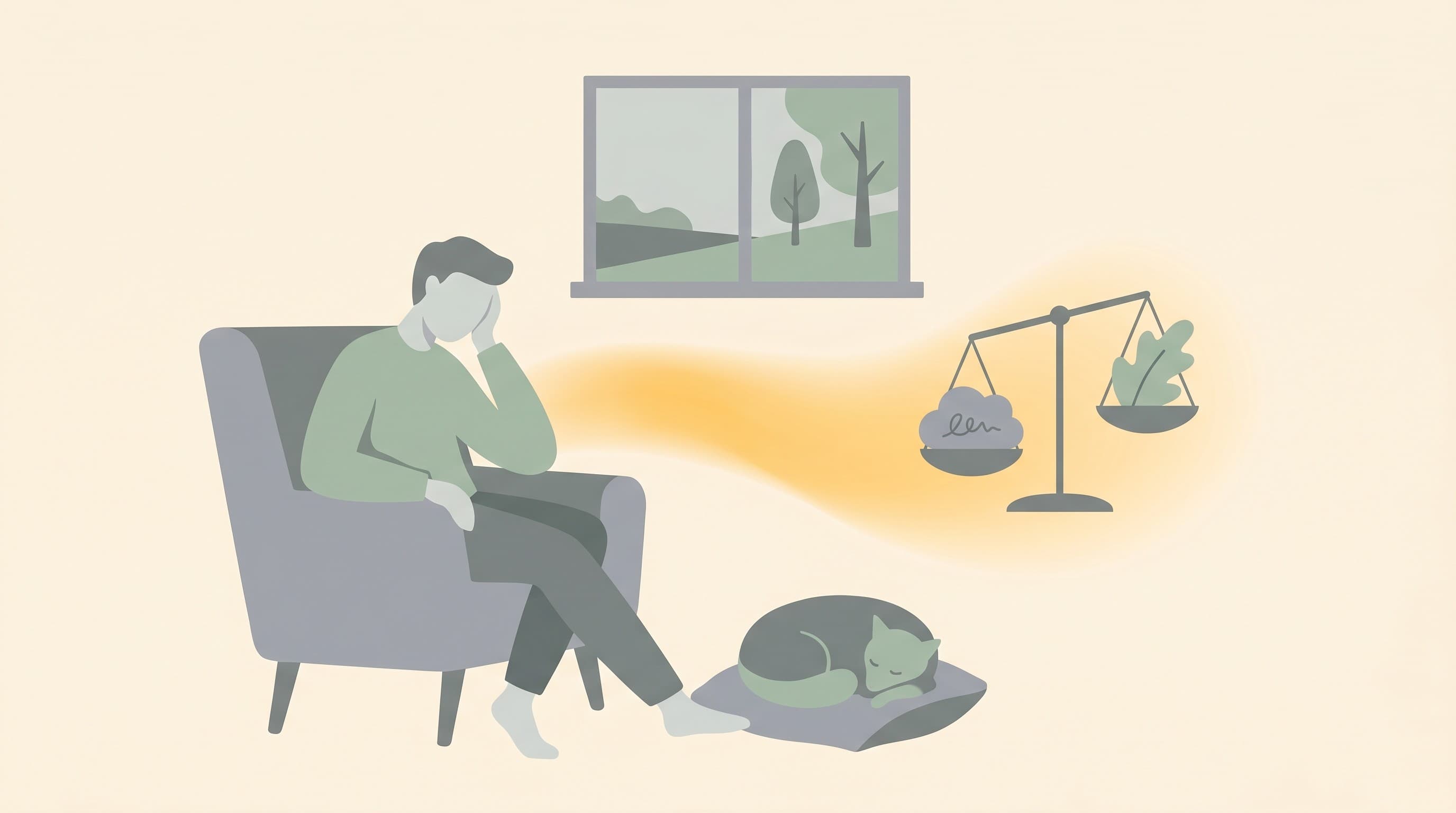
Two fears tend to keep owners awake at this stage, and they pull in opposite directions. One says: I cannot possibly do this yet, he still wags his tail when I come in, who am I to take that away. An hour later the other arrives: have I already left it too long, is he suffering while I dither, am I keeping him here for me? It is a particular kind of sleeplessness, and it does not look like the grief that comes after. If you are caught between those two walls tonight, this page is for you. Not to tell you which wall is right, because no good vet can do that, but to sit with you in the space between them, and to show you it is more bearable than it feels right now.
This is not the place that lists the signs to watch, or teaches the quality-of-life scale; that careful work belongs to how will I know when it is time, the article this one quietly leans against. This page is about something narrower and, in a way, harder: how to live inside the impossible arithmetic of timing without being paralysed by it, or destroyed by it afterwards. Two fears, held side by side, because both are real and both are survivable.
The two regrets, named plainly
The fear of "too soon" is the fear of theft: that in choosing a day, you will steal days your pet might still have enjoyed, end it while there was still a wag in the tail, a good breakfast, a patch of sun they would have lain in. It is the fear of acting on your own dread rather than their need. I have never met an owner who did not feel some version of it, and I would think less of the decision if it came without that ache.
The fear of "too late" is the mirror image, and it is quieter, which is part of why it is so dangerous. It is the fear of letting suffering run on out of love or hope, of clinging to one more day and one more day until the choice is taken out of your hands by a crisis: a collapse, a frightening night that should never have had to happen, a death that came as an emergency rather than a goodbye.
Both fears are legitimate, and I am not going to dismiss either to make you feel better, because a reassurance that ignores half of what you feel is not trustworthy. What I can do is tell you what the people who guide families through this for a living actually see, because it does shift the balance of the two in a way that may bring some peace.
Why "too late" is the regret families report more often
Frightened owners, in the thick of it, almost never know what the profession knows. Of the two regrets, "too late" is by far the more common, and the more painful. The team at Ohio State's veterinary hospital, who have sat with thousands of families through exactly this, put it plainly: "Many families tell us that they waited too long; families rarely tell us they made the decision too soon" (Ohio State University Veterinary Medical Center, 2024). I hold that sentence carefully, because it is reassurance against a fear, and it must never become a push.
It is also why the profession carries an old piece of wisdom, established enough that it titles a chapter in clinical congress proceedings vets train from: "Better a week too early than a day too late" (Jasani, BSAVA, 2016). I offer it the way I would offer a hand, not a verdict. It does not mean earlier is better. It means that, given the choice between the two errors, a gentle parting that came a little before the very end tends to leave less wreckage than one that came a little after, when suffering had already taken hold.
Why is "too late" so much commoner among loving, attentive owners? Not negligence, never that. Three very human things conspire. Love biases us, every time, toward "one more day". Hope is far harder to set down than fear. And, most quietly of all, daily proximity blinds you to the slow slide: you see your pet every hour, and gradual decline is almost invisible up close, the way you never notice a child growing until a relative who has not visited in months exclaims at the height of them. None of that is a failing of attention; it is how gradual change works on the human eye. The structured fix, comparing old photos and watching the trend rather than the day, is the subject of more good days than bad: tracking the trend, not the day.
So if one of your fears deserves a little more of your attention, the evidence gently says it is this one. But hold both.
You are preventing suffering, not ending it
Most owners carry, without quite realising it, a picture of euthanasia as a response to suffering that is already here: you wait until your pet is clearly, unmistakably suffering, and only then is it "allowed." On that picture, choosing any sooner feels like jumping the gun, like acting before you have earned the right. And it is precisely that picture that powers the fear of "too soon."
The people who do this work do not see it that way at all. The veterinary hospice service Lap of Love put it as plainly as I have ever seen it put: "This decision should not be about ending suffering that has already occurred, but about preventing any suffering in the first place" (Lap of Love, n.d.). The goal was never to wait until suffering is florid and then react. It is to step in before it takes hold. UK welfare charities frame it the same way. Blue Cross advise that "to prevent further pain and unnecessary suffering it is important to talk through options with your vet who will help to guide you on the right time for making a decision about euthanasia" (Blue Cross, n.d.). Prevent, not merely end. Once you see it that way, acting while your pet still has some good in their days is no longer theft: it is the kindest possible timing, the timing that prevents rather than reacts.
And there is a piece of this most owners genuinely do not know: when we weigh suffering, we are not only counting physical pain. Lap of Love are emphatic: "When considering euthanasia, you should be as concerned about your pet's anxiety as you are about their pain. Frankly, anxiety can be worse than pain to animals" (Lap of Love, n.d.). A pet who is frightened, breathless or distressed is suffering even if nothing obviously hurts, so an owner waiting only for clear physical pain may be missing a different argument entirely that the kind window has come.
A planned goodbye, or a goodbye stolen by a crisis
Now to the practical heart of all this, the thing that "a week too soon, a day too late" is really about. It is not, in the end, about a number of days. It is about the difference between two kinds of parting.
One is a chosen, prepared, peaceful goodbye. You have had time to think. You have decided where, at home in the favourite spot or in a quiet room at the practice. The people who love your pet have had the chance to say what they needed to. There is no panic, no fluorescent-lit emergency room at three in the morning. It is gentle, and it is yours. This is, in fact, one of the reasons animal hospice exists at all: it sets out to "help caregivers of ill or dying animals ease into an acceptance of death, provide time for them to adjust emotionally to the loss of their animal, and reduce the stresses arising from end-of-life decision-making and care," with a plan of care built on "a clear understanding of caregiver expectations and goals for the animal's care before, during, and after death" (IAAHPC, 2024).
The other is a death stolen by a crisis: a collapse, a bleed, a sudden inability to breathe, an emergency dash and a decision made in shock somewhere that is not home. Nobody got to say goodbye properly; the choice, when it came, came under duress.
The real meaning of "a day too late" is not that you missed the optimal date on a calendar. It is the risk of forfeiting the first kind of parting and being handed the second. A planned goodbye spares both your pet and your family a traumatic one, and that is the kindness the timing serves. The profession's whole approach rests on euthanasia being, in the truest sense, a good death: the word is "derived from the Greek terms eu meaning good and thanatos meaning death," and once the decision is made the humane aim is "to minimize pain, distress, and negative effect to the animal" (AVMA, 2020). A crisis death, by its nature, cannot offer that calm. A chosen one can.
If your pet's parting has already come as a crisis, before any choice could be made, please do not let a single word here add to your burden. That is a different and equally valid path, with its own article written for exactly your situation, when there is no time to prepare: the emergency decision. An emergency decision is no less loving than a planned one. You could not have known, and that is not a failure.
There is a name, in veterinary ethics, for the shadow at the far "too late" pole. "Dysthanasia is the opposite of euthanasia," a bad death rather than a good one, defined as "the practice of prolonging the life of terminally ill animals, and allowing suffering without palliative care, or necessary euthanasia" (CAETA, n.d.). It happens, when it happens, because letting go feels unbearable to the person who loves them. That is not an accusation; it is the most understandable impulse in the world, love and hope refusing to give up. I name it only so that, if you recognise it in yourself, you can hold it kindly and ask the harder question: am I waiting for my pet, or am I waiting for me? There is no shame in either answer. There is only the question, asked honestly.
There is no perfect moment, only a kind window
If you are searching for the one right day, the single moment when all the signs align and the choice becomes obvious and painless, I have to tell you the truth: that day does not exist, and waiting for certainty that will never come is how loving owners drift, day by day, into "too late."
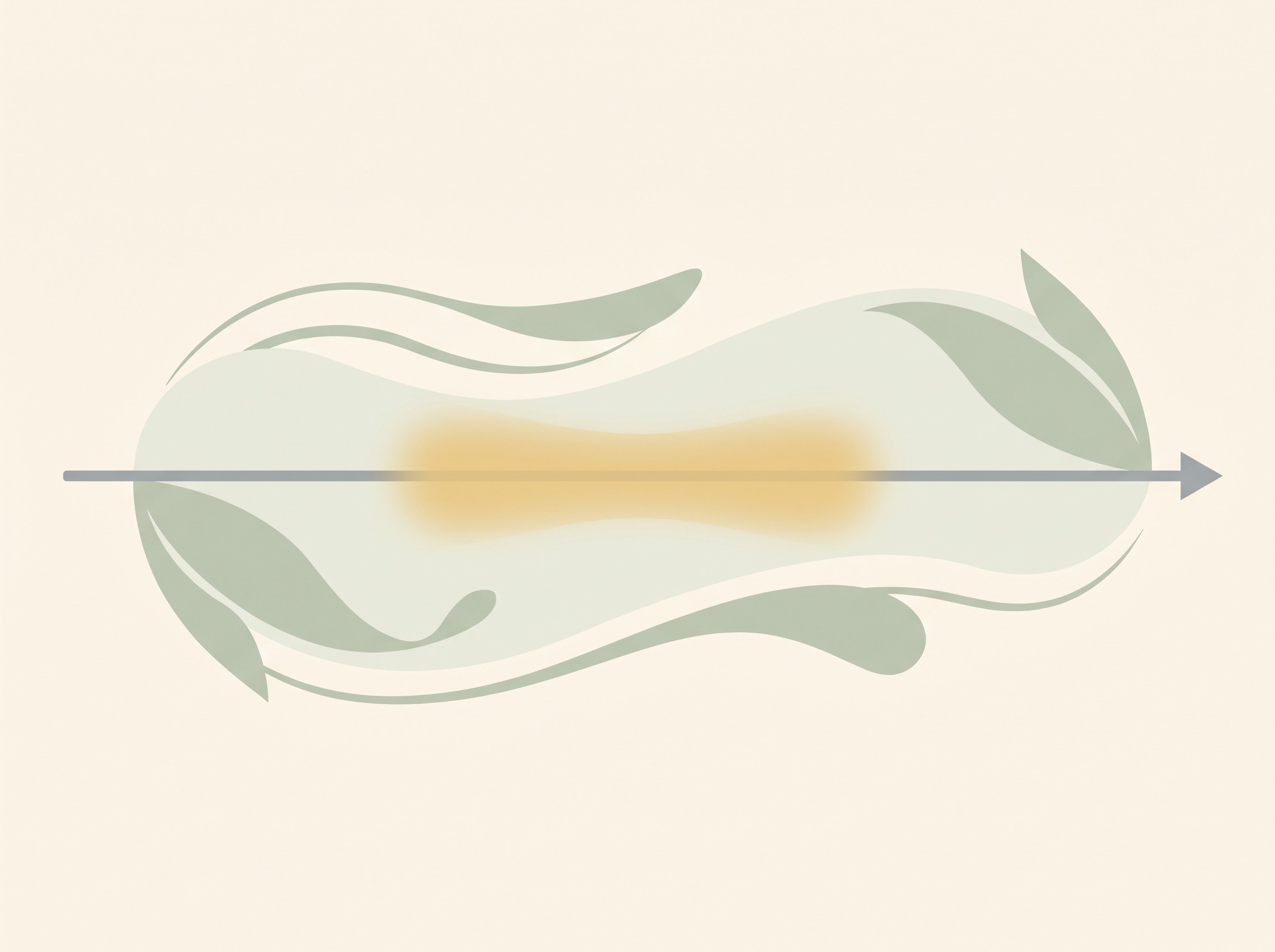
What does exist is far kinder, and far more forgiving. Lap of Love describe it exactly: "There is no perfect moment to make this ultimate choice, unless the pet is truly suffering," and rather there is "a subjective time period, which may be hours, days, weeks, or months, when euthanasia is the appropriate decision" (Lap of Love, n.d.). Not a point. A window. A stretch of time, sometimes a wide one, within which a gentle, suffering-preventing goodbye is the right and loving choice.
This dissolves the whole "too soon or too late" trap. You are not trying to hit a single invisible target and failing every day you do not. You are trying to act somewhere inside a humane window, and almost anywhere inside it is a kindness. You do not have to be exactly right; you have to be roughly, lovingly, within the right stretch of time, and that is something a person can actually do.
Deciding while you can still think clearly
Here the window becomes something you can prepare for rather than dread. You cannot find the perfect day in advance, because there isn't one. But you can do the thinking now, while you are calm, rather than leaving all of it to a moment of panic.
Ohio State's guidance here is wise and practical. They encourage families to think these questions through "early in the process, when your mind may be more clear," precisely because "decisions may seem forced or pressured if you wait until there is a crisis" (Ohio State University Veterinary Medical Center, 2024). That is the bridge from "there is no perfect day" to "but I am not helpless." You decide, while you can still think, what your own lines are: the things that, if your pet lost them, would tell you the window had opened. And then, when a hard day comes, you are not inventing the answer from scratch at three in the morning with your heart in your throat; you are recognising something you already, calmly, decided mattered.
I am not teaching you how to set those lines here; the practical method, the good-day calendar, the lines drawn in the sand while you are clear-headed, belongs to tracking the trend. I only want to make the case for doing the thinking early. It is not morbid, not disloyal, and certainly not giving up. It is the single most protective thing you can do for both of you: it means the window, when it arrives, comes as something you are ready to meet, not as an ambush.
This is also exactly where your vet belongs. No one can make this decision for you, but you do not have to make it alone, and your vet will help you weigh it. A good vet will never hand you a verdict, never tell you flatly that it is time as though it were a clinical fact, because it is not one. What we can give you is the thing you cannot get from inside the fog of love and fear: a clear read on what your pet is actually experiencing now, and a realistic sense of the road ahead. As the PDSA put it, "it can be hard to know when the 'right time' is," and "your vet will provide support and guidance and help you make this difficult decision"; the vet "wants you to be absolutely sure that you're making the right choice for your pet" (PDSA, n.d.). Lean on that. It is what we are for.
Forgive yourself in advance
You will second-guess yourself. Almost everyone does, and it does not mean you got it wrong. Ohio State say it as gently as it can be said: "it is normal and natural to second-guess a decision," and "second-guessing does not mean you made the wrong choice." They go further, and I think it is the truest sentence in all of this: "In cases of illness or declining quality of life there is truly no wrong decision to be made" (Ohio State University Veterinary Medical Center, 2024). The turning-it-over that comes afterwards, the wondering whether a different day would have been better, is not evidence of a mistake. It is evidence of how much you loved them. The two are almost impossible to tell apart, and the love is the truer reading.
So I am asking you to do something that sounds strange but is a real kindness to the version of you who will be standing on the other side of this. Forgive yourself in advance. Decide now, while you can still think clearly, that a choice made out of love, somewhere inside that kind window, was a loving choice, full stop, whichever way the timing falls by a day or a week. Grant yourself the compassion you would offer, without a second's hesitation, to any friend in your shoes. The guilt that circles all of this, before and after, is so universal and so undeserved that it has its own home in the guilt is normal: making peace with the decision; if you are already losing sleep over it, that is the next place to go. And if the weight ever shifts from grief into something darker, a feeling that you genuinely cannot carry this or cannot go on, please talk to someone tonight: the Samaritans are there free, day or night, 365 days a year, on 116 123 (Samaritans, n.d.), and pet loss is a real and recognised reason to reach out.
If you would like a gentle way to watch the window approach rather than scan your pet for the worst every morning, the Quality-of-Life Check walks you through the seven everyday markers in a few minutes. For those who want the trend tracked over time, Sightline (sightline.vet), a separate ConciergeVet tool, runs a short adaptive weekly assessment with a quality-of-life focus mode built around exactly these frameworks, tracks a single composite score over time so you can see the trend rather than judge a single bad day, and produces a Sightline Report PDF you can bring to your vet. There is no hard paywall on any of it, and you never need a tool to do this well: a written log, or our printable QoL sheet, does much the same job.
There is no perfect day waiting to be found; there is a kind window you and your vet can recognise together, and almost anywhere inside it is a kindness. Do the brave thing of thinking it through now, while you are clear-headed, so that when the window comes you meet it rather than being ambushed by it. And then, whatever day it turns out to be, let yourself off the impossible hook of "perfect," because perfect was never on offer and was never the point. Loving was the point, and you have been doing that all along. You do not have to know tonight, and you do not have to weigh any of it alone.
References
- American Veterinary Medical Association (AVMA). (2020). AVMA Guidelines for the Euthanasia of Animals: 2020 Edition. American Veterinary Medical Association.
- Blue Cross. (n.d.). Euthanasia and how to say goodbye to your dog. Blue Cross.
- Companion Animal Euthanasia Training Academy (CAETA). (n.d.). Dysthanasia. CAETA.
- International Association for Animal Hospice and Palliative Care (IAAHPC). (2024). Animal Hospice and Palliative Care Guidelines. IAAHPC.
- Jasani, S. (2016). Better a week too early than a day too late: euthanasia. In BSAVA Congress Proceedings 2016 (p. 281). BSAVA Library.
- Lap of Love Veterinary Hospice. (n.d.). How Will I Know It Is Time to Say Goodbye? Lap of Love.
- Ohio State University Veterinary Medical Center, Honoring the Bond Program. (2024). How Will I Know? Assessing Quality of Life and Making Difficult Decisions for Your Pet (rev. March 2024; adapted with permission from the HHHHHMM Quality of Life Scale, Dr Alice Villalobos). The Ohio State University Veterinary Medical Center.
- People's Dispensary for Sick Animals (PDSA). (n.d.). When it's time to say goodbye. PDSA.
- Samaritans. (n.d.). How we can help (free listening line, day or night, 365 days a year, 116 123). Samaritans.
Free downloads
Companion worksheets to put what you've read into practice. Free PDFs, print at home.