

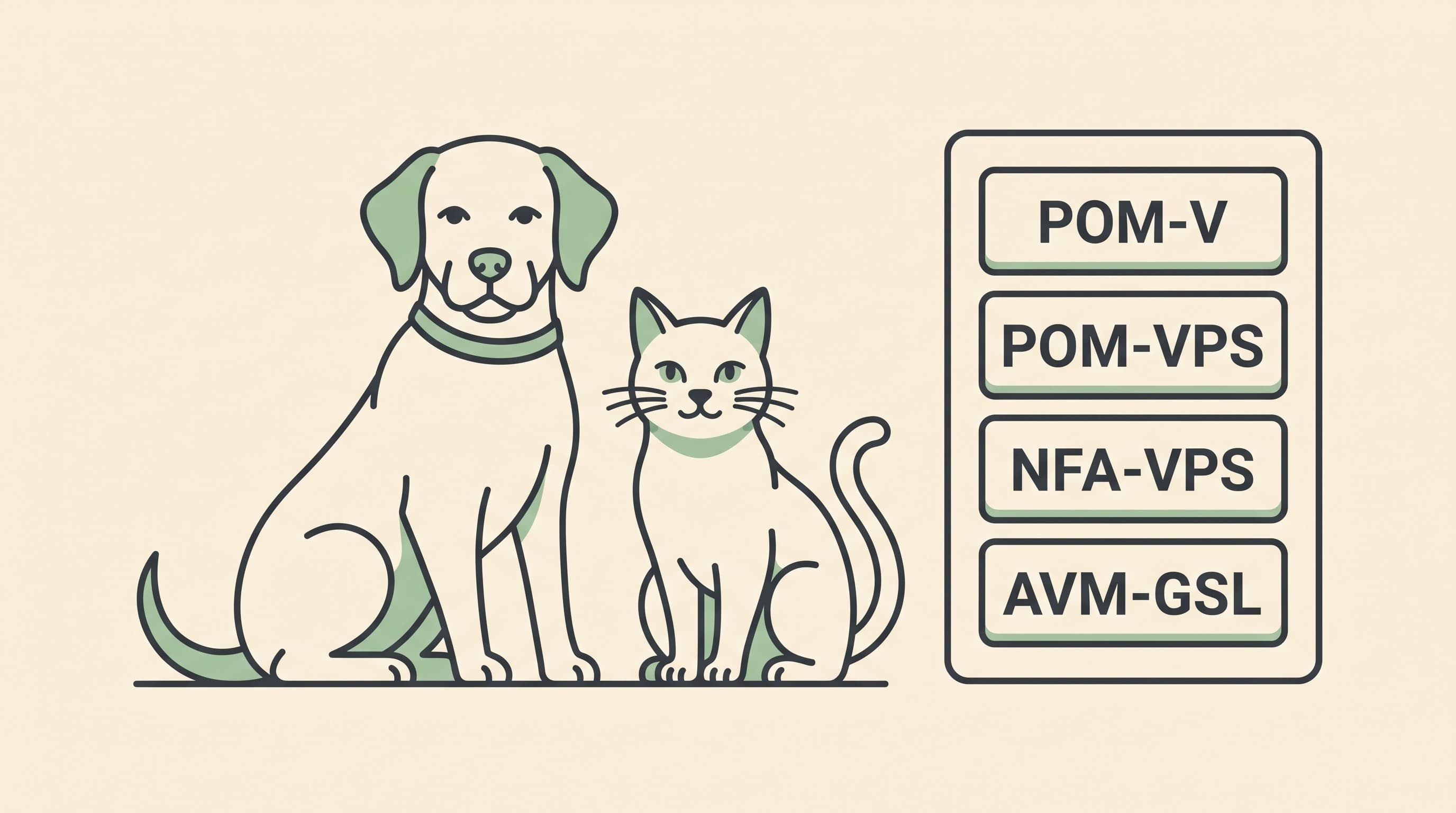
POM-V, NFA-VPS, AVM-GSL: Pet Medicine Categories Decoded
Alastair Greenway
BVM&S MRCVS
If you've ever stood in the waiting room holding a flea treatment your vet handed over, then spotted what looks like the same sort of thing for half the price online, you've probably felt a flash of irritation. Why does the vet's product need a prescription, or a conversation, or a form, when a website will post something similar to your door with no questions asked? Are you being made to jump through hoops so the practice can sell you the expensive version?
It's a fair question, and it deserves a proper answer rather than a shrug. The short version is that pet medicines in the UK are sorted into legal categories, and those categories decide who is allowed to supply a product and how much professional oversight comes with it. Once you understand the categories, a lot of the mystery falls away, and, more usefully, you'll know exactly what to ask so you get the right product for your pet rather than just the cheapest legal one. This isn't a piece about where to shop. It's a piece about understanding the label so you can have a better conversation.
Who decides all this? The VMD and the rules behind the letters
Veterinary medicines in the UK are regulated by the Veterinary Medicines Directorate (VMD), an agency that authorises products, checks their safety and efficacy, and sets the rules for how each one can be supplied. Those rules sit within the Veterinary Medicines Regulations. Every licensed product is given a distribution category, which is really just a shorthand for one question: how much professional judgement should stand between this medicine and the animal it's going into?
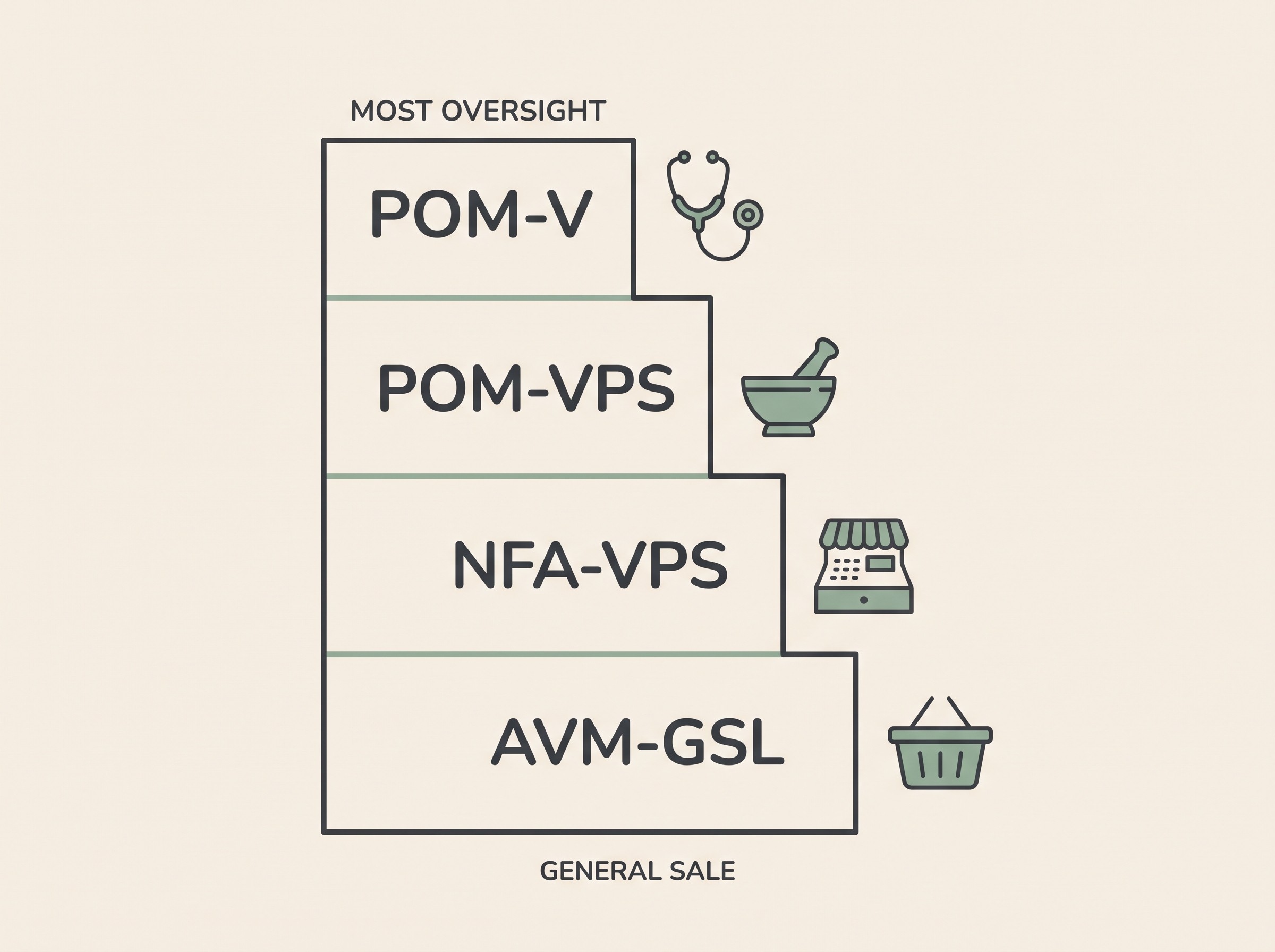
The higher the risk, the greater the potential for harm if it's used on the wrong animal, at the wrong dose, or alongside the wrong other drug, the more oversight the category requires. That's the whole logic. It isn't about protecting vets' income, and it isn't arbitrary. It's a graded system, and the four categories below run from most oversight to least.
The four categories, plainly
POM-V (Prescription-Only Medicine, Veterinarian)
This is the tightest category. A POM-V product can only be prescribed by a vet, and only for an animal that is genuinely under that vet's care, following an appropriate clinical assessment. The vet doesn't have to examine your pet on the very day every single time, but they do need enough up-to-date knowledge of your animal to prescribe responsibly.
Plenty of the products that matter most sit here: prescription flea and worm treatments with broader or more specialised cover, most antibiotics, pain relief, and lungworm-active wormers among them. If a website asks you to upload a prescription or have your vet's details verified before it will sell you something, that product is almost certainly POM-V. The prescription requirement is the point, not an obstacle.
POM-VPS (Prescription-Only Medicine, Veterinarian, Pharmacist, SQP)
A step down in oversight. A POM-VPS product still needs to be prescribed, but the prescriber can be a vet, a pharmacist, or an SQP (more on what an SQP is in a moment). A full clinical examination isn't required, but the person supplying it has to assess that the product is suitable for your animal and advise you on using it safely. Many common flea, tick and worm products for pets fall into this category or the next one down.
NFA-VPS (Non-Food Animal, Veterinarian, Pharmacist, SQP)
This category is specifically for companion animals (the "non-food" bit means it doesn't apply to livestock destined for the food chain). An NFA-VPS product can be supplied by a vet, pharmacist or SQP, who must be involved in the transaction and must give advice on safe use, but no written prescription is needed. A great many over-the-counter-feeling flea and worm treatments for dogs and cats actually sit here, which is why a knowledgeable person, in a pharmacy or a pet shop with the right qualification, can sell them to you with a few questions rather than a prescription.
AVM-GSL (Authorised Veterinary Medicine, General Sales List)
The most freely available category. An AVM-GSL product can be sold by any retailer, including supermarkets and general websites, with no professional involvement at all. These are the products judged low-risk enough for general sale. That does not automatically mean weak or useless, but it does mean nobody is checking that it suits your particular pet, and the range of what's available at this level is more limited than many owners assume.
What on earth is an SQP?
Two of the categories mention an SQP, so it's worth a sentence. An SQP (Suitably Qualified Person), now often called a RAMA (Registered Animal Medicines Advisor), is someone who has passed a recognised qualification allowing them to prescribe and supply certain veterinary medicines within the POM-VPS and NFA-VPS categories. You'll meet them in pharmacies, agricultural merchants and some pet shops. They aren't vets, and they can't dispense POM-V products, but they are trained and accountable, which is why they can legitimately supply many parasite treatments and talk you through them. When you buy a wormer from a reputable pharmacy and someone asks about your dog's weight, that's an SQP doing their job.
Why this actually matters for your pet, not just your wallet
Here's where the categories stop being trivia and start being useful.
A product's category is a rough map of how much can go wrong if it's mismatched. The classic, and genuinely serious, example is permethrin and cats. Permethrin is a common ingredient in some dog flea products, including ones you can buy off the shelf, and it is highly toxic, potentially fatal, to cats. A dog product bought without any advice, then used on a cat or picked up by a cat grooming a treated dog, is one of the ways cats are poisoned every year. A vet or SQP supplying it would flag the risk. A general online checkout won't. That single example captures why oversight isn't just paperwork.
Spectrum matters, and cheap doesn't mean equivalent. Two products can both kill fleas and be completely different animals underneath. One might also cover ticks, tapeworm or lungworm; another might not touch them. If your dog has genuine lungworm risk, buying a general-sale flea treatment because it's cheaper can leave a real gap, because lungworm-active products are typically POM-V and simply aren't sold that way. The category often tells you, indirectly, how much a product does. The source of truth for what any specific product actually covers is its datasheet on the NOAH Compendium, not a retailer's product description.
Fakes and storage. Buying from an unregulated source also carries the smaller but real risks of counterfeit product or medicines stored badly in transit. A registered supplier, whether that's your vet, a proper online pharmacy or a qualified retailer, is accountable for what they sell.
The debate you may have half-heard about: OTC spot-ons
There's a live regulatory conversation worth knowing about. Because some flea and worm ingredients (notably fipronil and imidacloprid) have turned up in UK rivers and wildlife, there has been growing pressure, from environmental researchers, the profession and government, to reconsider whether these products should remain so freely available over the counter. At the time of writing, the VMD and others were actively reviewing this, and the categories described above could change. We cover the environmental evidence itself in the companion piece on flea and worm treatments and the environment.
We flag this not to alarm you, but because it's a good illustration of what the category system is for: it's a living set of rules that shifts as the evidence does. If the way you buy a familiar product changes over the next couple of years, this is why.
So what should you actually do with all this?
Not this: treat the categories as a shopping ladder where the goal is to find the lowest-oversight, cheapest version of whatever your vet suggested. That's exactly the trap this piece is trying to help you avoid, because the cheapest legal option is very often not the right product for your pet, and the whole value of the higher categories is the judgement that comes with them.
Do this instead. Start from the question "what does my pet actually need?" rather than "what can I get without a prescription?". If money is tight, and for a lot of us it is, that's a completely legitimate thing to raise. Your vet or a qualified pharmacist can often tell you whether a lower-cost, lower-category product would genuinely do the job for your pet's risk profile, or whether it would leave a gap that matters. Buying the vet's product isn't compulsory; buying the right product is what counts, and a written prescription from your vet can usually be dispensed by a registered online pharmacy if you'd rather source a POM-V product more cheaply that way.
If you're weighing up a subscription service that posts treatments to your door, the categories are part of what tells you whether there's real oversight behind it or just a checkout, and we work through that decision in flea and worm subscription boxes: convenient, or over-treating?. And if the underlying worry is simply whether your pet needs year-round monthly treatment at all, start with does my pet actually need monthly flea treatment?.
The one question to take to your next appointment is short: "Given my pet's actual risk, which product does the job, and could a cheaper category or a written prescription work just as well?" That's not being awkward. That's exactly the conversation the category system exists to make possible.
References
- Veterinary Medicines Directorate (VMD). *Veterinary Medicines Regulations and distribution categories (POM-V, POM-VPS, NFA-VPS, AVM-GSL)*.
- NOAH Compendium. *Datasheets of UK licensed veterinary medicines* (source of truth for per-product spectrum, species, age and weight limits).
- BVA/BSAVA/BVZS (2021, updated 31 October 2025). *Responsible use of parasiticides in cats and dogs* (position statement).
- Permethrin toxicity in cats.
Keep track of how your pet is doing
The owners who cope best are the ones who notice changes early. A simple health log shows you what is working, and what is not, before the next vet visit.
Start tracking, freeYou're not doing this alone
Compare treatment journeys and talk to owners managing staying well. Free to join.
Join PetsLikeMine