

Flea and Worm Treatments and the Environment
Alastair Greenway
BVM&S MRCVS
If you've read a headline about flea treatments turning up in rivers, or seen the research about songbird nests, and felt a quiet pang of guilt, you're not alone, and you're not being silly. You love your pet and you'd rather not harm the natural world, and finding out those two things might pull in opposite directions is genuinely uncomfortable.
So let's lay the evidence out calmly, without either dismissing it or catastrophising it, and get to the part that actually helps: how to treat your pet responsibly, so a genuinely at-risk animal stays protected and the products don't end up doing damage they don't need to do. Because the honest answer here is not "stop using flea treatment". It's something more useful, and more doable, than that.
What the research actually found
Let's start with the evidence, because it's better to look at it squarely than to react to a half-remembered headline.
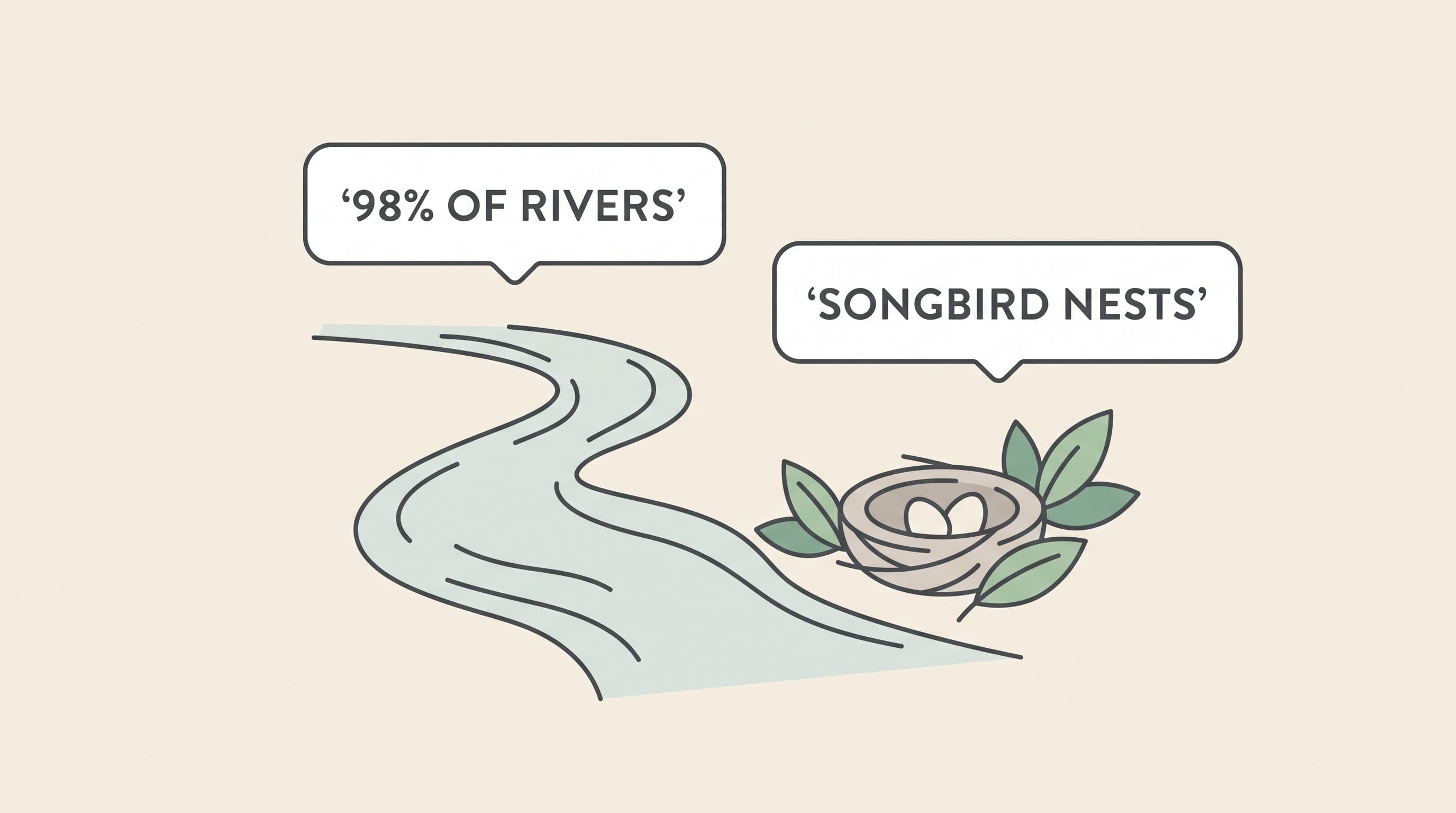
Researchers at the University of Sussex have been studying two of the most common active ingredients in spot-on flea products: fipronil and imidacloprid. Their water sampling found fipronil in around 98% of English river samples tested, and imidacloprid in around 66%, at levels that raise real ecological concern, because both are highly toxic to the insects and other invertebrates that river life depends on (Perkins, Goulson et al., Science of the Total Environment).
More recently, the same group looked at the nests of blue tits and great tits, birds that line their nests with fur, including pet fur. They found fipronil in around 100% of nests and imidacloprid in around 89%, and reported associations with reduced hatching success and higher chick mortality (Perkins, Goulson et al.). Birds collecting brushed-out or shed fur from treated pets appear to be carrying the chemicals straight into the nest.
Two things are worth saying about these figures. First, they're striking, and it's reasonable to take them seriously. Second, they're not a verdict on you as an owner. They're a picture of what happens at population scale when a lot of animals are treated a lot of the time, some of whom needed it and some of whom didn't. That distinction is where the useful response lives.
How pet treatments get into the water in the first place
It helps enormously to understand the pathway, because it turns a vague sense of guilt into a set of things you can actually do something about. These chemicals aren't getting into rivers because anyone is pouring them down the drain on purpose. The main routes appear to be:
- Bathing and swimming. A dog treated with a spot-on that then swims in a river, or is bathed soon after treatment, washes product off into the water.
- Hand-washing after application. Wash your hands after applying a spot-on, entirely sensibly, and a little product goes down the household drain and, eventually, toward the water system.
- General household wastewater and bedding washing. Washing a treated pet's bedding, or residues from ordinary contact, add to the load.
Reframing it this way is the whole point. "Flea drugs are evil" is not a useful thought and isn't accurate. "Here is a pathway I can manage" is both true and empowering.
Why these chemicals are such a problem in water
It's worth understanding why fipronil and imidacloprid raise more concern than you might expect from the small amounts involved, because it explains why "just a bit off one dog" adds up.
Both are extremely potent insecticides, which is exactly what makes them effective flea treatments. Imidacloprid is a neonicotinoid, the same class of chemical that has been heavily restricted in farming because of its harm to bees and other pollinators. Fipronil is similarly toxic to a very wide range of invertebrates. Rivers depend on invertebrate life (the insects, larvae and crustaceans that feed fish and birds and keep the whole system working), and these chemicals are toxic to exactly those creatures at very low concentrations. So a level that sounds trivially small in a water sample can still be biologically significant. When you multiply small contributions across millions of treated pets, the cumulative load is what the research is picking up.
That's not a reason to demonise the products, which do a genuinely important job for pets that need them. It's a reason to be thoughtful about how much of it we're releasing needlessly.
What about wormers?
Most of the headline research has focused on the flea-treatment ingredients in spot-ons, but the question naturally extends to worming products too. The environmental picture for wormers is less studied and less clear-cut, though some worming actives are known to affect invertebrates in dung and soil (this is well documented for livestock wormers, and the principle carries over). The honest position is that the evidence base is thinner here, so the sensible response is the same one that applies across the board: use what your pet genuinely needs, at the frequency that fits its risk, and don't treat reflexively "just in case". Right-sizing is the responsible default whether the evidence on a given product is thick or thin.
The profession and regulators are already on this
You're not the only one who noticed. This is an active area of work across the veterinary profession and government, which is worth knowing both for reassurance and because it explains why guidance has been shifting.
The UK Government has been developing a flea and tick pesticide roadmap (2025), there's a cross-government group looking at pharmaceuticals in the environment (the PiE group), and the Environment, Food and Rural Affairs (EFRA) committee has examined the issue. Alongside that, the veterinary profession's own guidance moved toward risk-based use partly because of exactly these concerns.
The bridge you've probably already spotted
This is where the environmental story and the rest of this whole section join up. The single most environmentally responsible thing you can do is also the thing the profession's guidance now recommends for your pet's sake: treat the pets that genuinely need it, on the right schedule for them, and don't blanket-dose the ones that don't.
That's not a fringe green position. It's the current view of the British Veterinary Association, the British Small Animal Veterinary Association and the British Veterinary Zoological Society, whose 2021 guidance, updated on 31 October 2025, calls for risk-assessing the individual animal, avoiding blanket treatment, and weighing environmental impact (BVA/BSAVA/BVZS, 2021, updated 2025). The environmental evidence and the risk-based approach point in the same direction. Reducing unnecessary treatment reduces the load on rivers and nests, and it happens to be better-matched care for your pet too.
If you'd like the full picture of how to work out what "the pets that genuinely need it" means for your animal, that's exactly what Does My Pet Actually Need Monthly Flea Treatment? and Worming: How Often Does Your Pet Really Need It? are for.
The over-treatment machine, gently named
There's a structural reason so much product ends up being used, and it's worth seeing clearly without turning it into a villain story. The default across much of the pet-care world is a steady monthly supply of flea and worm treatment, delivered through wellness plans, pharmacy reminders and subscription boxes, all of which are built around volume. A box that arrives every month, whether or not this particular pet needed treating this particular month, is convenient, and it's also, by design, more product used than a risk-based plan would prescribe. That convenience has a quiet environmental cost, because the pets being treated "just in case" are exactly the ones contributing to the load without the benefit.
None of that means these services are wrong for everyone, and for a high-risk pet a monthly box may be precisely right. It just means the automatic monthly default and the environmental problem are connected, and choosing a plan matched to your pet's actual risk is where the two concerns resolve together. There's a fuller look at this in Flea and Worm Subscription Boxes: Convenient, or Over-Treating?.
What you can actually do, specifically
Guilt without a next step just curdles into inaction, so here are the concrete, non-preachy things that genuinely reduce the environmental impact of treating your pet, none of which involve leaving an at-risk animal unprotected.
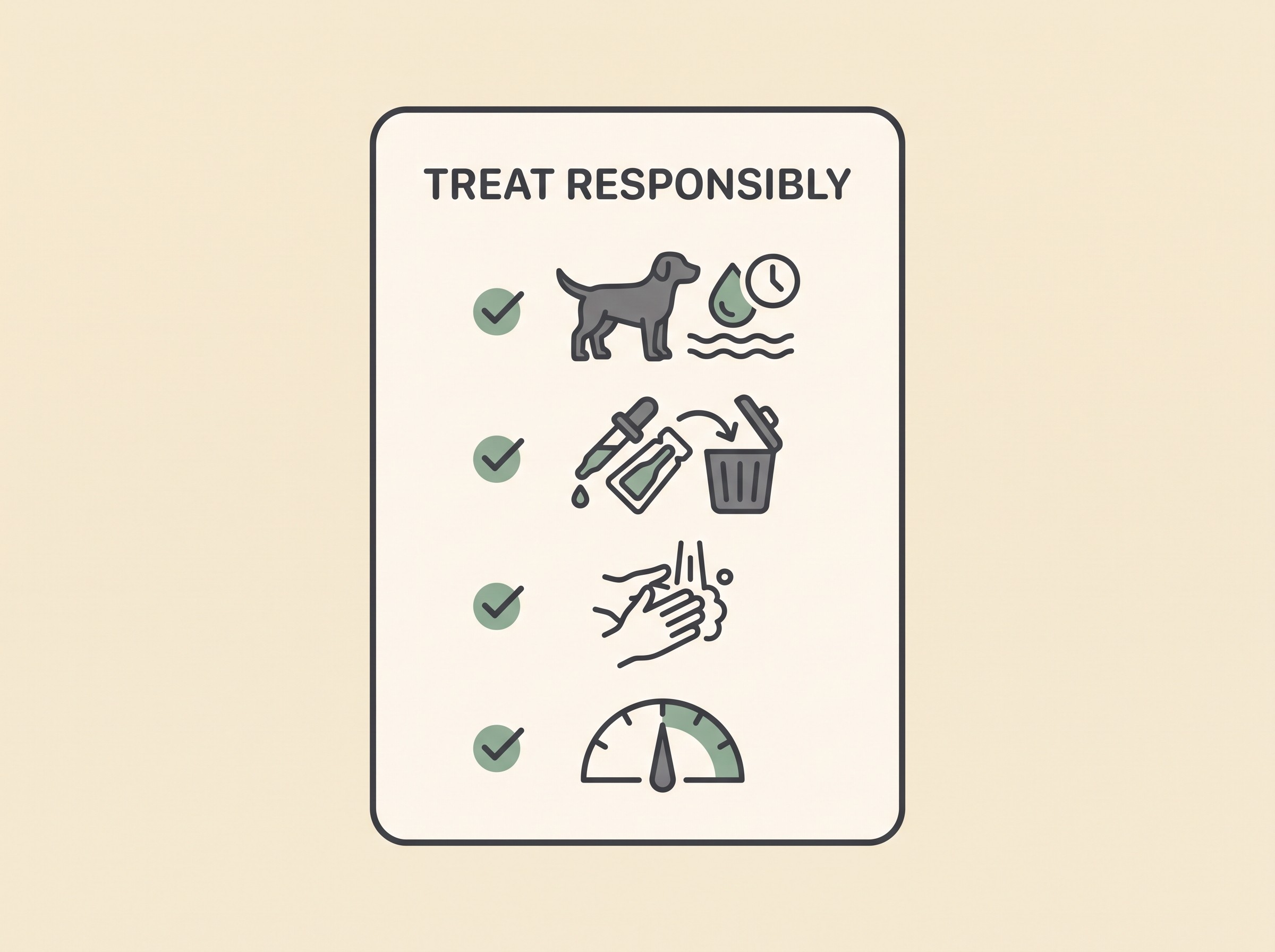
- Don't let a freshly treated pet swim, and don't bath them, for the period the product's datasheet specifies. This is the single biggest one for dog owners, especially spot-on users whose dogs swim. Check the specific interval for your product, as it varies (NOAH Compendium datasheets).
- Consider whether a tablet suits a swimming dog better than a spot-on. For a dog that's in and out of rivers, an oral product isn't washed off into the water in the same way. Whether that's appropriate for your pet is a question for your vet, but it's a genuinely useful one to ask.
- Dispose of used packaging and pipettes properly, with household waste as the datasheet directs, never rinsed down a drain.
- Wash your hands after applying, but be aware that's a pathway, so avoid over-applying and follow the dosing exactly.
- Stick to the risk-based plan you and your vet agree, rather than treating "just in case" on a pet that doesn't need it. Right-sizing is the biggest lever of all.
None of these is a grand sacrifice, and together they meaningfully reduce the amount of product reaching places it shouldn't.
The line that must not get lost
Here is the part it would be irresponsible to leave out, and it's the reason this article is framed the way it is. This is not a reason to stop treating a pet that genuinely needs it.
A pet with fleas, a pet with a history of fleas, a pet with a real tick exposure, or a dog at genuine risk of lungworm still needs protecting, and under-treating an at-risk animal causes real harm: to the pet, which suffers, and potentially to other animals and even people, because untreated parasites spread disease. Fleas cause miserable skin disease and can carry tapeworm; ticks carry Lyme and other illnesses; lungworm can kill. The environmental answer is appropriate use, not no use.
If you take the wrong message from the rivers-and-songbirds story, and stop protecting a genuinely at-risk pet out of guilt, you've swapped one harm for another. That's not what the research is asking of you, and it's not what the profession is asking either. The ask is precision, not abstinence: the right treatment, for the pets that need it, applied and disposed of thoughtfully.
Where this leaves you
So hold both halves. The evidence about flea products in rivers and nests is real and worth acting on. And the right way to act on it is right-sized, responsible treatment, not abandoning treatment. Those aren't in tension once you see that reducing unnecessary dosing is good for your pet, your wallet and the environment all at once.
The question to take to your vet: "What's the right-sized parasite plan for my pet's actual risk, and are there things I should do differently, like timing swims or choosing a tablet over a spot-on, to reduce the environmental impact?" The parasite risk quiz will help you work out where your pet sits before you go, so the conversation starts from your animal rather than from a default. That's the responsible response to this evidence: not guilt, and not inaction, but a plan that fits.
References
- Perkins, R., Goulson, D. et al. Studies on fipronil and imidacloprid contamination of English rivers. *Science of the Total Environment* (2020 onwards) / University of Sussex.
- Perkins, R., Goulson, D. et al. Study on fipronil and imidacloprid in blue tit and great tit nests and associations with hatching success and chick mortality. University of Sussex / *Science of the Total Environment*.
- British Veterinary Association, British Small Animal Veterinary Association and British Veterinary Zoological Society (2021, updated 31 October 2025). *Responsible use of parasiticides for cats and dogs* (position statement); risk-assess the individual, avoid blanket treatment, weigh environmental impact.
- UK Government flea and tick pesticide roadmap (2025); cross-government Pharmaceuticals in the Environment (PiE) group; House of Commons EFRA committee inquiry.
- NOAH Compendium. UK licensed-product datasheets; product-specific swimming/washing intervals and disposal instructions.
Keep track of how your pet is doing
The owners who cope best are the ones who notice changes early. A simple health log shows you what is working, and what is not, before the next vet visit.
Start tracking, freeYou're not doing this alone
Compare treatment journeys and talk to owners managing staying well. Free to join.
Join PetsLikeMine