

Litter training and scratching: setting a kitten up right
Alastair Greenway
BVM&S MRCVS
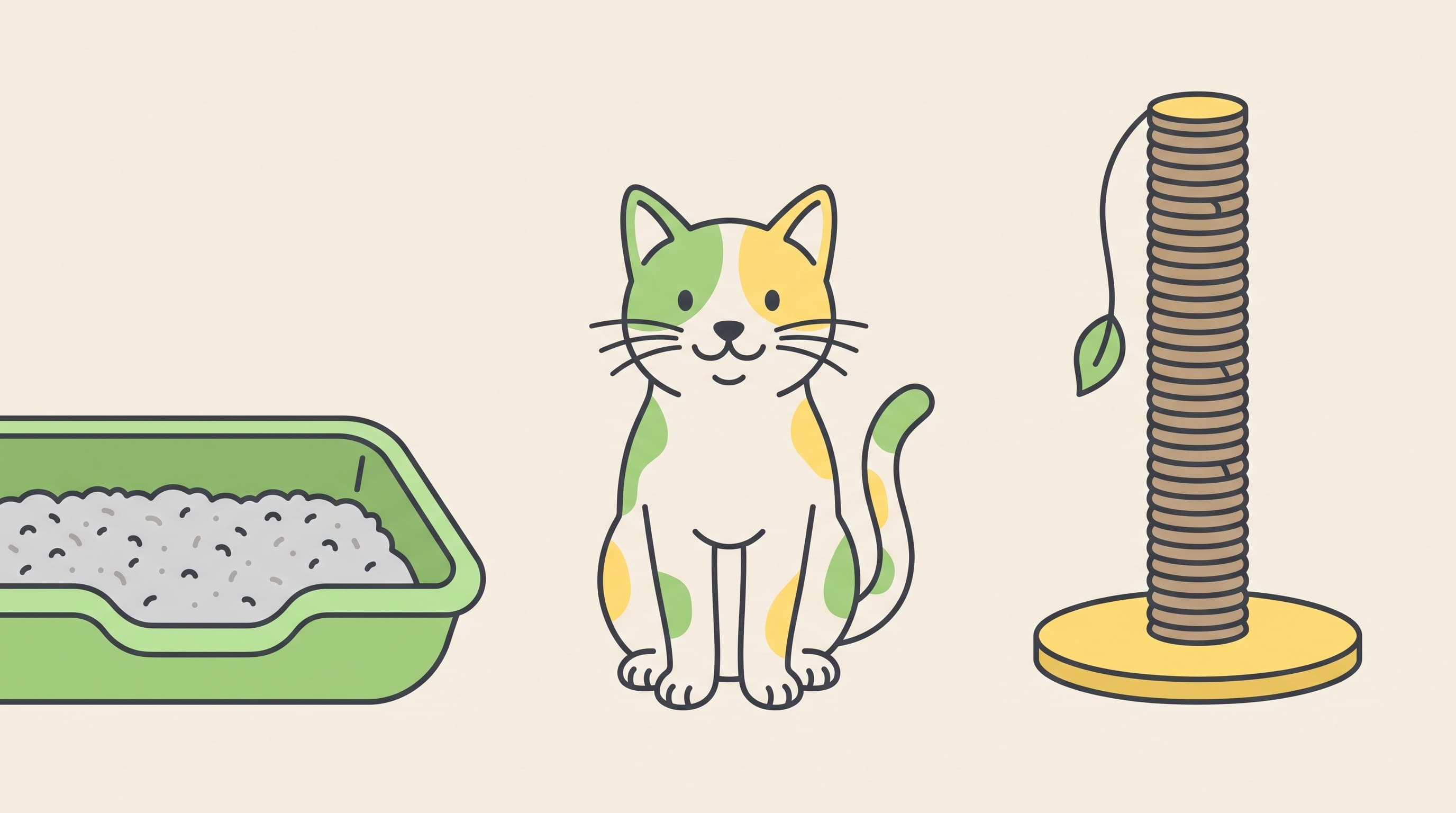
Two of the things new kitten owners worry about most, missing the litter tray and shredding the furniture, are actually two of the easiest to get right, once you understand that you are not really training a kitten at all. You are setting up the house so that your kitten's own instincts point at the tray and the scratching post instead of the carpet and the sofa. Get the environment right and the "training" mostly takes care of itself. Get it wrong and you can spend months frustrated at a kitten who is only doing exactly what cats do.
So let us make the house work for you. This is the kind, evidence-based way to raise a kitten who reliably uses the tray and keeps its claws off your furniture, and it is far simpler than the trial and error most people go through.
Litter training: mostly the kitten's idea already
Here is the reassuring truth. Most kittens arrive already knowing what a litter tray is for. They learn from their mother in the first weeks, and the instinct to dig, go, and cover in a loose substrate is deeply wired in. Your job is not to teach the behaviour, it is to provide a tray so appealing and well-managed that your kitten never has a reason to go elsewhere. When kittens toilet outside the tray, it is almost always because something about the setup is putting them off, not because they are being difficult.
So set it up properly from day one:
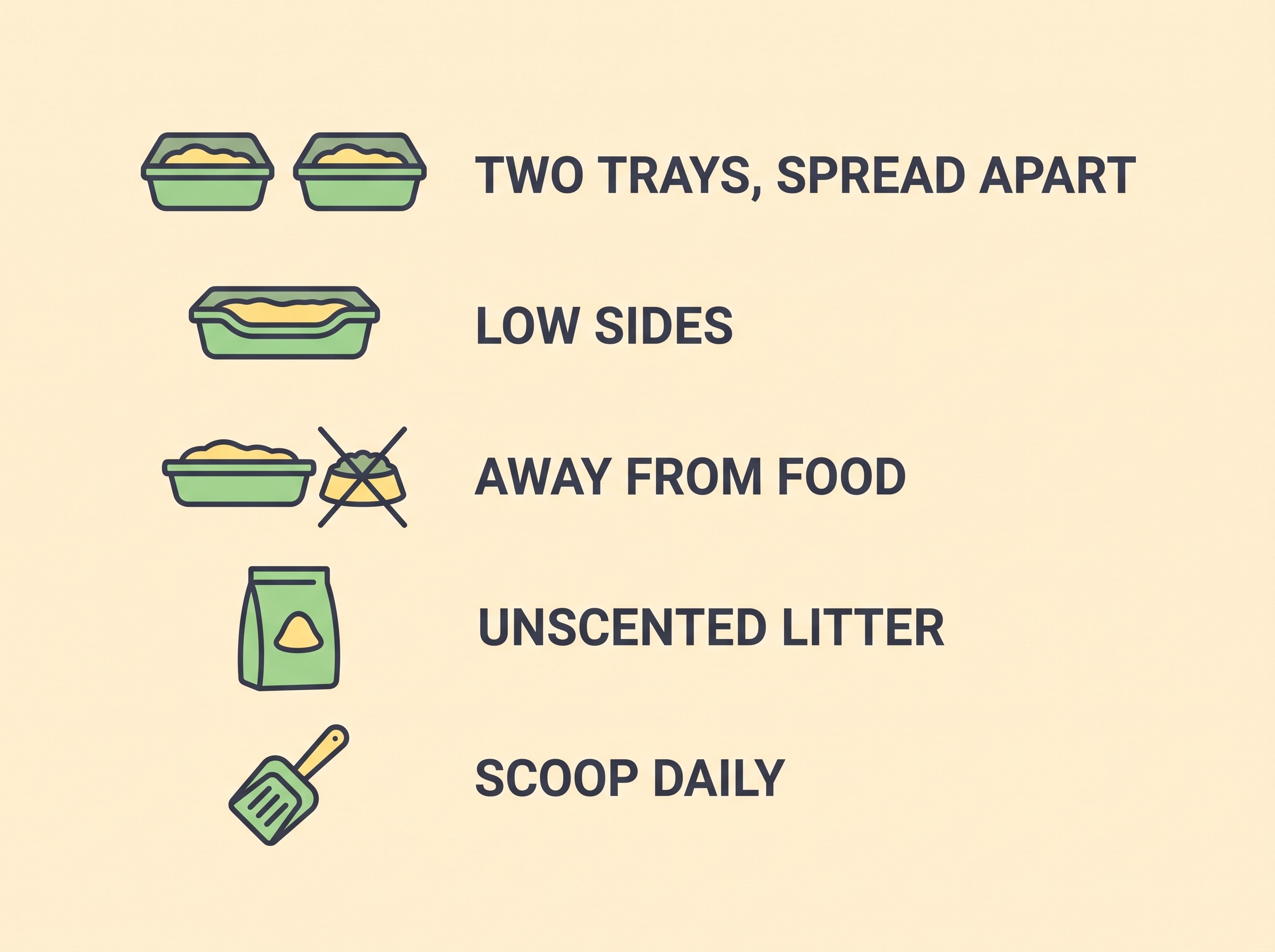
Get enough trays, in the right formula. The behaviour rule that iCatCare and feline vets use is one tray per cat, plus one spare. So a single kitten wants two trays, in different locations, not one. Cats dislike sharing and dislike a soiled tray, and having options prevents a surprising number of accidents.
Choose the right tray and litter. Kittens have short legs, so a tray with a low side they can climb into easily matters. Many cats prefer a large, open, uncovered tray, because hoods trap odours and can make a nervous cat feel cornered, though some cats like the privacy, so it is worth offering a choice. For litter, a soft, fine, unscented clumping litter suits most cats, as it feels good under the paws and mimics the sandy substrate cats naturally prefer. Heavily perfumed litters are for humans, not cats, and the strong scent puts many cats off.
Place trays thoughtfully. Put trays in quiet, low-traffic spots where your kitten will not be startled or cornered, and crucially, keep them well away from food and water bowls. Cats have a strong instinct not to toilet where they eat, so a tray next to the food is a tray they may refuse. Keep the trays spread out from each other too, so two trays in the same corner count, to a cat, as one.
Keep them clean, because cats are fastidious. Scoop waste at least once a day, ideally twice, and fully change and wash the tray regularly. Wash it with warm water and a mild, unscented detergent, not strong-smelling disinfectants (avoid anything containing phenols, which are toxic to cats). A dirty tray is the single most common reason a house-trained cat starts going elsewhere.
Show a new kitten where the trays are. When your kitten first arrives, gently place them in a tray after meals, after naps and after play, so they learn the location. Praise quietly if they use it. Most kittens need very little more than this.
When a kitten misses the tray
If your kitten toilets outside the tray, resist the very natural urge to tell them off. Punishing a cat for toileting is both unkind and counterproductive: it does not teach them where to go, it teaches them that you are frightening and that toileting near you is risky, which makes the problem worse and damages your bond. There is never any place for shouting, nose-rubbing or spraying with water. That approach is wrong for cats just as it is for dogs.
Instead, treat an accident as information. Run through the checklist: Is the tray clean enough? Are there enough trays, spread far enough apart? Is the tray too close to food, or in a spot where the kitten gets startled? Does the kitten prefer a different litter or an open tray? Has anything changed or become stressful in the home? Adjusting the setup usually fixes it.
Clean any accident thoroughly with an enzymatic cleaner made for pet messes, not an ammonia-based product, because leftover scent draws the cat back to the same spot. And take a sudden change in toileting seriously as a health matter, not just a behaviour one. A kitten who strains, cries in the tray, goes very frequently, passes blood, or suddenly stops using a tray they were happy with may have a urinary or digestive problem, and that warrants a vet check rather than a training fix. Straining to urinate, in particular, always deserves prompt veterinary attention.
Scratching: a need, not a nuisance
Now the furniture. The first thing to understand is that scratching is not naughtiness, boredom or spite. It is an essential, healthy feline behaviour that your cat needs to do. Scratching keeps the claws in good condition by shedding the worn outer sheath, it stretches and exercises the muscles of the back and shoulders, and it is a form of communication, leaving both a visible mark and a scent from glands in the paws that says "a cat lives here". You cannot and should not try to stop a cat scratching. What you can do is give them somewhere brilliant to do it, so they choose that over your sofa.
Provide the right scratching surfaces. Cats have preferences, so offer choice: a tall, sturdy, vertical post is essential, and many cats also like a horizontal cardboard scratcher on the floor. Whatever you choose, it must be:
- Tall or long enough for the cat to stretch to full length, which for a growing kitten means thinking ahead to adult size. A post that is too short is worse than useless.
- Completely stable. A wobbly post that tips or shifts when leaned on will be abandoned instantly. It needs a heavy base or to be fixed firmly, so the cat can throw its full weight into a good scratch.
- The right texture. Most cats love sisal rope or coarse fabric to dig their claws into. Carpet-covered posts can confuse a cat into thinking carpet is fair game, so a dedicated scratch texture is better.
Put the posts where the cat actually wants to scratch. This is the trick people miss. Cats often scratch when they wake and stretch, and they scratch in socially important, visible places, near doorways, by their sleeping spots, and in the rooms where the family spends time. Tucking the post away in a spare room guarantees it will be ignored. Place a post right next to where your cat already sleeps, and another in the main living area, ideally near whatever they have been eyeing up.
Make the post the winning option and the furniture the boring one. Encourage use by playing near the post, running a toy up it, and rewarding your kitten with praise or a treat when they use it. A little catnip rubbed on a post tempts many cats. Meanwhile, make targeted furniture less appealing: temporarily cover a favoured sofa corner with a texture cats dislike, such as double-sided sticky tape or a smooth cover, and place an attractive post right beside it, so you are redirecting rather than just blocking. As the cat commits to the post, you can phase the deterrents out.
A cat scratching post built into a taller cat tree earns its keep twice over, giving your kitten a scratching surface, a high perch to survey the room from, and a safe retreat all in one, which matters a great deal in a busy household or a home with a dog or children. If budget or space allows only one purchase, a stable floor-to-ceiling or free-standing unit with a sisal trunk and a high platform is often the single most useful thing you can buy for a kitten.
A word on claws in general: never consider declawing. It is illegal in the UK and much of Europe, and rightly so, because it is not a nail trim but the amputation of the last bone of each toe, causing lasting pain and behavioural harm. The humane answer to scratching is always redirection, plus, if you like, gentle routine claw trimming that your vet or nurse can show you how to do.
The bigger picture
Both of these behaviours sit inside the same principle, which runs through everything about living well with a cat: work with the instinct, not against it. A kitten set up with enough clean trays and good scratching posts, in the right places, from the start, very rarely develops the problems people dread. And the small effort of getting the environment right early pays off for the cat's whole life.
Litter and scratching are also part of the wider job of helping a kitten feel confident and settled, which is closely tied to gentle early handling and a calm home (Handling your kitten: the 2 to 9 week window), to those all-important first few days (Preparing your home and the first 72 hours), and, in time, to the decision about whether your cat goes outside at all (Indoor or outdoor: making the decision for your cat).
The one thing to do today: put a second clean tray in a different quiet room away from the food, and stand a tall, rock-steady scratching post right next to where your kitten sleeps. You will have solved most of both problems before they start.
References
- International Cat Care / iCatCare. Litter tray provision, litter type and toileting problems guidance.
- International Cat Care / iCatCare. Scratching behaviour and providing scratching resources.
- AAFP (American Association of Feline Practitioners). Feline environmental needs / house-soiling guidance.
- UK legal position on declawing (Animal Welfare Act 2006; prohibited).
Keep track of how your pet is doing
The owners who cope best are the ones who notice changes early. A simple health log shows you what is working, and what is not, before the next vet visit.
Start tracking, freeYou're not doing this alone
Compare treatment journeys and talk to owners managing new puppy & kitten. Free to join.
Join PetsLikeMine