

Your Cat Has Stopped Eating: A Liver Emergency (Hepatic Lipidosis)
Alastair Greenway
BVM&S MRCVS
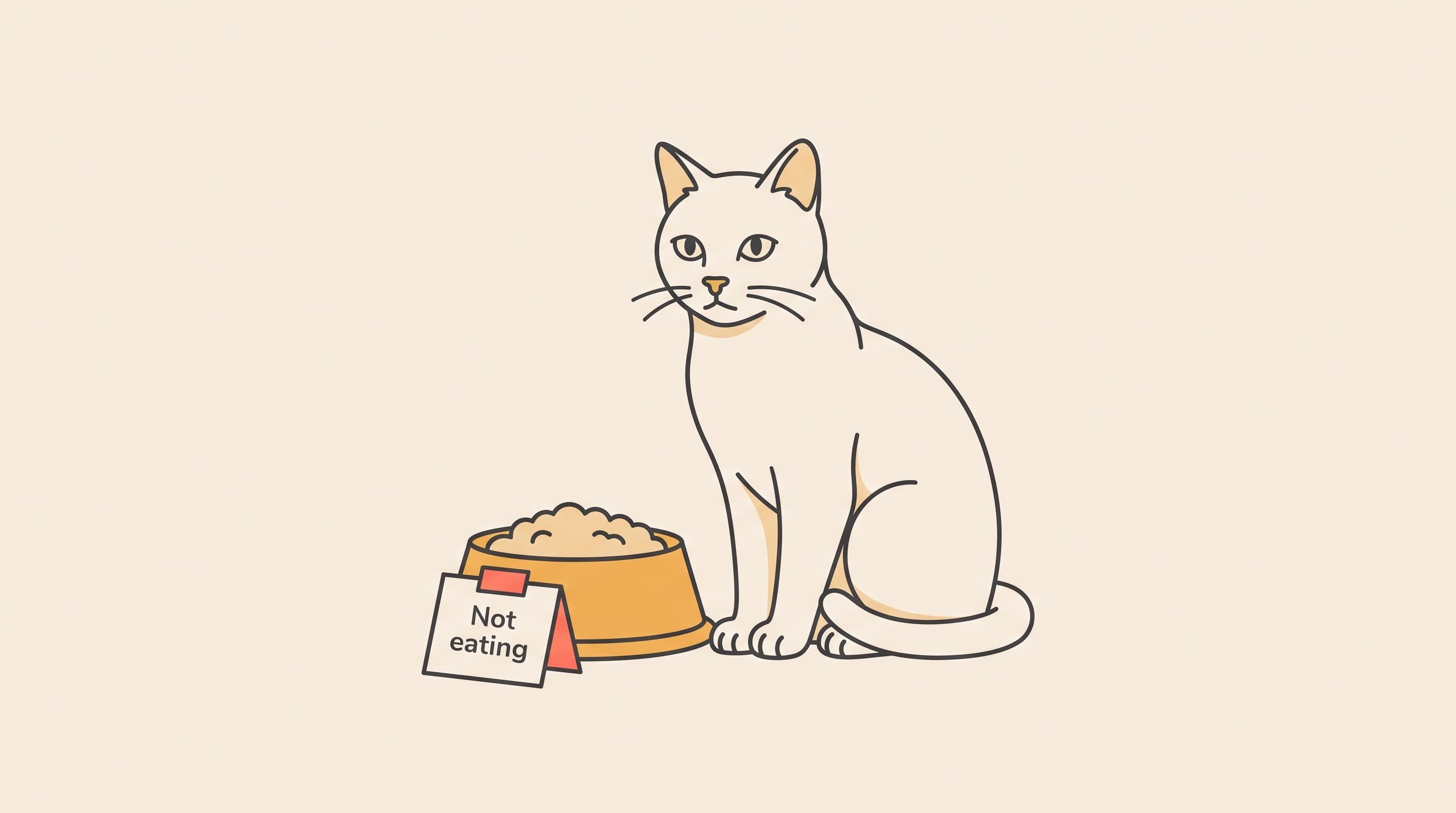
If your cat has barely touched their food for the last couple of days, and you have landed here at some anxious hour trying to work out whether it can wait until morning, let me give you the honest answer straight away, before anything else on this page. In a cat, going off food is not a minor thing to keep an eye on. It is the one situation in all of liver medicine where the right response is not "watch and see", it is "ring the vet". A cat who will not eat can slide into a serious, sometimes fatal, liver problem within days, and the earlier it is caught, the better it goes. So if you take nothing else from this article, take this: a cat who has eaten little or nothing for more than about two to three days needs to be seen, and today is not too soon.
I know that feels like a big leap from "my cat is being fussy". Cats skip the odd meal, turn their nose up at a new flavour, sulk after a vet visit. But there is a specific reason a hungry strike matters so much more in a cat than it would in a dog or a person, and once you understand it, the urgency makes complete sense rather than feeling like scaremongering. This piece is here to explain why, to tell you what your vet will actually do (it is very treatable, and that is the part worth holding on to), and to help you turn tonight's worry into one clear action.
Why a cat who stops eating is different
Here is the mechanism, in plain terms, because understanding it is what makes the urgency stick.
When any animal stops eating, the body starts mobilising its fat stores for energy. It sends that fat to the liver to be processed and turned into fuel. In most species this works reasonably well. In cats, it does not. A cat's liver is not built to handle a sudden flood of fat, and when a cat stops eating, fat pours into the liver faster than the liver can package it up and ship it out. The fat backs up inside the liver cells, clogs them, and the liver starts to struggle to do its normal jobs. This is hepatic lipidosis, also called fatty liver. It is the most common liver disease of cats.
The part that surprises people is how fast it can happen. We are not talking weeks. A cat, particularly an overweight one, can begin developing hepatic lipidosis after only a few days of not eating. The more body fat a cat carries, the more fat there is to flood the liver, which is why overweight cats are at the highest risk. The cruel irony is that a chubby cat can look like they have plenty in reserve to skip a few meals, when in fact they are the ones most in danger.
This is why the usual liver-disease advice on the rest of this site, the calm "watch the trend, recheck in a few weeks" message, does not apply here. That advice is right for a well dog with one raised enzyme on a routine panel. It is exactly wrong for a cat who has gone quiet and stopped eating. Different animal, different problem, different clock.
It is almost always a symptom of something else
Here is a point that matters enormously and is easy to miss. Hepatic lipidosis rarely comes out of nowhere. In most cats, something else stopped them eating first, and the fatty liver developed on top of that. That underlying "something" might be another illness (a dental problem making eating painful, a bout of pancreatitis, cholangitis, kidney disease, an infection, even cancer), or it might be a stressor (a house move, a new pet or baby, a change of food they have quietly refused, a stay in a cattery, a bereavement in the home).
This matters for two reasons. First, it means finding and treating the original trigger is part of the job, not an afterthought. Feeding the cat treats the fatty liver, but if the thing that put them off food in the first place is still there, they will not recover properly. Second, it explains why "just get some food into them at home and they will pick up" is not a safe plan. If your cat has stopped eating because they are genuinely unwell with something underneath, that something needs diagnosing, and only a vet can do that.
So when you get to the vet, they are not just treating a fatty liver. They are asking two questions at once: how do we support this liver, and why did this cat stop eating? Both need answering.
The hallmark to know: jaundice
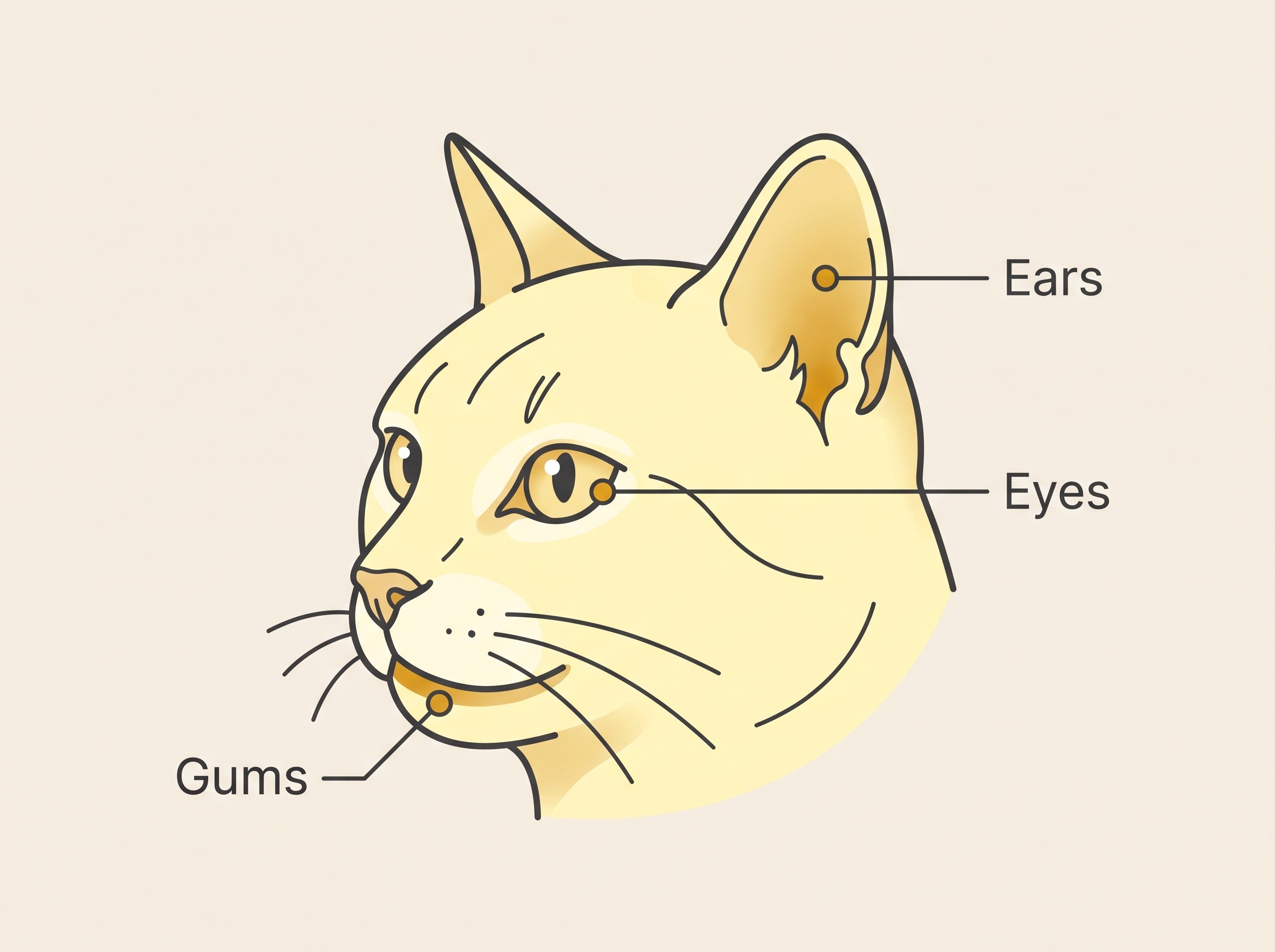
The classic, visible sign that a cat's liver is in trouble is jaundice, a yellow tinge that shows up in the least furry places: the gums, the whites of the eyes, sometimes the skin inside the ears or on the belly. It is caused by a pigment called bilirubin building up when the liver cannot clear it properly. If you have noticed yellow, that tells you the liver is already struggling, and it means today, not tomorrow (there is a fuller guide in [Jaundice in cats: what the yellow actually means], and jaundice in a cat is always urgent).
But here is the thing I most want you to hold onto, and it is the whole reason this page leads the way it does. By the time jaundice appears, your cat is already some way down the road. The point of catching hepatic lipidosis early is to act on the not-eating before the yellow arrives. Please do not wait for jaundice as your signal to worry. The signal to worry is the empty bowl. Alongside the not-eating, you might also notice weight loss, drooling, vomiting, weakness, hiding away, or a general dullness. Any of these in a cat who is off food adds to the picture, but the loss of appetite alone is enough to pick up the phone.
What your vet will actually do
I want to move you from fear to a plan, because this is a treatable condition and the numbers are genuinely encouraging when it is caught and managed properly. Here is roughly what happens.
Confirming it. Your vet will examine your cat and run bloods, which typically show raised liver values and, importantly, a raised bilirubin. They will often use an ultrasound scan of the liver, and sometimes a fine-needle sample of the liver, to confirm the fat and to look for that underlying cause. Getting to the trigger underneath is a real part of the work.
Stabilising your cat. A cat who has not eaten and is unwell often needs fluids and correction of any imbalances first. They may be dehydrated, and their body chemistry can be off in ways that need putting right before anything else.
The crux: feeding. The one treatment that turns hepatic lipidosis around is nutrition. The liver needs a steady, adequate supply of the right food to stop mobilising fat and start clearing what has built up. Because these cats will not eat voluntarily, and cannot eat enough by being coaxed, the reliable way to deliver that nutrition is through a feeding tube. I know that sounds alarming. In practice it is one of the kindest and most effective tools we have, it lets your cat get complete nutrition without the daily battle of syringe-feeding, and most cats tolerate it remarkably well. Because it is such a big part of the story, and because it is usually the thing owners are most frightened of, we have given it its own piece: [Feeding tubes for fatty liver: the 6-7 weeks that save cats].
Treating the underlying cause. Alongside the feeding, your vet treats whatever started it, whether that is nausea, pain, an infection, or a condition like cholangitis (see [Cholangitis and triaditis: the liver-gut-pancreas triangle], a common trigger).
The honest prognosis, and why it should motivate you
Here is the contrast that I hope lodges in your mind and gets you to the phone.
With committed, aggressive assisted feeding, survival from hepatic lipidosis is good, in the region of 80 to 90 per cent. That is a genuinely hopeful figure for a serious illness. The liver can recover a great deal once the fat stops flooding in and starts clearing.
Without that feeding, the same condition is frequently fatal. The difference between those two outcomes is, very largely, whether the cat gets proper nutritional support in time. This is not a disease where the outcome is out of your hands. The single biggest thing determining how your cat does is how quickly this is recognised and how completely they are fed. That is why every hour of "let's give it one more day" works against you, and why acting early is not an overreaction, it is the treatment.
What not to do
A few honest cautions, because the internet is full of well-meaning but dangerous advice for exactly this moment.
Do not treat home force-feeding as the answer. Syringe-feeding at home might have a place as a short-term stopgap that your vet has specifically advised, but it is not a substitute for veterinary care, and on its own it almost never delivers enough nutrition to reverse hepatic lipidosis. It can also be stressful and risky (food going down the wrong way) if done without guidance. If your cat is not eating, the plan is the vet, not the syringe.
Do not wait for the appetite to come back on its own. With most illnesses, "they will eat when they are hungry" is reasonable. With a cat and the liver, it is the trap. The appetite may not come back on its own, and every day of not eating deepens the problem.
Do not try to tempt them for days first. By all means offer strong-smelling favourites, gently warmed, while you arrange the appointment. But do not let food-tempting become a reason to delay. A day of trying treats is a day the liver spends filling with fat.
What to do tonight
If your cat has eaten little or nothing for more than about two to three days, ring your vet or the nearest out-of-hours service and tell them your cat has stopped eating and you are worried about their liver. If you have seen any yellow in the gums, eyes or ears, say so, and treat it as an emergency now rather than in the morning. Bring anything you know about what changed in the household recently, because that trigger is part of the story.
You have not overreacted by worrying. A cat who stops eating is the one moment in this whole subject where fast action genuinely saves lives, and you are doing exactly the right thing by taking it seriously. Once you have that appointment booked, our companion pieces will walk you through what comes next: the feeding tube that does the heavy lifting, the cholangitis and triaditis that so often sits underneath, and what jaundice actually means if you have seen the yellow. For now, the only thing that matters is getting your cat seen.
References
- Cornell Feline Health Center. Hepatic lipidosis (fatty liver disease) in cats: owner resource on pathophysiology, risk factors, diagnosis and treatment.
- University of Illinois College of Veterinary Medicine. Feline hepatic lipidosis owner guidance: assisted enteral nutrition and prognosis.
- Feline hepatic lipidosis as the most common hepatobiliary disease of cats; rapid hepatic fat accumulation following anorexia.
- Obesity and duration of anorexia as principal risk factors for hepatic lipidosis.
- Hepatic lipidosis is most often secondary to an underlying disease or stressor that precipitates anorexia.
- Survival of approximately 80-90% with aggressive assisted (tube) feeding; high mortality without nutritional support.
- Jaundice (icterus) as the hallmark clinical sign; diagnosis by biochemistry, ultrasound and hepatic cytology.
Free downloads
Companion worksheets to put what you've read into practice. Free PDFs, print at home.
Keep track of how your pet is doing
The owners who cope best are the ones who notice changes early. A simple health log shows you what is working, and what is not, before the next vet visit.
Start tracking, freeYou're not doing this alone
Compare treatment journeys and talk to owners managing liver & gallbladder. Free to join.
Join PetsLikeMine