

Cat flu: what every kitten owner should know
Alastair Greenway
BVM&S MRCVS
Very few things throw a new kitten owner more than the first sneeze. One day you have a bright, bouncy kitten, and the next it has runny eyes, a snuffly nose, and that small, wet sneeze that makes your heart sink. Is it serious? Is it contagious? Did you do something wrong? Let me put your mind at ease and give you the honest picture, because cat flu is common, it is usually manageable, and knowing what to watch for is most of the battle.
Cat flu is one of the most frequent things a kitten comes home carrying, especially if it came from a rescue, a shelter, or a multi-cat household, simply because it spreads readily where cats live in groups. So a kitten with the sniffles is not a sign of a bad start or a bad breeder, it is one of the most ordinary things in feline medicine. What matters is understanding it and acting sensibly.
What "cat flu" actually is
"Cat flu" is a slightly misleading nickname, because it is not one illness and it has nothing to do with human flu. It is a general term for an upper respiratory infection in cats, most often caused by one of two viruses: feline herpesvirus (FHV-1) and feline calicivirus (FCV) (AAFP, 2020; International Cat Care). Sometimes bacteria such as Chlamydia felis or Bordetella are involved too, either as the main cause or on top of a viral infection.
The two main viruses behave a little differently, and it is worth knowing the shapes of them:
- Feline herpesvirus tends to cause the classic streaming eyes and nose, sneezing, and sometimes painful eye ulcers. Like the cold-sore virus in people, it never fully leaves the body. After the first illness the virus goes dormant, and it can flare up again at times of stress (a house move, a new pet, a cattery stay), which is why some cats have recurring bouts throughout life.
- Feline calicivirus more often causes mouth ulcers, on the tongue and gums, which can make a kitten drool and go off its food because eating hurts. It also causes sneezing and eye and nose discharge, and some strains cause a limping, feverish illness.
Both spread easily between cats through sneezes, shared bowls, grooming, and on your hands and clothes, which is why it runs through litters and shelters so readily.
Why kittens are hit hardest
Cat flu can affect a cat of any age, but it hits kittens hardest, and there are good reasons to be attentive rather than casual with a young cat.
A kitten has a small body, limited reserves, and an immune system that is still learning, so it can become dehydrated or run down faster than an adult. Two knock-on problems matter most. First, a snuffly, congested kitten cannot smell its food, and cats rely heavily on smell to want to eat, so a blocked nose can quickly turn into a kitten that stops eating altogether, which is dangerous in a small animal. Second, the eye involvement can be serious in kittens: herpesvirus can cause ulcers on the surface of the eye, and in very young kittens, infection can occur even before the eyes have opened, occasionally causing lasting damage if not treated (International Cat Care). Neither of these is a reason to panic, but both are reasons to take a poorly kitten seriously and to involve your vet sooner rather than later.
When to see the vet, and when it's an emergency
This is the part worth reading twice, because knowing the difference between "keep an eye on it" and "ring now" is genuinely useful.
Book a vet appointment if your kitten has more than very mild signs, in particular:
- Runny eyes or nose, sneezing, and any discharge that turns from clear to yellow or green (a sign of secondary bacterial infection).
- Sore, squinting, cloudy or gunky eyes, which need checking promptly because of the ulcer risk.
- Dribbling, pawing at the mouth, or reluctance to eat, which can mean painful mouth ulcers.
- Any kitten that seems flat, quiet or feverish.
Treat it as more urgent, and contact a vet the same day or out of hours, if your kitten:
- Has stopped eating or drinking, especially for more than a day (small kittens cannot go long without food).
- Is lethargic, floppy or collapsed, or seems dehydrated.
- Is breathing with obvious effort or open-mouthed, which is always an emergency in a cat.
Young kittens can go downhill quickly, so with a small, sick kitten the honest rule is: when in doubt, phone. No good vet or nurse will mind a worried call about a poorly kitten.
How it's managed
Because cat flu is usually viral, there is often no single pill that "cures" it, and this catches owners out who expect antibiotics to fix everything. Instead, most kittens are managed with good supportive care while their own immune system does the work, and your vet's plan will usually revolve around keeping the kitten comfortable, hydrated and eating.
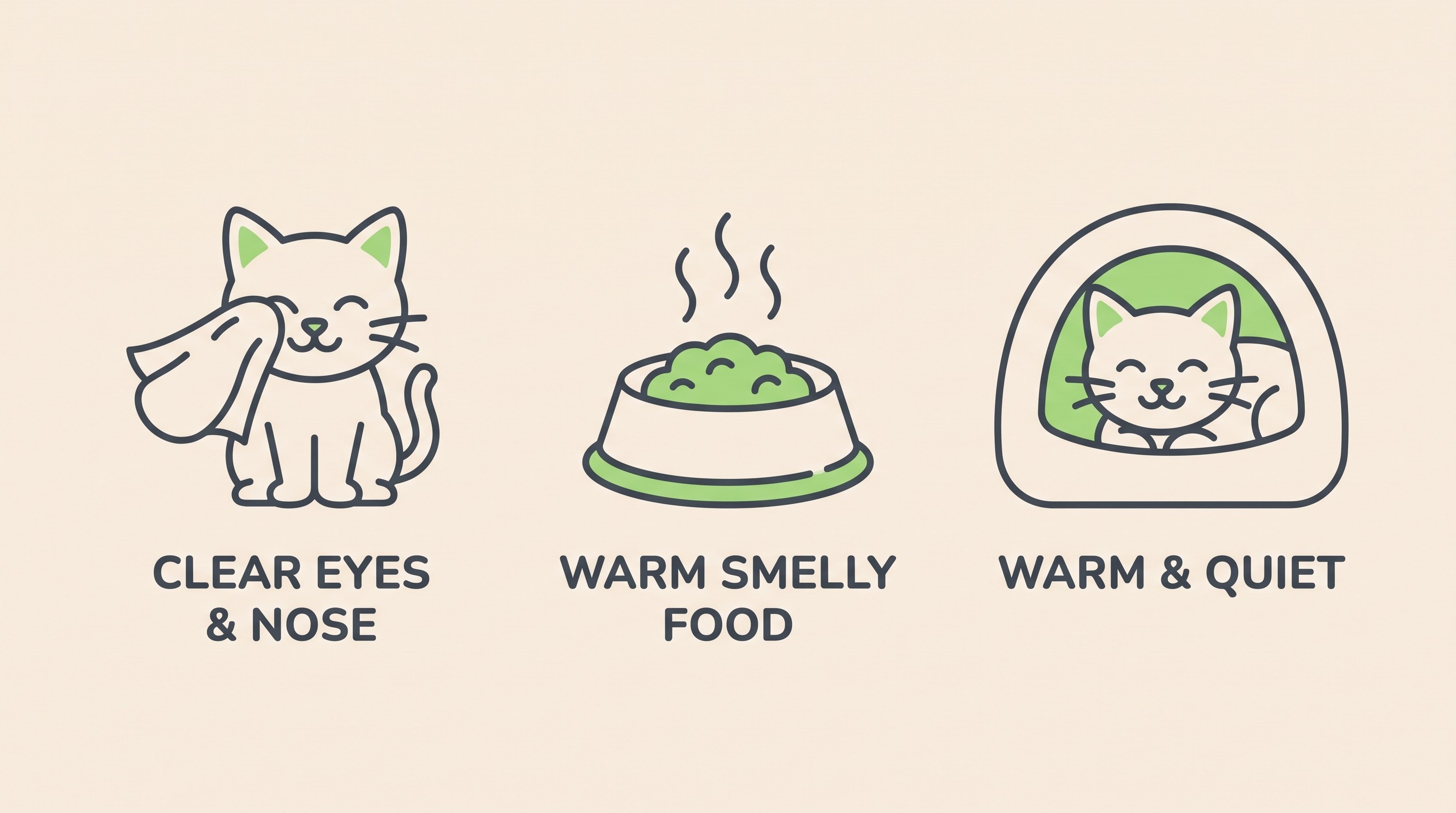
At home, the things that genuinely help are gentle and practical. Wipe away eye and nose discharge frequently with cotton wool and cooled boiled water so your kitten can see and breathe. Tempt the appetite by warming food to release its smell and offering strong-smelling wet food, since a kitten that cannot smell often will not eat cold or dry food. Some owners find steam helps: sitting with the kitten in a steamy bathroom (never putting the kitten near hot water directly) can ease a blocked nose. Keep your kitten warm, quiet and away from other cats.
Your vet will decide whether anything more is needed. Antibiotics are used when there is a bacterial component, such as green discharge or a secondary infection, rather than for the virus itself. Eye treatments may be prescribed for ulcers or conjunctivitis. In more serious cases, especially a kitten that has stopped eating and drinking, a short stay for fluids and support can be life-saving. Every one of these is your vet's call, matched to your individual kitten, so please do not reach for human decongestants or leftover medicines, several of which are toxic to cats.
Can you prevent it? Vaccination and the honest limits
Prevention is where vaccination earns its keep, and it is why the cat-flu viruses are part of the core kitten vaccine course. The core vaccines protect against feline herpesvirus and calicivirus (alongside panleukopenia), and getting your kitten through its primary course is the single most important thing you can do to reduce the risk and severity of cat flu (AAFP, 2020). The full timing, including the important UK detail about finishing the course at around 16 weeks, is in The UK vaccination schedule explained.
Here is the honest part, though, because I would rather you were not caught out. Vaccination reduces the risk and severity of cat flu, but it does not guarantee your cat will never get it. There are many strains, particularly of calicivirus, and the vaccine cannot cover them all, and it does not prevent a cat that already carries herpesvirus from having stress-triggered flare-ups later (AAFP, 2020; International Cat Care). So a vaccinated cat can still have a mild bout, and that does not mean the vaccine failed or was pointless. Think of it as turning a potentially serious illness into a manageable one, which is exactly what a good vaccine does.
Beyond vaccination, prevention is about reducing stress and exposure: a calm, settled home, careful and gradual introductions to any resident cats (Preparing your home and the first 72 hours has the settling-in groundwork), good hygiene between cats, and washing your hands after handling a cat that is unwell.
The carrier cat, and living well with cat flu
One thing worth knowing early is that many cats that recover from cat flu become lifelong carriers, particularly with herpesvirus, and may shed the virus again at times of stress even when they look perfectly well (International Cat Care). This is not a reason for alarm and certainly not a reason to consider giving up a cat. It simply means that if your cat has recurring snuffly episodes at stressful times, you now understand why, and you can plan for it by keeping stress low around known triggers and speaking to your vet about managing flare-ups.
The overwhelming majority of kittens that get cat flu recover well with the right care and go on to live entirely normal lives. A small number, particularly those that were very poorly young, are left with some lasting effects such as a slightly runny nose or occasional flare-ups, and even they usually do very well.
What to do now
If your kitten is showing signs right now, the action is straightforward: phone your vet, describe what you are seeing, and be led by them on whether it is a same-day concern. Keep the eyes and nose clean, keep tempting food, and keep your kitten warm and quiet in the meantime.
If your kitten is currently well, the best prevention you can put in place is finishing the vaccination course on schedule, so set up the Vaccination & worming scheduler so no dose slips. And because a kitten that came from a shelter, a stray background or an unknown seller may carry more than cat flu, it is worth reading about testing for the two viruses that need a longer view: FeLV and FIV: should you test your kitten?. A first sneeze is rarely the disaster it feels like at 10pm. With sensible care and a good vet on the end of the phone, most kittens come through cat flu just fine.
References
- Stone, A.E.S. et al. (2020). 2020 AAHA/AAFP Feline Vaccination Guidelines. Journal of Feline Medicine and Surgery, 22(9), 813-830.
- International Cat Care / iCatCare. Cat flu (feline upper respiratory tract disease): feline herpesvirus and calicivirus.
- Thiry, E. et al. / ABCD (European Advisory Board on Cat Diseases). Guidelines on feline herpesvirus and calicivirus infection.
- International Cat Care. Guidance on nursing the inappetent or congested kitten at home.
Keep track of how your pet is doing
The owners who cope best are the ones who notice changes early. A simple health log shows you what is working, and what is not, before the next vet visit.
Start tracking, freeYou're not doing this alone
Compare treatment journeys and talk to owners managing new puppy & kitten. Free to join.
Join PetsLikeMine