

The 84-day observation window
Alastair Greenway
BVM&S MRCVS
You imagined the last day of treatment would feel like a finish line. You'd give the final dose, exhale, and finally let go of the fear you've been carrying for twelve weeks. Instead, someone has handed you another calendar. Treatment is over, but you're now being asked to watch, and wait, for roughly twelve more weeks before anyone will use the word you've been longing to hear.
If that landed as an anticlimax, or worse, as a fresh wave of dread, that's completely understandable. You did the hard thing. You earned some relief. And here's more waiting instead. So let's be clear about what this next stretch actually is, because it isn't limbo, and it isn't nothing. The observation window is the last, quiet part of the cure, and understanding what it's for is the difference between enduring it in fear and getting through it while actually living your life.
Why there's a window at all
When treatment stops, the antiviral leaves your cat's system, and the real question becomes: has the disease genuinely gone, or was it only being held down by the medicine? The observation window is how that question gets answered honestly. If a cat is going to relapse, it most often shows in this off-treatment period, and coming through the window clear is what tells you the treatment did its whole job rather than just suppressing the disease while it was being given.
So think of these weeks not as "after treatment" but as the final phase of it. Nothing is being done to your cat, which after twelve weeks of daily medicine can itself feel unnerving. But something is being confirmed, and that confirmation is worth having. Your vet will usually want to examine your cat around four weeks after the last dose, and may check a blood marker to add reassurance that things remain settled (Taylor et al., 2024). That recheck is a normal part of the plan, not a sign anyone is worried.
What "good" looks like day to day
The trap in the observation window is that with nothing to do, it's easy to turn watching into hunting: reinterpreting every nap, every skipped biscuit, every slightly-off morning as the start of a relapse. That way lies exhaustion, and it doesn't make your cat any safer.
So here's what steady, reassuring progress actually looks like, so you know what you're genuinely watching for:
- Eating well and keeping it up. A good, consistent appetite is one of the most reliable everyday signs that all is well.
- Energy and normal behaviour. Playing, exploring, being her ordinary self.
- Weight holding or gently rising, especially in a young cat who's still growing.
- A settled temperature and easy, comfortable breathing.
The rule that keeps owners sane is watch the pattern, not the moment. A single quiet afternoon or one turned-up nose is a data point, not a diagnosis. What matters is the direction of travel across days, not the ups and downs of any single hour. A short daily note of appetite, energy, breathing and weight, the kind the FIP Treatment Companion is built to hold, does two useful things at once: it catches a real change if one comes, and it frees you from having to hold it all in your anxious head.
What "84 days" really means
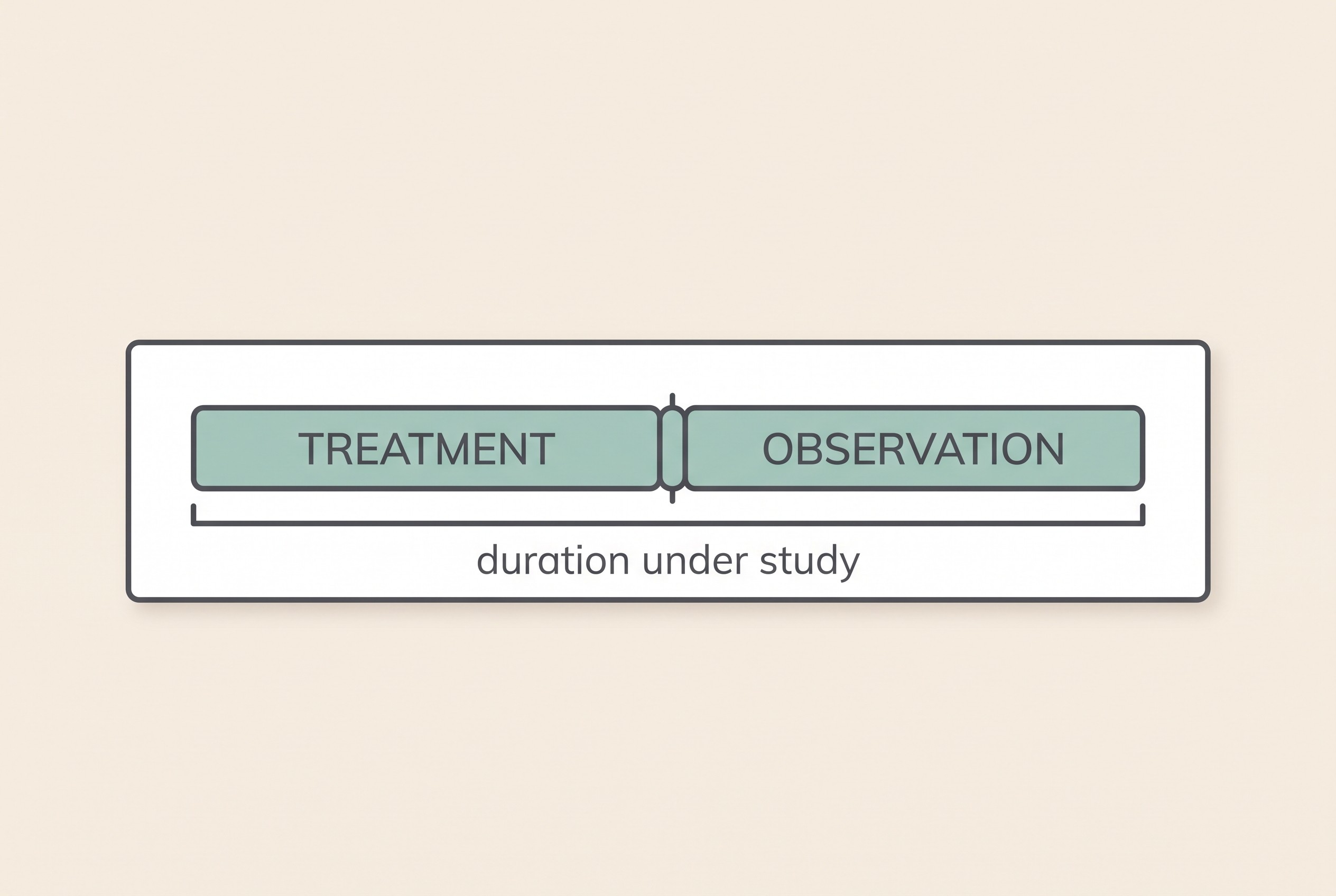
You may be doing 84 days of treatment followed by 84 days of observation, and you may reasonably wonder where those numbers come from and whether they're fixed. They aren't laws of nature, and it's worth being straight with you about that.
Eighty-four days, roughly twelve weeks, has been the standard minimum treatment course, and the observation window mirrors it (Taylor et al., 2024). But research is actively refining this. A randomised study of cats with effusive FIP found that a shorter 42-day course of oral GS-441524 was as effective as the standard 84-day course, with all the cats who completed the short course still in complete remission at day 168 (Zwicklbauer et al., 2024). On the strength of work like this, updated European guidance in 2026 now recognises that a shorter course can be as effective as the longer one for effusive disease.
What that means for you is simple: the exact length of your cat's treatment and observation is a decision for your vet, based on your cat's form of FIP and how she's responded, and the numbers may look different from a friend's or from something you read a year ago. Follow the plan your vet has set for your cat, and if you're curious why yours differs, ask. The field is moving in a hopeful direction, towards shorter, kinder courses, but the details are still settling.
How likely is a relapse, really?
It helps to size the fear accurately, because a vague dread is heavier than a real number. Relapse is genuinely uncommon. In the largest UK study, 10.8% of treated cats relapsed, and relapse tends to cluster in or shortly after the observation window rather than turning up out of the blue years later (Taylor et al., 2023; Taylor et al., 2024). Set against that, the same body of work shows most cats come through: around 84 to 85% were alive at longest follow-up across the UK study and a pooled review of hundreds of cats (Taylor et al., 2023; systematic review, 2025).
In plain terms, that's roughly eight to nine cats in ten coming out the other side, and even for the minority who do relapse, it's often treatable again. Knowing the real red flags, and being able to tell them from an ordinary off-day, is what lets you watch calmly rather than constantly, and our guide on the signs of relapse sets those out clearly so you're not scanning for the wrong things.
Getting back to normal life, gently
The observation window isn't only about watching for trouble. It's also when a cat who's spent months being a patient starts being a cat again, and there are a few practical threads to pick back up. Some can't be rushed. If your kitten wasn't neutered before or during treatment, that's usually best done from around a month after treatment finishes, once she's responded well, so it often falls in or just after this window (Taylor et al., 2024). Routine worming and flea treatment can carry on as normal, and vaccination can be picked back up too, guided by your vet and your cat's lifestyle, with the reassurance that treated cats have generally been vaccinated safely afterwards (Taylor et al., 2024).
Beyond the admin, this is the stretch where you let ordinary life back in. A cat who's been through FIP has often lost condition along the way, so good nutrition and steady weight gain matter, and a young cat should be growing again. Play, sunny windowsills, the return of her usual mischief: these are the signs you're actually watching for, and they're a pleasure rather than a chore to log.
Why relapse happens, when it does
Understanding the small risk makes it less frightening than a nameless dread. When relapse does occur, it's often linked to the disease not having been fully cleared from the harder-to-reach parts of the body, particularly the brain and the eye, which the medicine has to work harder to penetrate. That's why a cat who first had fluid in the belly can, in the uncommon event of relapse, show new neurological or eye signs instead (Taylor et al., 2024). It's also why keeping the dose correct right through treatment matters so much, and why an under-dosed course, especially in a growing kitten whose dose never caught up, carries more risk. Our guides on relapse signs and, for the barrier forms, neurological and ocular relapse cover exactly what to watch for. The reassuring counterweight is that relapse, when caught early, is often treatable again, sometimes at a higher dose or for a longer course, as your vet judges.
Using the tool without being ruled by it
The FIP Treatment Companion has an observation mode: a gentle day counter and a plain list of the genuine red flags to watch for. The point of it is to let you stop scanning. If the real things to watch for are written down and being tracked, you don't have to keep them all live in your mind every waking hour. Check in with it, log the day, and then go and have your day.
One thing worth saying plainly, because it matters: a nervous log, a wobbly-looking day, a single missed meal or a high day-count does not change your cat's prognosis. The counter counting down doesn't make relapse more or less likely, and a worried entry doesn't mean anything is wrong. The tool records; it doesn't predict, and it never decides that your cat is heading for a bad outcome. Nothing you log tips your cat into a worse category. It's there to catch a real change, not to keep score of your fear.
The comedown nobody warns you about
There's an emotional shape to this window that catches a lot of owners off guard, and it's worth naming so you don't think something's wrong with you. For twelve weeks you had a job: the daily dose, the weighing, the checklist, the sense that you were actively doing something to save your cat. That structure, exhausting as it was, gave your fear somewhere to go. When it stops, the fear can actually feel louder, not quieter, because there's nothing to pour it into any more.
If you find yourself more anxious now than during treatment, hovering, checking, unable to relax into the good news, that's a normal reaction to the sudden absence of a task, not a sign your cat is in danger. Giving your worry a small, contained daily home, a quick log rather than a constant vigil, is genuinely part of getting through this well. So is leaning on the people around you, and remembering that letting your guard down a little is allowed. The plan is holding. You're allowed to rest inside it.
What to do with these twelve weeks
If a genuine red flag appears, returning fever, a real drop in appetite or energy, weight loss, a new swelling, or any new eye or balance change, contact your vet promptly, and our relapse guide walks through exactly what those look like and what happens next. Relapse caught early is what makes it treatable, so early is better than brave.
But for the vast majority of days in this window, the instruction is a simple one that happens to be hard: live your life. Watch the real markers, not every passing moment. Let your cat be a cat again, playing and sleeping in the sun, and let yourself be an owner rather than a full-time sentinel. You've done the enormous, daily work of treatment. This part asks something different and, in its way, harder: to trust the plan enough to loosen your grip, while keeping one calm eye open. Most cats spend these twelve weeks quietly getting on with being well, and yours very likely will too.
References
- Taylor, S. S., Coggins, S., Barker, E. N., Gunn-Moore, D., et al. (2023). Retrospective study and outcome of 307 cats with feline infectious peritonitis treated with legally sourced veterinary compounded preparations of remdesivir and GS-441524 (2020–2022). Journal of Feline Medicine and Surgery, 25(9).
- Taylor, S., Tasker, S., Gunn-Moore, D., Barker, E., Sorrell, S. (2024). An update on treatment of FIP using antiviral drugs in 2024: growing experience but more to learn. ISFM / Bova UK (updated February 2024).
- Zwicklbauer, K., et al. (2024). Short treatment of 42 days with oral GS-441524 results in equal efficacy as the recommended 84-day treatment in cats suffering from feline infectious peritonitis with effusion: a prospective randomized controlled study.
- ABCD / European Advisory Board on Cat Diseases FIP guidelines update (2026), Viruses.
- GS-441524 systematic review (2018–2024), Pathogens (2025).
Free downloads
Companion worksheets to put what you've read into practice. Free PDFs, print at home.
Keep track of how your pet is doing
The owners who cope best are the ones who notice changes early. A simple health log shows you what is working, and what is not, before the next vet visit.
Start tracking, freeYou're not doing this alone
Compare treatment journeys and talk to owners managing feline infectious peritonitis (fip). Free to join.
Join PetsLikeMine