

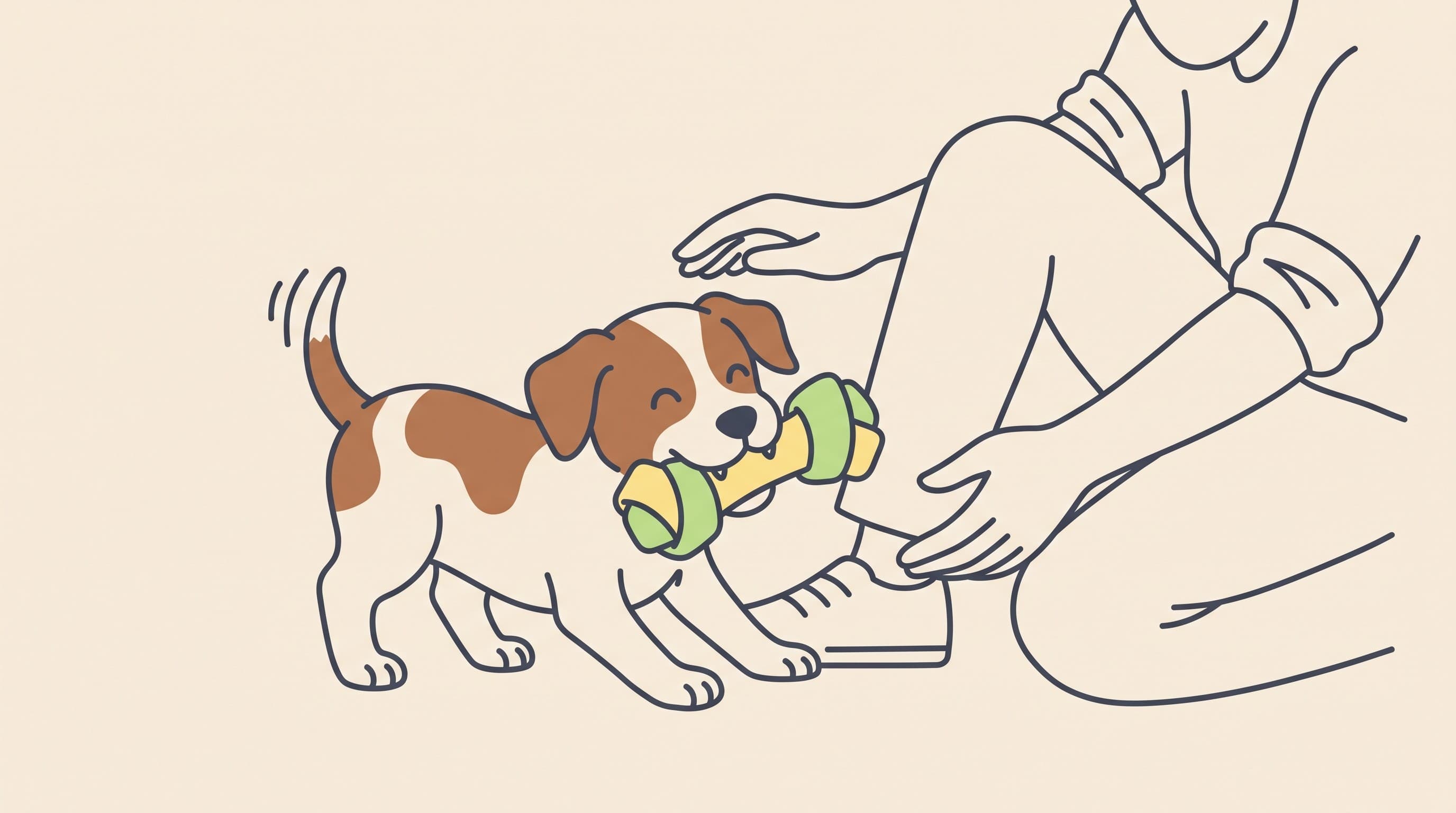
Teething and biting: surviving the land-shark phase
Alastair Greenway
BVM&S MRCVS
There is a particular moment, usually a few weeks in, when a lot of new owners quietly panic. The adorable puppy has turned into a set of needle-sharp teeth attached to a small body that launches at your hands, your sleeves, your ankles and your children, drawing actual blood and apparently loving it. You have possibly been told by someone at the park that this is aggression, that you need to "show them who's boss" or "dominate" them before it gets worse. Your arms are covered in scratches and you are starting to worry you have brought home a monster.
You have not. This is the land-shark phase, it is one of the most normal things a puppy does, and it is not aggression. Let us explain what is actually happening and, more importantly, exactly how to get through it without either getting shredded or damaging your puppy's trust in you.
Why puppies bite so much
There are two overlapping things going on, and it helps to separate them.
The first is exploration and play. Puppies do not have hands. They investigate the entire world with their mouths, and they play with their littermates almost entirely by biting and wrestling. When you bring a puppy home at eight weeks, you have removed them from the litter but not from the instinct, so you become the new littermate, and you get bitten accordingly. Mouthing is how a puppy plays, learns and bonds. It is normal, expected behaviour, not a warning sign.
The second is teething. Puppies are born without teeth, grow a set of sharp milk teeth, and then lose them as the adult teeth come through, usually beginning at around four months and largely complete by around six or seven months of age. During that stretch their gums are sore and itchy, and chewing brings relief, exactly as it does for a teething baby. So on top of the play-biting, you get a puppy with a physical urge to gnaw on everything, including you.
Put together, you have a small animal that is biologically driven to use its mouth, at the precise age its mouth is most uncomfortable. No wonder it feels relentless.
The single most important reframe: this is not aggression
Before any technique, the mindset. Play-biting and teething are not aggression, and treating them as if they were is where owners go badly wrong. A puppy that mouths you is not challenging you for status. The whole "dominance" and "alpha" idea, the notion that you must physically overpower your puppy, pin them, hold their muzzle, or bite them back, is based on a long-discredited misunderstanding of dog behaviour, and the veterinary behaviour community is united against it. Aversive, forceful methods are not only unnecessary, they are harmful: they increase fear and anxiety, they damage the bond between you, and they can actually create the aggression owners were worried about in the first place.
So when someone at the park tells you to be firmer, to grab the scruff, to hold the mouth shut, please file that advice in the bin. There is a far more effective toolkit, and it is built entirely on redirection and calm consistency.
What actually works, step by step
The goal is not to stop your puppy using its mouth (you cannot, and it is a normal need). The goal is to teach it what is acceptable to bite, that human skin is not, and gradually that teeth on people should be gentle. Here is how.
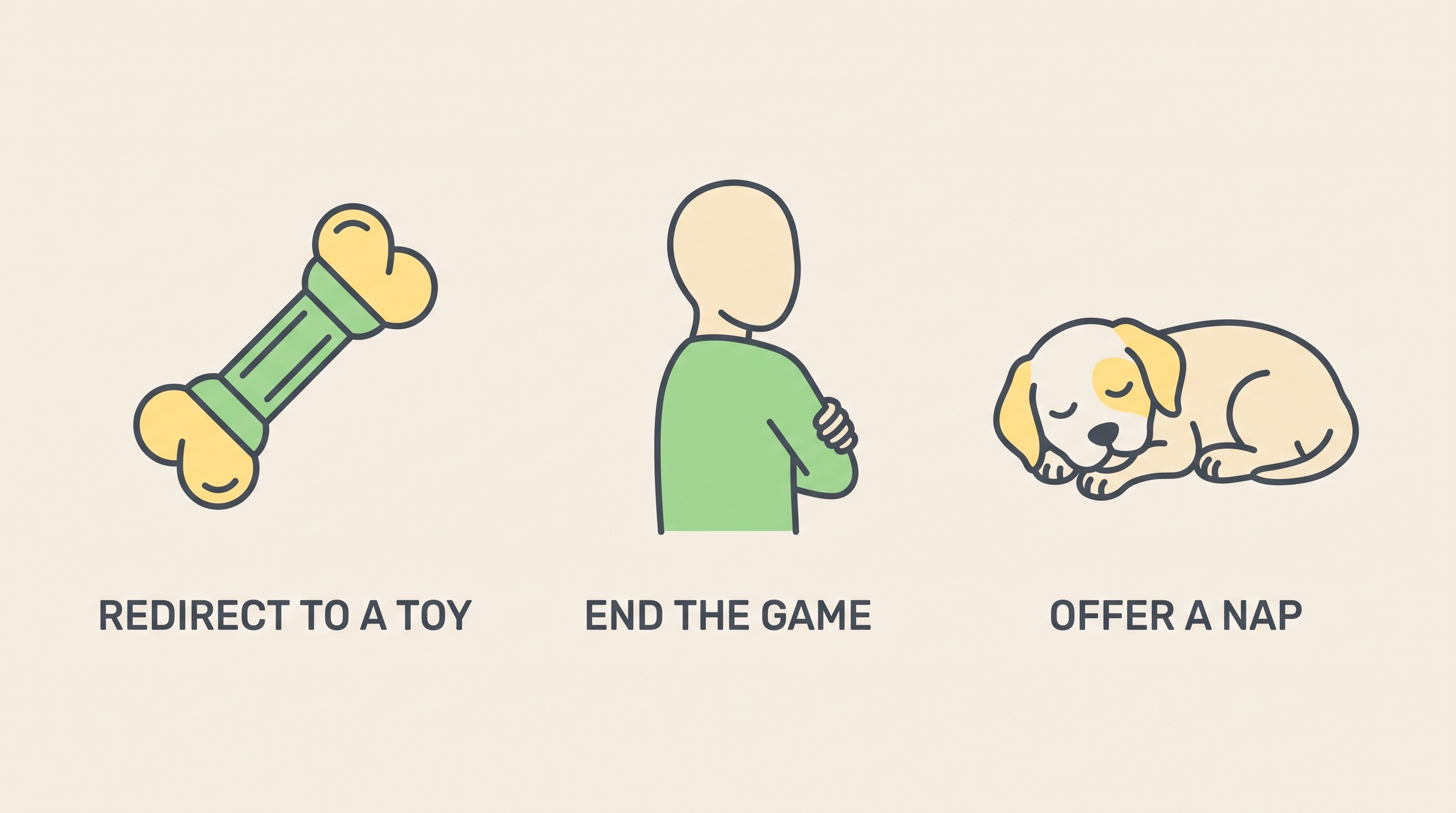
Redirect onto something legal, every single time. Keep appropriate chew toys in every room, within reach. The instant your puppy puts teeth on you, calmly swap in a toy: pop it in front of their mouth and let them latch onto that instead, then praise them for chewing the right thing. You are not punishing the bite, you are giving the mouth a better job. Do this a hundred times a day if you have to. Consistency is what teaches, not intensity.
Teach that biting ends the fun. Puppies want your attention and your company more than almost anything, so the most powerful consequence you have is to remove it. When a bite is too hard, or the mouthing is getting out of hand, calmly stop the game: stand up, fold your arms, turn away, and go quiet for a few seconds, or step out of the room briefly. No drama, no telling off, just an abrupt, boring end to the good times. The lesson your puppy learns is clear and gentle: teeth on skin make the human, and the fun, disappear. Then, after a short pause, you can calmly re-engage with a toy.
Do not yelp or squeal if it revs them up. You may have read that you should give a sharp "ouch" or yelp, the way a littermate would. For some puppies this works and helps them learn bite inhibition. For plenty of others, a high-pitched squeal is thrilling and makes them bite harder, because you have just become a squeaky toy. Watch your own puppy: if a calm "ow" and withdrawing attention helps, use it; if noise winds them up, stay quiet and simply end the game.
Manage the arousal, because tired and overtired puppies bite most. A huge amount of the worst biting happens when a puppy is overtired, like an overwrought toddler who has missed a nap. Puppies need a lot of sleep, and an under-rested puppy becomes a piranha. If the biting is escalating and nothing is helping, the answer is very often not more training but a nap: settle them somewhere quiet for a proper sleep. Learning to spot the overtired-bitey state and pre-empt it with rest will save your skin more than any technique.
Teething relief and protecting your stuff
For the teething discomfort itself, give your puppy safe things designed to be gnawed. Suitable puppy chew toys, and some owners like chilling a damp clean flannel or a puppy-safe rubber toy in the fridge (not the freezer) so the coolness soothes sore gums. Always choose chews sized and made for puppies, and steer clear of anything hard enough to fracture a tooth or small enough to swallow.
To protect your home and your puppy, manage the environment rather than relying on the puppy to resist temptation. Keep shoes, cables, remote controls and children's toys out of reach, use stair gates and pens to limit access, and supervise closely, because a teething puppy will chew anything, and some of those things (electrical cables, toxic houseplants, small swallowable objects) are genuinely dangerous. Prevention beats correction here every time.
Choosing chews safely
Because a teething puppy will chew almost anything, giving them the right things to chew is half the battle, and choosing badly can cause real harm. The two dangers to avoid are chews hard enough to fracture a tooth and objects small enough to swallow or break into swallowable pieces. As a rough test, many vets suggest that if you would not want to be hit on the kneecap with it, or if you cannot make a dent in it with a fingernail, it is too hard for a puppy's teeth. That rules out a lot of very hard bones, antlers and hooves, which are common causes of broken teeth.
Better options are softer, puppy-specific rubber chew toys, puppy-safe dental chews, and toys you can stuff with a little food and freeze for longer-lasting, gum-soothing interest. Whatever you choose, supervise, and replace anything that is being chewed into small pieces. If your puppy does swallow something they should not have, or you think a piece of a toy is missing, ring your vet rather than waiting to see, because swallowed objects can cause a blockage.
Ankle-nipping and the herding breeds
One particular flavour of biting deserves a mention because it worries owners of certain breeds: the puppy that chases and nips at moving ankles, trouser legs and children's feet. This is especially common in herding and working types (collies, heelers and similar), whose instinct to chase and control movement is strong and switches on early. It is still not aggression, it is a hard-wired urge with nowhere useful to go yet.
The fix is the same in spirit, redirect the instinct rather than fight it. Keep a toy handy to swap in the moment the chasing starts, stop moving so you become boring (a stationary ankle is no fun), and channel that drive into appropriate outlets like fetch and, later, structured activities that give the brain and body a proper job. For these breeds in particular, plenty of mental stimulation and rest genuinely reduces the nipping, because a bored, overtired herding pup is a nipping machine.
Children, and when to get help
If you have children, the land-shark phase needs active managing, because a puppy jumping and mouthing can frighten or hurt a child, and a child's flailing and squealing can wind a puppy up into ever-harder biting. Never leave young children and a puppy together unsupervised, teach children to stand still and "be a tree" rather than run and scream, and give both the puppy and the children safe separate spaces to retreat to. There is more on this in Introducing your new pet to resident pets and children.
Almost all puppy biting is normal and fades as the adult teeth settle and the training takes hold, usually easing noticeably by around five to six months. But trust your instincts if something feels genuinely different: biting that comes with stiff, still body language, a hard freeze, growling that is not the throaty play-growl, snapping when guarding food or a resting place, or biting that is getting worse rather than better despite consistent kind handling, is worth talking through with your vet or a qualified, reward-based behaviourist. Getting good advice early is sensible, and it is not an admission of failure.
Finally, if this phase has you at your wits' end, please know that the biting stage is one of the most common reasons new owners feel they have made a terrible mistake. If you are there, The puppy blues is written for exactly this moment, and there is a whole community of people whose arms looked like yours a few months ago and who now have soft-mouthed, gentle dogs.
The one thing to do today: put a chew toy in every room within arm's reach, and next time those teeth find your hand, calmly trade the hand for the toy. Repeat, forgive the scratches, and watch it fade.
References
- AVSAB (2021). Position Statement on Humane Dog Training and Position Statement on the Use of Dominance Theory in Behavior Modification of Animals. American Veterinary Society of Animal Behavior. [reward-based methods; against dominance/aversive training]
- Dogs Trust. Puppy mouthing, biting and teething advice.
- RSPCA / reward-based training guidance on redirection and bite inhibition.
Keep track of how your pet is doing
The owners who cope best are the ones who notice changes early. A simple health log shows you what is working, and what is not, before the next vet visit.
Start tracking, freeYou're not doing this alone
Compare treatment journeys and talk to owners managing new puppy & kitten. Free to join.
Join PetsLikeMine