

Introducing your new pet to resident pets and children
Alastair Greenway
BVM&S MRCVS
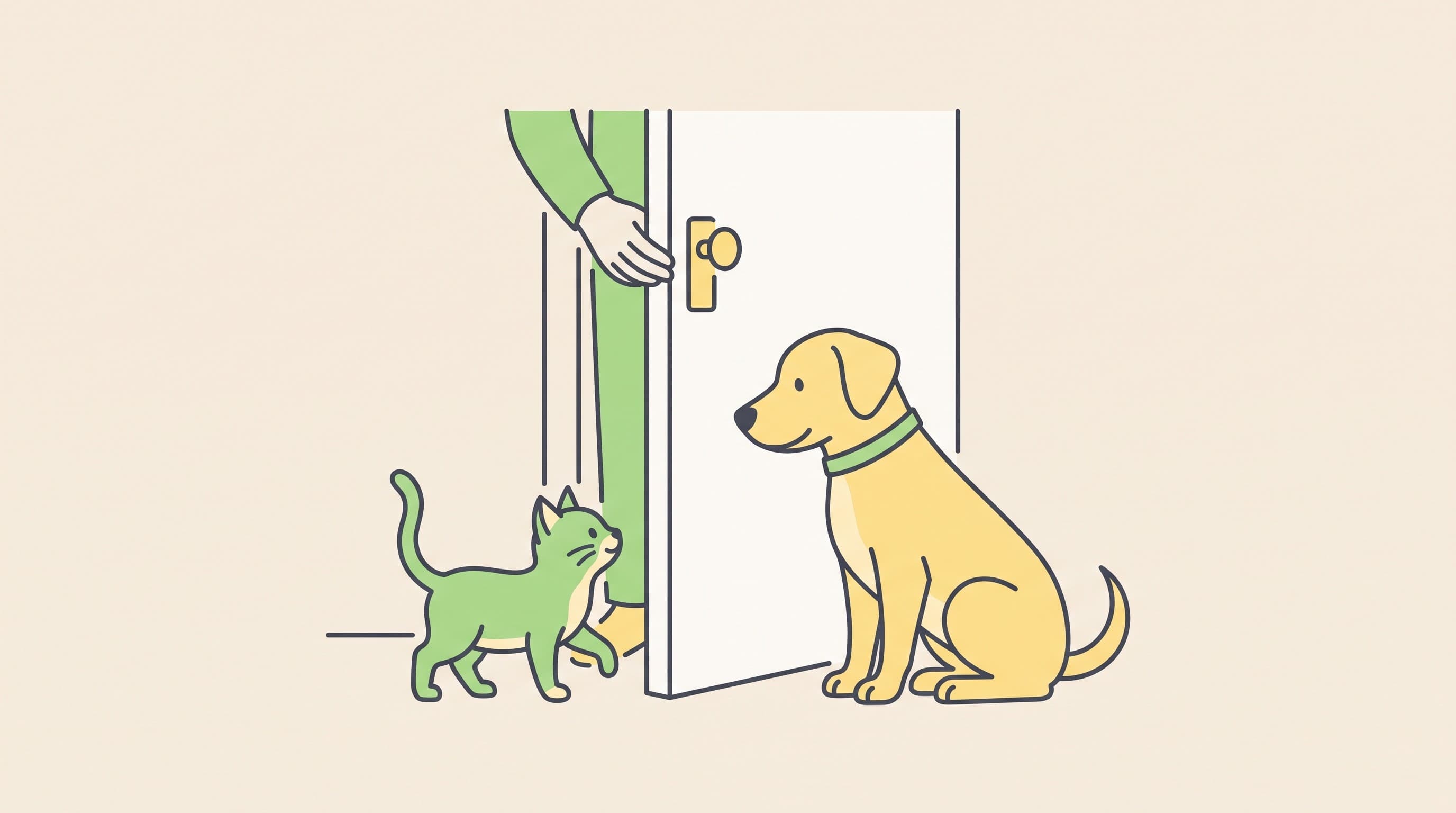
The moment a lot of new owners are most nervous about is not the vet visit or the first night. It is the first meeting: carrying a new puppy or kitten through the door while the older dog stares, or the resident cat vanishes under the bed, or an over-excited toddler barrels in wanting to hug the new baby animal right now. It feels high-stakes because it is. First impressions between animals genuinely matter, and a rushed or frightening introduction can set up months of tension, whereas a slow, calm one lays the foundation for a friendship that lasts years.
The good news is that the whole thing rewards patience more than skill. If you go slowly and let everyone feel safe, the odds are overwhelmingly in your favour. Here is how to do introductions properly, whether you are bringing a new pet to a resident dog or cat, or into a home with children.
The golden rule: slow is fast
Almost every introduction that goes wrong went too fast. The instinct is to put the animals together straight away so they can "sort it out", but forcing a face-to-face meeting on day one is the single most common mistake, and it is the one that causes lasting problems. Animals that are flooded with a scary encounter can form a bad first impression that is hard to undo.
So the principle running through everything below is: introduce gradually, in stages, letting each animal get used to the idea of the other before they ever meet properly, and always keeping every animal feeling safe and able to retreat. Going slowly in the first week or two saves you months of difficulty later. Rushing to get a lovely photo of them cuddling on day one is exactly the wrong goal.
Two things underpin all of it: scent comes before sight, and everyone needs an escape route. Animals read the world through smell, so letting them get familiar with each other's scent before they see each other takes a huge amount of tension out of the eventual meeting. And no animal should ever feel cornered or trapped with a stranger. A cat that can leave, a resident dog that can walk away, a new puppy with its own safe base, all of these prevent the fear that turns into a fight.
Introducing a new pet to a resident cat
Cats are territorial and change-averse, so this is the introduction that most needs patience. A resident cat suddenly confronted with a new animal in its home can be genuinely stressed, and a botched introduction can lead to lasting tension or a cat that stops using its tray or stays hidden. Take it in clear stages:
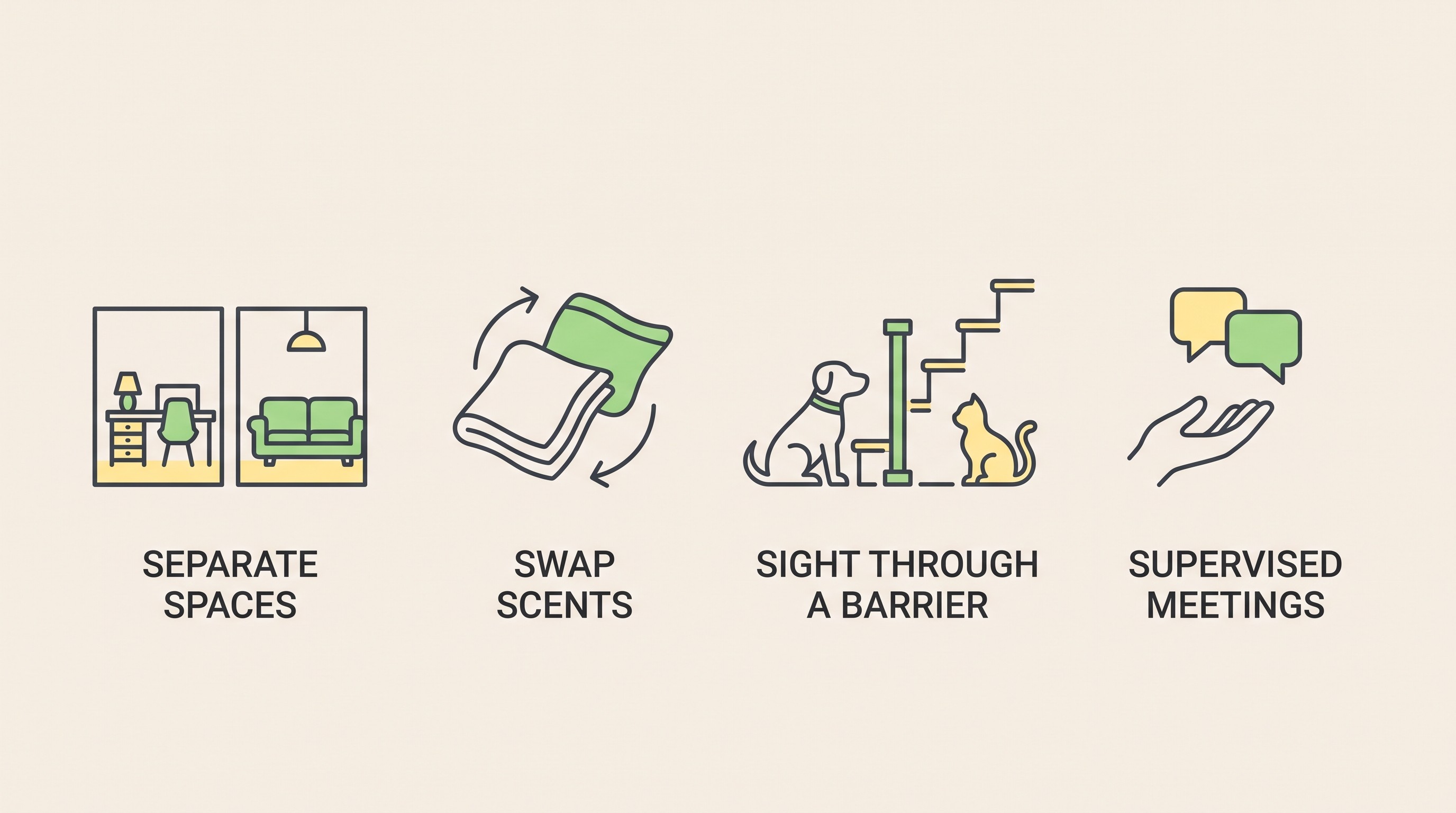
- Set up a separate safe room first. Before the new pet even arrives, prepare a room for the newcomer with its own food, water, litter tray, bed and toys. The new animal lives here at first, and the resident cat keeps the run of the rest of the house, so neither feels displaced.
- Swap scents. For the first several days, let them smell each other without meeting. Stroke one and then the other, swap their bedding, or wipe a soft cloth over one and leave it near the other. The aim is for each to accept the other's smell as ordinary and unthreatening before any sight contact.
- Let them explore each other's space. Allow the new pet to investigate the rest of the house while the resident cat is elsewhere, and vice versa, so each becomes familiar with the other's scent throughout the home.
- Sight without contact. Next, let them see each other through a barrier, a glass door, a stair gate, or a door open just a crack, ideally while both are doing something pleasant like eating. Keep these sessions short and calm and end them before anyone gets tense.
- Supervised meetings, kept positive. Only once both are relaxed at the previous stage, allow brief face-to-face time in the same room, calm, supervised, with the cat always free to leave and get up high if it wants. Keep sessions short and sweet, reward calm behaviour, and build up over days.
A little hissing, growling or wariness from a resident cat is normal early on and not a disaster. What you are watching for and preventing is real fear or fights. If a dog is the newcomer, keep it on a lead during early meetings so it cannot chase, and never let a dog corner or pursue a cat, because a cat that learns the dog means to chase will stay frightened. Make sure the cat always has high perches and escape routes the dog cannot follow.
Introducing a new pet to a resident dog
Dogs are generally more sociable about newcomers, but the same slow, managed approach protects everyone, especially a small, fragile puppy or kitten meeting a much larger resident dog.
For dog meeting dog, a first meeting on neutral ground, a quiet park or a friend's garden rather than your home, avoids the resident dog feeling its territory is invaded. Keep both on loose leads, let them greet briefly and calmly, watch the body language, and keep it short and positive before heading home together. At home, pick up the resident dog's toys, chews and food bowls at first to prevent squabbles over resources, feed them separately, and give each dog its own space. Supervise closely until you are confident, and never leave a new puppy alone with an adult dog until you know them well.
For a resident dog meeting a new kitten or puppy, the size difference makes management essential. Keep the resident dog calm and on a lead for early meetings so it cannot chase or pounce, even in play, because a bouncy dog can terrify or accidentally injure a tiny kitten. Reward the dog for calm, gentle behaviour around the newcomer, and make sure the little one has a safe space, and for a kitten, high spots, that the dog cannot reach. Let the newcomer approach in its own time rather than pushing them together. Watch the dog for over-arousal (a hard stare, stiff body, fixation) and calmly end the session if you see it.
Throughout, remember that a good introduction is also good socialisation for the newcomer, a calm, positive experience of another animal at exactly the age it matters most. That ties directly into the socialisation checklist and, for kittens, Handling your kitten: the 2 to 9 week window.
Introducing a new pet to children
Children and a new pet can become the closest of companions, but the early days need active adult management, for the safety of both. Small children move fast, make sudden noises, and want to grab and cuddle, all of which can frighten a baby animal, and a frightened puppy or kitten may nip or scratch to defend itself. A tiny kitten or puppy is also physically fragile and easily hurt by well-meaning rough handling.
The core rules are simple and worth being firm about:
- Never leave young children and a new pet together unsupervised, however gentle they both seem. This is non-negotiable in the early weeks and remains wise well beyond.
- Teach children to be calm and let the animal come to them. Coach them to sit quietly, keep their voices low, and let the puppy or kitten approach in its own time rather than chasing or grabbing it. "Let it sniff your hand first" is a good, concrete instruction a child can follow.
- Show them gentle, correct handling, and how to recognise when the pet has had enough and wants to be left alone. A pet trying to move away should always be allowed to.
- Protect the pet's rest and safe space. Teach children that when the puppy or kitten is in its bed, crate or safe spot, it is off limits, no picking up, no disturbing. Every animal needs a place where it will not be bothered, and respecting it prevents the fear and defensiveness that lead to bites and scratches.
- Give it structure children can understand. Even young children can learn a couple of clear rules, and involving them gently in kind care, helping fill the water bowl, calmly offering a treat, builds a good relationship on the pet's terms.
Managed this way, the relationship between a child and a new pet becomes one of the real joys of these early months, and it grows on a foundation of mutual safety and respect. The land-shark biting phase overlaps with all this, so Teething and biting is worth reading alongside if you have a puppy and young children.
When it is taking time, and when to get help
Some introductions click in days, and some take weeks, particularly with a change-averse resident cat, and that slower pace is completely normal. Keep going at the animals' speed, keep every interaction as calm and positive as you can, and do not force progress. Most households settle into a comfortable balance with patience.
Do get advice if things are not improving or are going backwards: persistent fear, a resident cat that stops eating or using its tray, genuine aggression rather than early wariness, or any meeting that has led to injury. Your vet can rule out any pain or illness that might be fuelling the tension, and can point you to a qualified, reward-based behaviourist. Asking for help early is sensible, not a failure, and it usually resolves things far faster than struggling on alone.
The one thing to do before you bring the newcomer home: set up that separate safe space now, with its own bed, bowls and (for a kitten) litter tray, so on day one nobody has to share anything, and you can let scent do the introducing before anyone has to meet.
References
- International Cat Care / iCatCare. Introducing a new cat or kitten to a resident cat, and to dogs.
- Dogs Trust. Introducing dogs to each other and to new pets; neutral-territory meetings.
- Blue Cross / RSPCA. Introducing pets and children safely; supervision guidance.
- AVSAB (2021). Position Statement on Humane Dog Training. American Veterinary Society of Animal Behavior. [reward-based, non-aversive approach]
Keep track of how your pet is doing
The owners who cope best are the ones who notice changes early. A simple health log shows you what is working, and what is not, before the next vet visit.
Start tracking, freeYou're not doing this alone
Compare treatment journeys and talk to owners managing new puppy & kitten. Free to join.
Join PetsLikeMine