

Registering With a Vet and Getting the Most From Appointments
Alastair Greenway
BVM&S MRCVS
Registering your pet with a vet is one of those jobs that's easy to leave until you need one, which is exactly the wrong time to do it. A pet that's already registered, with a practice you've chosen thoughtfully, means that when something does go wrong you're phoning somewhere that knows you, not scrambling through a search engine at nine on a Sunday night. And beyond the emergencies, the relationship you build with a practice over years of routine visits is genuinely one of the most valuable things you can set up for your pet.
This piece covers both halves of that: how to choose and register with a practice in the first place, and then how to get real value out of the appointments once you're in. Neither is complicated, but a little thought at the start pays off for your pet's whole life.
Choosing a practice: what actually matters
It's tempting to just pick the nearest one, and location does matter, but a few other things matter as much or more.
Location and out-of-hours cover. Distance counts, especially in an emergency, so factor in how quickly you could get there. Just as important, ask how the practice handles out-of-hours and overnight emergencies. Some run their own emergency service, some refer to a dedicated out-of-hours provider, sometimes a few miles further away. There's nothing wrong with either model, but you want to know the arrangement before you need it, not during a crisis.
RCVS accreditation. In the UK, veterinary surgeons and practices are regulated by the Royal College of Veterinary Surgeons (RCVS). Many practices are also members of the voluntary RCVS Practice Standards Scheme, which sets standards for facilities, equipment and protocols and is worth looking for as a quality marker (RCVS). You can also check that an individual vet is registered with the RCVS.
The type of practice. A general first-opinion practice handles the vast majority of what your pet will ever need. For complex problems, they refer on to specialist referral centres, which is a normal and good part of the system, not a sign your vet has failed. Some owners like a small independent practice, others prefer a larger group with more equipment on site; neither is inherently better, it's about fit.
The feel of the place. This sounds soft, but it's real. You'll be trusting these people with your pet, sometimes with hard decisions, for years. A practice where the staff are warm, where you don't feel rushed or talked down to, and where a nervous cat or an anxious dog is handled gently, is worth choosing. Many practices are happy for you to pop in and have a look, or to visit before you commit.
Cat-friendly and species considerations. If you have a cat, look for cat-friendly features: separate cat waiting areas or appointment times, calm handling, and ideally accreditation as a cat-friendly clinic, because a less stressful visit means a more thorough exam and a cat that dreads the carrier less (International Cat Care).
How to register
Registering itself is usually quick. Contact the practice, in person, by phone or often online, and they'll take your details and your pet's. It helps to bring or forward:
- Any previous history, if your pet was registered elsewhere. Practices can request records from your previous vet, which saves repeating tests and gives your new vet the full picture.
- Vaccination records and microchip details.
- Details of any ongoing conditions or medication.
If you're moving practices, do the registration before you have a problem, and ask the old practice to transfer the history. A new vet working blind is a new vet at a disadvantage.
Getting the most from an appointment
A standard consultation is short, often around ten to fifteen minutes, and it's easy to walk out realising you forgot half of what you meant to say. A little preparation changes that entirely, and it's the single biggest thing you can do to get better care for your pet.
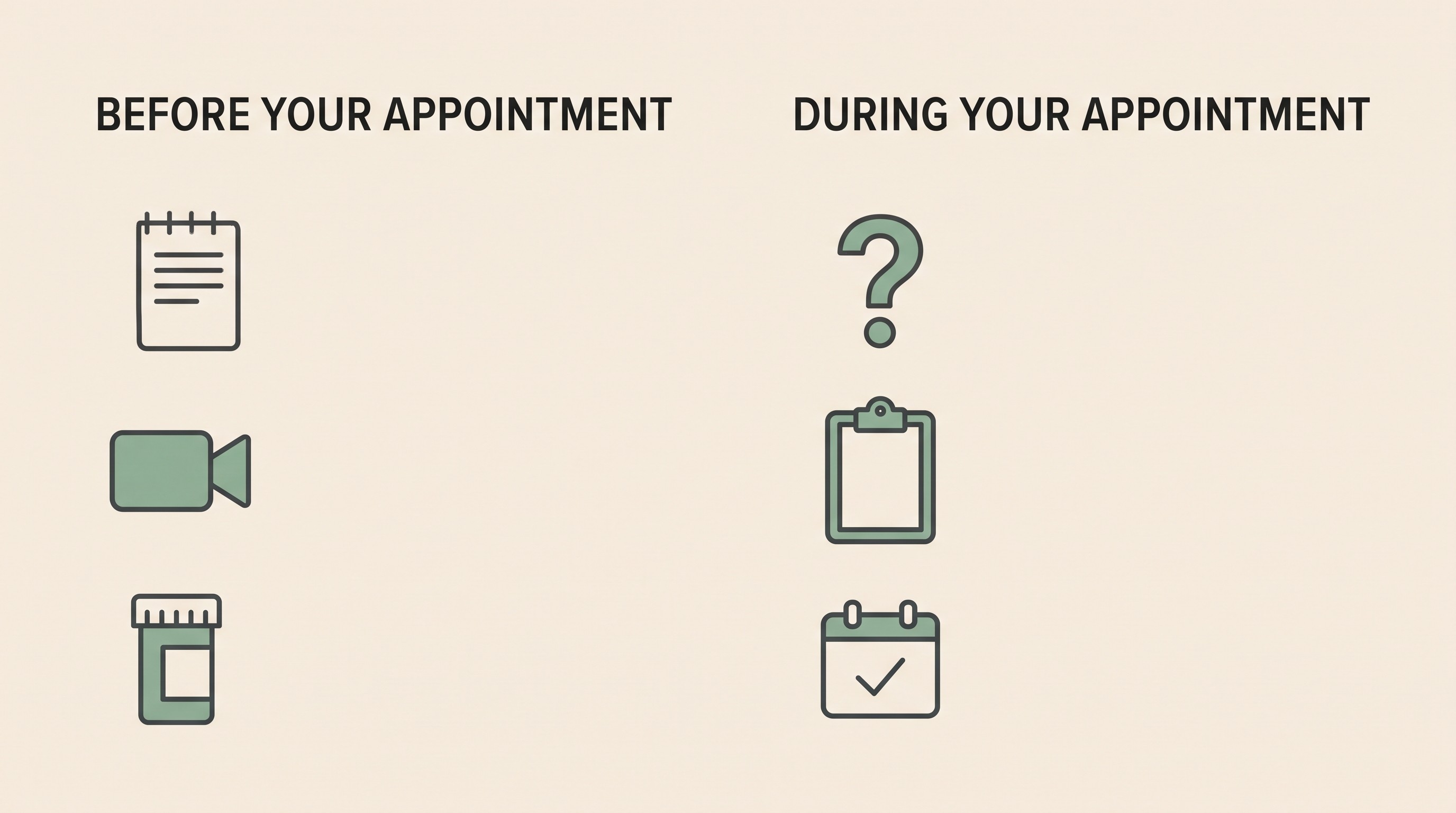
Before you go:
- Write down your concerns in advance, in order of importance. If there are several, say so at the start ("I've got three things I'm worried about") so the vet can pace the appointment.
- Bring specifics, not impressions. "He's been drinking more" is useful; "he's emptying his water bowl twice a day when it used to be once, for about two weeks" is far more useful. Note when a problem started, how it's changed, and anything that makes it better or worse.
- A short video of an intermittent problem, a limp, a cough, a funny episode, is often worth more than any description, because these things rarely happen in the consulting room.
- Bring a current list of everything your pet takes, including flea and worm products, supplements and any human foods, so nothing interacts unexpectedly.
- Weigh the food, roughly. If diet or weight is the issue, knowing what and how much your pet actually eats saves guesswork.
During the appointment:
- Lead with your biggest worry, in case time runs short.
- Ask what you don't understand. A good vet would far rather explain again than have you leave confused. If a term or a plan isn't clear, say so.
- Ask about the plan, the alternatives and the costs. It's completely reasonable to ask "what are the options here, what do you recommend and why, and what's it likely to cost?" A good practice will talk you through it without judgement.
- Write down or photograph the plan before you leave: what to give, when, what to watch for, and when to come back.
Afterwards:
- Do the follow-up. If a recheck is booked, keep it, even if your pet seems better, because "seems better" and "is better" aren't always the same thing, and the recheck is where problems get caught early.
- Ring if something changes. You don't have to wait for the next appointment. Most practices are happy to give quick guidance over the phone, and the nursing team is a hugely underused resource for practical questions.
Using the whole practice team, and being honest about budget
Two things owners under-use, and both make a real difference to the care your pet gets.
The first is the wider team. It's easy to think of "the vet" as the whole service, but a good practice is a team, and the veterinary nurses in particular are a hugely valuable and often free-or-low-cost resource. Nurse-led clinics handle weight management, dental advice, nail clips, post-operative checks, senior wellness reviews, and showing you how to give tablets or apply treatments. If you've a practical question that doesn't need a vet, the nursing team is often the quickest, kindest place to get it answered, and booking a nurse appointment for something like a weight check keeps your pet's record building between vet visits. Reception staff, too, know the practice inside out and can save you a wasted trip.
The second is money, spoken about openly. Cost is the thing owners most often stay quiet about, and that silence helps no one. Vets deal with budgets every single day and would far rather you said "here's what I can manage, what are my options?" than have you decline care in embarrassed silence or skip a recommended step without saying why. There is almost always more than one way to approach a problem, from gold-standard investigation down to a sensible, pragmatic plan, and your vet can only offer the right fit if they know your constraints. Being upfront about budget isn't awkward, it's information that helps them help you and your pet. It's also worth asking, before any non-urgent procedure, for a written estimate, so there are no surprises.
If cost is a real barrier, ask whether the practice offers payment options, and be aware that some charities provide subsidised treatment for owners on certain benefits. None of this works if you don't raise it, so raise it.
The relationship is the point
Here's the thing that gets lost in the transactional view of vet visits. The real value of registering with a practice and turning up for the routine appointments isn't any single visit, it's the continuity. A vet who has seen your dog every year knows what's normal for him, spots the subtle change you'd miss, and has the history to make sense of a new symptom. A cat whose weight has been recorded annually reveals a slow decline that a one-off visit never would. That accumulated knowledge is only possible if you're registered somewhere and you actually go.
This is also why the annual health check is worth far more than "just the jab", because it's the appointment that builds that picture year on year, and why keeping your whole prevention routine on track matters. If you'd like a single place to hold your pet's boosters, worming, health checks and the rest so nothing slips, the Preventive Care Scheduler is built for exactly that, with reminders for the things that come round monthly, seasonally or once a year.
So if you've just moved, or you've a new pet, or you've simply never got round to it, register now, while everything's calm. Choose a practice you trust, get the history transferred, and set your pet up with a medical home before you ever need it in a hurry. It's ten minutes of admin that pays off for a lifetime. While you're getting the essentials in place, our microchip law guide covers the other bit of new-pet admin worth sorting straight away.
References
Keep track of how your pet is doing
The owners who cope best are the ones who notice changes early. A simple health log shows you what is working, and what is not, before the next vet visit.
Start tracking, freeYou're not doing this alone
Compare treatment journeys and talk to owners managing staying well. Free to join.
Join PetsLikeMine