


Can bad teeth really cause heart or kidney disease? The honest evidence
Alastair Greenway
BVM&S MRCVS
Somewhere between booking the dental and the night before, a lot of owners end up down the same rabbit hole. You search your pet's mouth, and up comes a headline: "Bad teeth can cause heart disease." Then another: "Gum disease damages the kidneys." By the third one you're not just worried about her teeth any more, you're frightened her heart or her kidneys are already failing because you didn't brush enough.
I want to sit with you and give you the version those headlines don't. Not the scary one, and not the dismissive "oh, that's overblown" one either, because both of those are a bit of a con. The truth is more interesting, more reassuring, and it still ends with the same advice: her mouth is worth treating. It's just worth treating for honest reasons, not frightening half-truths.
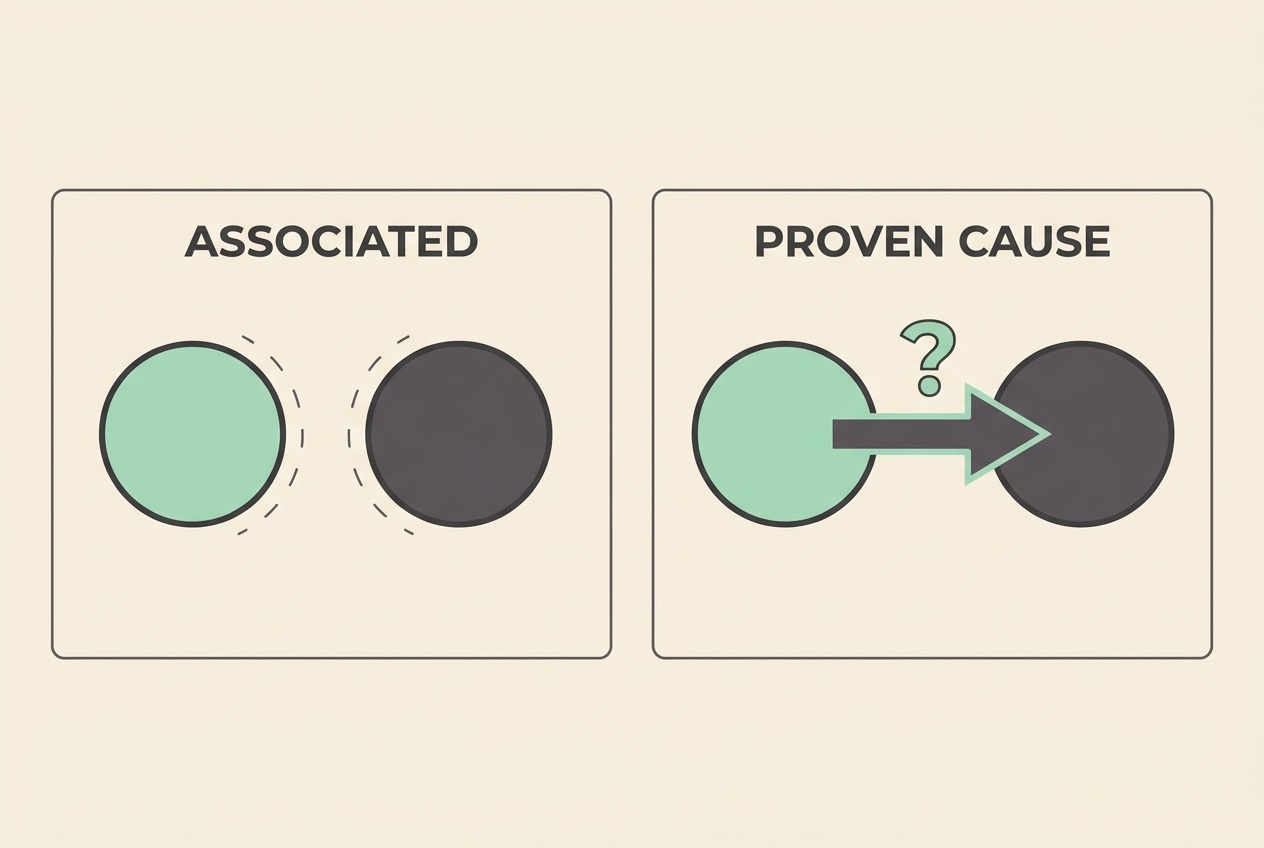
The word doing all the heavy lifting is "associated"
Here's the sentence that matters most in the whole article, so I'll say it slowly. When researchers study the mouth and the heart, or the mouth and the kidneys, what they almost always find is an association, not a proven cause.
Those two words get blurred together constantly, and the blur is where the fear comes from. So let me pull them apart.
"Associated" means two things tend to show up together. Pets with worse gum disease tend to have more heart and kidney trouble than pets with clean mouths. That pattern is real and it's been found in very large numbers of animals. But finding two things together doesn't tell you which one caused which, or whether a third thing caused both.
Think of it this way. Older dogs have more grey muzzles, and older dogs have more arthritis. Grey muzzles and arthritis are strongly "associated", they turn up in the same dogs all the time. Nobody thinks the grey fur is rotting the joints. Age is quietly driving both. Dental disease is tangled up in exactly this kind of knot. An older pet, or a smaller-breed pet, or one who hasn't had the easiest life, is more likely to have bad teeth and more likely to have a tired heart or ageing kidneys, all at the same time, partly for reasons that have nothing to do with the teeth. Untangling "the mouth is harming the organs" from "the same animal simply accumulates several problems at once" is genuinely difficult, and most of the studies you'll find headlines about can't do it.
That doesn't make the link meaningless. It makes it honest to hold it lightly.
What the heart research actually shows
The heart is where the scariest headlines come from, so let's look at what's underneath them.
In dogs, the largest study people quote followed tens of thousands of animals and found that as gum disease got more severe, the recorded rate of heart problems went up alongside it, including changes to the heart muscle and, at the far end, inflammation of the heart valves (Glickman et al., 2009). Smaller studies looking directly at tissue under the microscope found much the same pattern: dogs with worse periodontal disease tended to show more changes in the heart, the kidneys and the liver (DeBowes et al., 1996; Pavlica et al., 2008).
Read quickly, that sounds like proof. Read carefully, it's the association trap again. These are observational studies. They watched what happened, they didn't run an experiment, and they can't rule out that sicker, older animals simply collect both bad teeth and heart changes together.
The human side is worth borrowing here, because it's been studied far more heavily and the verdict is unusually clear. The American Heart Association reviewed all of it and concluded that gum disease is genuinely associated with heart and artery disease, but the evidence does not show that one causes the other, and treating gum disease has not been shown to prevent heart attacks or strokes (Lockhart et al., 2012). Their most recent update, in late 2025, said the same thing again: the link is real, causation still isn't established, and we still need the proper trials to know whether cleaning the mouth protects the heart (American Heart Association, 2025). When the heart specialists themselves are this careful after decades of work, a pet website promising you that bad teeth "cause" heart disease is getting ahead of the science.
There is one corner of this where the mechanism is more solid, and I'll be straight about it rather than hide it. Bacteria from an infected mouth can get into the bloodstream, and in a small number of cases those bacteria can settle on a heart valve and infect it, which is a serious condition called endocarditis. That pathway is real and well understood. It is also uncommon, and it tends to matter most in animals who already have a damaged or abnormal heart valve. So it belongs on the list, but as a rare and specific risk, not as the reason your otherwise healthy dog's mouth needs sorting.
What the kidney research shows, and one intriguing hint
The kidney story runs along the same lines, with one detail that's genuinely thought-provoking.
The same large database of dogs showed that the more severe a dog's gum disease, the higher the recorded risk of chronic kidney disease. The risk climbed step by step with severity, up to roughly two and a half times higher in the worst-affected dogs compared with dogs who had no gum disease (Glickman et al., 2011). As before, this is an association drawn from records, not an experiment, so the same caution applies. Older, generally less-well animals tend to have both.
But this study did something the others didn't, and it's the most interesting finding in the whole field. Among the dogs whose gum disease actually got treated, the later risk of kidney disease was noticeably lower, by around a fifth, than in the dogs who were left untreated (Glickman et al., 2011). Now, that still isn't proof, because the dogs who get their teeth done are often the dogs whose owners look after everything else too, so you can't fully separate the dental treatment from all the other care. But it's the closest thing we have to a hint that treating the mouth might actually help the rest of the body, rather than the two just travelling together. It's a reason for cautious optimism, not a promise, and I'd rather give it to you as exactly that.
Cats: the link that's worth taking seriously, precisely because kidneys fail
Cats deserve their own section here, and not as an afterthought, because the kidney question lands differently for them.
Chronic kidney disease is one of the most common conditions we see in older cats full stop. It's so common that by the time a cat is elderly, a struggling pair of kidneys is almost part of the territory. Gum disease and tooth resorption are also extremely common in older cats. So in the cat world, dental disease and kidney disease are two of the biggest problems of old age, and they land on the same cats constantly.
A very large study of cats found the familiar pattern: cats with worse gum disease had a higher recorded risk of going on to develop kidney disease, with the risk highest in the cats with the most advanced dental disease (Trevejo et al., 2018). And once again, this is an association pulled from records. It can't tell us whether the sore mouth is nudging the kidneys along, or whether ageing cats simply tend to accumulate both. Given how universal kidney decline is in old cats, a good chunk of that overlap is almost certainly just the arithmetic of getting old.
What I take from it as a vet isn't "the teeth are destroying the kidneys". It's that an older cat is an animal who often has several quiet problems at once, and a painful, infected mouth is one of the more fixable ones. If your cat already has kidney disease, that changes how we plan an anaesthetic, not whether her mouth deserves attention, and it's worth reading alongside our guidance on chronic kidney disease and on the older cat and dog more broadly. If a heart murmur is in the mix, the same is true of our heart health material. The mouth doesn't get treated in isolation, it gets treated as part of the whole animal.
Why her mouth is worth treating even if the link were zero
Here's the part I most want you to hold on to, because it's the part that survives no matter which way the science eventually falls.
Suppose, for a moment, that every one of those studies turned out to be pure coincidence and the mouth had no effect on the heart or kidneys at all. Would I still want that grade 3 mouth treated? Absolutely, without a second's hesitation. And the reason has nothing to do with organs downstream.
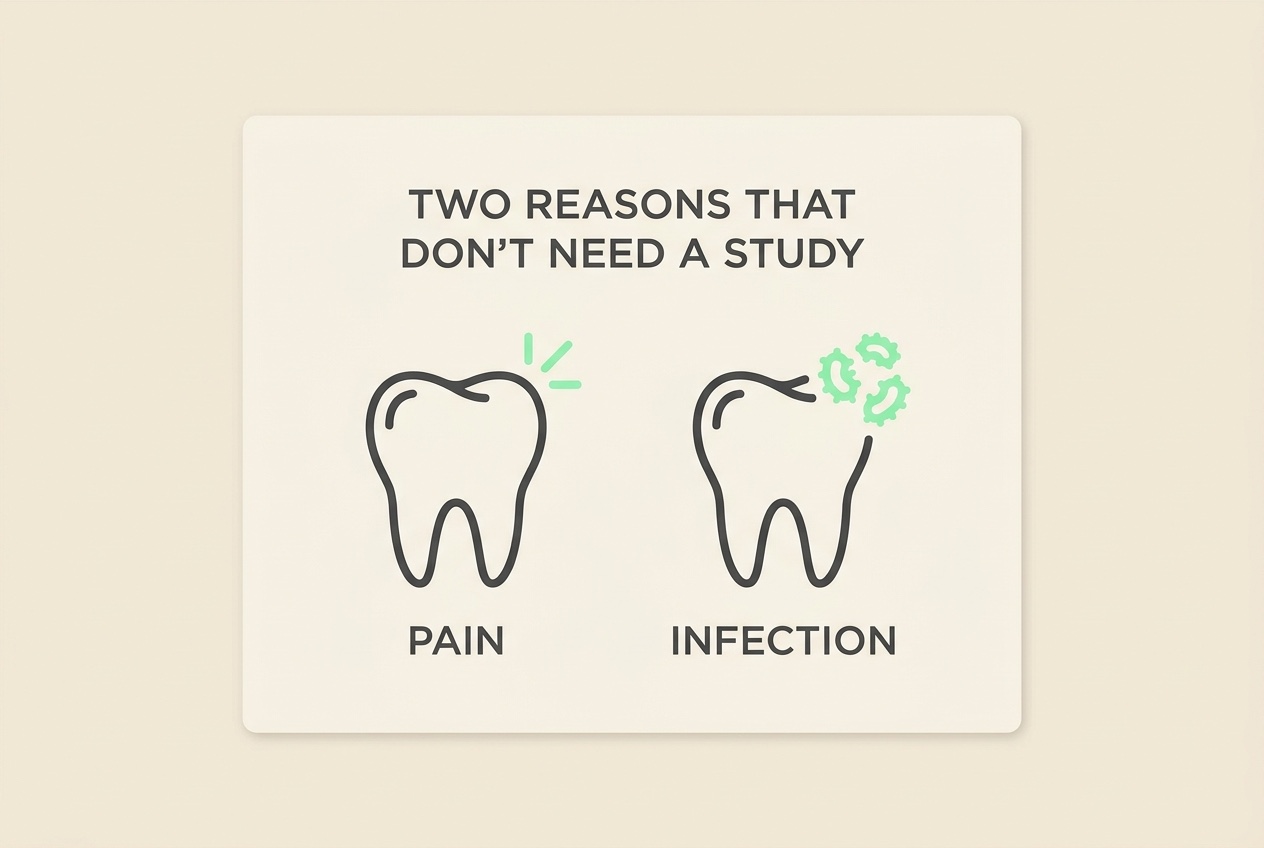
Advanced gum disease is painful, and it's an active infection sitting in the body. Those two facts stand entirely on their own. A mouth with deep gum pockets, exposed roots and abscesses hurts every time your pet eats, and it hurts in a slow, grinding way that animals are hard-wired to hide (which is exactly why so many owners are shocked at how much brighter their pet is afterwards, something I've written about in the signs a mouth is hurting). And an infected mouth is, quite literally, a pocket of infection that your pet's immune system has to keep firefighting, day in and day out.
You don't need a single heart or kidney study to justify fixing that. Chronic pain is reason enough. A live infection is reason enough. Everything the systemic research might eventually add on top is a bonus argument, not the foundation. So when someone tells you gum disease is worth treating "because it protects the heart", they've picked the weakest, least certain reason and skipped the two rock-solid ones sitting right in front of them.
So what should you actually do with all this
If you came here frightened that a bit of tartar has already damaged your pet's heart or kidneys, you can put that particular fear down. The evidence doesn't support it, and the heart and kidney specialists are the first to say so.
What the evidence does support is calmer and more useful. A healthy mouth is part of a healthy animal, gum disease is worth preventing and treating on its own clear merits, and there's a reasonable, unproven hope that looking after the mouth is good for the rest of the body too. That's a sensible reason to brush the teeth, to book the dental when it's needed, and to keep an eye on the mouth as your pet ages. It is not a reason to lie awake.
If your pet is older, or already has a heart or kidney condition, that scary headline is actually a good prompt to have a proper conversation with your vet, one that treats the whole animal rather than the teeth in isolation. Bring the worry with you. It's a good worry to have out loud, and it usually ends somewhere far more reassuring than the search results suggested.
References
- DeBowes, L.J., Mosier, D., Logan, E., Harvey, C.E., Lowry, S., Richardson, D.C. (1996). Association of periodontal disease and histologic lesions in multiple organs from 45 dogs. Journal of Veterinary Dentistry, 13(2), 57-60.
- Pavlica, Z., Petelin, M., Juntes, P., Erzen, D., Crossley, D.A., Skaleric, U. (2008). Periodontal disease burden and pathological changes in organs of dogs. Journal of Veterinary Dentistry, 25(2), 97-105.
- Glickman, L.T., Glickman, N.W., Moore, G.E., Goldstein, G.S., Lewis, H.B. (2009). Evaluation of the risk of endocarditis and other cardiovascular events on the basis of the severity of periodontal disease in dogs. Journal of the American Veterinary Medical Association, 234(4), 486-494.
- Glickman, L.T., Glickman, N.W., Moore, G.E., Lund, E.M., Lantz, G.C., Pressler, B.M. (2011). Association between chronic azotemic kidney disease and the severity of periodontal disease in dogs. Preventive Veterinary Medicine, 99(2-4), 193-200.
- Trevejo, R.T., Lefebvre, S.L., Yang, M., Rhoads, C., Goldstein, G., Lund, E.M. (2018). Survival analysis to evaluate associations between periodontal disease and the risk of development of chronic azotemic kidney disease in cats evaluated at primary care veterinary hospitals. Journal of the American Veterinary Medical Association, 252(6), 710-720.
- Lockhart, P.B., Bolger, A.F., Papapanou, P.N., Osinbowale, O., Trevisan, M., Levison, M.E., et al. (2012). Periodontal disease and atherosclerotic vascular disease: does the evidence support an independent association? A scientific statement from the American Heart Association. Circulation, 125(20), 2520-2544.
- American Heart Association (2025). Periodontal disease and atherosclerotic cardiovascular disease: a scientific statement from the American Heart Association. Circulation.
- Niemiec, B., Gawor, J., Nemec, A., Clarke, D., McLeod, K., Tutt, C., et al. (2020). World Small Animal Veterinary Association Global Dental Guidelines. Journal of Small Animal Practice.
- O'Neill, D.G., Roto, A., Church, D.B., McGreevy, P.D., Thomson, P.C., Brodbelt, D.C. (2021). Epidemiology of periodontal disease in dogs in the UK primary-care veterinary setting. Journal of Small Animal Practice.
Keep track of how your pet is doing
The owners who cope best are the ones who notice changes early. A simple health log shows you what is working, and what is not, before the next vet visit.
Start tracking, freeYou're not doing this alone
Compare treatment journeys and talk to owners managing teeth & mouth. Free to join.
Join PetsLikeMine