

Signs your dog or cat has dental disease, and why cats hide it
Alastair Greenway
BVM&S MRCVS
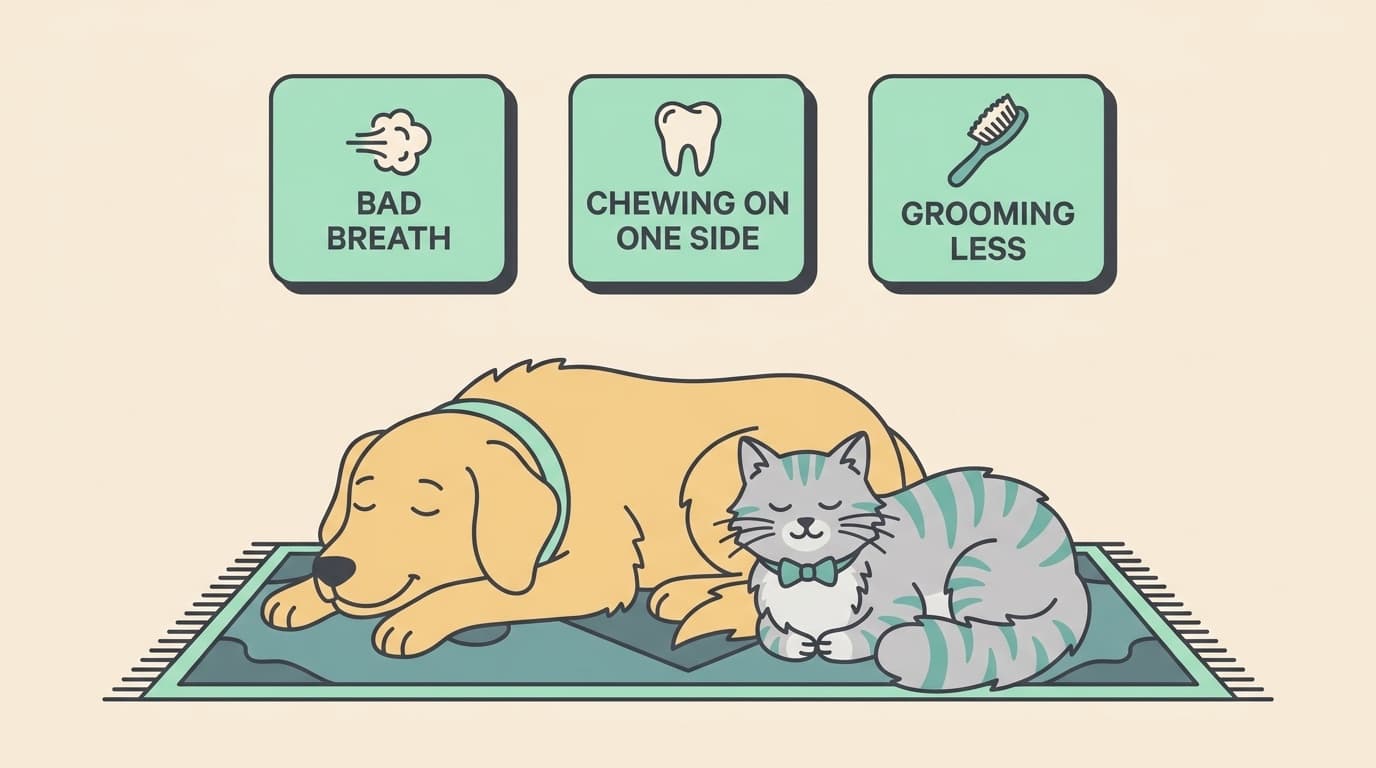
You caught a whiff of something when she yawned. Or you noticed she's started chewing on one side, or a single piece of kibble skitters out of the bowl and she leaves it where it lands. Maybe there's a smear of drool on the cushion that wasn't there a month ago. And then comes the thought that lets most of us off the hook: "but she's still eating, and she seems happy, so it's probably nothing."
I want to gently take that reassurance apart, because it is the most misleading thing owners tell themselves about their pet's mouth. Not because you've missed something obvious or done anything wrong. You noticed a change, and noticing is the whole job. It's because "still eating" is one of the worst tests of dental pain there is. Let me show you why, then walk you through the signs that actually mean something, including the quiet ones your cat is working hard to hide from you.
Eating is a terrible test for a sore mouth
The part that surprises people most is this. A pet with a genuinely painful mouth will almost always keep eating. Dogs and cats are built to.
For most of their history, an animal that stopped eating stopped surviving. Hunger came first, and pain came a distant second, so the instinct to feed through discomfort is wired in very deep. The 2025 FelineVMA feline dental guidelines put it plainly for cats, noting that with only a short history of domestication behind them, cats have "retained a strong survival instinct to conceal illness and pain" (Lobprise et al., 2025). Dogs are a little more expressive, but the same rule holds. They will happily crunch through a sore mouth rather than go without.
So when you say "she's still eating", what you're really telling me is that her hunger is stronger than her pain. That's not the reassurance it sounds like. The FelineVMA guidelines say it directly: "a normal appetite does not always equate with a healthy mouth" (Lobprise et al., 2025). I've extracted rotten, abscessed teeth from cats and dogs who cleared their bowl that very morning. Appetite tells you they're hungry. It doesn't tell you they're comfortable.
And this matters because dental disease is not rare or unlucky. It is the single most common problem we diagnose. In the largest UK study of its kind, periodontal (gum) disease was the most frequently recorded disorder in dogs seen by first-opinion vets, affecting around one in eight dogs in a single year (O'Neill et al., 2021). Zoom out across a lifetime and it is close to universal. The WSAVA Global Dental Guidelines report that by two years of age, roughly 80% of dogs and 70% of cats already have some degree of periodontal disease (Niemiec et al., 2020). If your pet is past their second birthday, the odds are simply that something is brewing in there. The only question is whether you catch it early or late.
The signs you can actually see
Some signs are obvious once you know to look. If you spot any of these, it's worth a proper check.
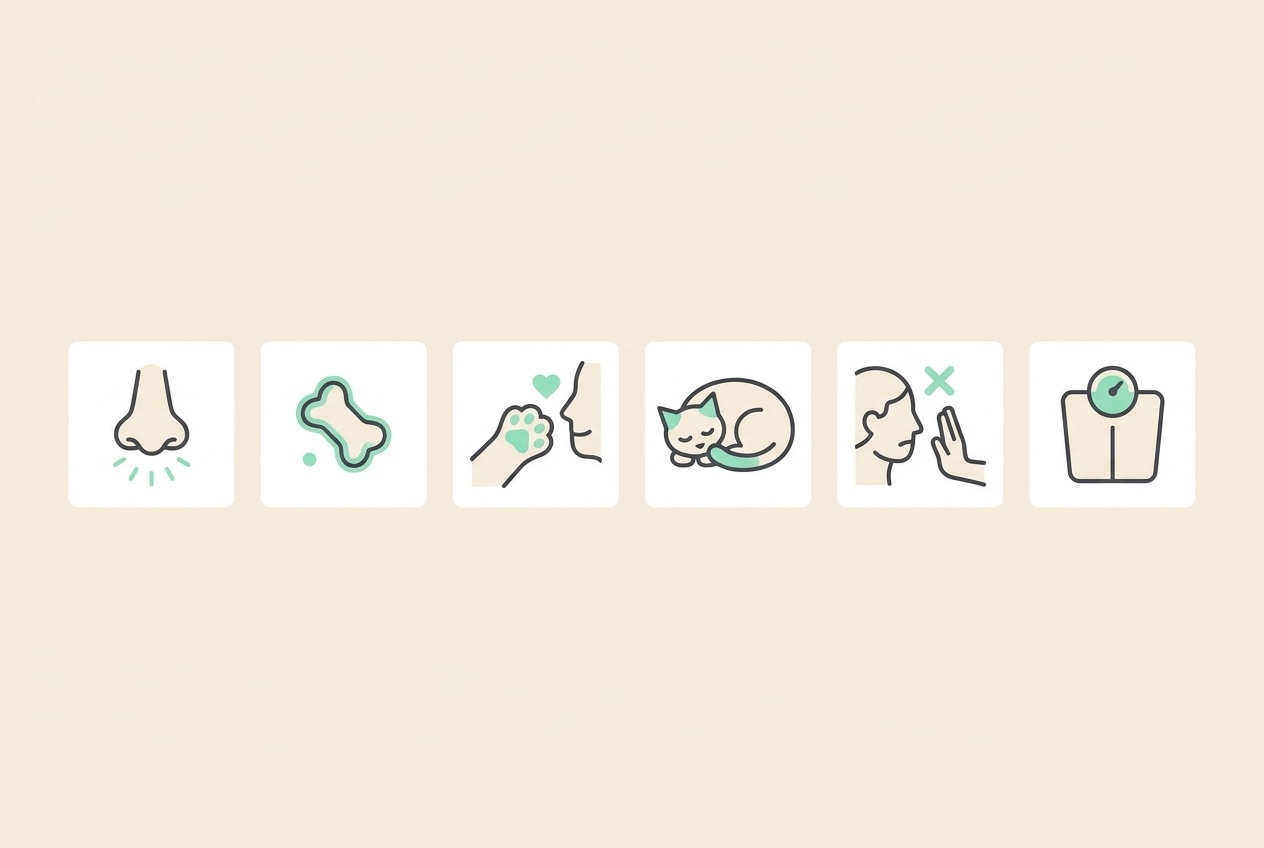
- Bad breath that doesn't shift. This is the one owners notice first and dismiss fastest. "Doggy breath" and "cat breath" are not real things. A healthy mouth doesn't smell offensive. Persistent bad breath is usually the smell of bacteria and infection along the gumline, and it's the earliest sign many owners ever get (Niemiec et al., 2020).
- Drooling, sometimes tinged pink. A sudden change in how much your pet dribbles, especially with a rusty or bloody tint, points at the mouth.
- Pawing at the face or rubbing it along the carpet and furniture. This is your pet trying to get at something that hurts and can't be reached.
- Chewing on one side, tilting the head to eat, or dropping food. Watch them at the bowl. If they favour one side, catch and re-catch mouthfuls, or let food fall out, one part of the mouth is sore. The FelineVMA guidelines list "chewing on one side of the mouth or with the head tilted to one side" and "dropping of food" among the signs to look for (Lobprise et al., 2025).
- Going quiet on hard food or favourite chews. A dog who used to love a biscuit and now noses it aside, or a cat drifting off their dry food, is often telling you that crunching hurts.
- A firm swelling on the face, just below one eye. This one I want you to know by heart. The large chewing tooth at the back of the upper jaw (the carnassial, the upper fourth premolar) has roots that sit right beneath the eye. When that tooth abscesses, the infection tracks upward and shows as a swelling, sometimes a bursting, draining sore, on the cheek below the eye. It is frequently mistaken for a bite, a sting or an eye problem. It is a dental emergency, and it needs a same-week appointment, not a wait-and-see.
The signs that look like "she's just getting older"
The harder signs are the ones that don't look like a mouth problem at all. They look like ageing, or grumpiness, or a fussy phase. These are the ones I most often unpick months later, in the room, once the owner sees how differently their pet behaves after treatment.
Watch for a pet who has quietly become a smaller version of themselves. Less playful. Withdrawing to another room. Reluctant to have their head or face touched, or flinching and turning away when you stroke near the jaw. Short-tempered when they never used to be, because being handled hurts. A dog who has "gone off his food a bit" and now prefers the soft stuff. A cat whose coat has lost its shine because grooming has quietly stopped. And sometimes a slow, unexplained drop in weight, because eating has become a chore rather than a pleasure.
None of these screams "teeth". Every one of them can be the mouth. When an older pet seems to be "just slowing down", a sore mouth is one of the most common, most treatable and most overlooked reasons why.
Why cats hide it hardest
Cats deserve their own section here, because they are the true masters of the poker face, and the generic advice you'll find online almost never accounts for it.
A cat in the wild is both hunter and hunted. Showing weakness attracts trouble from both directions, so a cat's instinct is to carry on exactly as normal for as long as it possibly can. That instinct doesn't switch off just because your cat has never set a paw outdoors. The FelineVMA guidelines are blunt about the consequence: changes in appetite are actually an uncommon finding in cats with oral disease, so caregivers should be reminded that a cat eating well can still have a seriously painful mouth (Lobprise et al., 2025).
So with cats you learn to read the small tells that slip past the poker face:
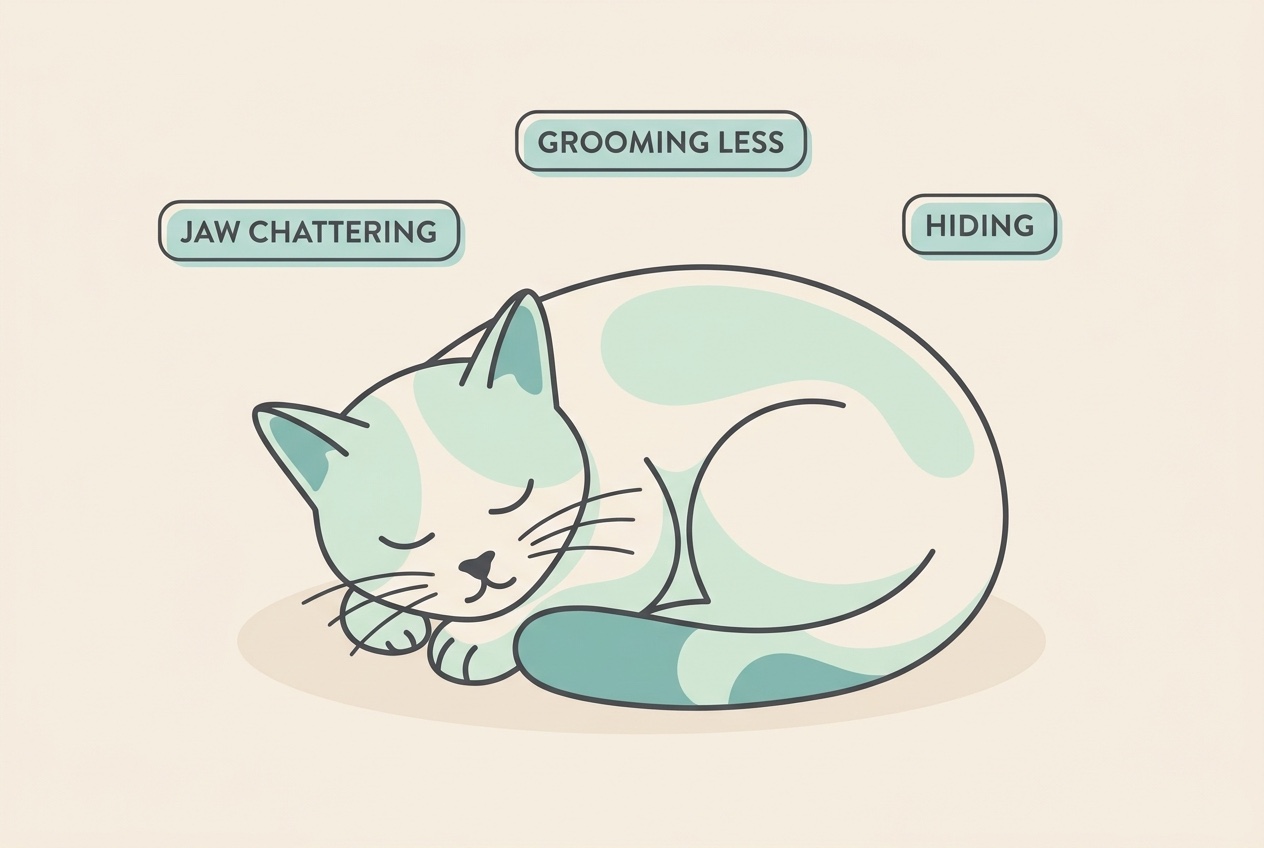
- Jaw chattering or teeth grinding, especially when they go to eat or yawn. The FelineVMA guidelines name "jaw chattering" as a sign of oral pain (Lobprise et al., 2025).
- A dropped-off grooming habit. Cats groom constantly, and grooming means dragging a rough tongue across sore teeth and gums. A cat who has become scruffy, greasy or matted, particularly down one side, has often stopped because it hurts. The guidelines list "decreased grooming, which can point to oral pain" (Lobprise et al., 2025).
- Head shyness and hiding. Flinching away when stroked near the face, or simply spending more time tucked away and less time with you.
- Approaching the bowl hungry, then hesitating. Walking up keen, taking a bite, then backing off, pawing at the mouth, or crying at the food.
- Avoiding hard food or facial rubbing. The guidelines specifically flag "avoidance of hard foods and facial rubbing", along with quieter changes in activity and play (Lobprise et al., 2025).
There's a reason to be especially watchful with cats. Tooth resorption, a painful condition in which the tooth slowly destroys itself from the inside, is remarkably common. Studies put radiographic evidence of it in around two thirds of all cats examined, and in more than eight in ten cats over the age of ten (Lobprise et al., 2025). It hurts even while the cat is still eating, and much of it can only be seen on an x-ray. If your cat has any of the tells above, it deserves a proper look, and I'd gently point you towards our guide on tooth resorption for the fuller picture.
"But she's still eating" is worth one more look
I want to come back to this line, because it's usually the last thing standing between an owner and a phone call to the vet.
Eating through pain has a look, once you know it. It's the dog who used to savour dinner and now inhales it, swallowing lumps almost whole to avoid chewing. It's the cat who eats keenly but only on one side, or who has quietly voted with her paws for the softest food in the cupboard. It's the pet who circles the bowl hungry, starts, stops, and starts again. They are eating. They are also managing.
What tells the real story is the after. The single most common thing owners say to me once a painful mouth has been treated is that their pet is "like a puppy again" or "years younger". They're brighter, more playful, keener to be touched, back to grooming, back to their old selves. The heartbreaker in that sentence is that they'd all assumed the slowing down was just age. It wasn't. It was pain they had learned to live with, so quietly that the people who love them most couldn't see it.
What to do tonight, and when it can't wait
You don't need to panic, and you don't need to book an emergency visit for bad breath alone. Here's the sensible order of things.
Tonight, take a 30-second look. Lift the lip gently at the back where the big cheek teeth sit, which is where trouble starts, and check for a red rim along the gumline, brown or yellow build-up, a broken or discoloured tooth, or a smell. Our step-by-step guide, how to check your pet's mouth at home, shows you exactly what healthy and not-healthy look like, and how to do it without a wrestling match, especially with cats. If you'd rather answer a few questions and get a steer, our "Does my pet need a dental?" checker will help you decide whether it's a booking or a watch-and-wait.
Please don't try to fix anything yourself. There's a trend for scraping tartar off at home with metal tools. Don't. You'll damage the tooth surface, miss the disease that actually matters (which lives below the gumline where you can't see or reach it), and you stand a good chance of injuring the gum or getting bitten. Home care is brushing and vet-checks, nothing sharper.
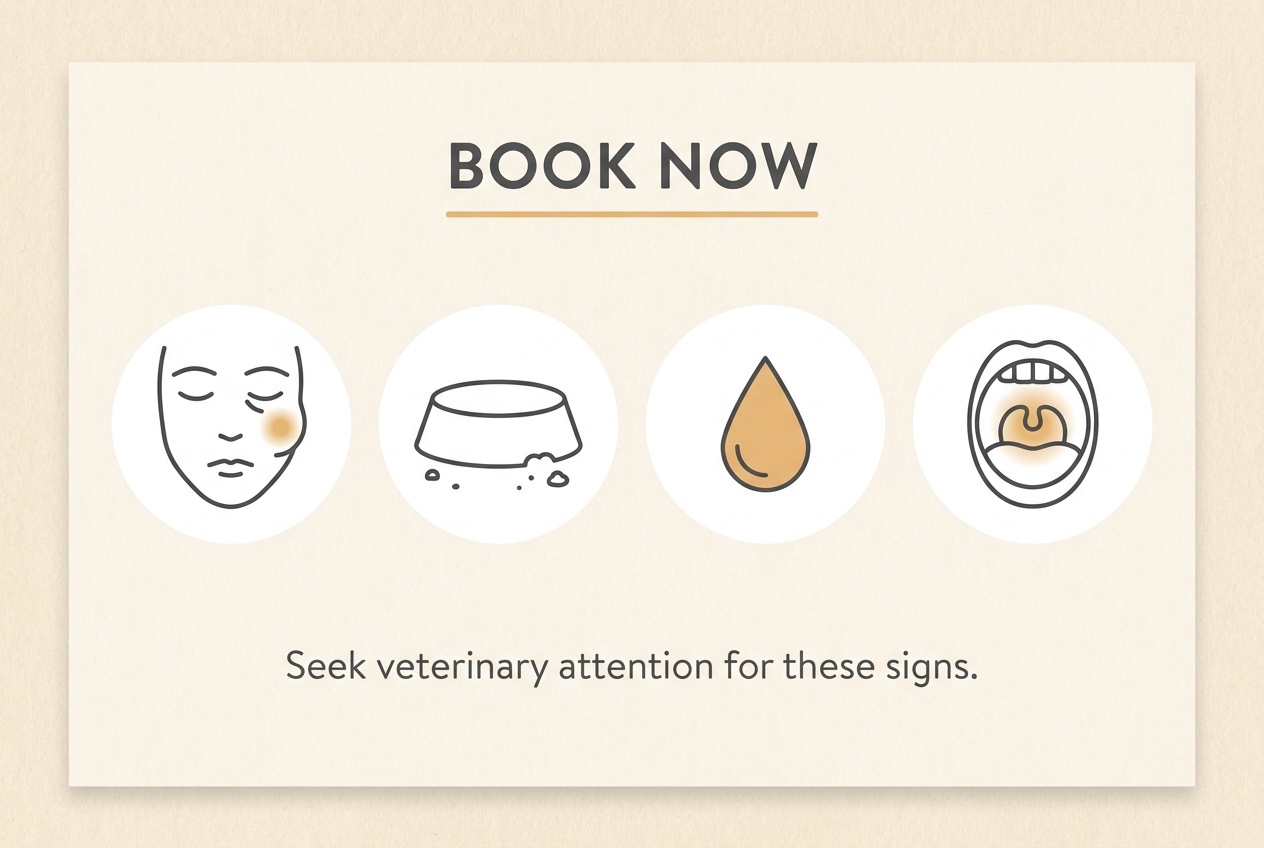
Some signs mean book now, not next month. Call your vet promptly if you see:
- a facial swelling below the eye (a likely tooth-root abscess),
- your pet refusing all food, not just going quiet on the hard stuff,
- bleeding from the mouth, or blood in the drool or on toys and bedding,
- a bright red, angry, proliferating area at the back of the mouth.
If you've read this far because something about your pet has been nagging at you, trust that instinct. You already noticed the change. The kindest next step is simply to look, and if what you see gives you pause, to let your vet look too. A mouth that's been sore for a long time can be made comfortable again surprisingly quickly, and the pet who comes home from that is very often the one you remember.
References
- O'Neill, D.G., Roto, A., Church, D.B., McGreevy, P.D., Thomson, P.C., Brodbelt, D.C. (2021). Epidemiology of periodontal disease in dogs in the UK primary-care veterinary setting. Journal of Small Animal Practice.
- Niemiec, B., Gawor, J., Nemec, A., Clarke, D., McLeod, K., Tutt, C., et al. (2020). World Small Animal Veterinary Association Global Dental Guidelines. Journal of Small Animal Practice. (full guideline: https://wsava.org/global-guidelines/global-dental-guidelines/)
- Lobprise, H., St Denis, K., Anderson, J.G., Hoyer, N., Fiani, N., Yaroslav, J. (2025). 2025 FelineVMA feline oral health and dental care guidelines. Journal of Feline Medicine and Surgery.
- American Animal Hospital Association (2019). AAHA Dental Care Guidelines for Dogs and Cats.
Free downloads
Companion worksheets to put what you've read into practice. Free PDFs, print at home.
Keep track of how your pet is doing
The owners who cope best are the ones who notice changes early. A simple health log shows you what is working, and what is not, before the next vet visit.
Start tracking, freeYou're not doing this alone
Compare treatment journeys and talk to owners managing teeth & mouth. Free to join.
Join PetsLikeMine