

House-training that actually works
Alastair Greenway
BVM&S MRCVS
If you are reading this standing over yet another puddle, wondering what you are doing wrong, take a breath. You are almost certainly not failing. House-training is one of those jobs that feels like it should be simple and turns out to be a slow, unglamorous grind of watching, timing and mopping. The good news is that it is a genuinely solvable problem with a small number of reliable principles, and once those click into place, the accidents fall away faster than you would expect.
Let us throw out the guilt first, then give you a method you can actually follow when you are tired.
First, the biology: why your puppy is not being naughty
A very young puppy simply cannot hold on. The muscles and the nerve control that let an adult dog "wait" are not fully developed yet, and neither is the learned understanding that indoors is not for toileting. A rough rule of thumb that many trainers use is that a puppy can hold their bladder for around one hour per month of age, so a two-month-old pup might manage only a couple of hours at a stretch, and less when they are excited or busy. Overnight they can usually last a little longer.
This matters because it reframes every accident. Your puppy is not defying you, being spiteful, or "getting one over" on you. Dogs do not toilet indoors to make a point. They go when they need to go, wherever they happen to be, until they have learned both the physical control and the habit of preferring one particular place. Your whole job is to make that place obvious and rewarding, and to be there when it counts.
Hold on to that, because the single biggest thing that derails house-training is an owner taking it personally.
The core method
House-training comes down to three things done consistently: get them to the right place often, reward heavily when they get it right, and manage the environment so accidents are rare. Everything else is detail.
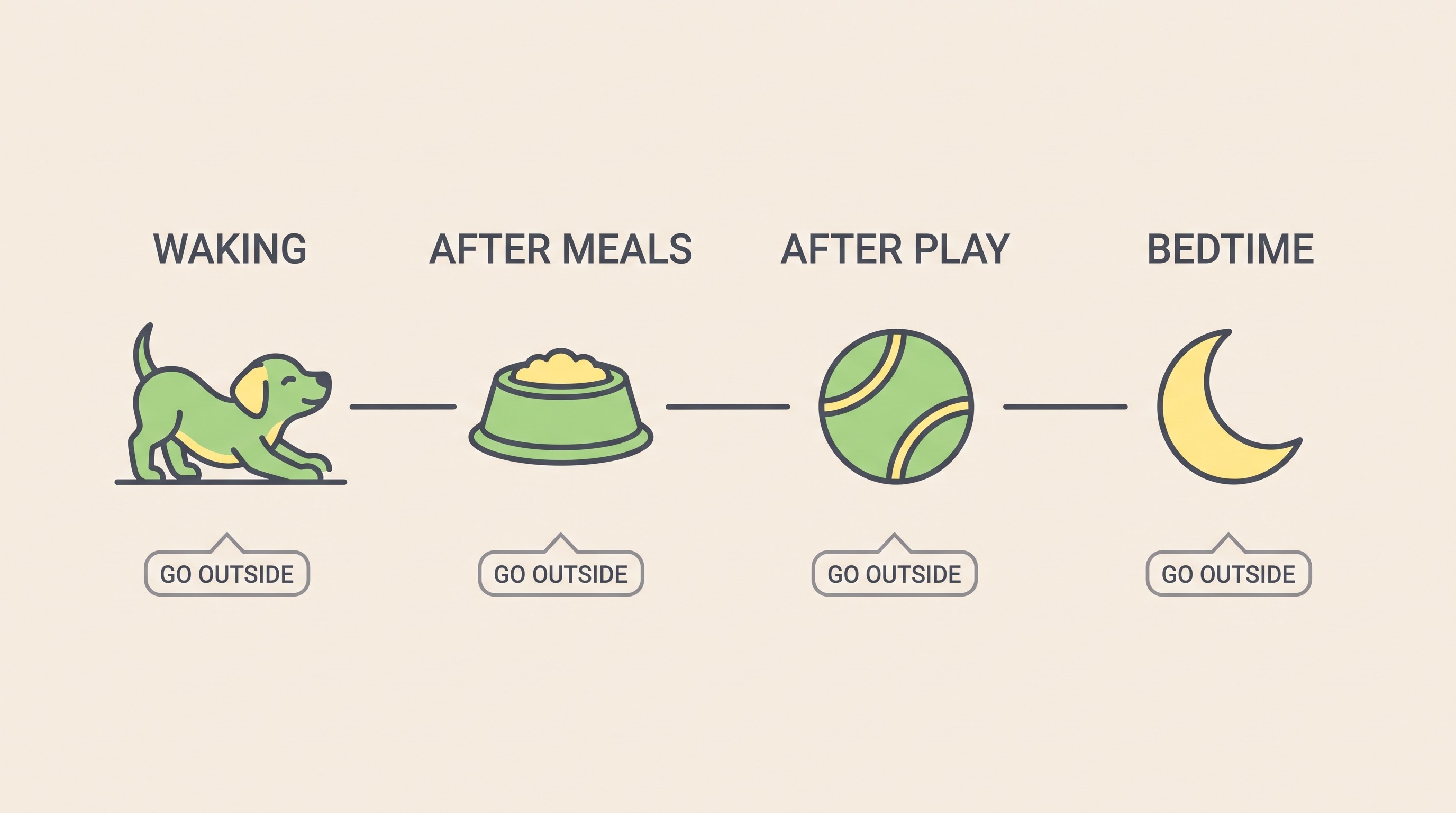
Take them out often, and always at the predictable moments. Puppies are most likely to need to toilet at specific times, so build your day around them. Take your puppy out:
- First thing when they wake, every time, including after naps.
- After every meal and every drink.
- After play and after any excitement.
- Roughly every hour or two in between while they are very young.
- Last thing at night.
Yes, that is a lot of trips to the garden. For the first few weeks, house-training genuinely is close to a full-time job, and knowing that in advance makes it less demoralising.
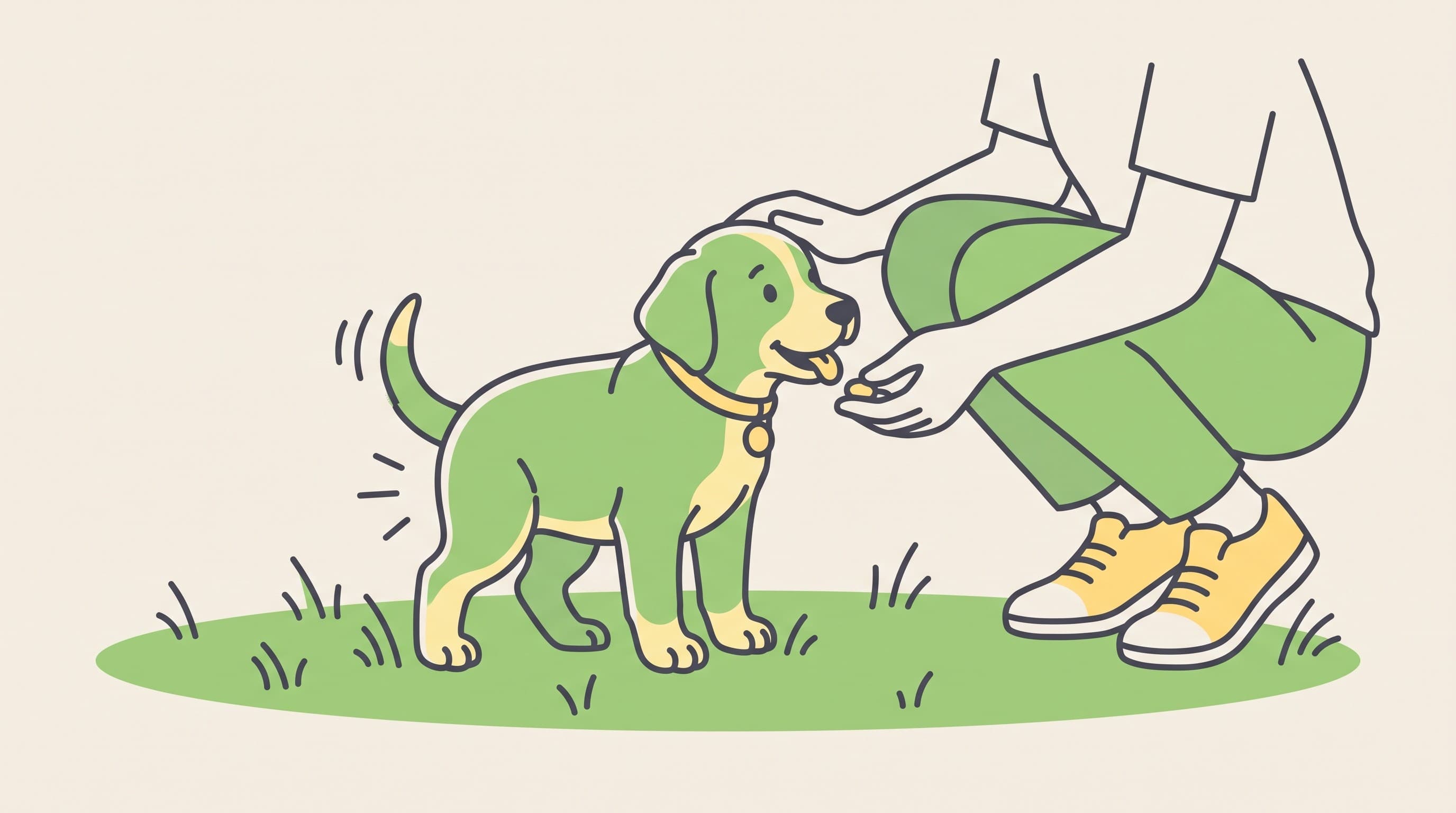
Reward the instant they go, outside, every time. This is the part people underdo. When your puppy toilets in the right place, praise warmly and give a small tasty treat immediately, while you are still outside, within a second or two of them finishing. The timing is everything: the reward has to land while the act is fresh, so the puppy connects "toileting here" with "good things happen". Waiting until you are back indoors to reward teaches them that coming inside is what earned the treat. Reward-based methods like this are both the most effective and the kindest approach to teaching dogs, and they are what the veterinary behaviour bodies recommend across the board.
Supervise or contain, so accidents cannot quietly happen. When you cannot watch your puppy closely, they should be somewhere accidents are limited or easy to clean, a puppy-proofed room, a pen, or a crate they are happy in (there is more on using a crate kindly in Sleep, crates and settling in). An accident that happens out of your sight is a missed teaching moment and a rehearsed bad habit, so the aim is simply to make those rare.
Learn your puppy's "I need to go" signals
Once you have watched for a few days, you will start to spot the tell-tale signs that come just before your puppy toilets: sudden sniffing of the floor in a focused way, circling, wandering off from play, whining, or heading towards a spot where they have gone before. The moment you see any of these, calmly and quickly get them outside to their toileting place. Catching that pre-toilet window and getting a "right place" success out of it is worth more than almost anything else you can do.
Some people add a cue word, said softly while the puppy is actually going, such as "be quick" or "wee-wees". Over time the puppy associates the phrase with the act, which is genuinely useful on cold mornings and away from home. It only works if you say it during, not before, and pair it with the reward after.
When accidents happen, and what never to do
Accidents will happen. They are part of the process, not a sign it has gone wrong. How you respond to them decides whether house-training speeds up or stalls.
If you catch them mid-flow indoors, interrupt gently and without alarm, a soft "oops, outside" and a quick lift or lead outside, then reward warmly if they finish in the right place. Do not shout, do not startle them mid-stream, just redirect.
If you find a puddle after the fact, simply clean it up and say nothing to the puppy. This is the hard one to accept, but it is important: a puppy cannot connect your annoyance now with something they did minutes ago. They live in the present, so telling off after the event teaches nothing except that you are sometimes frightening for no reason they can work out.
And here is the line to underline in bold. Never rub a dog's nose in their mess, never shout at or smack them for toileting, and never punish accidents. Beyond being unkind, it actively backfires. Punished puppies do not learn to toilet outside, they learn that toileting near you is dangerous, so they start to hide it, going behind the sofa or refusing to go while you are watching in the garden, which makes the whole job far harder. There is no "dominance" or "showing them who's boss" involved in house-training. That framing is outdated and wrong, and it damages trust. Calm, rewarding, consistent, that is the entire toolkit.
Clean thoroughly with the right product. Ordinary household cleaners, especially anything with ammonia, can leave a scent that smells like urine to a dog and draws them back to the same spot. Use an enzymatic pet cleaner that breaks down the odour properly. This one detail prevents a surprising number of repeat accidents in the same place.
Flats, no garden, and puppy pads
Not everyone has a back door and a lawn, and house-training a puppy from a flat is entirely doable, it just needs a bit more planning. The same principles apply, you simply have a longer journey to the toileting spot, so timing and speed matter more. Have a lead and shoes by the door ready to go, use a lift or the stairs quickly at the predictable moments, and carry a small young puppy down rather than expecting them to hold on during the descent.
Puppy pads (absorbent pads placed indoors) can bridge the gap for a very young pup who cannot yet make it outside in time, or for owners out for a stretch of the day. Used sensibly they prevent accidents, but be aware of the trade-off: pads teach a puppy that toileting indoors is sometimes acceptable, which can slow down the transition to going only outside. If you use them, place them in one consistent spot, ideally near the door you will eventually use, and phase them out as soon as your puppy can reliably last long enough to get outside. Many people skip pads entirely and simply commit to frequent outdoor trips, which is the cleaner route if your circumstances allow it.
Setbacks, night-times, and how long it takes
Expect a wobble or two. Progress is rarely a straight line. Many puppies have a good week and then a run of accidents, often when something changes: a growth spurt, a new environment, a change of routine, or simple over-excitement. A sudden return of accidents in a puppy who had been reliable is worth a calm review of whether the routine has slipped, and if it comes with straining, blood, or going very frequently, it is worth a vet check, because urinary infections do happen in young dogs and are not a training problem at all.
Night-times improve on their own as the bladder matures. In the early weeks you may need one overnight garden trip. Keep it boring and businesslike, out, toilet, praise quietly, straight back to bed, with no play, so your puppy does not learn that the night is party time.
How long does it take? Honestly, it varies a lot. Many puppies are largely reliable in the house by around four to six months with consistent work, though occasional accidents beyond that are completely normal, and some breeds and individuals take longer. If you are weeks in and despairing, that is usually a sign you are tired, not that it is not working. It is working. It is just slow.
If the whole thing is grinding you down, that is worth naming too, because the toileting slog is one of the classic triggers for the low, overwhelmed feeling so many new owners get. If that is you, please read The puppy blues: it's real, it's common, and it passes. You are not alone in it, and this stage does not last.
The one thing to do today: set a timer for an hour, take your puppy out the moment it goes off, and reward like they have won the lottery the second they perform. Do that on repeat, forgive the puddles in between, and the habit builds itself.
References
- Dogs Trust. Toilet training and puppy care advice.
- AVSAB (2021). Position Statement on Humane Dog Training. American Veterinary Society of Animal Behavior. [reward-based methods; punishment counterproductive]
- RSPCA / Dogs Trust guidance on positive-reinforcement house-training and avoiding punishment.
Keep track of how your pet is doing
The owners who cope best are the ones who notice changes early. A simple health log shows you what is working, and what is not, before the next vet visit.
Start tracking, freeYou're not doing this alone
Compare treatment journeys and talk to owners managing new puppy & kitten. Free to join.
Join PetsLikeMine