

Denamarin, SAMe, silybin and milk thistle: what the evidence says
Alastair Greenway
BVM&S MRCVS
Someone has recommended a liver supplement for your pet. Maybe it was your vet, maybe the pet shop, maybe a well-meaning post in a Facebook group. The name was probably Denamarin, or perhaps just "SAMe" or "milk thistle". It wasn't cheap, and you've come away with the vague but persistent question that supplements always leave: does this actually do anything, or am I paying to feel like I'm doing something?
You deserve a straight answer, and the straight answer is more interesting than either of the two you'll usually get. The pet shop tends towards a reflexive yes, as though every raised liver number needs a supplement. The hardened sceptic tends towards a reflexive no, as though it's all snake oil. Both are wrong, and the truth sits in the honest middle: these products are low-risk and biologically plausible, there is one genuinely good study behind them in a very specific situation, and the evidence that they change outcomes in ordinary liver disease is much thinner than the confident marketing suggests. They are neither a scam nor a cure, and they are absolutely not a reason to skip finding out what's actually wrong.
What these things actually are
It helps to know what you're giving, because the names are used loosely and often interchangeably when they shouldn't be.
SAMe (S-adenosylmethionine) is a compound your pet's own body makes. It's involved in producing glutathione, one of the liver's main antioxidant defences, so the rationale is that topping it up supports a liver under oxidative stress.
Silybin (also called silibinin) is the active fraction extracted from milk thistle (the plant Silybum marianum). When people say "milk thistle", they usually mean a crude plant extract; when a veterinary product says silybin, it means the purified, standardised active compound, often combined with phosphatidylcholine to help it absorb. This distinction matters, because a cheap milk-thistle capsule from a health-food shop is not the same, in dose or quality, as a standardised veterinary silybin product.
Denamarin is the branded product that combines SAMe and silybin in one tablet. So when someone says "Denamarin", they mean the combination; when they say "SAMe" or "milk thistle" alone, they mean one half of it. The antioxidant and cell-protective rationale behind all of them is genuine and worth stating plainly. The question is not whether it's plausible. It is. The question is whether that plausibility translates into real benefit, and there the picture gets more honest.
What the evidence really shows
Here is the part the marketing tends to gloss over, so let's be precise.
The single strongest piece of evidence for the SAMe-plus-silybin combination is a proper randomised controlled trial: Skorupski and colleagues, published in the Journal of Veterinary Internal Medicine in 2011. It tested Denamarin in dogs receiving the chemotherapy drug CCNU (lomustine), which is known to damage the liver (liver-enzyme increases occur in up to around 86% of dogs on CCNU). The dogs given Denamarin came out with less pronounced liver-enzyme elevation than those who weren't, suggesting the combination helped protect the liver against that specific chemotherapy insult.
That is a real, well-conducted, positive finding, and it's why your oncology-minded vet may reach for Denamarin around chemotherapy. But look carefully at what it does and doesn't say. It shows a benefit in preventing a known drug-induced liver injury, in dogs on a specific chemotherapy protocol. It does not show that the combination treats chronic hepatitis, reverses copper disease, fixes a shunt, or does anything measurable for the well dog with one mildly raised ALP on a routine panel. Extrapolating from "it blunts lomustine hepatotoxicity" to "it treats liver disease in general" is a leap the evidence simply doesn't support. Beyond that chemotherapy setting, the studies are smaller, more mixed, and often measure blood markers rather than whether pets actually live longer or feel better.
It's worth pausing on why the evidence stays thin, because it isn't laziness on anyone's part. Liver disease in dogs and cats is genuinely varied, the numbers of patients with any one form are small, and a proper trial needs to follow them for a long time and measure something that matters, like survival or quality of life, not just a blood value that wobbles anyway. That kind of study is expensive and slow, and for a supplement that's already selling well without one, there's little commercial push to run it. So the absence of strong evidence isn't proof the product does nothing. It genuinely means we don't know, for most of the situations it's sold for, and honest uncertainty is a very different thing from a confident yes. Be a little wary of any source, shop or forum that skips straight past that uncertainty.
So the honest summary is this. There is good evidence for a narrow, specific use, and thin evidence for the broad, everyday use it's most often sold for.
The honest verdict
Put it all together and here's where a reasonable vet lands.
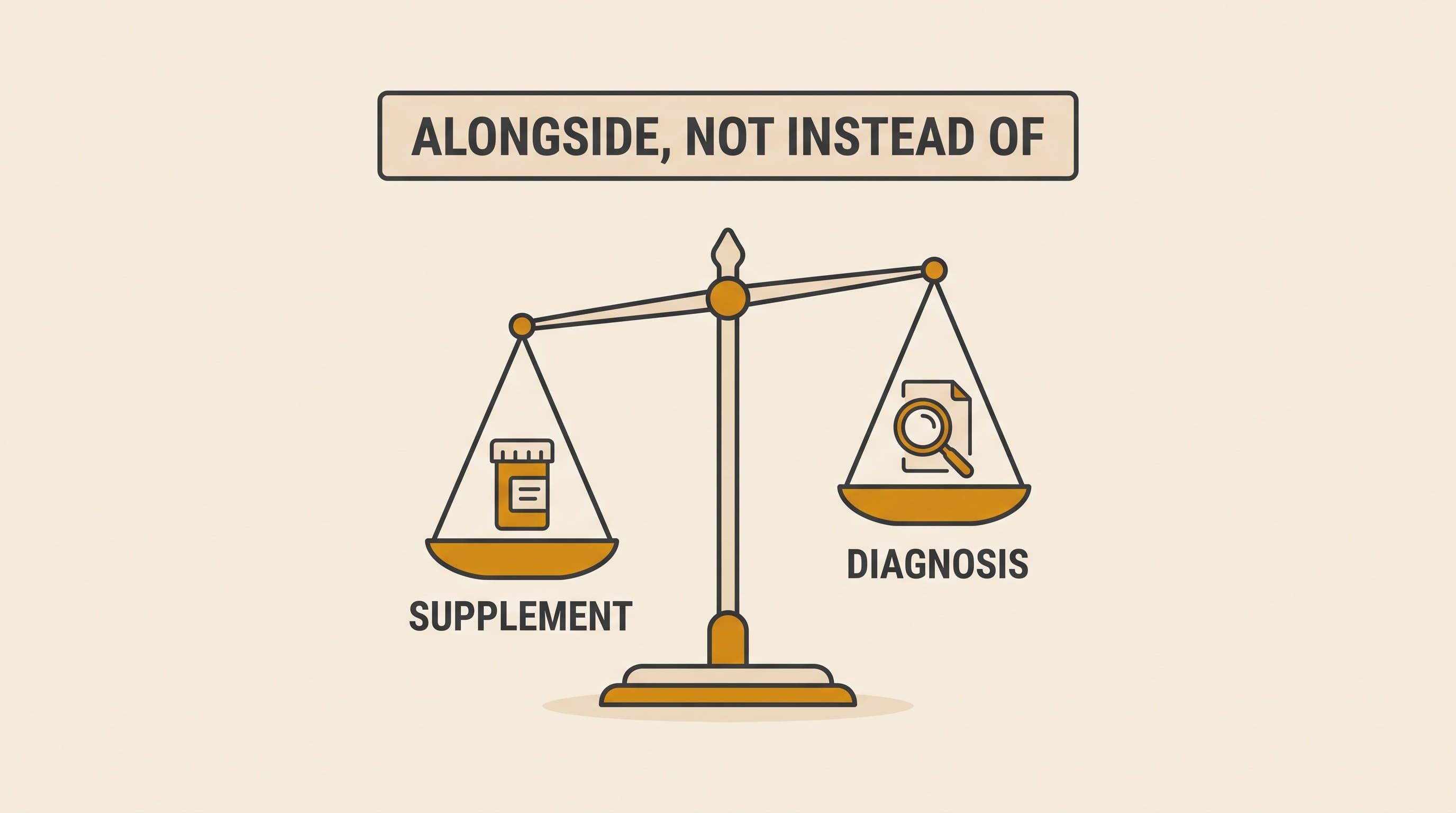
A liver supplement like Denamarin is low-risk (side effects are uncommon), biologically plausible (the antioxidant rationale is sound), and occasionally genuinely indicated (clearest around CCNU chemotherapy, and defensible as supportive care in some liver disease where your vet judges it worthwhile). It is not a substitute for a diagnosis, and it is not disease-specific treatment. It won't chelate copper, it won't suppress immune-mediated inflammation, it won't close a shunt, and it won't feed a cat that has stopped eating.
Neither a scam nor a cure, in other words. If you and your vet decide to use it as an adjunct while the real work of diagnosis and disease-specific treatment goes on, that's a perfectly reasonable choice. The problem is never the supplement itself. The problem is what people sometimes do with it.
The trap this article exists to warn you about
Here is the genuine harm, and it isn't the money.
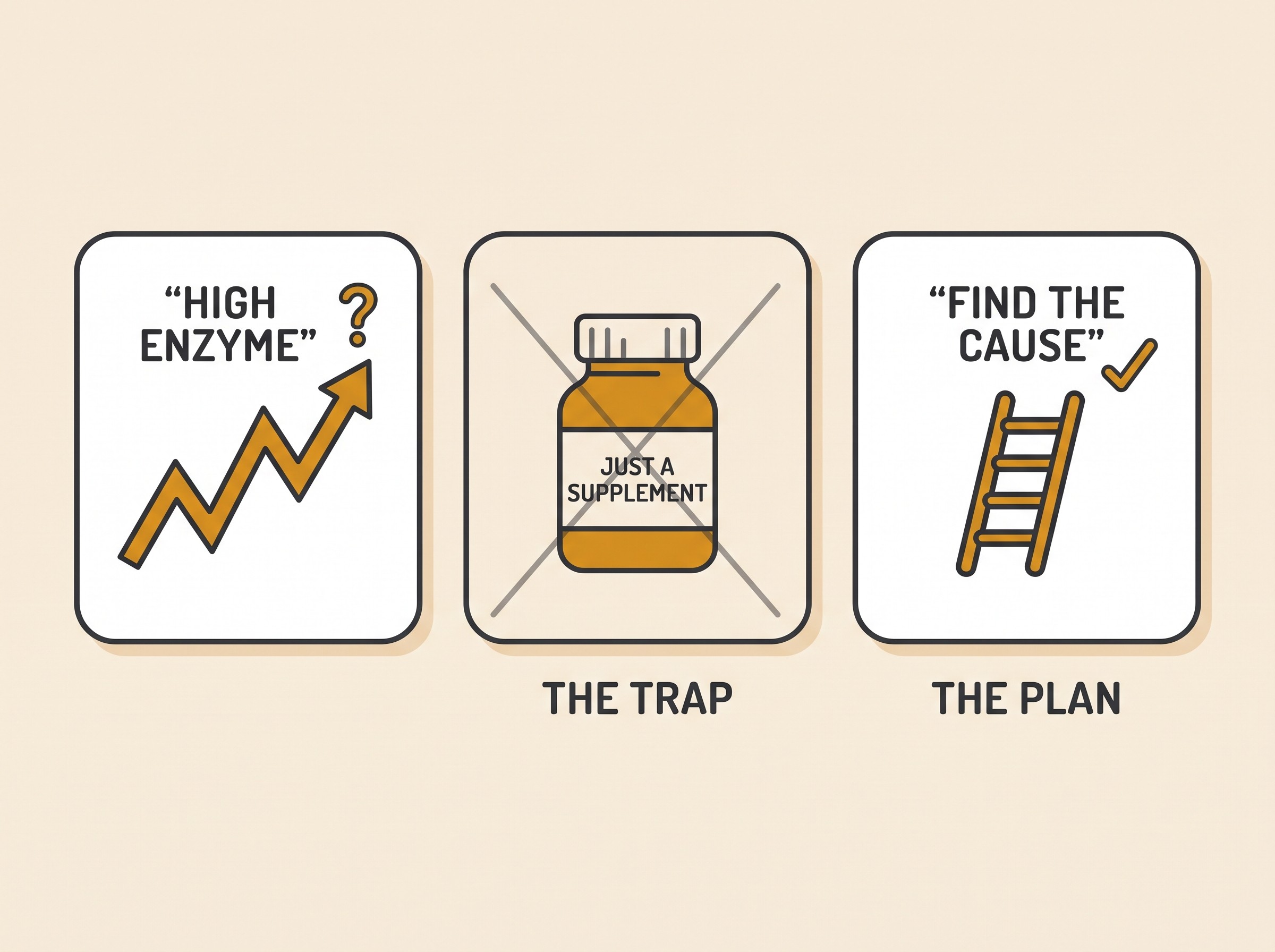
The trap is giving a "liver supplement", feeling reassured, and treating the problem as handled, while the actual cause of the raised liver enzyme goes undiagnosed and untreated. Because these products are marketed for almost any liver number, and because they're easy to buy, it's tempting to reach for one instead of doing the work-up. But the raised enzyme was a signpost, not a diagnosis. Underneath it might be copper accumulation that needs a specific diet and possibly chelation, immune-mediated chronic hepatitis that needs proper investigation, a gallbladder mucocoele that a surgeon should be looking at, or in a cat, the early edge of a fatty-liver crisis that needs urgent feeding. None of those is touched by a supplement, and every one of them does worse the longer it's left.
So the danger isn't that Denamarin harms your pet. It's that it can quietly buy time you don't have, by making everyone feel like something is being done. A supplement should never be the reason you don't ring the vet, don't run the recheck bloods, or don't have the ultrasound. It sits alongside the work-up, never instead of it.
The practical bits, if you do use it
If your vet recommends a supplement, or you've decided together to try one, a few practical points make a real difference.
SAMe absorption is famously finicky. It's usually given on an empty stomach, at least an hour before food, and the enteric-coated tablet should be given whole, not split or crushed, because the coating is what gets it past the stomach acid intact. Give it at the wrong time or break the tablet and you may be paying for something your pet barely absorbs. Product quality also varies, especially for over-the-counter milk-thistle capsules, which is one reason a standardised veterinary product is generally a safer bet than a bargain human supplement. And always tell your vet what you're giving, because supplements can interact with prescribed medicines, and your vet needs the full picture.
None of that is complicated, but it's the difference between using the product properly and wasting it.
One more practical thought on cost. These products aren't cheap, and if money is tight, it's a fair conversation to have with your vet about where your budget does the most good for your pet. In most cases, the pounds spent on the actual diagnosis (the recheck bloods, the bile acids test, the ultrasound) buy you far more than the same pounds spent on a supplement, because they tell you what you're dealing with and therefore what will actually help. If you can comfortably afford both the work-up and the supplement, fine. If you have to choose, the diagnosis wins every time, and any honest vet will tell you so.
The reframe to close on
If you came here hoping a supplement would be the thing that fixes your pet's liver, the kindest honest answer is that the real medicine is elsewhere. The best thing you can do for a liver is get the right diagnosis and then watch the trend over time on the treatment that diagnosis points to (see tracking liver values over time). A supplement can be a sensible passenger on that journey. It just isn't the driver.
So by all means ask your vet whether Denamarin or a SAMe or silybin product has a place for your pet, especially if chemotherapy is involved or your vet wants antioxidant support alongside a diagnosis. But ask it as "does this help on top of the plan?" rather than "can this be the plan?". The first question is reasonable. The second is the one that gets pets into trouble. And if your pet still hasn't been properly worked up, that (see your dog's liver enzymes are high: what it actually means), not a bottle of tablets, is your real next step.
References
- Skorupski KA, Hammond GM, Irish AM, et al. Prospective randomized clinical trial assessing the efficacy of Denamarin for prevention of CCNU-induced hepatopathy in tumor-bearing dogs. Journal of Veterinary Internal Medicine 2011; 25(4): 838–845. doi:10.1111/j.1939-1676.2011.0743.x
- Webster CRL, Center SA, Cullen JM, et al. ACVIM consensus statement on the diagnosis and treatment of chronic hepatitis in dogs. Journal of Veterinary Internal Medicine 2019; 33(3): 1173–1200. doi:10.1111/jvim.15467
- BSAVA Library. Silybin (Milk thistle, Silibinin, Silymarin) formulary entry.
Keep track of how your pet is doing
The owners who cope best are the ones who notice changes early. A simple health log shows you what is working, and what is not, before the next vet visit.
Start tracking, freeYou're not doing this alone
Compare treatment journeys and talk to owners managing liver & gallbladder. Free to join.
Join PetsLikeMine